-
-
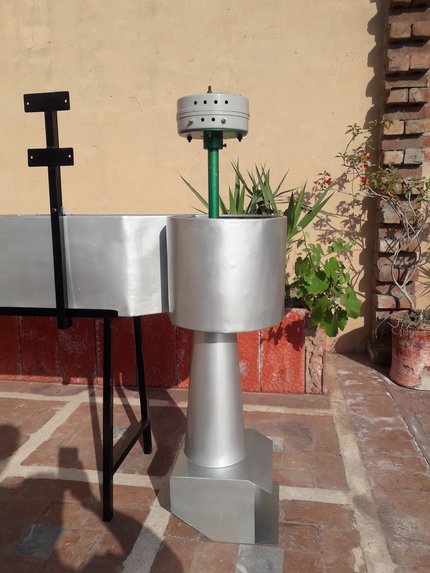
Turbine runner and generator front view
-
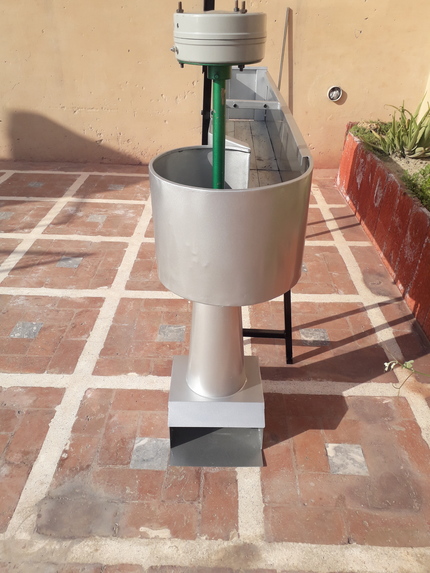
turbine runner side view
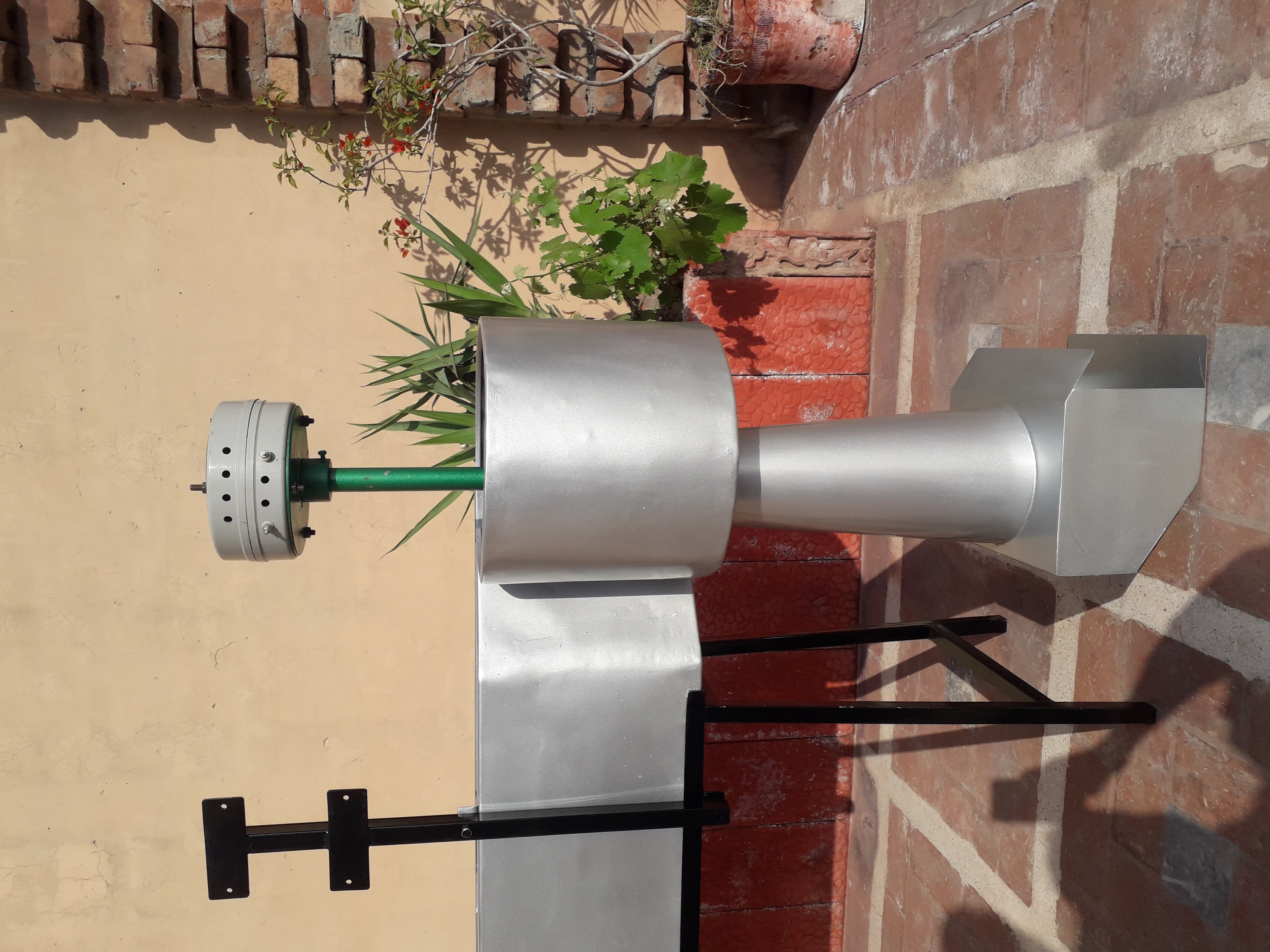
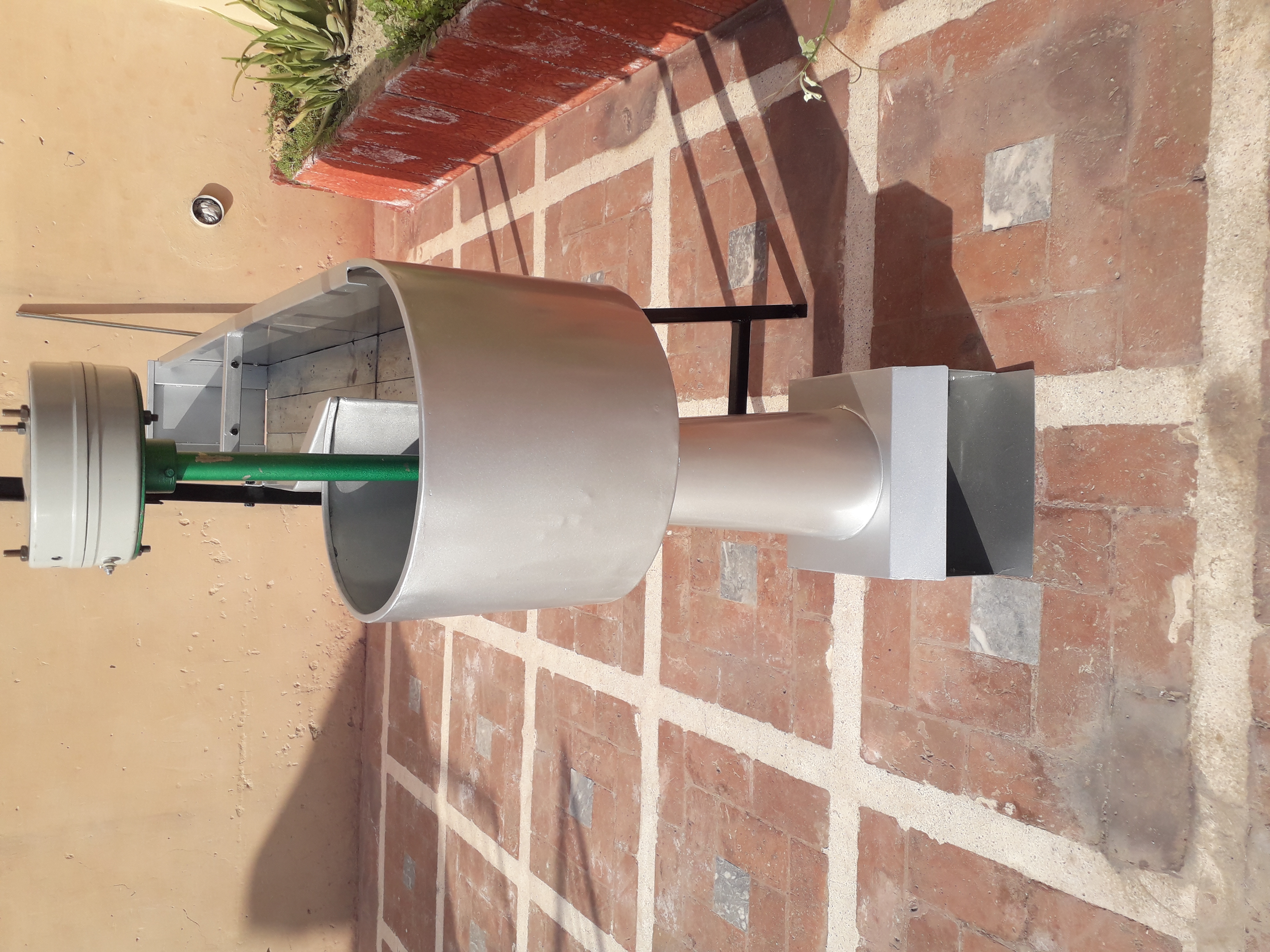
Major issue going on in Pakistan is the lack of electricity in its remote areas. The optimum demand for electricity in Pakistan right now according to the population is 15,000 MW, which will rise up to 50,000 MW in the upcoming 30 years, or so the energy demand is increasing by 11-13% each year in Pakistan. The conventional methods used in Pakistan aren’t enough to produce that much electricity and this is one of the major challenges government is facing.
With very limited flow rates and available low heads are various points this turbine will easily produce enough electricity to lighten up one village consisting of 10-20 houses and an average of 3-4 persons/house.
Site survey and evaluation is carried out considering multiple factors such as areas where water is abundant with the head of 1-2 m and considerably low flow rates, but electricity is short or not available.
The choice of the speed (N) depends on the speed of the generator and type of the drive used. The optimum range of rpm rang of 160-200 that is why we are selecting rpm of 185. By calculating all these parameters, specific speed lies in the range of efficient low head GVT. Then design the angle of attack and velocities to design blades. profile of the blade is also important that it affects the overall performance. After parametric design final construction is done. The turbine is tested on CFD and installed on site.
As in Pakistan flooding conditions are somehow unpredictable. A major challenge is outer structure design either it can bear high flow rates of flood or not. Secondly, we should clean our canals if some garbage trap in blades can affect their performance.
Designed turbine is capable of providing lighting load to a small community of 10-15 rural houses.
In Pakistan there is huge potential of water and even we can install similar configuration and other on small canals of Lahore.
Wind turbines installed on highways and water turbines installed in local canals are future of clean power.
Built With
- ansys
- cfd
- english
- solidworks


Log in or sign up for Devpost to join the conversation.