-
-
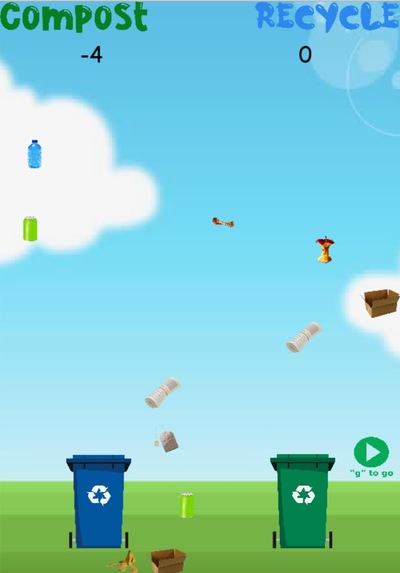
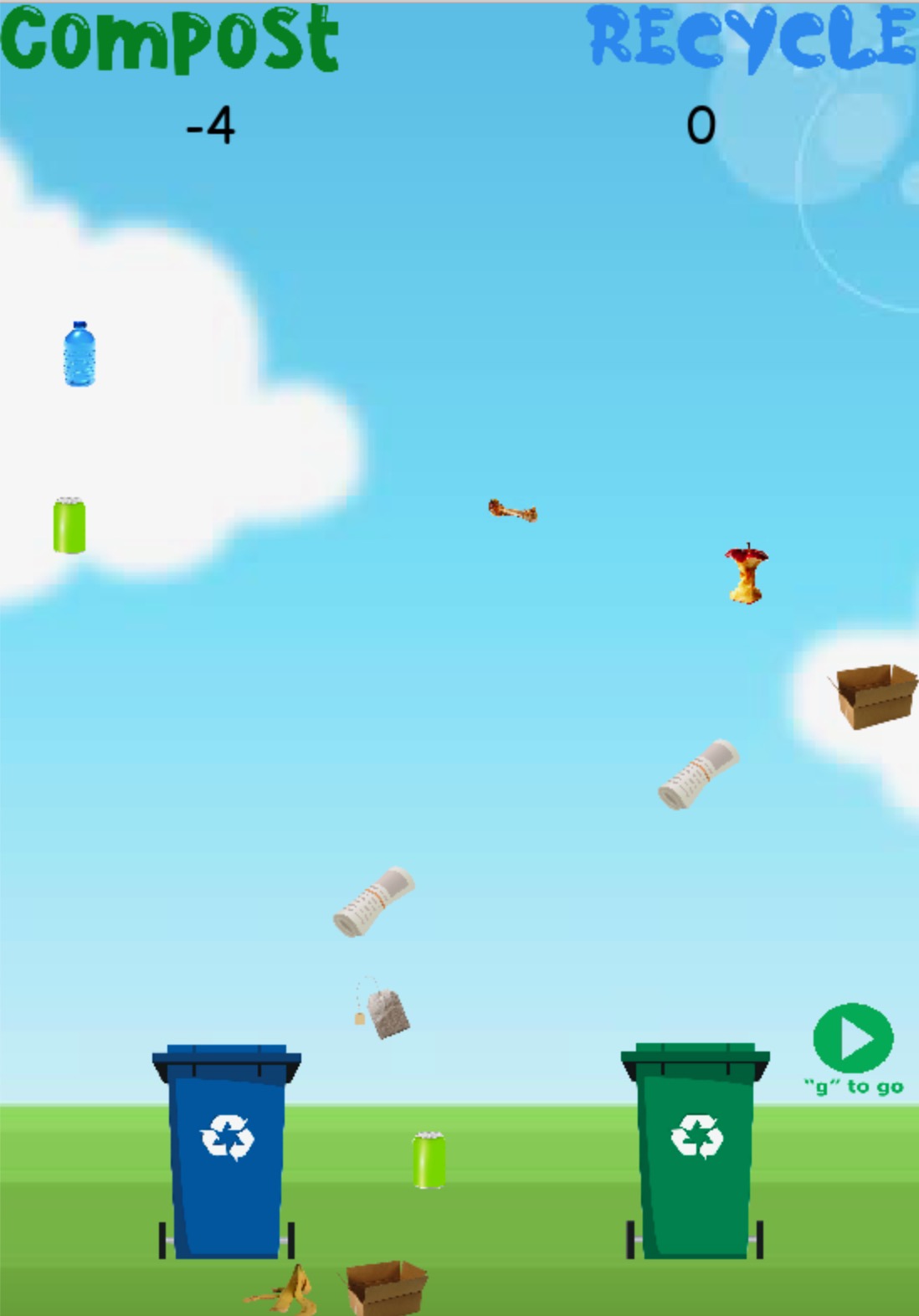
This is a snapshot of the game when it is paused and all items are frozen in the air.
-
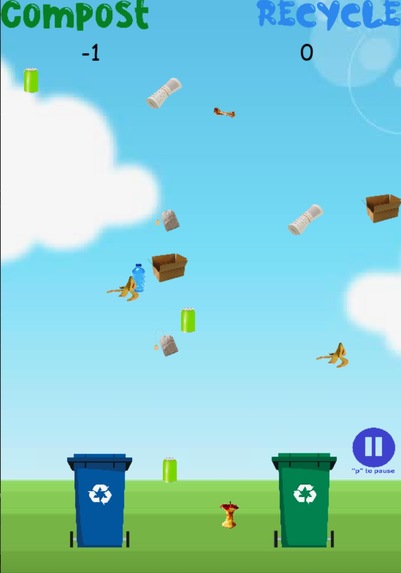
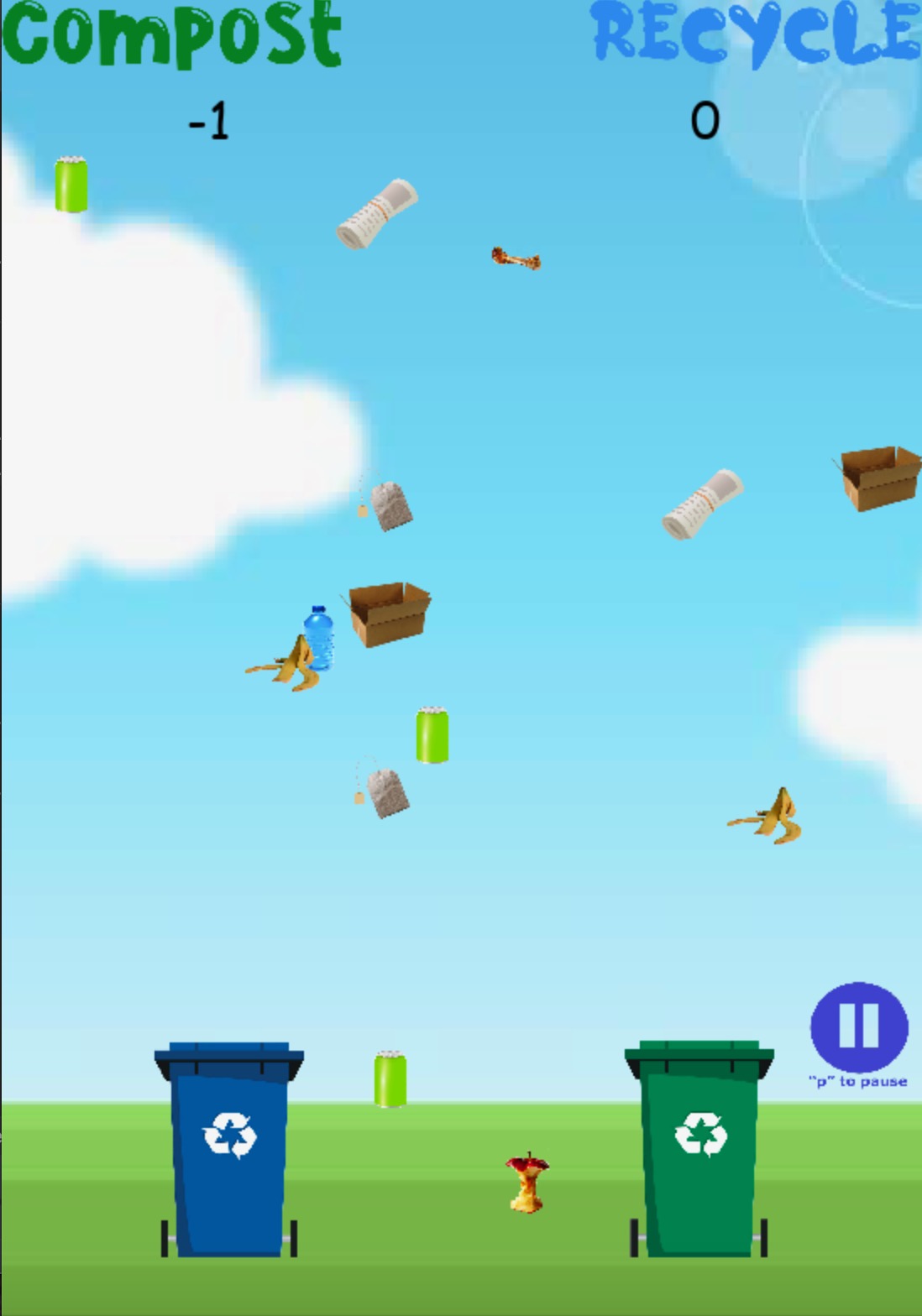
This is a snapshot of the game while it is running, as items fall and the bins are moved to collect them.
-
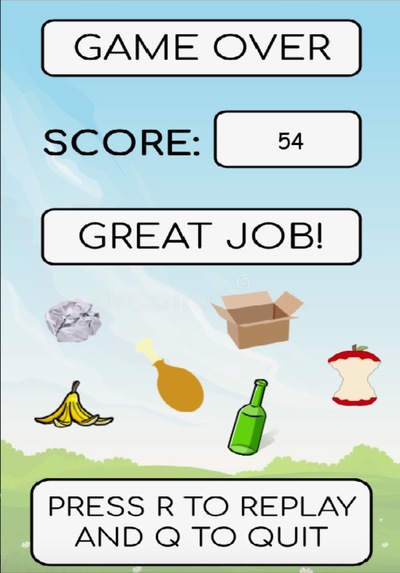
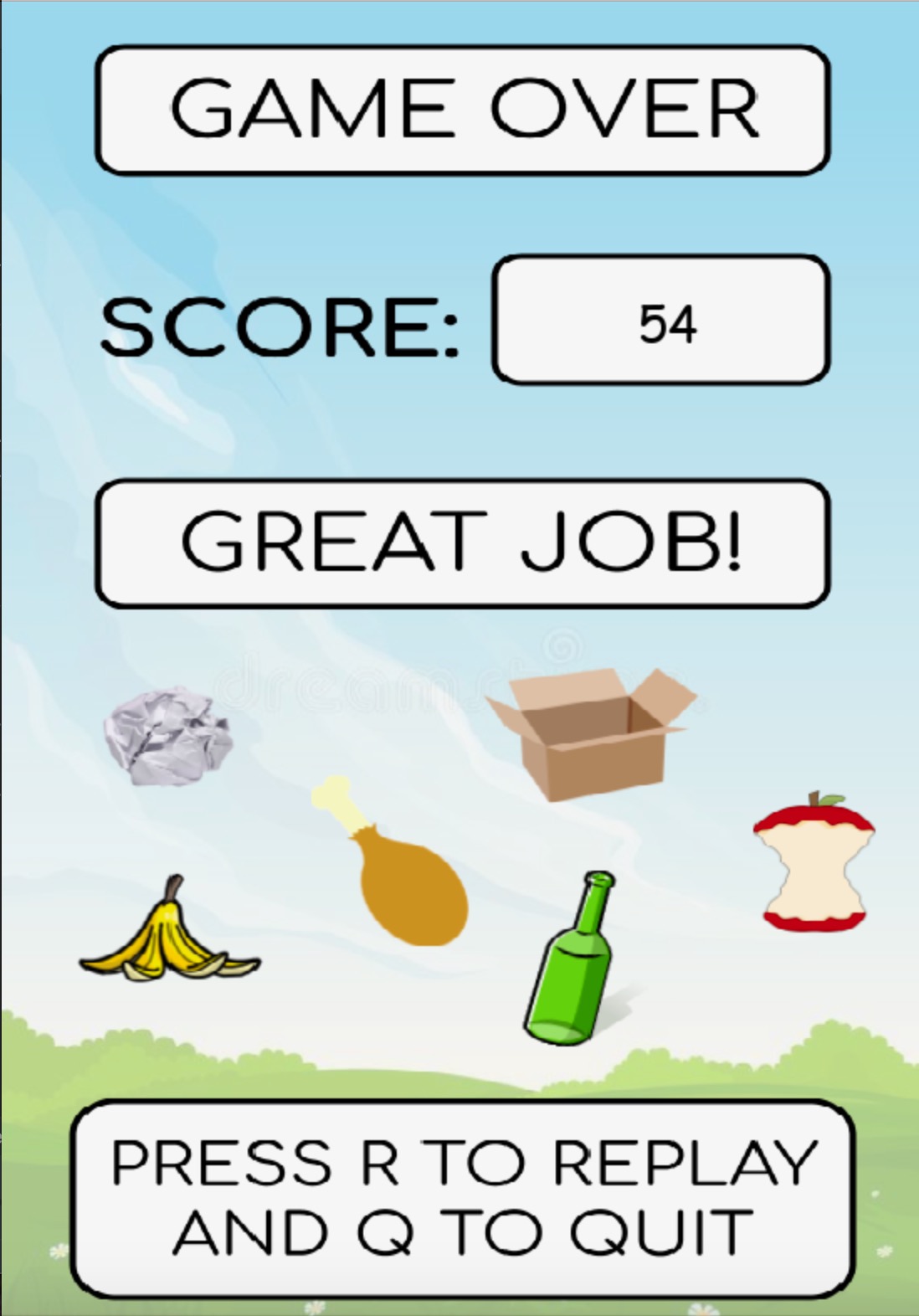
This is the game over screen that is displayed once the game is over.
-
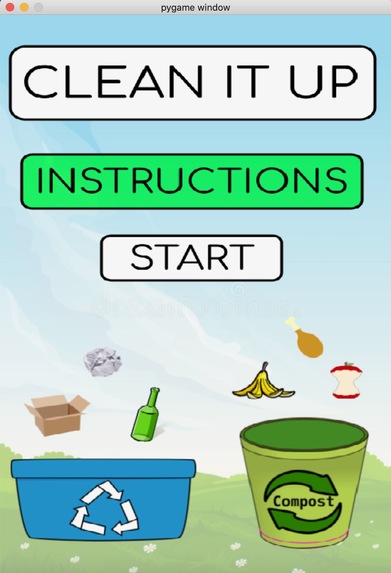
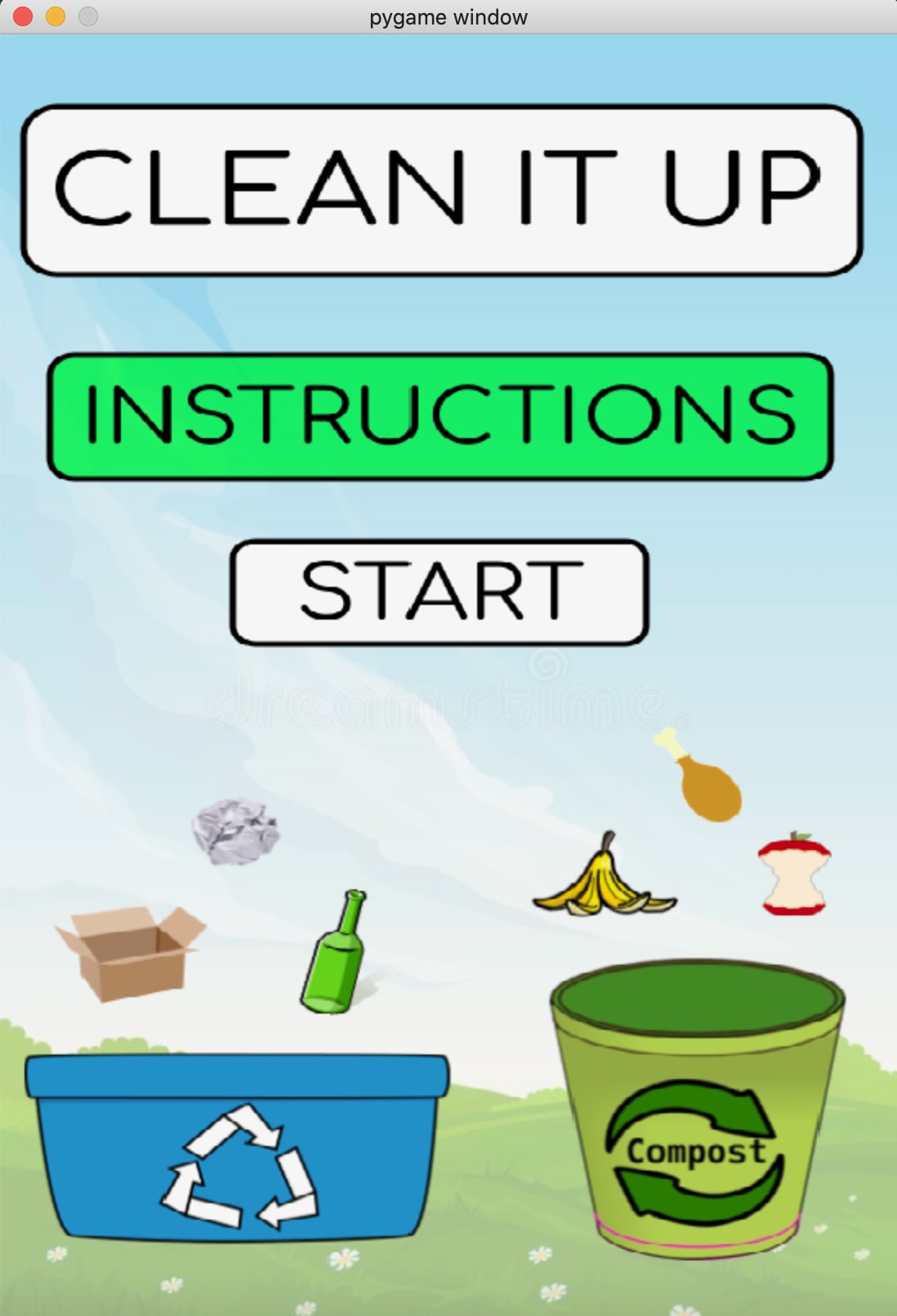
This is the start screen that is displayed when the game begins to run. Players can proceed to game or read the instructions.
-
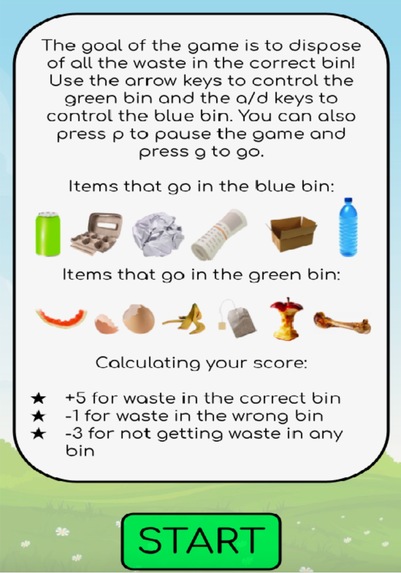
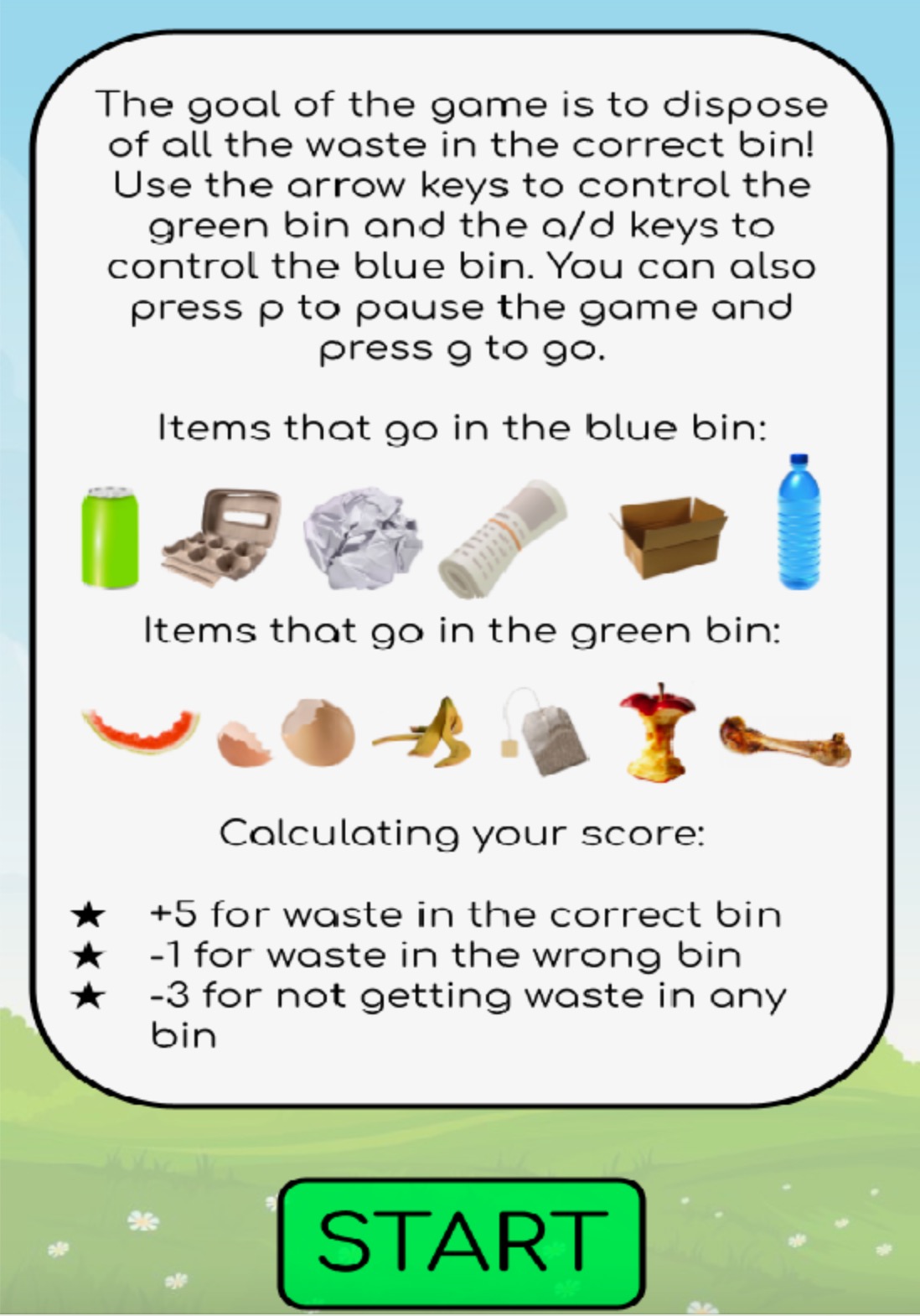
This is the instruction page which explains to users how to play the game.
Inspiration
Between the years 1993 and 2019 Greenland has lost 279 billion tons of ice per year. In the last century global sea levels have risen approximately 20 centimetres (link). From extreme weather conditions to the extinction of many species, climate change is a growing issue that needs to be solved. Issues that are this large and crucial can be very challenging for young children to comprehend. Thus we decided to create a game that allows kids to learn about taking care of the Earth in an exciting way.
What it does
Our game involves various recyclable or compostable items falling from the top of the screen. The player must strategically move the compost and recycling bins so that all items are placed in the correct disposal bin. Players gain knowledge on effective waste management through this interactive game.
How we built it
In order to build this project we broke it down into many different phases and tasks and as a team worked through each one. First the brain-storming phase, as soon as the time began we got on a call to think about what we could create that would really stand out to the judges. Then, after attending workshops and using various online educational resources, we began the development phase. We reached out to different mentors and got some positive feedback as well as constructive criticism. We then narrowed down all of the features we wanted our game to have and decided how best to execute them. We decide to use pygame to create this game. Python is the language the majority of our group was most familiar with so with such little time it was an easy choice. We split up tasks such as graphic design, functions, object oriented programming, and the main code combining all these elements. Each team member individually completed their tasks and together we worked on making the game run smoothly.
Challenges we ran into
Throughout our hack there were many different challenges that we faced and overcame as a team. Firstly, our different skill and experience levels. As a collective, we are all beginners in the field of coding. This was our first hackathon and we were quite nervous and unsure what to expect. Some of our team members were more knowledgable in certain areas than others in coding, which presented a challenge but we ended up using it to our advantage when dividing tasks. Another challenge was time management and meeting deadlines. There were also challenges that arose while coding where we ran into dead ends. We worked together to come up with solutions and get our code to run effectively.
Accomplishments that we're proud of
There is so much to be proud of coming out of this experience. This was something that was brand new to all of us, and we had no idea if we would be able to produce a final product that we were proud of in such a short amount of time. To be able to say we designed, developed and debugged a whole game from scratch within 38 hours is a major accomplishment. Also the message behind our project is one that we all stand behind and think is extremely important to pass on to others.
What we learned
We learned about effective teamwork, time management, and explored the world of programming. Throughout the process, we had to split up the work and work together to achieve a common goal. This taught us how a team should work together. We had to make sure we met deadlines and were on task as well as attended the various events throughout the weekend. We learned a lot of new information as programmers. We worked with new languages and implemented new concepts.
What's next for CLEAN IT UP
We want to continue informing the young generation about environmental issues and how we can solve them. The informative game we created is just the first step in creating a sustainable Earth. In this specific game, we tackle waste management. There are many other topics we can cover in the future such as pollution, climate change, endangered species and more.


Log in or sign up for Devpost to join the conversation.