

Inspiration
A few days after the hackathon started I was in my university waiting for my first class of the semester to start. Then a lecturer entered and started discussing about electric grids and the complex system which gives us the convenience of electricity at our ports 24/7. Initially I was confused as it had nothing to do with my course but I found it more interesting than my actual course. Later though it happened to be a confusion and my course faculty came but that small mistake that day did motivate me to work on this project.
What it does
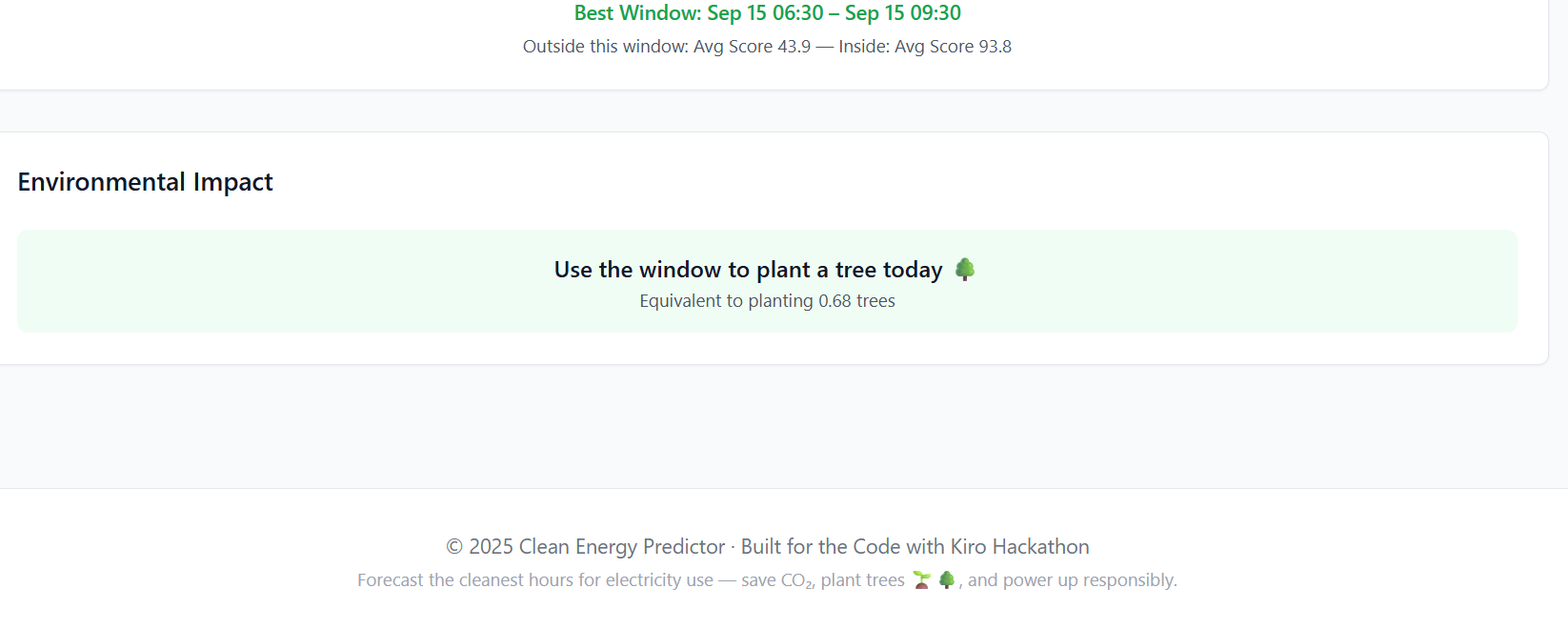
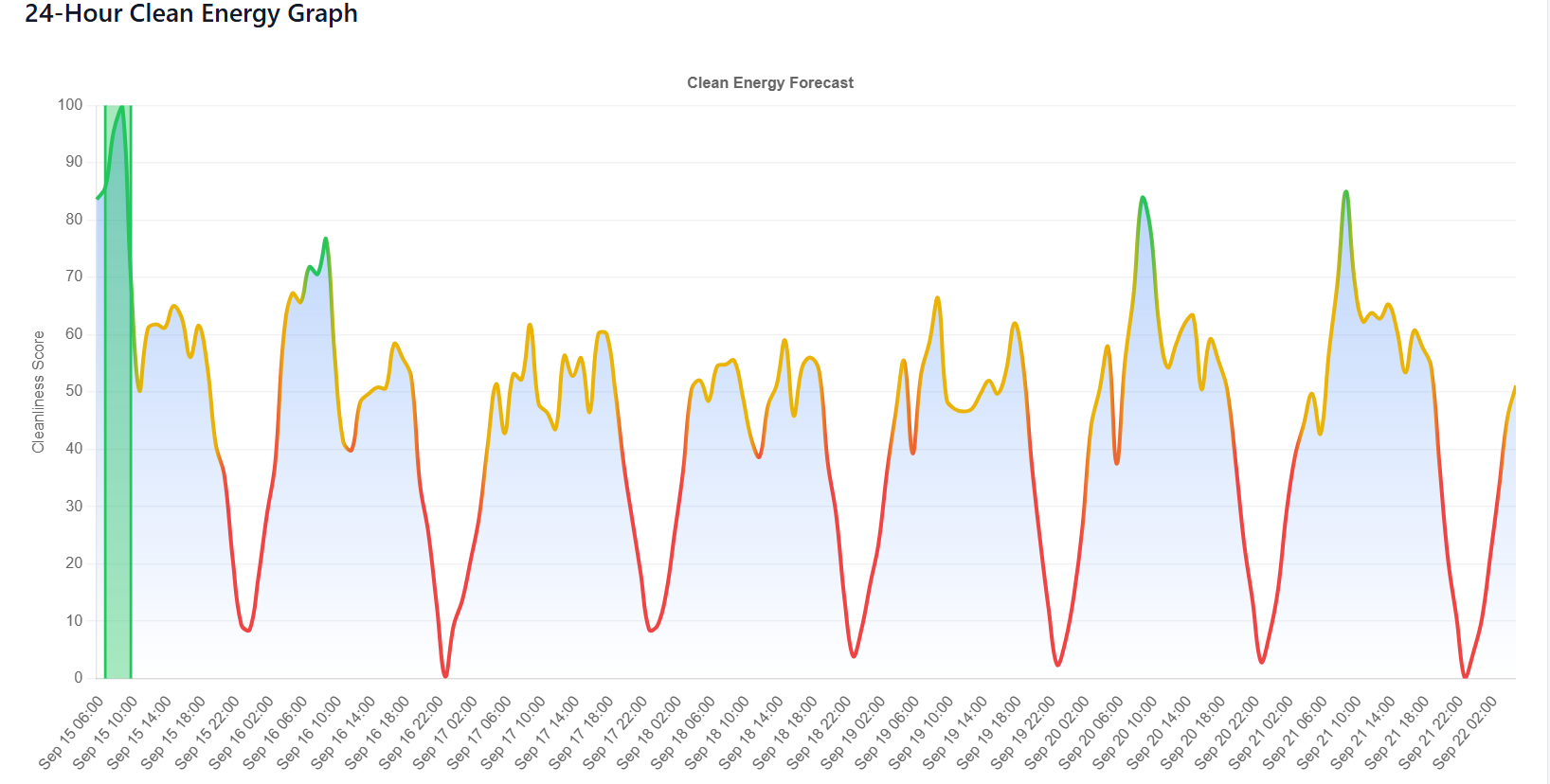
This project is about choosing a specific time period within a day which generates the cleanest energy. It based on the concept that the electricity coming to our plug points in homes is generated from many different sources both renewable and non-renewable. And at some points of time when huge amount of renewable energy is generated the current at our ports also has high clean energy. The project is just about predicting that and then accordingly scheduling non critical tasks to maximize clean energy usage.
How we built it
- Data Collection
- Historical carbon intensity data from public grid APIs.
- Weather data from open meteorological APIs to capture renewable generation patterns.
- Historical carbon intensity data from public grid APIs.
- Model Training
- Used XGBoost for time‑series prediction of carbon intensity.
- Features included hour of day, day of week, and weather variables.
- Used XGBoost for time‑series prediction of carbon intensity.
- Backend
- Implemented in FastAPI.
- Endpoints for predictions and data visualization.
- Served model outputs in JSON for frontend consumption.
- Frontend
- Built with React + Vite.
- Displays a timeline graph with green highlights for the cleanest window.
- Allows users to input city and task duration.
Challenges we ran into
I didn't face as many challenges with Kiro to do most of the heavy lifting until my vibe requests ran out but the biggest one was the lack of grid data to work with and integrating many different parts to create the data. Another challenge was the error fixing which was very painful to do without Kiro's chat window as I had exhausted the free tier requests.
Accomplishments that we're proud of
Being completely new to web application development and the lack of required data, I am happy that I could complete the application to what I actually had in mind. Though I had many other things to add I am satisfied with the progress we made.
What we learned
Through out this project the thing I learned the most is how leveraging AI development tools like Kiro can accelerate the development process substantially. I also learned parts of many things like web application development, APIs, deployment which I didn't knew earlier.
What's next for Clean Energy Predictor
Integrating actual grid data could massively improve the performance of the model. Trying some other algorithms and adding some more features is definitely in mind. Integration of smart IOT devices could help users simply schedule it and the start and end of the task can be done automatically without manual check is something I hope for as it would motivate more people to use it as a tool for sustainability.

Log in or sign up for Devpost to join the conversation.