Inspiration
There are a lot of TransJakarta bus stations in Jabodetabek. When we go to PIK Avenue, we often see people lining up to go on the bus. We often see it but never thought about it as a health problem. We always thought it is just where people wait.
Thats when we researched about this. Roadside PM2.5 in Jakarta averages around 92 µg/m³ on weekdays. The Jakarta average is 42.5 µg/m³. The WHO recommends it to be 2.5µg/m³-5µg/m³.
So the people waiting at a halte are breathing roughly eighteen times the WHO guideline, and about double the city average, because a bus stop sits exactly where the exhaust comes from.
And they are not passing through. Commuters wait twenty minutes twice a day. Street vendors work beside the road for eight hours. Ojek drivers park there. A 2023 study by Vital Strategies and the DKI Jakarta Environment Agency estimated air pollution contributes to over 10,000 deaths a year in Jakarta, with an economic cost around USD 2.94 billion, roughly 2.2% of the city's GDP.
We wanted to fix the place, not tell people to avoid it.
What it does
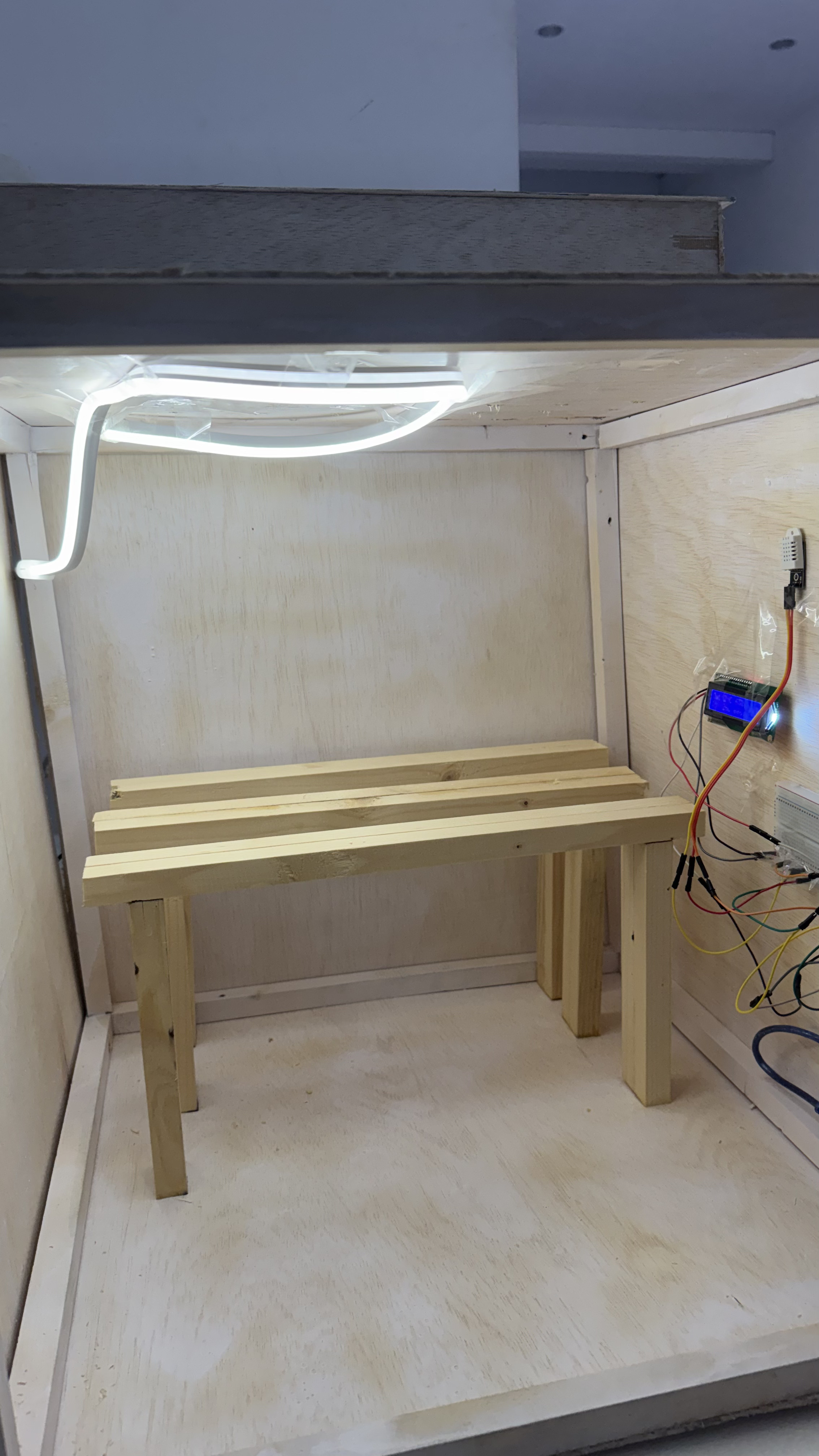
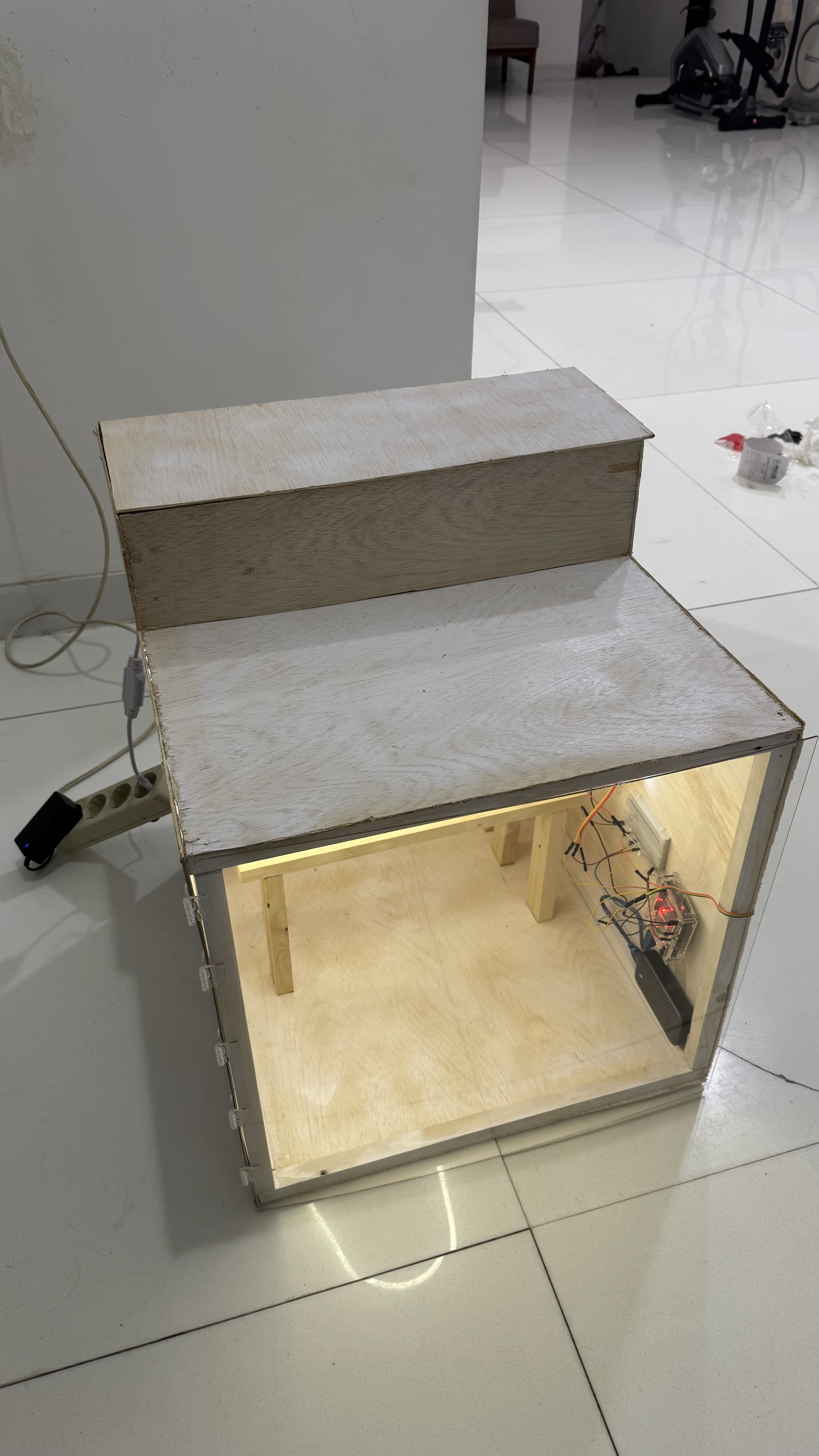
Clean Air Bus Stop is a closed bus stop. Filtered air is pushed in from the roof, which keeps the inside at slightly higher pressure than the street. When the pressure exceeds the one from the street, air always flows outward from the back, so polluted air cannot get in.
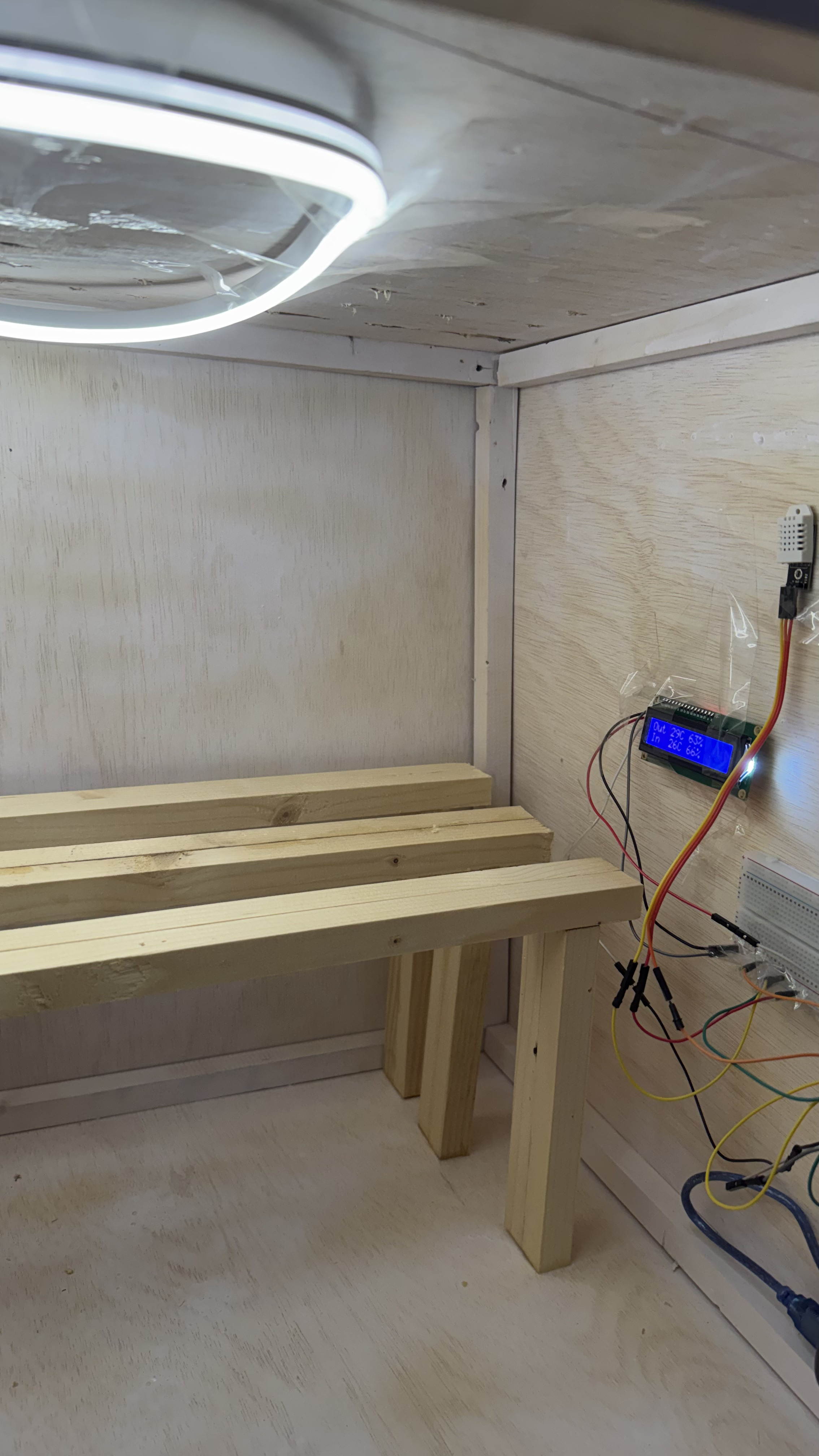
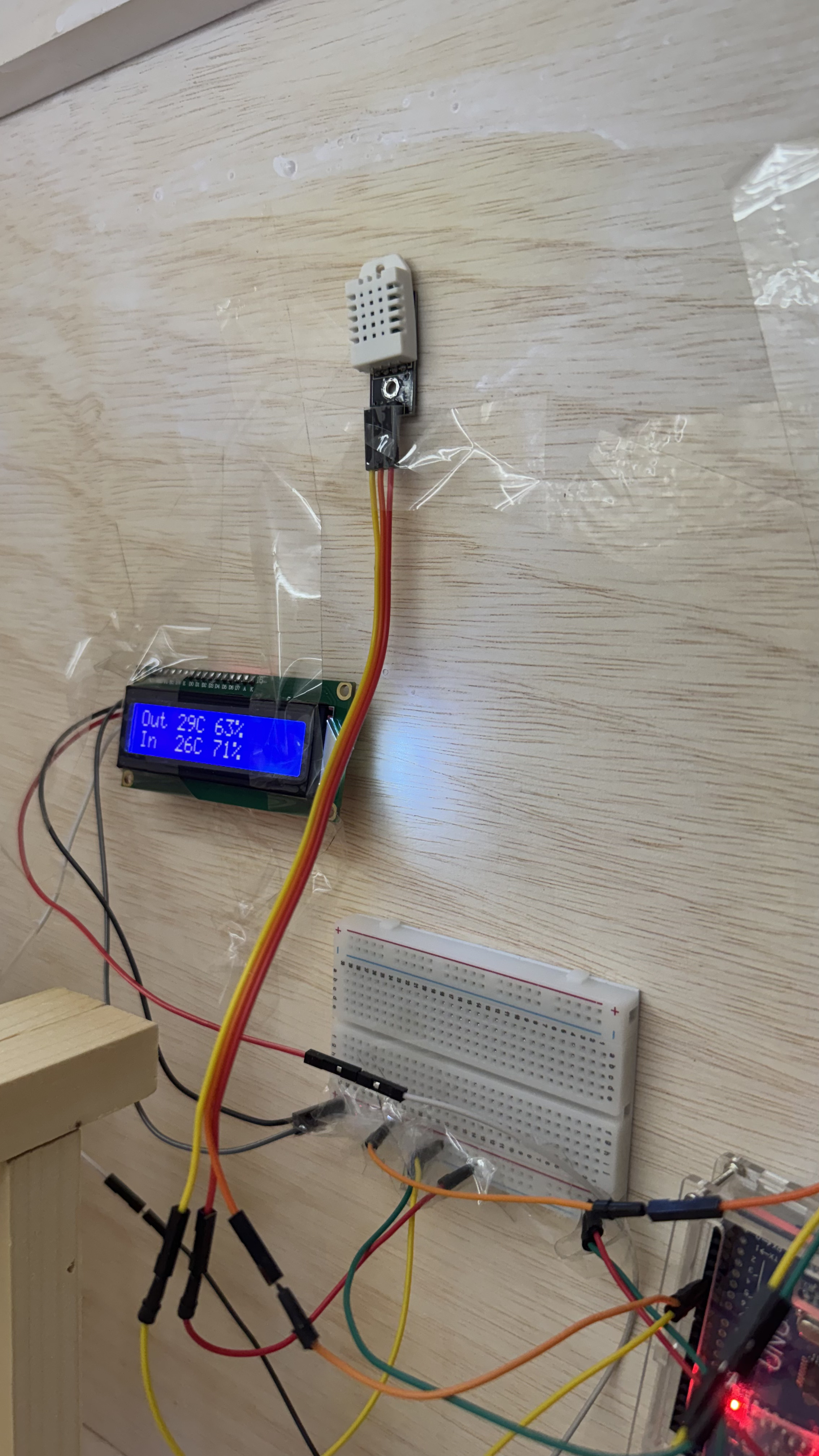
A live display shows conditions inside and outside so waiting passengers can see the difference of the temperature and humidity inside and outside.
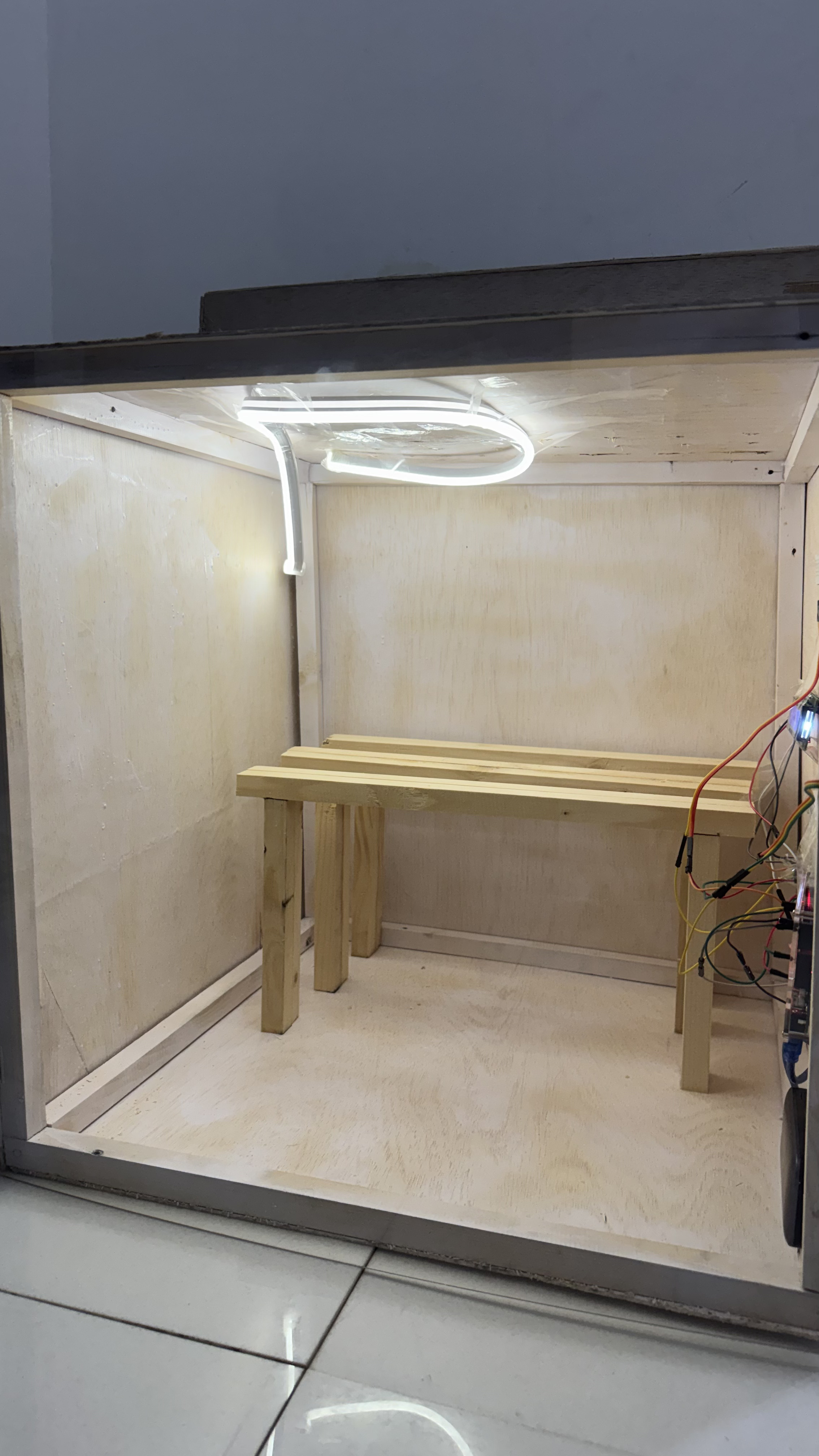
We built a 1:4 scale working prototype — 50 × 50 × 50 cm — with a full-scale design and costing behind it.
How we built it
We used these to build it:
- Wood planks
- Wood sticks
- Arduino Uno
- Temperature Sensor
- Led Strip
- Jumper wires
- Acrylic sheet
- 12V Fan
- Mini blower fan
- Nails
- Super glue
Here's how we built it:
- We first placed the frames in form of a cube, then glued everything and nailed the edges so they all connect.
- We then put on the planks and the acrylic door in front of it.
- We then built a smaller rectangle on top for the fan to blow inside the cabin, which has been filtered with a hepa filter.
- We then connected the temperature sensor and and the lcd screen to the arduino, before uploading the code to it.
- We then stuck the led strip which makes the cabin brighter at night.
The problems we faced in the beginning
Our first idea was obvious: put an air filter in a bus stop.
It does not work.
An open shelter exchanges air with the street far faster than any fan can clean it. Put a purifier in an open bus stop and you are not filtering the shelter - you are trying to filter the entire road, but fail.
Challenges we ran into
- We were about to use dust sensors to know the pm2.5 inside and outside at first, but it nearly ended the project. The thing kept giving us randomized data, so we decided to not use it completely, and also the Arduino can't handle 2 dust sensors at the time.
Thin stranded and also the jumper cable wire will not stay in a breadboard. Our readings would work for a few seconds and then collapse. Quick-connect terminal blocks solved what an hour of re-seating wires could not.
The Arduino IDE. Our macOS version could not upload it, because of cpu not supported. We were wondering why, and after some research we tried installing Rosseta 2 and everything fixed.
What we learned
Evaporative cooling does not work in Jakarta. We considered it early. At 70–85% relative humidity, it will barely cool anything, and it adds moisture to already-saturated air.
Sealing creates a thermal problem. Our sealed cabin runs warmer than ambient because the electronics and fan generate heat with nowhere to go. This is a real tradeoff of the design, not a build defect. A full-scale unit needs active cooling, though a smaller unit than an open shelter would, because it is not constantly cooling incoming street air.
Built With
- arduino
- fan
- lcd

Log in or sign up for Devpost to join the conversation.