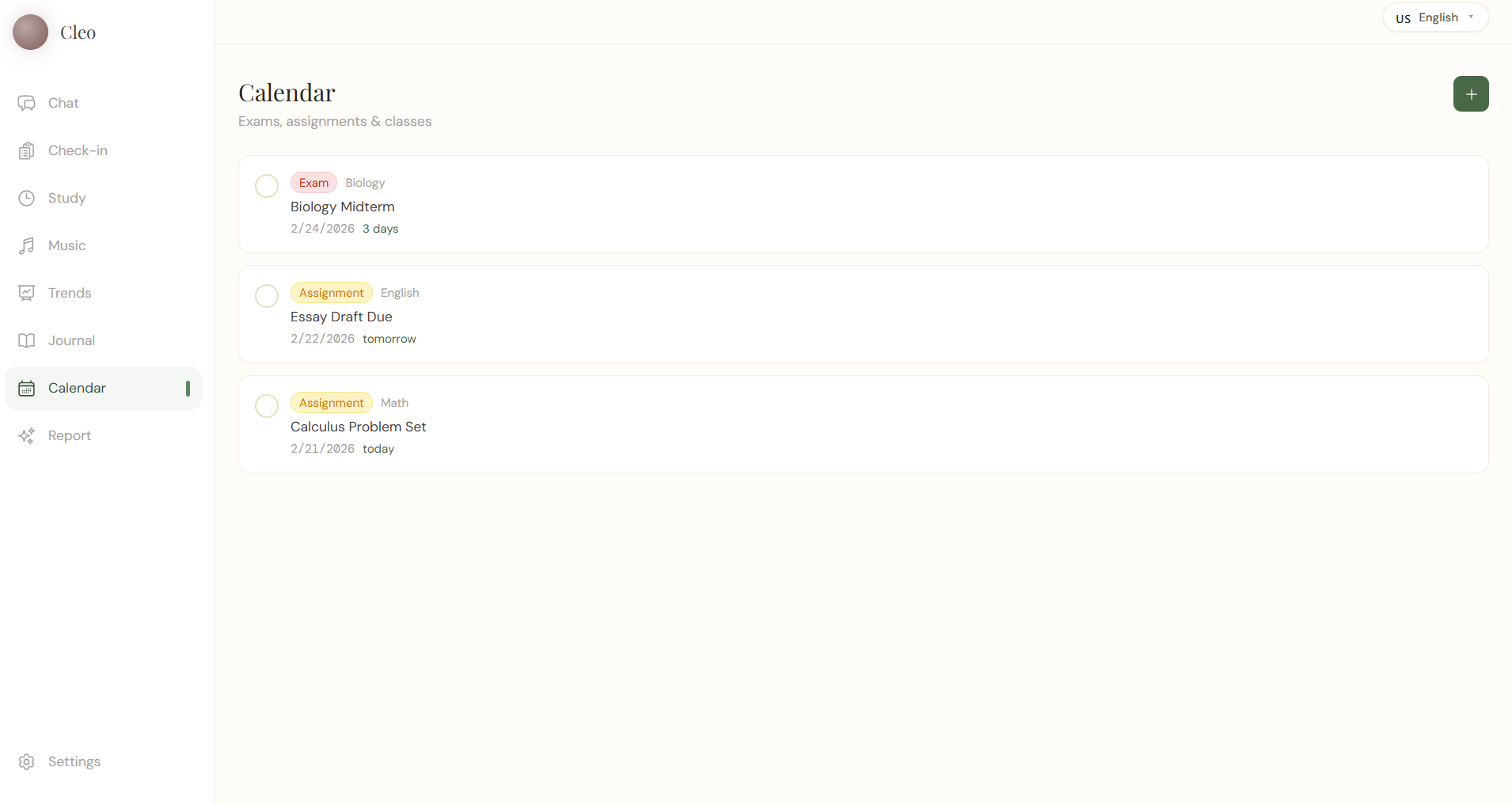
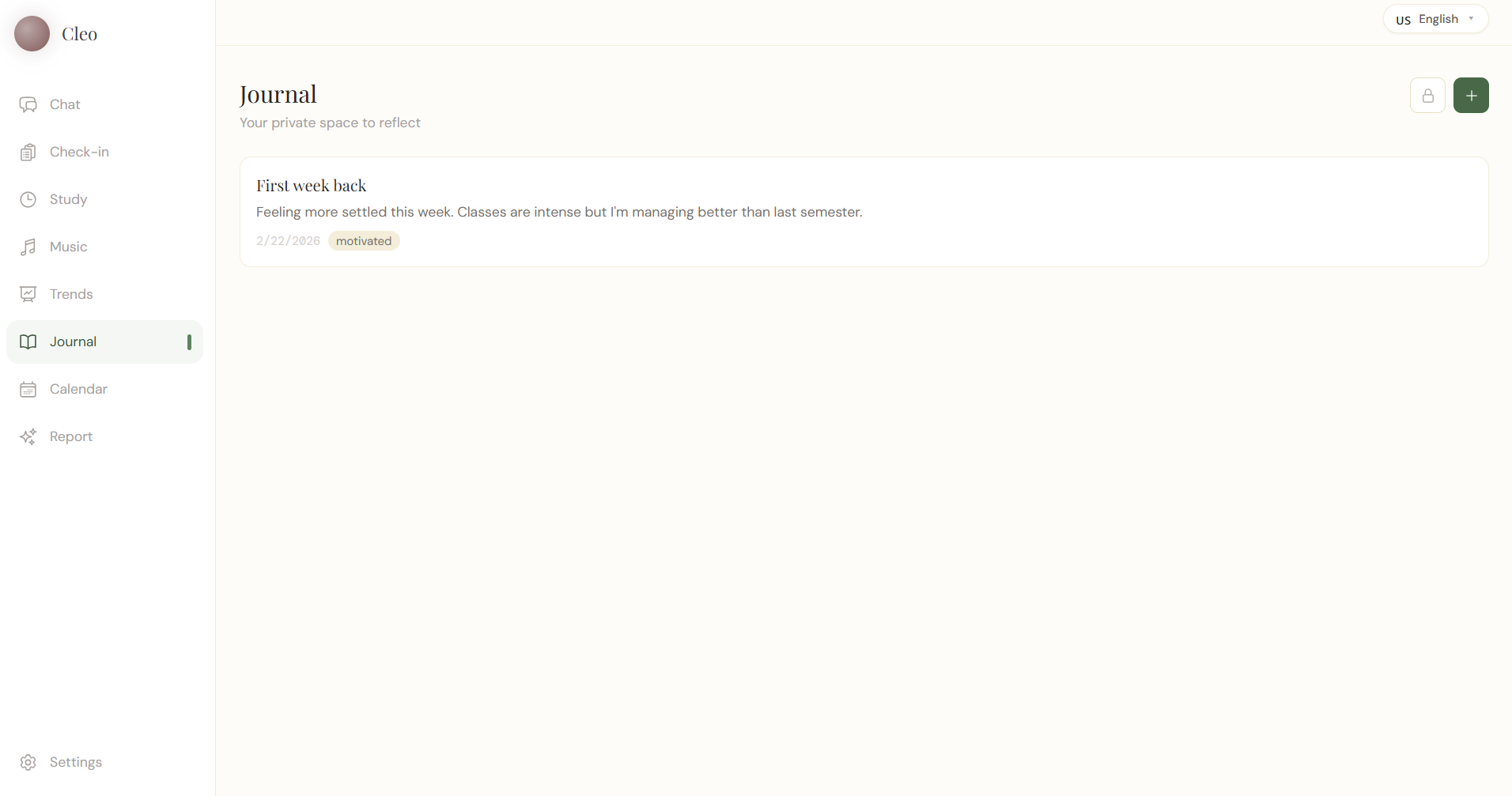
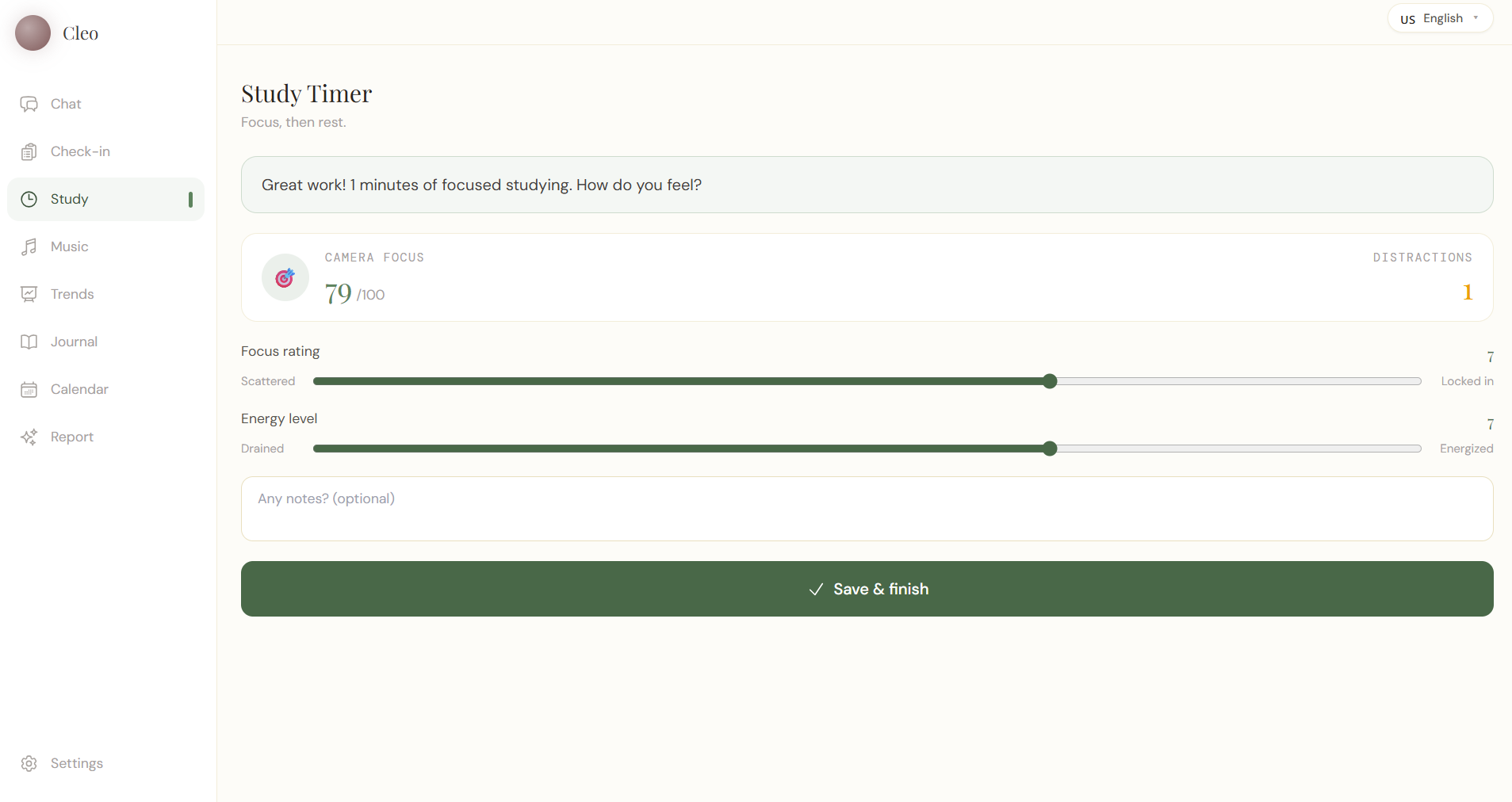
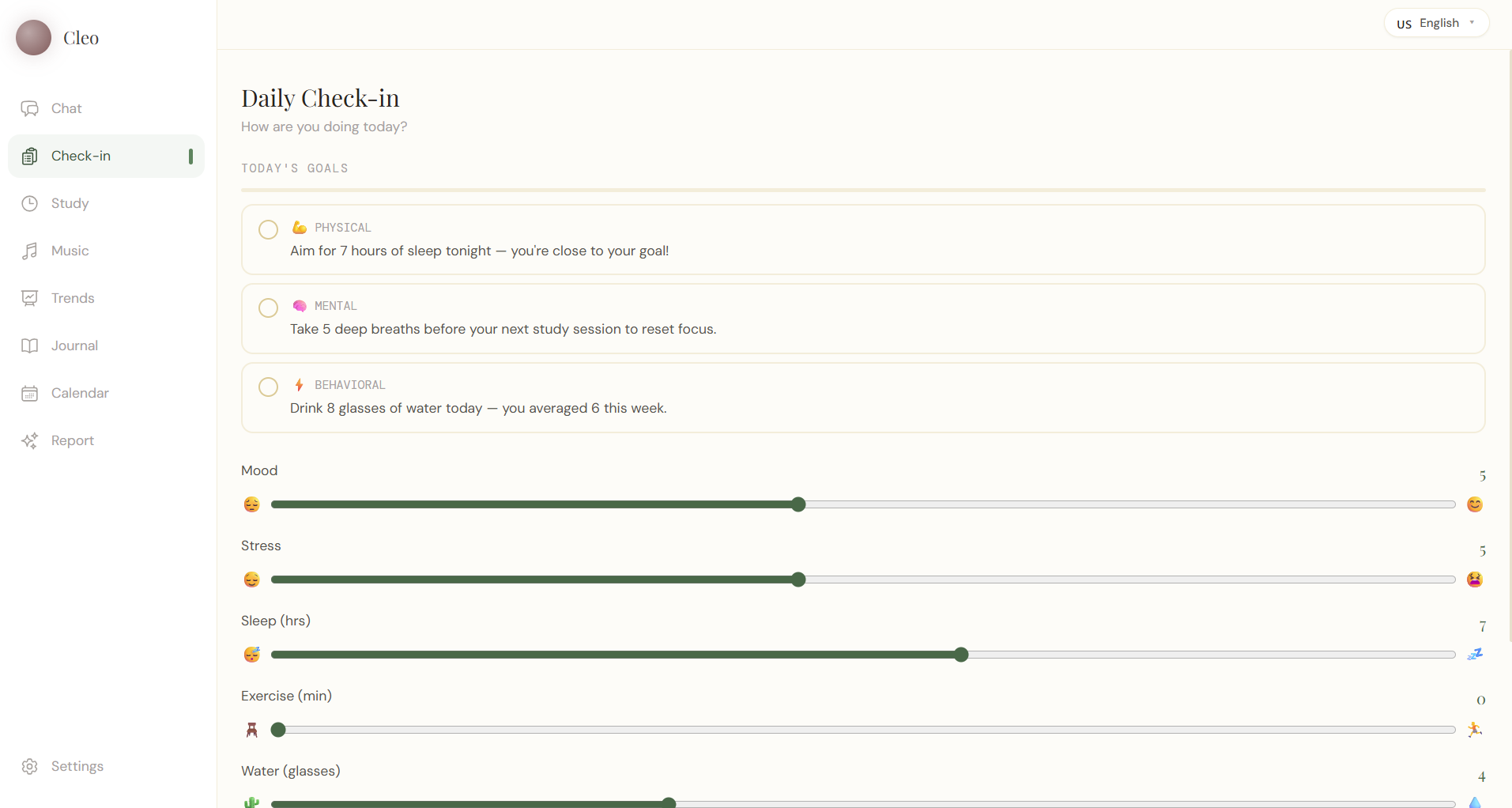
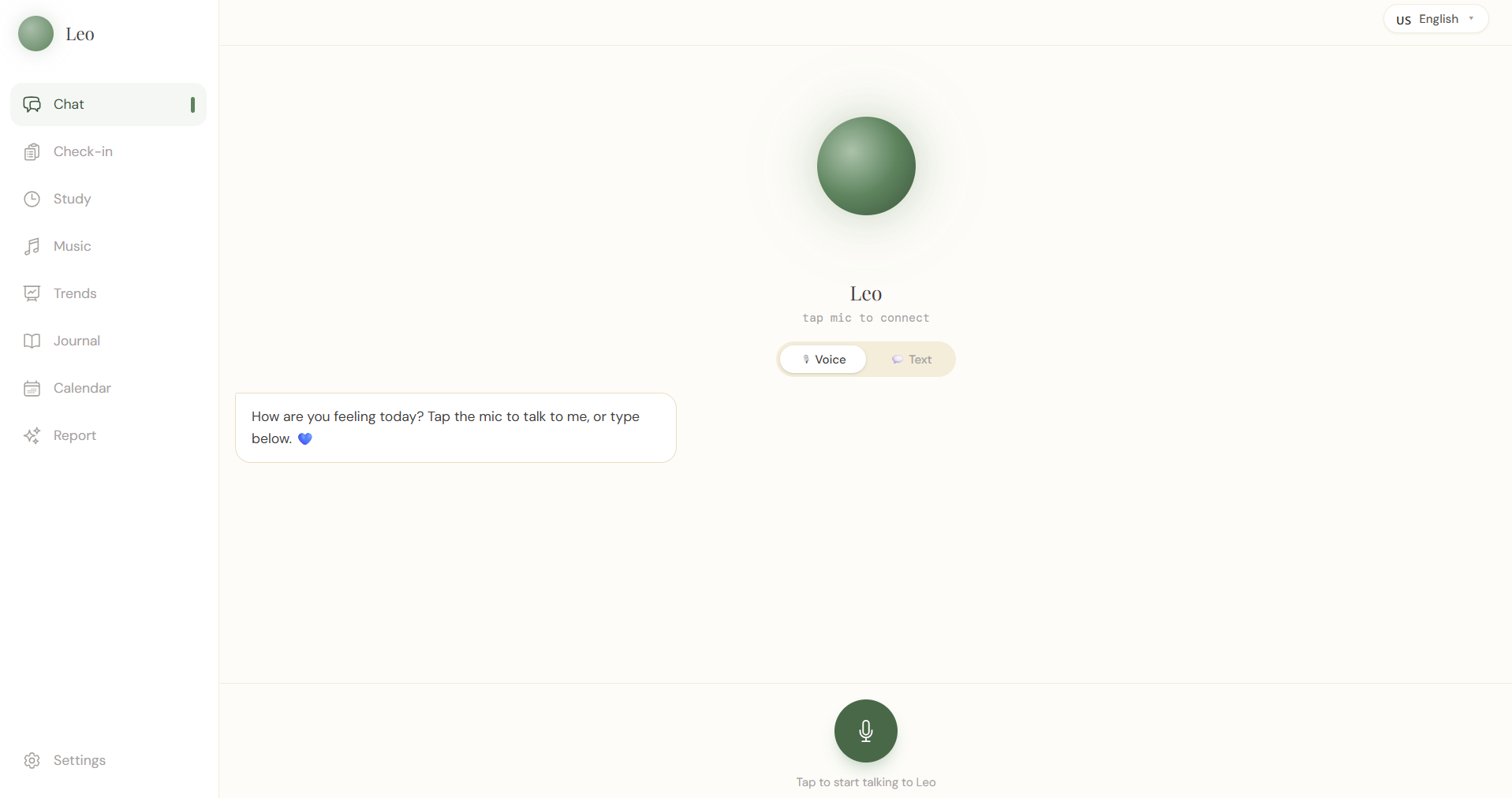
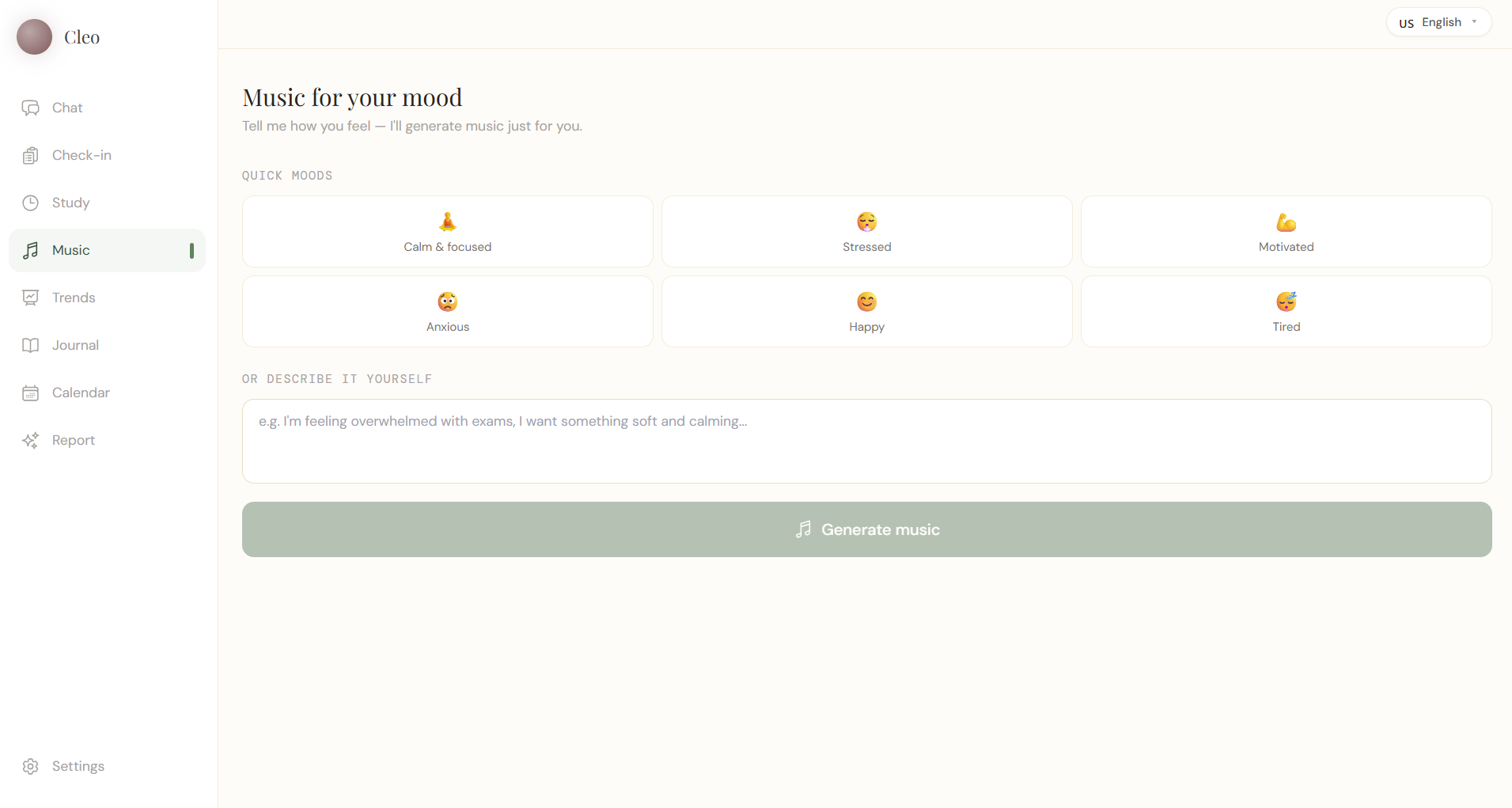
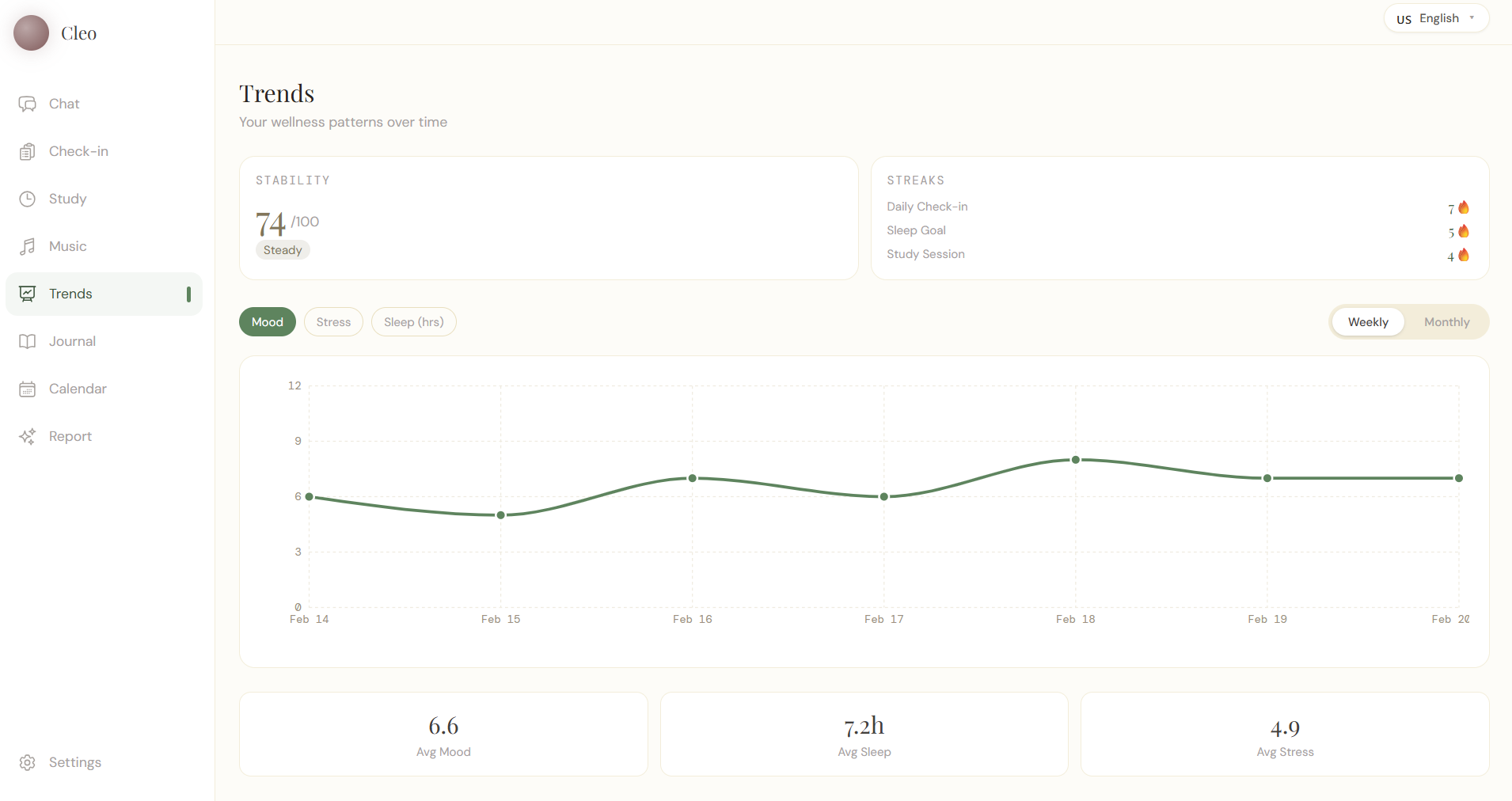
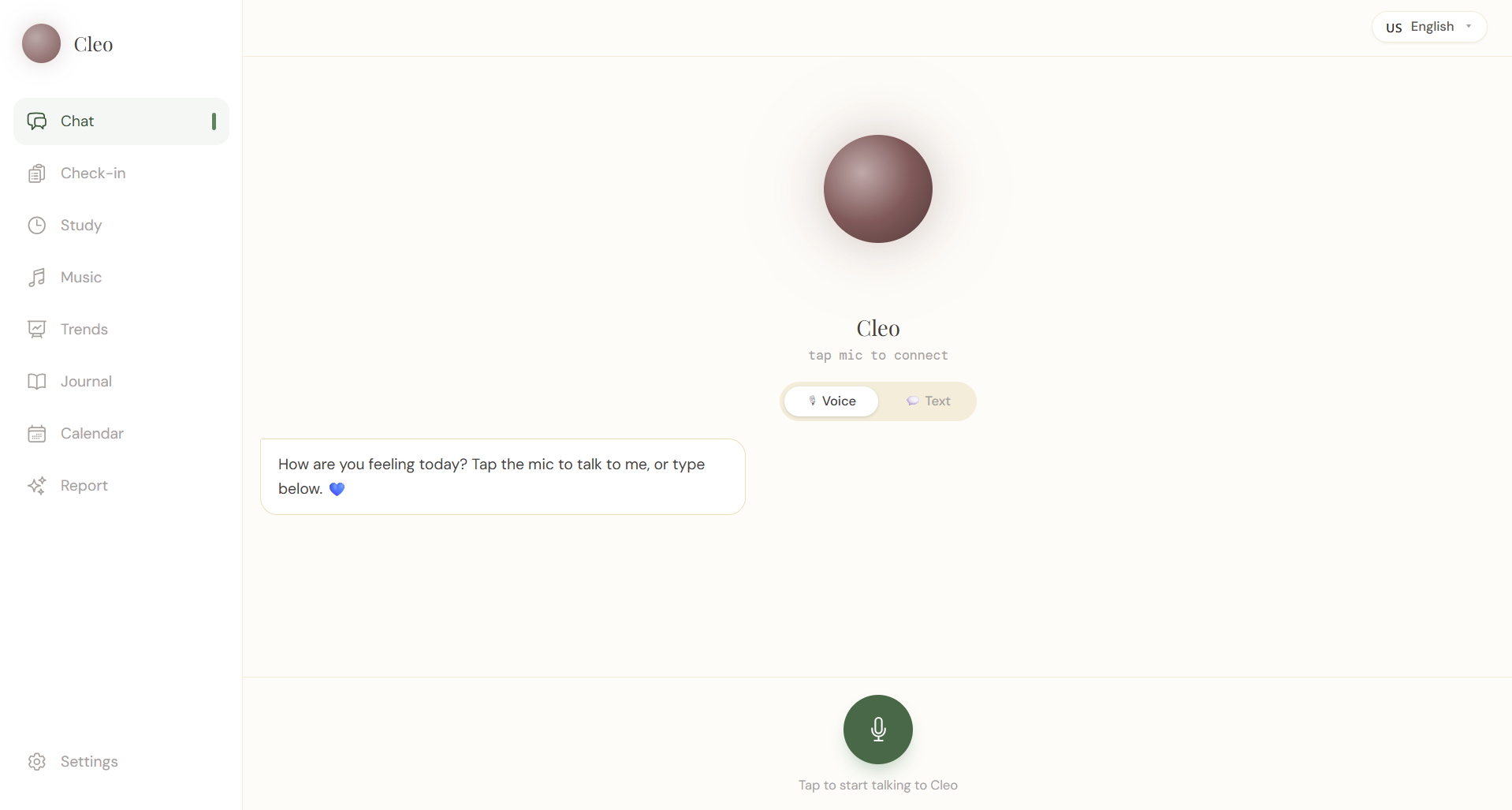
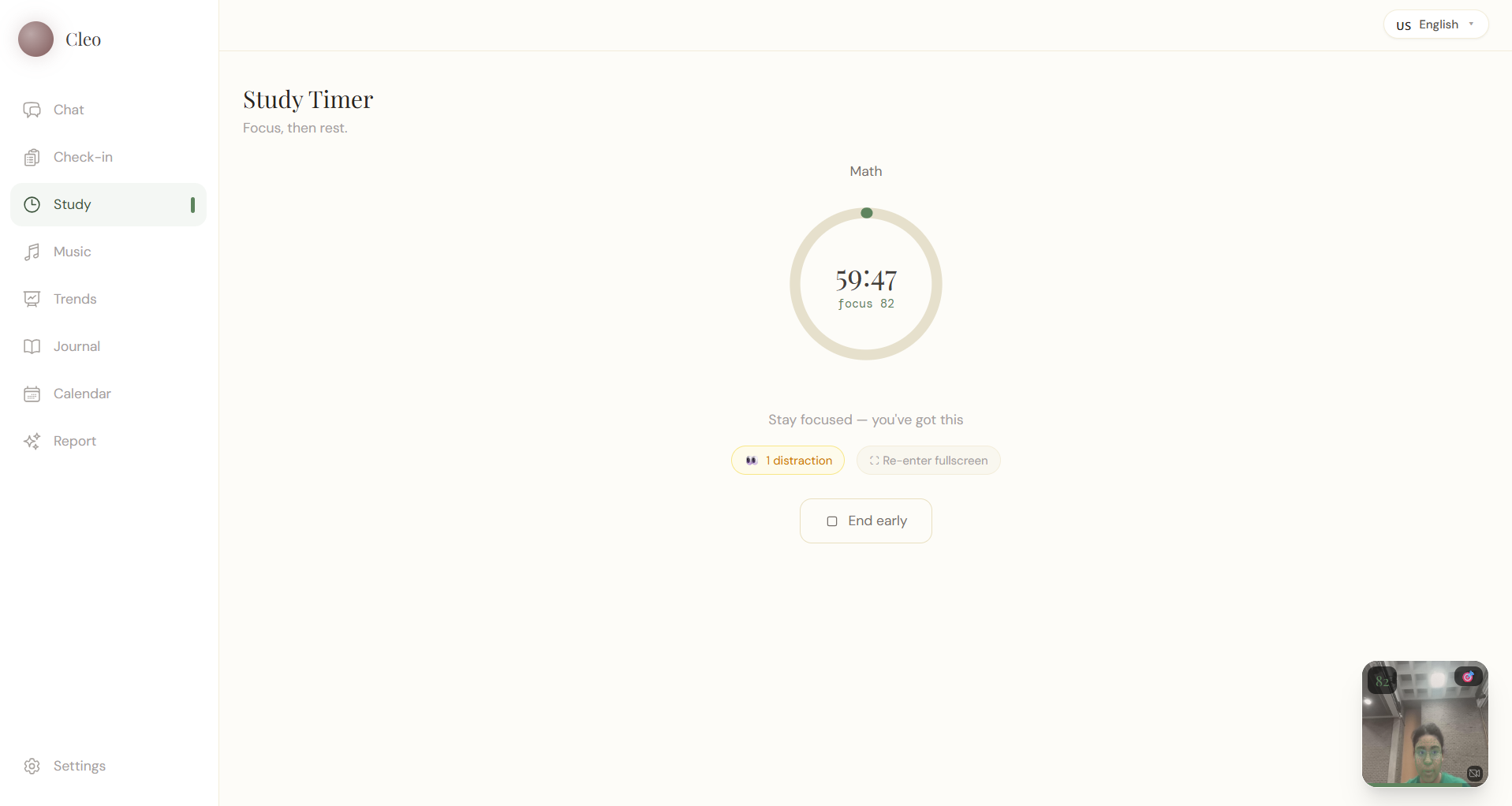
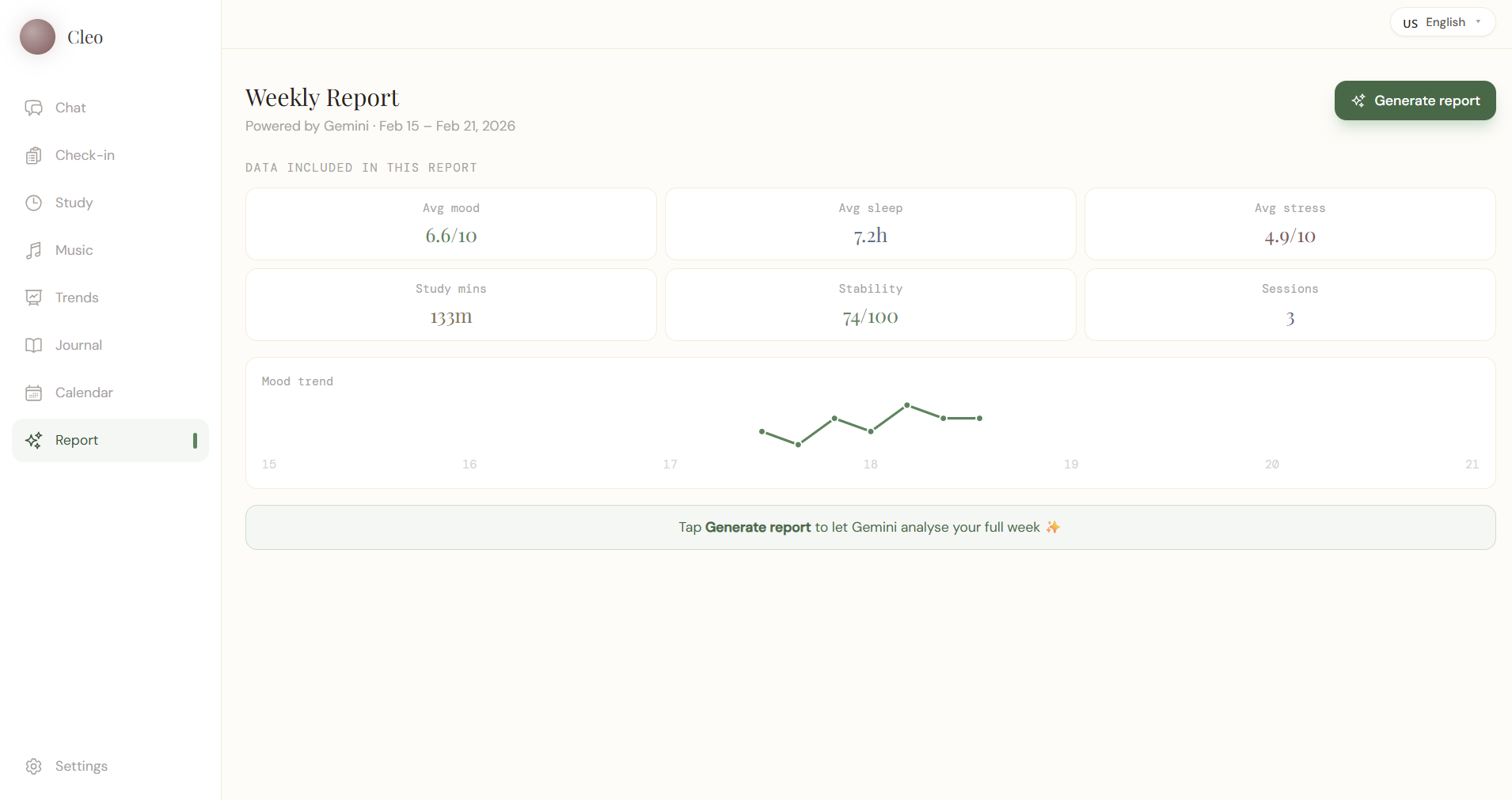
Undergraduates experience three mounting pressures: academic overload, emotional fluctuations, and unreliable support. They juggle exams, new environments, cultural adjustments, language challenges, and personal responsibilities, all managed across various apps. CLÉ-O is a unified well-being and productivity AI companion for students navigating academic pressure, emotional turbulence, and fragmented digital tools. It integrates mood tracking, stress signals, study capacity modeling, personalized music generation, multilingual emotional AI chat, calendar intelligence, and a private journal, creating a single, adaptive system that understands a student’s current state and guides their future. Universities gain a scalable retention tool. Students gain daily stability, emotional safety, and the structure needed for long-term growth.
We developed CLÉ-O using a combination of generative AI APIs and structured data modeling. ElevenLabs powered voice generation for our chatbot and study session music features, making interactions more engaging. Gemini provided structured weekly performance reports, turning user activity into actionable insights. During development, Anthropic (Claude) supported code debugging and optimization, allowing us to iterate quickly while maintaining system reliability.
We integrated mood tracking, stress signals, and calendar intelligence to create a unified adaptive system that responds in real time to a student’s current state. The system prioritizes privacy, personalization, and scalability to support both individual users and institutional needs.
Building CLÉ-O taught us how to integrate multimodal data, such as mood inputs, calendar events, and interaction signals, into a unified adaptive system, and how to design emotionally responsive AI models that balance personalization, privacy, and real-time decision-making while maintaining system scalability and reliability. Along the way, we faced several challenges, including ensuring consistent outputs from Gemini for weekly reports, integrating multiple multimodal data streams into a single adaptive model, balancing AI personalization with sensitive user privacy, optimizing real-time voice responses from ElevenLabs without latency, and coordinating development under tight hackathon time constraints. Despite these obstacles, the team successfully created a functional prototype. Future additions could include voice-based emotional analysis and AI-driven peer study matching to enhance both personalization and community support, as well as predictive analytics to allow CLÉ-O to anticipate academic risk and intervene before performance declines, demonstrating how an AI companion can support both student well-being and academic productivity.
Built With
- api
- css
- facemesh
- gemini
- html
- javascript
- python


Log in or sign up for Devpost to join the conversation.