-
-
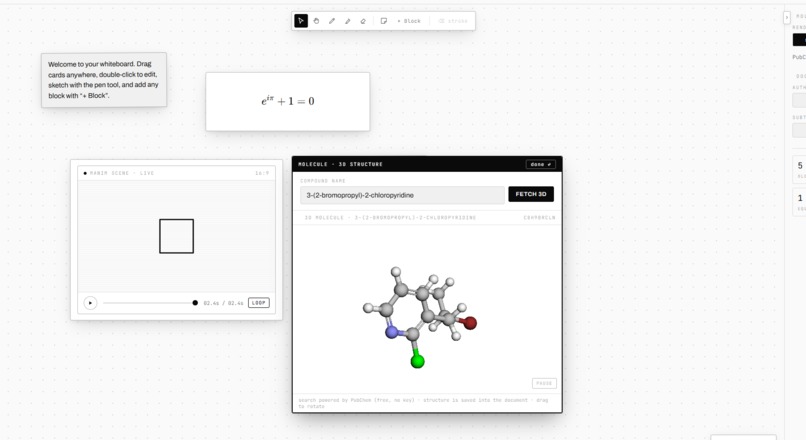
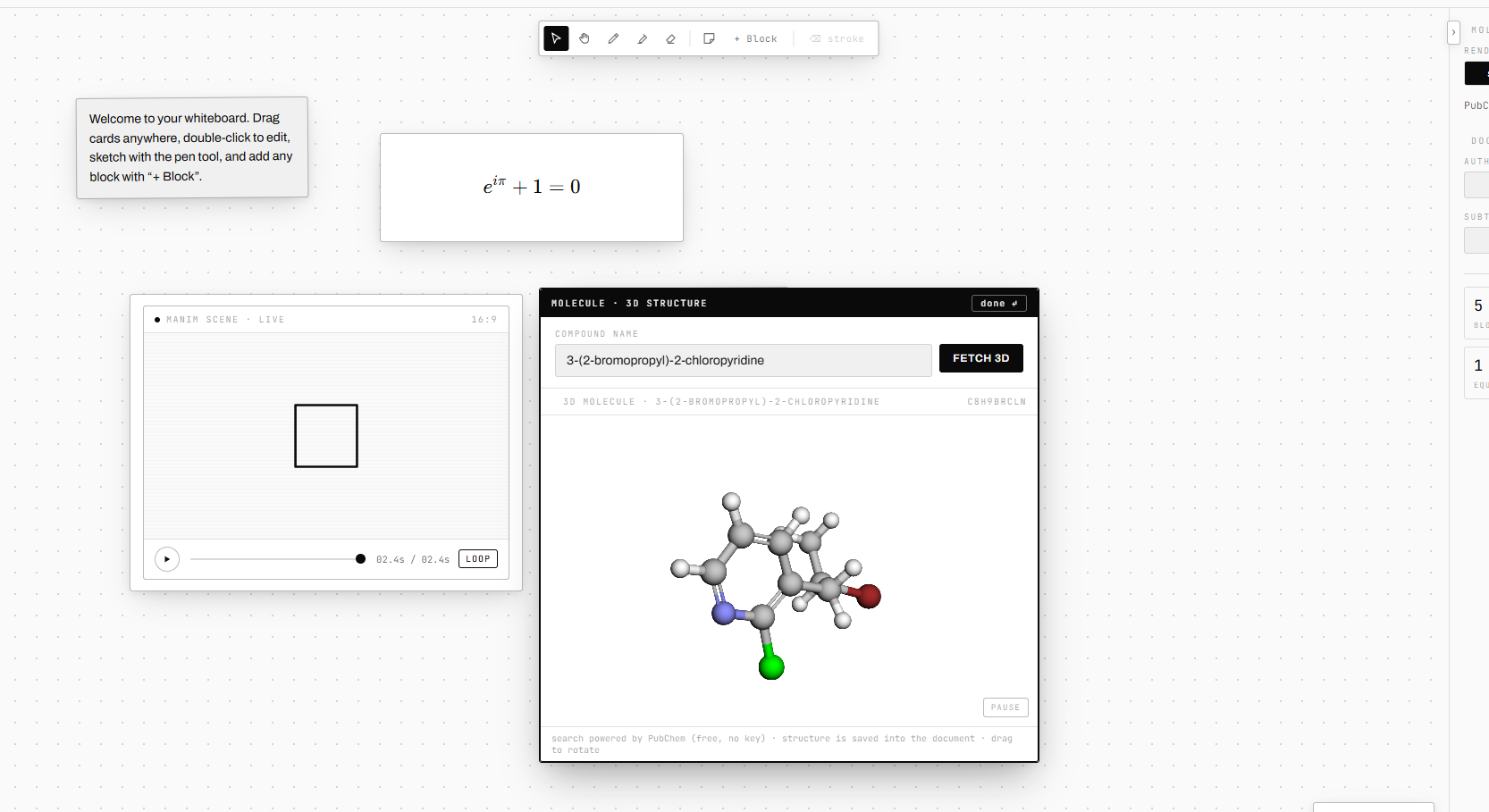
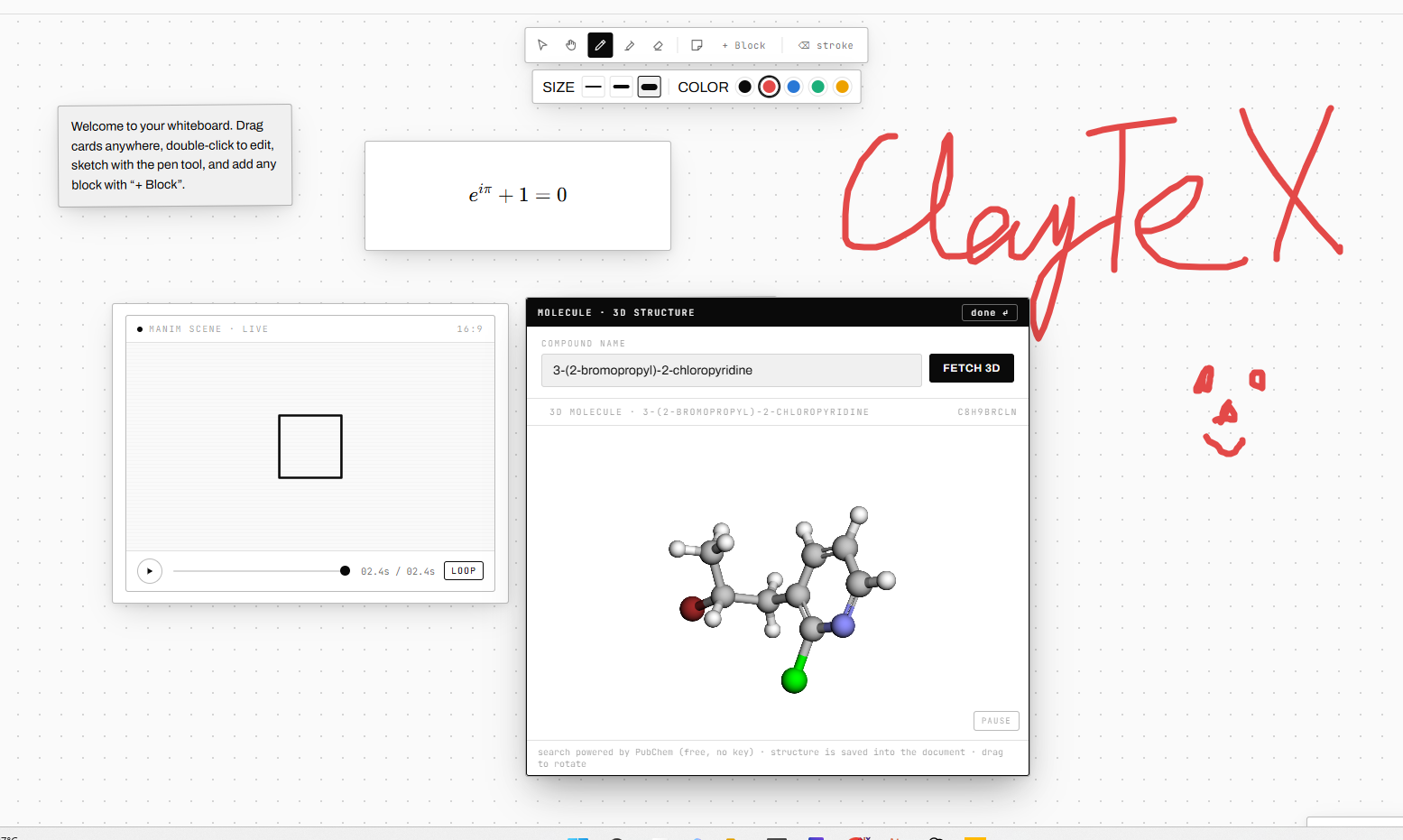
Show 3d Chemicals bonds
-
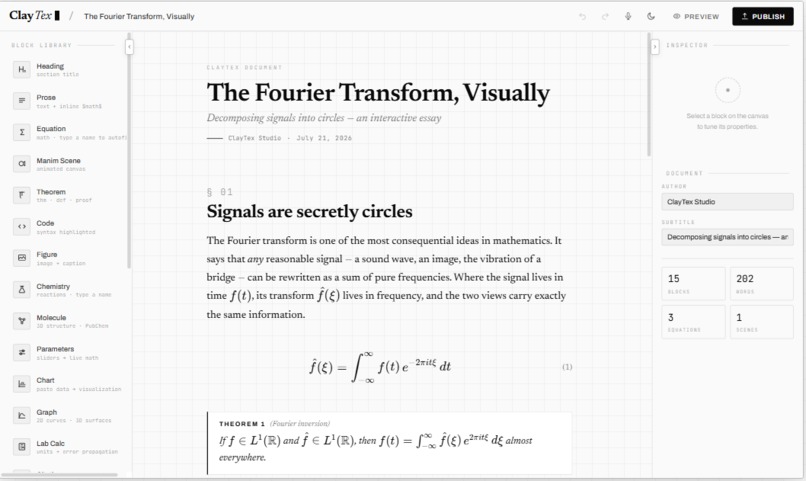
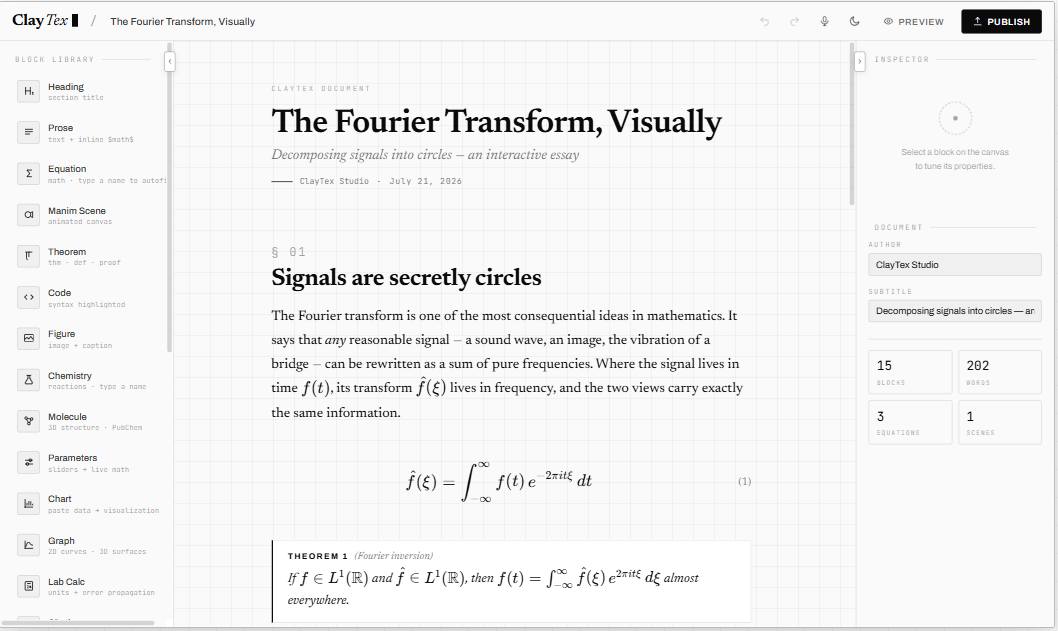
The Science Editor
-
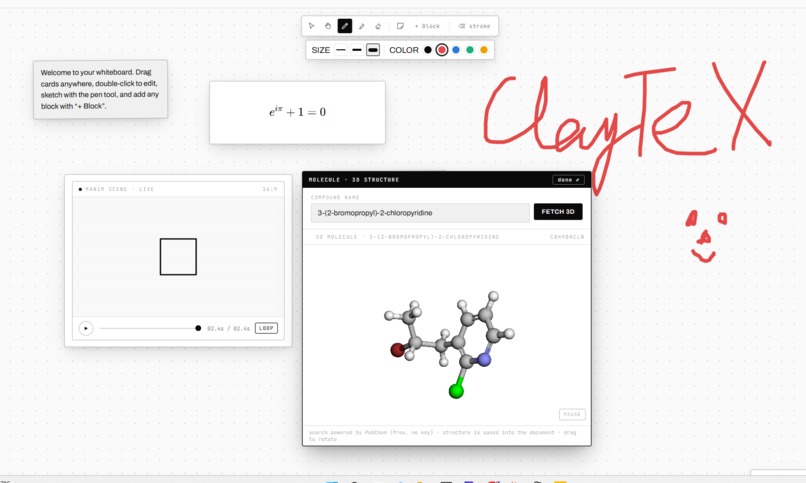
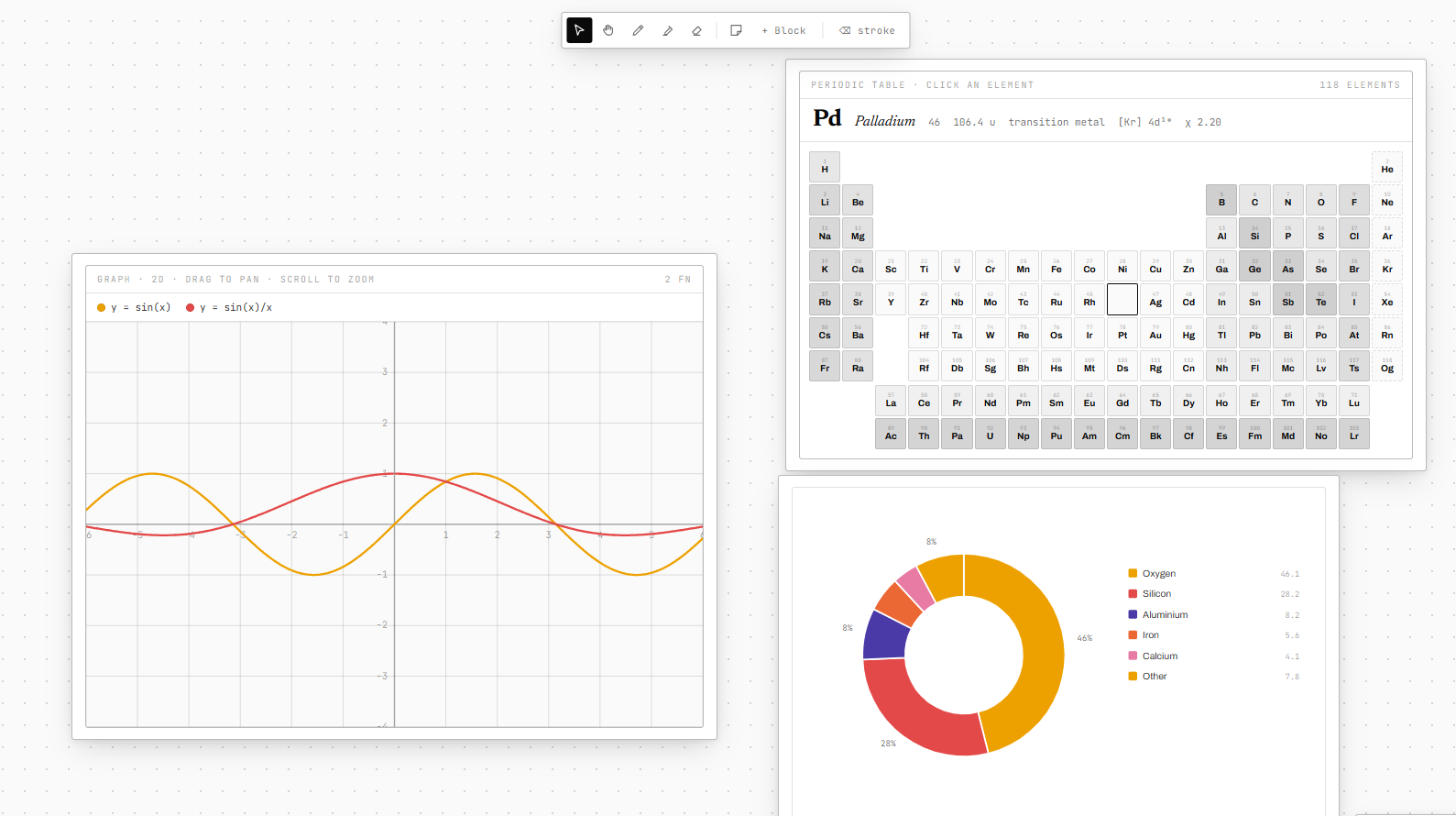
Use as whiteboard
-
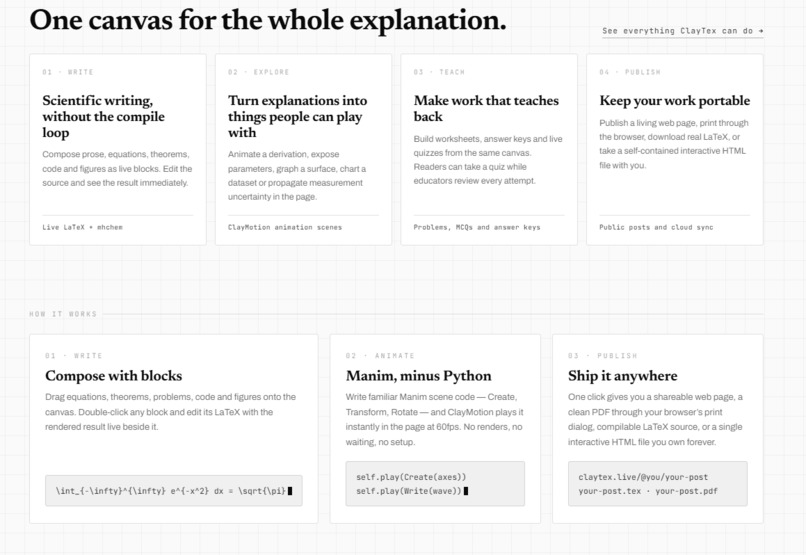
Demos
-
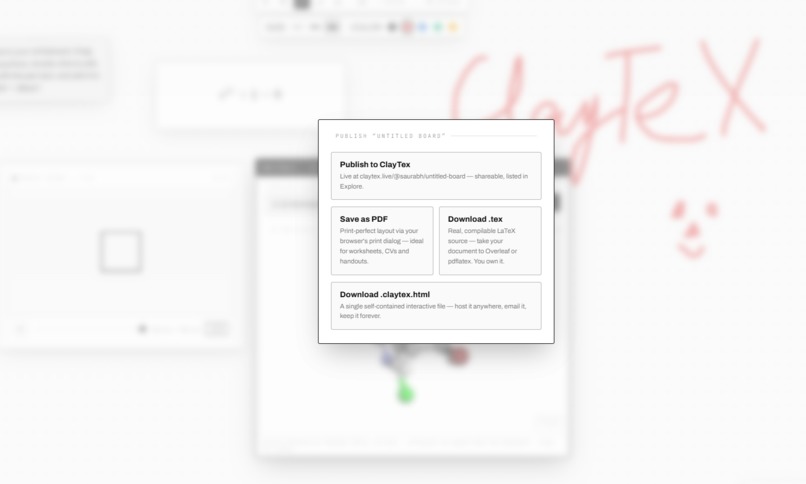
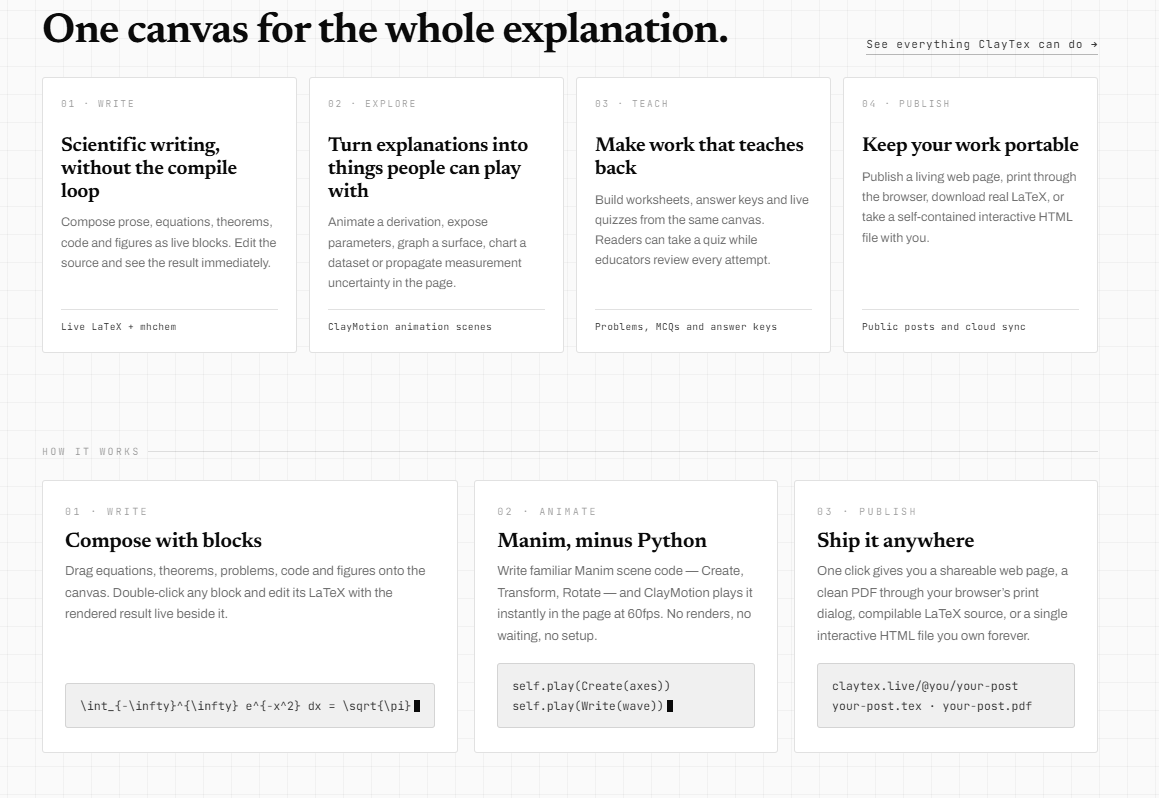
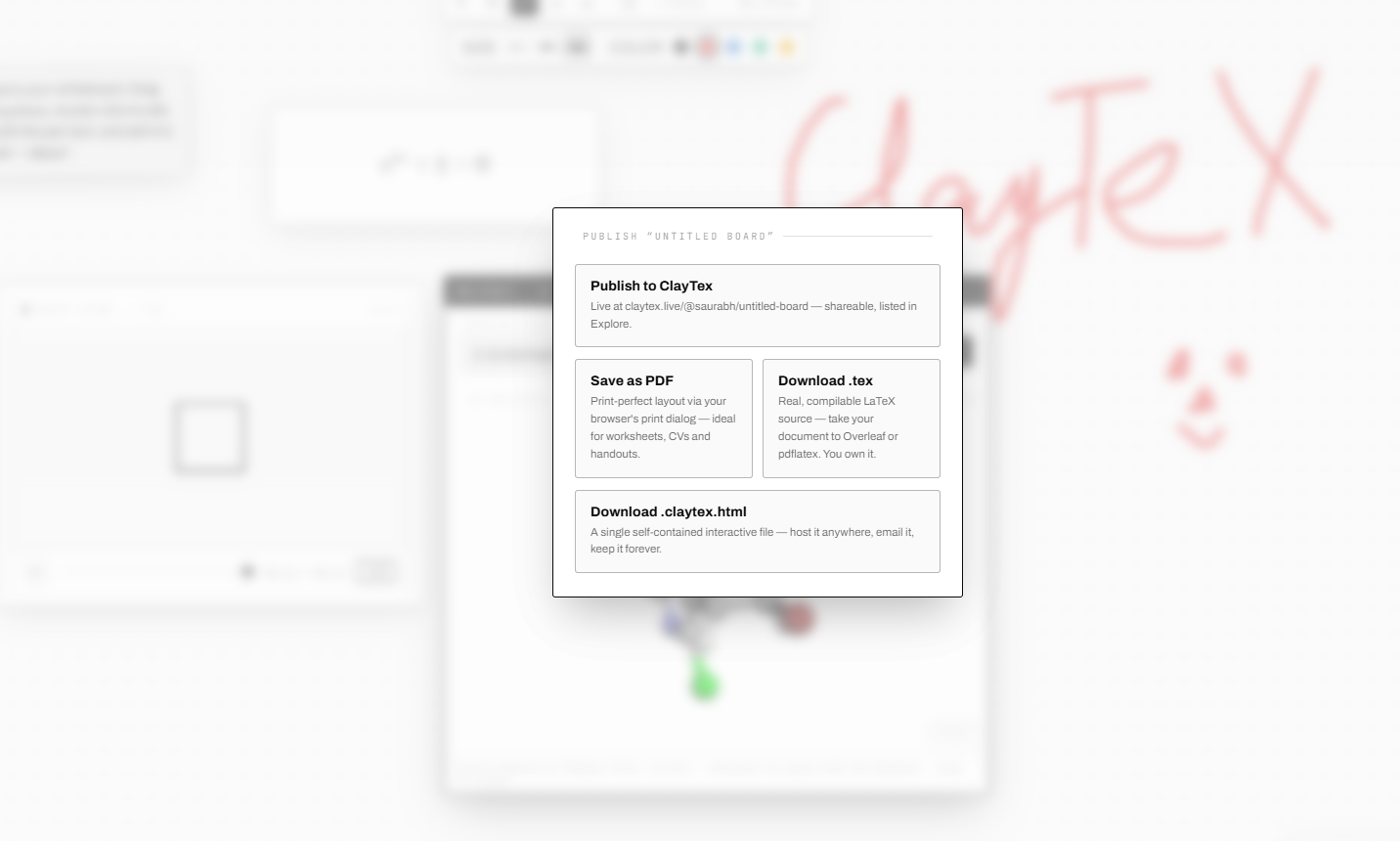
Share as a published page
-
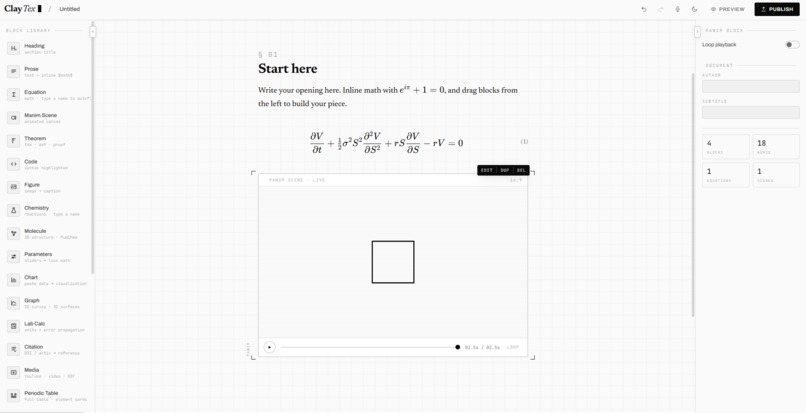
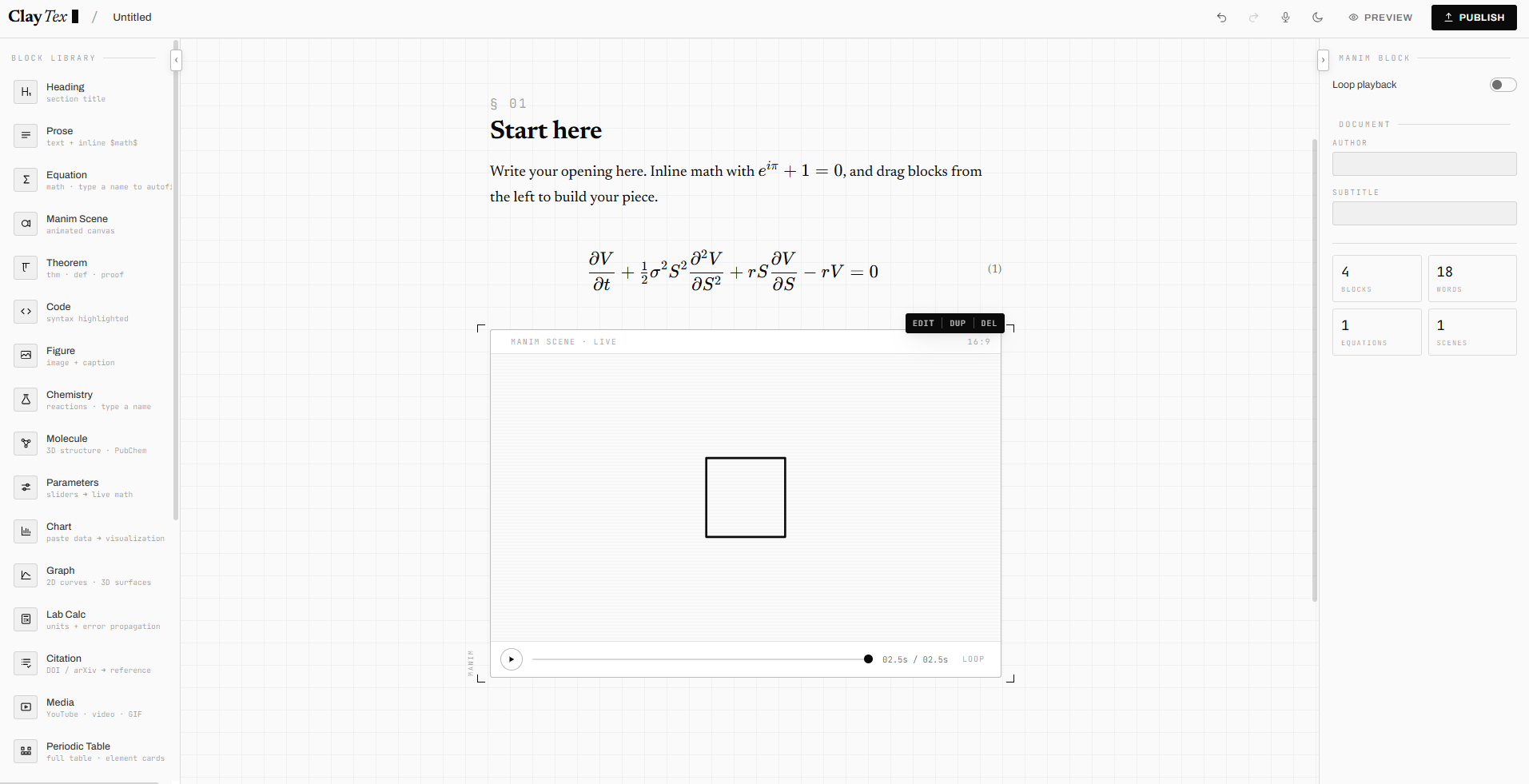
Write any equation, Manim Code
-
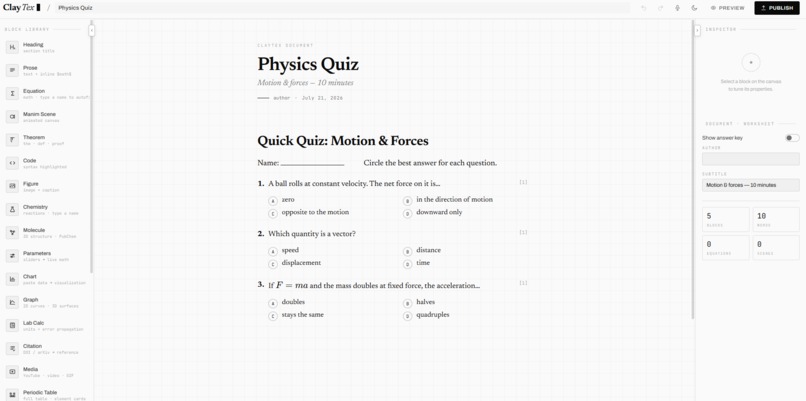
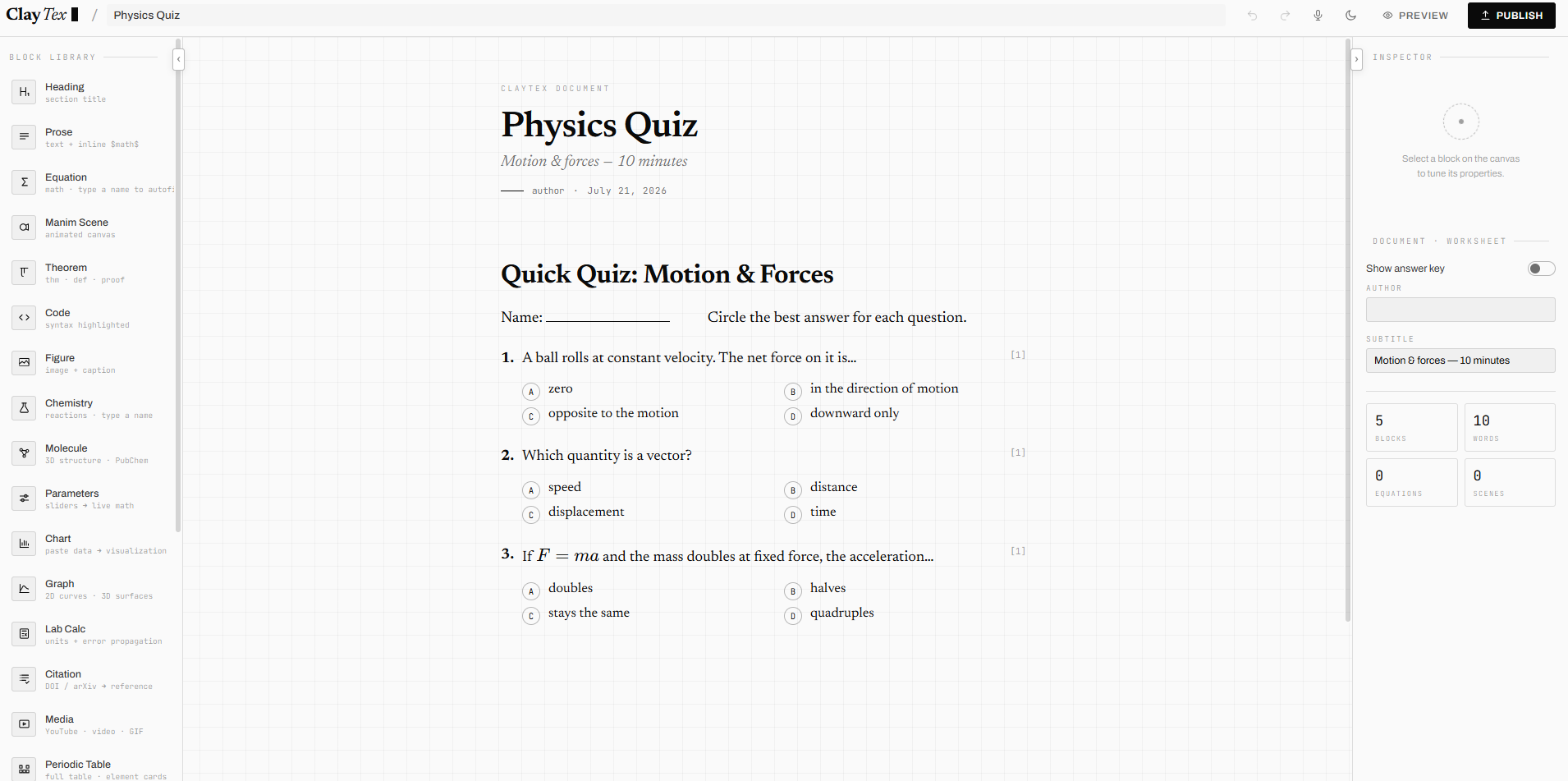
Host Quizzes
-
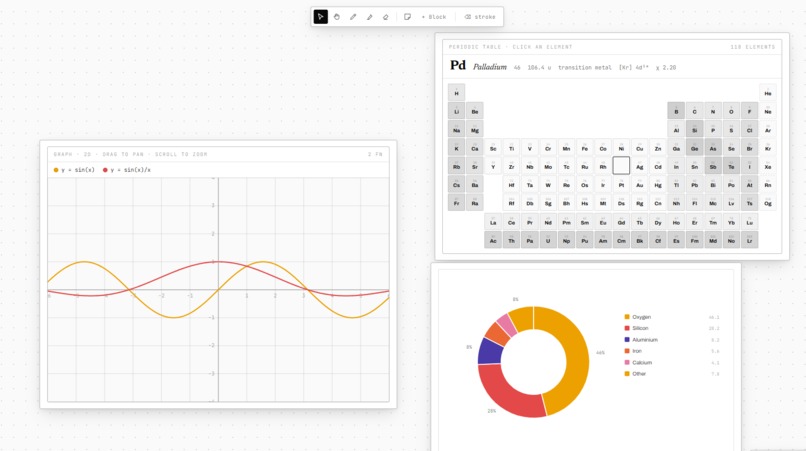
Show various visualizations an interactive periodic table / datawrapper style charts, graphs (2D-3D)
Inspiration
I did not begin ClayTex with a feature list. I began with a familiar frustration: a scientific idea can be clear in my head and still become painfully difficult to explain once it leaves the notebook. Try writing the Navier-Stokes equations or try teaching someone only and constantly shift tabs to show desmos / visualization / chemical structure (3D) or write the Navier Stokes equations on a whiteboard.
An equation starts as a sketch. Then it becomes LaTeX, a diagram, a slide, a screen recording, and eventually a PDF. Every format solves one problem while creating another. The equation survives, but the intuition around it often disappears.
The Navier–Stokes equations are powerful, but they can also be intimidating when they arrive as a wall of symbols. I wanted a tool that could keep the mathematics, the visual explanation, and the story together.
ClayTex came from that question: what if writing science did not have to mean choosing between a serious technical workflow and an expressive visual one?
What it does
ClayTex is a browser-based studio for creating scientific content that is meant to be understood, not just typeset.
I can write LaTeX, render equations live, build Manim-style animated scenes, use a growing library of equations and chemistry reactions, arrange content visually, and publish the result as a shareable page. It supports articles, slides, worksheets, lesson plans, and CVs, with export options for web, PDF, and LaTeX source.
The point is not to make science flashy. The point is to make difficult ideas easier to follow.
How I built it
I built ClayTex with React and Vite because I wanted it to open in a browser and get out of the way quickly.
The editor combines a visual, drag-and-drop workflow with live mathematical rendering. I built browser-native animation scenes instead of trying to force a full desktop animation environment into a tab. That constraint kept me focused on the parts of animation that actually help an explanation: sequence, motion, labels, and relationships.
I used Supabase for authentication, content, and published work. Public posts are rendered into shareable pages and served through Cloudflare Pages and a Cloudflare Pages Function, so a URL such as claytex.live/@name/post can behave like a real publication instead of a private editor state.
I also expanded the equation and reaction library because people do not always remember the exact canonical form of a formula when they are in the middle of building something. The tool has to meet the user halfway.
Challenges I ran into
The hardest part was deciding what not to build.
It is easy to add controls to an editor. It is much harder to keep an editor calm. Scientific content has its own rules: equations must remain legible, animation must clarify instead of decorate, and the interface should not make a learner feel like they need a manual before they can make a simple explanation.
Publishing was another challenge. A project is not useful if it only looks good inside the editor. I had to think through how a piece becomes a clean public page, how it loads, how it is shared, and how it still feels intentional outside the workspace.
I also learned quickly that maths input is not as tidy as it looks in textbooks. People search for formulas using different names, symbols, shorthand, and mental models. Building a useful library meant thinking less like a database and more like someone trying to remember an equation five minutes before class.
Accomplishments that I'm proud of
I am proud that ClayTex brings writing, maths, animation, layout, publishing, and export into one place without requiring a local install.
I am proud that it treats a formula as more than a line on a page. An equation can become a visual anchor, an animation cue, a teaching moment, or the centre of a story.
Most of all, I am proud that the project has stayed grounded in a simple idea: scientific communication should feel more alive without becoming more complicated.
What I learned
I learned that LaTeX is not the product. Clarity is.
I learned that "no installs" is not just a convenience feature. It changes who feels invited to create. A student with an idea, a teacher preparing a lesson, or a researcher explaining a result should be able to start before mastering a complicated toolchain.
I also learned to be suspicious of feature lists. The best feature is not always the most impressive one; sometimes it is the thing that removes one small piece of friction at exactly the right moment.
What's next for ClayTex
Next, I want to make ClayTex more useful in real teaching, research, and self-learning workflows.
I am continuing to expand the equation and reaction library, improve the animation controls, refine publishing, and learn from the first people who use it to explain actual ideas. I also want to make the public experience stronger, so a published ClayTex page feels like something worth sharing—not just something exported from an editor.
ClayTex is still early, but its direction is clear: make science easier to write, easier to see, and easier to share.
Built With
- 3dmol.js
- cloudflare-pages
- cloudflare-pages-functions
- codemirror
- css
- dnd-kit
- dompurify
- git
- html
- javascript
- katex
- latex
- npm
- postgresql
- react
- react-router
- supabase
- supabase-auth
- supabase-rest-api
- supabase-storage
- typescript
- vite
- zustand

Log in or sign up for Devpost to join the conversation.