-
-
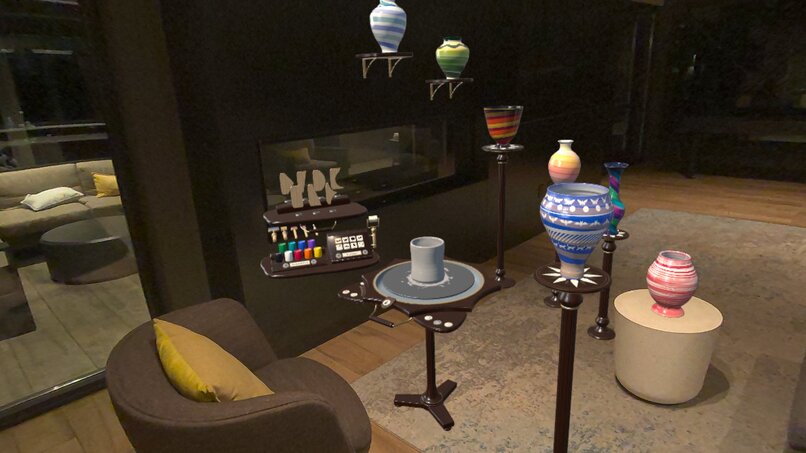
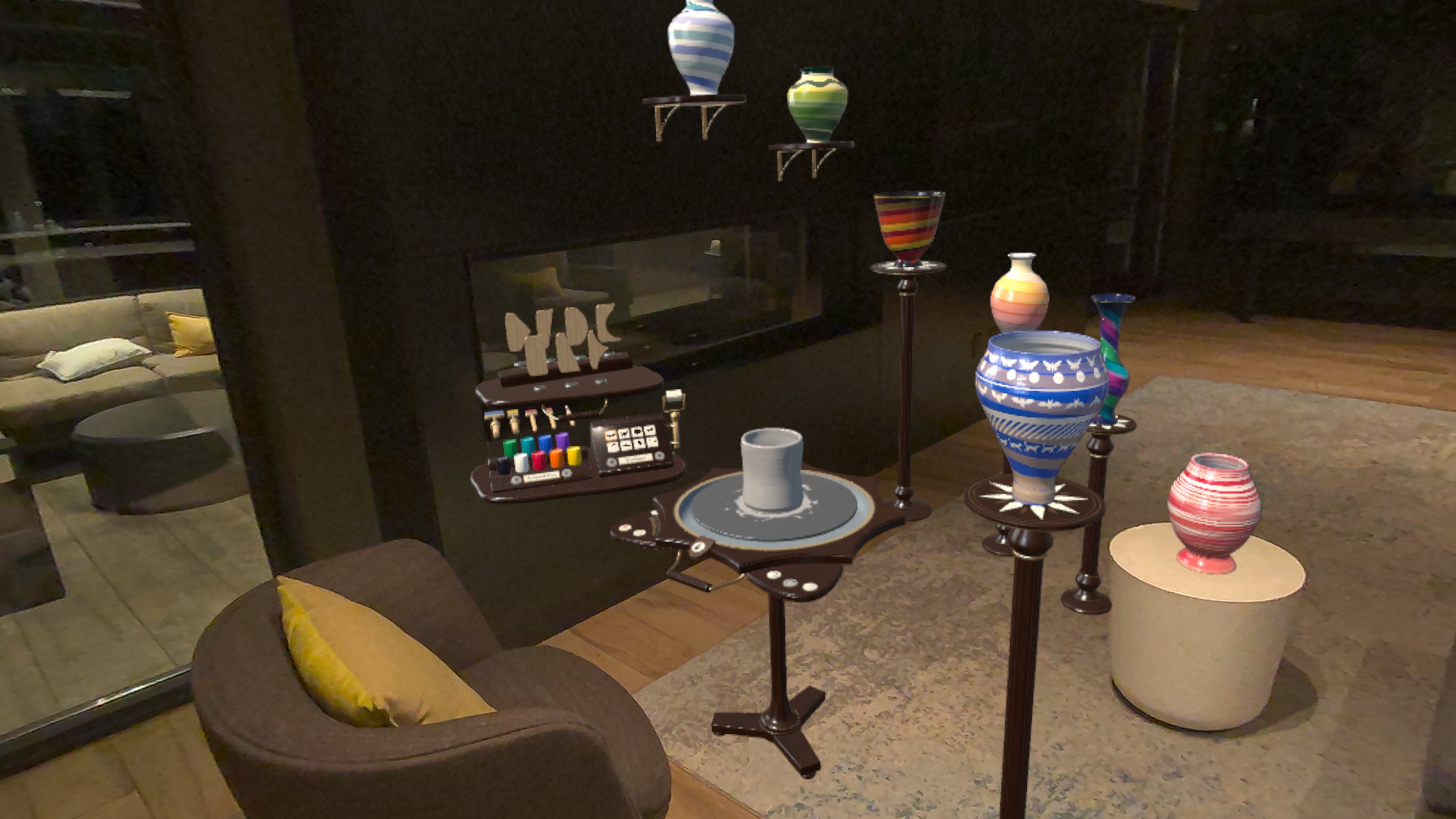
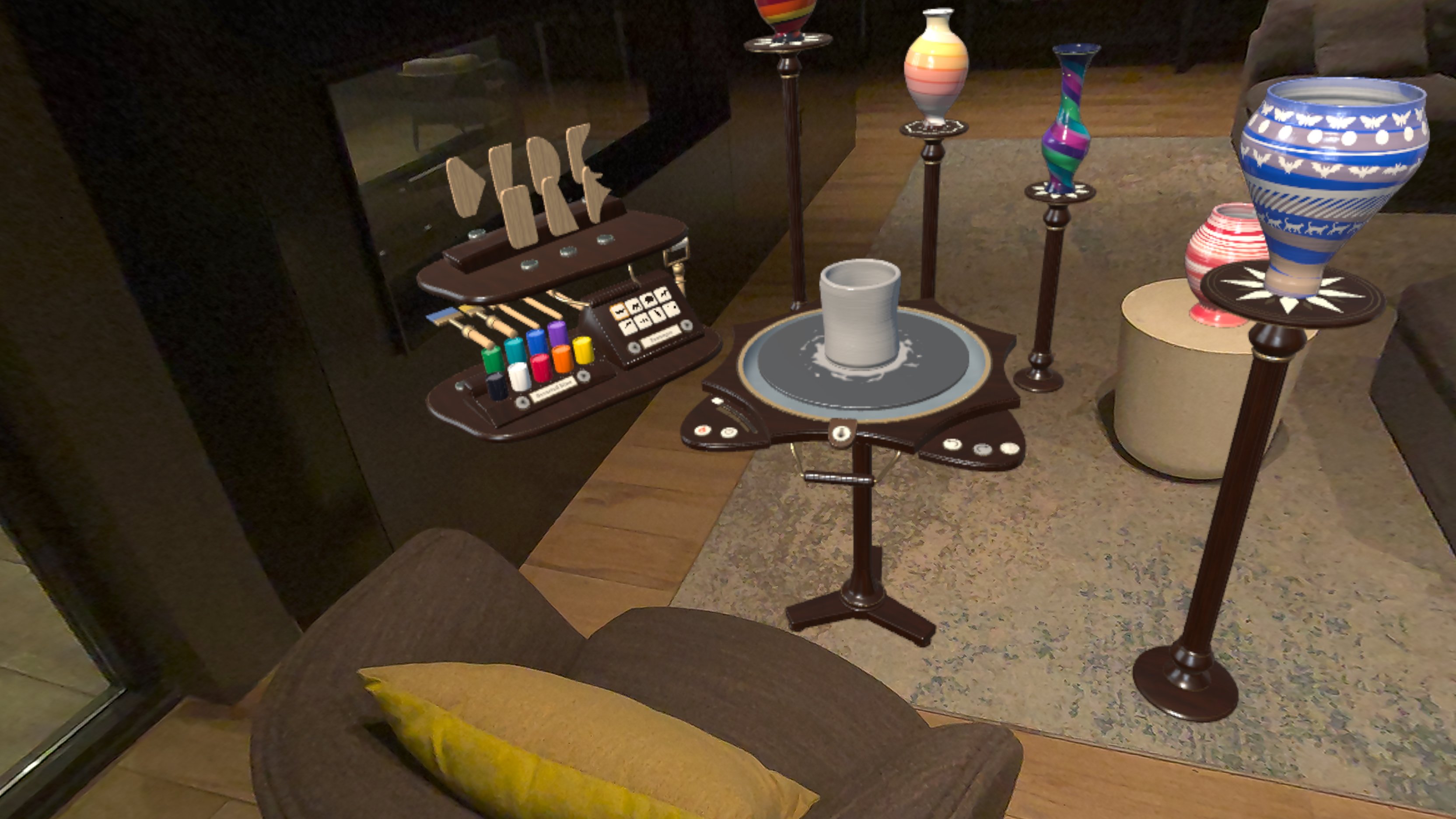
A view of the ClayTime workspace - pottery wheel with fresh clay, and various pots on display on space-aware pedestals, tabletops, shelves
-
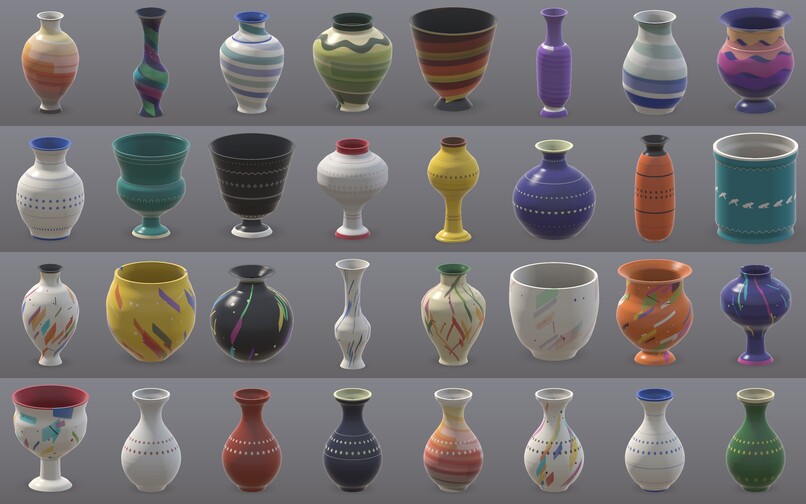
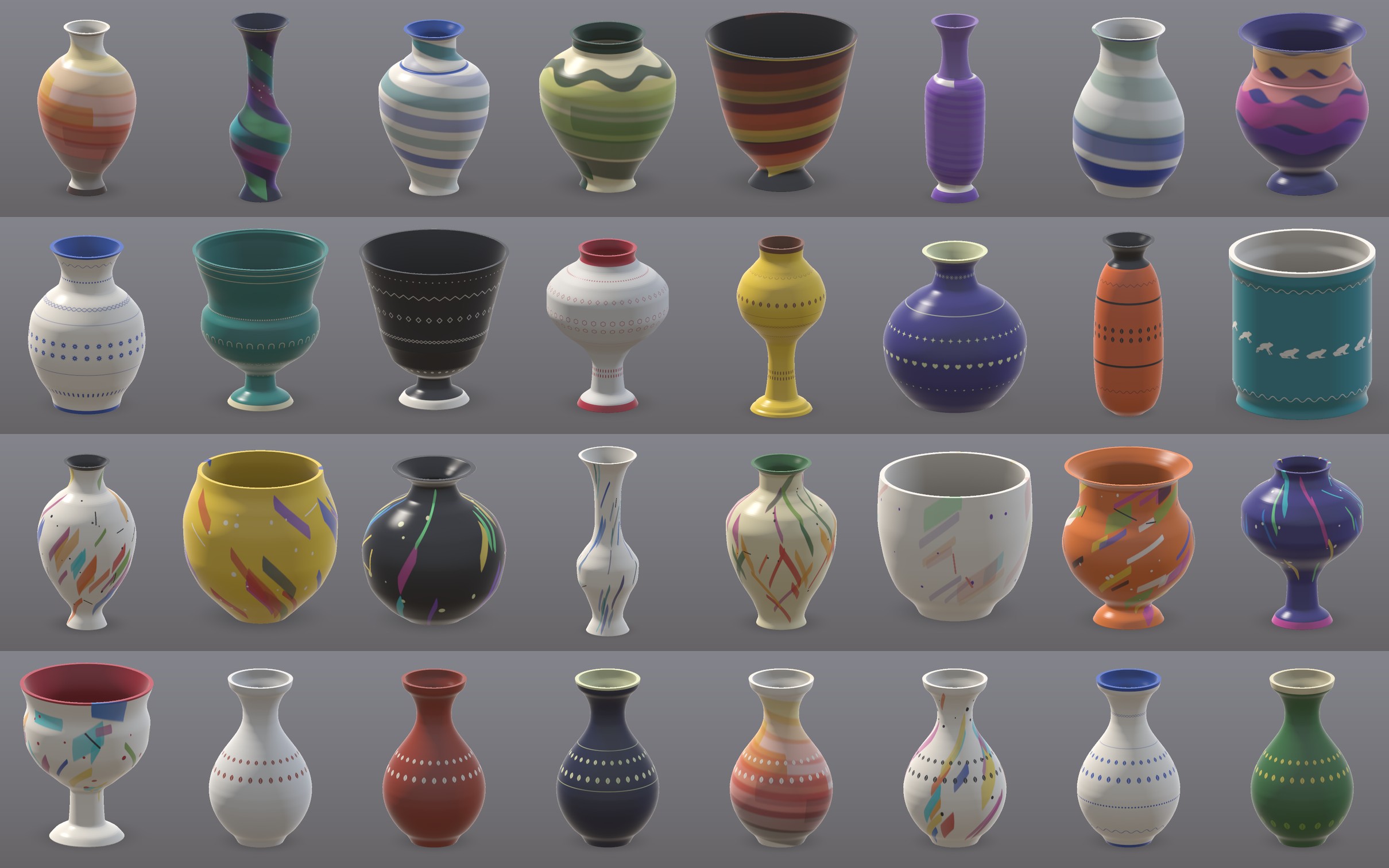
A collage of various designs achievable with the shaping and painting tools available in Clay Time
-
-
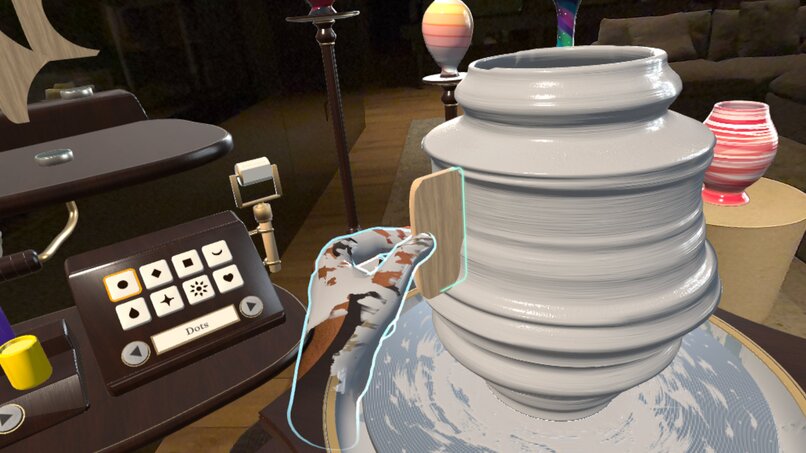
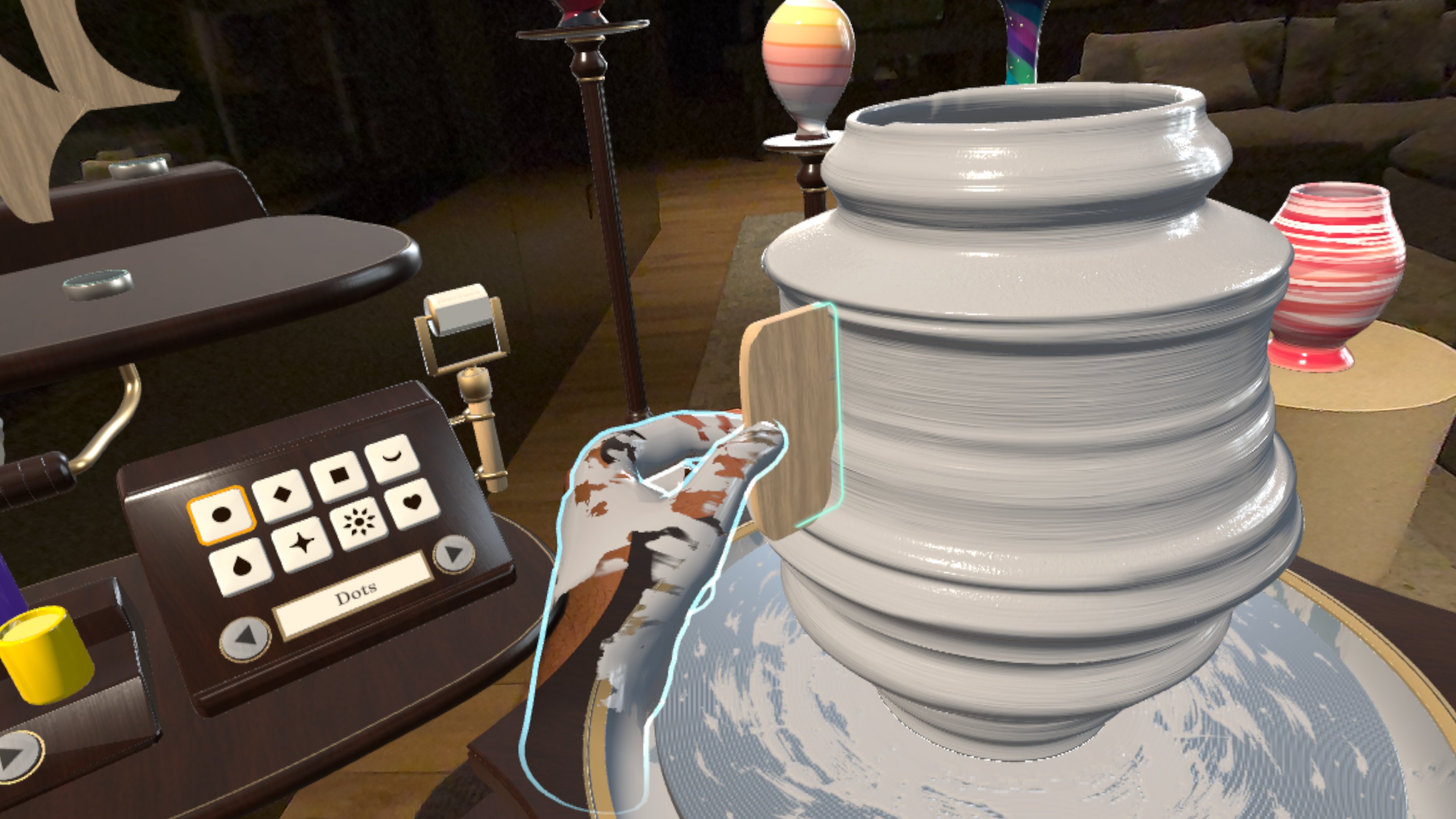
Wooden rib tools for shaping
-
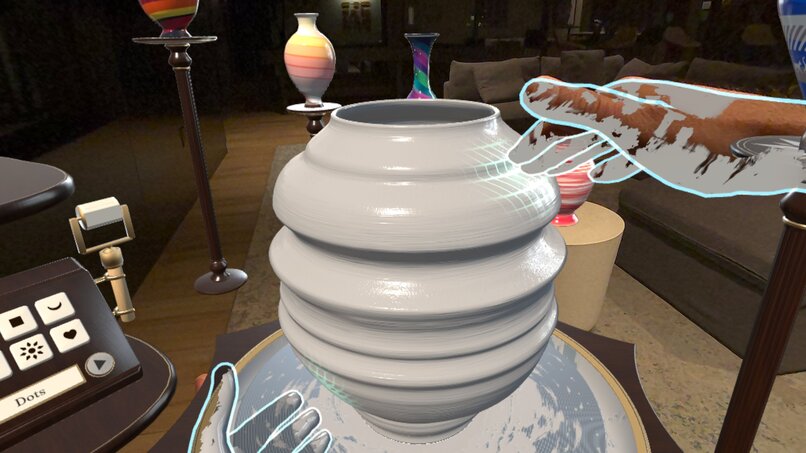
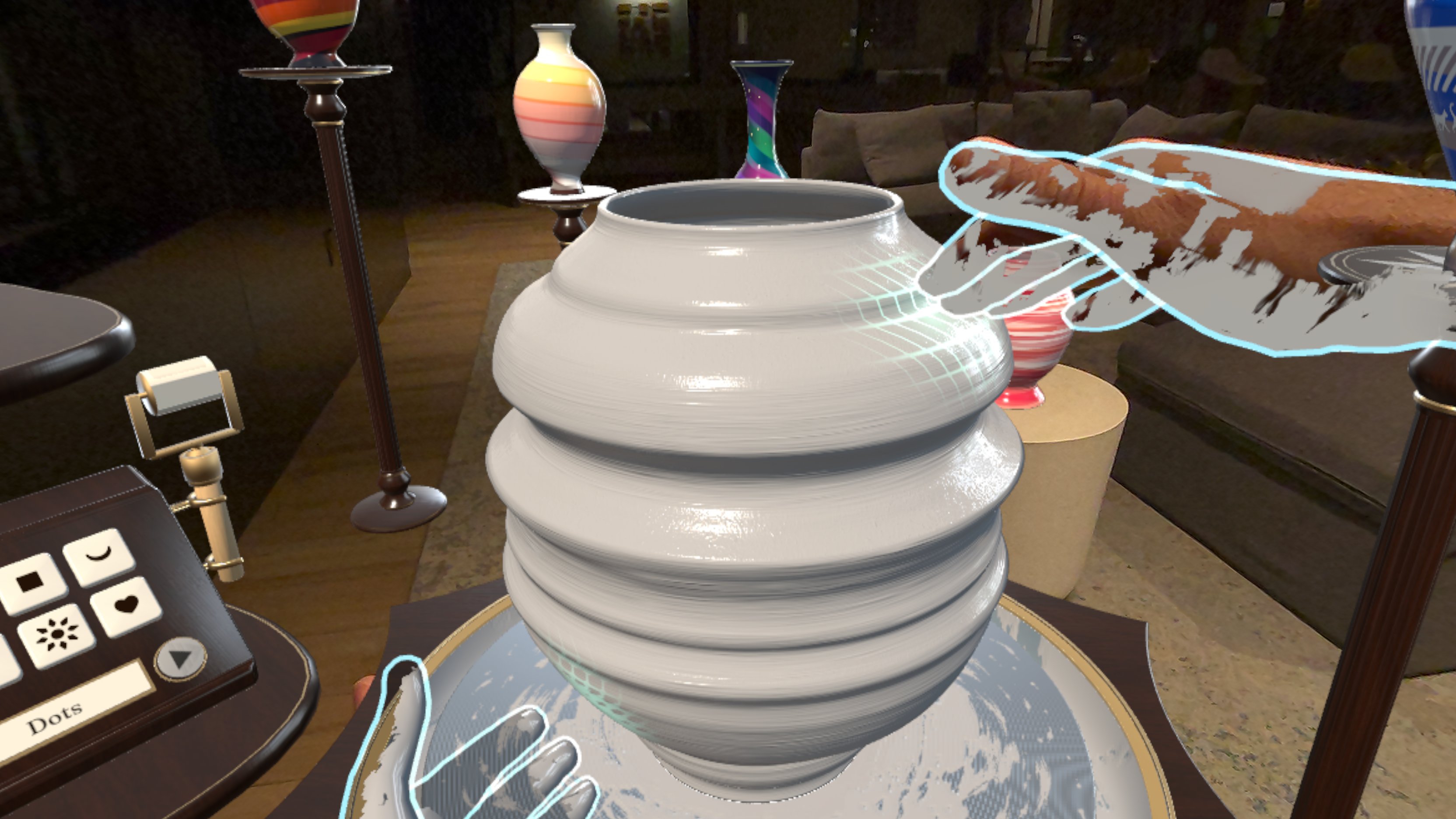
Hand shaping
-
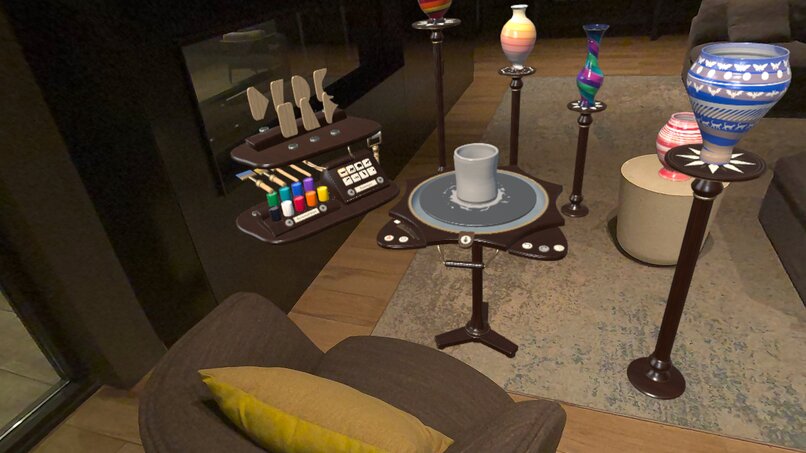
Clay Time can be experienced comfortably seated or standing
Inspiration
I wanted to make an art sandbox where people could unwind and create something of their own. Put on a headset, shape some clay, and see where it goes, without the setup and cleanup of a physical pottery studio. I’m also a student of geometry. I like observing patterns, shapes, and curves, understanding how they work, and using that understanding to make something beautiful. Clay Time brings those interests together by letting you shape and decorate directly with your hands. I wanted to create art tools in VR that are intuitive and predictable enough to help people realize an idea, while leaving room to experiment, make mistakes, and make a mess.
What it does
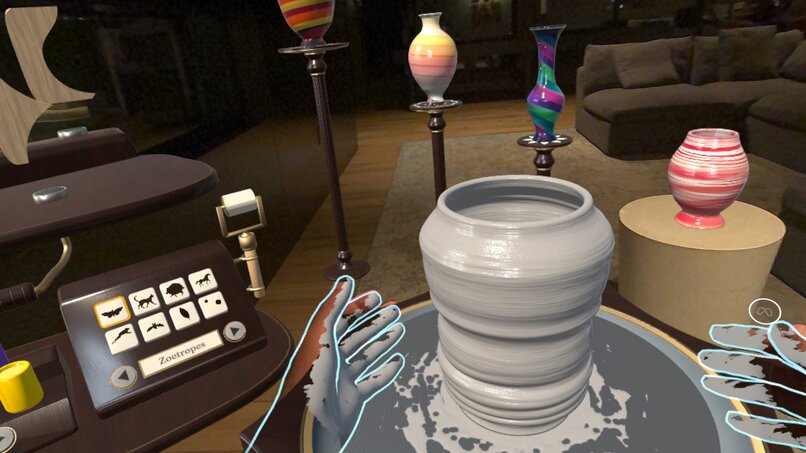
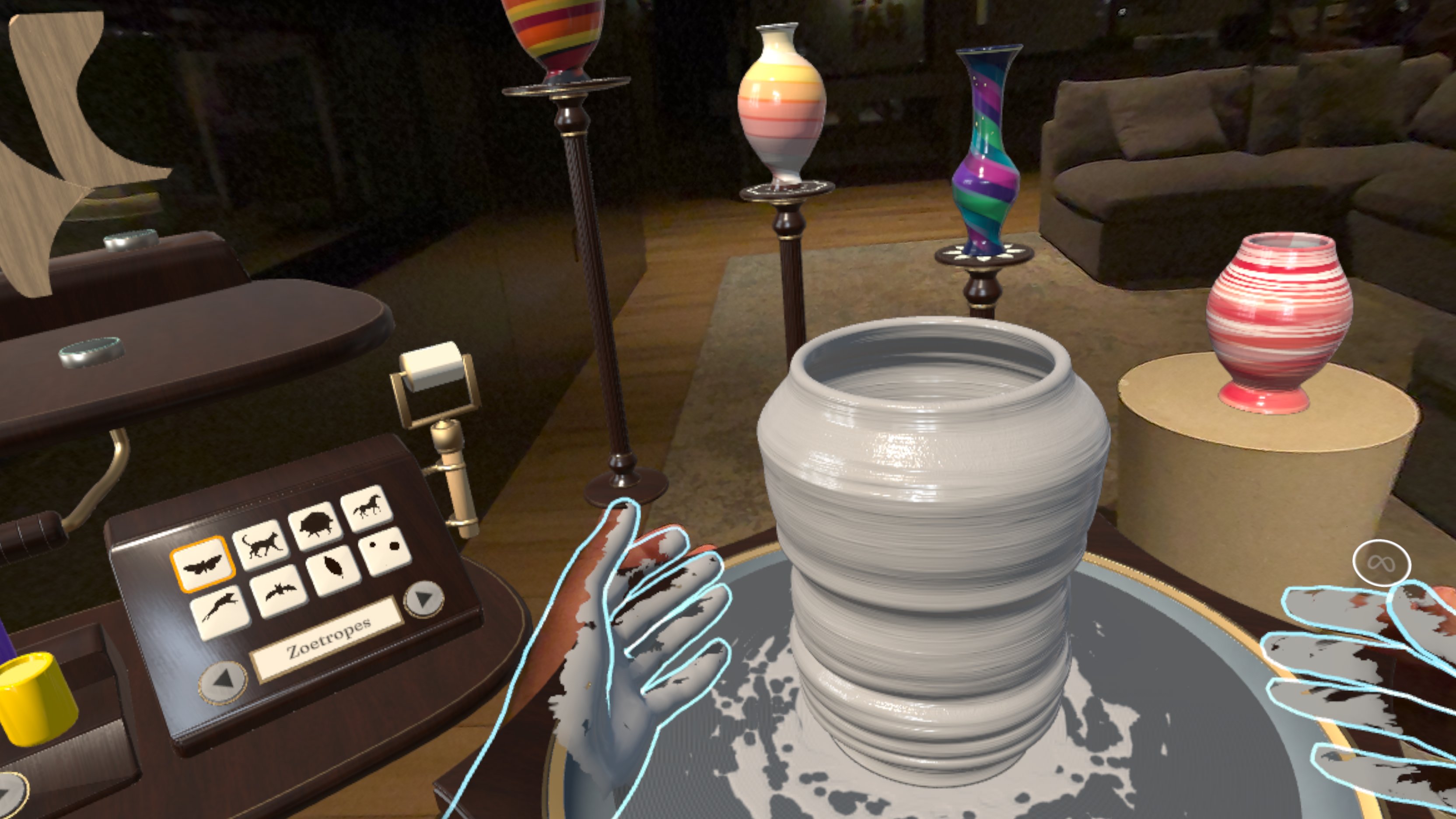
ClayTime is a hands-first pottery simulator. It lets you shape the clay in manners somewhat inspired by real wheel-turning. It gives the player 5 different hand shaping operations, 7 wooden shaping tools, 2 stabilized brushes, 3 freehand brushes, a pattern roller (that even supports rolling zoetropes!), a variety of glaze color palettes and a variety of patterns. It lets you shape and paint the pot in intuitive, predictable ways. The player decides when to move from the ‘wet clay’ stage to the ‘bisque fired stage’ to the ‘glaze fired’ stage, after which the pot becomes ready, and the glaze colors change to give the pot a satisfying vibrancy and shininess. Finished pots can be used to decorate the player’s space in mixed reality, with awareness of walls/surfaces - pedestals, wall shelves, and “floating place mats” appear automatically with awareness of the player’s scanned room.
How I built it
- I created detailed requirements, specs, and acceptance criteria for each major feature.
- I created interaction rules/diagrams for interacting with clay with different parts of the hands (fingers, palm, thumb, knuckles), rules for interacting with tools, and tools interacting with clay / fired clay.
- I iterated on the tools, brushes, patterns etc, with lots of hand-drawn sketches as reference.
- I developed debugging tools for rapid headset testing and fine tuning the feel of using the tools and hand operations, adjusting thresholds for interaction behaviors, etc
- I pored over small details, e.g., hands getting messy after touching wet clay, wall thickness of wet clay auto-adjusting in response to shaping operations, ensuring cross CPU-GPU work is optimized.
- Built headset-free testing methods for rapid iteration.
- Built tools to art direct easily (e.g. change color palettes, audition sound effects, etc)
- Used agentic AI tools for the implementation after all major features were solidified in specs/work items/milestones with an issue tracker.
Challenges I faced
- Small details in timing, reach, and visual response had a large effect on the experience.
- Implementing this app as a solo developer in 3 weeks was a fun challenge!
What I learned
Sometimes it’s good to put things on rails so they are easier to operate with imperfect input (e.g., rolling a perfectly horizontal pattern ring with a pattern brush that snaps to a height), but significantly reducing degrees of freedom also severely restricts what the player can creatively express.
What comes next
- Refine UX and design of the onboarding experience
- Guided pottery challenges
- Sharing the pottery that you make
- Export pots you make for other apps or for 3D printing
- Pattern packs inspired by different cultures around the world
- Replace placeholder assets with final art
- Fully immersive, distraction free modes with optional music


