Inspiration
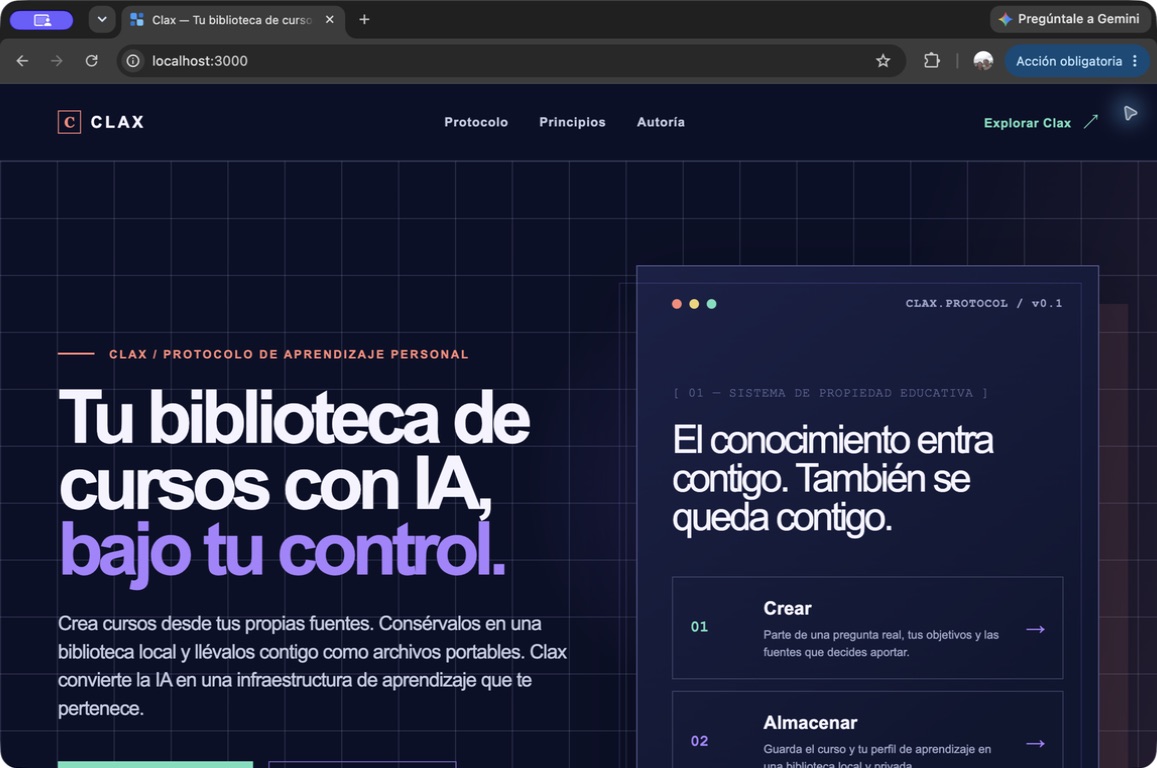
AI is already part of how we learn, but that learning often stays scattered across conversations: isolated questions, useful answers that get lost, and knowledge without a clear sequence. I created Clax to turn AI-assisted exploration into a structured, personal, private, and reusable learning process. Clax started with a simple question: what if people could turn their own sources, learning needs, and AI conversations into a complete course they can keep, revisit, and share?
Relevant Experience
Clax is also informed by my experience designing virtual learning for adults. I have developed four training courses for workers through SENA Colombia’s Specialized Continuing Education program. That experience taught me that working adults need learning content that is clear, practical, modular, and connected to real problems. That is why Clax is not designed to generate AI text alone: it turns a concrete learning need into a structured experience with objectives, practice, assessment, and visible progress.
What I Built
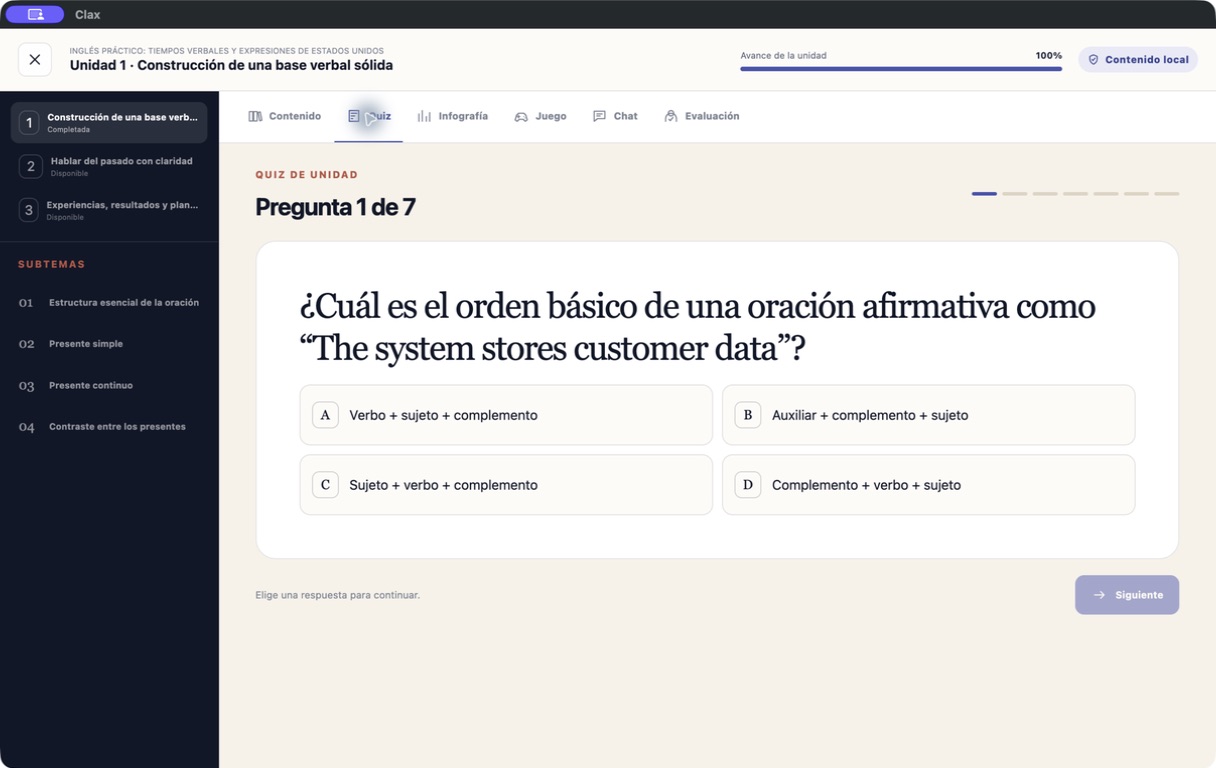
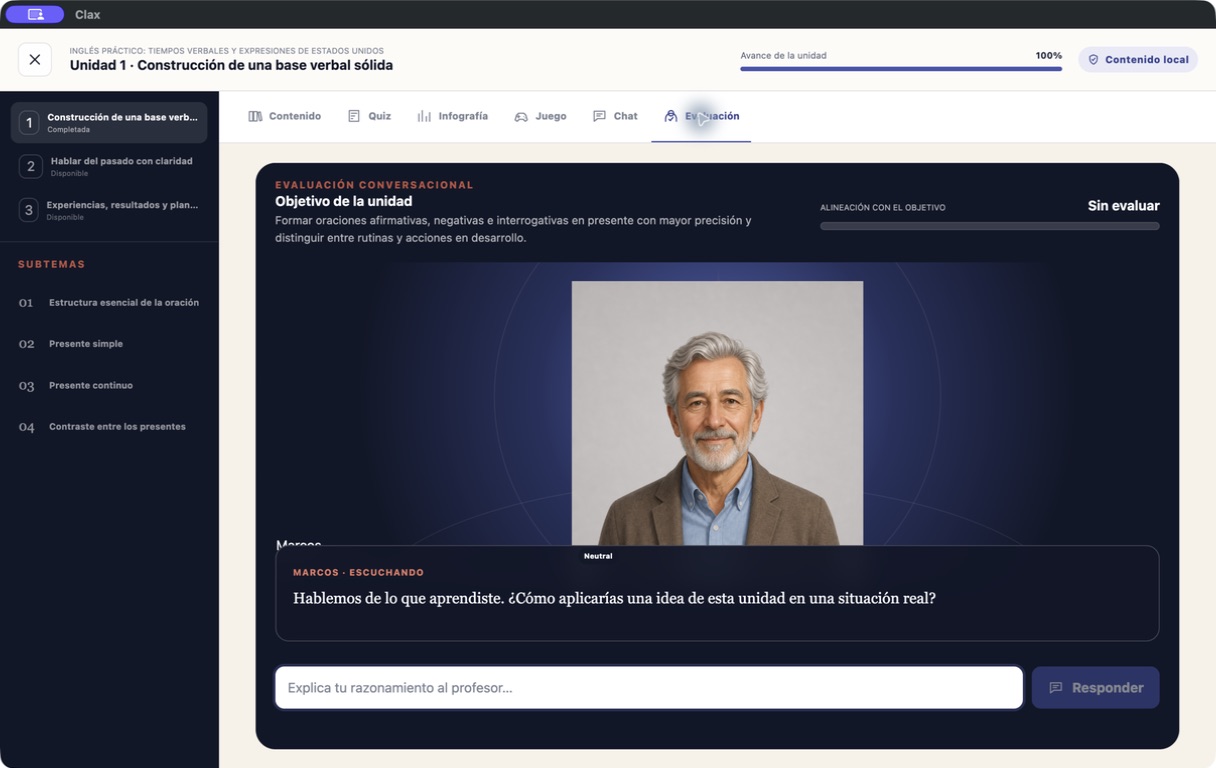
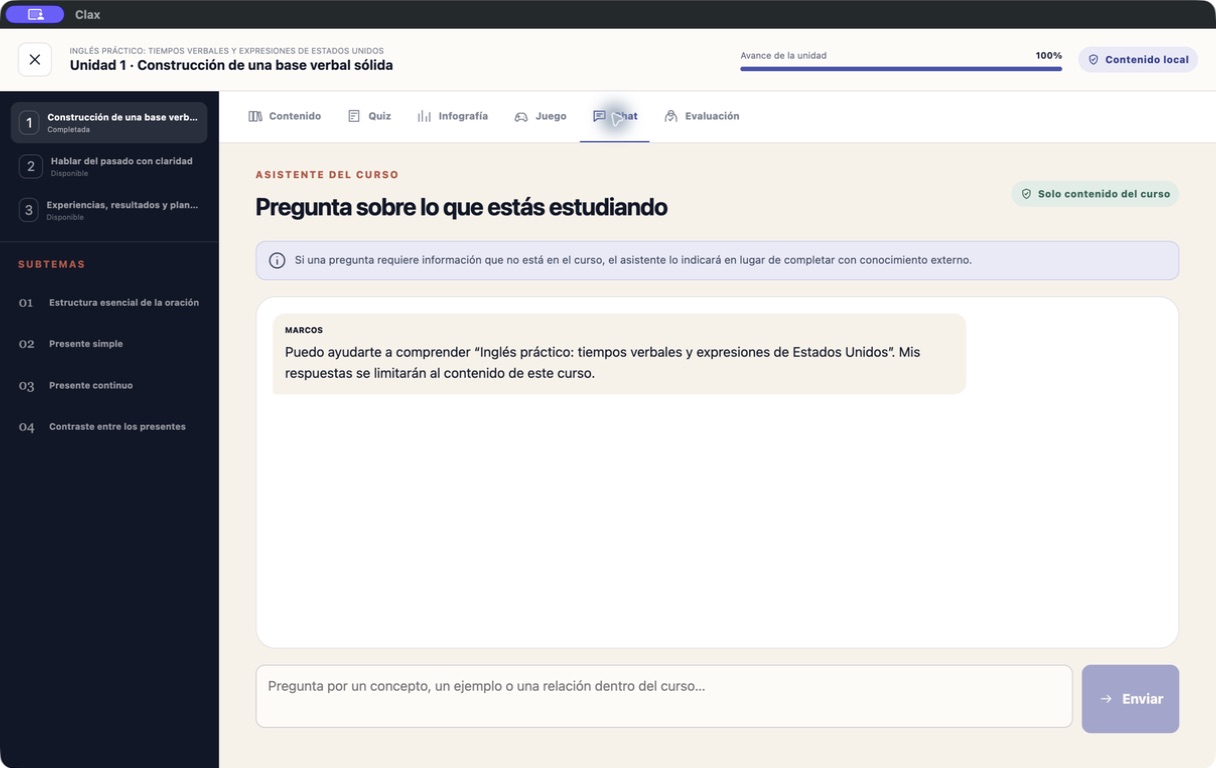
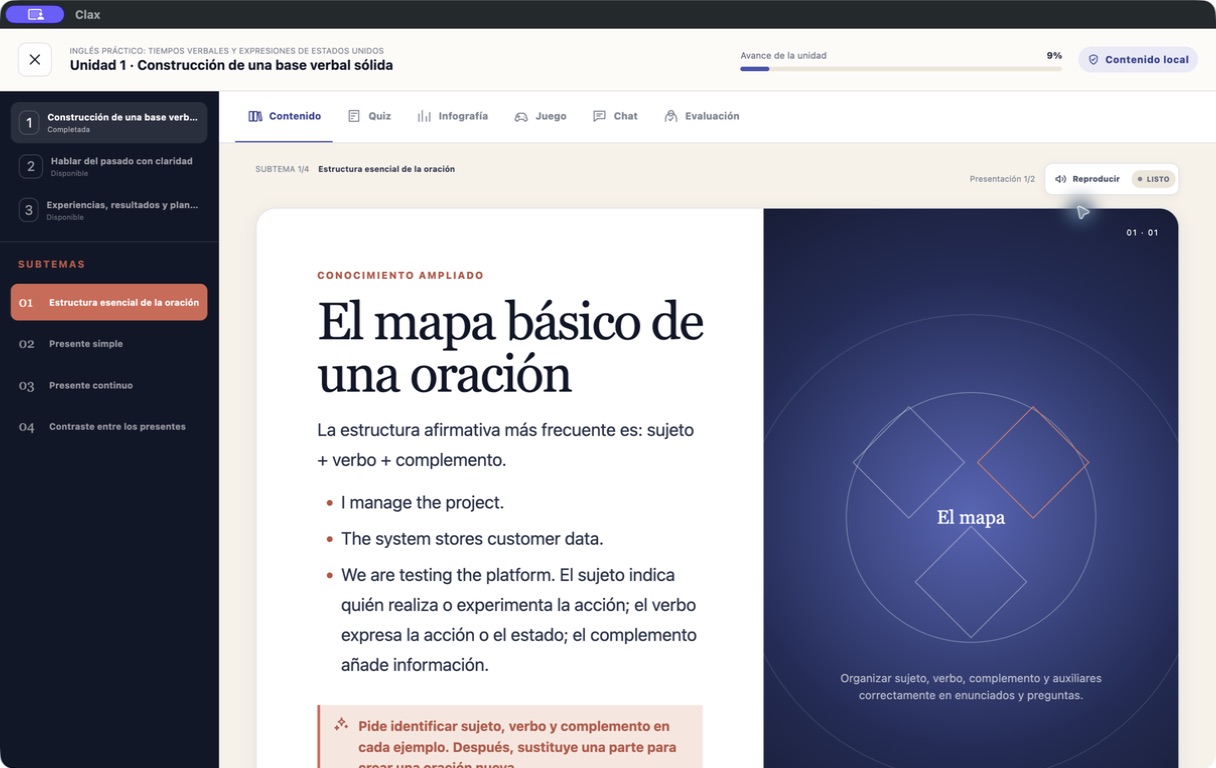
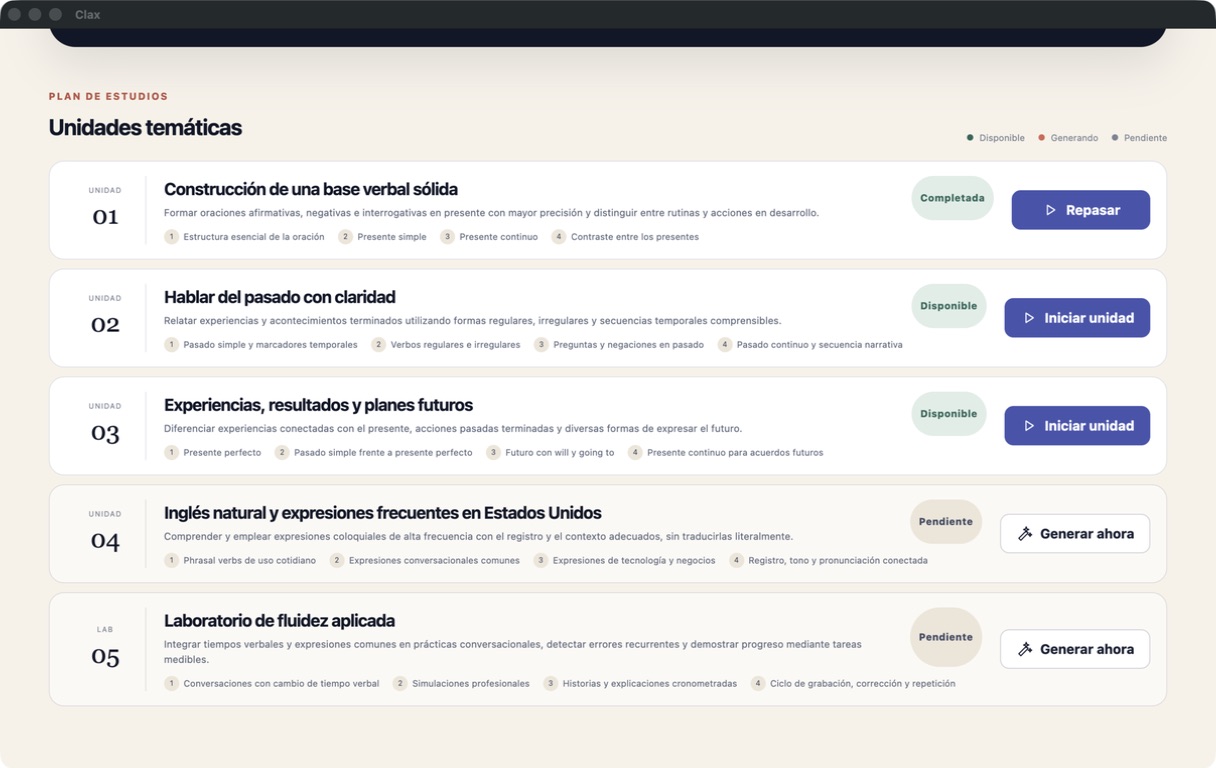
I built Clax, a desktop application for macOS and Windows that lets people create personalized AI-powered courses using their own ChatGPT account. A learner describes their study goal, can add text or PDF sources, YouTube links with short descriptions, and choose whether the course should stay limited to those sources or expand from them. Clax first generates a curriculum, then develops the course progressively. Each course includes: Four learning units and one final practice or experimentation unit. Four subtopics per unit. Ten structured screens per subtopic for deeper learning. Clear objectives for the course, each unit, and each subtopic. Quizzes with balanced correct-answer positions. Infographics generated from the lesson content. Review games such as matching, fill-in-the-blank, concentration, and hangman. A teacher avatar with multiple emotional states for conversational evaluation. A course-grounded chat that only answers from the generated course content. Text-to-speech, learning progress, and a local course library. Portable course export and import.
How I Built It
I developed Clax as an Electron application with TypeScript and React, securely separating the interface, main process, and internal communication. I implemented an encrypted local library, source import, structured content generation, local visual asset storage, text-to-speech support, and a portable course format that does not depend on a central platform. For generation, I created strict output contracts and runtime validation. This makes the result academically structured instead of just another long chat response.
Challenges and Lessons Learned
The main challenge was making AI-generated content useful, consistent, and genuinely educational. Asking for “a course” was not enough: I had to define objectives, constraints, learning sequences, source references, quiz formats, games, and infographic requirements. Balancing depth and speed was also challenging. Moving from a few slides to ten screens per subtopic required a clear progression: context, definition, components, process, criteria, example, common mistakes, relationships, practice, and transfer. I learned that building with AI does not mean outsourcing educational design. AI can accelerate creation, but quality comes from the contracts, user experience, privacy choices, validation, and pedagogical intention behind every screen.
Next
Next for Clax is to validate it with real adult learners and working professionals, measure which parts of the course improve understanding the most, and refine the experience from that feedback. I want to strengthen the portable course protocol so people can create, store, and share knowledge without losing control of their sources or privacy. I also plan to refine the cross-platform macOS and Windows experience, improve visual content generation, and expand adaptive practice and assessment.


Log in or sign up for Devpost to join the conversation.