-
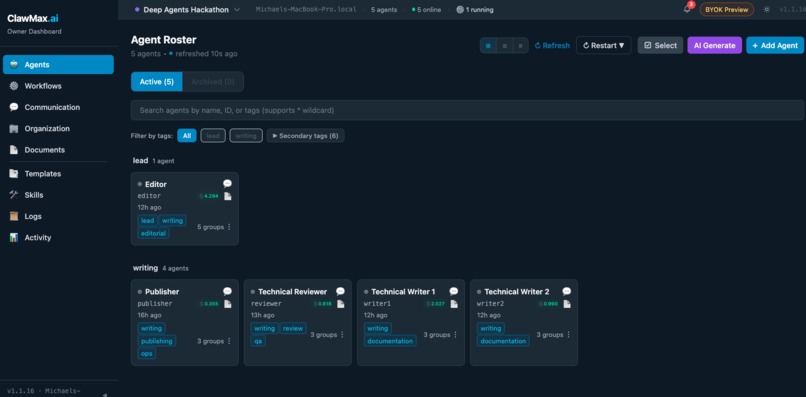
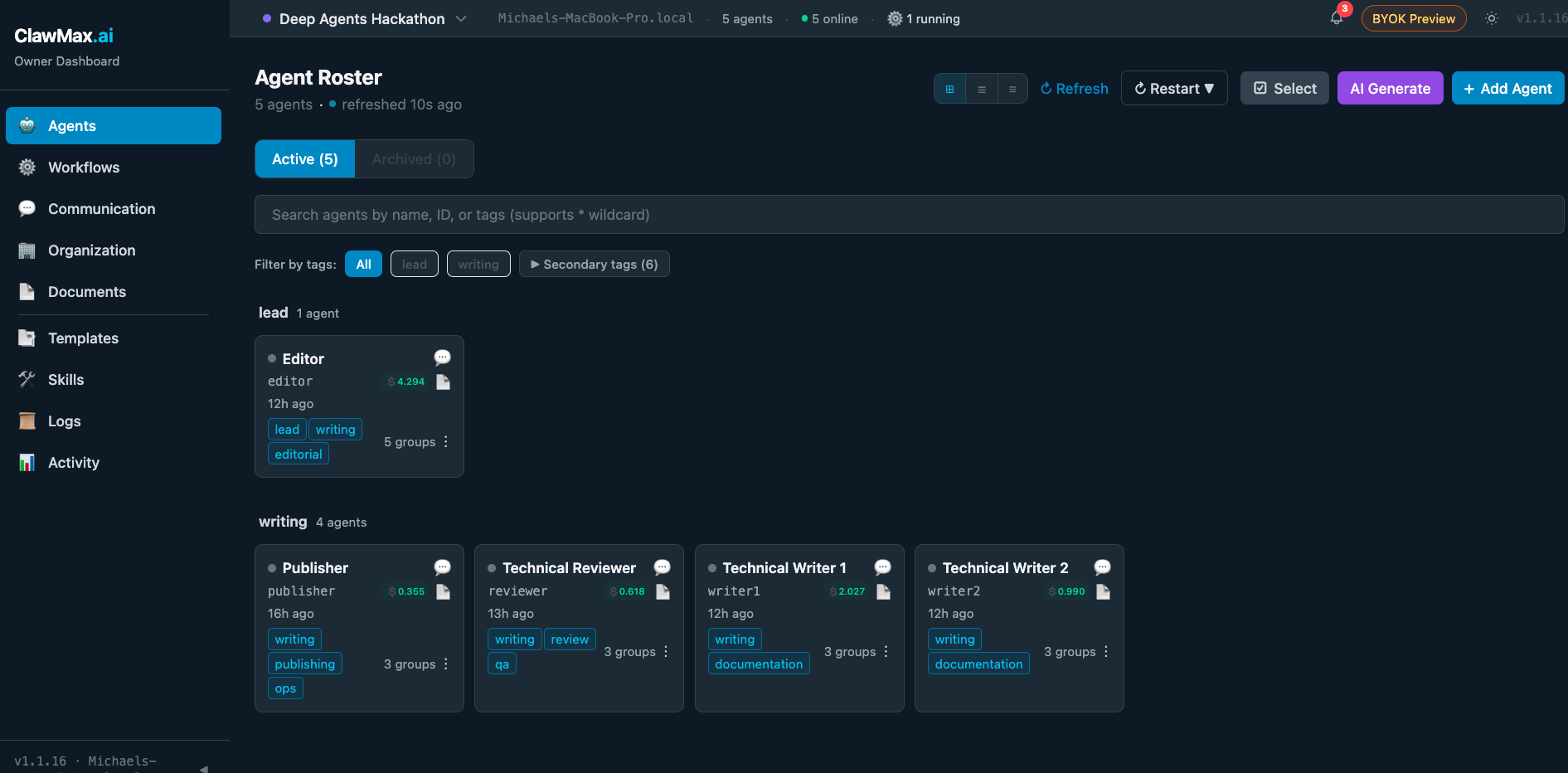
ClawMax - Agents view
-
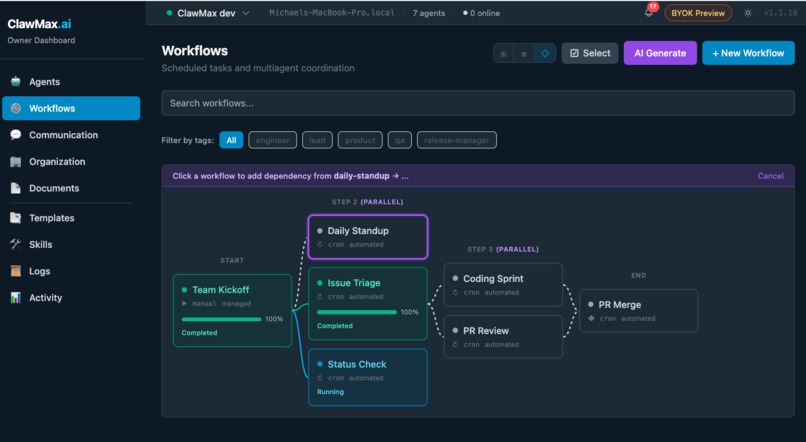
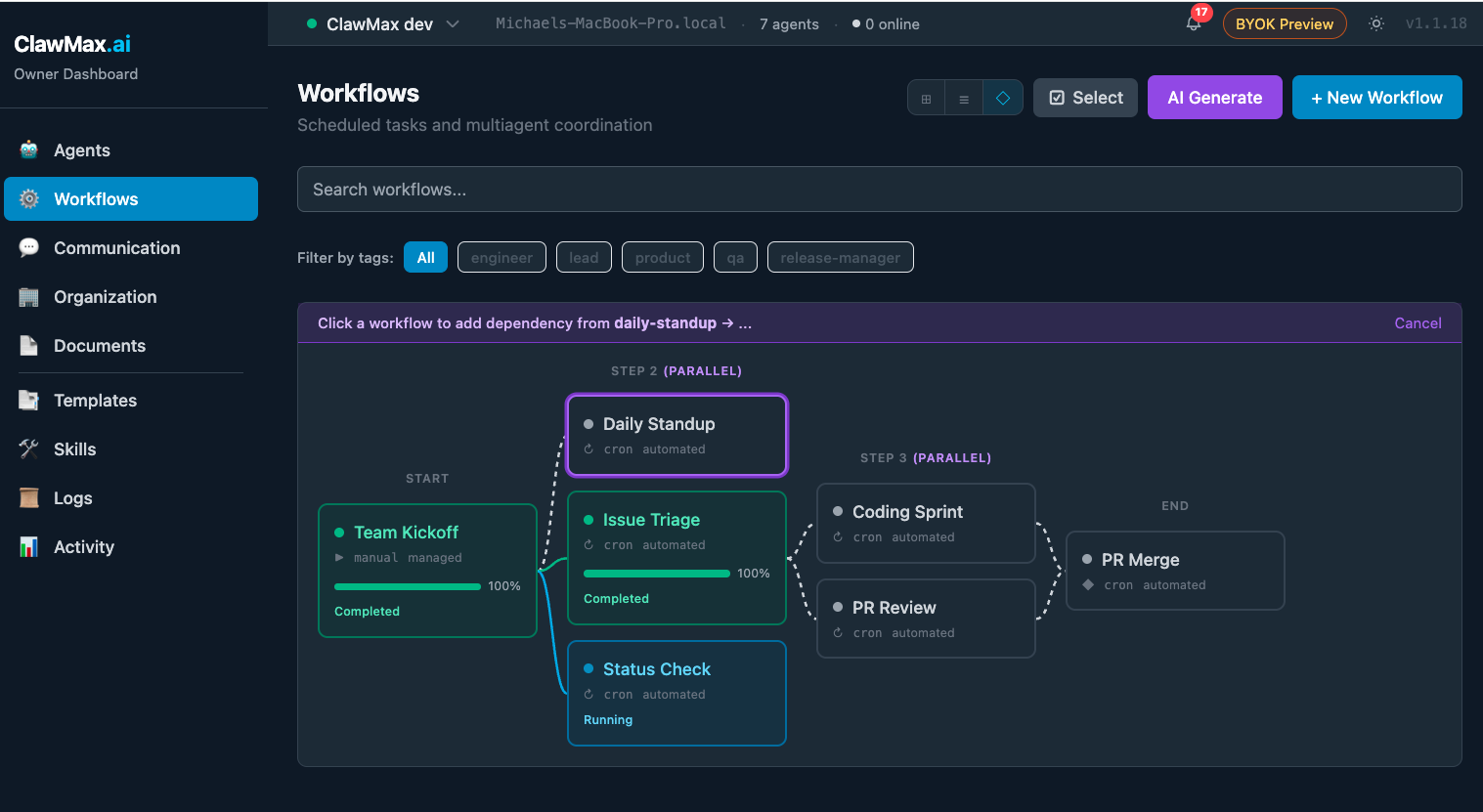
ClawMax - Workflow DAG view
-
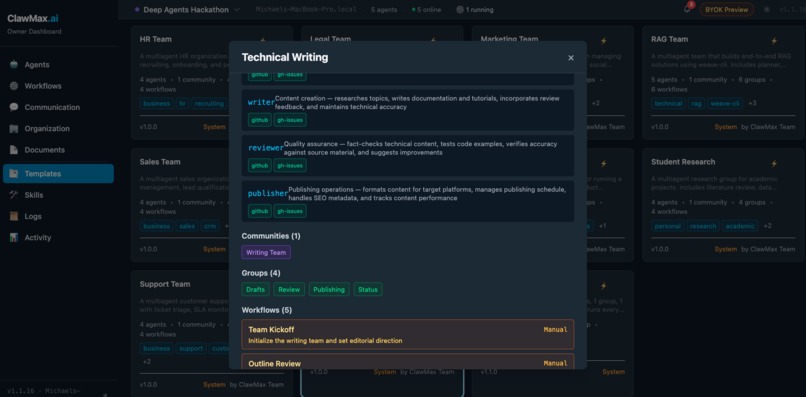
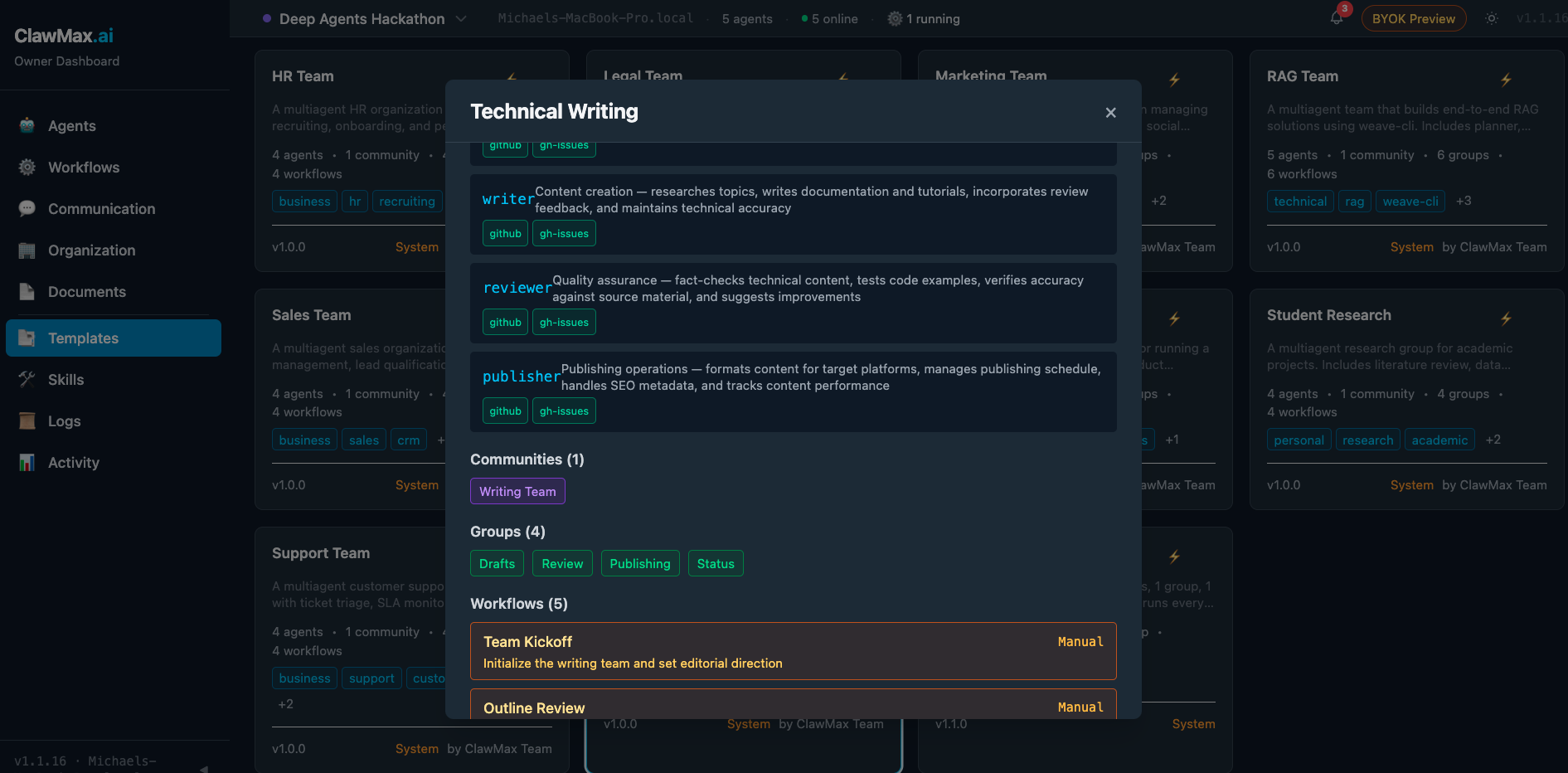
ClawMax - Templates apply
Inspiration
We built ClawMax because most agents can reason, but very few can operate as real teams. The hackathon prompt pushed exactly on that gap: agents should observe live inputs, share context, coordinate through workflows, and take action without requiring a human to manually stitch everything together. We were especially inspired by the idea of combining multimodal evidence with a shared memory layer, so agents could continuously learn from what they ingest and what they produce.
## What it does
ClawMax is a multi-agent orchestration platform for creating teams of specialized agents, assigning them skills, and coordinating them through workflows, groups, and communities. For this hack, we built a multimodal workflow called Real-Time Research Desk where agents ingest screenshots, notes, and documents into Senso, retrieve prior context from that shared knowledge layer, synthesize a grounded brief, and route the next action. The result is a system where agents do not just talk about data, they turn evidence into decisions.
## How we built it
We used ClawMax as the orchestration layer for agents, workflows, template application, and execution tracking. We integrated Senso as the shared multimodal context layer so agents could ingest evidence, search prior knowledge, generate summaries, and write outcomes back into memory. We also extended the ClawMax template apply flow so Senso can be enabled during template application, automatically attaching the right skills to agents and injecting shared-context instructions into workflows. On top of that, we created ClawMax-specific Senso adapter skills to reduce friction for ingestion and retrieval in real workflows.
## Challenges we ran into
The biggest challenges were not around the core idea, but around making the workflow execution path reliable under hackathon time pressure. We had to keep rebasing against a fast-moving main branch while adding DAG workflows, kickoff improvements, skill management updates, and new apply-template behavior. We also ran into issues around workflow dependency visualization, model loading in apply, and making sure template- defined workflows actually imported with the right dependency chain. A second challenge was making the system feel autonomous without becoming too brittle for a live demo.
## Accomplishments that we're proud of
We are proud that we turned ClawMax into a real multimodal team orchestration story rather than a single-agent demo. Agents can now be created from an org template, automatically receive Senso- backed skills, ingest evidence into shared context, and coordinate through workflows with dependency structure. We are also proud of the improvements to the Skills experience, the template apply flow, and the Senso-specific skill adapters, because those make the system more reusable beyond just this hackathon.
## What we learned
We learned that shared context is the difference between agents that feel isolated and agents that feel alive. Senso worked best not as a replacement for everything else, but as the shared evidence and memory plane, while ClawMax handled orchestration and workflows. We also learned that small workflow and skill UX improvements matter a lot in multi-agent systems: if the path to apply, inspect, and execute is not smooth, the autonomy story breaks down quickly. Finally, we learned that multimodal systems need very explicit handoff structure if you want them to produce reliable action, not just analysis.
## What's next for ClawMax - Multimodal workflow with senso context
Next, we want to turn this from one hackathon workflow into a reusable family of multimodal org templates. That means more Senso-backed workflows for visual QA, customer signal routing, and real- world operational monitoring, plus better workflow execution visibility, cleaner dependency rendering, and stronger autonomous handoff loops. We also want to publish the ClawMax Senso adapter skills so other teams can use the same pattern: multimodal evidence in, shared memory preserved, and coordinated agent action out.
Built With
- clawmax
- openclaw
- typescript

Log in or sign up for Devpost to join the conversation.