-
-
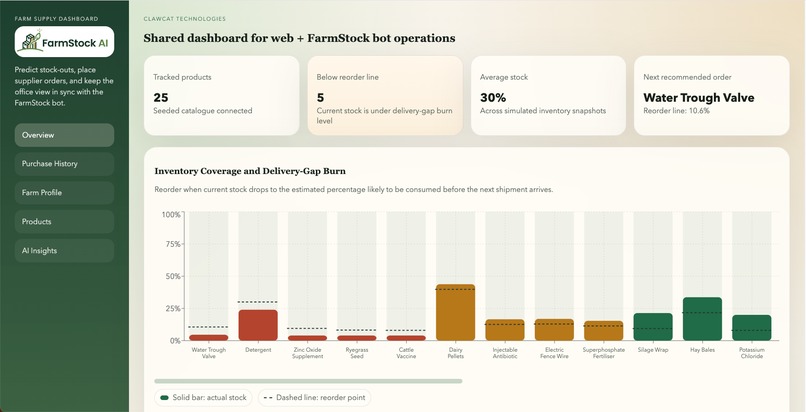
FarmStock AI dashboard
-
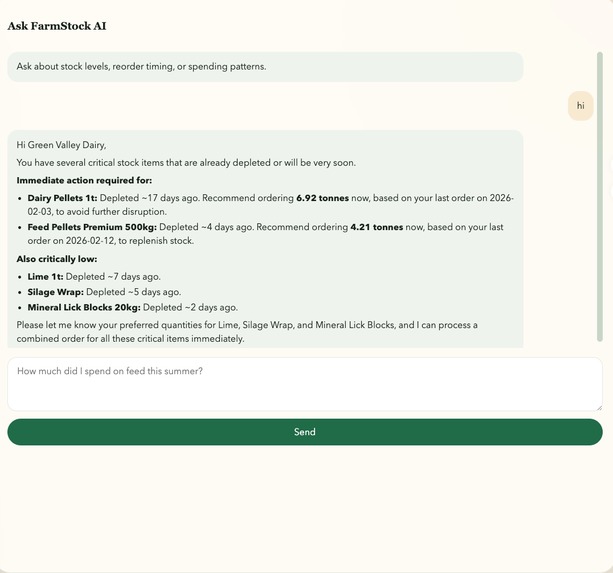
Chat with AI to get insigh
About the project
FarmStock AI is an AI-powered farm supply management assistant for small and medium dairy and livestock farms in New Zealand and Australia, accessible directly through our Telegram bot so users can manage inventory and purchasing by simply chatting with AI. The idea came from a simple but costly operational problem: many farmers still manage feed, veterinary products, fertiliser, and consumables through memory, paper records, or scattered invoices. That makes it easy to miss reorder timing, overbuy products with shelf-life risk, or run into shortages during busy or weather-sensitive periods.
The pain point we focused on is not just “inventory tracking,” but the real-world friction around farm purchasing. Farmers are already busy, and most software asks them to learn a completely new workflow, maintain a new dashboard, and manually keep records updated. In practice, that creates low adoption. We wanted to build something that reduces that friction instead of adding to it.
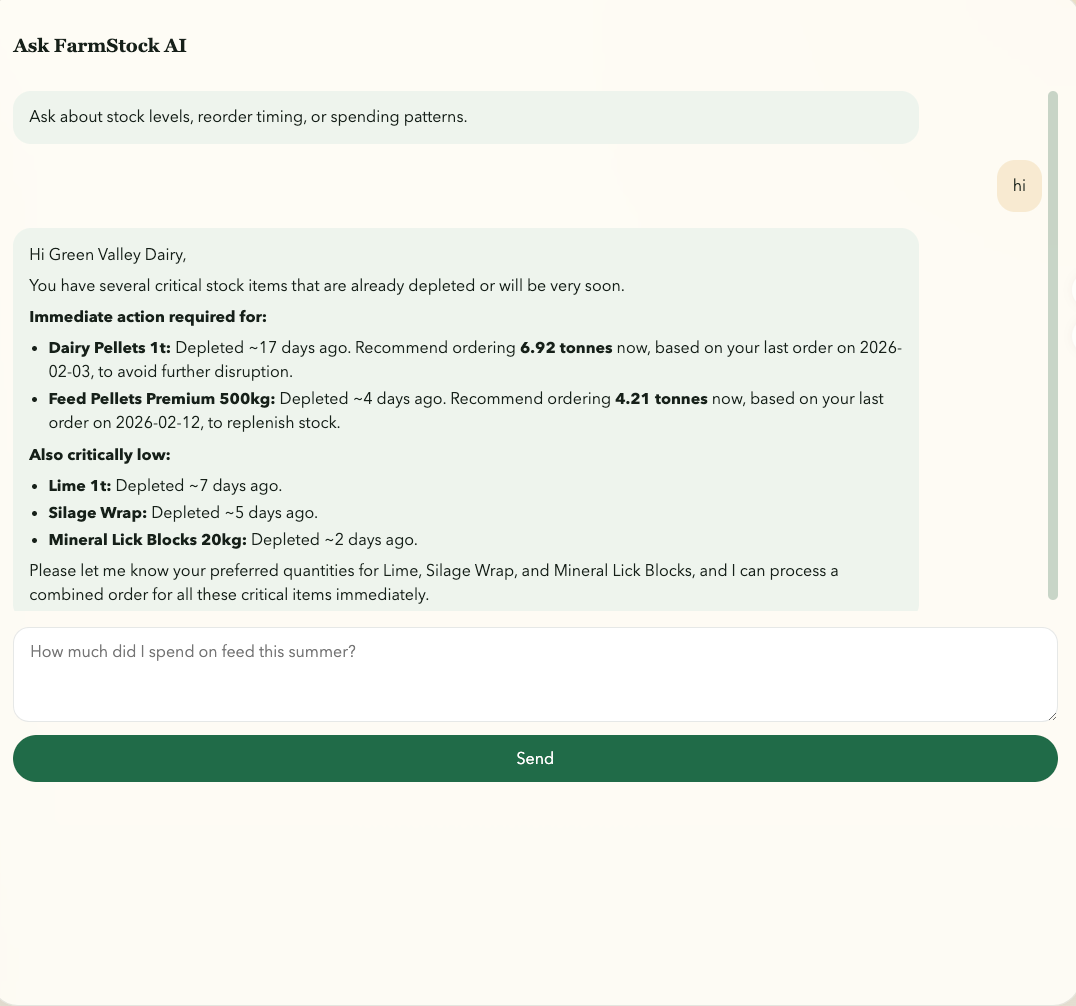
Our solution is FarmStock AI: a system that combines historical purchase data, predictive restocking logic, shelf-life awareness, and conversational AI into one experience. The core idea is that users do not need to learn a new platform to get value. Instead of navigating complex menus, they can simply talk to the FarmStock bot in natural language via telegram or What'sapp to check stock risk, ask what needs reordering, review spending, and receive practical recommendations. The web dashboard still exists for richer analytics and data management, but the bot is the simplest and most intuitive entry point.
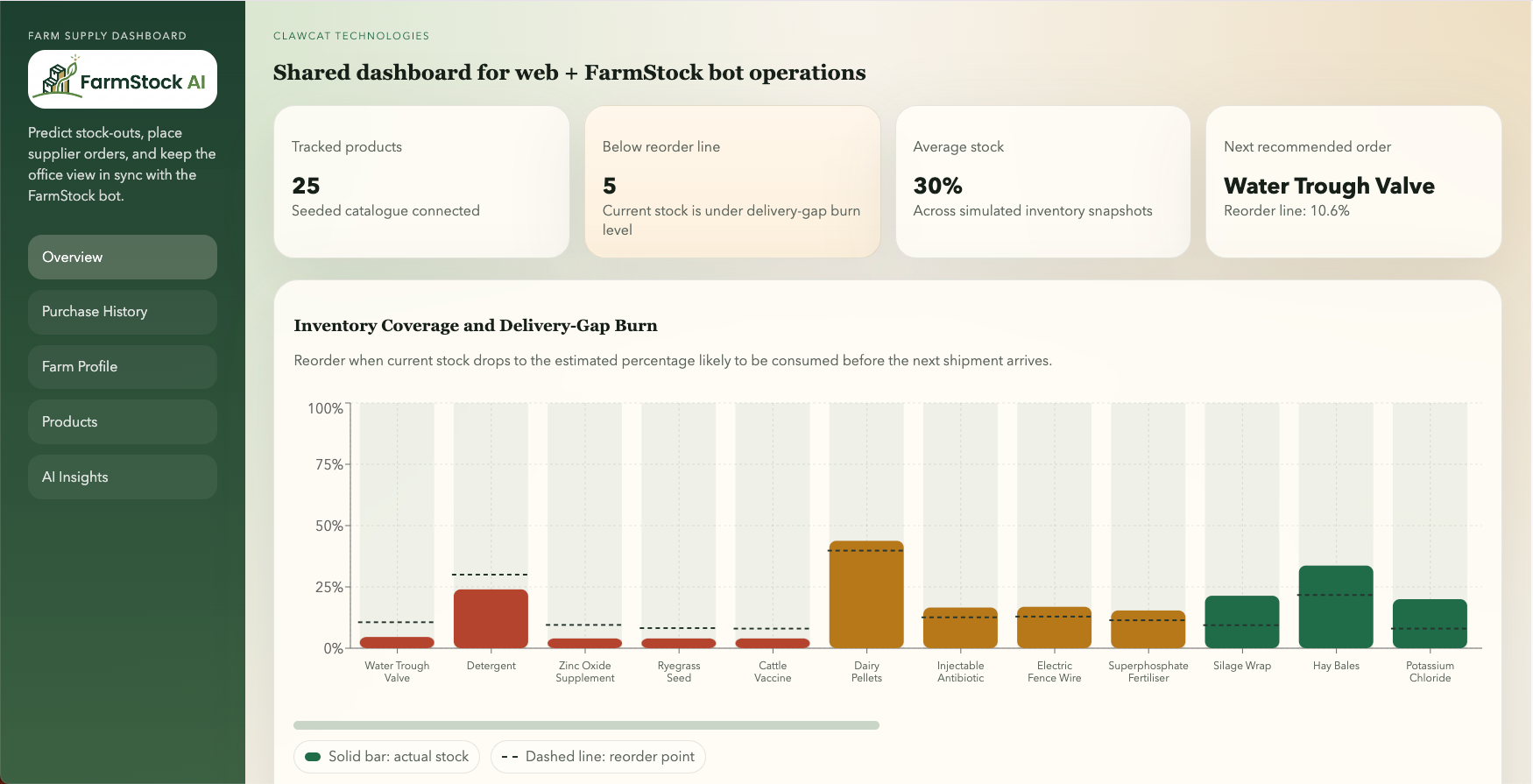
We built the project with a FastAPI backend, SQLite database, React frontend, and Gemini-powered AI chat layer. On the data side, we generated realistic multi-year farm purchasing history, then built prediction logic to estimate depletion timing, reorder thresholds, and “delivery-gap burn” risk. On the frontend, we created an inventory dashboard, order history CRUD flows, farm profile management, AI insights, and chart-based stock visualisation. On the bot side, we implemented a lightweight messaging workflow and later adapted it toward Telegram support to make testing easier and reduce setup friction.
One of the most important things we learned was that usability matters as much as intelligence. It is not enough for an AI system to be accurate; it must fit the user’s habits.
A key challenge was balancing technical ambition with hackathon practicality. Messaging platform setup, API compatibility, seeded data realism, and frontend clarity all took iteration. We also had to make the system resilient when external services were unavailable, so we added simulation flows and graceful fallback behavior. Another challenge was turning raw purchase history into explanations a farmer could trust, not just numbers in a chart.
What inspired us most was the opportunity to build something genuinely useful: a tool that feels less like software to manage and more like a farm operations assistant you can simply ask.
What’s next for us
Our next step is to make FarmStock AI more proactive and even more valuable in day-to-day purchasing decisions. One major direction is building an AI-driven price intelligence layer that automatically gathers and monitors product pricing from major agricultural suppliers, then alerts farmers when there is a meaningful saving opportunity. Instead of only warning users when stock is low, the system could also tell them when it is the right time to buy, which supplier is currently offering the best value, and whether a product is safe to stock up based on shelf life.
We also want to deepen the bot experience so it becomes the primary interface for most users. That means more natural conversations, better order recommendations, smarter follow-up questions, and a smoother path from “What am I running low on?” to “Place the order.” On the product side, we want to expand beyond simulated inventory into more real-time operational signals, improve supplier integrations, and eventually support a broader range of farm types and purchasing workflows. Our long-term vision is for FarmStock AI to become a lightweight but intelligent operating layer for farm supply decisions, helping farmers save time, reduce waste, and avoid costly shortages without forcing them to adopt complicated new software.


Log in or sign up for Devpost to join the conversation.