-
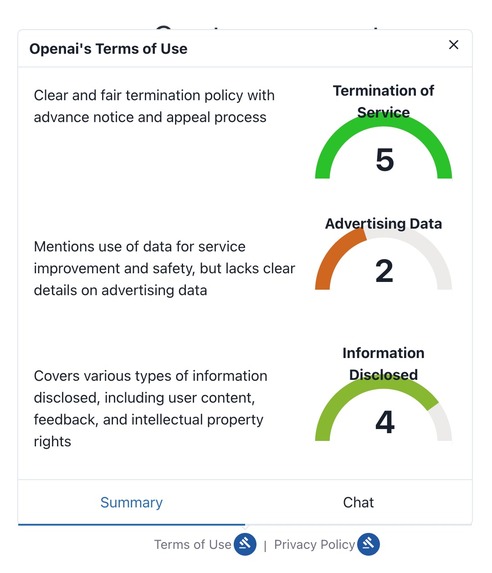
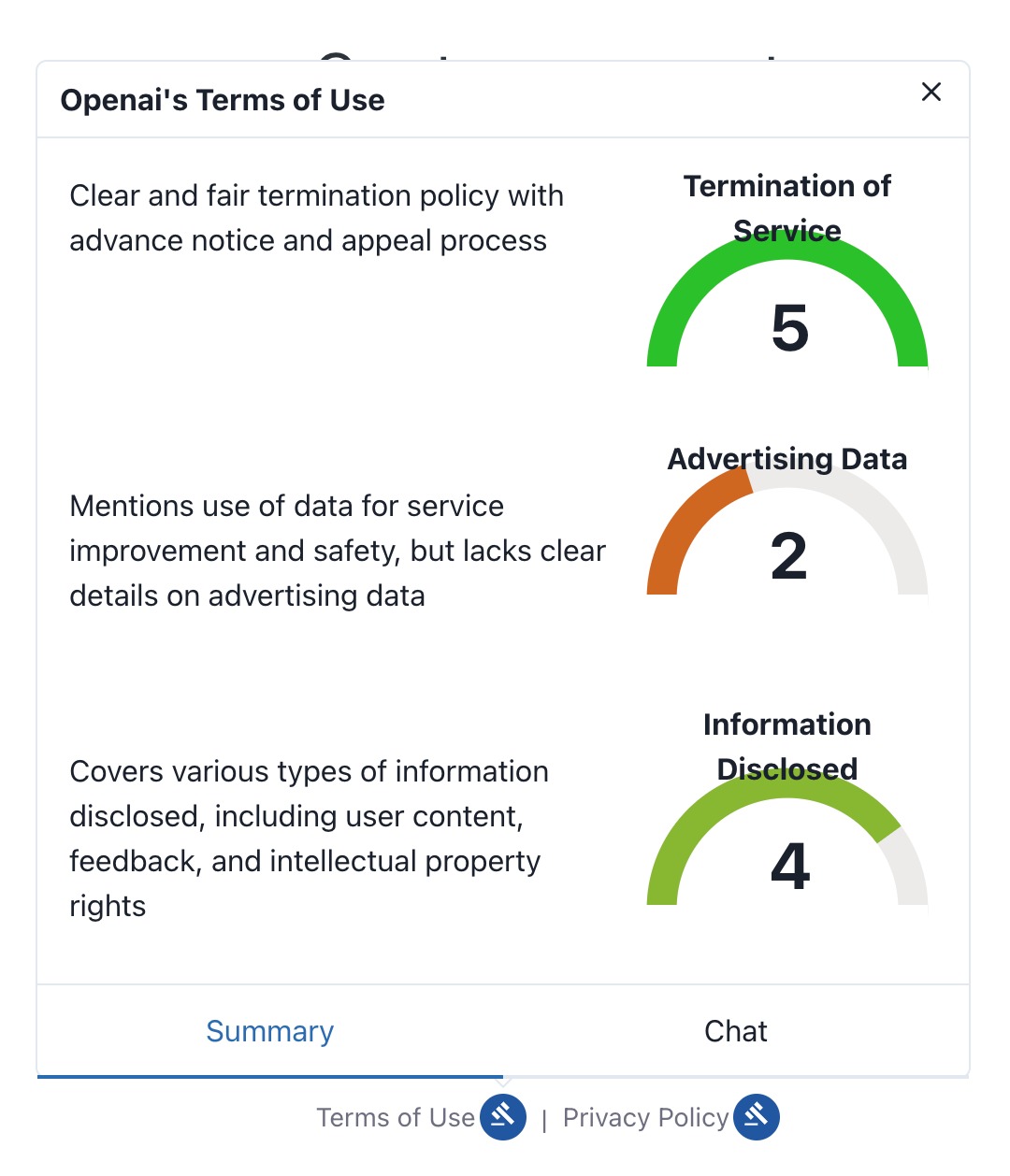
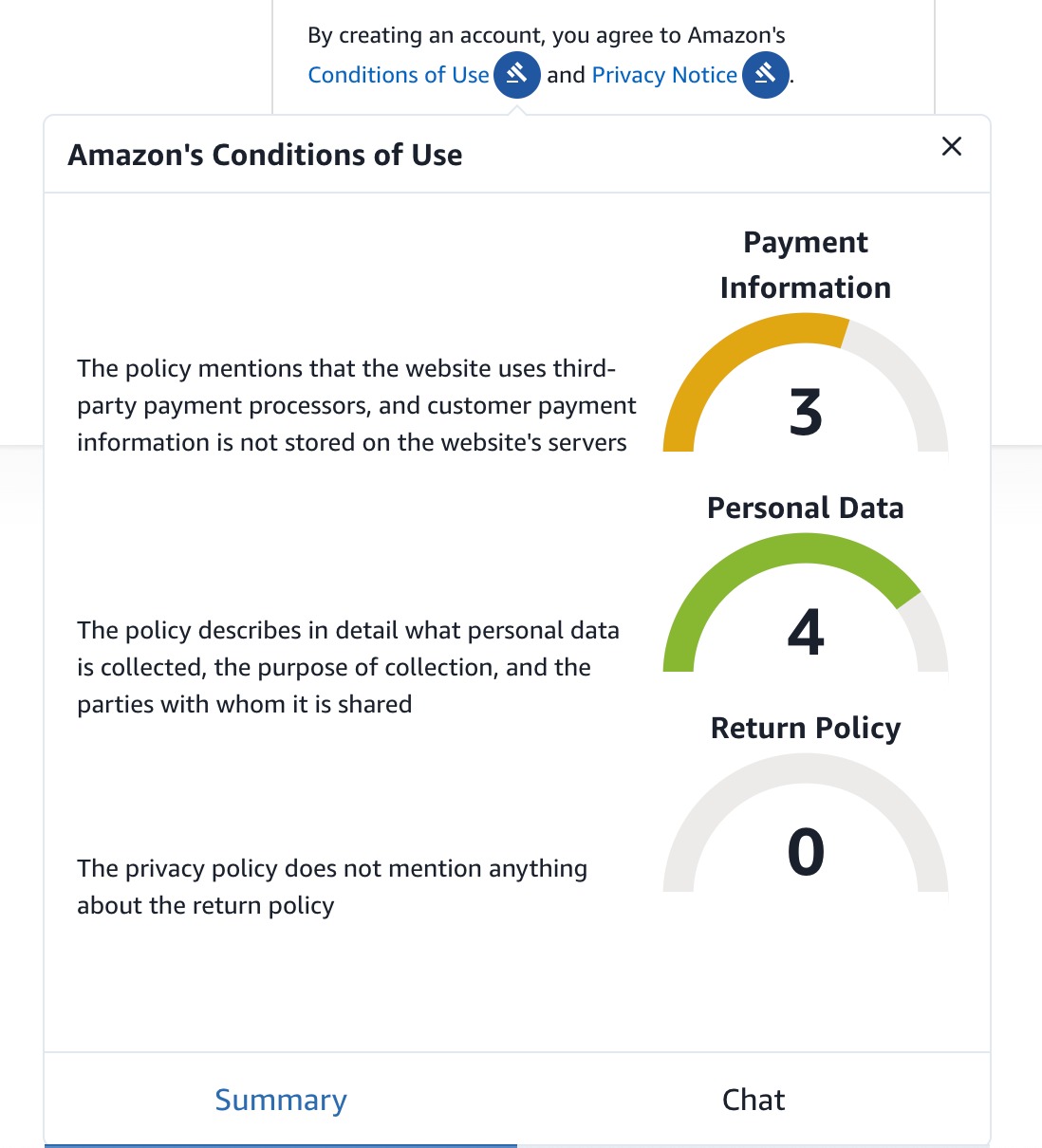
Our software returning "scores" for the top three categories for a website's Terms of Use, and scoring them on industry standards
-
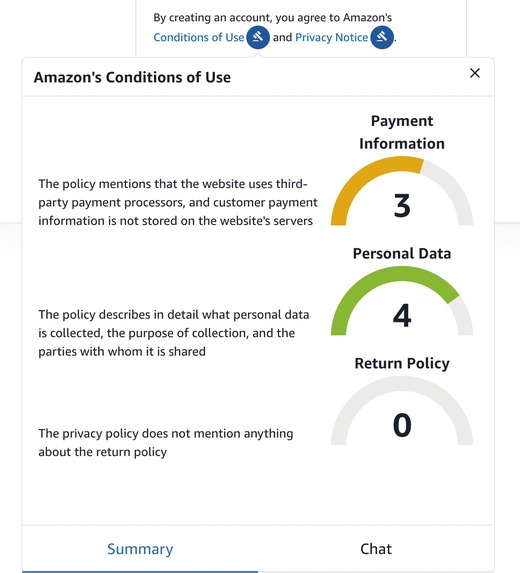
Screenshot from Amazon.com's Terms of Use. We can see that since there is no mention of Return Policy, our software intelligently returns 0.
-
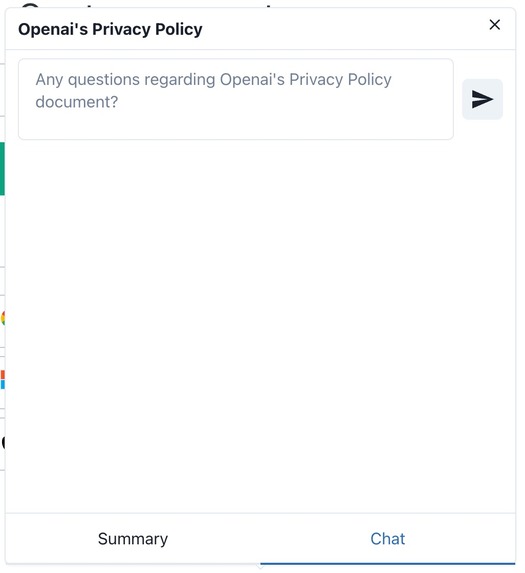
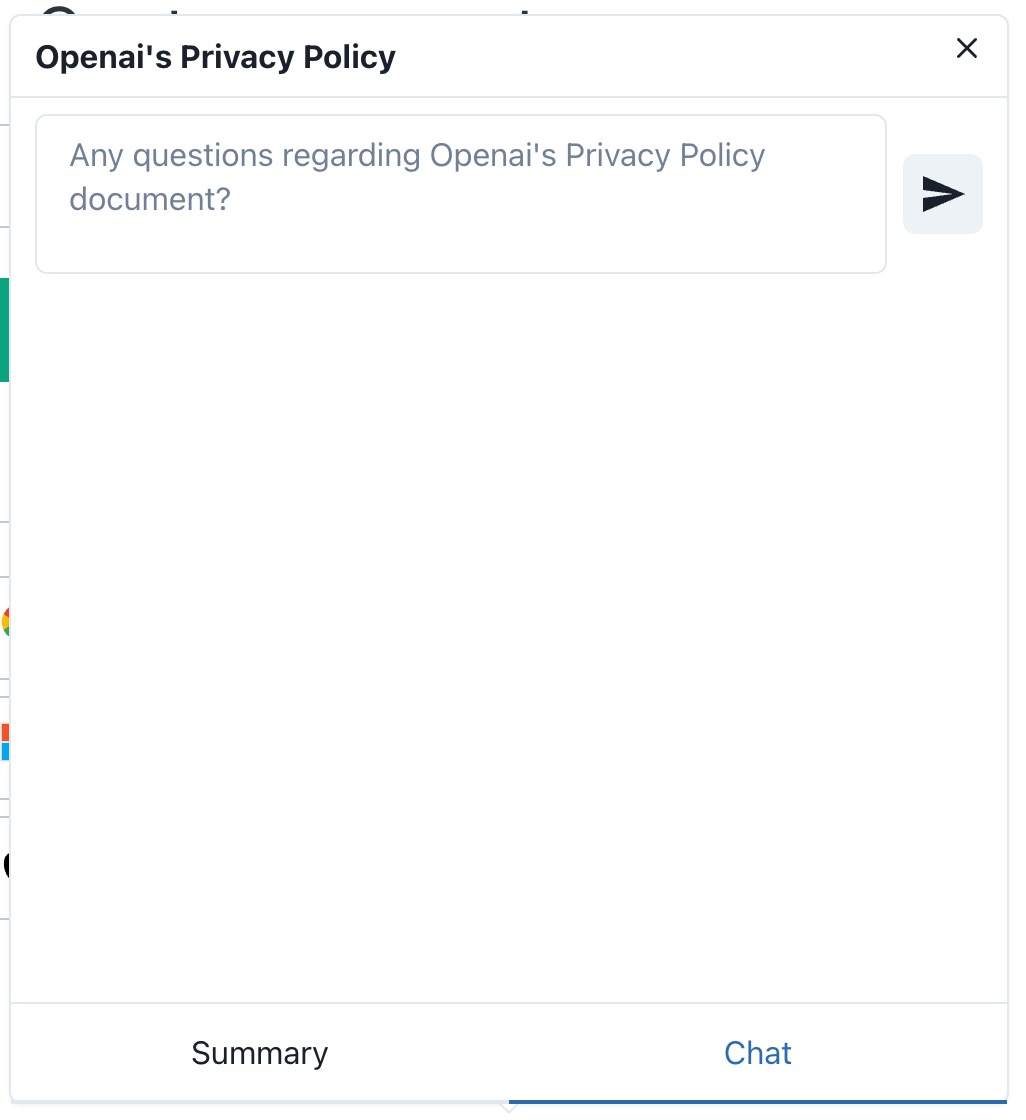
A screenshot of the Chat screen, where users can interact with Clause to delve deeper within the legal documents and question it further.
Inspiration
Our inspiration for ClausePause was simple: to demystify the often overlooked yet crucial terms and conditions, in an era where data privacy, user rights, and compliance are increasingly paramount.
What it does
Our project introduces a sophisticated Chrome extension designed to navigate and interpret the often complex terrain of legal documents, including terms and conditions, privacy policies, and related legal content. This tool employs a dynamic crawler that meticulously analyzes these documents and distills their content into concise summaries, making the intricacies of legal jargon accessible to users.
The user interface is meticulously crafted, featuring a unique rating system that evaluates documents across various key categories. These categories are tailored specifically to the type of company—like emphasizing data collection and sharing for social media companies or financial dealings for financial institutions. The extension assesses the three most critical categories pertinent to each industry, calculating an average score that reflects the overall compliance and quality of the document.
Additionally, we have integrated a sophisticated AI-driven chat feature that allows users to delve deeper into specific areas of the document, ask questions, and gain clarity on particular clauses directly through the extension. This feature leverages a custom-trained model capable of pinpointing relevant information swiftly and engaging in informative dialogues about the document’s content. The extension activates automatically upon detecting legal documents on a webpage, offering real-time guidance on what users are agreeing to before they proceed.
This Chrome extension is not just a tool but a comprehensive solution designed to empower users with knowledge and confidence as they navigate the digital legal landscape.
How we built it
Technology Stack Our project was developed using a robust stack that includes React, Vite, TypeScript, HTML, CSS, and chakra.ui. This combination of technologies was selected for their performance efficiency, scalability, and the vibrant ecosystem they provide.
Extension Setup We began by creating a boilerplate for the Chrome extension using React, coupled with Vite for efficient bundling and TypeScript for strong typing. This setup ensures our code is maintainable and robust, minimizing bugs and facilitating team collaboration.
Frontend Development
Detecting Legal Documents The core functionality on the frontend involves scanning web pages for potential legal documents. Our extension monitors and parses all anchor elements in real-time as a user navigates. We implemented a sophisticated detection algorithm that identifies links containing legal terminology or buzzwords. Once a potential legal document is found, our extension dynamically injects a custom-designed symbol next to the hyperlink. This symbol serves as a visual cue for users, indicating the presence of legal content.
Interactive UI Elements Clicking on the indicated symbol activates a popup panel, which is the gateway to the tool's extensive features. This panel provides a summary of the document, scores across predetermined categories relevant to the company type, and highlights specific areas of concern or excellence within the document.
To build this, we leveraged React for its component-based architecture, allowing us to manage each part of the user interface as an independent and reusable block. This modular approach makes it easier to update and maintain the application.
Styling and Responsiveness For the design and layout, we utilized HTML and CSS, enhanced with chakra.ui for its comprehensive suite of styled system-based components. Chakra.ui enabled us to implement a responsive, accessible, and visually cohesive interface without extensive custom styling, speeding up the development process.
Backend and AI Integration
Our Chrome extension isn't just a static tool; it's backed by a powerful AI-driven backend. The AI component is designed to interact with users through a chat feature, which allows them to inquire about specific segments of the legal document. This AI has been trained on a vast corpus of legal documents to understand and extract meaningful information from the legalese.
To implement this, we developed a custom model using machine learning techniques that can accurately identify and interpret legal clauses and their implications. The model is integrated seamlessly into the extension, enabling it to provide real-time responses within the chat interface.
Summary The construction of this Chrome extension represents a sophisticated integration of modern web technologies and artificial intelligence. By focusing on user interaction, intuitive design, and powerful backend algorithms, we've crafted a tool that not only simplifies the reading of legal documents but also educates users about the implications of the agreements they are entering into. This project showcases our commitment to enhancing digital literacy and making legal information more accessible and understandable for everyone.
Challenges we ran into
Navigating Sparse Documentation One of the initial hurdles was the limited documentation available for building complex Chrome extensions using React. This gap often left us to resolve issues independently, enhancing our problem-solving skills but also significantly testing our patience and resourcefulness.
Hackathon Time Crunch The timing added another layer of intensity. As we approached the critical final hours of the hackathon, we encountered unexpected packaging issues. These were primarily due to the nuances of integrating React into a Chrome extension environment—a task less documented and therefore more prone to unexpected challenges. The pressure to prepare a functioning demo under time constraints led to a frantic but focused effort to troubleshoot and resolve these issues swiftly.
Handling Incorrect MIME Types A specific technical challenge involved MIME type errors. Our extension attempted to load a CSS file hosted on Amazon’s servers, but instead of receiving a stylesheet, we were met with HTML content. This error led to a painstaking process of verifying and correcting file paths and server requests across our project directories, ensuring that every resource call was accurate and that the server's responses were as expected.
Backend and AI Integration Issues On the backend, we faced significant challenges with Google Cloud authentication processes, which were crucial for our AI-powered chat feature to function correctly. Integrating AI into the extension also posed dilemmas regarding model selection and configuration. We needed a model that was not only efficient and accurate but also compatible with the lightweight and responsive nature of a Chrome extension.
Strategic Problem Solving To tackle these challenges:
- We increased our reliance on community forums and other non-traditional sources of information to fill the gaps left by official documentation.
- We implemented rigorous testing protocols, particularly for the frontend, to ensure that all elements behaved consistently across different web environments.
- For backend issues, particularly those involving Google Cloud and AI integration, we engaged in deep dives into the documentation, as well as using AI to explain AI to us.
Learning and Adapting These challenges, while daunting, provided valuable lessons in flexibility, persistence, and the importance of a well-coordinated team effort. Each obstacle was transformed into a learning opportunity, pushing us to explore new solutions and strengthen our skills in software development and AI applications.
By reflecting on these experiences, we not only developed a functional Chrome extension but also gained insights that will enhance our future projects, ensuring we are better equipped to handle similar challenges moving forward.
Accomplishments that we're proud of
We are truly proud of the work we were able to accomplish together as a team in such a limited timeframe. We were able to not just think of and design something truly unique and helpful to society, focusing on social impact,
What we learned
Navigating Sparse Documentation One of the initial hurdles was the limited documentation available for building complex Chrome extensions using React. This gap often left us to resolve issues independently, enhancing our problem-solving skills but also significantly testing our patience and resourcefulness.
Hackathon Time Crunch The timing added another layer of intensity. As we approached the critical final hours of the hackathon, we encountered unexpected packaging issues. These were primarily due to the nuances of integrating React into a Chrome extension environment—a task less documented and therefore more prone to unexpected challenges. The pressure to prepare a functioning demo under time constraints led to a frantic but focused effort to troubleshoot and resolve these issues swiftly.
Handling Incorrect MIME Types A specific technical challenge involved MIME-type errors. Our extension attempted to load a CSS file hosted on Amazon’s servers, but instead of receiving a stylesheet, we were met with HTML content. This error led to a painstaking process of verifying and correcting file paths and server requests across our project directories, ensuring that every resource call was accurate and that the server's responses were as expected.
Backend and AI Integration Issues On the backend, we faced significant challenges with Google Cloud authentication processes, which were crucial for our AI-powered chat feature to function correctly. Integrating AI into the extension also posed dilemmas regarding model selection and configuration. We needed a model that was not only efficient and accurate but also compatible with the lightweight and responsive nature of a Chrome extension.
Strategic Problem Solving To tackle these challenges:
- We increased our reliance on community forums and other non-traditional sources of information to fill the gaps left by official documentation.
- We implemented rigorous testing protocols, particularly for the frontend, to ensure that all elements behaved consistently across different web environments.
- For backend issues, particularly those involving Google Cloud and AI integration, we engaged in deep dives into the documentation and made AI help us with AI.
Learning and Adapting These challenges, while daunting, provided valuable lessons in flexibility, persistence, and the importance of a well-coordinated team effort. Each obstacle was transformed into a learning opportunity, pushing us to explore new solutions and strengthen our skills in software development and AI applications.
By reflecting on these experiences, we not only developed a functional Chrome extension but also gained insights that will enhance our future projects, ensuring we are better equipped to handle similar challenges moving forward.
What's next for ClausePause
Winning HackDartmouth 2024
Enhanced AI Model Training A key priority for the future development of ClausePause is to significantly enhance the precision and versatility of our AI model. Our aim is to retrain our model with a more diverse and comprehensive dataset. This will allow the AI to deliver more accurate and nuanced interpretations across a broader range of legal documents and industry-specific regulations. By refining our AI's understanding and predictive capabilities, we can ensure that ClausePause provides users with an even more reliable and insightful analysis of legal terms and conditions.
Commitment to Open Source We are dedicated to keeping ClausePause open-sourced. This approach not only fosters a collaborative environment where developers worldwide can contribute to and benefit from our project but also accelerates innovation and improvement. By maintaining an open-source platform, we invite a community of developers to join us in enhancing the functionality and reach of ClausePause, making it a more robust tool that evolves in line with the needs of its users.
Expanding User Base to Corporate Environments Looking ahead, we see significant potential for ClausePause in corporate settings. Recognizing the critical importance of safeguarding company secrets and ensuring compliance with industry standards, we plan to tailor specific features of ClausePause to meet the needs of corporate users. This adaptation will include enhanced security measures and customization options that allow businesses to integrate ClausePause seamlessly into their existing workflows and security frameworks.
Continuous Improvement and Community Engagement As we advance, we will continue to engage with our user base and the broader tech community to gather feedback and ideas. This continuous loop of feedback and updates will help us to not only improve the existing features but also to innovate new functionalities that address emerging needs and challenges in legal document handling.
Vision for Broader Impact Ultimately, our vision for ClausePause is to become an indispensable tool for individuals and organizations alike, providing a reliable and user-friendly solution for navigating the complexities of legal documents. We believe that by continuously improving ClausePause, we can contribute significantly to enhancing transparency and understanding in legal engagements, thereby empowering users with the knowledge to make informed decisions.
These planned improvements and expansions are guided by our commitment to excellence, user satisfaction, and making legal information accessible and comprehensible for everyone.
Built With
- chakra.ui
- css
- css3
- express.js
- firestore
- google-cloud
- html
- html5
- javascript
- python
- react
- typescript
- vertex.ai
- vite

Log in or sign up for Devpost to join the conversation.