-
-
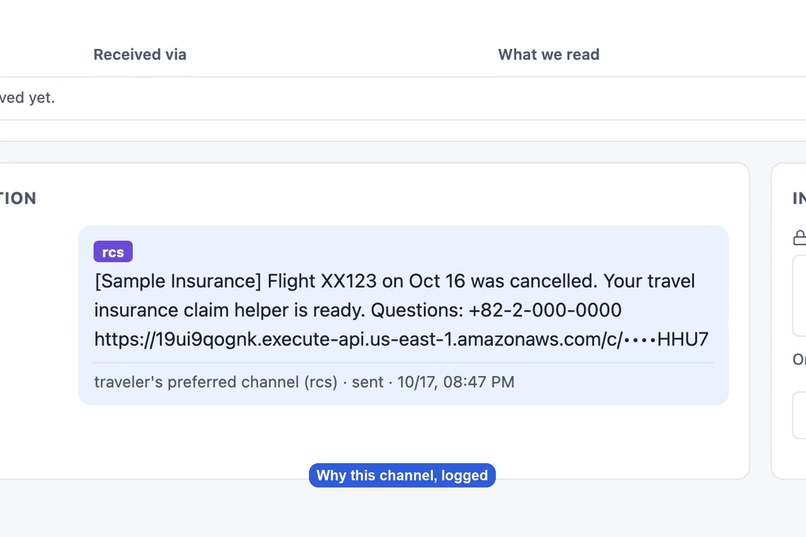
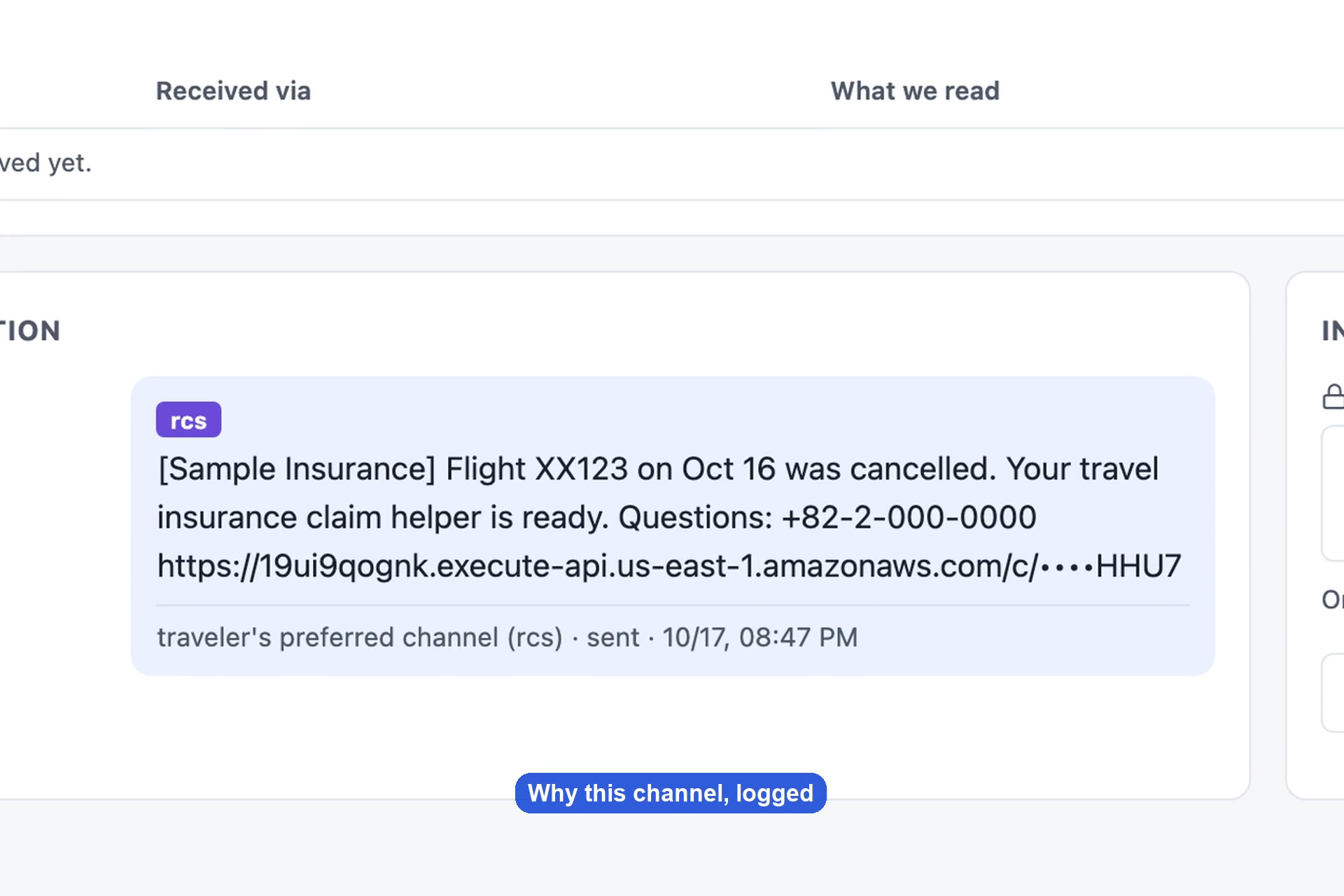
The channel chosen for each traveler, and why, is logged
-
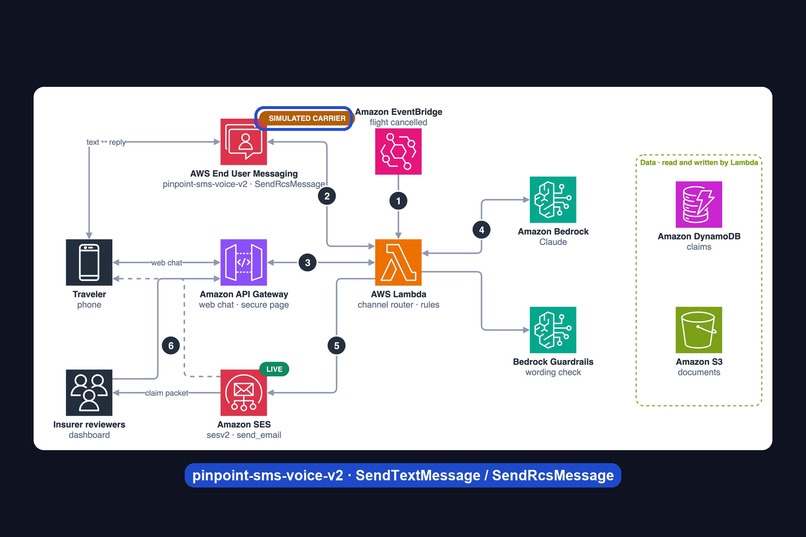
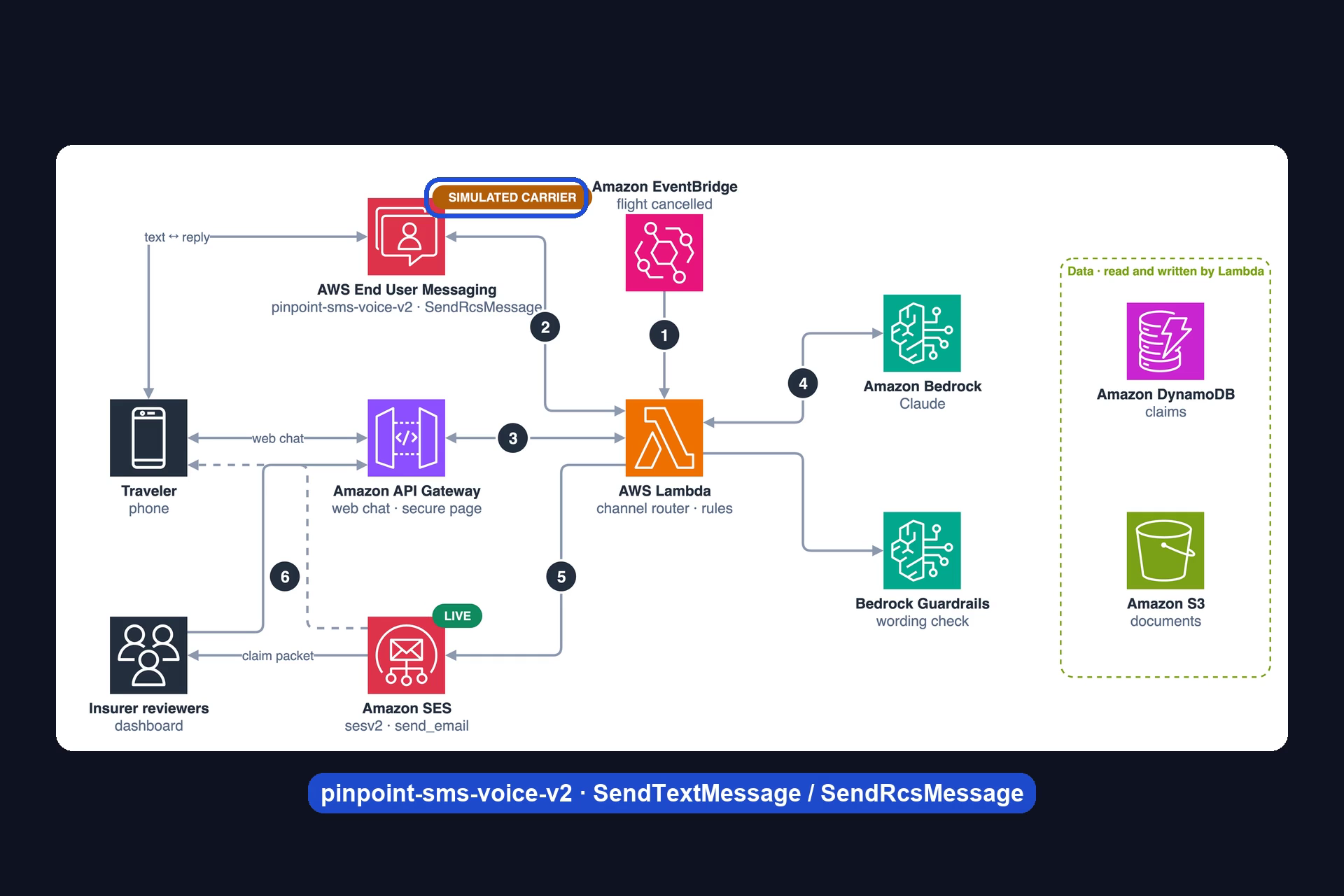
Architecture: Bedrock, End User Messaging, SES
-
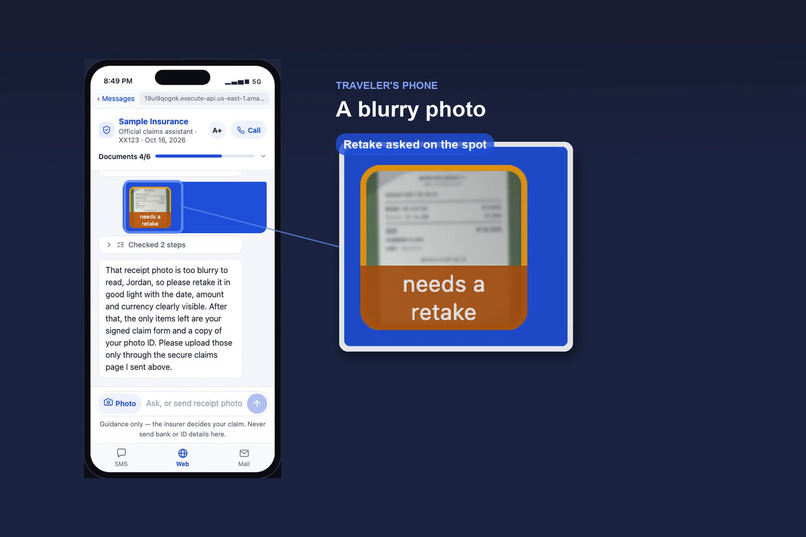
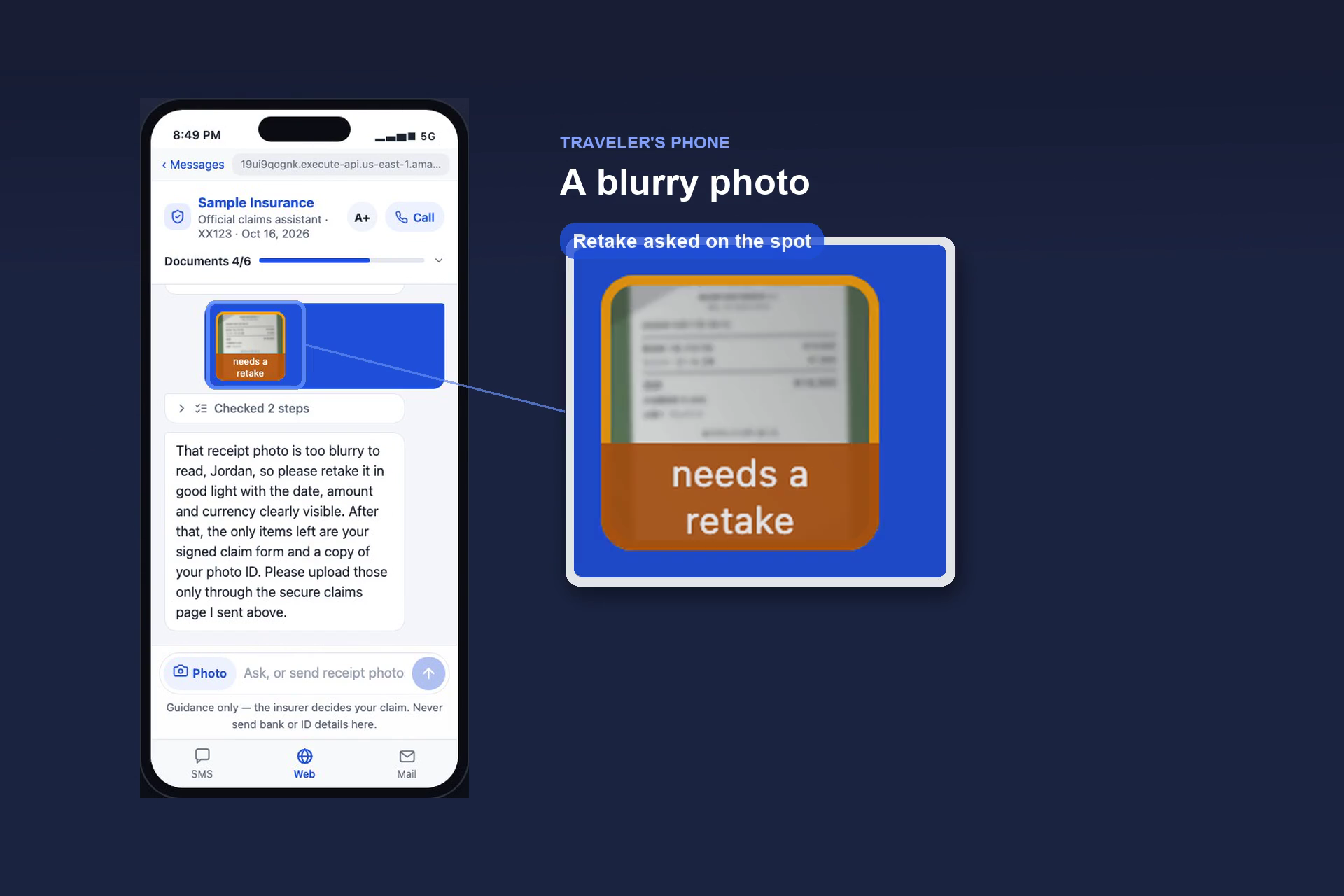
A blurry photo gets a retake request on the spot
-
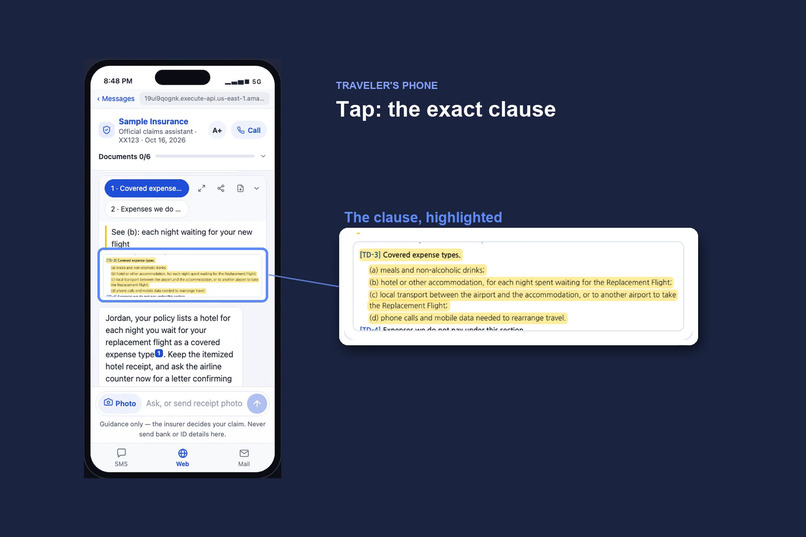
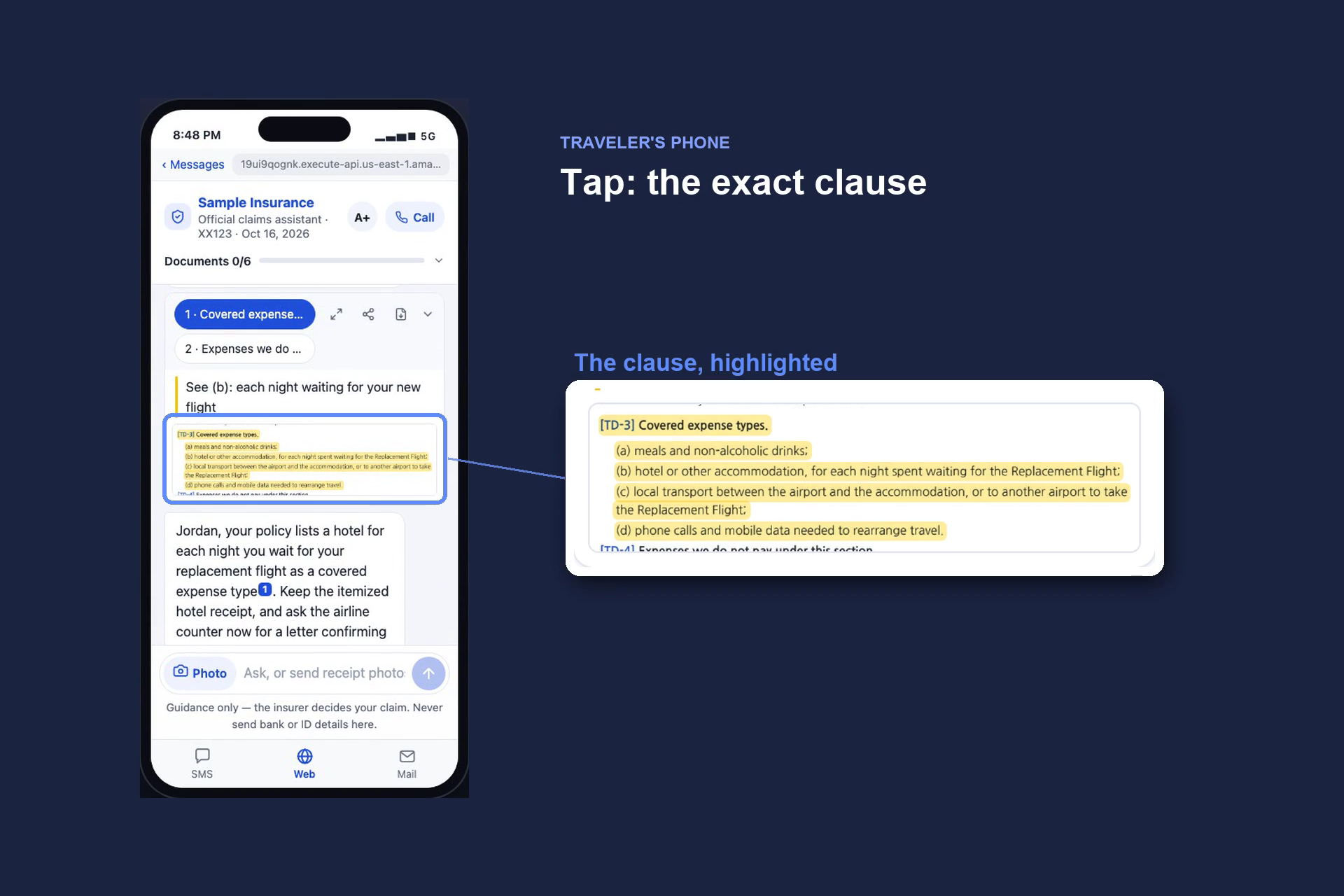
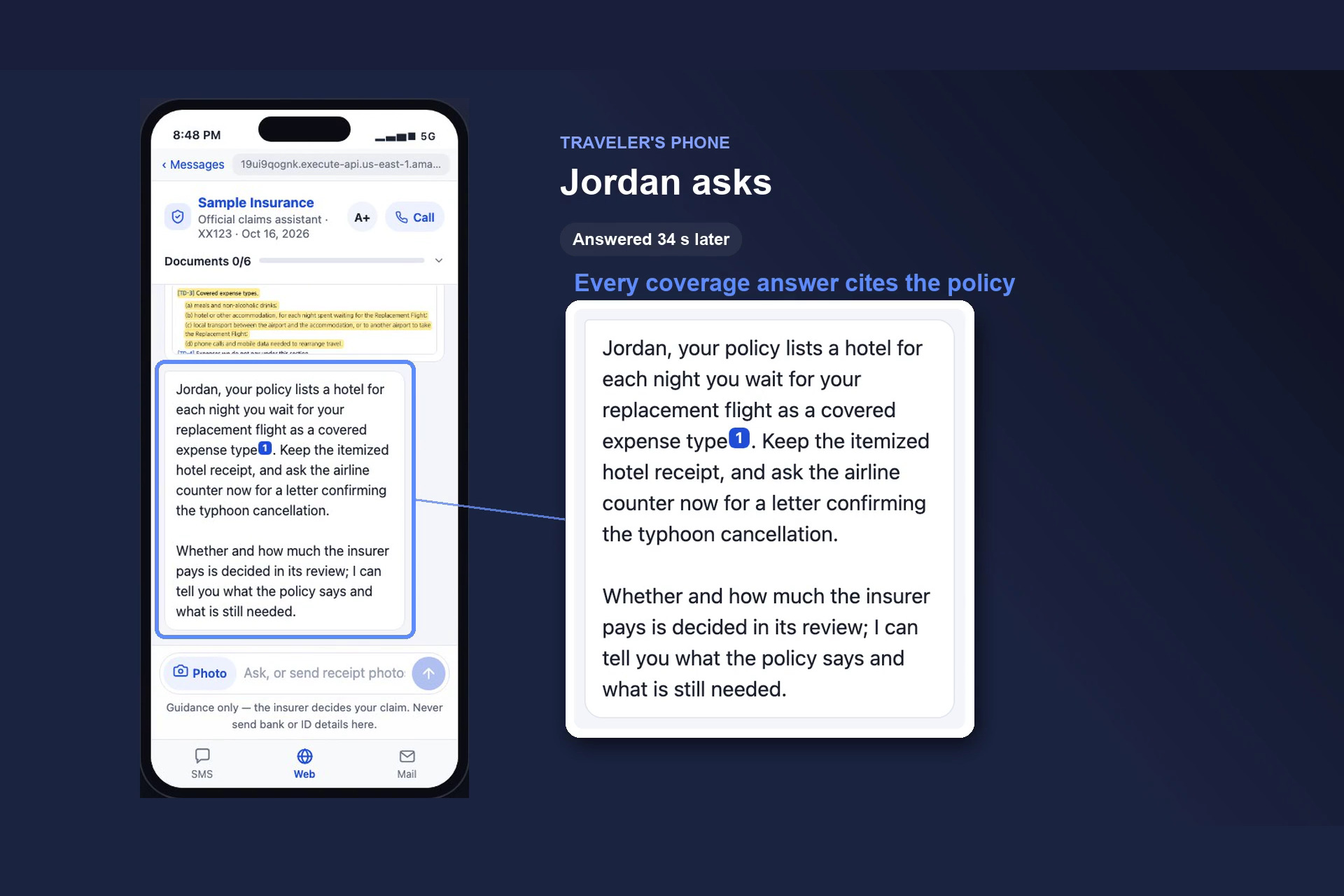
One tap highlights the exact clause
-
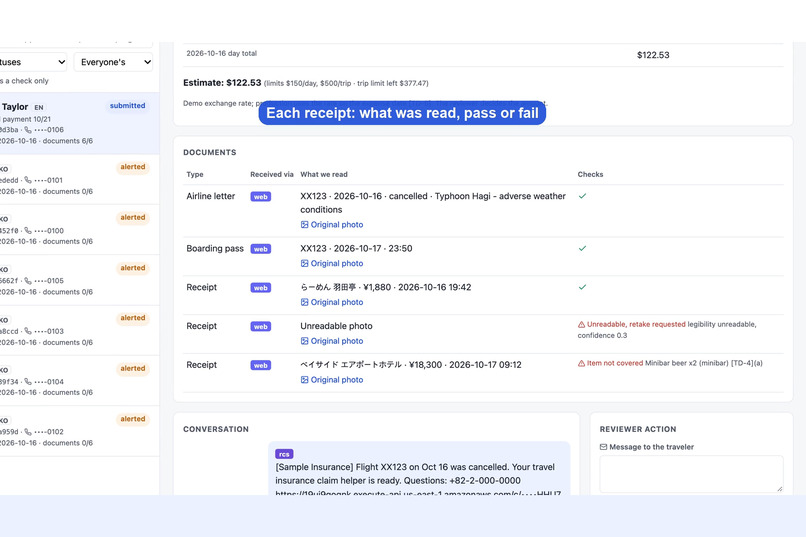
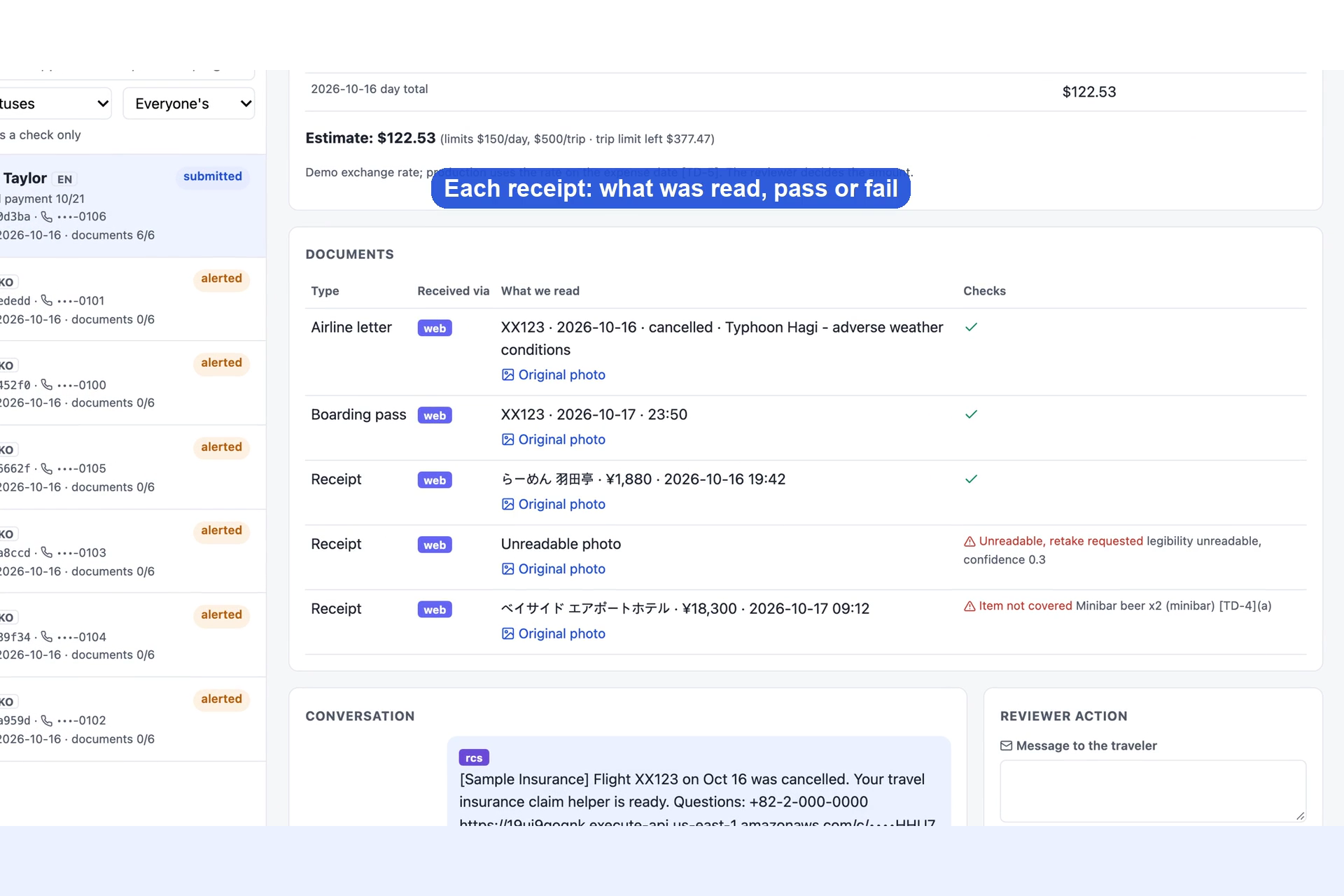
Staff desk: what was read from each receipt, pass or fail
-
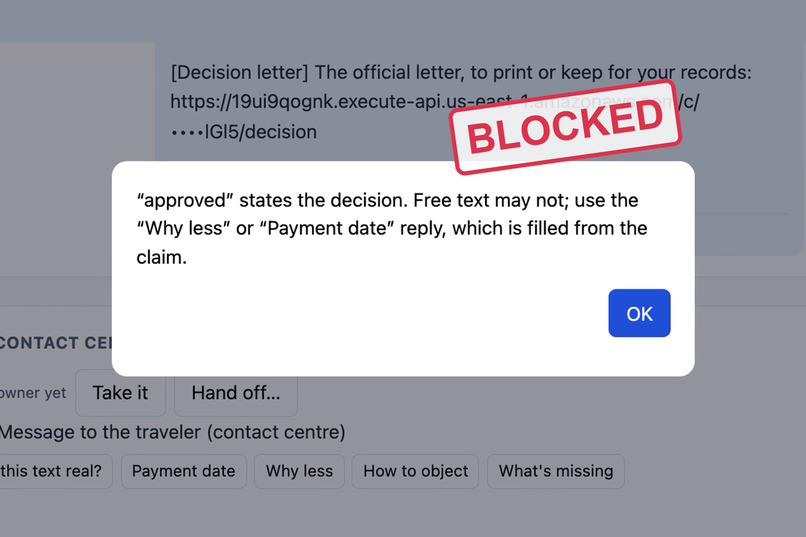
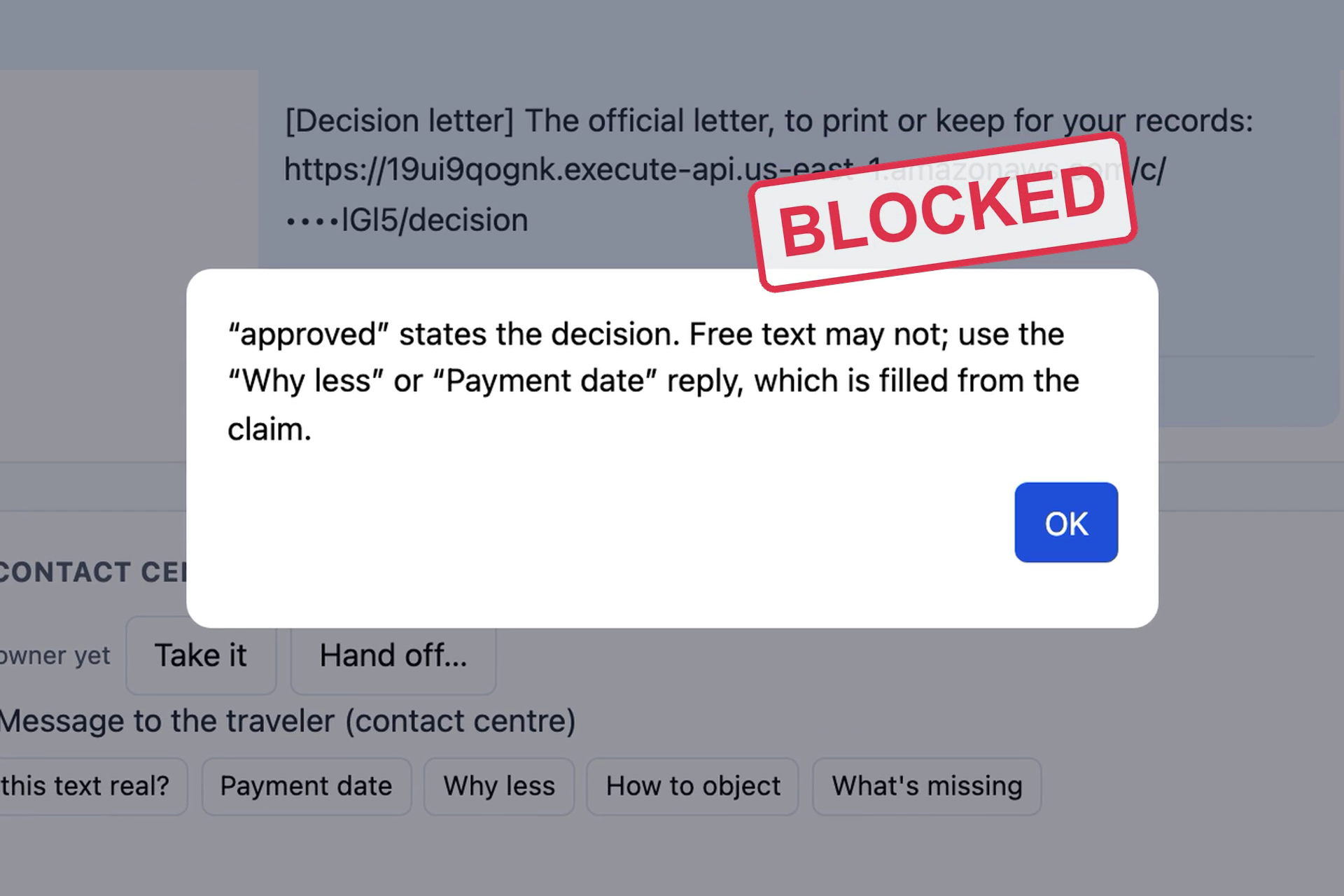
"Approved" typed by staff is blocked; decisions use templates
-
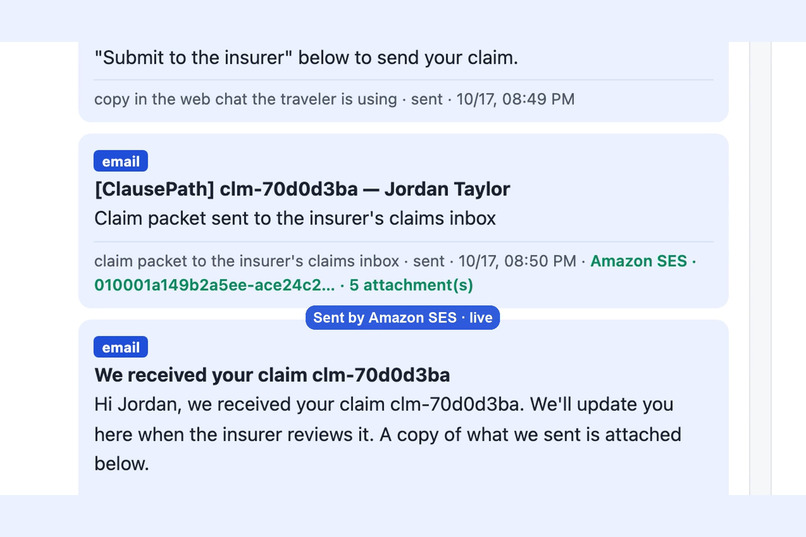
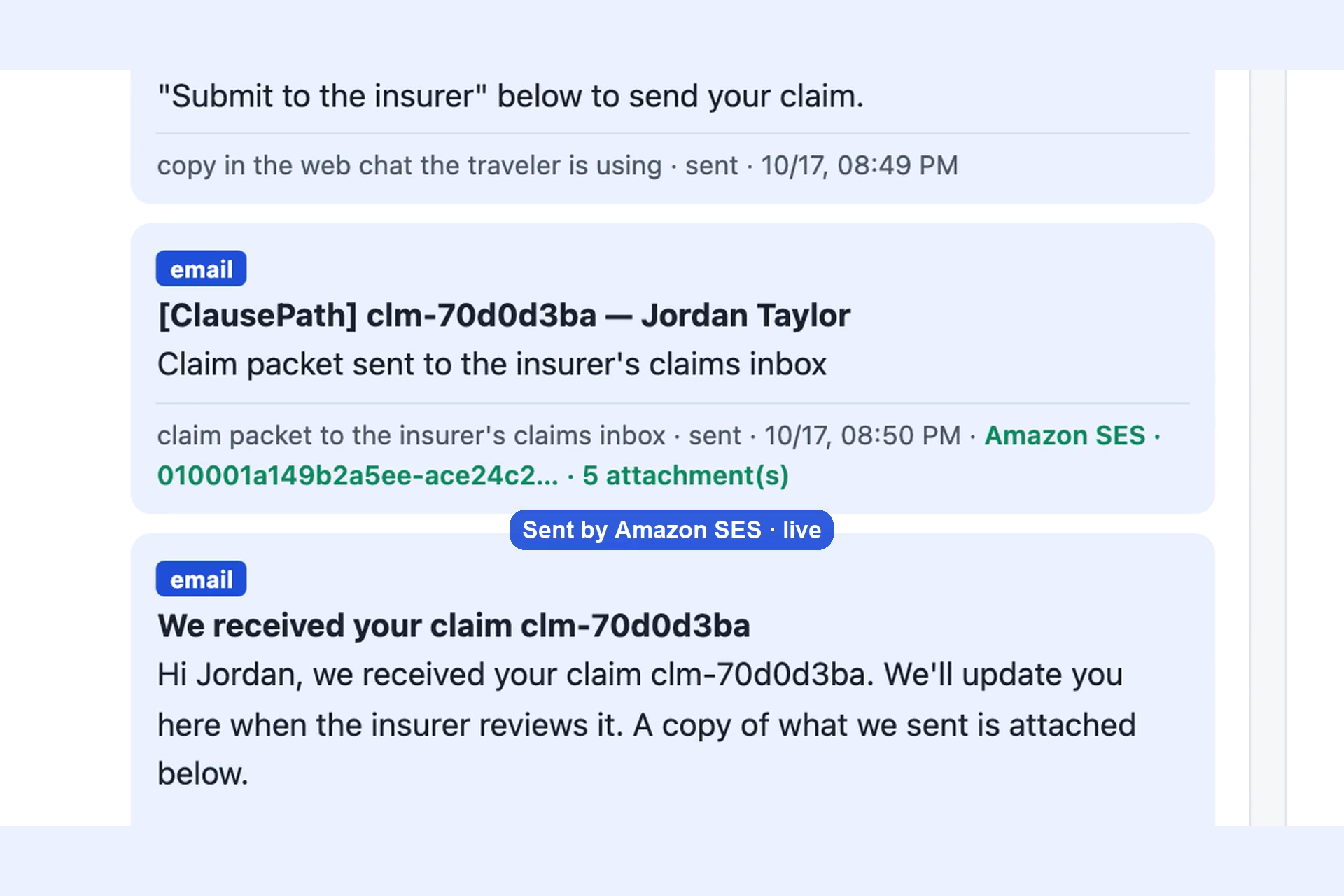
Claim packet sent to the insurer by Amazon SES (live)
-

99.7% of receipt totals read correctly on 1,146 real photos
-
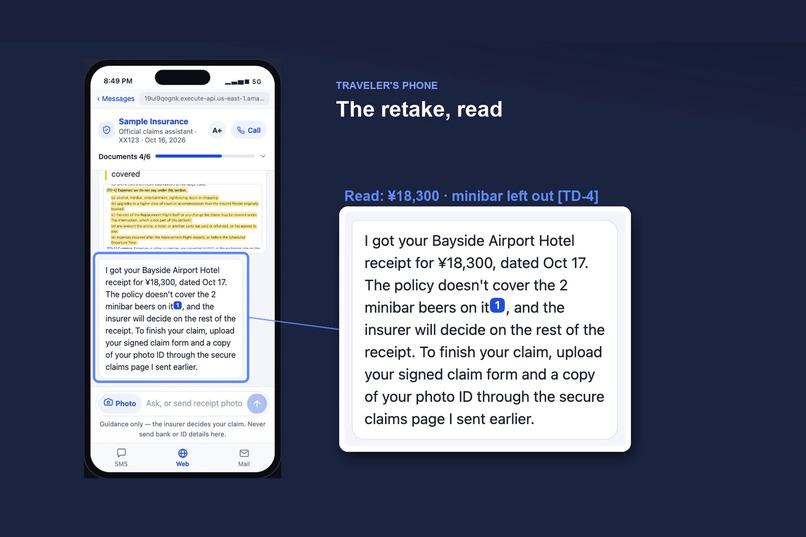
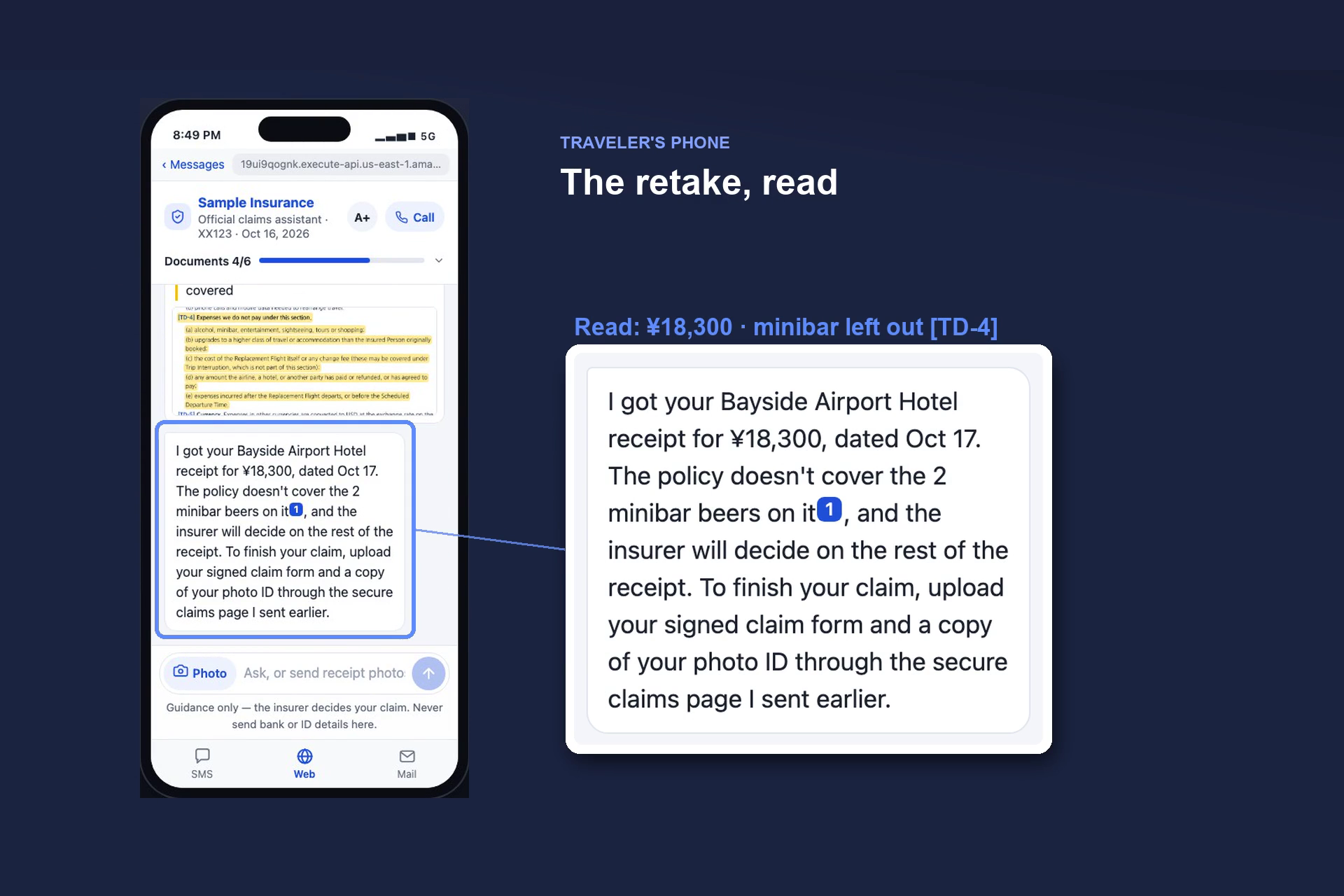
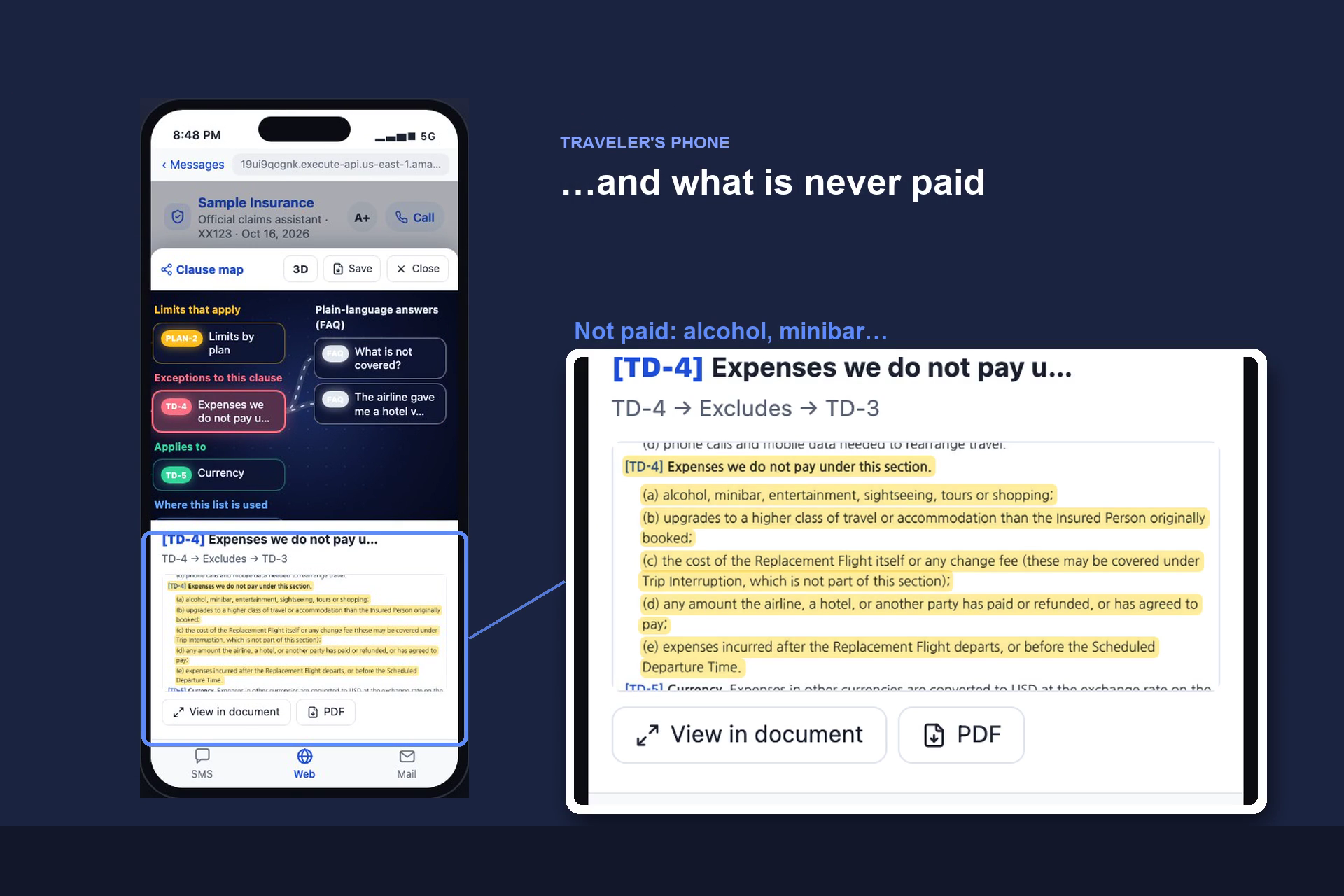
The retake is read; the minibar is left out with the clause
-
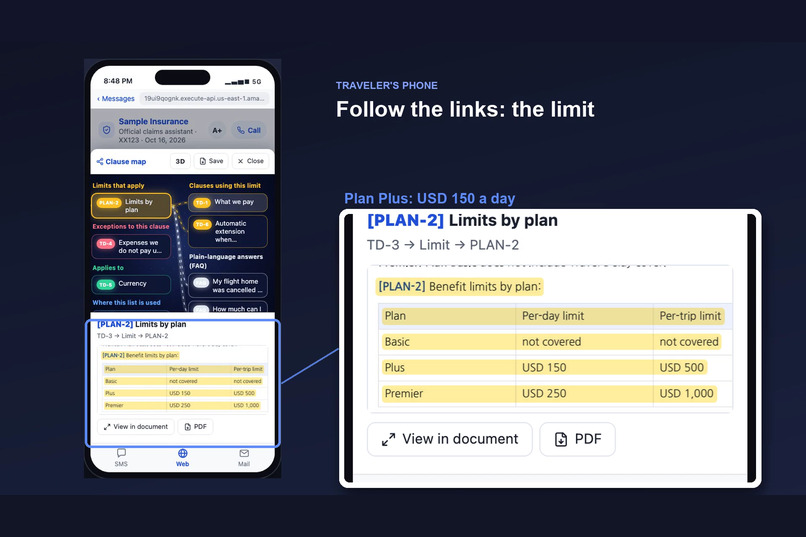
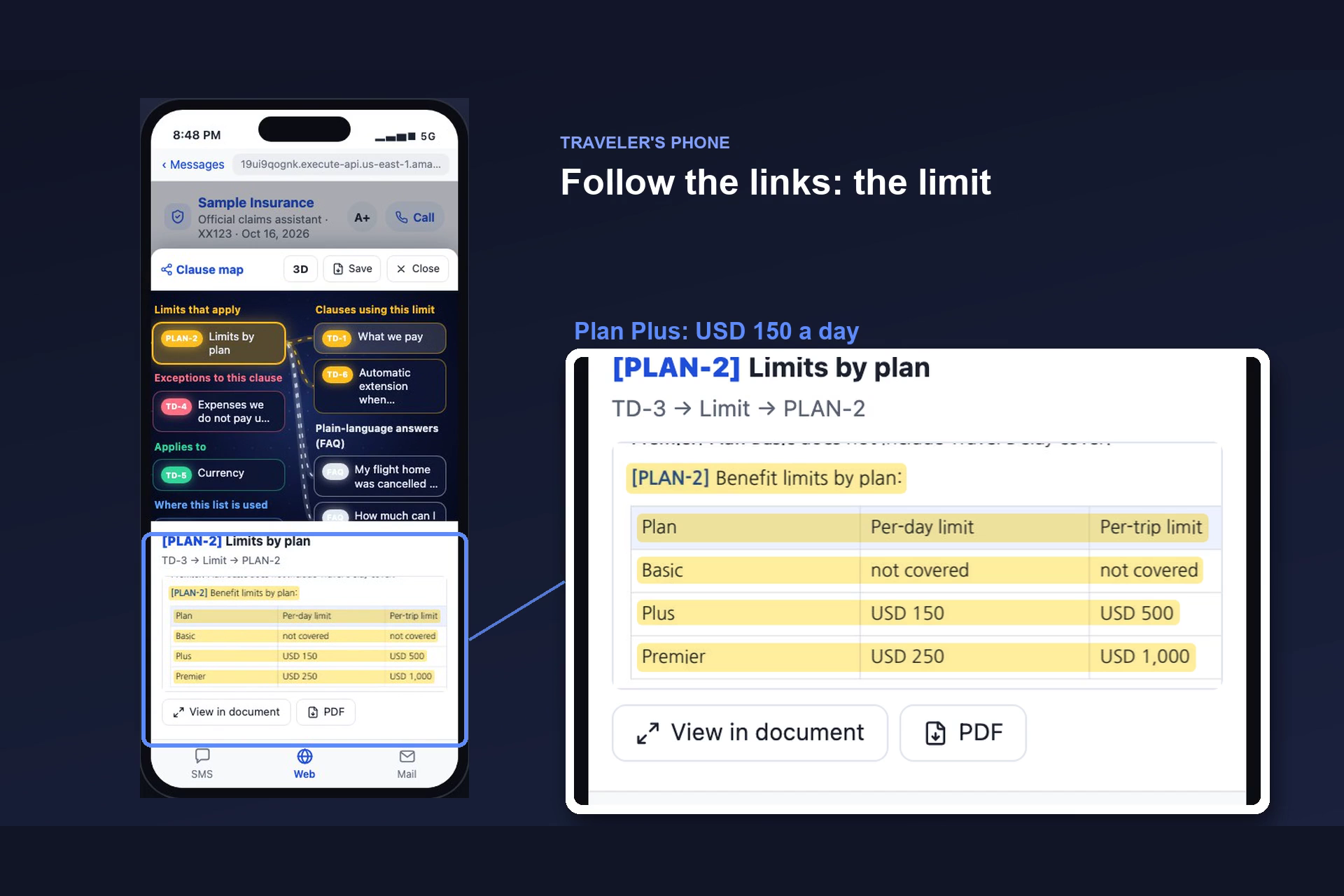
Clause map: the limit for the traveler's plan
-
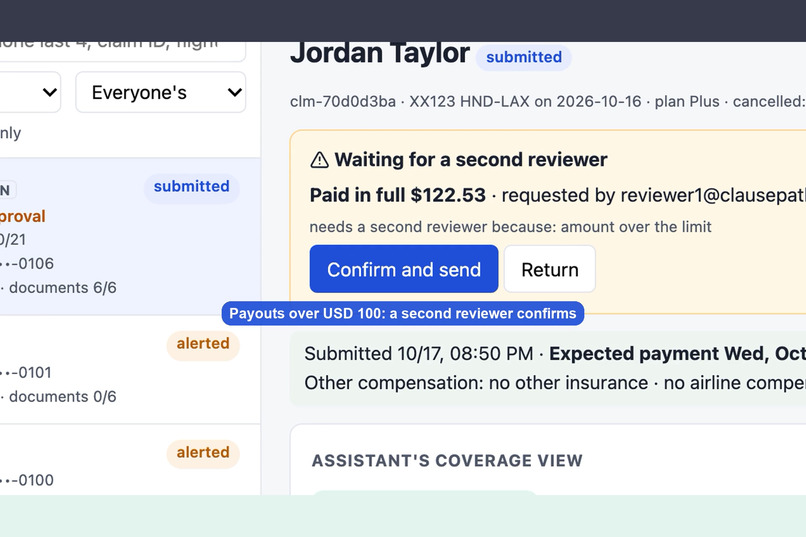
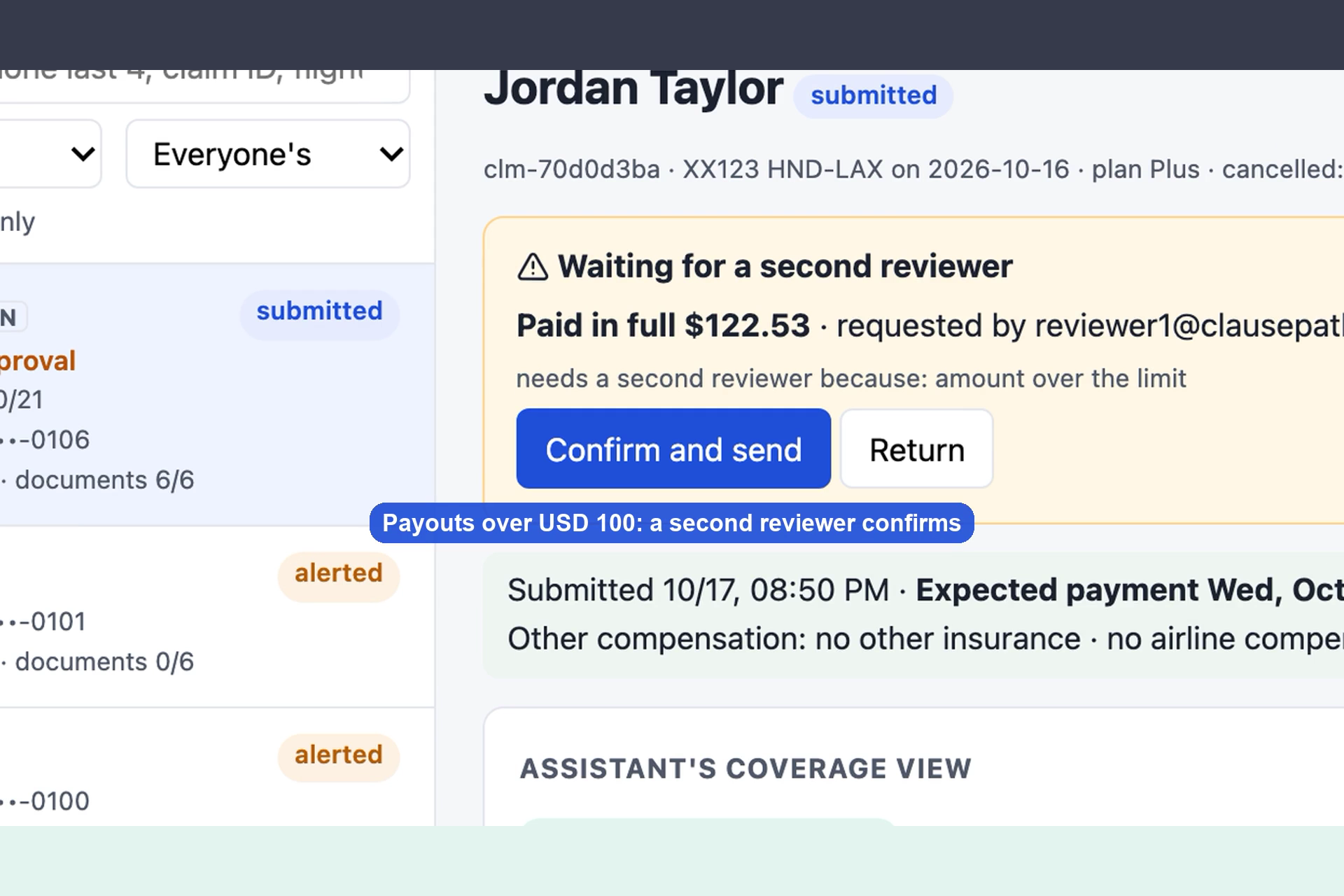
Payouts over USD 100 need a second reviewer
-
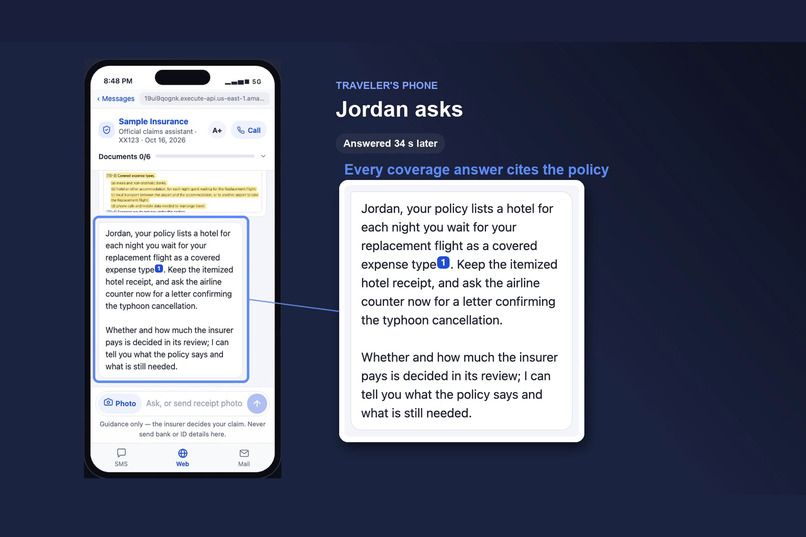
Every coverage answer cites the policy
-
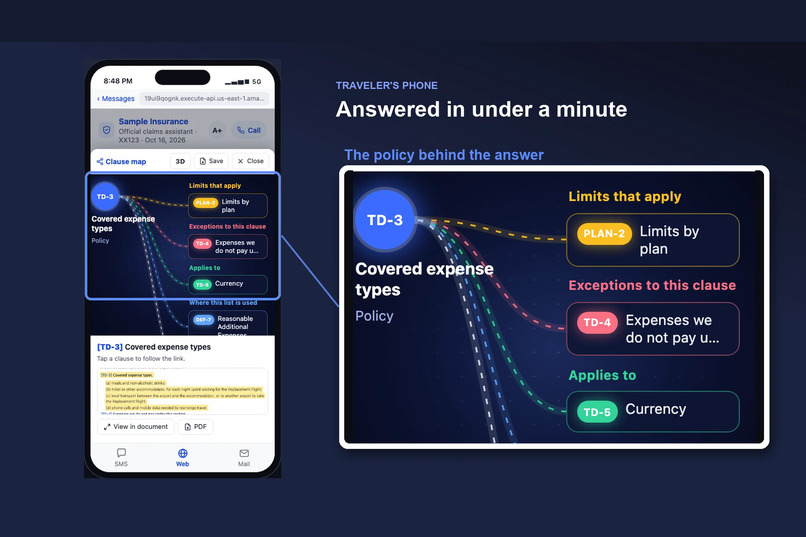
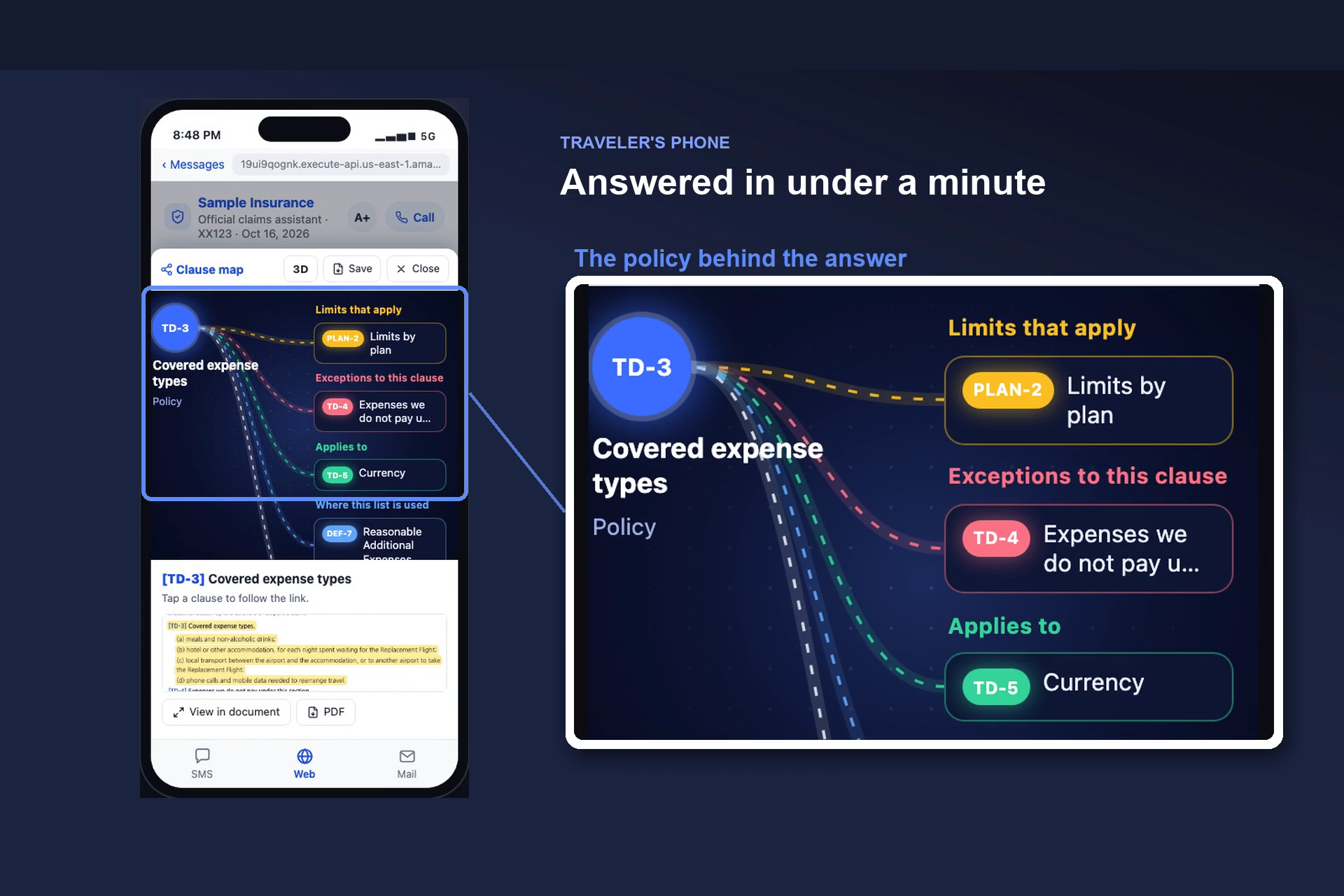
Answered in under a minute, with the clause map behind the answer
-
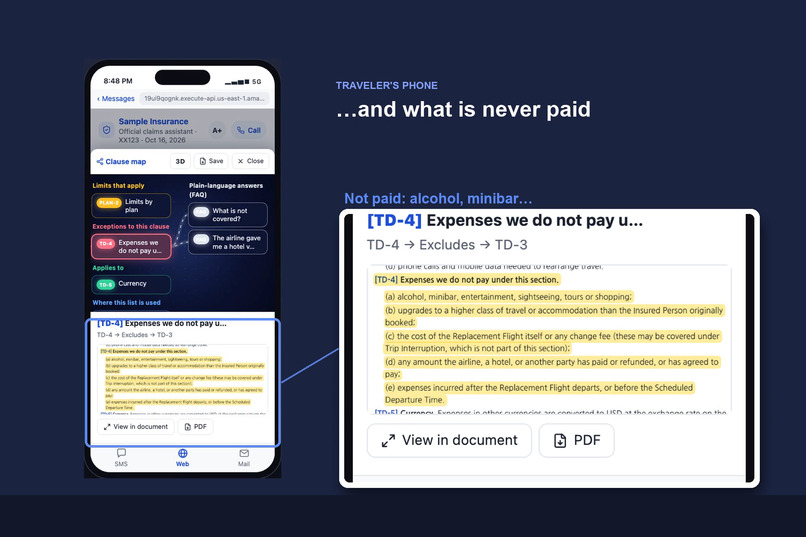
Clause map: what is never paid
-
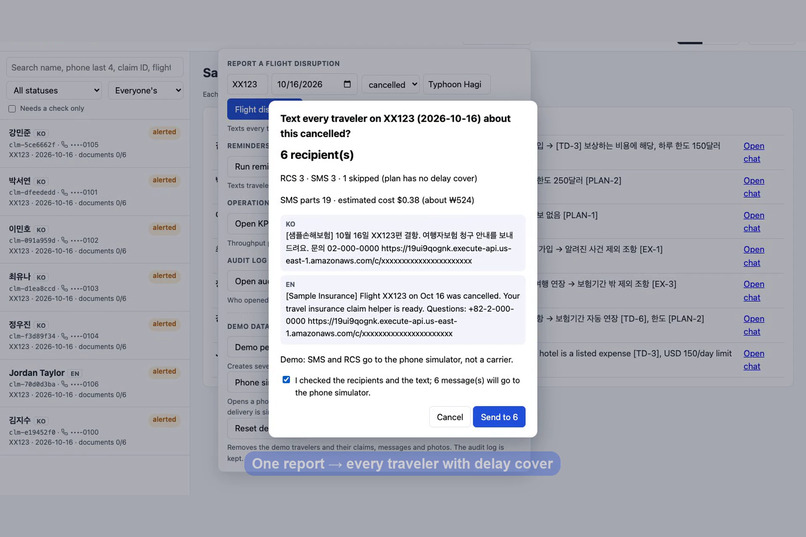
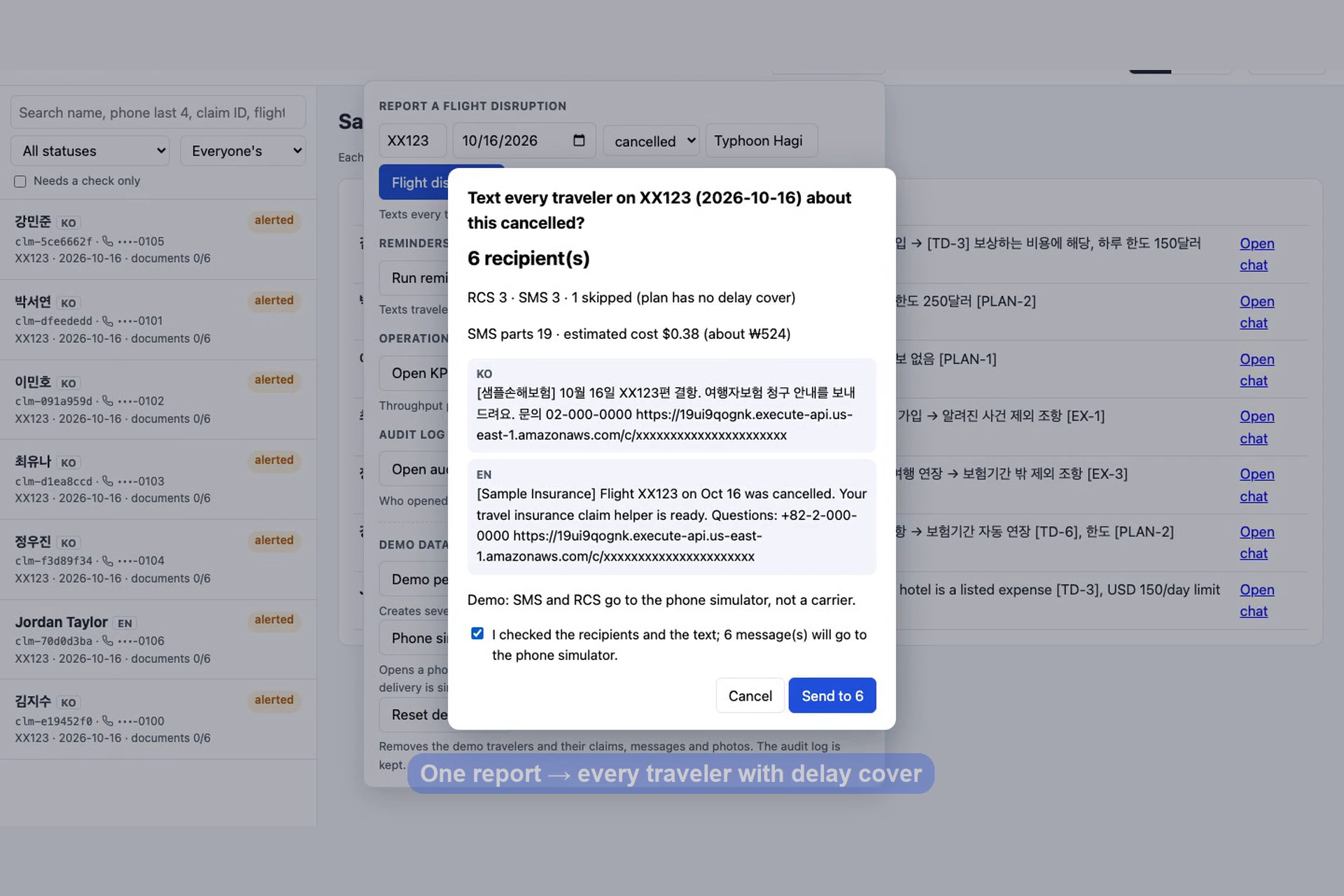
One report reaches every covered traveler on the flight

ClausePath is an AI claims concierge for travel insurers. One conversation moves from text to web chat to email, and every answer comes with the exact policy clause — shown on a clause map so travelers can see their limits and exclusions for themselves.
Inspiration
A typhoon cancelled our own flight home from Japan. At the airport we had one question: is tonight's hotel covered, and what should we keep? There was nobody to ask.
The documents that decide a claim, such as the airline's letter and itemised receipts, have to be collected on the spot. Most travelers find out what was needed only at home, then spend weeks going back and forth with the insurer.
And even a quick answer is hard to trust. A policy is a web of clauses, limits and exclusions that nobody reads. We wanted travelers to see why an answer is what it is.
What it does
Two things make ClausePath different
1. Every answer stands on a clause — and the clause map shows the whole picture. The agent cites the policy wording, and one tap highlights the exact clause on the original PDF page. From there, the clause map shows the policy as a graph: travelers follow the links from the cited clause to their plan's limits and exclusions. "USD 150 a day on your plan." "Minibar is not covered." They know before they spend the money, without reading the whole policy.
2. One conversation across channels. Built on AWS Communication Developer Services, the conversation starts with a text message, continues in a web chat (the same conversation, no app, no login), and the claim completes by email. Each traveler is reached on the channel that suits them, and the reason is logged.
The journey
- Alert. The insurer reports a disrupted flight once. Every covered traveler on it gets a message with a link to their own claim.
- Ask. The traveler texts a question and gets an answer by text, then opens the link to continue in web chat.
- Understand. Answers come with clauses; the clause map shows limits and exclusions.
- Collect. Photos of letters and receipts are read by Claude and checked by fixed rules (date, flight, place, limits, duplicates). A blurry photo gets a retake request at once; excluded items like the minibar are left out, with the clause shown. Bank details go only through a secure page.
- Decide. The claim packet goes to the insurer by Amazon SES. A reviewer sees what was read from each receipt and why anything failed. Larger payouts and all denials need a second reviewer. The decision reaches the traveler by email, then in the chat.
No promises it can't keep
For an insurer, one wrong sentence can sound like a promise. Every free-text message, from the agent or from staff, is checked by compliance rules and Amazon Bedrock Guardrails. A reviewer typing "your hotel was approved" is blocked; decisions go out only as templates filled from the claim.
How we built it
- Agent: Strands Agents with Claude on Amazon Bedrock (Converse API), deployable on Bedrock AgentCore Runtime. Tools for policy search with citations (RAG over the policy PDFs with Titan embeddings), claim state, document checks and the secure link.
- Clause map: an ontology of how clauses relate (limits, excludes, defined by, extends), plus links found in the wording and FAQ, drawn as an interactive graph next to the highlighted PDF page.
- Communication (CDS):
- Amazon SES v2
SendEmail: claim packet with attachments, traveler copies, decision letters. - AWS End User Messaging
pinpoint-sms-voice-v2SendTextMessage/SendRcsMessage: alerts, two-way replies, fallback. - Amazon SNS for inbound messages and delivery events; SES receiving for forwarded airline emails.
- Amazon SES v2
- Infrastructure: AWS CDK, API Gateway, Lambda, DynamoDB, S3 (Object Lock audit copy), EventBridge, Cognito (admins, reviewers, contact-centre agents), CloudWatch alarms.
What is live and what is simulated: email is sent for real through Amazon SES. SMS and RCS are implemented with pinpoint-sms-voice-v2, but no sender identity could be registered within the hackathon, so the demo sends them to an on-screen phone simulator. The routing, messages and logged reasons are real, and the simulator says on screen that delivery is simulated.
Challenges we ran into
- Not sounding like a promise. "You will be reimbursed" is a compliance risk. We layered rules and Guardrails over every outbound sentence and tested them on a set of risky sentences.
- Making answers verifiable. A citation had to land on the exact clause, not just a section number, and then connect to the rest of the policy. That is how the clause map came about.
- Real receipts are messy. Thermal paper, point discounts, rounding. We tested on all 1,146 labelled real Japanese receipt photos in the public JaWildText set, not just our own samples.
- Channel registration. SMS/RCS sender registration takes longer than a hackathon, so we built a clearly labelled simulator on top of the real routing code.
Accomplishments that we're proud of
- An answer with the exact clause in under a minute instead of days, with limits and exclusions visible on the clause map.
- A conversation that really moves across channels: it starts by text and the claim completes by email.
- 99.7% of receipt totals read correctly on 1,146 real photos, while every decision is still made by a person.
What we learned
Trust is the product. For an insurer, citations, a clause map travelers can explore, fixed checks next to the model and strict wording rules matter more than a fluent chatbot.
What's next for ClausePath
- Registered SMS/RCS senders and WhatsApp templates per insurer and country.
- Hand-off to insurers' core claim systems (the packet already carries structured JSON).
- More languages and policy wordings; live flight-status feeds instead of manual reports.
Try it
- Code: github.com/MZCbgkim/clausepath-aws-cds-hackathon. Step-by-step judge instructions are in the README.
- Deployed dashboard: https://19ui9qognk.execute-api.us-east-1.amazonaws.com/ — for a judge login, email [email protected] (subject: "ClausePath judge access"). It stays up through judging, until November 19, 2026.
- No login needed:
python -m tripclaim.sim --serve 8080runs the full storyline locally without an AWS account.
Built With
- amazon-api-gateway
- amazon-bedrock
- amazon-bedrock-agentcore
- amazon-bedrock-guardrails
- amazon-cloudwatch
- amazon-cognito
- amazon-dynamodb
- amazon-eventbridge
- amazon-ses
- amazon-sns
- amazon-web-services
- aws-cdk
- aws-end-user-messaging
- aws-lambda
- claude
- python
- strands-agents


Log in or sign up for Devpost to join the conversation.