Inspiration:
My sister, currently studying law at SMU, was recently selected to participate in the prestigious Willem C. Vis International Commercial Arbitration Moot. During her preparations, she faced a notable obstacle: existing AI tools, like ChatGPT, often hallucinate information and struggle to maintain legal context, especially when handling large documents. Working with a 50-page case study, she needed precise, contextually accurate analysis—something current AI solutions were not reliably providing. Observing her frustration and recognizing these AI limitations in the legal field inspired me to develop a more reliable tool: ClauseCounsel.
What It Does:
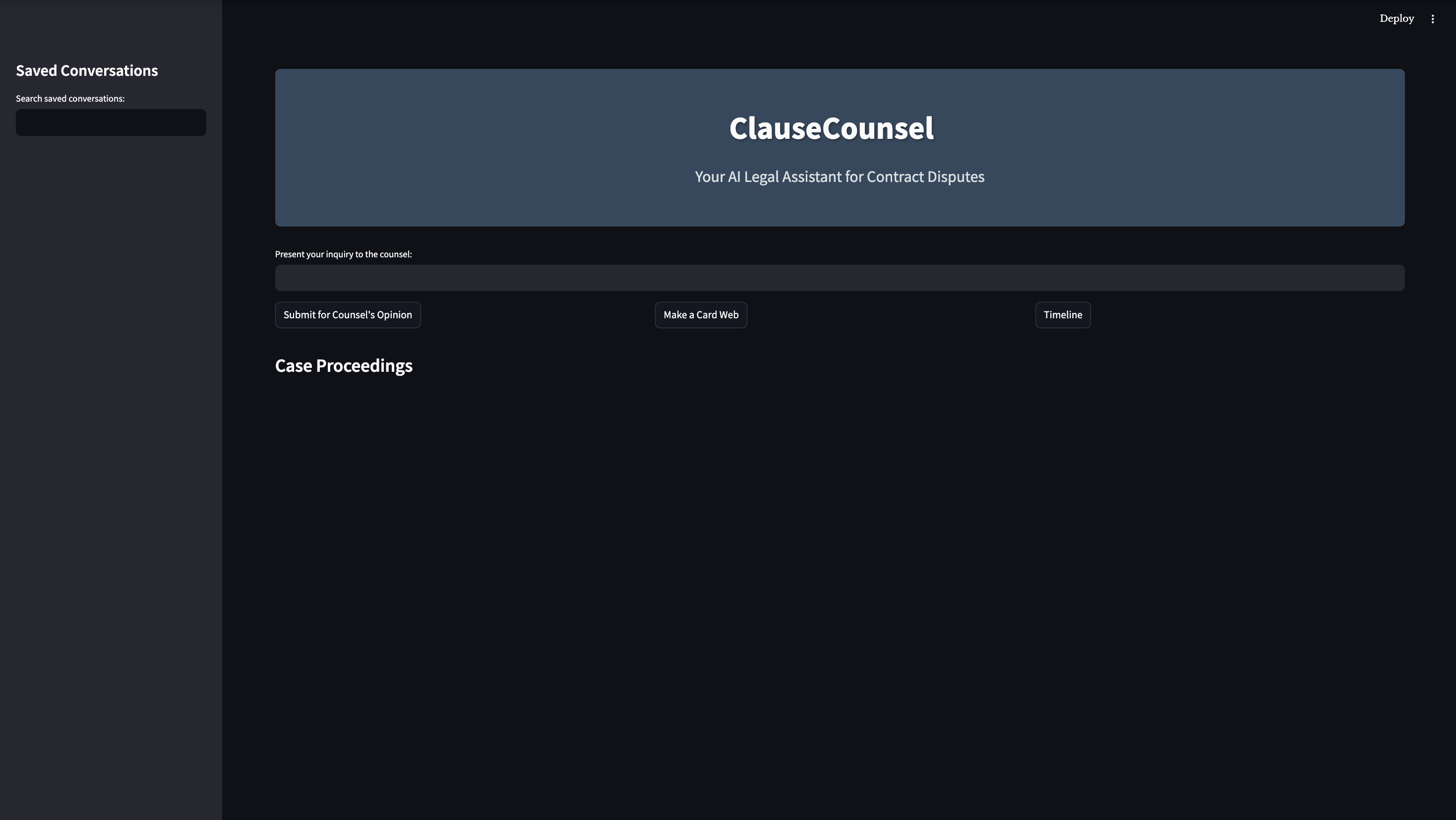
ClauseCounsel is an AI-driven legal assistant designed to transform complex legal documents into intuitive knowledge graphs. By leveraging advanced Retrieval-Augmented Generation (RAG) systems, it extracts and organizes critical information from extensive contracts and case studies. For this project, it focuses on analyzing a dispute concerning the termination of a green hydrogen plant project, ensuring an efficient breakdown of essential information for legal professionals.
How We Built It:
I combined several cutting-edge technologies to develop ClauseCounsel:
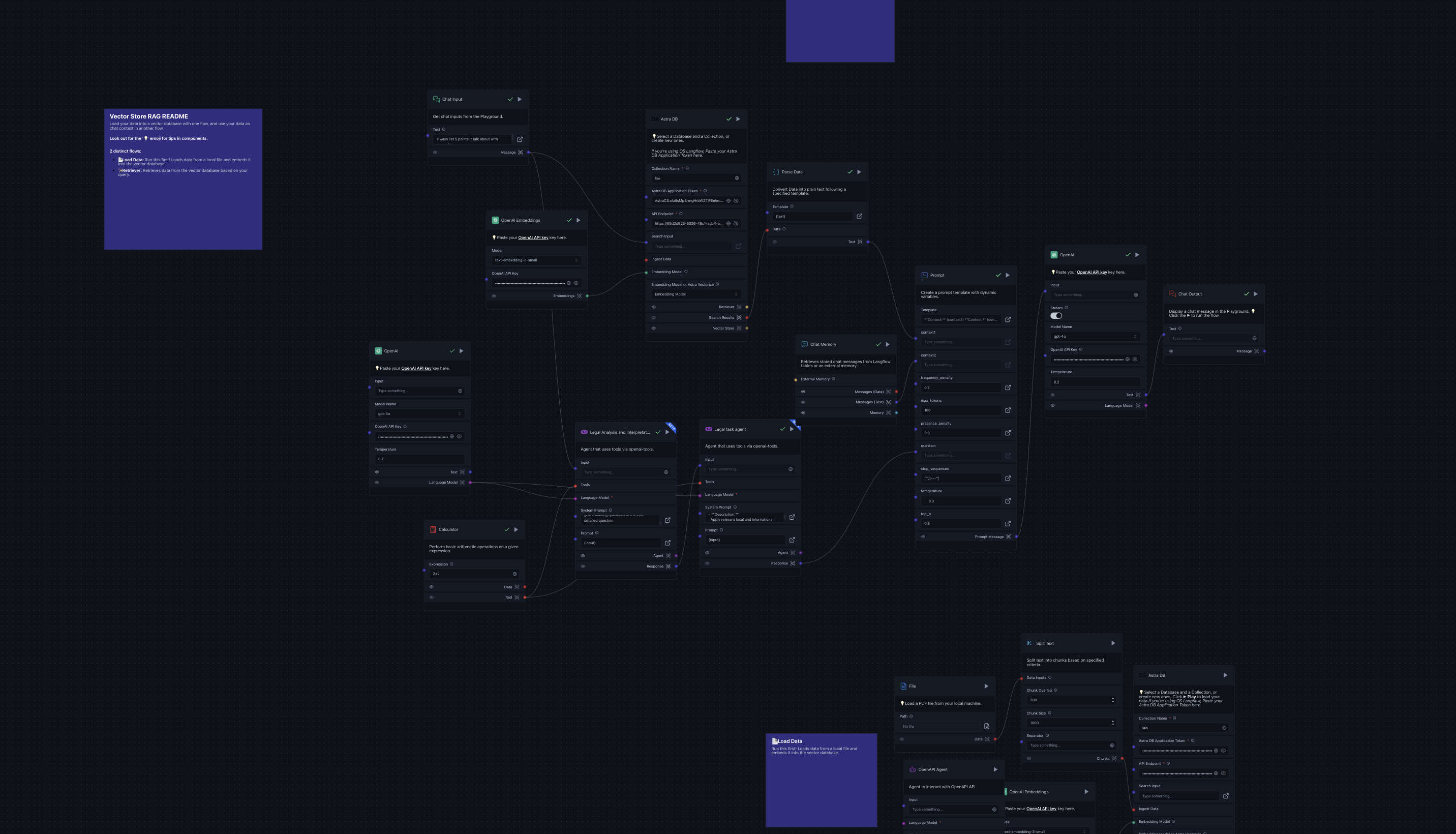
AstraDB: Selected for its secure and efficient data storage capabilities, AstraDB manages large legal documents with robustness and reliability. LangFlow: Facilitates smooth data processing and system integration, allowing seamless data flow between various components. AI Agents (Retrieval-Augmented Generation): RAG was implemented to enhance data extraction accuracy and ensure contextual relevance, significantly reducing AI hallucinations and improving reliability.
Challenges I Faced:
Initial AI models frequently generated irrelevant or inaccurate information, affecting tool reliability. Converting large documents into vectors proved challenging, with frequent errors complicating the process. Integrating diverse technologies like AstraDB, LangFlow, and RAG required careful coordination to ensure flawless data handling. Moreover, managing sensitive legal documents presents ongoing ethical and security concerns, which require rigorous safeguards and adaptability in light of evolving regulations and emerging threats.
Accomplishments I am Proud Of:
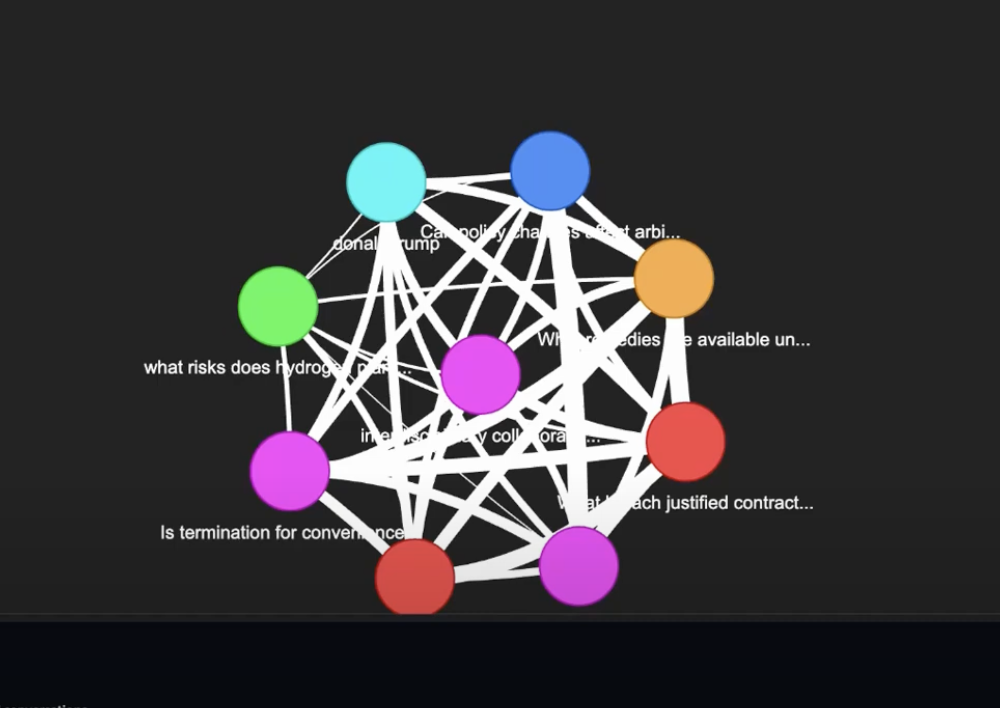
Our interactive Knowledge Graphs stand out as a significant achievement, enabling users to transform a 50-page case study into a dynamic visual representation. With vertices and edges that emphasize interrelated queries, users can efficiently explore and understand the document’s key elements. This functionality enhances insight and accelerates decision-making without exhaustive manual searches. Additionally, fine-tuning the AI agents was both challenging and rewarding, demonstrating that multi-agent orchestration can deliver highly accurate outputs in complex legal contexts—a breakthrough for our project.
Lessons Learned:
Creating ClauseCounsel offered invaluable insights into both legal and technological requirements. I learned the importance of precision in AI development for maintaining legal context, as well as the need to design tools that align seamlessly with legal workflows. This project underscored the value of interdisciplinary collaboration, merging expertise in law, AI, and software development. Iterative development and user feedback were critical, reinforcing the importance of continuous improvement to enhance functionality.
What’s Next for ClauseCounsel:
Looking forward, I plan to integrate the LexisNexis API to deepen contract law context and enhance dispute resolution capabilities. New features will include citation tracking, timeline generation, and integration of related case studies. The platform could also evolve into a collaborative tool for law students, where shared documents are automatically converted into vectorized stores for seamless analysis. Ultimately, ClauseCounsel will scale to support tens of thousands of AI agents tackling multiple legal problems, with a human-in-the-loop system ensuring accuracy and contextual relevance.
Built With
- altair
- astrapy
- cassandra-driver
- cursor
- langchain
- langflow
- networkx
- openai
- pandas
- plotly
- python
- pyvis
- scikit-learn
- streamlit
- tiktoken


Log in or sign up for Devpost to join the conversation.