
Inspiration
Living in a different city from my mom, I wanted to find a way to let her know I am safe and doing well without relying on the constant, sometimes disruptive back-and-forth of text messages. The inspiration for Claudiac was born out of that simple, universal desire: to give a mother peace of mind across the miles. We wanted to find a way to transform raw, clinical biometric data into a comforting, emotional presence.
What it does
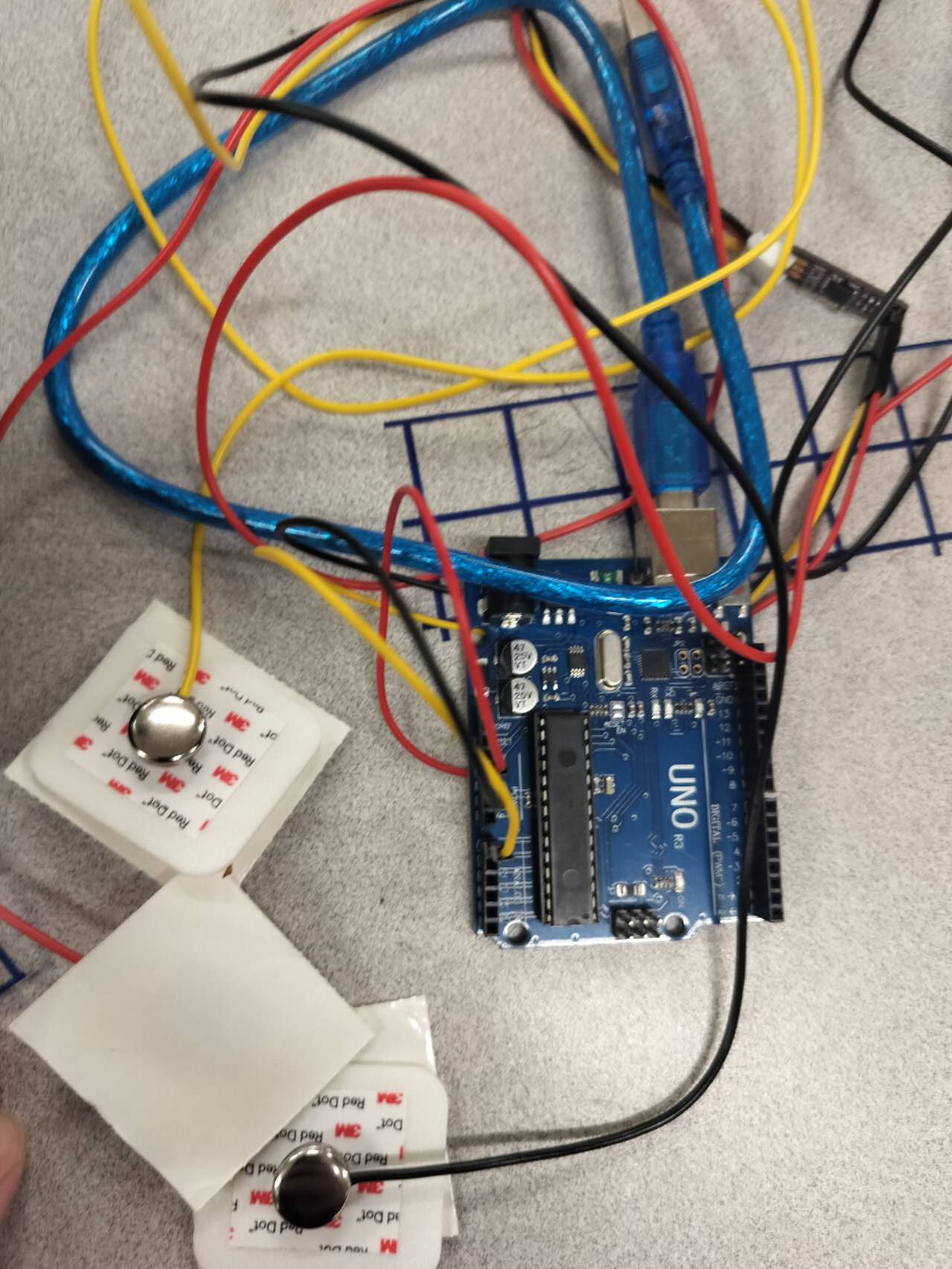
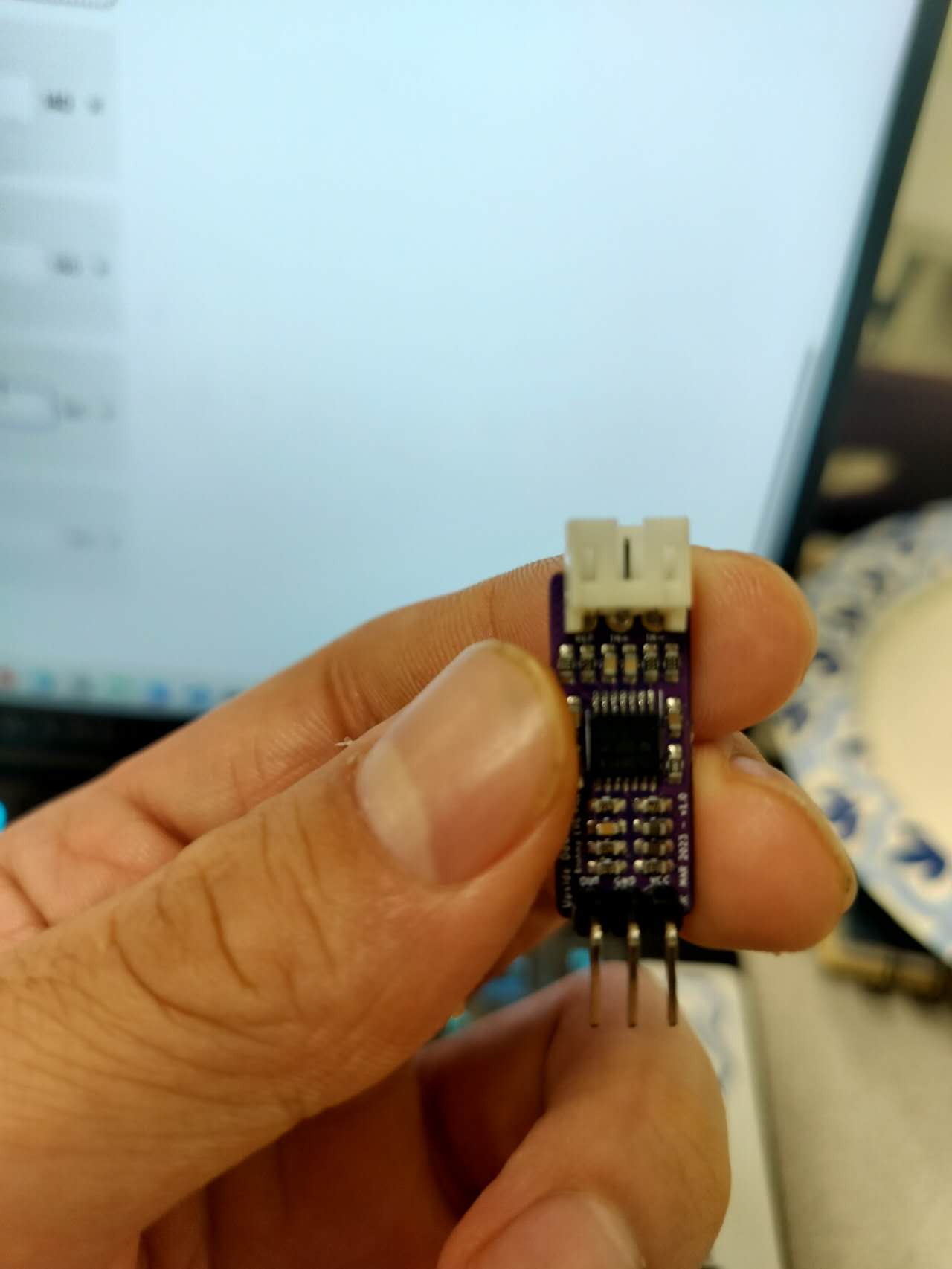
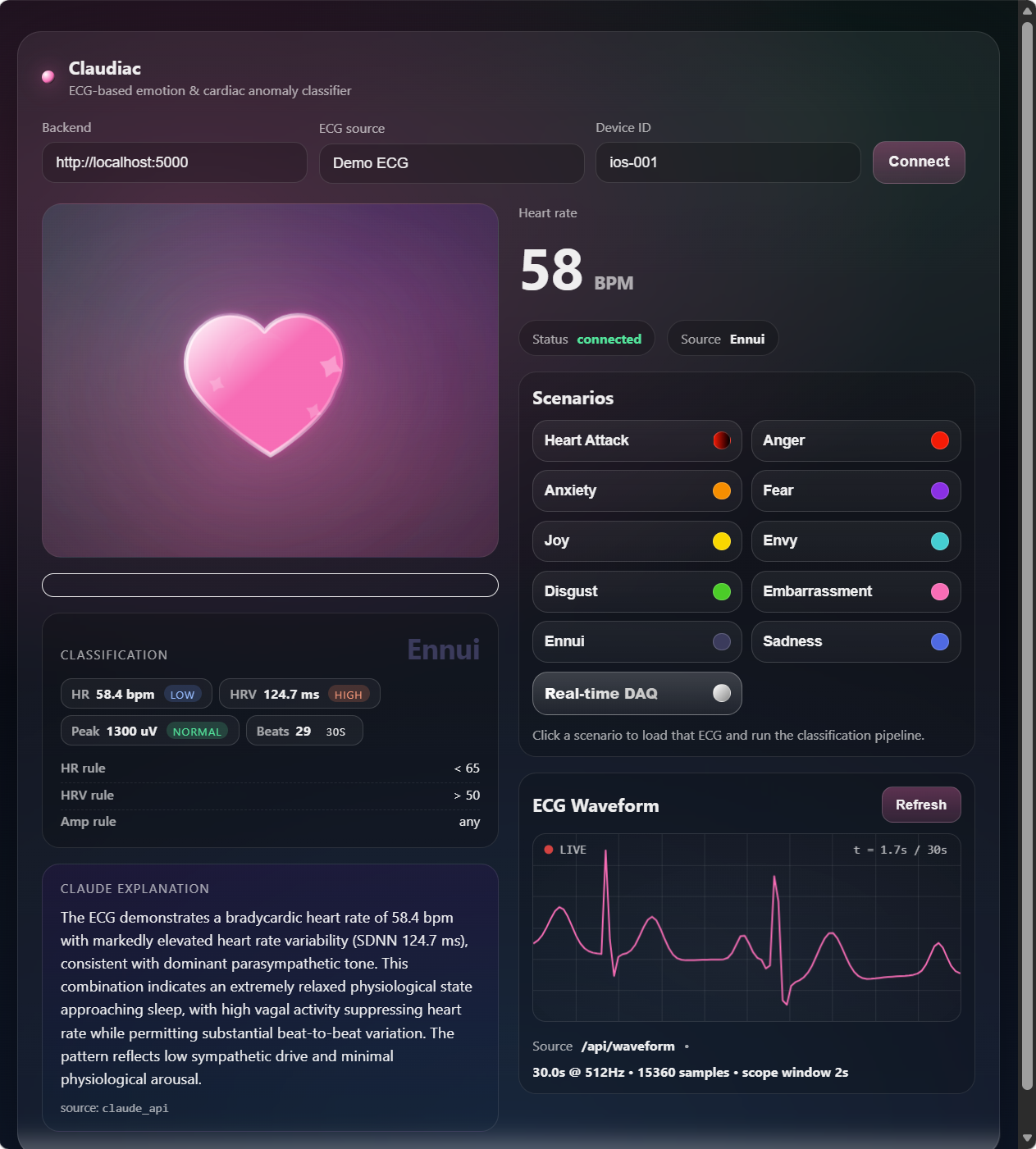
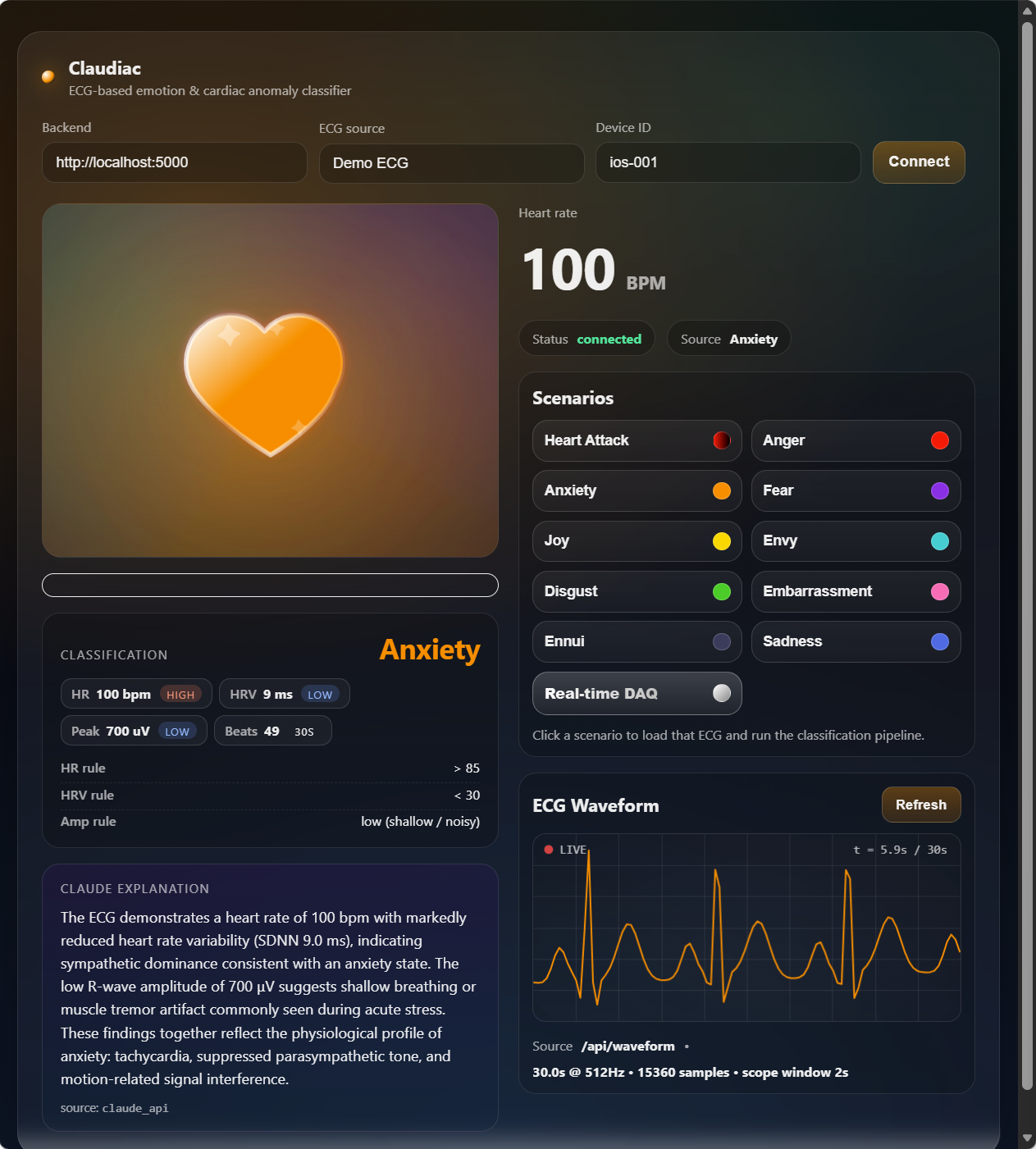
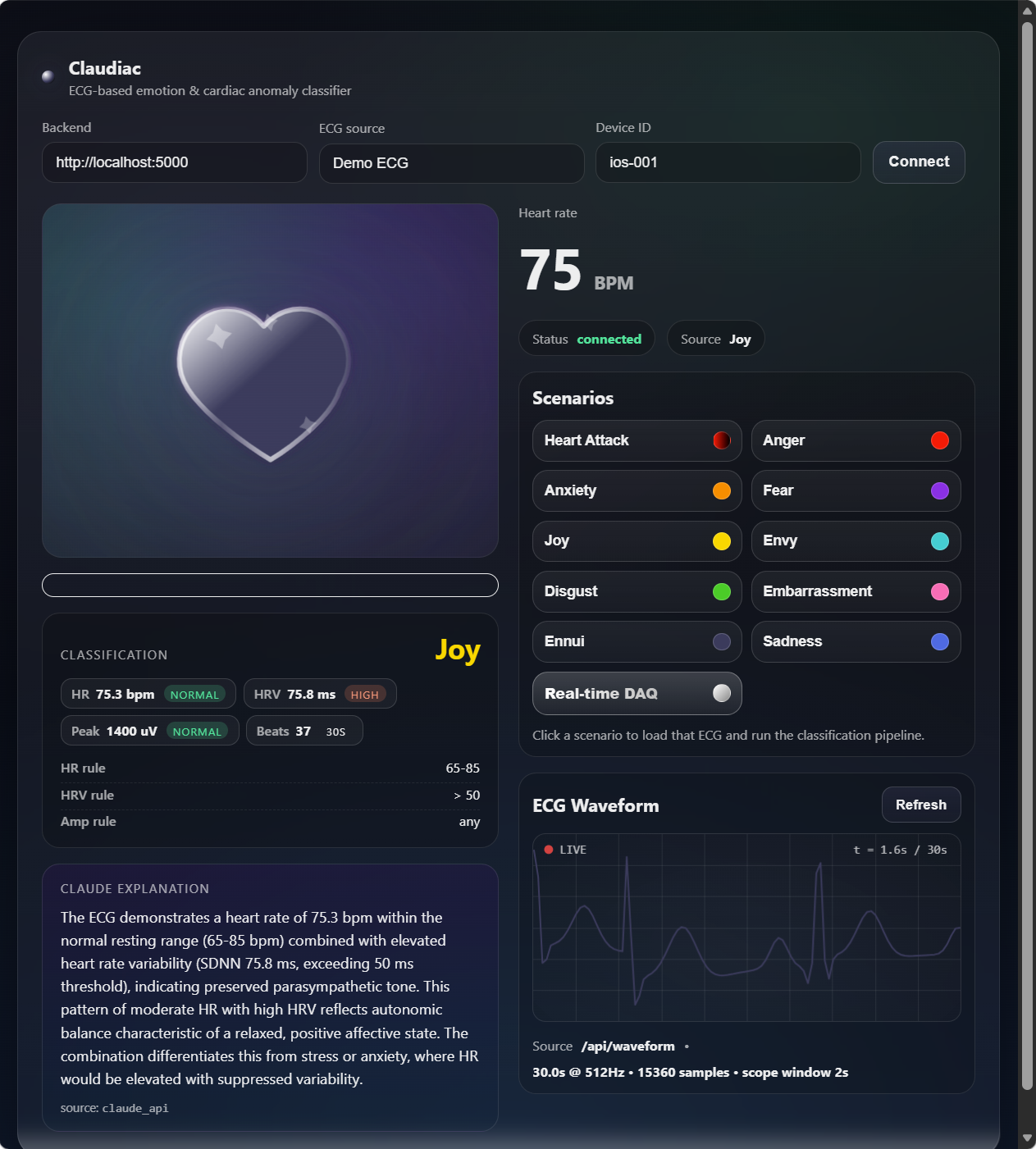
Currently, Claudiac is an interactive web application that acts as a live digital tether between loved ones. By connecting to ECG sensor & Apple Watch, the webpage displays a minimalist, beautiful heart animation that pulses in real-time with my actual heartbeat. As my biometrics change throughout the day, the on-screen heart dynamically shifts its color and rhythm to match my state. If I take my watch off, the web app enters a soothing "Sweet Dreams" standby mode, gently glowing to let my mom know I am resting safely.
How we built it
We focused on creating a seamless bridge between wearable hardware and the web:
- The Data Bridge: We utilized WebSockets to stream live heart rate data from the Apple Watch to our web application in real-time.
- The Front-End: We built a responsive, visually soothing web interface. The core feature is a dynamic animation that maps the incoming Beats Per Minute (BPM) data directly to the pulse speed and color gradient of the on-screen heart.
Challenges we ran into
Our biggest hurdle was bypassing the Apple Watch's notoriously strict "walled garden" to access live HealthKit data without building a massive, custom iOS app. We had to find a creative software bridge to broadcast the heart rate securely to the web. Additionally, translating raw, fluctuating numerical data into a smooth, organic web animation that felt comforting rather than mechanical required a lot of fine-tuning.
Accomplishments that we're proud of
We are incredibly proud of successfully bridging the gap between wearable tech and emotional connection. Making the data functional was one thing, but making the web interface feel deeply personal and emotionally resonant was a huge win. We successfully proved the concept that real-time biometrics can be used as a digital "hug."
What we learned
We leveled up our software and integration skills significantly. We learned how to handle and route real-time data streams, bypass closed hardware ecosystems, and use dynamic front-end animations to represent physical human states.
What's next for Claudiac
Our ultimate goal is to bring Claudiac off the screen and into the physical world! The next step is to build a physical, 3D-printed smart lamp for my mom's nightstand. We plan to use an ESP32 microcontroller and WS2812B LEDs housed inside a translucent SLA resin shell fabricated at the NJIT Makerspace. The physical device will pull the same live data our web app currently uses, turning the digital heartbeat into a glowing, ambient art installation in her home.

Log in or sign up for Devpost to join the conversation.