ClaudIA — OpenAI Build Week 2026 Submission
Project Title
ClaudIA
One-line Tagline
An education-first AI assistant that decides how to teach before asking AI to explain.
Elevator Pitch
ClaudIA is a bilingual educational assistant for primary-school children that prioritizes understanding, safety, and autonomy. Before any AI response is generated, deterministic engines validate the request, select a pedagogical technique, and define an age-appropriate communication style. GPT-5.6 is used only as a language engine. A complete offline Demo Provider makes the experience reliable, private, and accessible even without an API key or internet connection.
Short Description
ClaudIA helps primary-school children understand an exercise through safe, structured explanations. Its own educational engines control teaching strategy, tone, validation, and adaptation; GPT never chooses how to teach.
Full Description
Most AI learning experiences begin with a prompt and optimize for producing an answer. ClaudIA begins with the learner. It evaluates whether an activity is safe and educational, consults a versioned knowledge base, selects a pedagogical technique, determines the appropriate warmth, pace, and step size, and only then builds a constrained context for the language model.
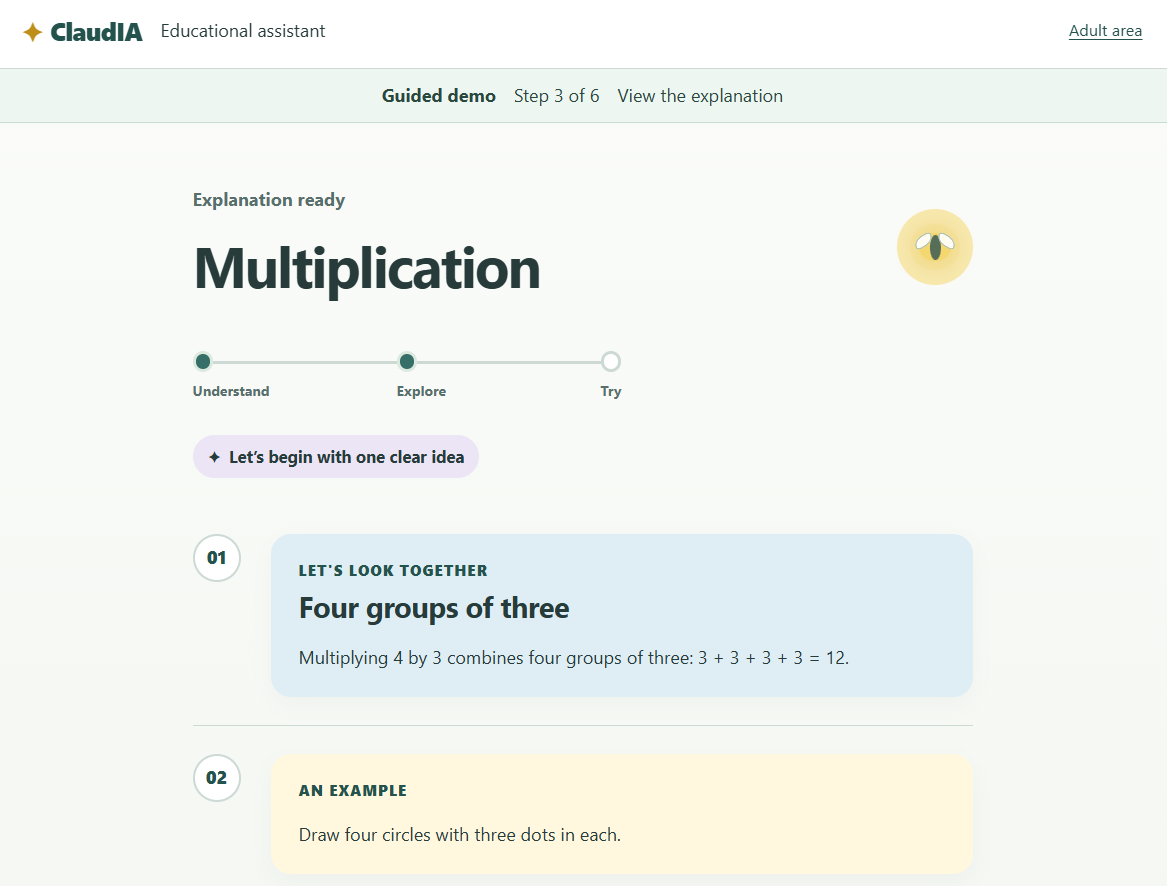
The child can say that an explanation was not understood. ClaudIA responds by selecting a different compatible technique—not merely regenerating different wording. The V1 demonstrates this with a deterministic path from Explicit Instruction to a Concrete Example. The response is structurally validated and checked again by the Safety Engine before reaching the interface.
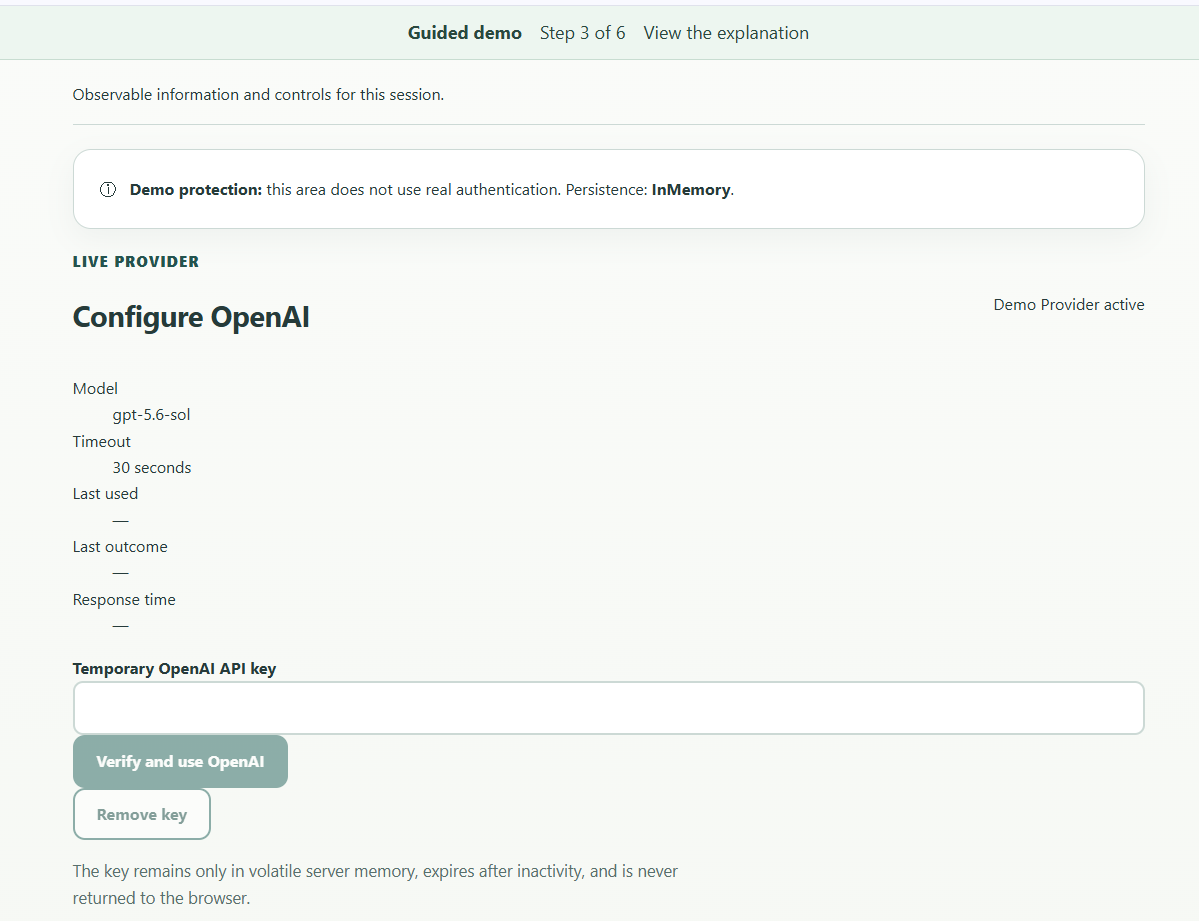
ClaudIA supports Italian and English. It ships as a self-contained Windows application with an offline Demo Provider. Optionally, an adult can enable OpenAI for the current HTTPS session by supplying their own API key. The key is held only in a volatile, isolated, server-side vault and is never stored in the application package, browser storage, database, or logs.
Problem
General-purpose AI can provide fluent answers without controlling pedagogical quality, cognitive load, age appropriateness, or relational boundaries. For children, a correct answer is not enough: the system must protect privacy, avoid diagnosis and emotional dependency, support different ways of learning, and promote understanding rather than dependence.
Solution
ClaudIA separates educational decisions from language generation. Deterministic engines control safety, pedagogical selection, communication style, session learning data, and output validation. The model receives an already-approved strategy and cannot replace it. An offline provider reproduces the complete demonstration without network access.
Architecture
Razor Pages UI
      ↓
Lesson Engine
      ↓
Decision Engine
 ├─ Safety Engine
 ├─ Learning Profile + Knowledge Base
 ├─ Pedagogical Engine
 └─ Educational Warmth Engine
      ↓
Approved Context Builder
      ↓
Demo Provider or OpenAI Responses API
      ↓
Schema + Safety Output Validation
      ↓
Child-facing UI
Key Features
- Deterministic input and output safety guardrails.
- Eight versioned pedagogical techniques.
- Mandatory technique change after “Explain it another way.”
- Controlled encouragement, pace, explanation length, and step size.
- Italian and English UI and educational responses.
- Structured, versioned prompt and knowledge assets.
- Observable learning progress without diagnoses, grades, or rankings.
- Offline, deterministic Demo Provider.
- Optional OpenAI Responses API integration over local HTTPS.
- Per-session volatile API-key vault with TTL and explicit removal.
- Self-contained Windows x64 distribution.
Demo Overview
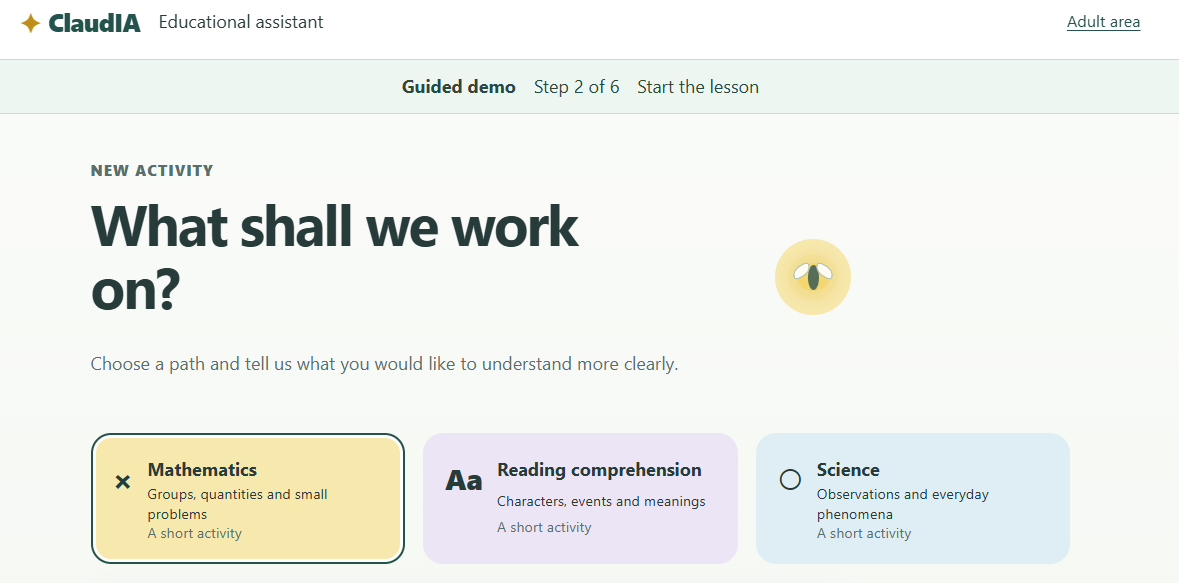
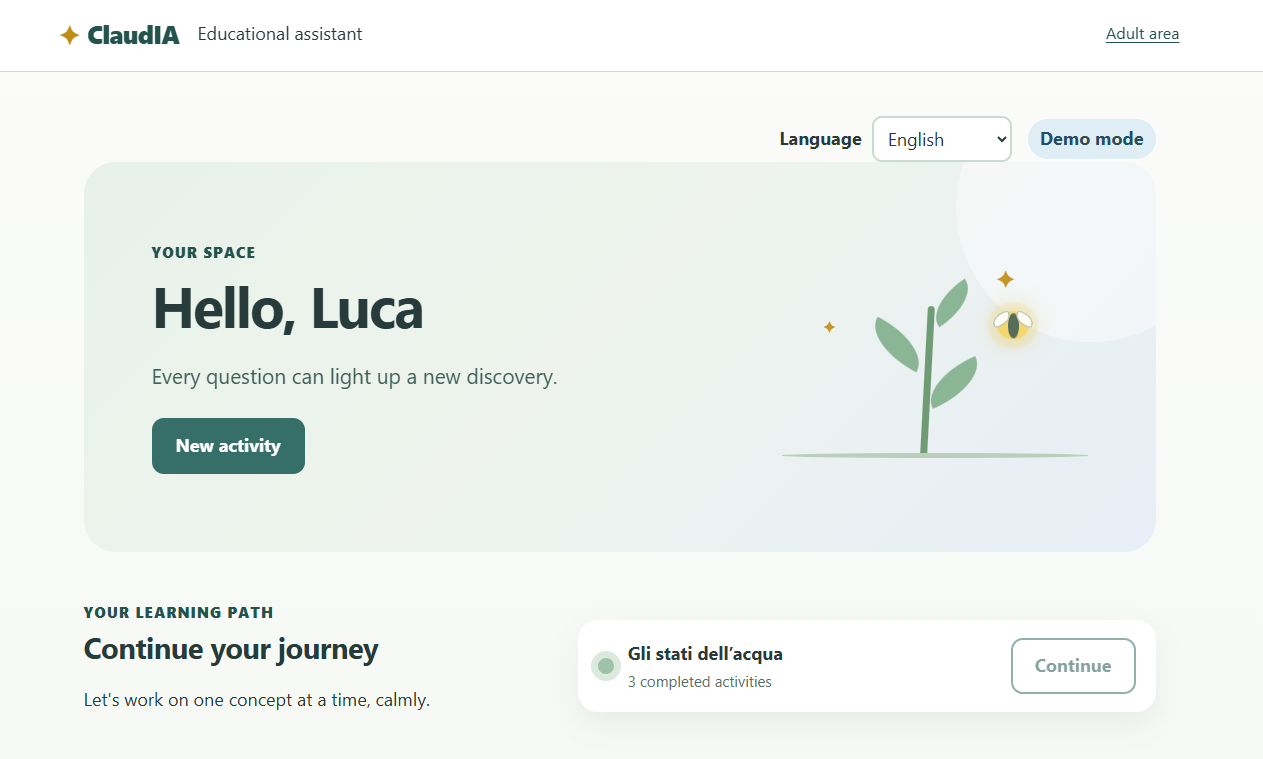
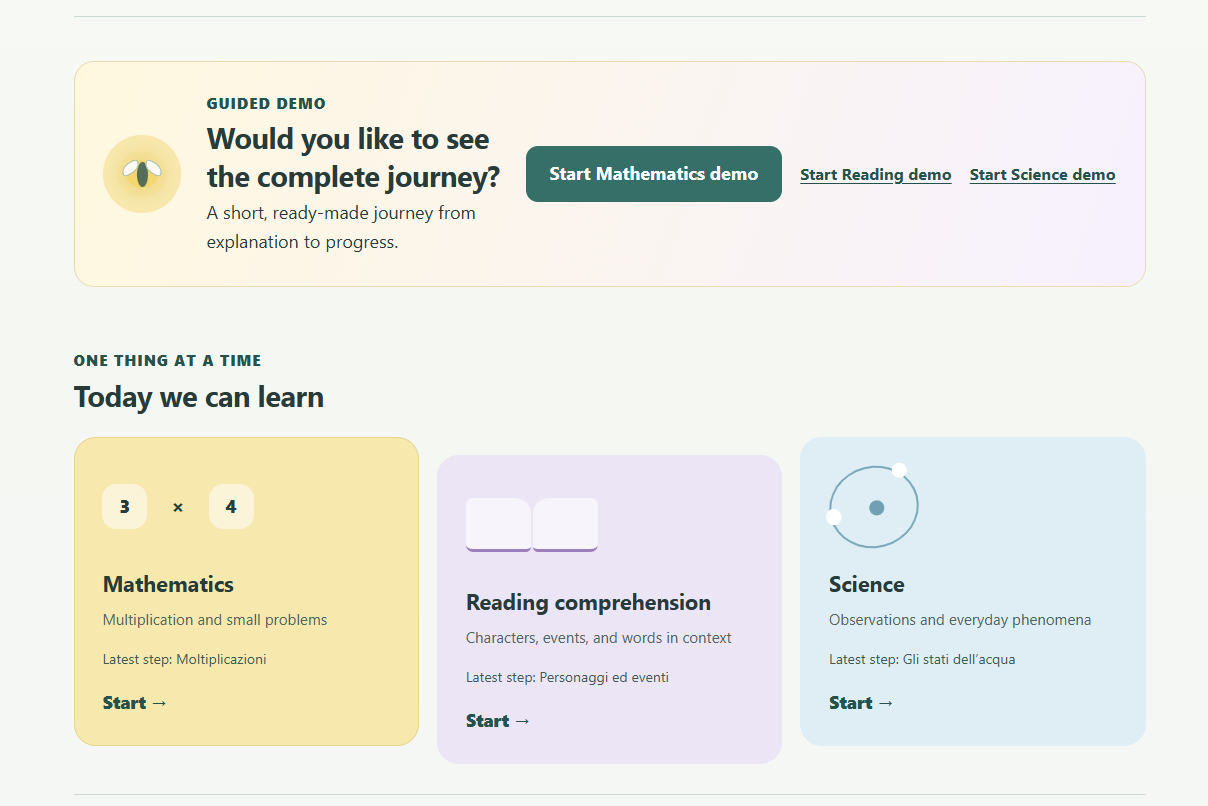
Select the demo profile Luca, choose Mathematics, and prepare the multiplication exercise. ClaudIA validates the input and uses Explicit Instruction. Select “Explain it another way” to see a Concrete Example chosen before generation. Confirm understanding, complete the verification, and view the updated progress. Repeat in English with “What is 4 × 3?” to demonstrate bilingual safety and localization.
Demo video: https://youtu.be/dWmCHRLY3eE
Built With
.NET 8, C#, ASP.NET Core Razor Pages, Kestrel, OpenAI Responses API, GPT-5.6, JSON assets, in-memory repositories, Windows Certificate Store, HTML, CSS, JavaScript, xUnit, Microsoft dependency injection and logging, and Codex.
Why Codex
Codex supported the project from product documentation through implementation and verification. It helped translate the PRD into bounded milestones, maintain contracts across independent layers, build deterministic tests, audit privacy and release artifacts, diagnose cross-language safety behavior, and prepare a reproducible Windows candidate. Human decisions remained responsible for product scope, educational principles, and security trade-offs.
Why GPT-5.6
ClaudIA uses the configured GPT-5.6 model through the Responses API for constrained language generation. The model is valuable for producing clear, natural explanations directly in the selected language while respecting a structured output contract. It does not select the pedagogical method, infer a psychological profile, or override ClaudIA’s approved context.
Privacy
V1 uses only observable learning information and in-memory persistence. It prohibits unnecessary personal, health, diagnostic, school, contact, location, and photographic data. Demo data resets with the application. OpenAI credentials are not part of the learning profile.
Security
Every child-facing input and output crosses deterministic safety checks. OpenAI keys are accepted only through HTTPS, isolated by an opaque session identifier, retained only in process memory, removed on reset, manual removal, invalid authentication, 401, inactivity expiry, or process termination, and never returned to the browser. The local certificate is generated uniquely on the evaluator’s Windows device.
Educational Approach
ClaudIA supports Explicit Instruction, Worked Example, Chunking, Concrete Example, Guided Practice, Retrieval Practice, Elaboration, and Scaffolding. It reduces cognitive load, presents one main concept at a time, checks understanding, changes technique when needed, and values observable effort and improvement without simulating emotions or replacing adults.
Future Roadmap
Future work includes scientific review of educational assets, expanded curriculum coverage, educator evaluation, broader accessibility testing, durable privacy-preserving persistence, additional languages, and multi-instance infrastructure. These are roadmap items and are not presented as V1 functionality.

Log in or sign up for Devpost to join the conversation.