-
-
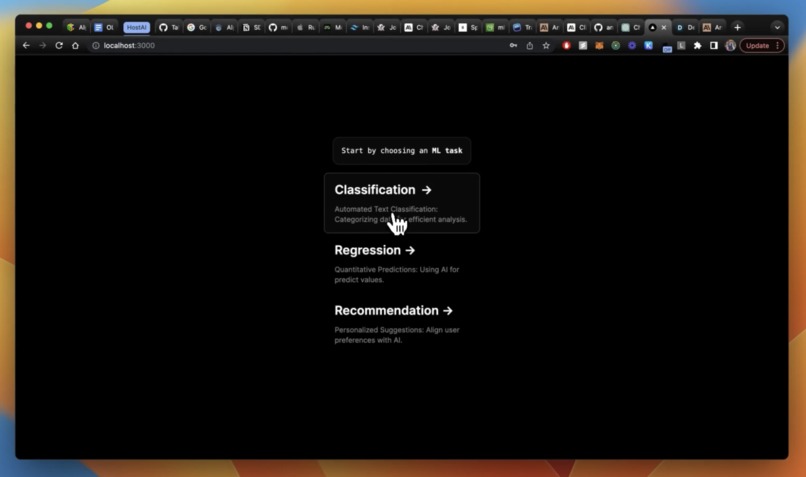
Screenshot
Inspiration
As businesses look to leverage machine learning to enhance decision-making, many face barriers in terms of high costs and infrastructure requirements. Developing custom ML solutions requires skilled data scientists and engineers, which can be prohibitively expensive, especially for smaller companies. Additionally, organizations need the data pipelines and infrastructure in place before they can even begin building models. This makes it difficult to prototype and test new ML concepts quickly. Our hackathon project aims to democratize access to machine learning by empowering any business user to rapidly create ML APIs for tasks like classification, regression, and recommendations. By utilizing pre-trained language models like LLMs, our tool can generate capable models even with limited data. This allows companies to pilot and validate ML ideas without intensive upfront investments. With our solution, organizations of any size can experiment with ML and integrate it into their operations and products. The goal is to make AI's advantages more accessible so every business can leverage data to make smarter decisions.
What it does
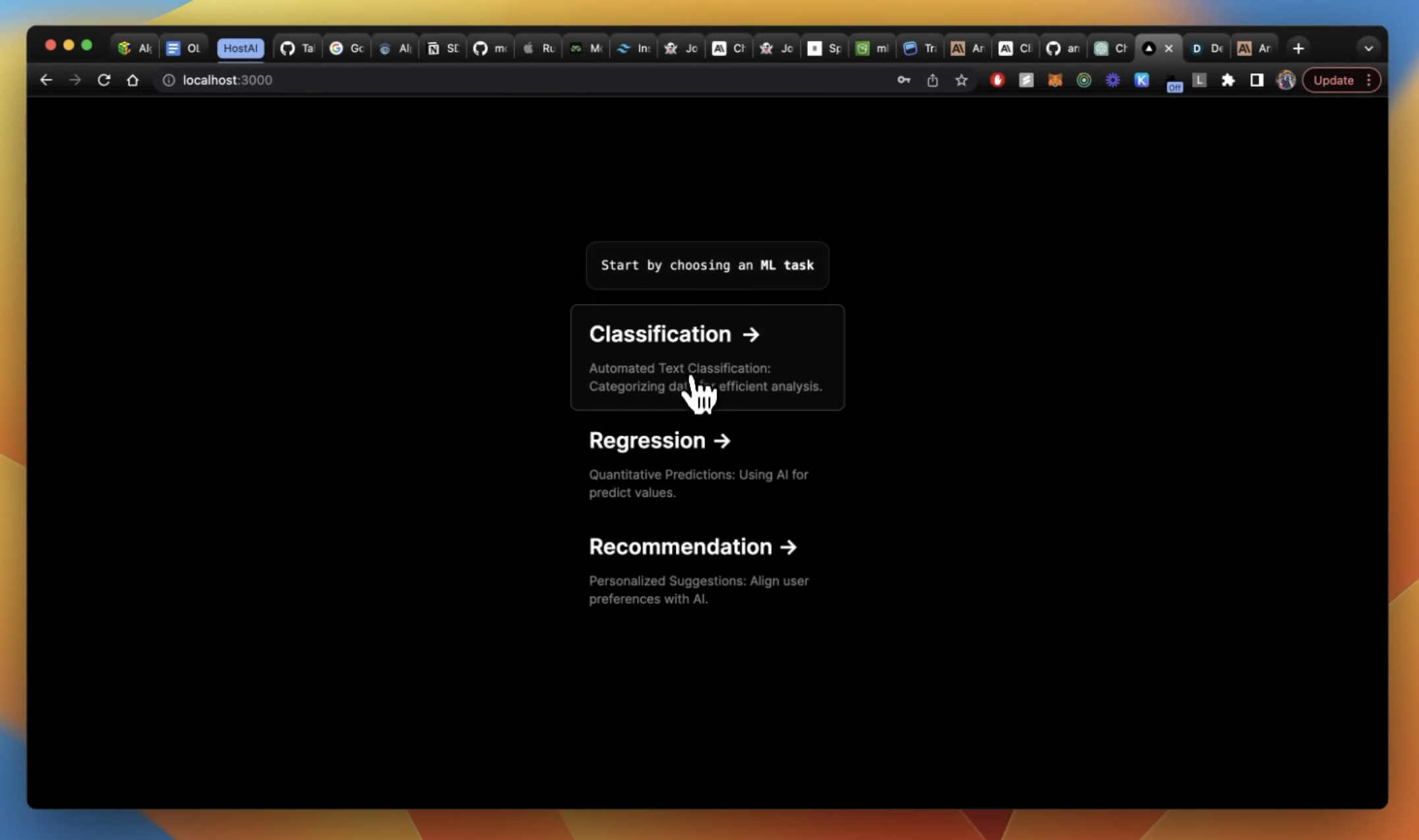
The tool allows you to specify the task you want to perform, such as classification, regression, or recommendations, along with basic inputs like a description and the variables involved. For a classification task, you would provide the classes to predict. For regression, you would specify the target variable to estimate. Once the task is defined, you can then directly copy/paste or upload your data in a simple format like CSV. After the data is submitted, our tool automatically creates a custom API endpoint that is tailored to your specific machine-learning task. Users can then call this API anytime with new, unseen data and it will perform the requested prediction, classification or recommendation. Within minutes, anyone can have a production-ready ML API without needing to code or develop complex models themselves. The API abstracts away the complexity so you can rapidly integrate predictive capabilities into business applications and processes.
How we built it
NextJS - Frontend framework for building user interface Flask - Backend framework for building APIs and connecting to data AWS S3 - Cloud storage for storing dataset uploads Vercel - Platform for hosting and deploying the application Claude API by Anthropic - Language model API for generating ML models
Challenges we ran into
- Prompt engineering
- Determining how data should be store
Built With
- amazon-web-services
- anthropic
- claude
- llm
- nextjs
- s3
- vercel

Log in or sign up for Devpost to join the conversation.