-
-

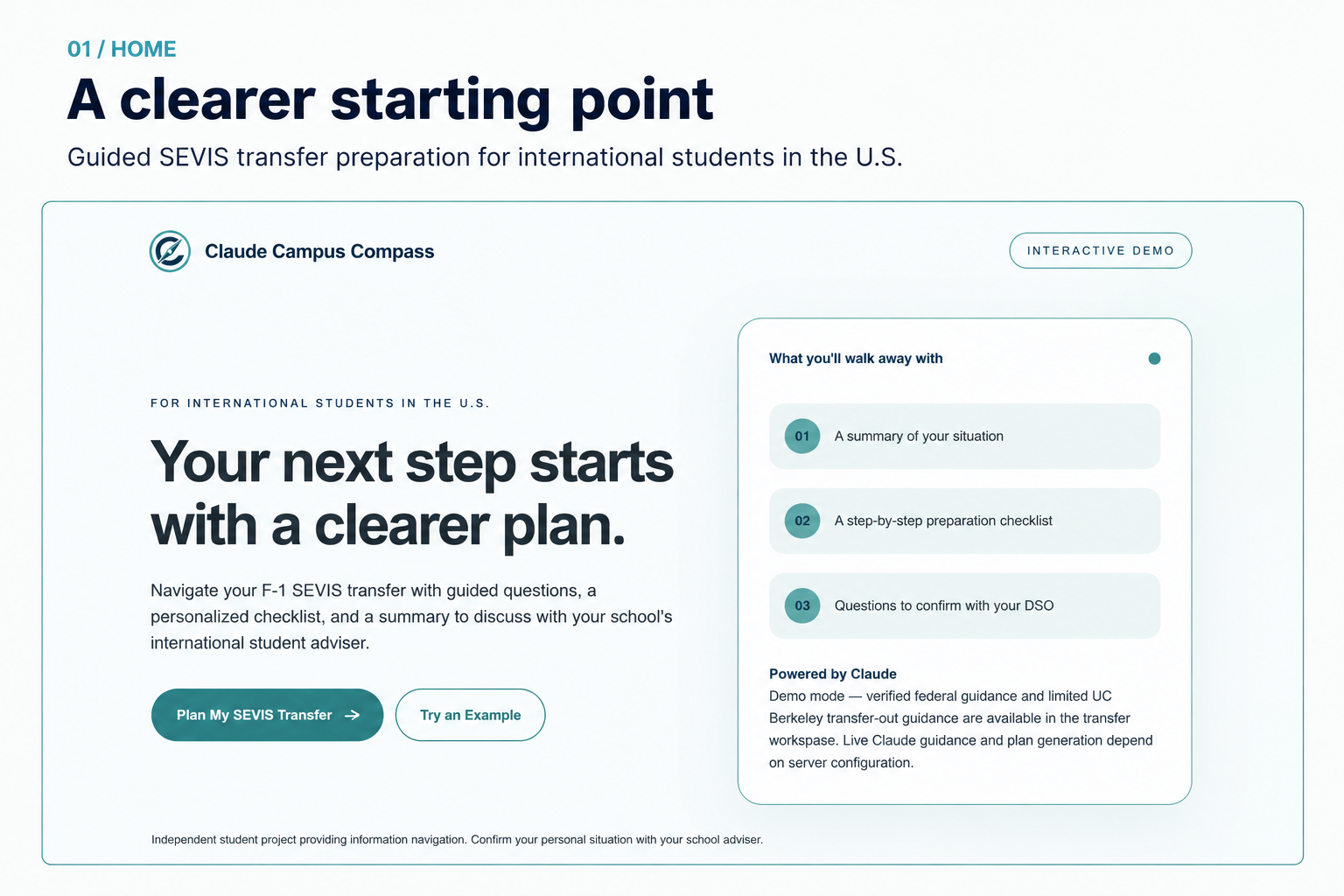
Claude Campus Compass — helping international students prepare for clearer conversations with their school advisers.
-
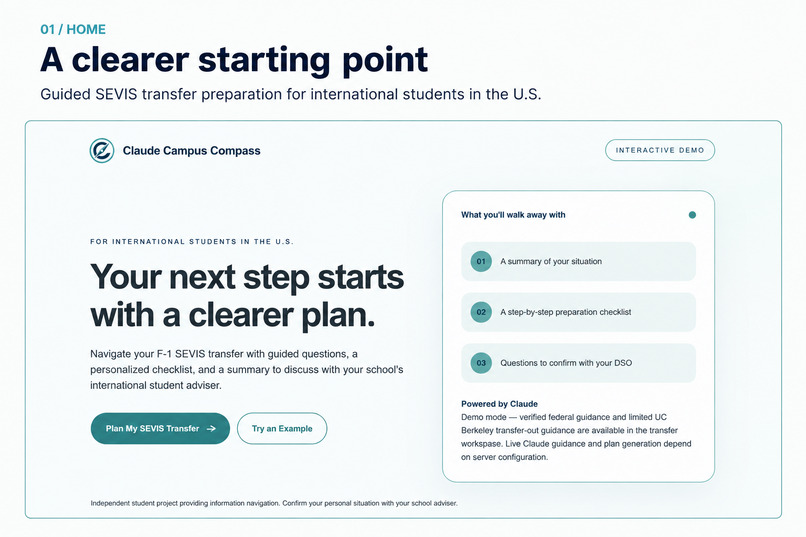
A guided starting point for international students to organize their situation and prepare for an F-1 SEVIS transfer.
-
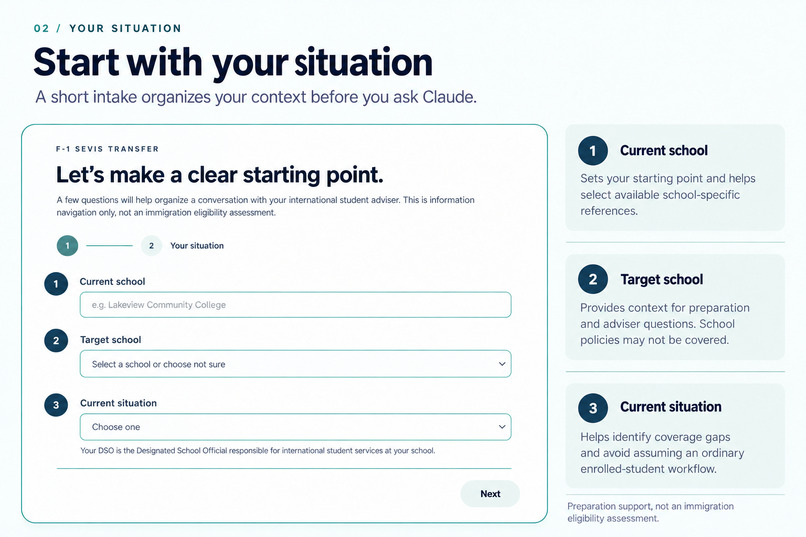
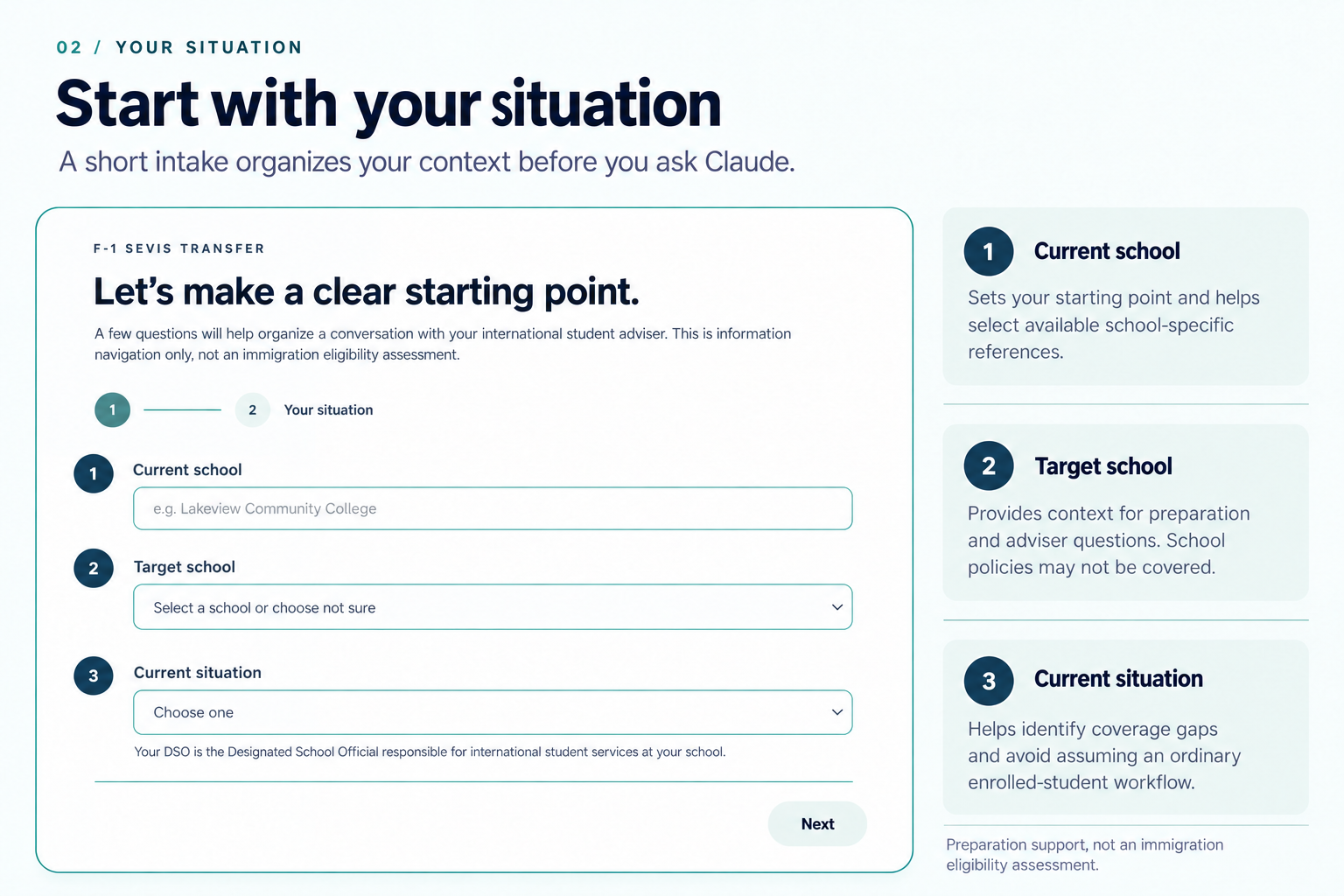
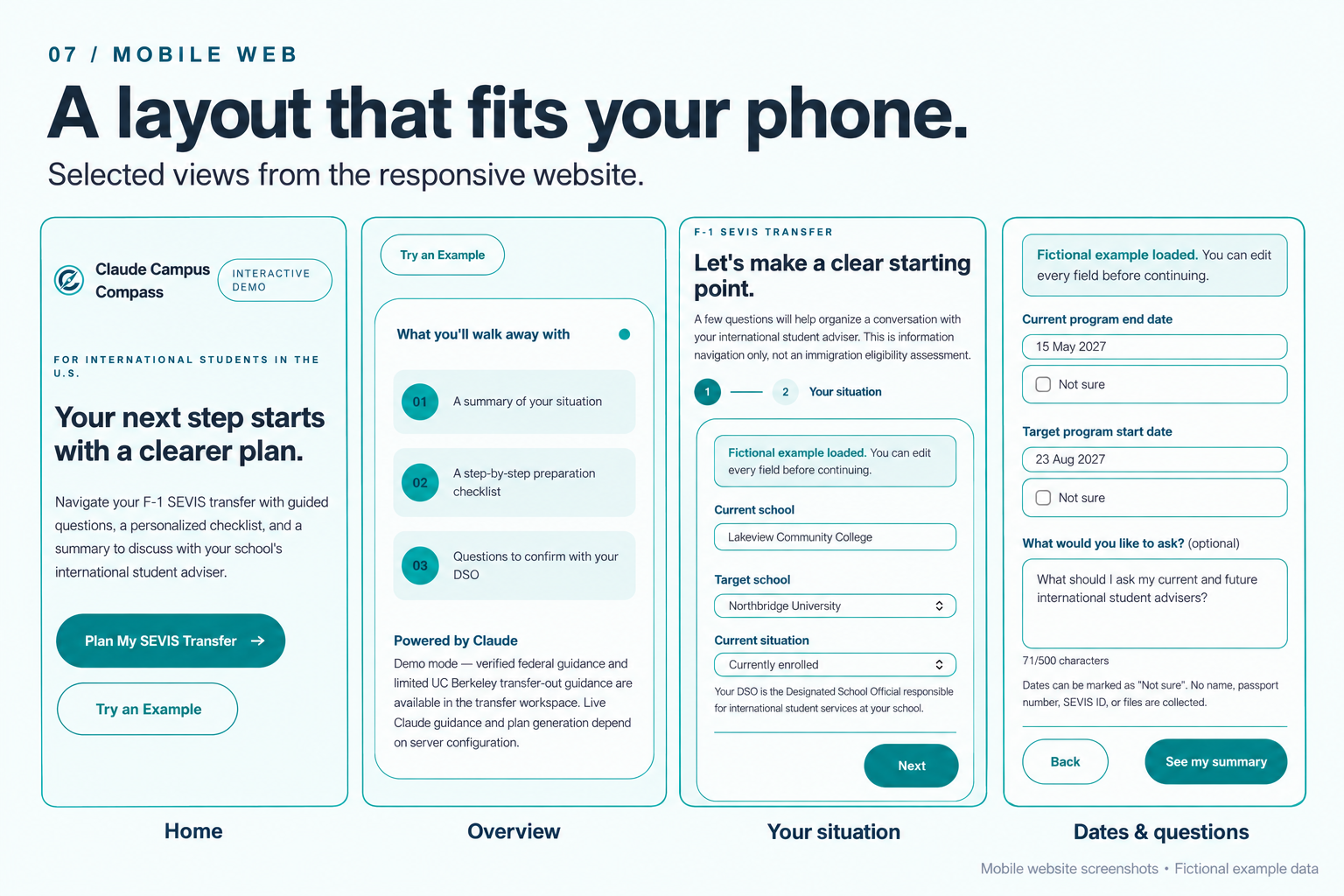
Students enter their current school, target school, and situation to organize preparation and identify gaps in available guidance.
-
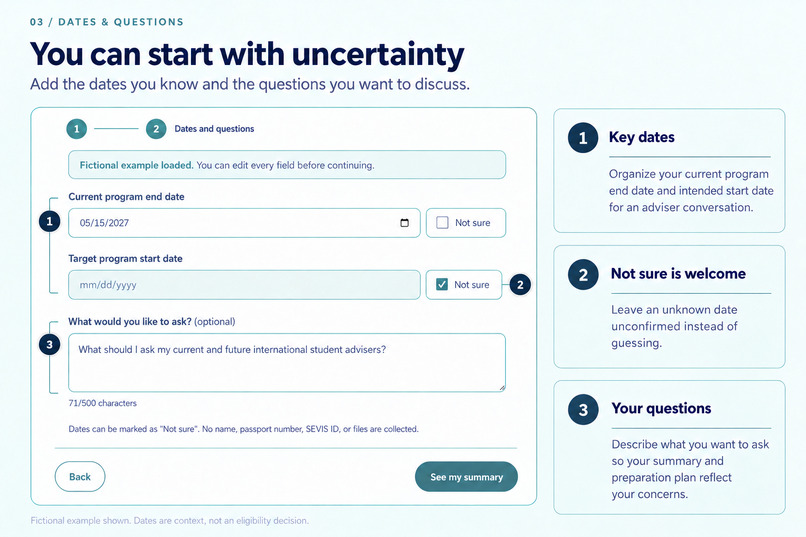
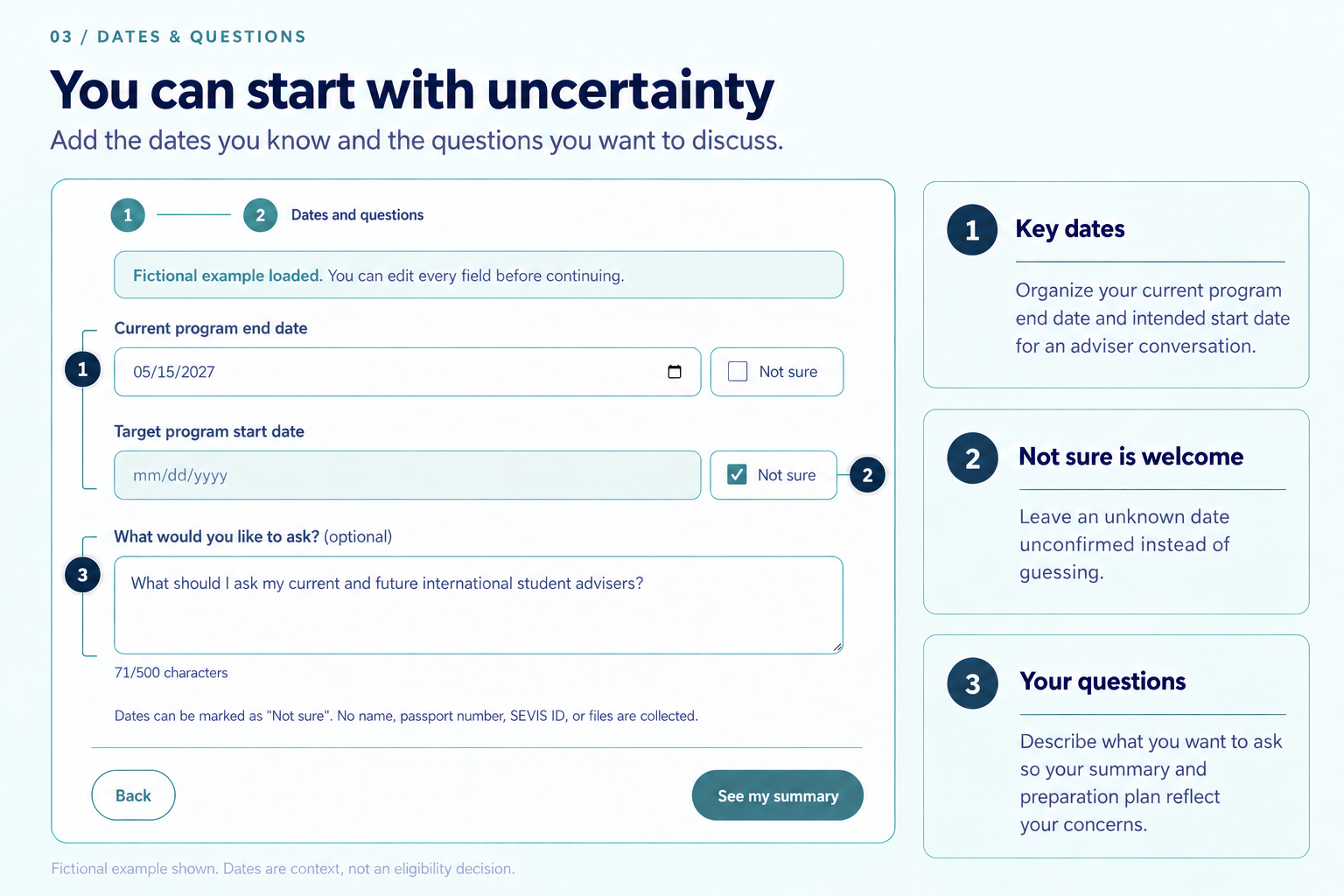
Students can enter known dates, mark unknown dates as “Not sure,” and add questions to prepare for an adviser conversation.
-
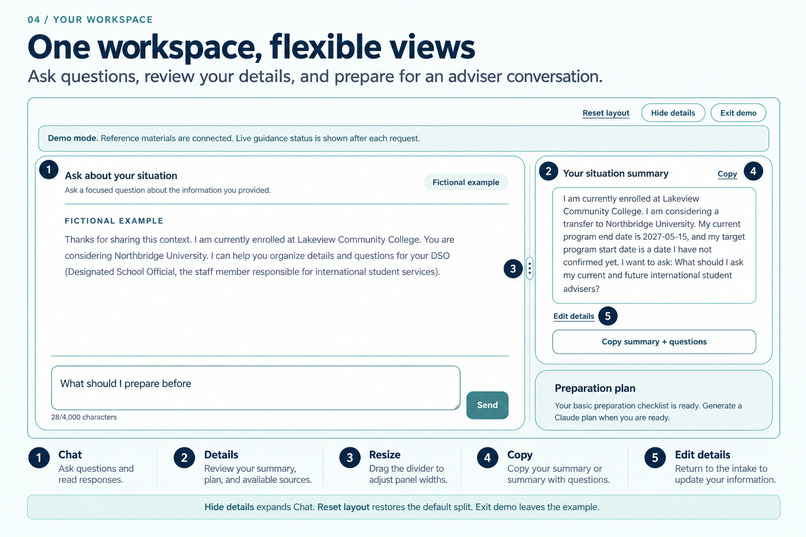
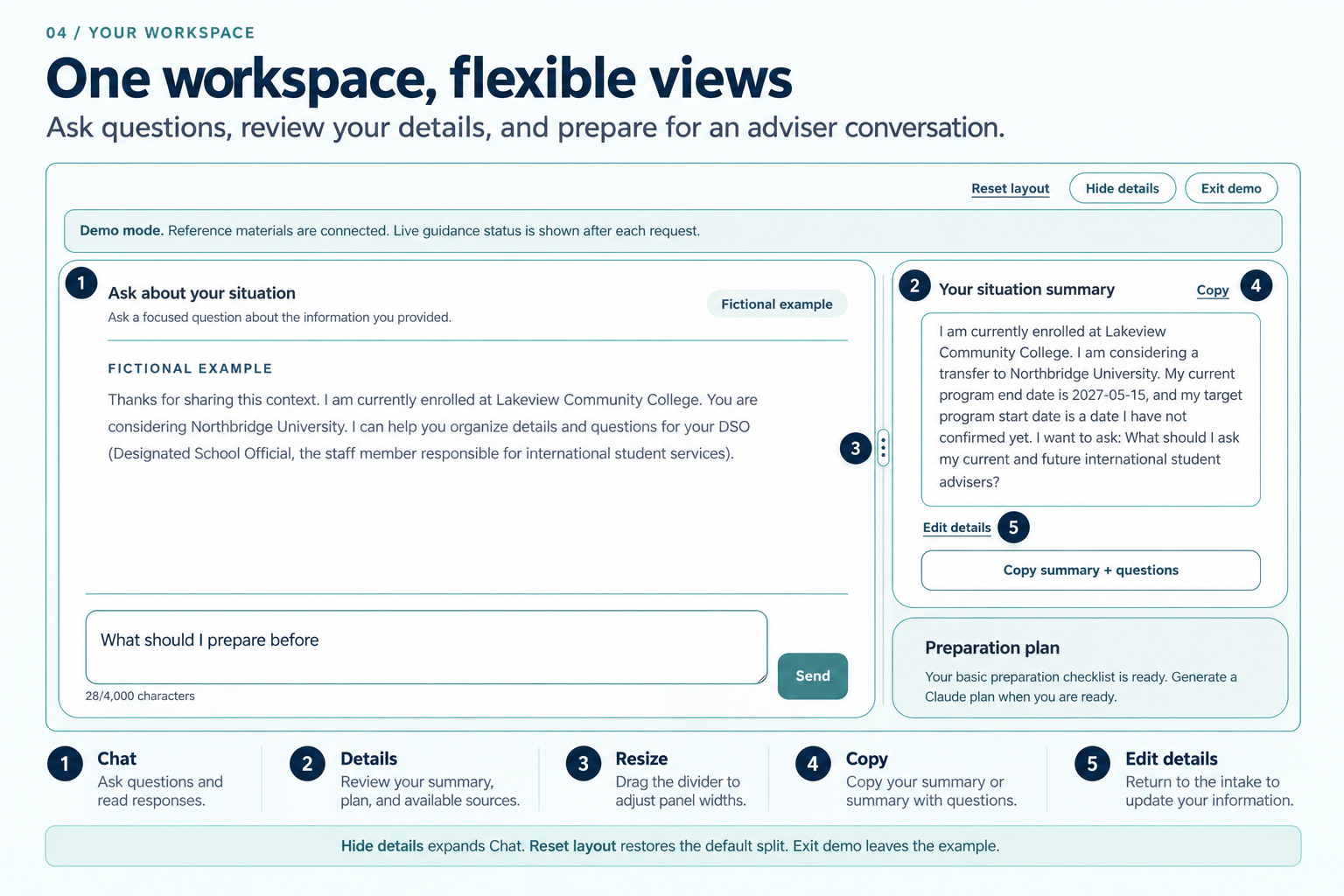
A flexible workspace with chat, student details, resizable panels, copy controls, and an option to edit previously entered information.
-
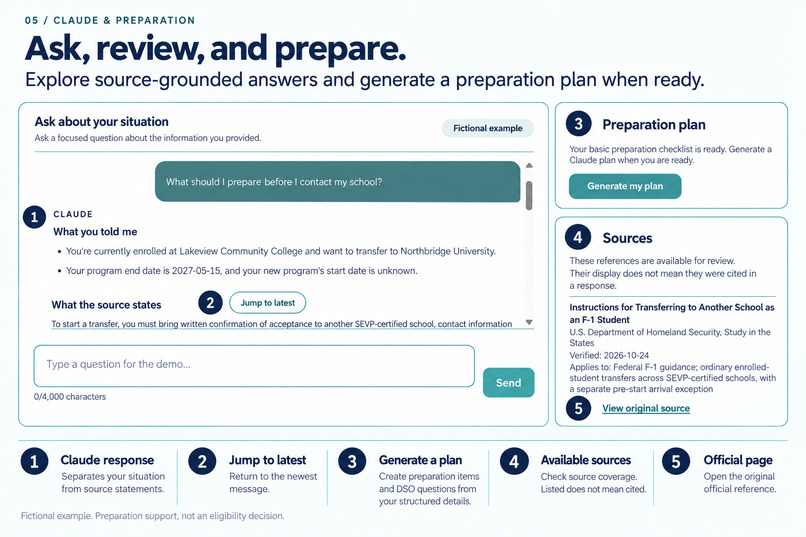
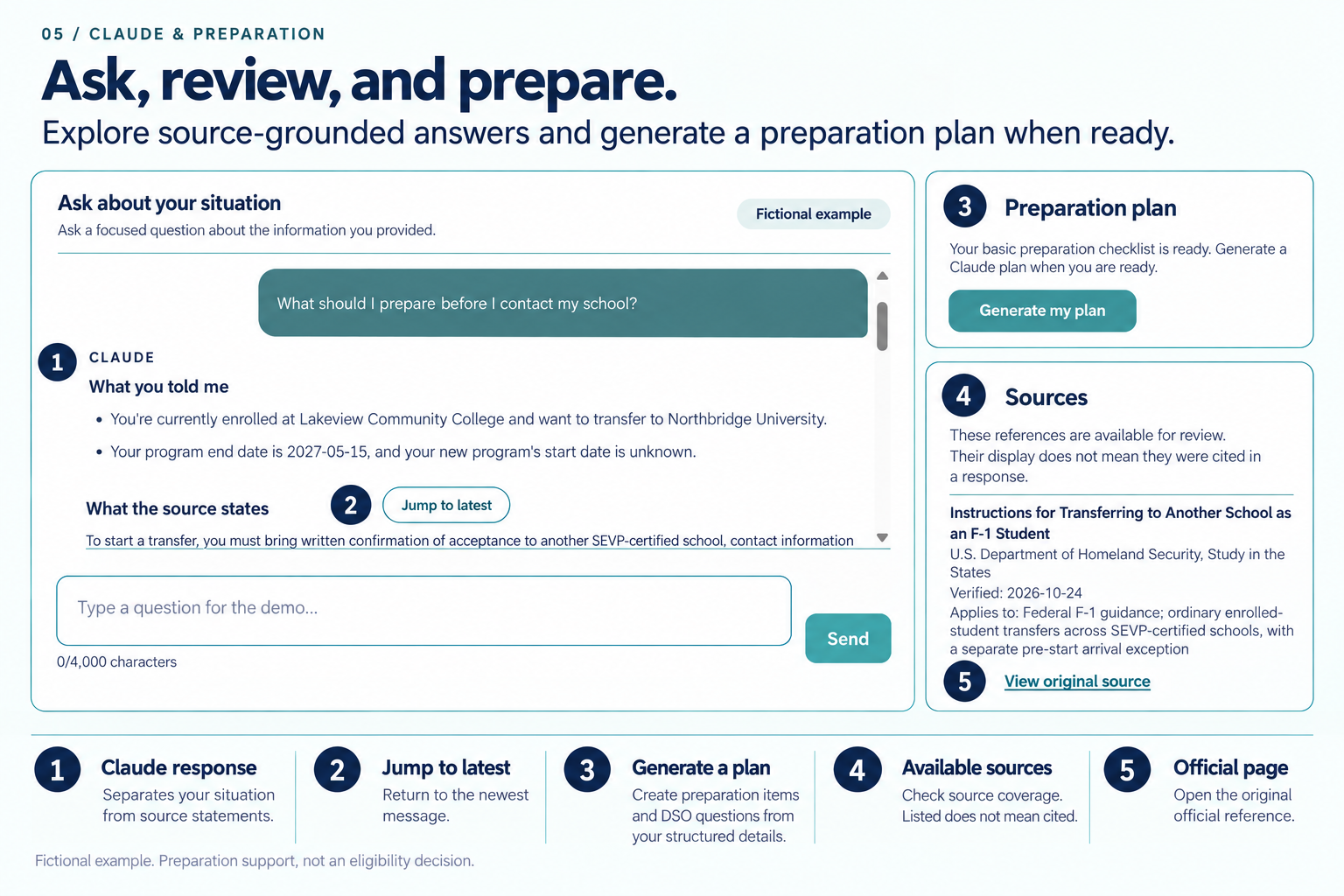
Ask Claude questions, review official sources, jump to the latest reply, and generate a preparation plan from your details.
-
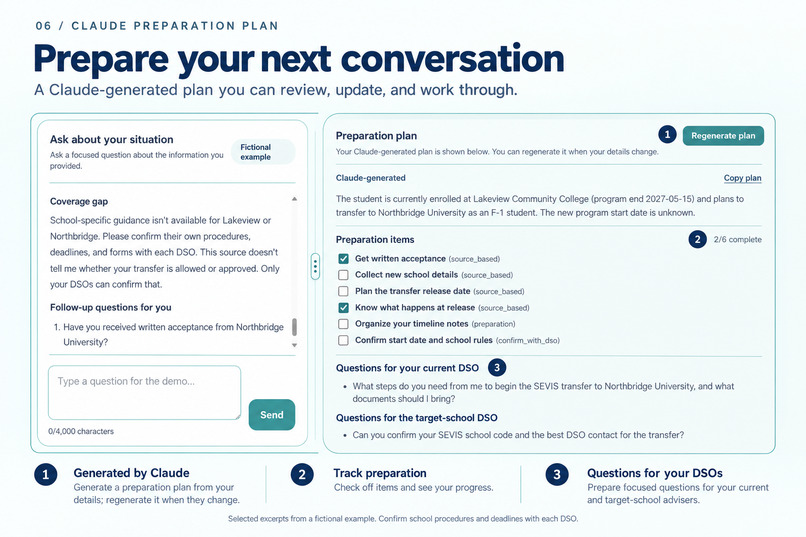
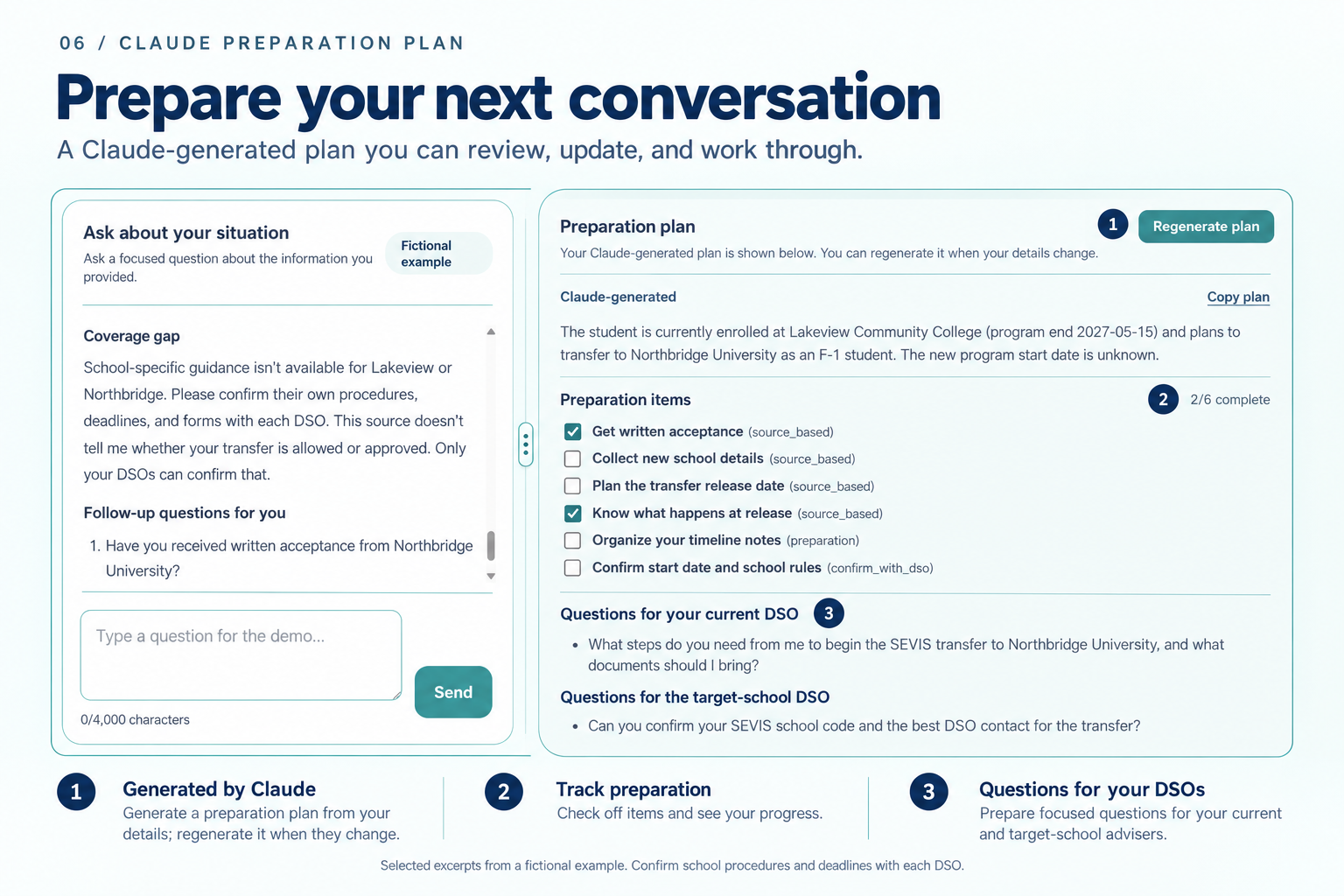
Claude generates a preparation plan with checkable items and DSO questions. Regenerate it when your details change.
-
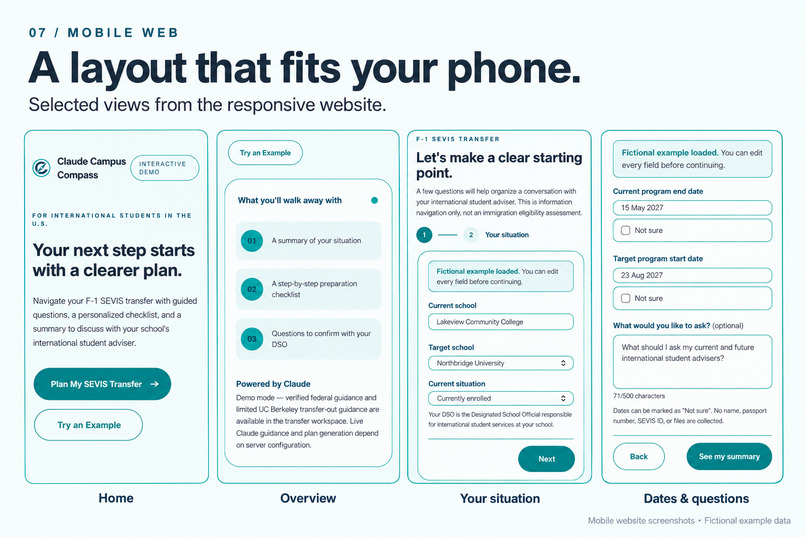
Mobile layouts for the homepage, overview, and guided intake.
-
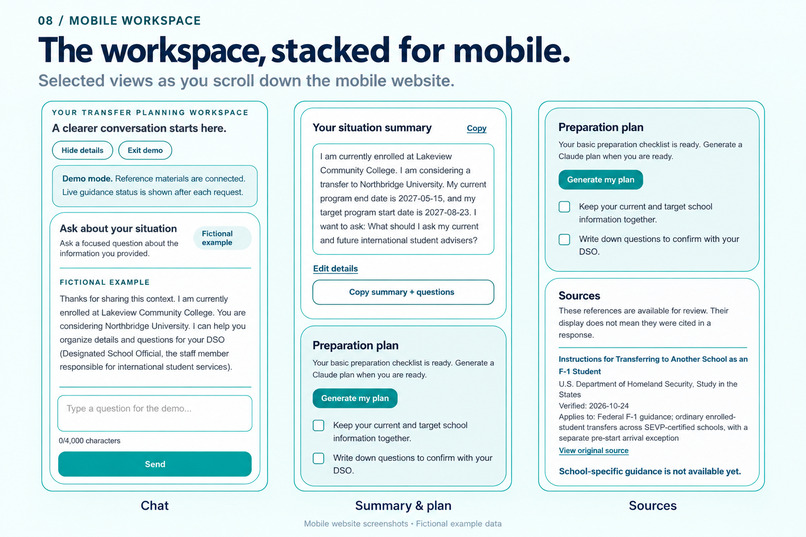
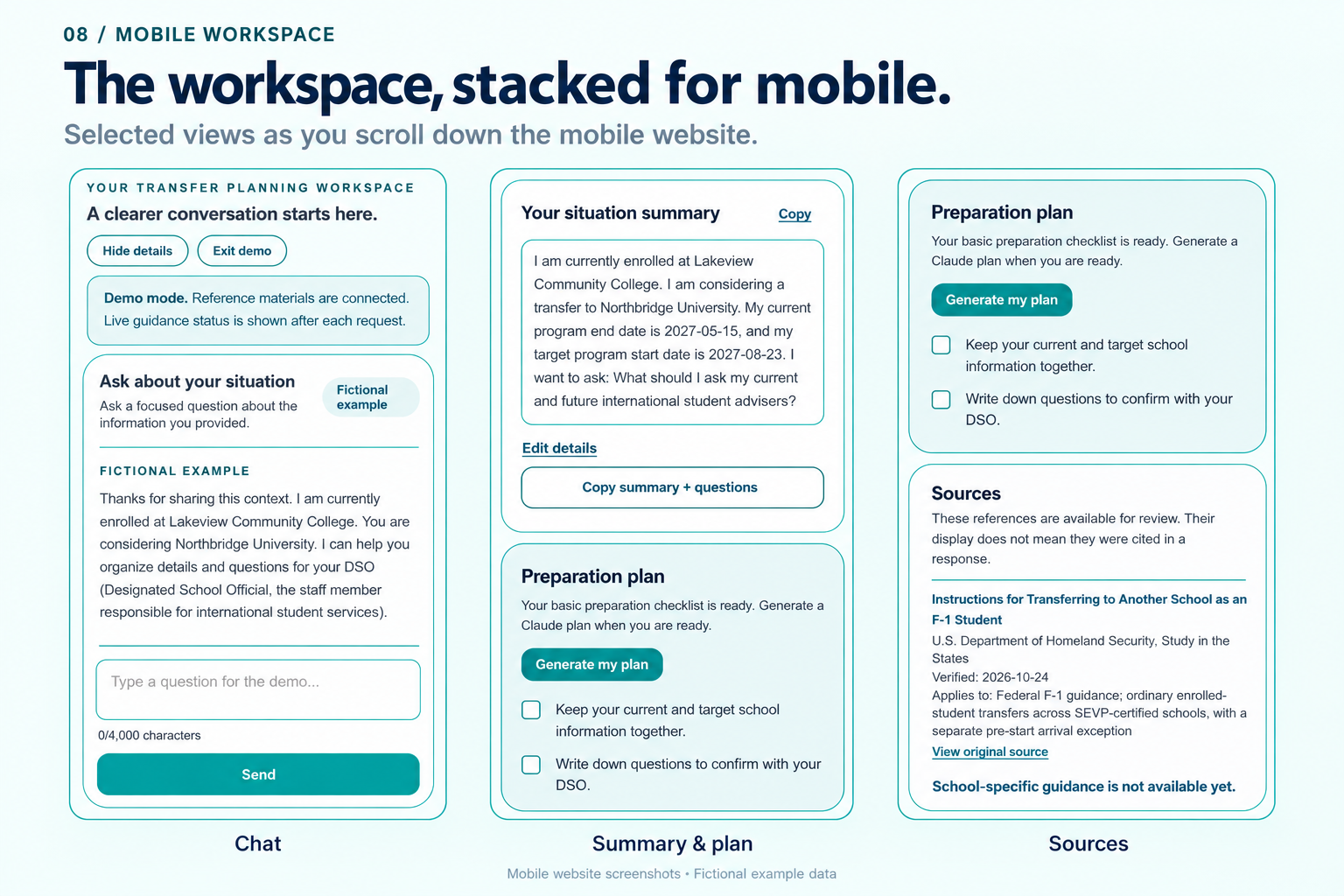
The mobile workspace stacks chat, student details, preparation plans, and sources vertically.

Inspiration
I came to the United States as a visiting student in Fall 2026. Around that time, discussions about changes to student immigration policies made an already unfamiliar system feel even harder to understand.
I had understood that extending my visiting program would involve getting an updated Form I-20 from my school. But as I encountered news and discussions about possible policy changes, I became unsure whether that understanding was still accurate, which changes were actually in effect, and what applied to my situation. My friends were asking the same questions.
The hardest part was connecting general information to a personal situation: Is this an existing rule, a proposed change, or a school-specific procedure? Which source should I trust? What should I ask my international student adviser?
That experience inspired Claude Campus Compass. I started with a focused use case—F-1 SEVIS transfer preparation—to help international students organize their circumstances, inspect the sources behind an explanation, and prepare clearer questions for their Designated School Officials (DSOs).
My own uncertainty involved a possible program extension; this MVP addresses transfer preparation. The connection is the same underlying need: helping students approach an unfamiliar process with clearer information and a better-prepared adviser conversation.
What it does
Claude Campus Compass helps F-1 international students prepare for SEVIS transfer conversations.
Students can:
- Describe their current school, target school, student status, and program dates.
- Review and edit a structured summary of their situation.
- Ask Claude questions and inspect citations linked to the supplied reference materials.
- Generate a personalized preparation plan with checklist items and questions for both schools' Designated School Officials (DSOs).
- Track preparation progress and copy their summary or plan.
- Try the workflow using clearly labeled fictional example data.
The current reference collection includes general federal F-1 transfer guidance and limited UC Berkeley transfer-out guidance. Berkeley-specific materials are selected only when the student's current school matches UC Berkeley.
The application makes coverage gaps explicit. Entering a target school does not mean its transfer-in policies are available, and OPT situations are not presented as having a complete transfer action plan.
The product does not assess immigration eligibility, provide legal conclusions, approve transfers, or replace a DSO or qualified immigration attorney.
How I built it
I built the application with Next.js, React, TypeScript, and Tailwind CSS, and deployed it on Vercel.
Claude powers two core workflows:
- Source-grounded chat: The server selects applicable reference documents and supplies them to Claude. Anthropic's citations feature connects explanations to source excerpts. The backend validates and maps citations to known references rather than allowing the model to invent source URLs.
- Structured preparation plans: A separate request uses structured outputs to generate preparation items, missing information, DSO questions, and coverage limitations. The server validates the returned plan and its reference IDs before displaying it.
Upstash Redis provides shared request limits across serverless instances. Server-side environment variables protect API credentials, and an explicit switch can pause paid AI requests.
I used GitHub Copilot Agent throughout development, with iterative code review, offline validation, browser checks, and manual testing of the deployed Claude workflows.
Challenges I ran into
One challenge was distinguishing a school's name from actual policy coverage. A broad match for “Berkeley” could incorrectly apply UC Berkeley instructions to Berkeley City College. I replaced that behavior with explicit matching and an ambiguity notice.
Another challenge was keeping source coverage consistent across prompts and backend validation. An early OPT plan contained source-based action items despite incomplete OPT coverage. I aligned the generation instructions with the validation rules so unsupported situations produce preparation advice and questions to confirm with a DSO.
Citations also affected presentation. Rendering individual API text blocks separately broke Markdown lists and spacing. Combining the text while preserving citation positions produced a more readable answer.
Finally, a fixed desktop workspace compressed the chat area on mobile. I separated the responsive layouts so desktop panels scroll internally while mobile pages flow naturally without overlapping the input or footer.
Accomplishments that I'm proud of
I completed and deployed a working flow from student intake to cited chat and a copyable preparation plan.
I am especially proud of making uncertainty visible through source excerpts, school-specific scope notices, explicit coverage limits, and an out-of-date indicator when a student's details change.
The application also includes shared request limits, manual retry controls, copy feedback, and a mobile layout. These details help turn an API demonstration into a usable prototype.
What I learned
I learned that useful AI assistance requires more than a fluent answer. It also requires clear source boundaries, validated outputs, understandable failure states, and an interface that helps people inspect the basis for a response.
I also learned to separate three things: what the student reports, what the available sources support, and what still needs confirmation from an adviser.
What's next for Claude Campus Compass
Expand school-specific coverage
The first priority is to grow the reviewed reference collection beyond the current federal guidance and limited UC Berkeley transfer-out materials.
I want to cover both sides of the transfer: the current school's transfer-out process and the target school's transfer-in instructions. Future references could include official forms, adviser contacts, document requirements, and published processing timelines, with clear source links and verification dates.
Expansion will follow student demand, starting with the schools that early users actually need.
Support more student situations
The current MVP focuses on F-1 SEVIS transfer preparation. Future work will explore OPT-related questions and other F-1 situations before expanding to J-1 exchange visitors.
Each new area will need its own reviewed sources, applicability rules, and validation. The goal is to expand useful coverage while keeping unsupported situations and unanswered questions visible.
Keep guidance current
My own experience showed how confusing it can be to distinguish a proposed policy change from an effective rule or a school-specific instruction.
I want to develop a reference-review process that tracks updates, flags materials needing review, and clearly explains what changed. Optional notifications could eventually help students notice relevant updates without implying that every announcement applies to their individual case.
Make access sustainable
Visitors to the hosted application already use Claude through the platform's server-side configuration; they do not need their own API keys.
For longer-term operation, I want to explore accounts, a free usage allowance, and affordable subscription or usage-based options. Students would access the service through a simple interface, while the platform manages model access and costs. Pricing decisions will depend on actual usage, operating costs, and feedback about affordability.
Build a stronger mobile experience
The application is already available on the web with a responsive mobile layout. The next step is to improve the experience on real devices and explore an installable progressive web app.
A dedicated mobile app could follow if user demand justifies it, particularly for saved preparation plans, progress tracking, and optional reminders.
Learn from students and advisers
Before expanding broadly, I want to test the workflow with international students and seek feedback from international student advisers.
The key question is whether the product helps students understand the available information, identify what remains uncertain, and prepare for a more productive adviser conversation.
Longer-term improvements could include multilingual explanations and optional saved plans, with clear consent and controls for deleting personal information.
Built With
- anthropic-api
- claude
- claude-code
- github-copilot
- next.js
- react
- tailwind-css
- typescript
- upstash-redis
- vercel


Log in or sign up for Devpost to join the conversation.