Inspiration
Managing classrooms in a large college can become difficult when there are multiple departments, subjects, faculty members, rooms, laboratories, and changing student attendance. A classroom may be underutilized while another room is overcrowded, and timetable changes can create room conflicts.
We wanted to build a smarter solution that can use classroom and attendance data to help colleges make better resource allocation decisions.
What is ClassOpt AI?
ClassOpt AI is an AI-powered classroom resource optimization platform designed to help educational institutions efficiently manage classrooms.
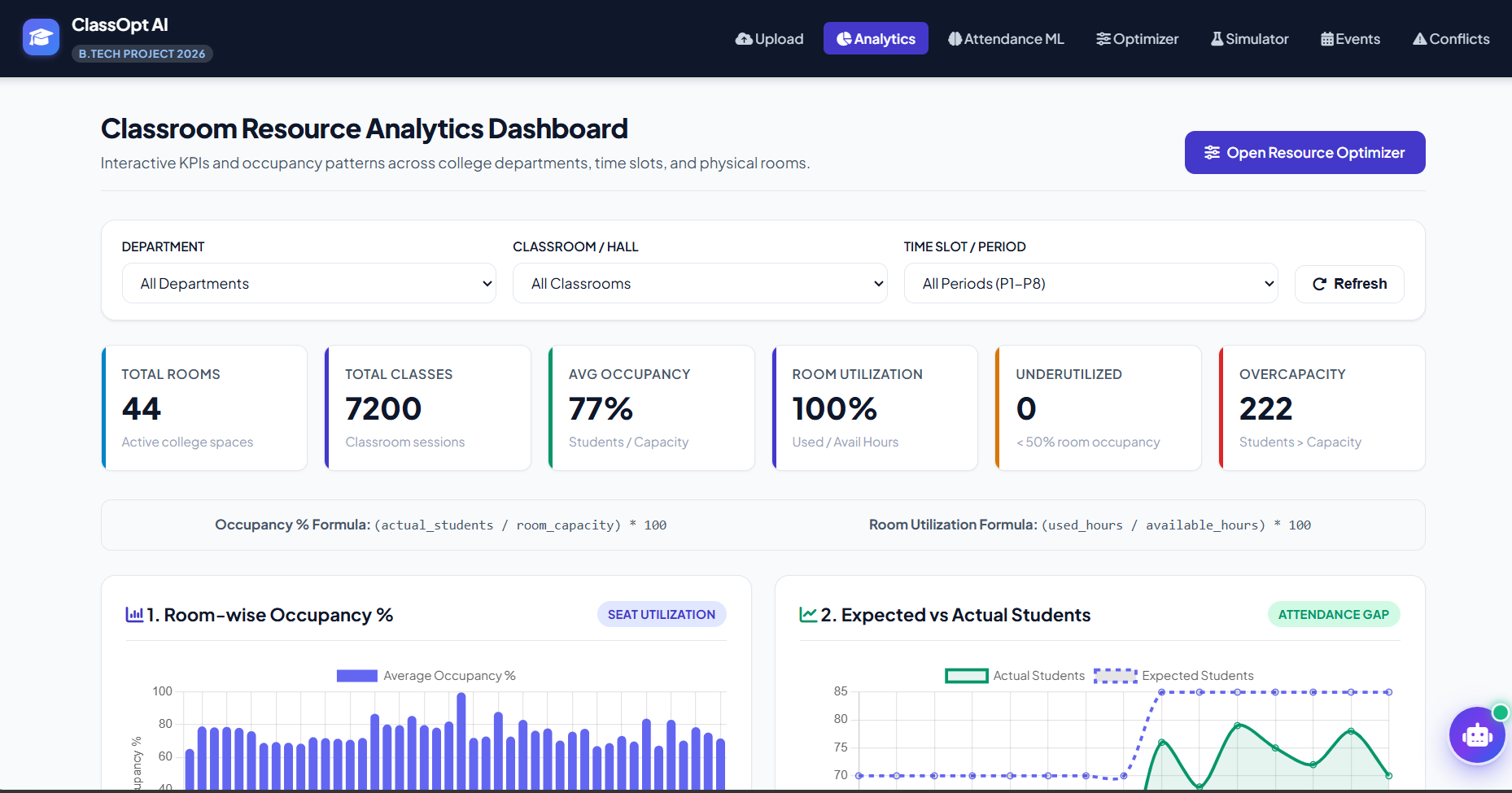
The system analyzes historical classroom occupancy, timetable, department, subject, room capacity, and attendance data to provide useful insights and recommendations.
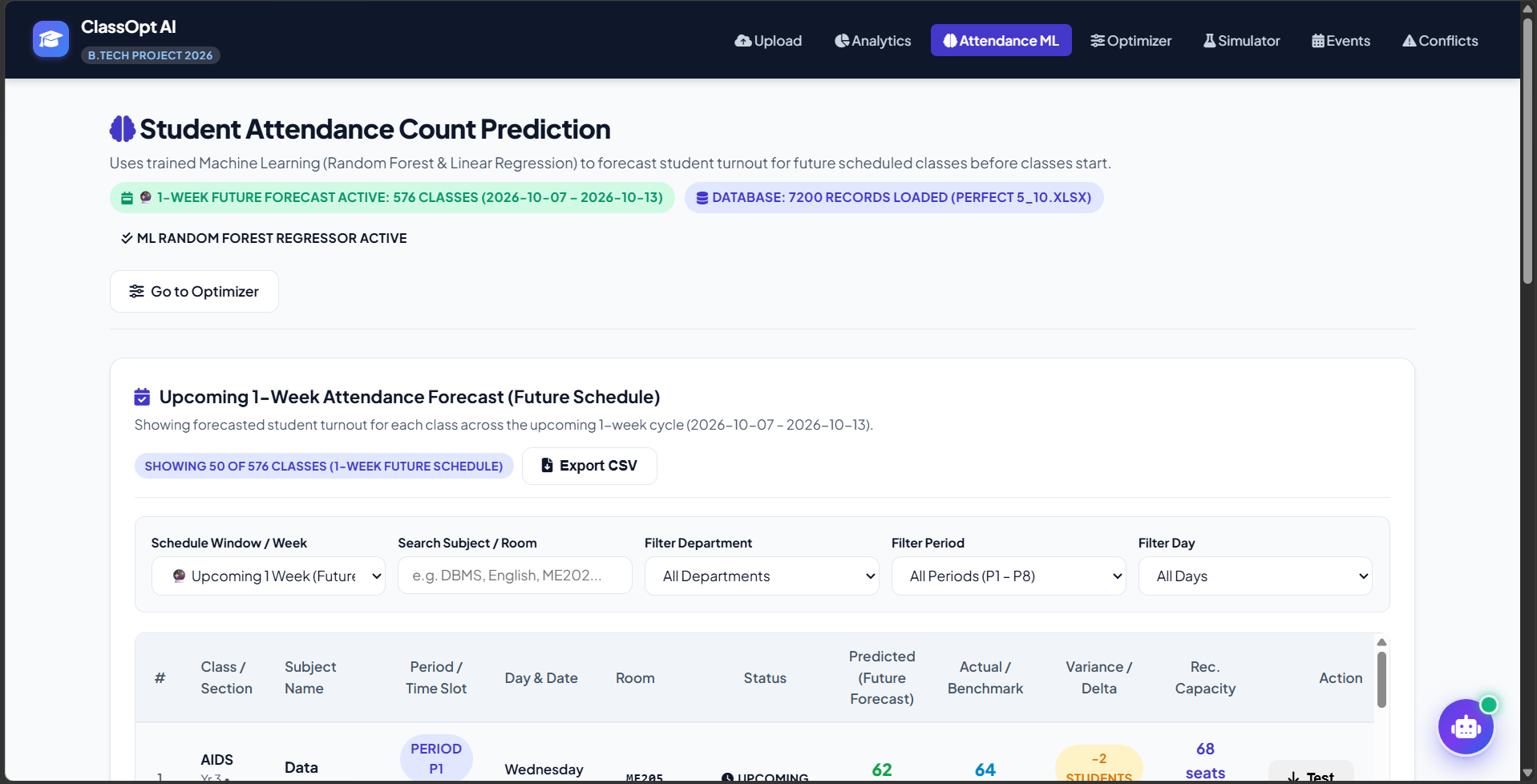
It can predict future classroom occupancy, identify possible room allocation conflicts, recommend suitable classrooms, and help administrators understand how classroom resources are being utilized.
Key Features
- Classroom Occupancy Analytics – Understand how classrooms are being utilized.
- Occupancy Prediction – Predict expected student count for a particular date and period.
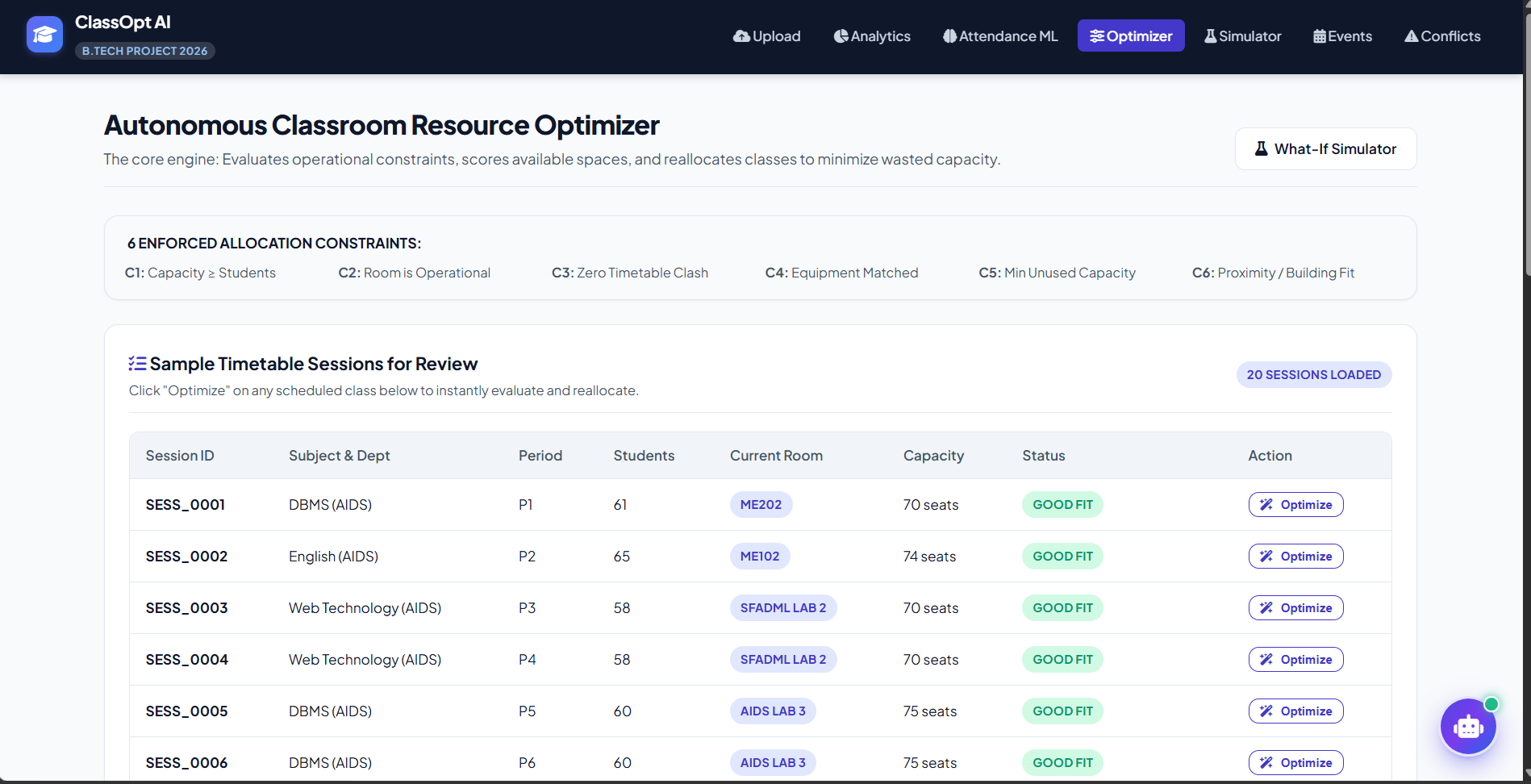
- Smart Classroom Recommendation – Suggest suitable classrooms based on capacity and availability.
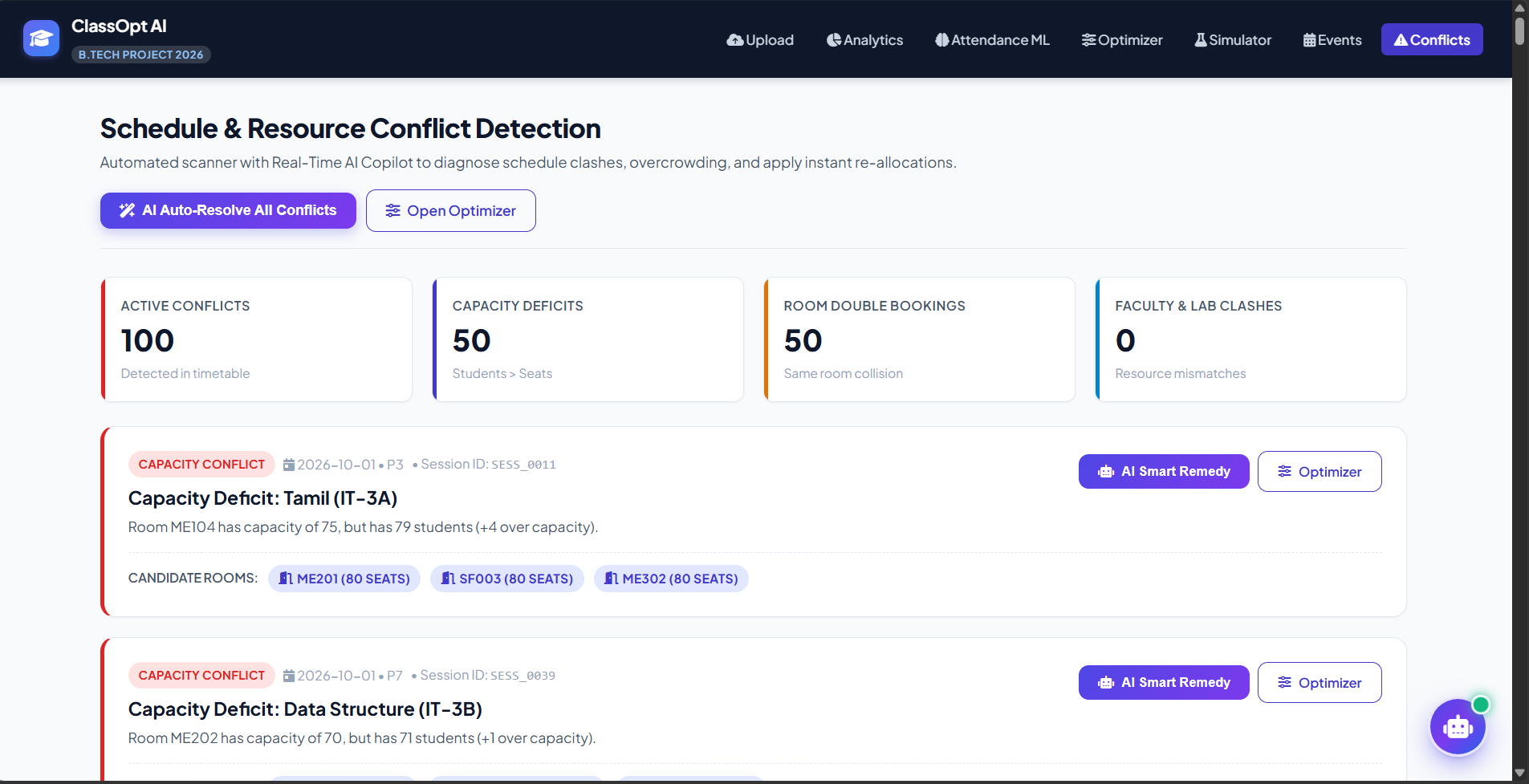
- Conflict Detection – Identify classroom allocation and timetable conflicts.
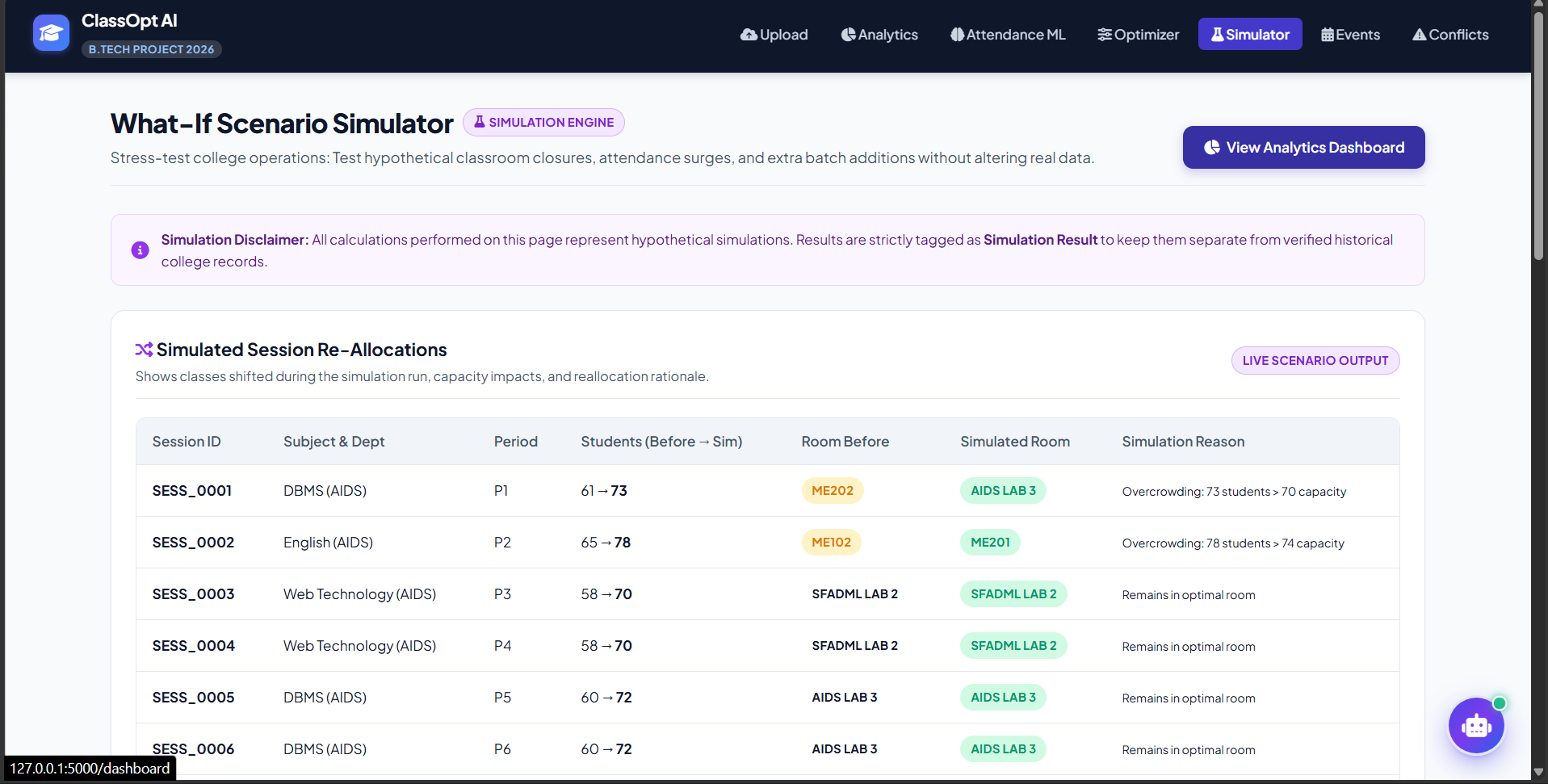
- What-If Simulator – Test different classroom mappings and see possible conflicts before applying changes.
- Nearest Classroom Recommendation – Suggest alternative classrooms when the required room is unavailable.
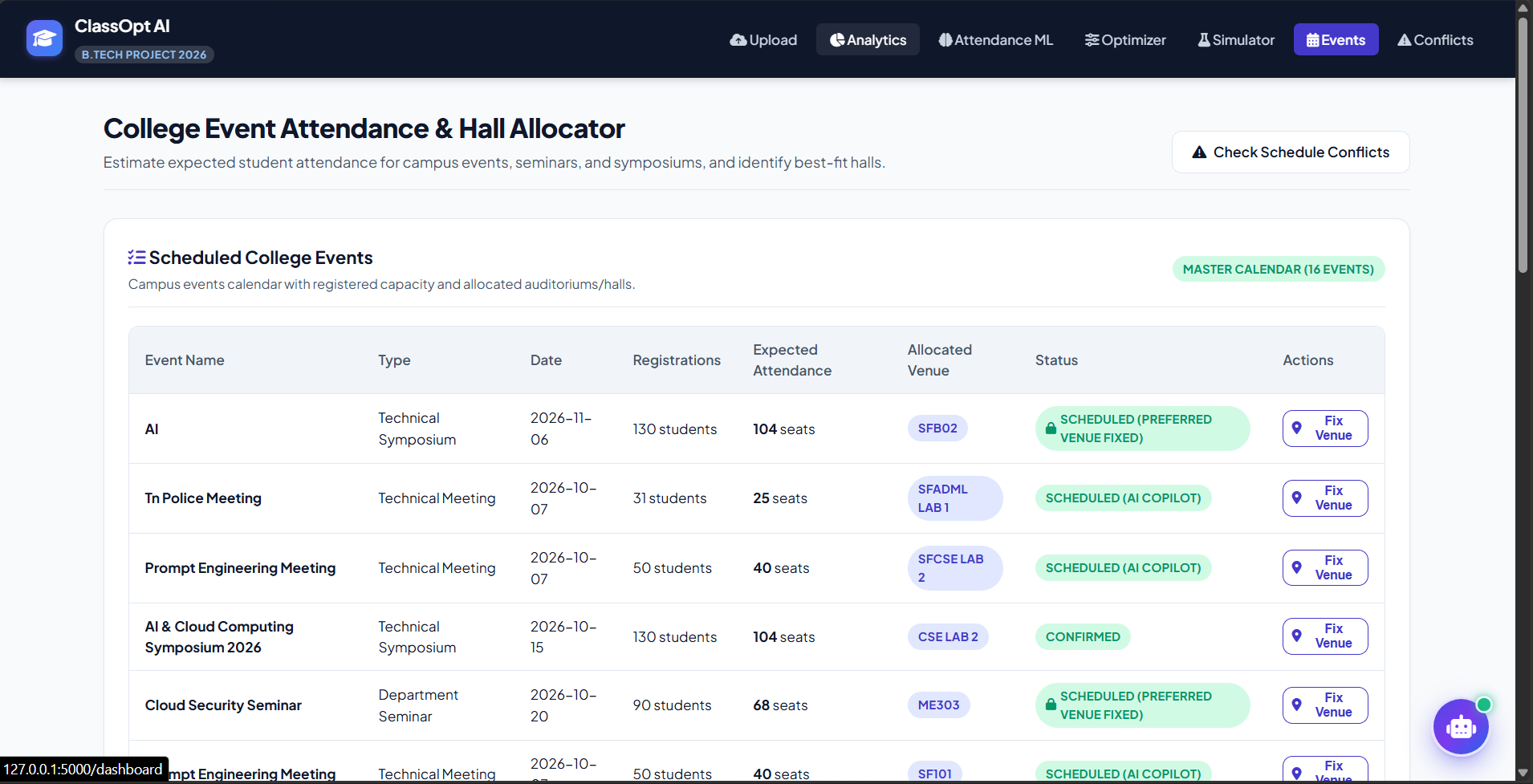
- Event Occupancy Prediction – Estimate expected student occupancy for academic events.
- Resource Optimization – Reduce classroom underutilization and overcrowding.
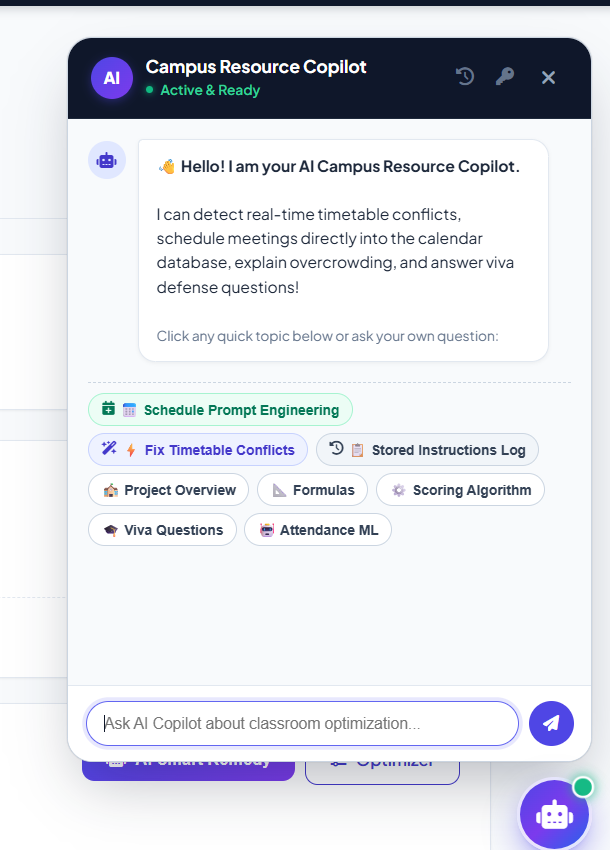
- AI Interface – Allow users to interact with the system and ask for resource optimization or classroom-related information.
How We Built It
The system is designed around structured college data such as date, department, venue, subject, period, booking capacity, and actual attendance.
The data is processed and analyzed to identify classroom utilization patterns. Machine learning techniques can then be used to predict future occupancy and support better classroom allocation decisions.
The platform combines data analytics, machine learning, visualization, and an interactive web interface into a single system.
Challenges We Faced
One of the major challenges was designing realistic classroom allocation rules while considering different department strengths, classroom capacities, timetable periods, and student attendance.
Another challenge was handling situations where multiple classes require classrooms at the same time. We addressed this by introducing conflict detection, alternative classroom recommendations, and what-if simulation.
Impact
ClassOpt AI aims to help colleges make data-driven decisions instead of relying completely on manual classroom allocation.
By understanding classroom utilization and predicting future demand, institutions can potentially reduce unused classroom capacity, avoid overcrowding, identify scheduling conflicts, and improve overall resource utilization.
Future Scope
Future versions can integrate real-time attendance data, IoT-based classroom occupancy sensors, automated timetable generation, energy consumption optimization, faculty scheduling, and a complete digital twin of the campus.
Our long-term goal is to create an intelligent campus resource management system that continuously learns from real-world usage and automatically recommends better resource allocation.
Built With
- analytics
- css
- data
- html
- javascript
- learning
- machine
- matplotlib
- numpy
- pandas
- python
- scikit-learn

Log in or sign up for Devpost to join the conversation.