Inspiration
Classroom allocation and resource planning can become difficult when there are many classrooms, students, departments, schedules, and changing attendance patterns. We wanted to build a system that goes beyond simply displaying classroom data and actually helps in planning and decision-making.
What the Project Does
Our project is a Predictive Classroom Resource Optimization System that combines data analysis, prediction, optimization, and simulation.
The system provides:
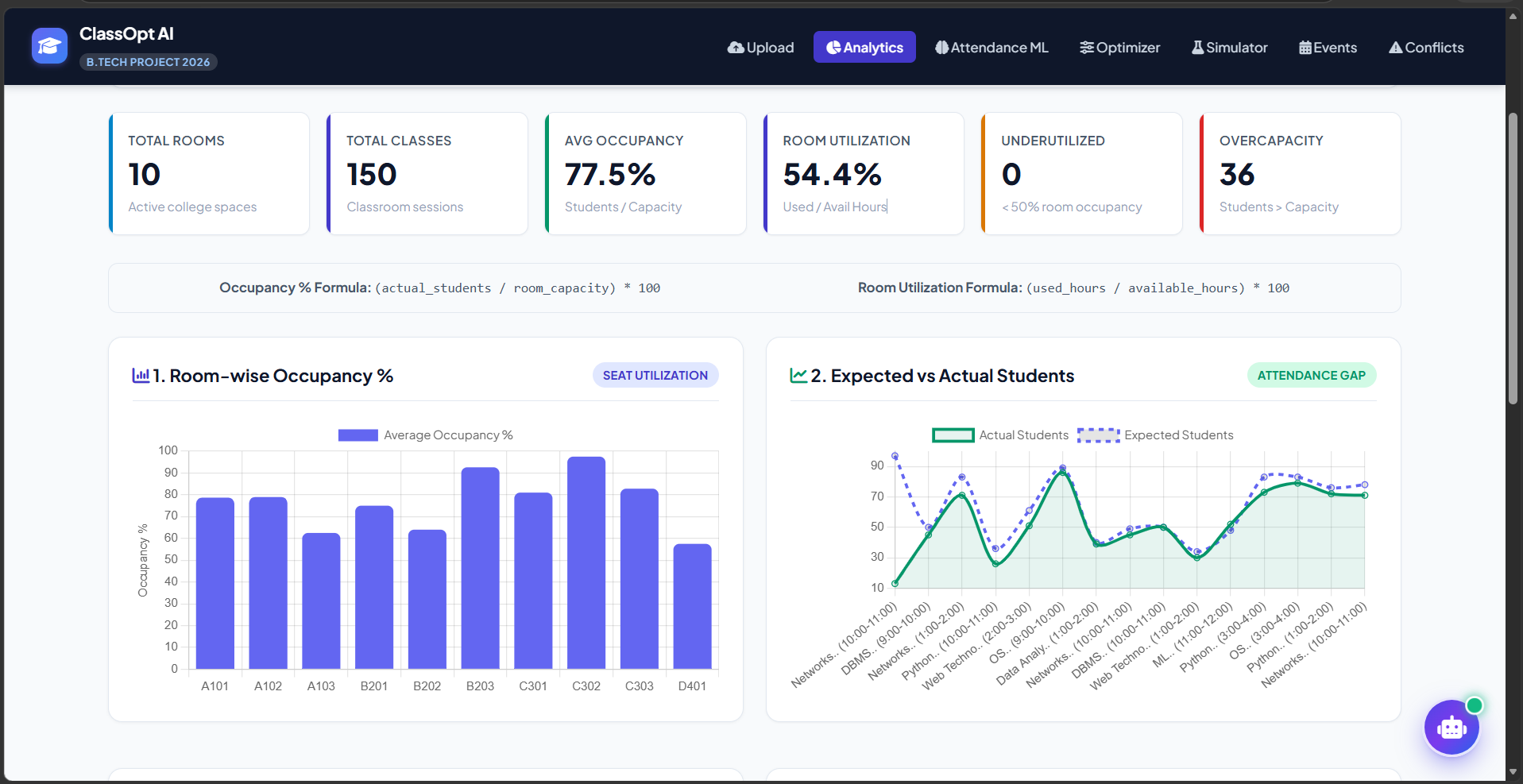
- Classroom and resource analytics
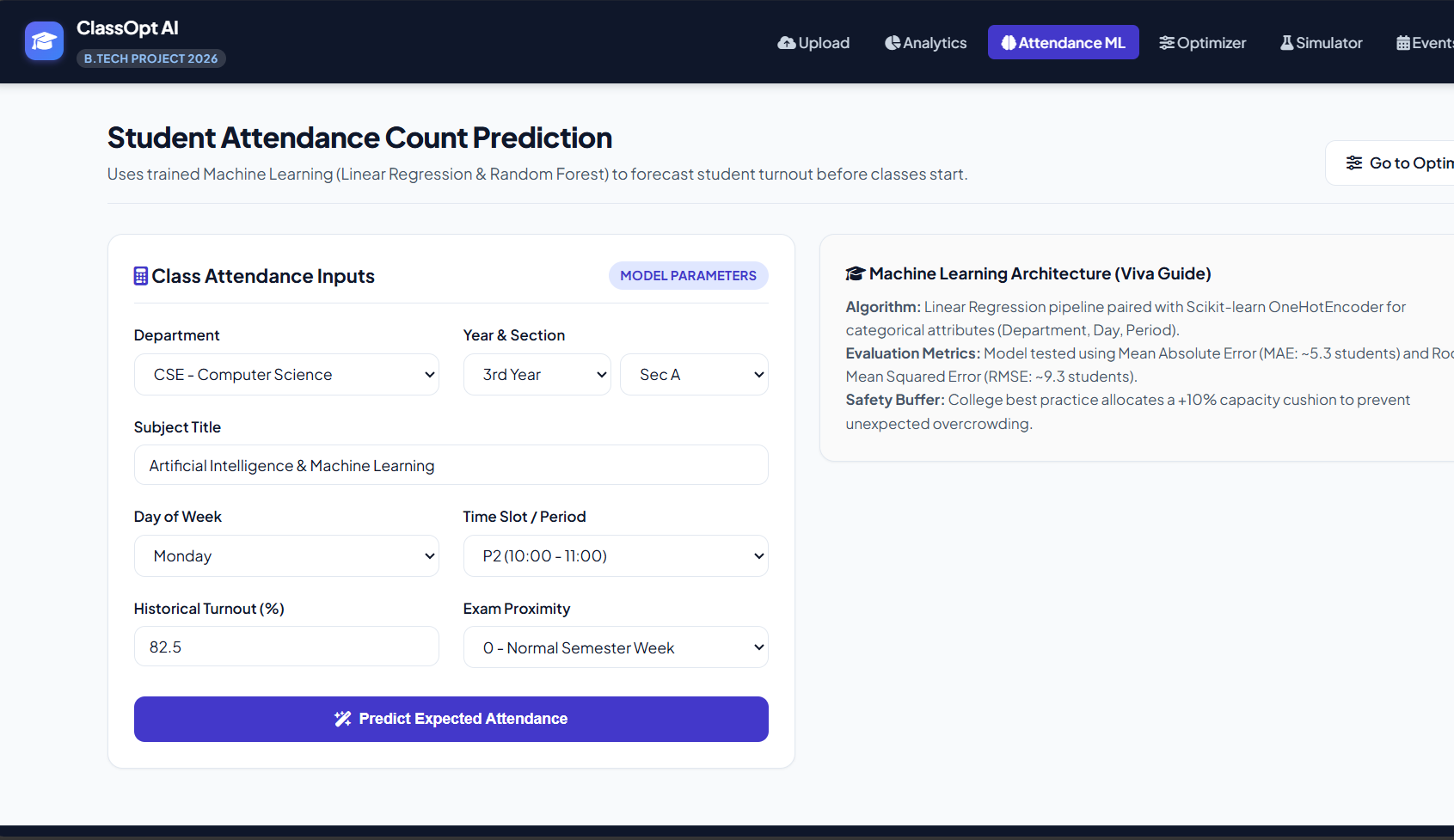
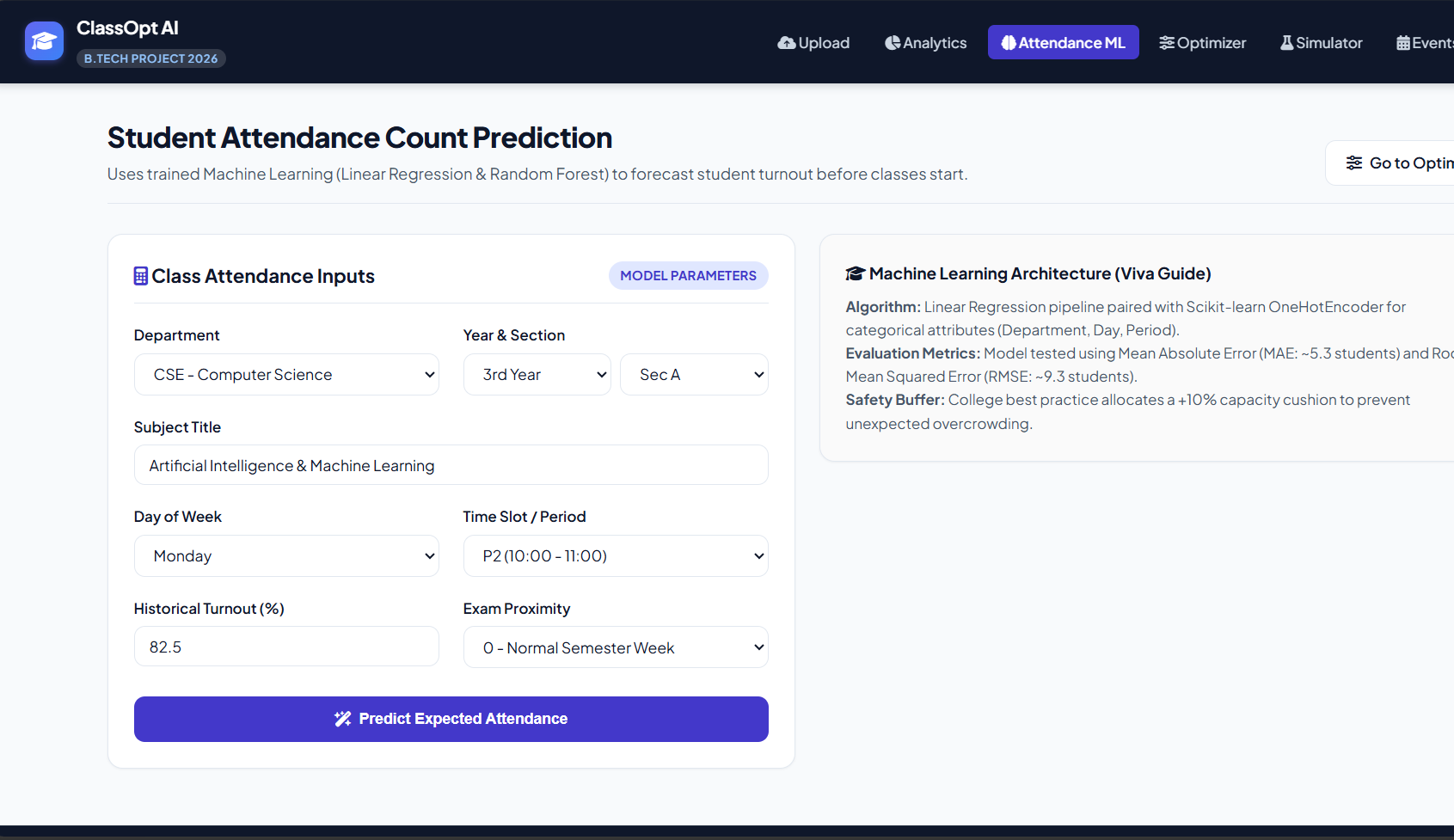
- Attendance prediction
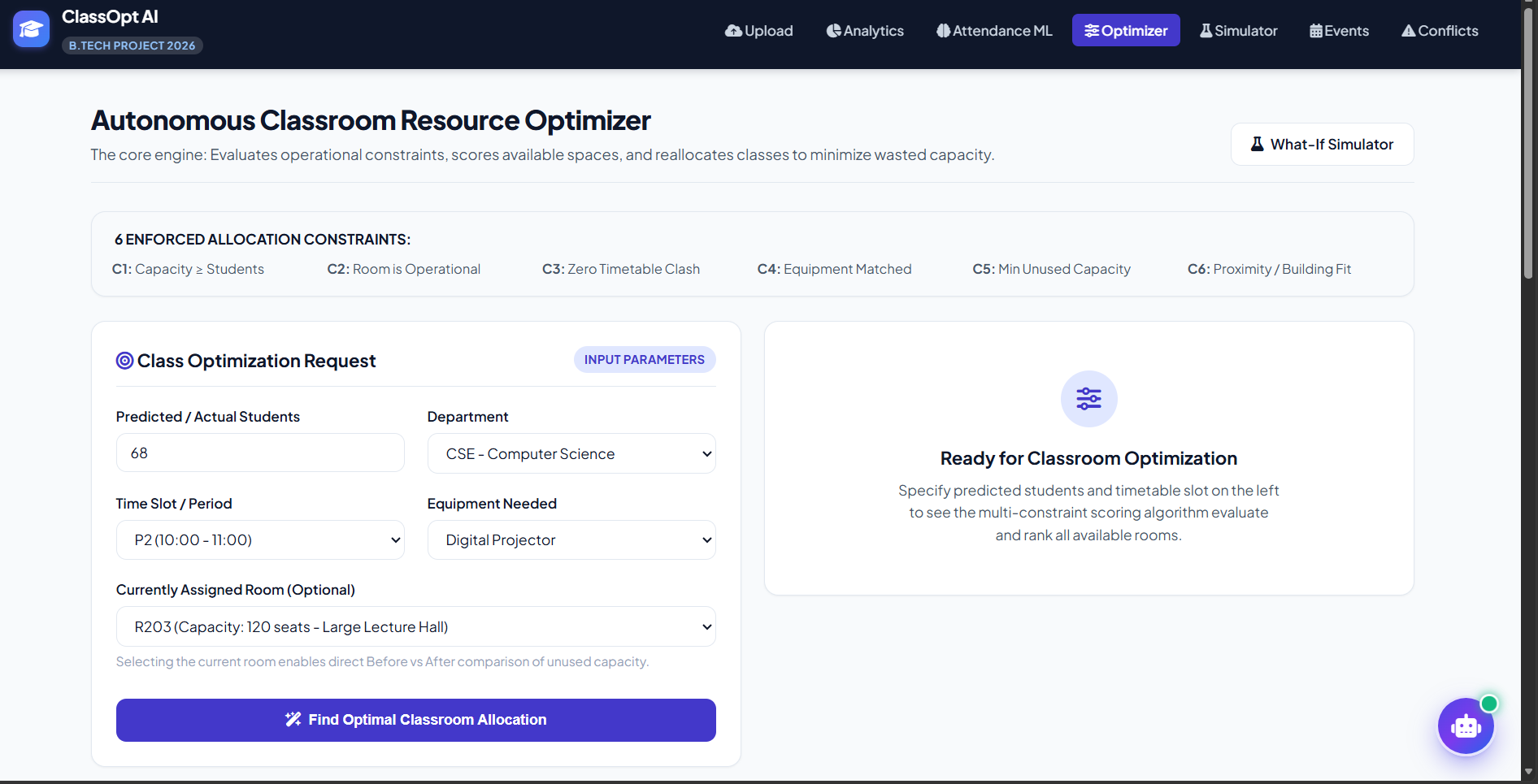
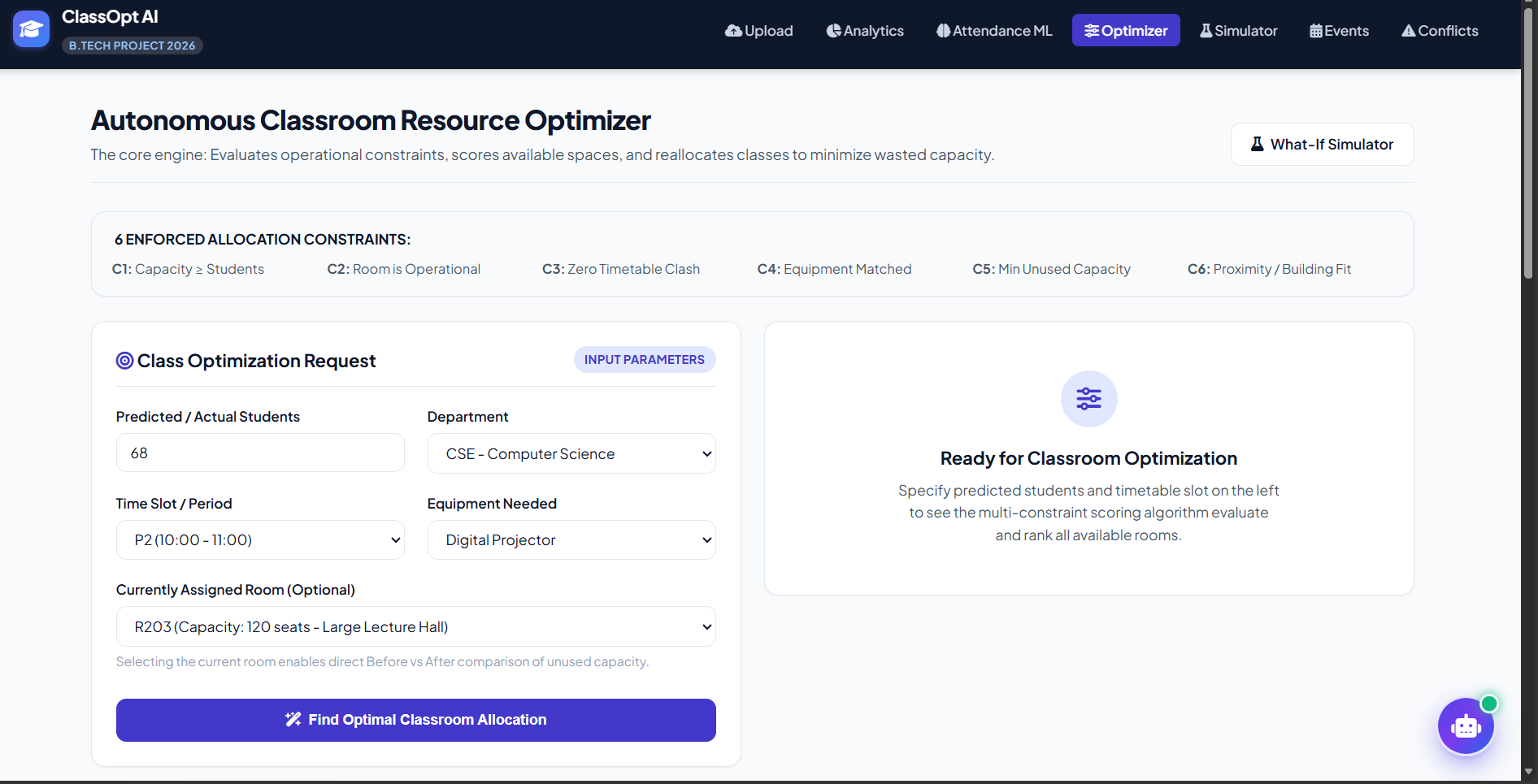
- Classroom recommendations based on multiple constraints
- Schedule and resource conflict detection
- What-if simulation for testing different scenarios
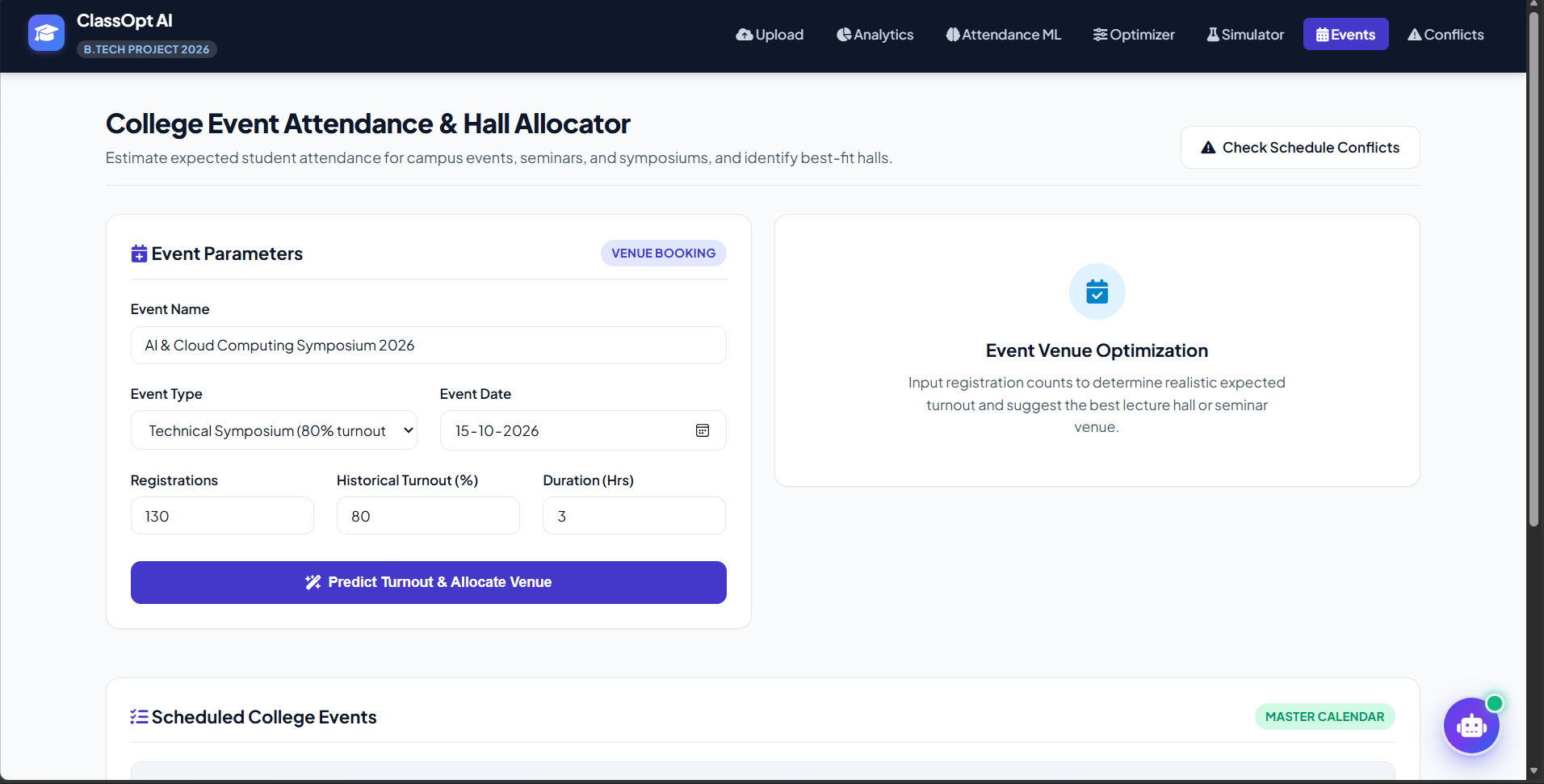
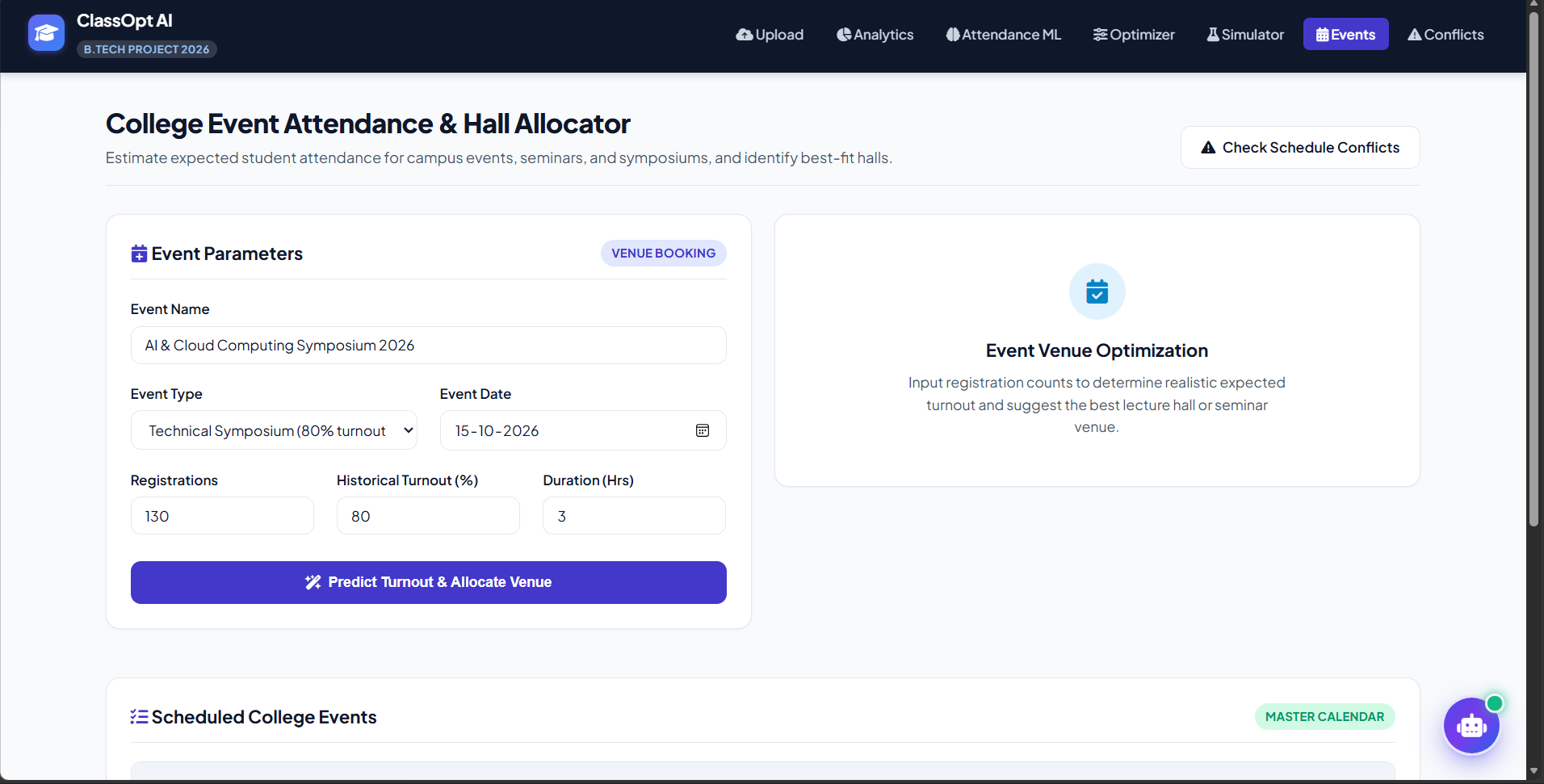
- Event resource planning
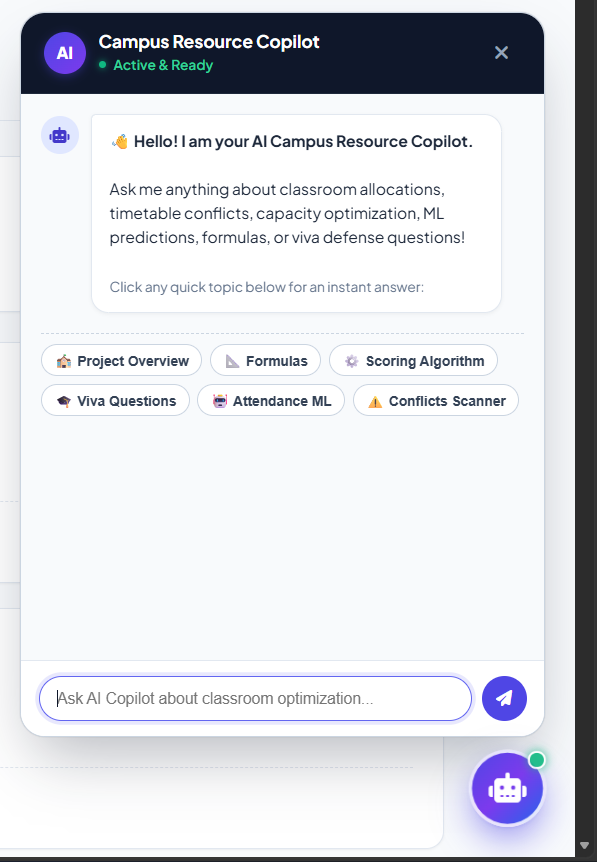
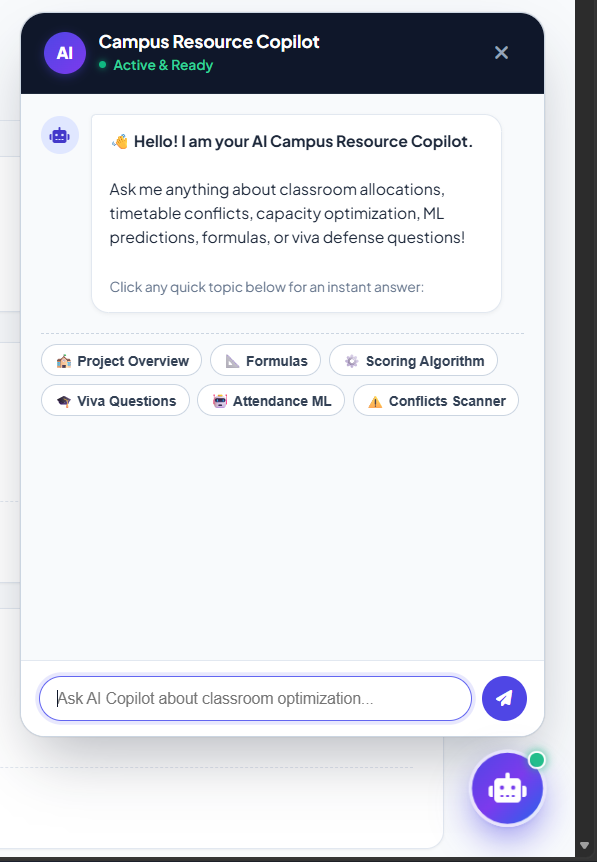
- An AI-based resource assistant
The classroom recommendation engine considers factors such as expected attendance, classroom capacity, availability, timing, and other requirements to generate suitable classroom options.
How We Built It
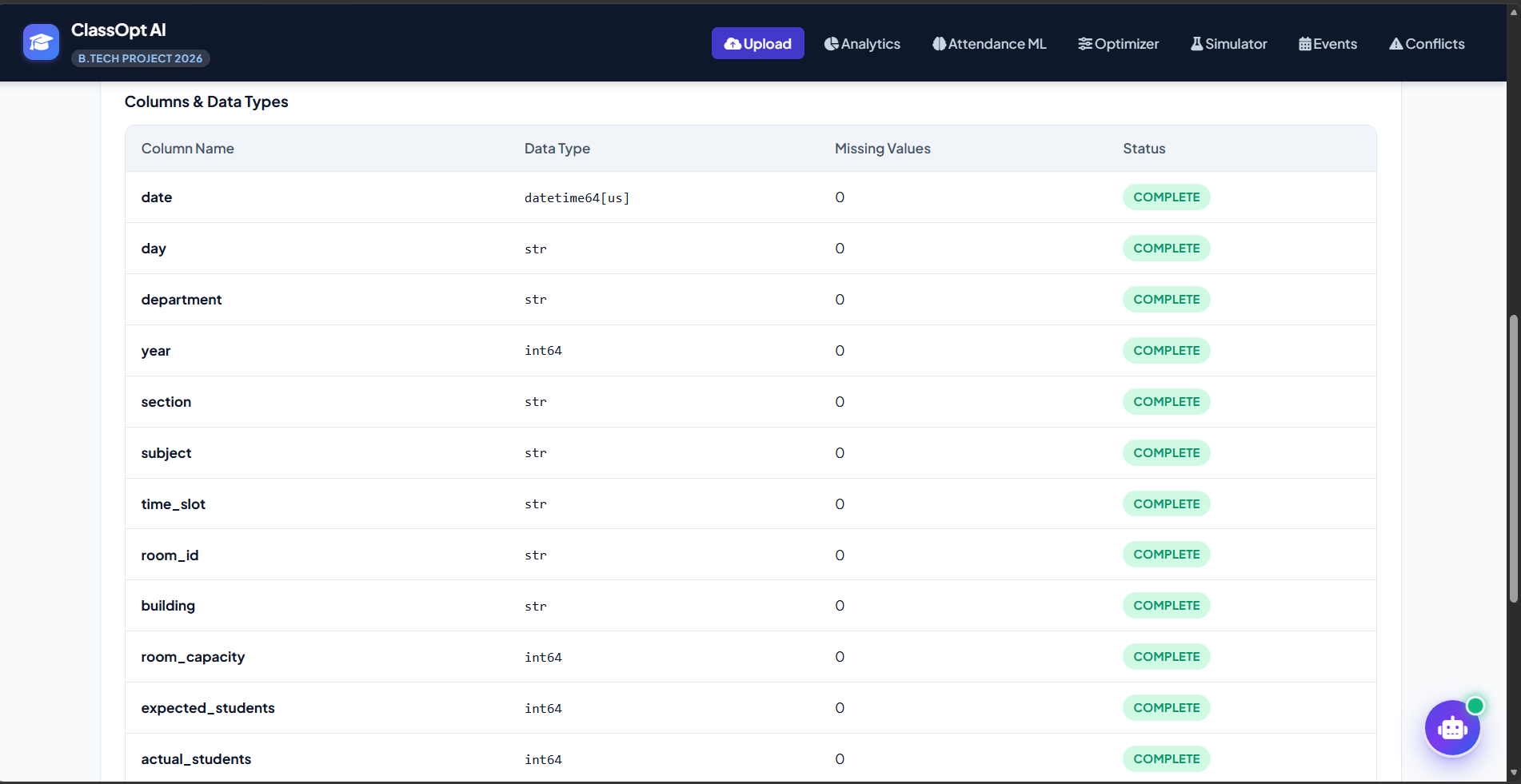
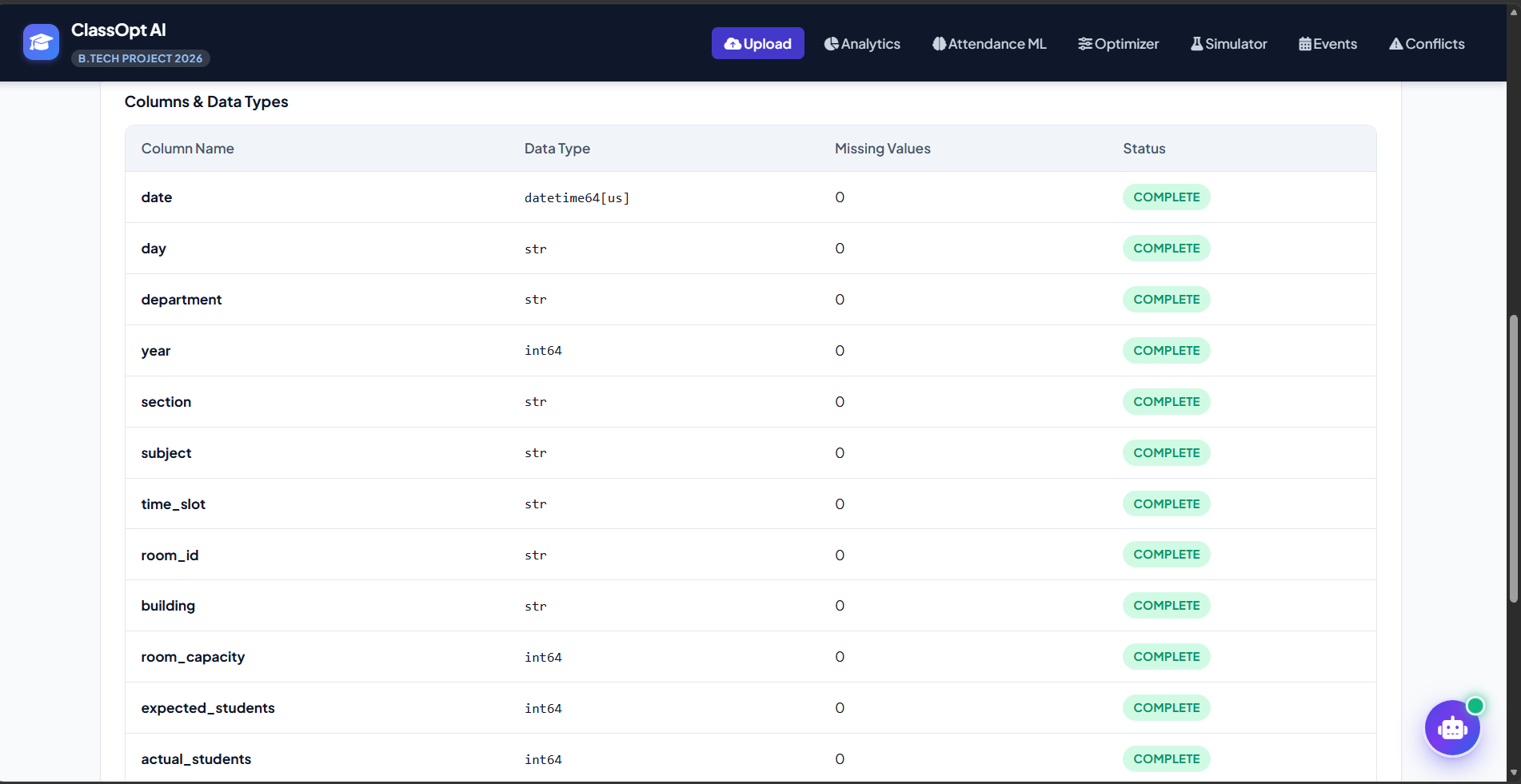
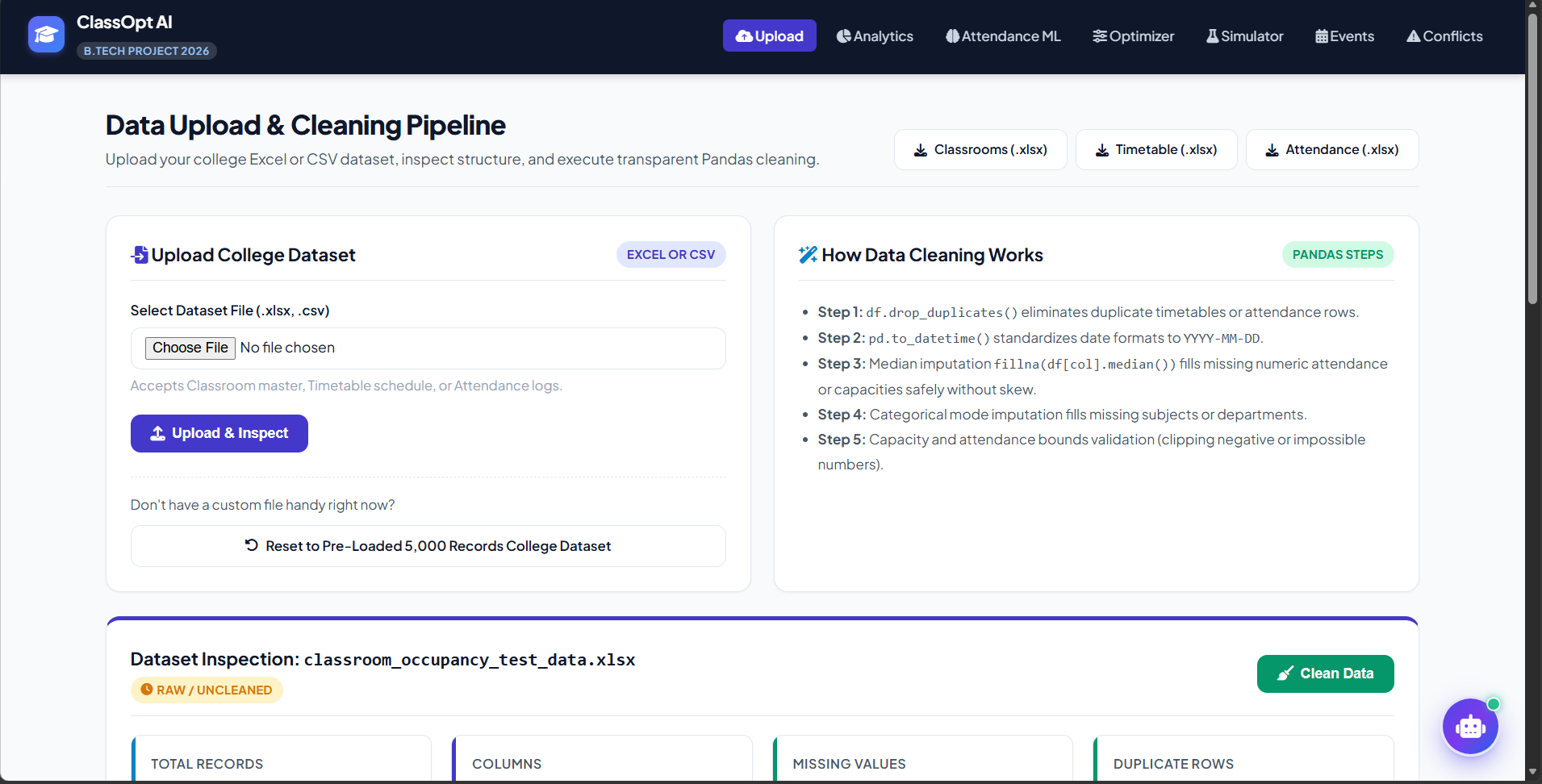
We started by creating realistic classroom, student, attendance, timetable, and resource datasets. Python was used for data processing and analysis with libraries such as Pandas, NumPy, Matplotlib, and Scikit-learn.
The prediction module uses historical attendance data to estimate expected attendance. The optimization module then uses these predictions along with classroom constraints to recommend suitable resources. A simulation module allows users to change inputs and observe how the recommendations change.
The final system connects these modules through a web-based interface so that users can explore the data, predictions, recommendations, and scenarios in one place.
What We Learned
Through this project, we learned how a data-driven system can be developed from raw data to useful recommendations. We gained practical experience in data preprocessing, exploratory data analysis, prediction, constraint-based decision making, visualization, and integrating Python-based analysis into a web application.
Challenges
One of the main challenges was designing the recommendation logic so that it was understandable and explainable rather than simply producing an unexplained score. We also had to create realistic test data and ensure that the system handled different classroom capacities, attendance levels, schedules, and resource constraints.
The project helped us understand that effective resource optimization is not only about prediction, but also about using predictions with real-world constraints to support better planning.

Log in or sign up for Devpost to join the conversation.