Inspiration
Picture a girl at the back of a classroom. She is not slow. She knows every word of a song she heard once, and every move of her favourite football club. But today’s lesson is speed and acceleration, and the teacher explains it with a train. She is lost. By next week she has decided: “I’m just not a maths person.”
Picture a boy who plays the same game for four hours a day. He can calculate damage, cooldowns and odds in his head faster than anyone in his class. Then chemistry starts, and a page of reactions and equations makes him feel stupid. Nobody told him it was the same kind of thinking he already does every night.
Picture a first-year university student in a lecture hall of four hundred. Two hundred slides, one lecturer, no time for questions. She doesn’t fail because she can’t learn. She fails because the lesson was built for an imaginary average student, and she isn’t that student.
Picture a teacher with thirty students and one lesson to give. She knows each of them loves something different. She wishes she could explain it thirty ways. She has forty minutes, so she explains it once, and most of the room quietly decides the subject isn’t for them.
Four people, one truth: nobody fails because they aren’t smart. They fail because the lesson wasn’t written in their language.
We built ClassMind to change that. Different minds. Same lesson.
What it does
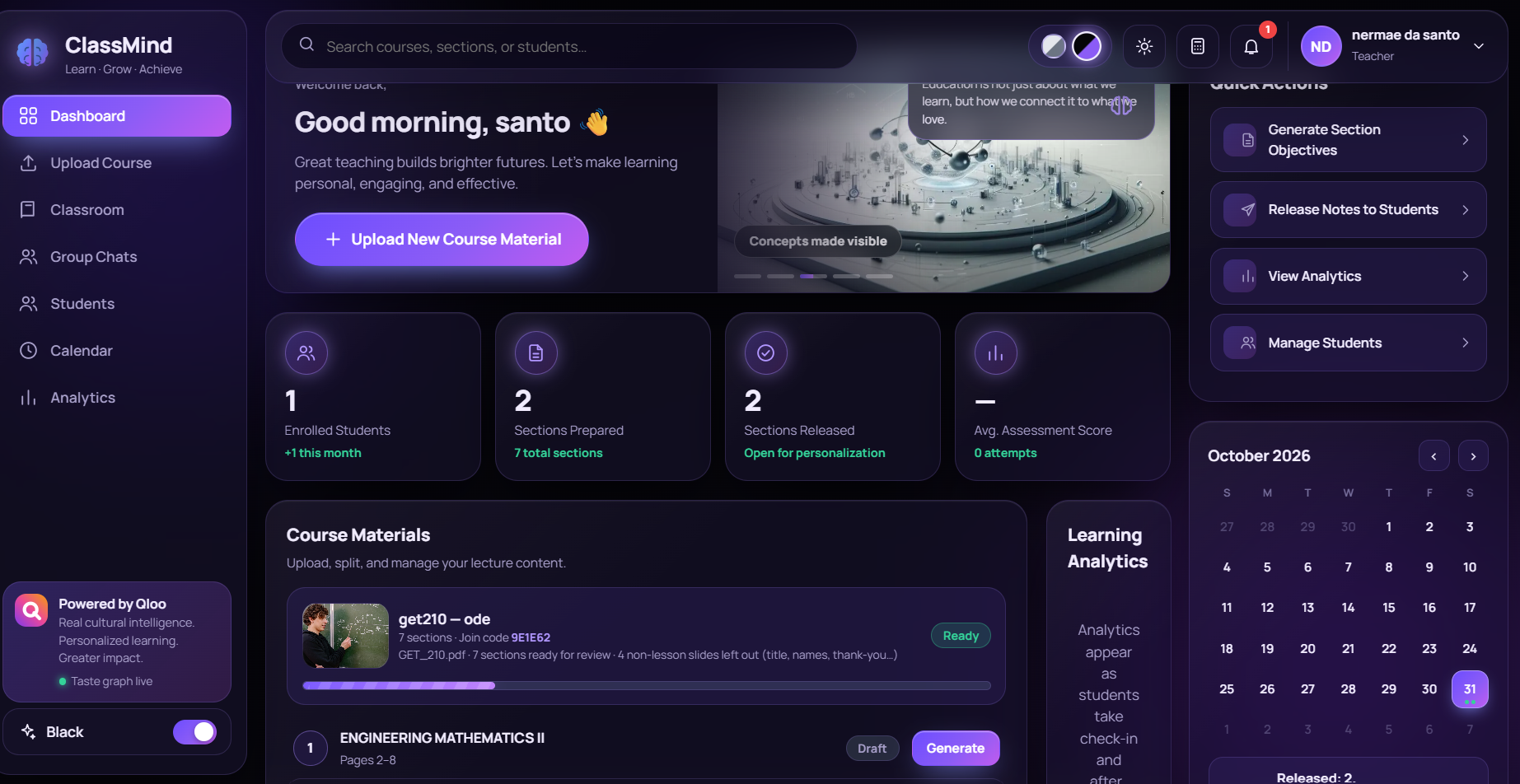
ClassMind turns every teacher-approved section into a lesson and a mission built around what the student loves. A live AI teacher speaks and writes on a board. A personal learning world lets the student do the subject, not just read about it.
The Qloo part, which everything else depends on
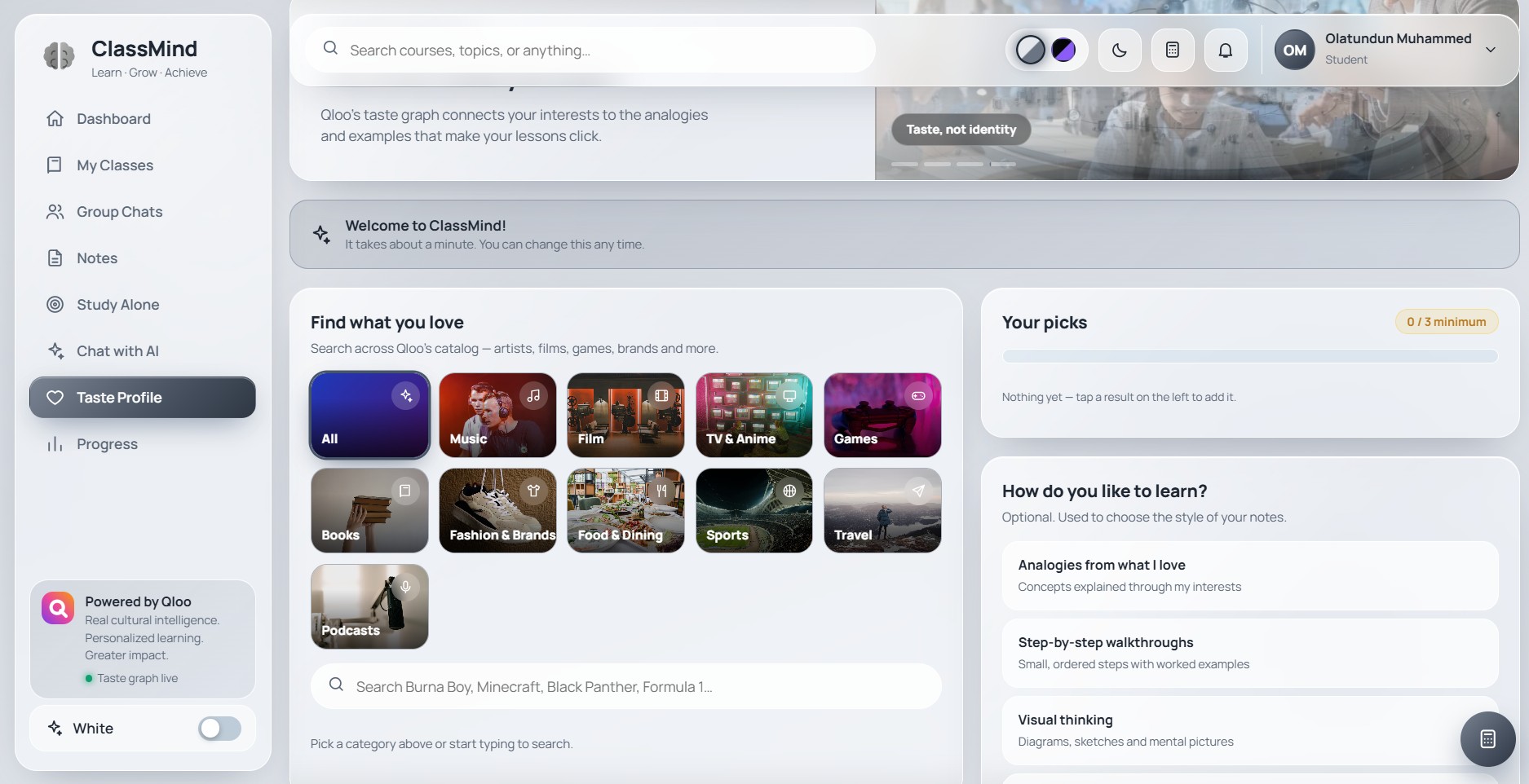
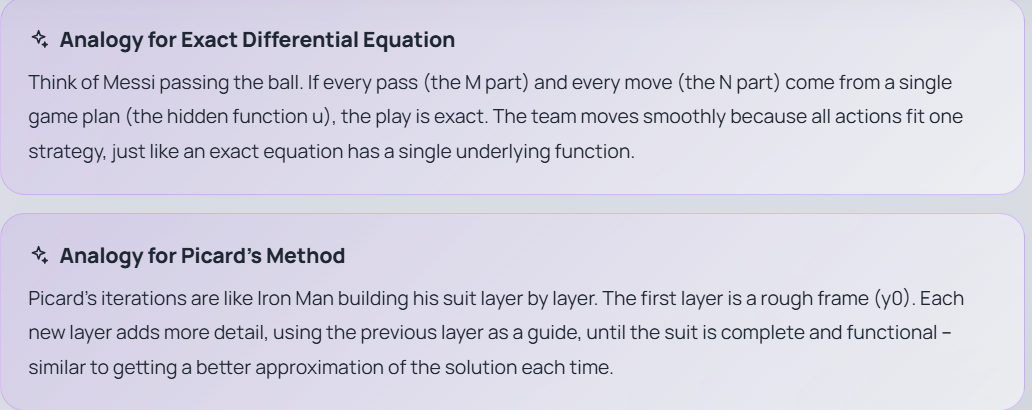
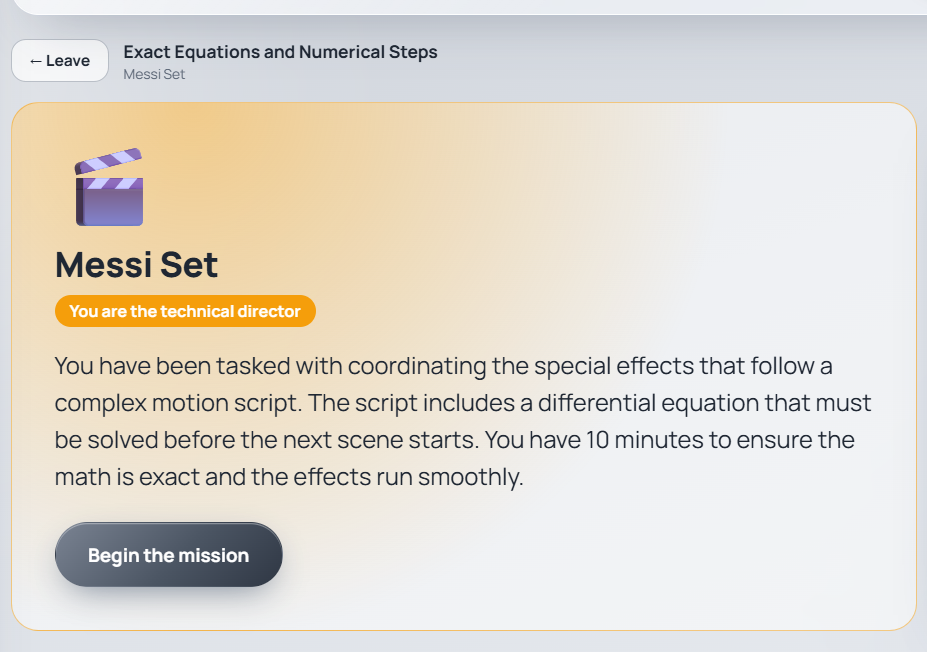
Taste profile: the student picks what they love, and Qloo’s taste graph turns it into a real profile across music, film, TV, games, food, sport and books. Related interests: Qloo links what they love in one area to others, so the teacher always has more than one world to explain from. The right world and analogy for each topic: ClassMind ranks the student’s interests per topic and picks the one that explains the hardest idea best. A music lover’s mission takes place in a sound studio. A sports fan’s takes place at a training ground. A gamer’s takes place in a strategy arena. The right experience style: from the student’s interests, ClassMind recommends story, competition, exploration, creation or simulation, and shows why it chose it. Honest by design: Qloo supplies cultural intelligence only. We never claim it measures ability or personality.
Without Qloo this does not work properly. An AI with no taste data has to guess which example, world and style will mean something to a student. Qloo tells it. That is the difference between a lesson that is merely correct and one that clicks.
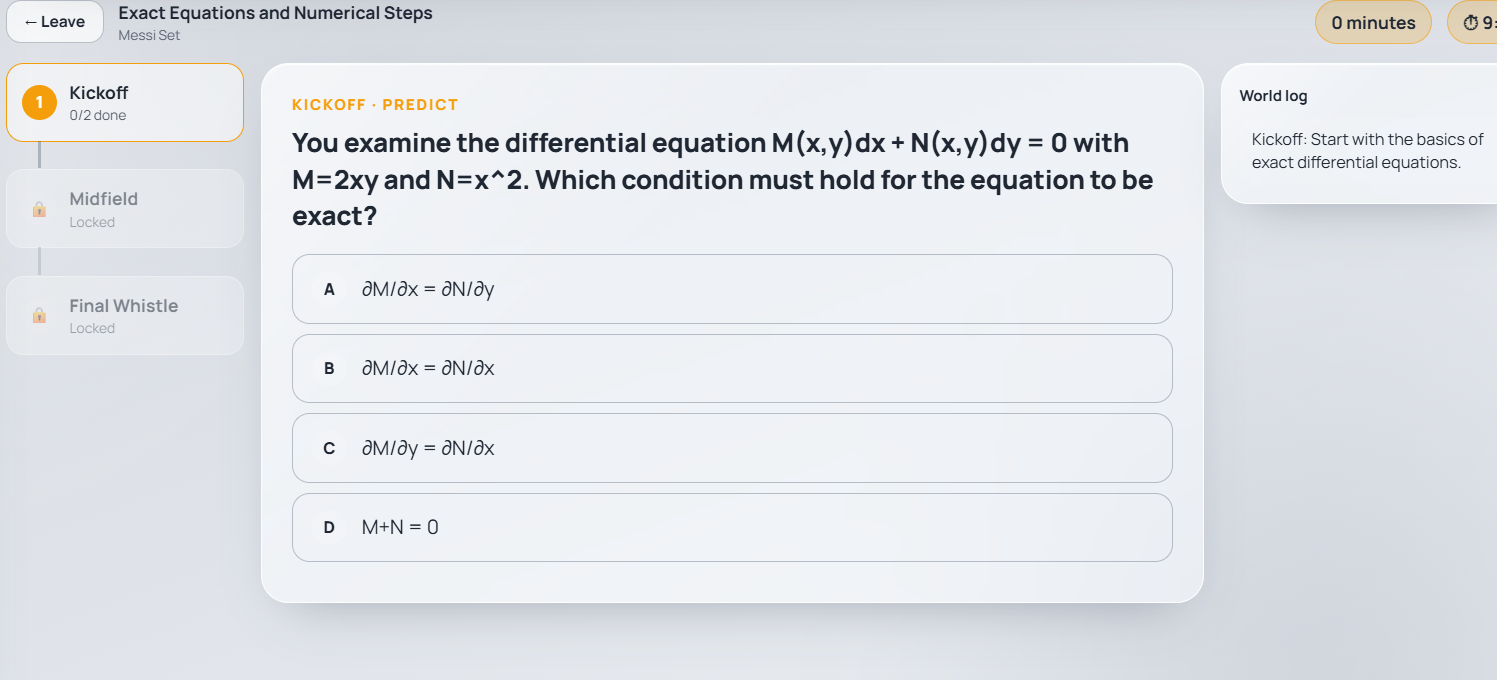
Missions: you do the subject, not just read it Every section can become a personal mission set in the student’s own world. It isn’t a story wrapped around the same boring lesson. The student actually works with the idea:
Predict: guess what will happen before running it. Experiment: move sliders on a model whose results are computed on the server. Order: put the steps of a method in the right sequence. Decide: make a call, and the world reacts. Skill tree: three tiers. The next tier opens when the student has handled at least half of the current one well. Otherwise they get a practice round with new numbers, or can move on. Learns from results: ClassMind keeps simple counts of what the student finished and got right, and uses them to shape the next mission. It never labels a student as a “visual learner” or similar.
The live AI teacher
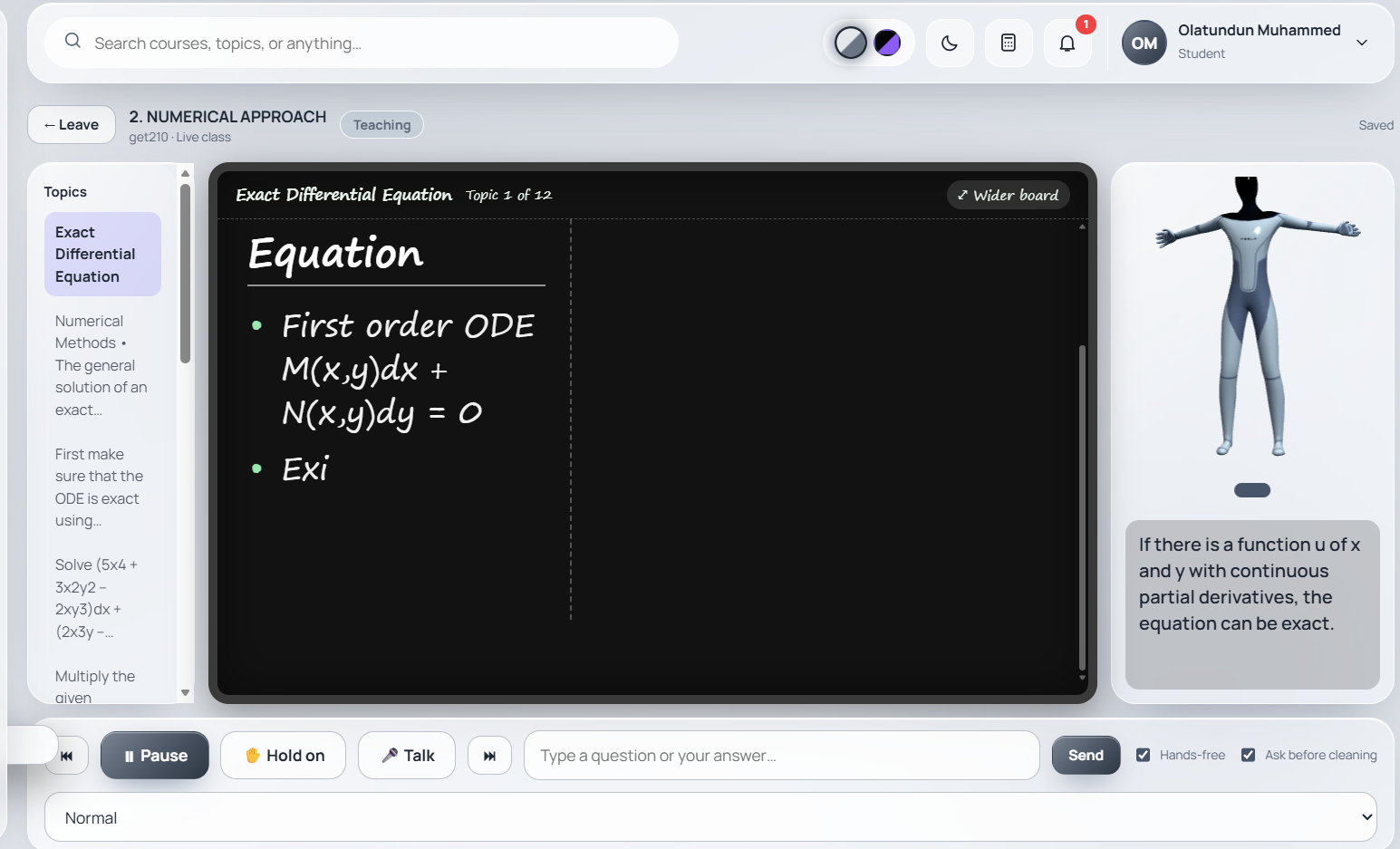
Teaches only the section the student opened, from the teacher’s own slides. It adds nothing from outside and never wanders into other sections. Speaks and writes: the robot teacher talks while writing on a board, line by line as it says it. The board is a long roll you can scroll back through, and it only offers to clean when it gets really long. Raise your hand by talking: interrupt by voice or text. It answers only from the section, and says so politely if something isn’t on the slides. Checks understanding with short questions, using the teacher’s own approved questions where they exist. Remembers where you stopped and continues from the same place next time.
For teachers
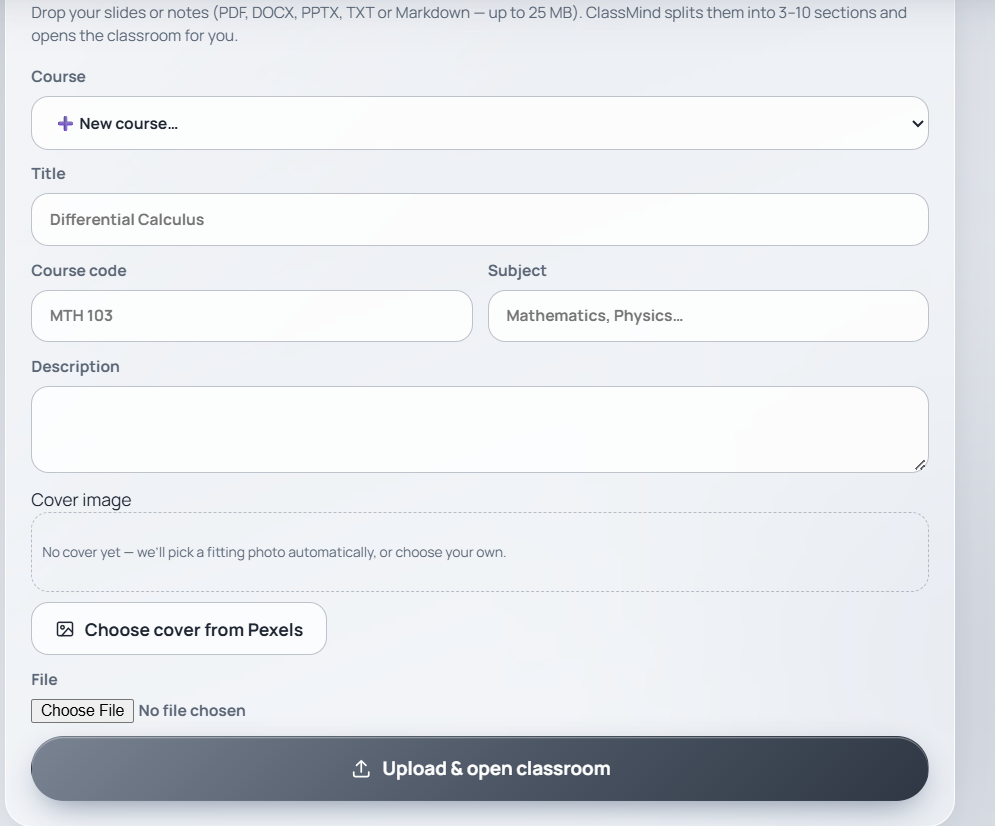
Upload a PDF, DOCX, PPTX or text file, and it splits into sections. Review and edit the outline and objectives. Nothing reaches students until the teacher approves it, and the approved version is saved as a snapshot. Course rooms with join codes, posts, classwork, a calendar and notifications. Honest analytics, with a clear note that the results show correlation, not proof.
For students
Personalized notes in their own world, with a facts lock so the teacher’s key facts and formulas are never changed. Study Alone: upload your own notes to get sections, flashcards, quizzes and a live class. Taste-aware tutor chat and a calculator that shows its steps.
How we built it
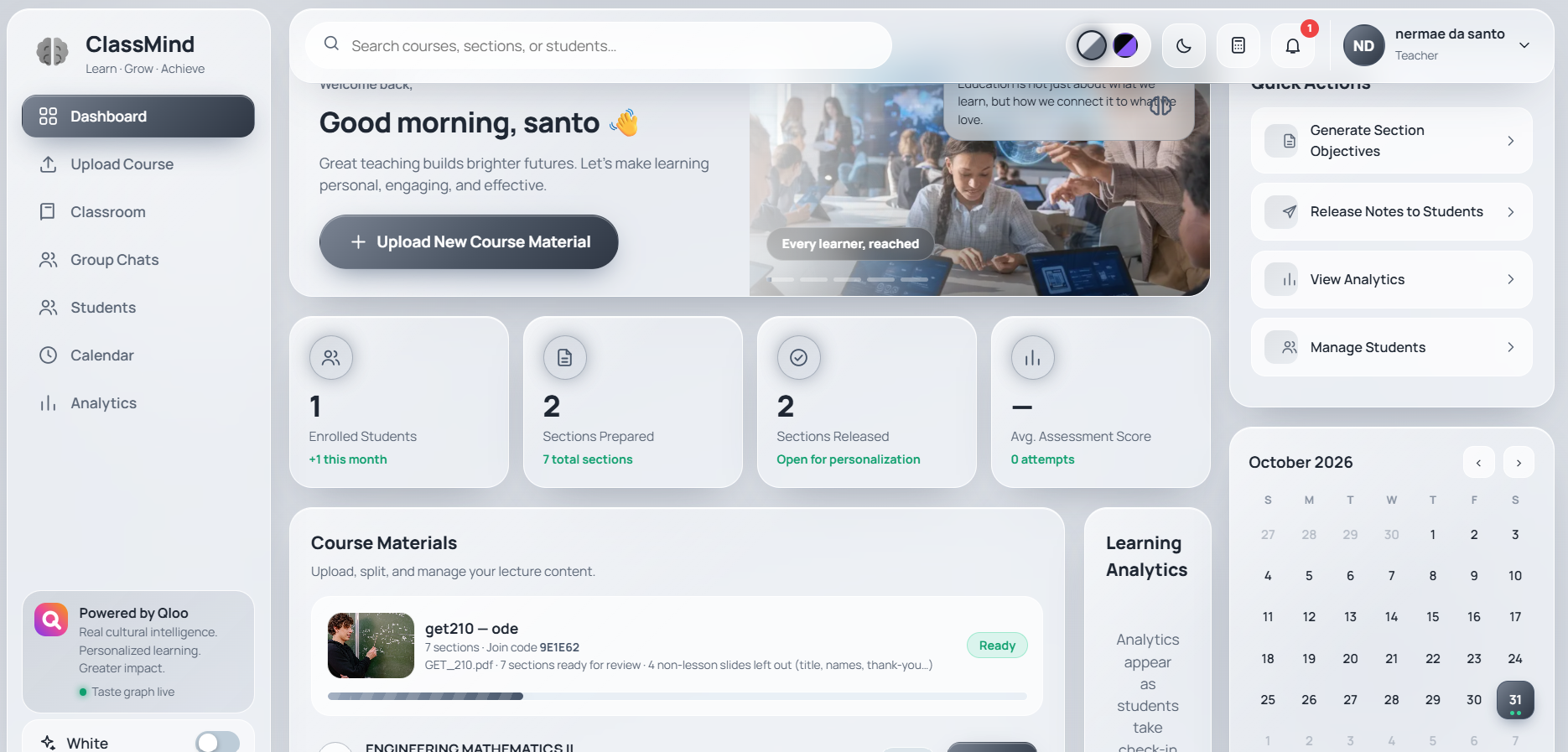
Backend: Flask and SQLAlchemy, with PostgreSQL on Render. Qloo at five levels: the student’s universe, the experience style, the interaction, the challenges, and how the next mission evolves. Qloo responses are cached to keep the app fast. LLMs: Groq models write each lesson and mission. The teacher’s slides are the only source of facts. Several API keys run in parallel so many students can learn at once. Trust layers: answer keys, formulas and results are checked on the server and never sent to the browser early. A validator rejects any AI lesson that wanders from the slides, and a second independent check can drop weak mission stages. If AI is unavailable, the app falls back to a plainer version built straight from the teacher’s content. Front end: vanilla JavaScript, a light and dark glass design, the browser’s speech recognition and synthesis for voice, and a 3D robot teacher.
Challenges we ran into
Keeping the teacher honest: AI loves to add its own knowledge. We had to fence it into one section and reject anything that drifts. Making missions real, not just skins: a theme on top of a worksheet is not a game. The student has to use the idea in order to progress. Analogies that don’t mislead: a fun comparison can teach the wrong thing, so every analogy says where it stops being true. The board: at first the AI kept stopping to ask whether to clean it. We rebuilt it as a scrolling roll that follows the writing and only cleans when it’s really needed. Voice that feels human: interruptions, pauses and resuming from the exact sentence were harder than they look. Deploying: getting PostgreSQL, uploaded files and several workers to run safely on Render. Time: we built all of this against a hackathon deadline.
Accomplishments that we're proud of
The same lesson reaches different students through different worlds, and it always stays inside what the teacher approved. A live class that feels like a conversation: it speaks, writes, can be interrupted, and remembers you. Missions where the student does the subject, with answers checked on the server. Qloo is part of how the learning works, not decoration. The idea collapses without it. A complete product: teacher tools, student tools, approval, analytics, missions and quizzes.
What we learned
Personalization is more than a friendlier tone. The right example is what makes a student understand. An AI teacher is only useful when it can be trusted, so limiting what it may say matters as much as what it can do. Real taste data beats guessing. Qloo gave the AI something a plain language model can’t have. Students should be rewarded for learning, not for time spent. Our design rule: reward understanding, improvement, persistence and mastery, never raw hours or clicks, and never punish a missed day.
Limitations
We are on Render’s free tier, so the app spins down when idle. The first visit after a quiet spell can be slow while it wakes up. Please wait a moment and refresh once if needed. Uploaded files may reset when the free service redeploys, and the free database has a limited lifetime. A paid plan removes both. Voice works best in Chrome, Edge and Safari. Every voice action has a typed fallback. AI speed depends on free-tier API limits at busy times. Missions work best on topics with numbers, steps or cause-and-effect. Some subjects give simpler missions for now.
What's next for Classmind
A personal progression system, so students want to come back. None of this is built yet. Our rule is to reward learning, never time spent, and never to punish a missed day.
XP for demonstrated understanding, not for clicks or hours. Skill tree: deeper concepts unlock as you prove the earlier ones. Boss challenges: a hard exam at the end of each topic. Personal records: beat your own previous score. Learning streaks with rest days built in. Mastery badges for difficult subjects. Unlockable worlds: new learning environments open as you progress.
Student choice. Qloo recommends an experience style, and the student can override it: story, challenge, experiment, competition or creator.
An AI teacher that feels alive. It celebrates when you finally understand something, notices when you’re struggling and changes its explanation, raises the challenge when you’re ready, and tests whether you can apply an idea without the familiar example.
Business model. This is a proposal, and prices are still to be decided.
Free gives every student their Qloo taste profile, a few live classes and missions a week in their best-matched style, and Study Alone with limits.
Plus adds more missions, all five experience styles with the student’s own choice, personalized notes, flashcards and quizzes, XP, streaks and personal records.
Pro includes unlimited live classes, the full skill tree and boss challenges, mastery badges, unlockable worlds, the full alive AI teacher (coach, rival and examiner), progress tracking and priority speed.
Partnering with schools and universities. We want to work with schools and universities to take education from the old one-size-fits-all way to a Qloo-personalized digital way. Institutions license ClassMind for their classes. Teachers keep full control and approval of the content, every student gets a lesson in their own world, and teachers get honest analytics on where students are stuck.
Also planned: more languages, a mobile app, deeper Qloo signals, and paid hosting with no cold starts.
Built With
- css
- flask
- groq
- html
- javascript
- katex
- pdf.js
- pexels
- postgresql
- python
- python-pptx
- qlooapi
- render
- three.js
- web-speech-api

Log in or sign up for Devpost to join the conversation.