-
-
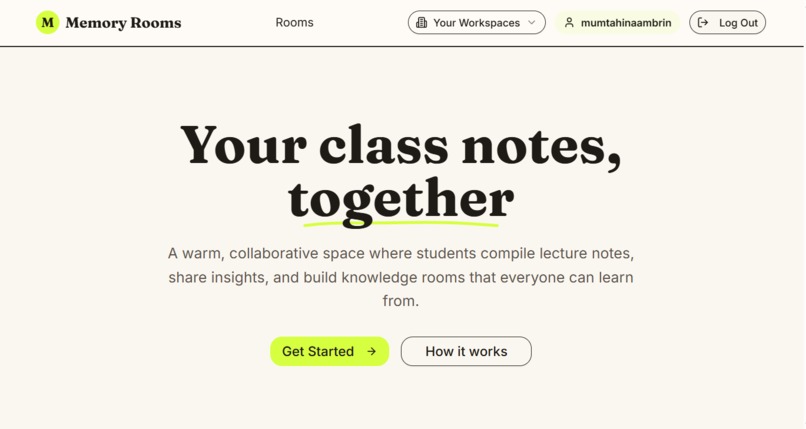
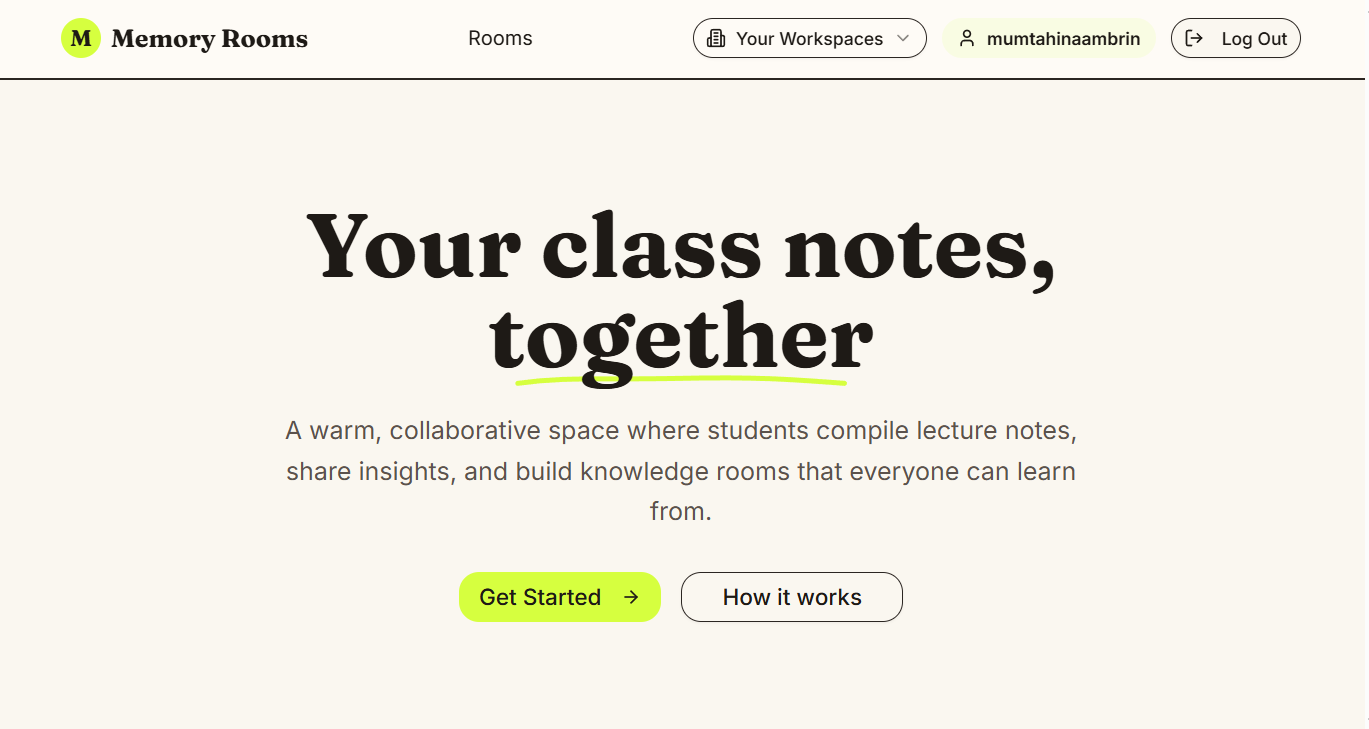
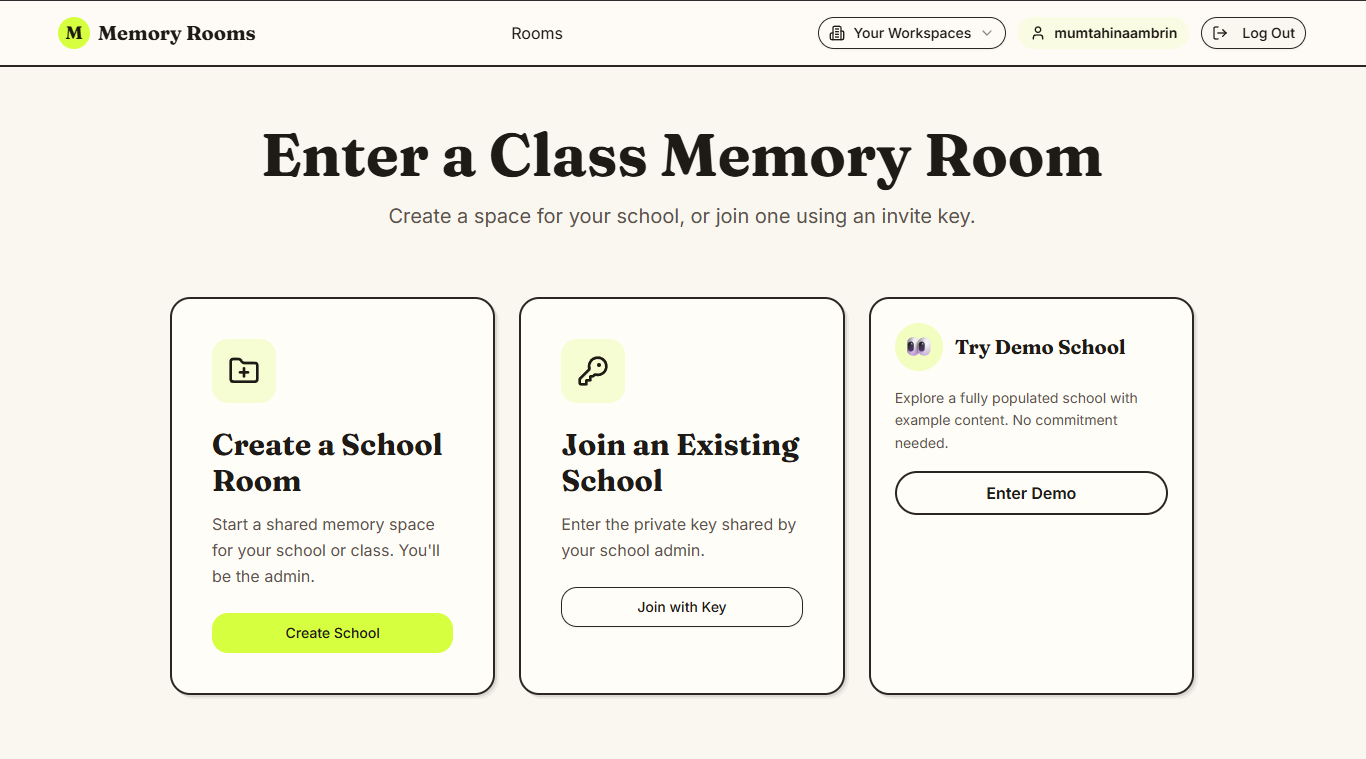
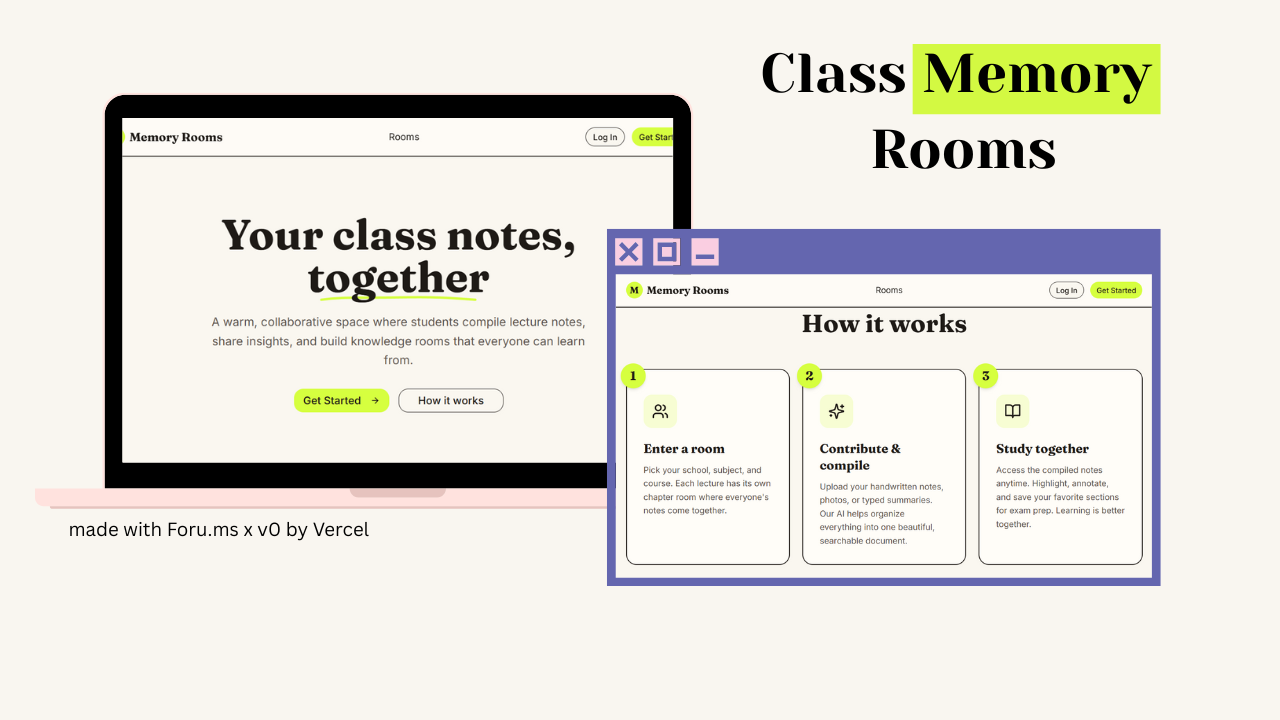
Landing Page of Class Memory Rooms
-
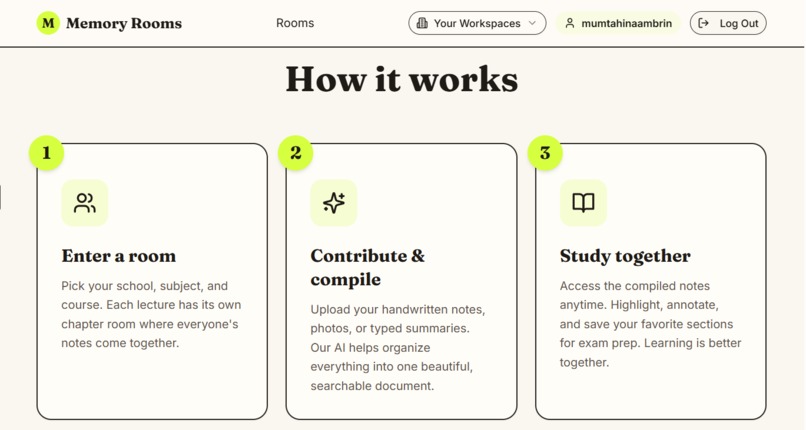
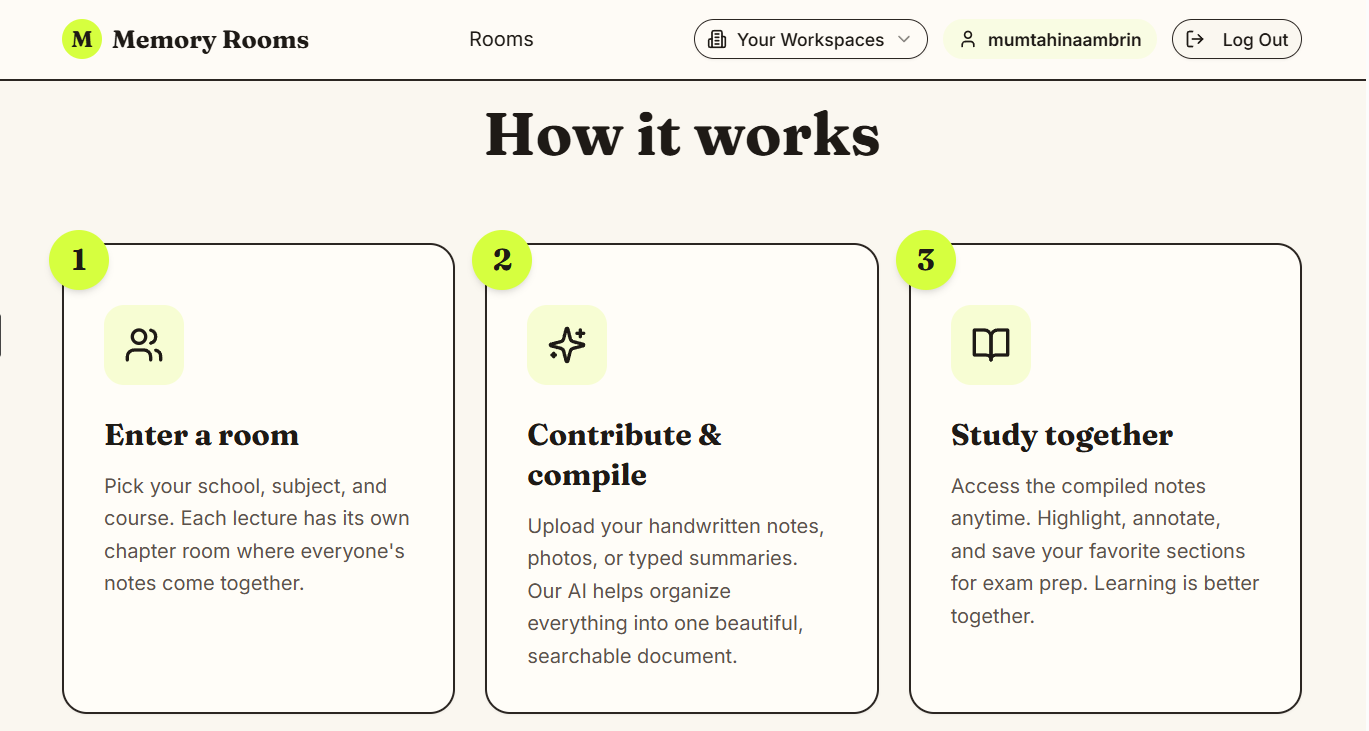
How it works
-
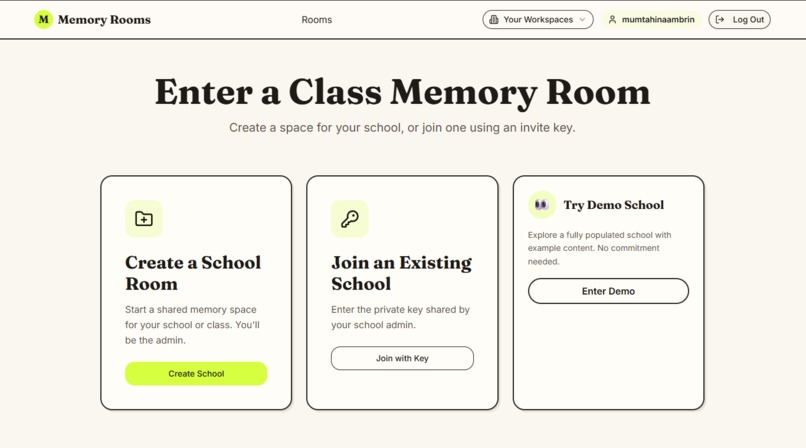
Create new School/ enter existing one using a code / enter demo School
-
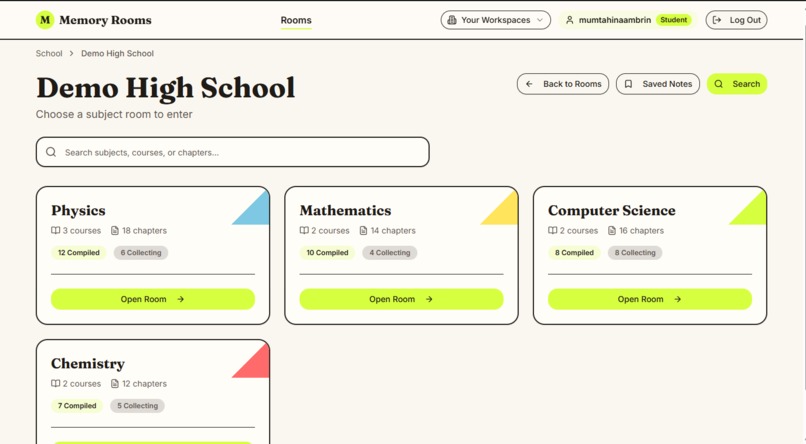
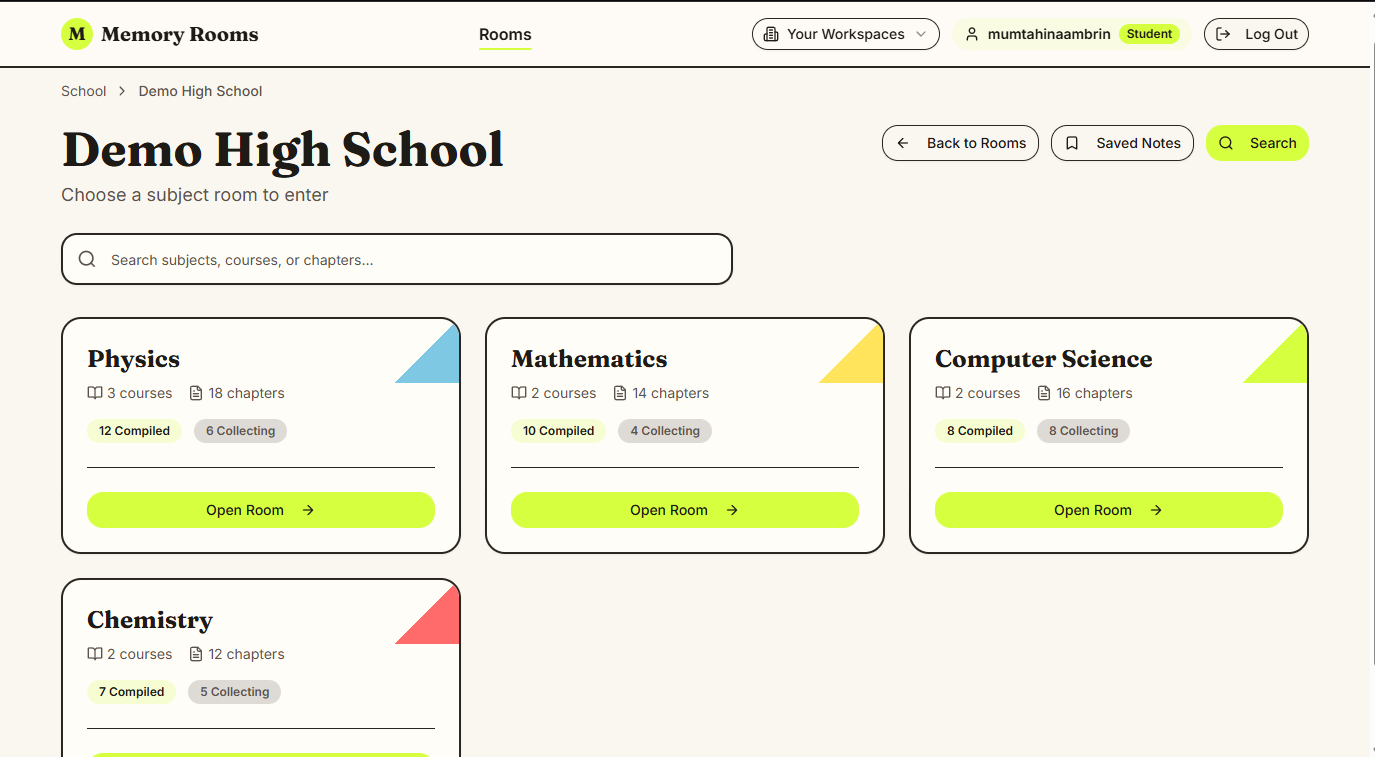
Demo School Dashboard
-
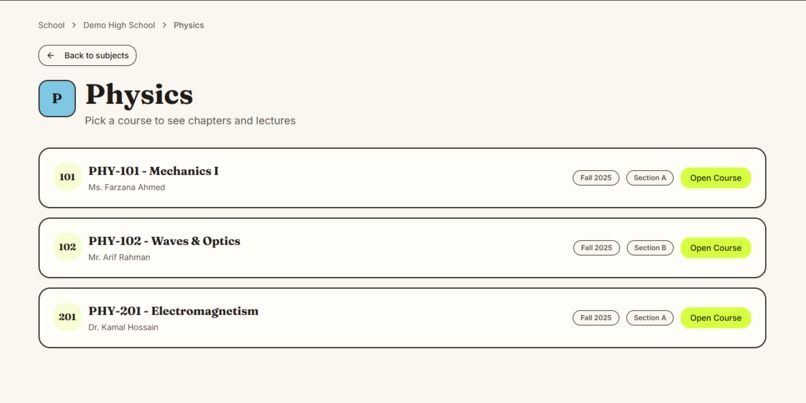
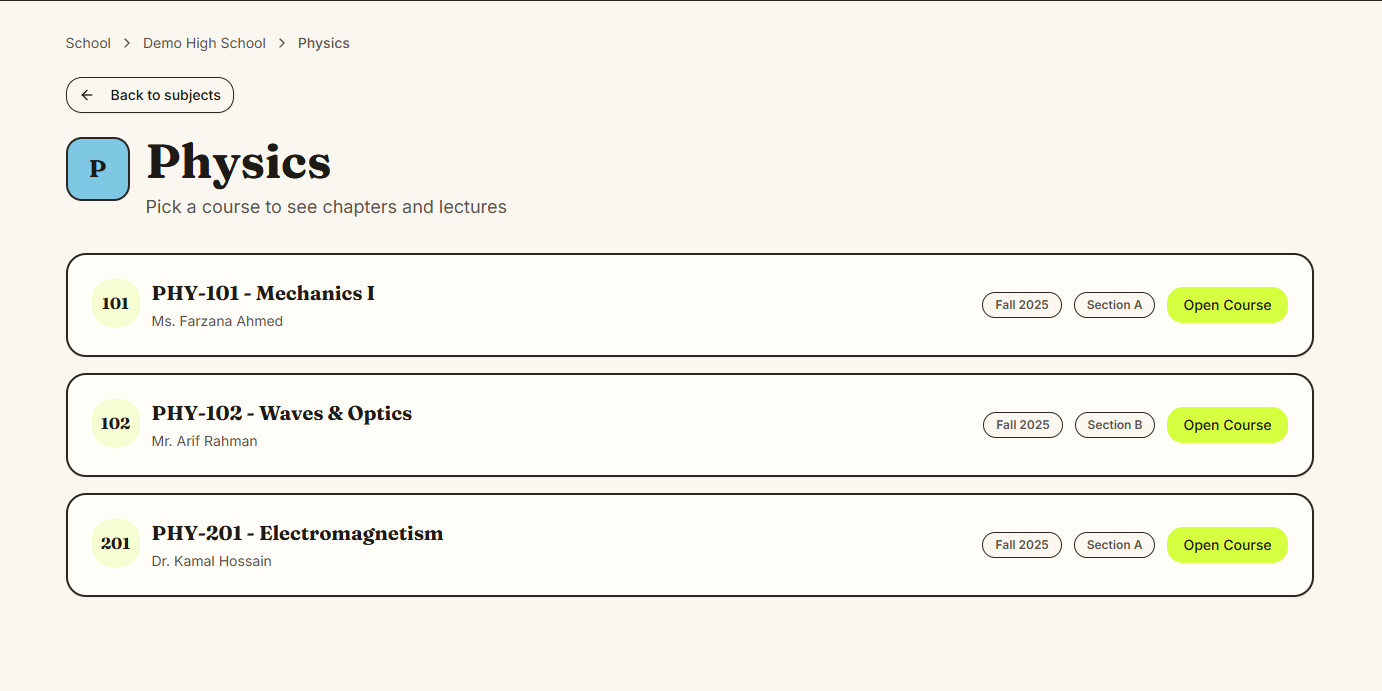
Subject content
-
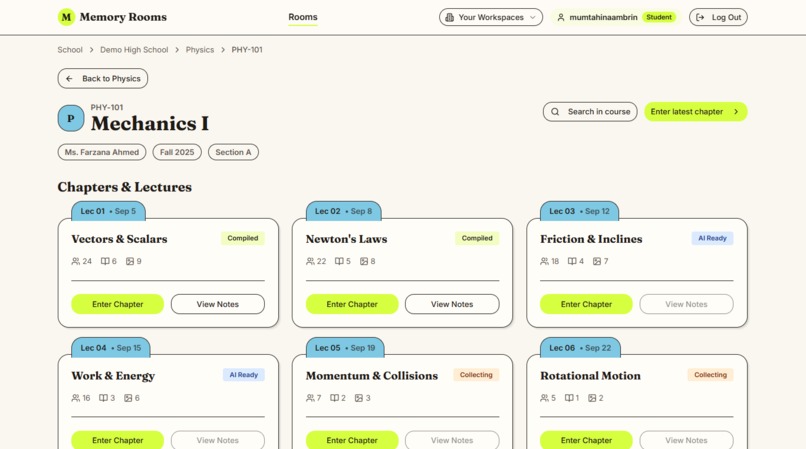
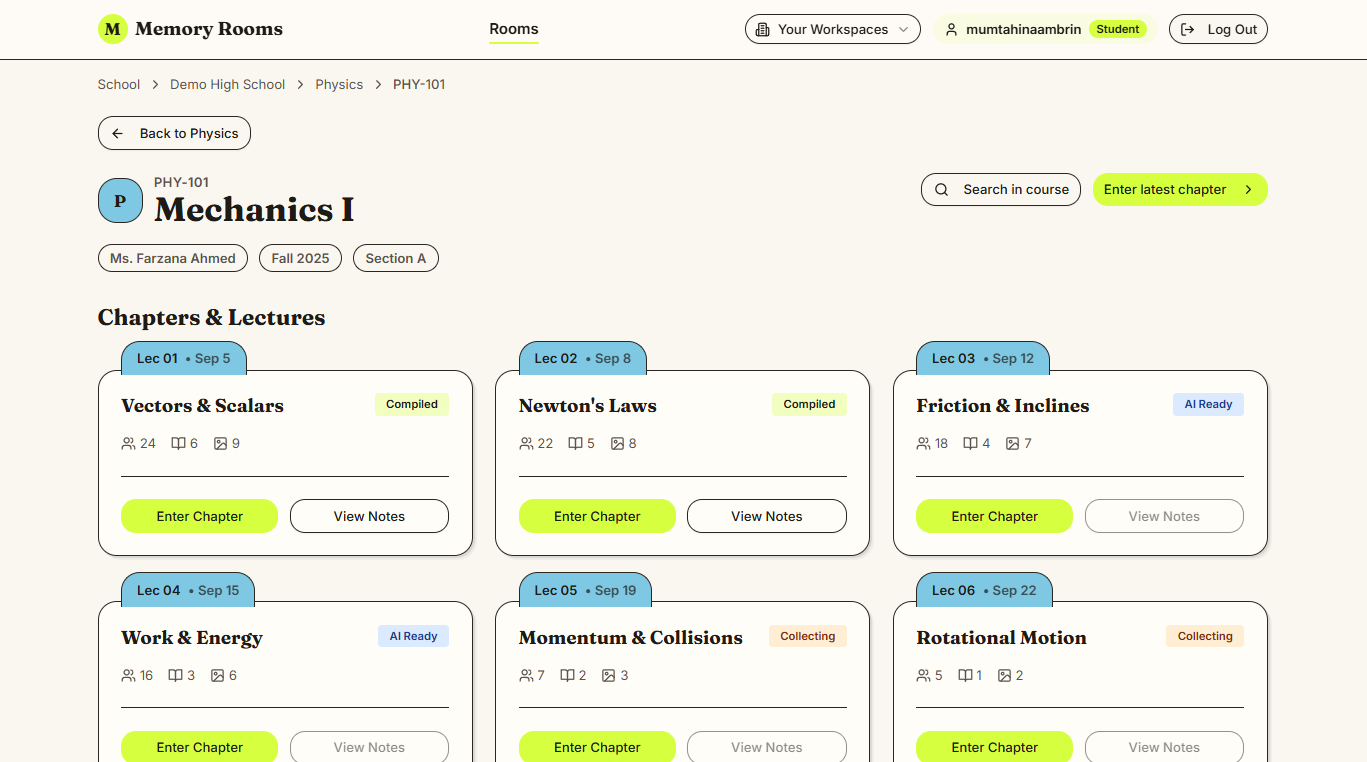
Course Content
-
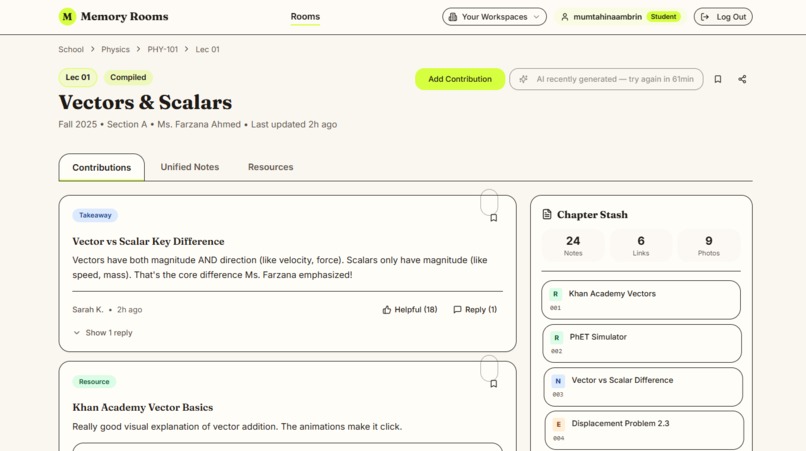
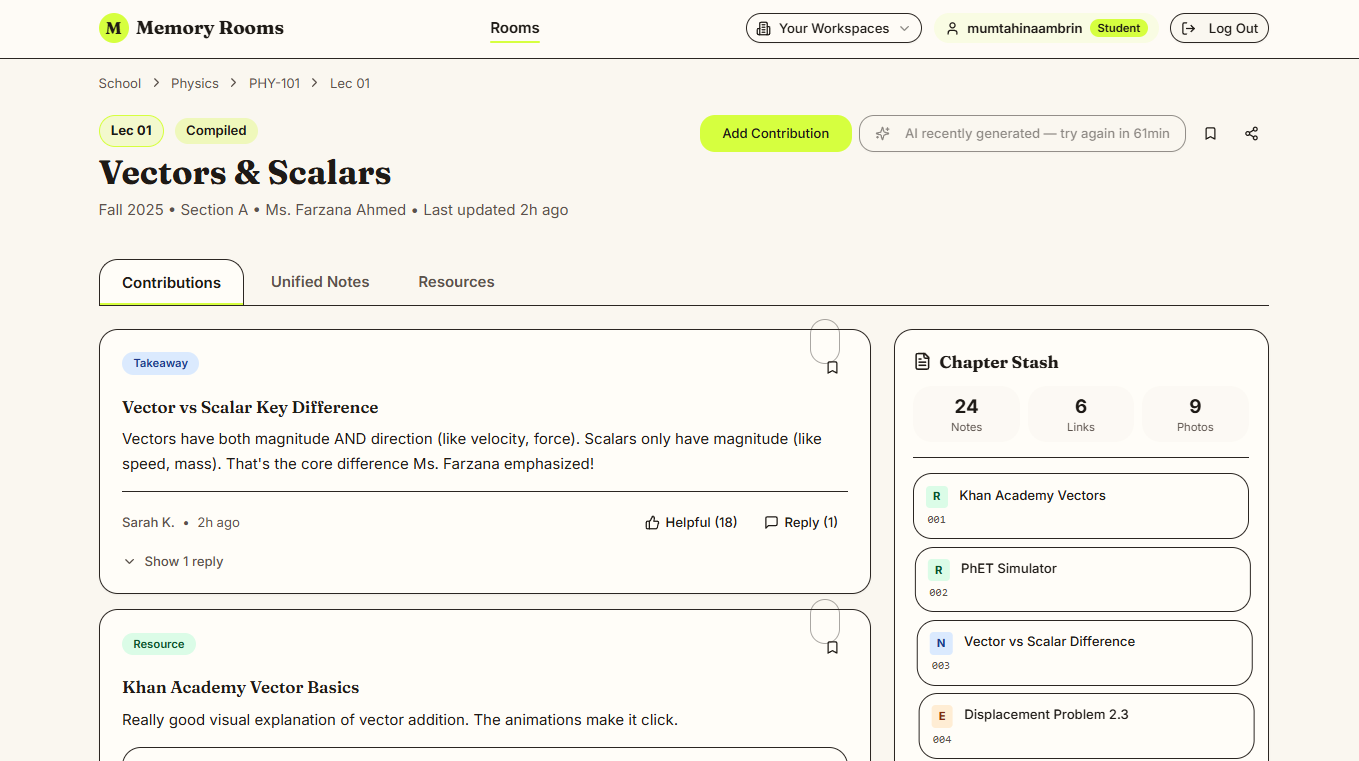
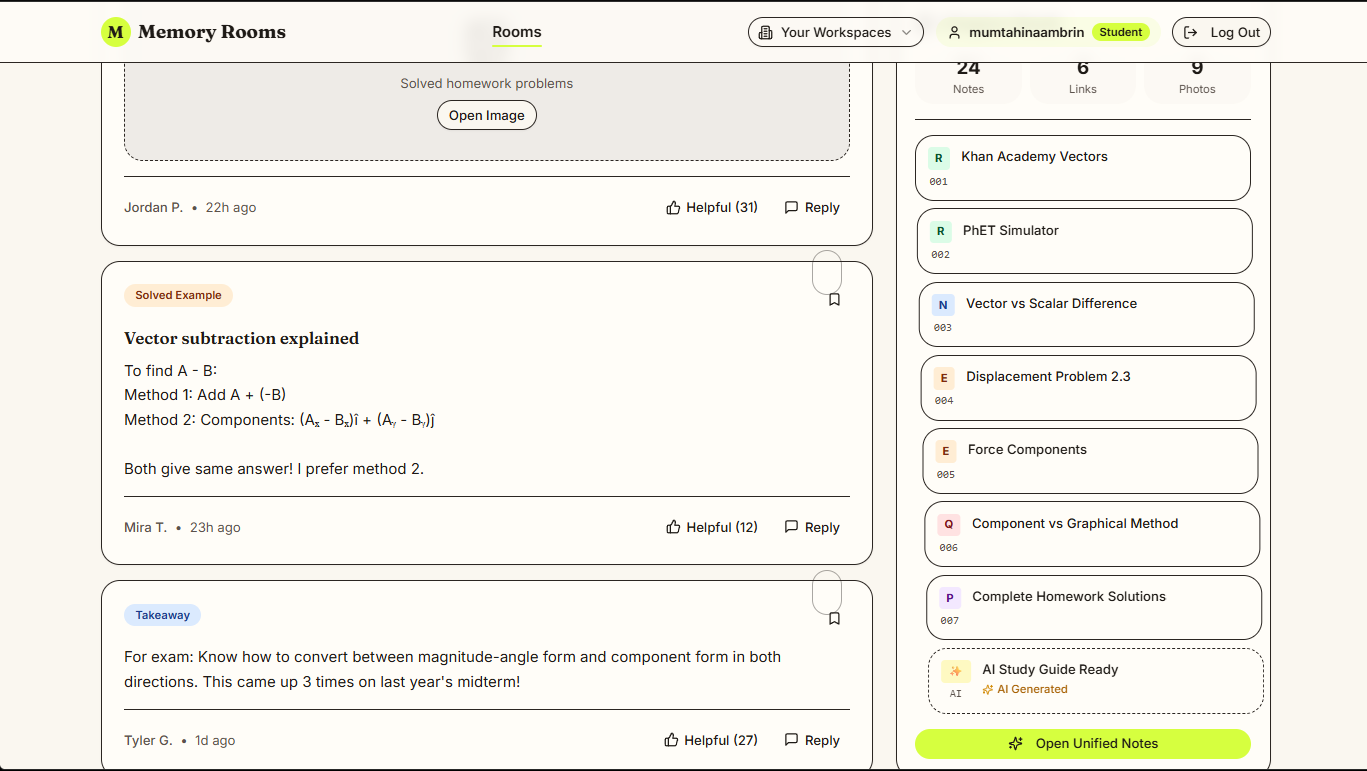
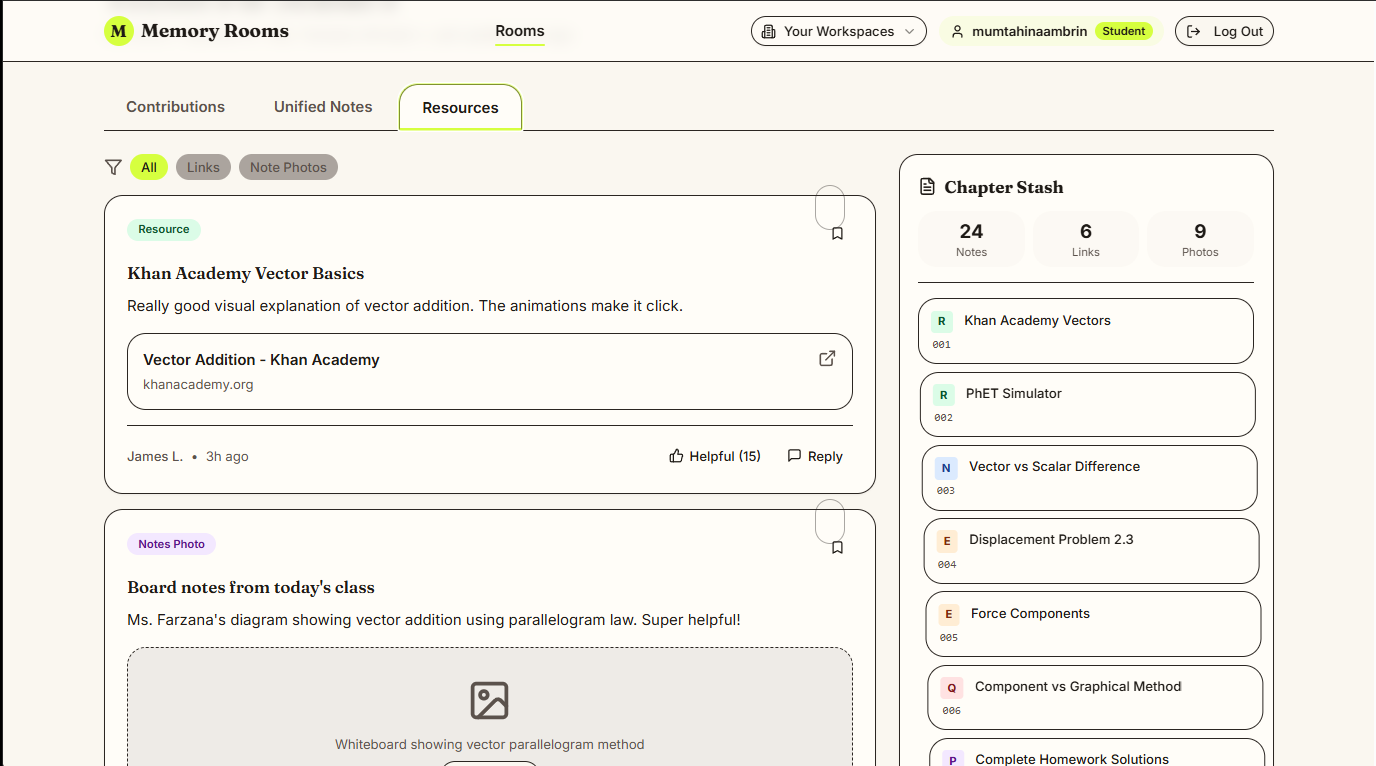
Lecture content showing other students' contributions and all the saved resources/notes so far.
-
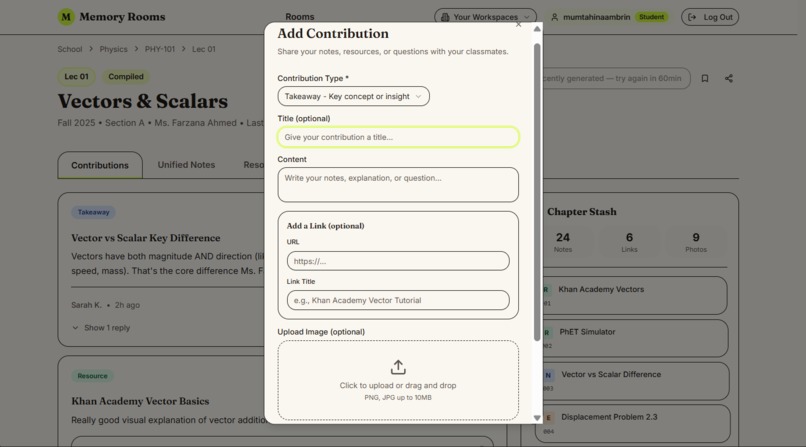
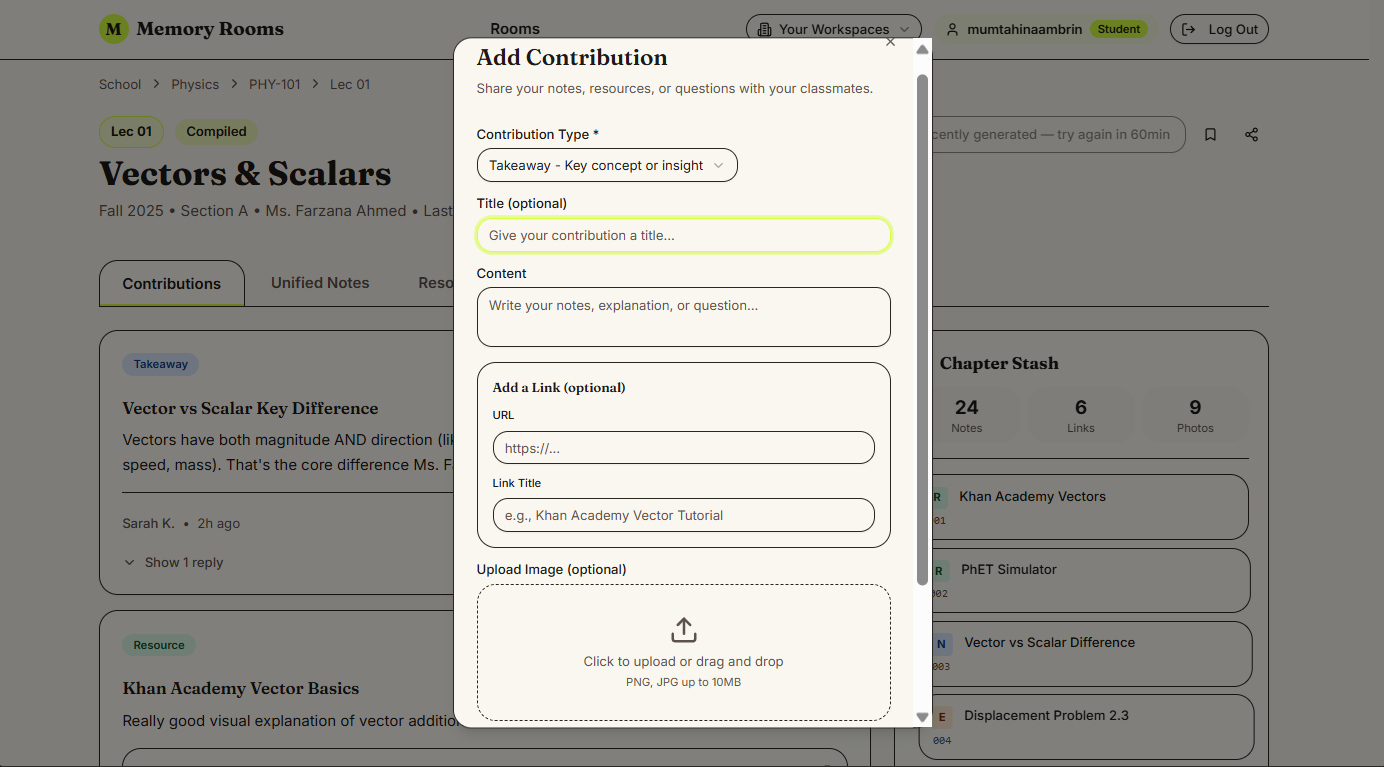
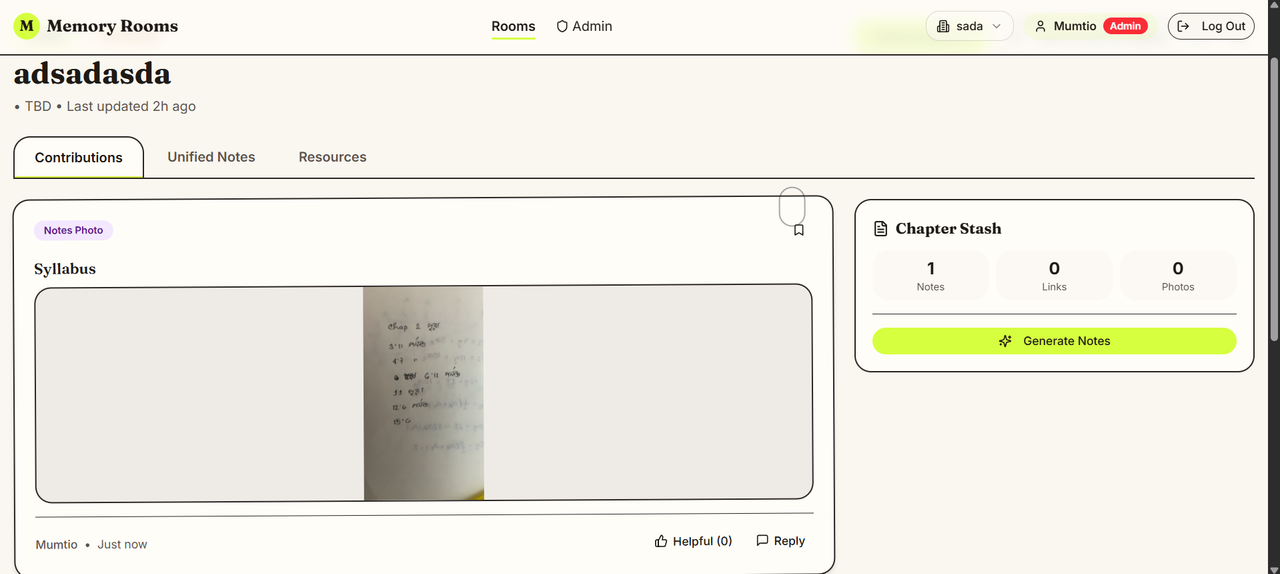
Making a contribution by sharing images, descriptions, links, other useful resources.
-
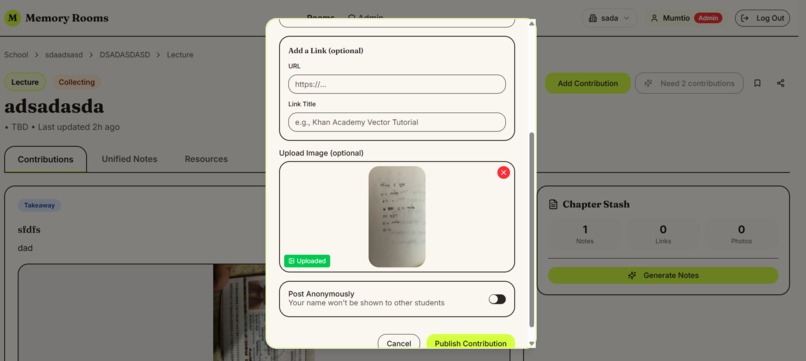
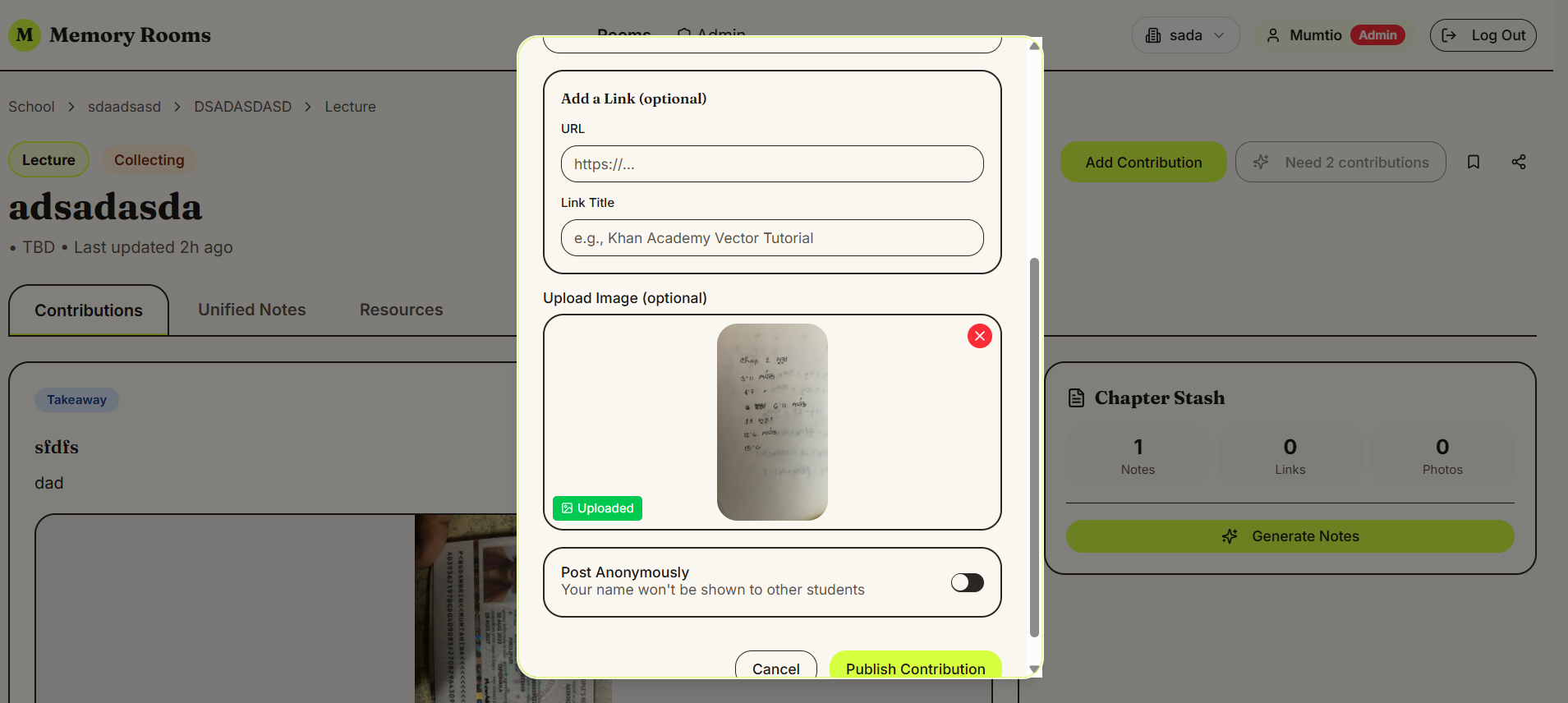
Adding multiple images as contribution
-
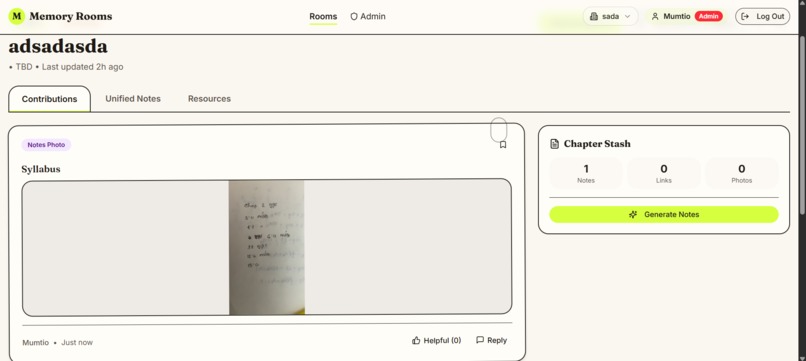
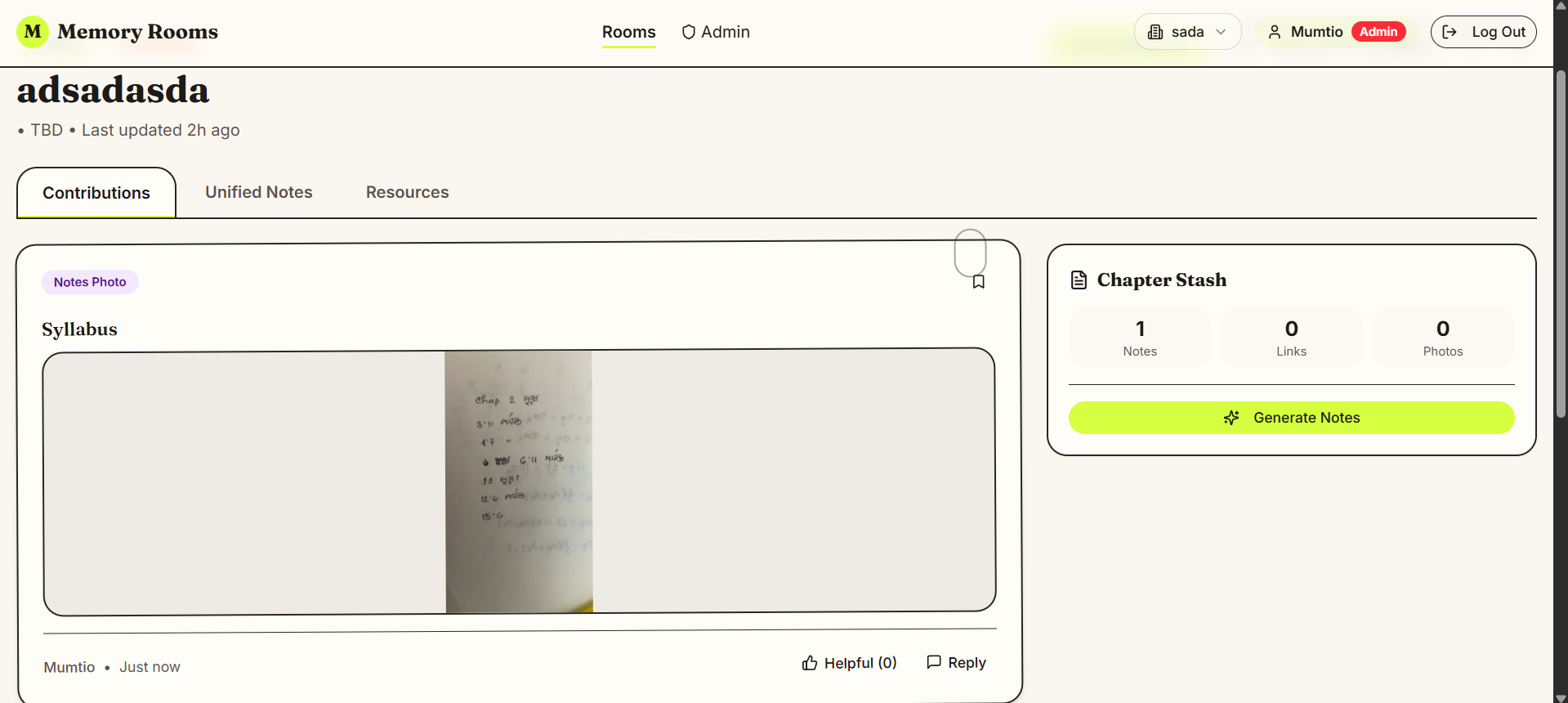
Image of notes as contribution
-
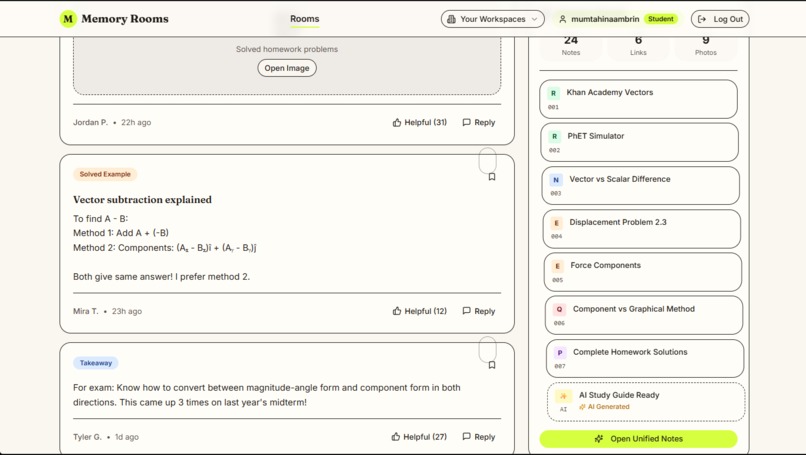
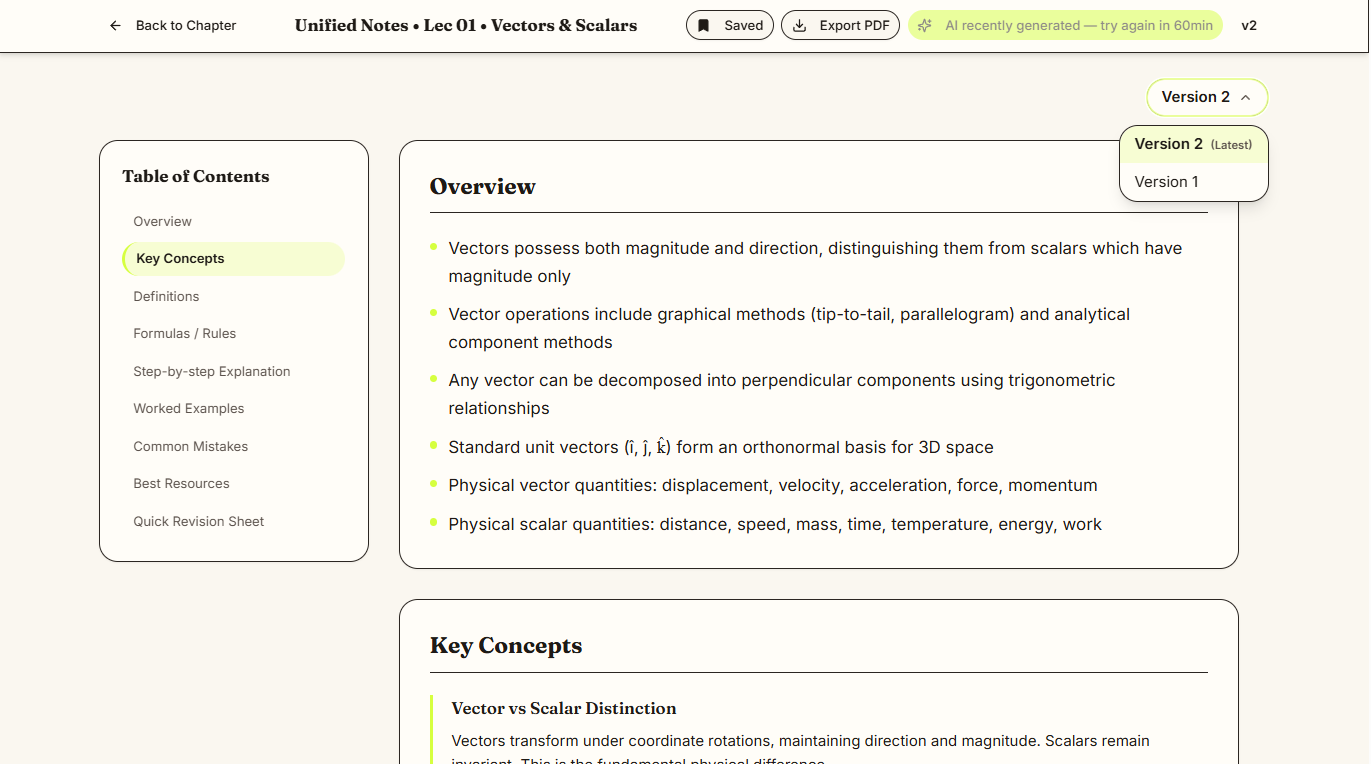
When the threshold amount of resources is accumulated, students can create AI notes.
-
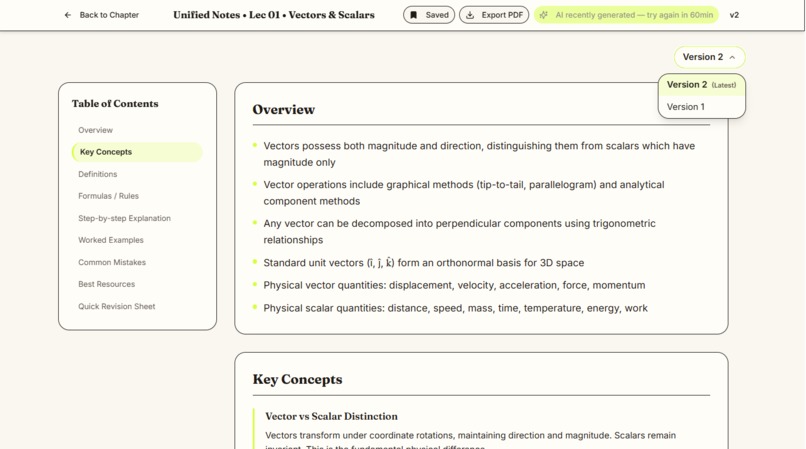
Ai generated notes from all the collected resources.
-
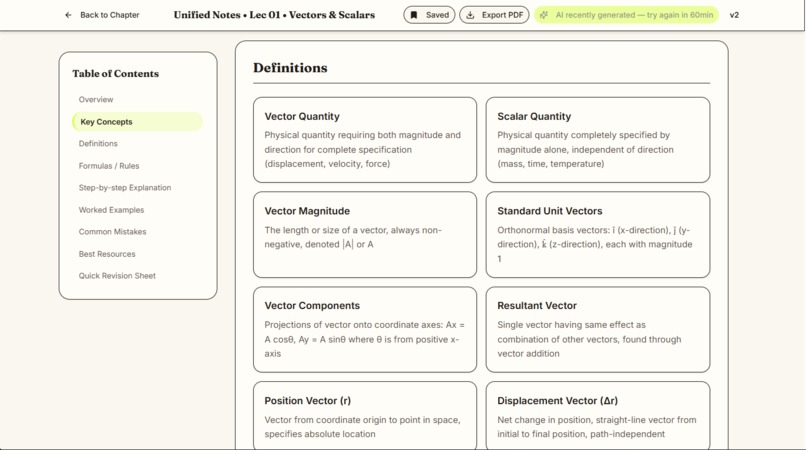
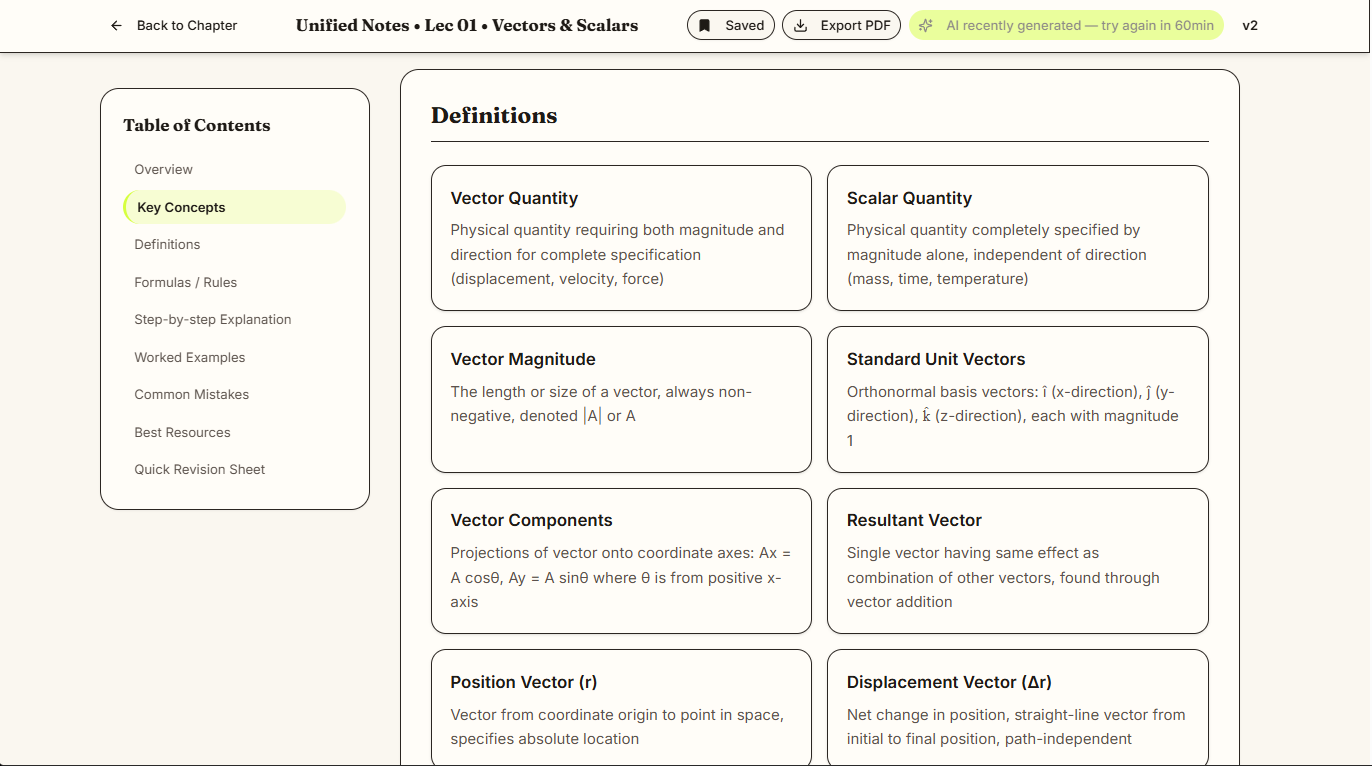
Different sections of the generated notes.
-
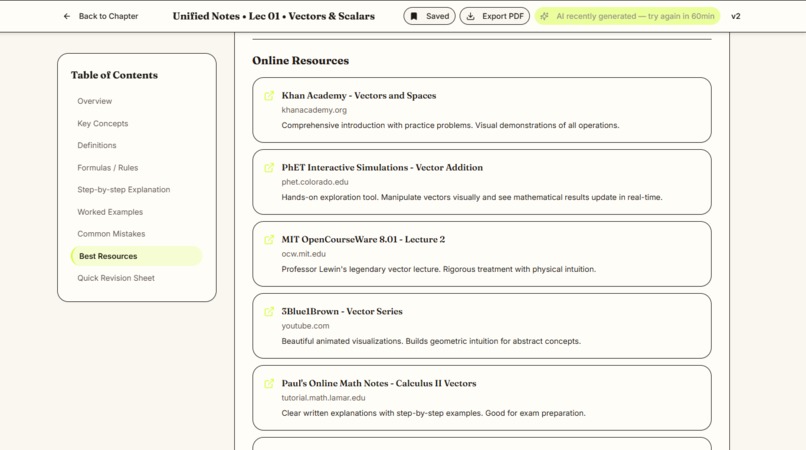
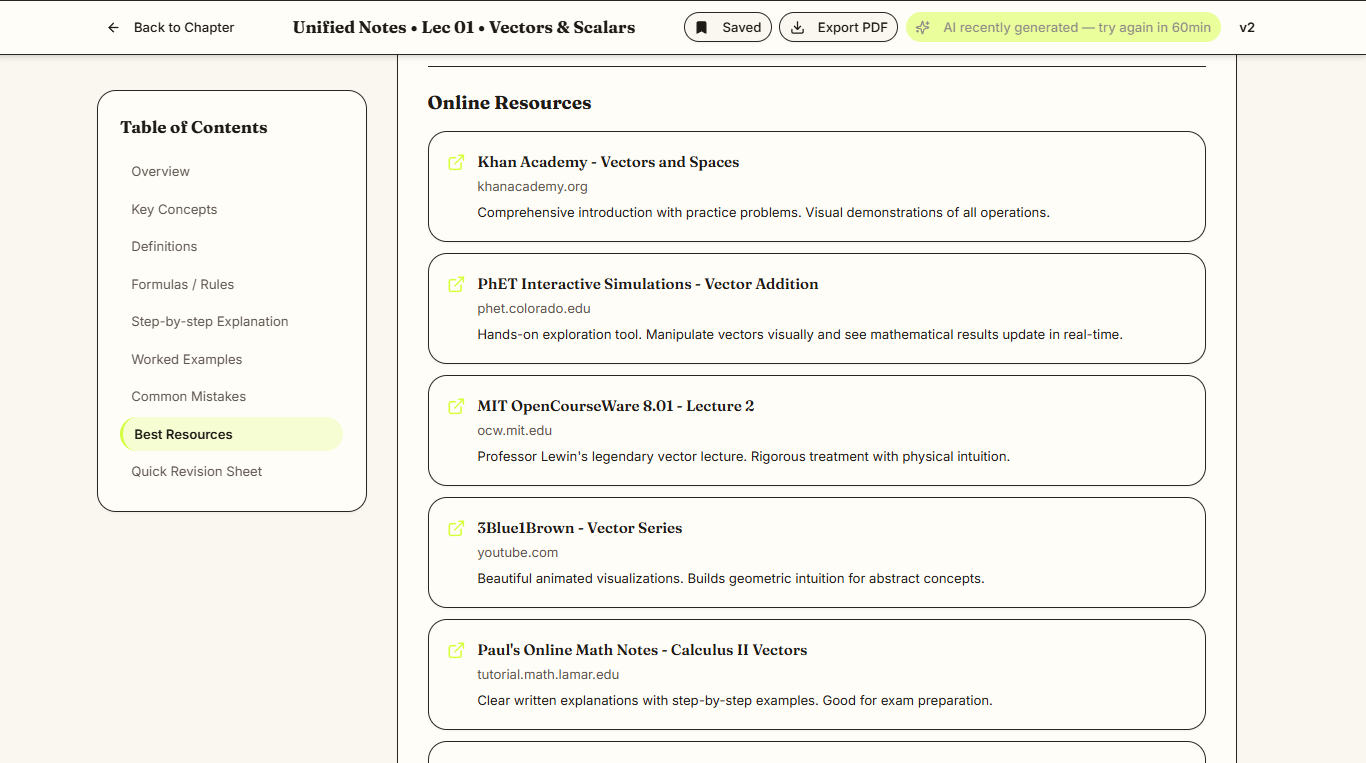
Best online Resources and Student notes in the stash.
-
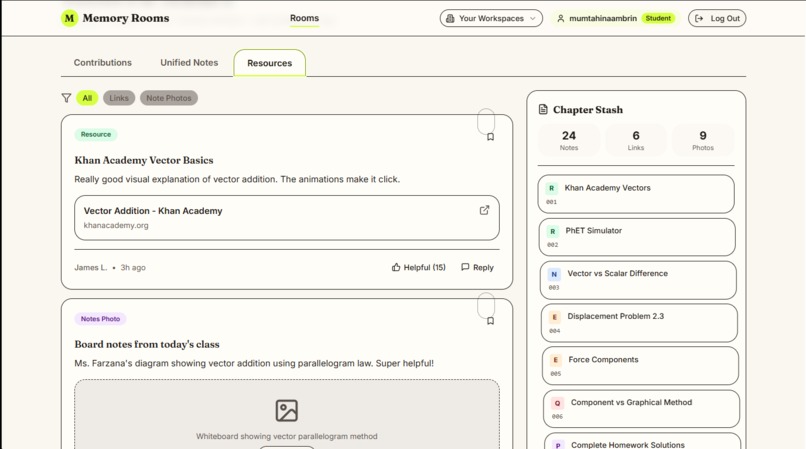
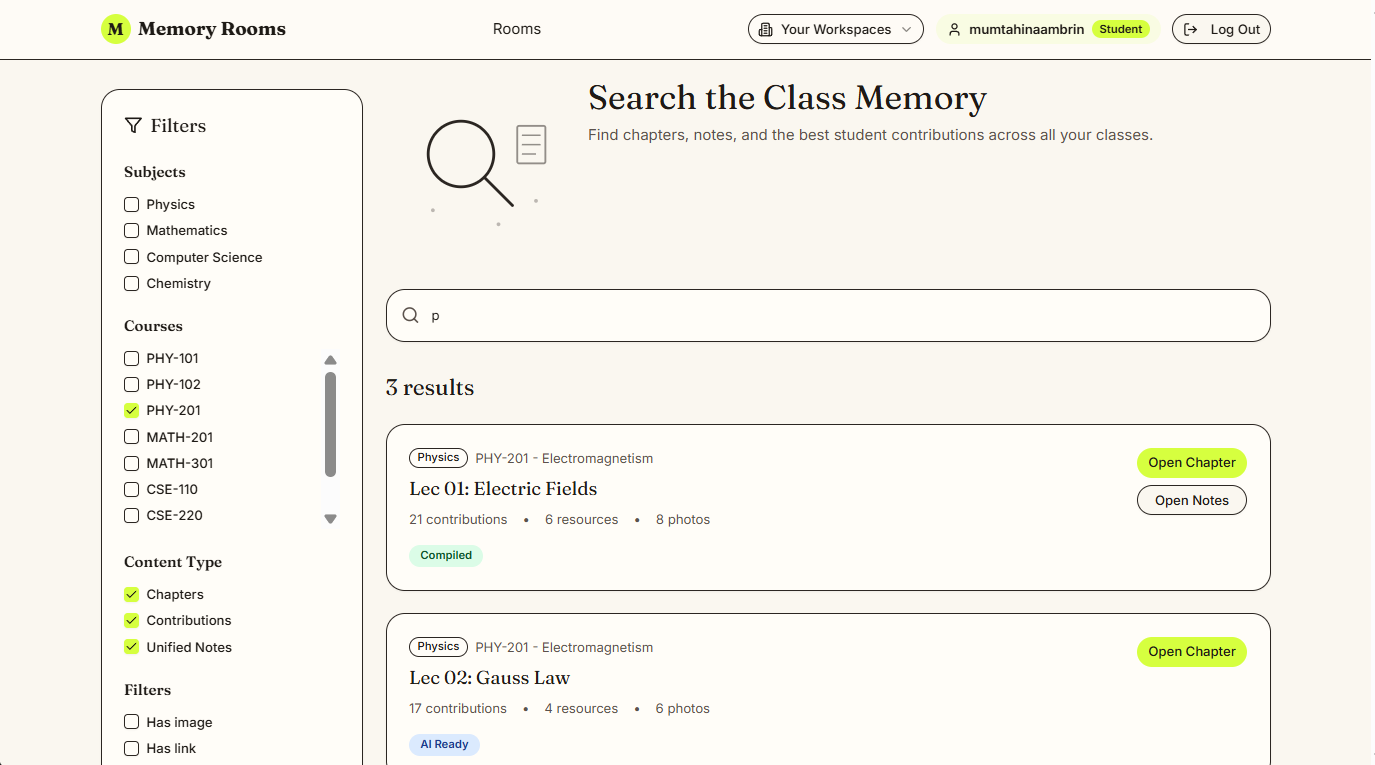
Filter through all the resources.
-
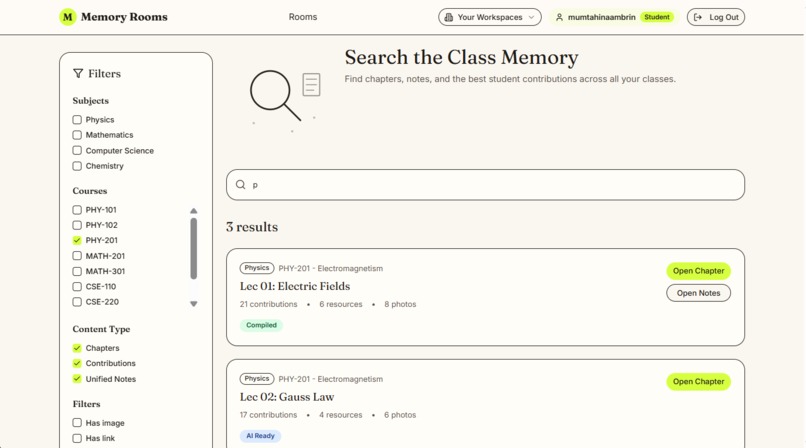
Search any notes easily across all the schools.
-
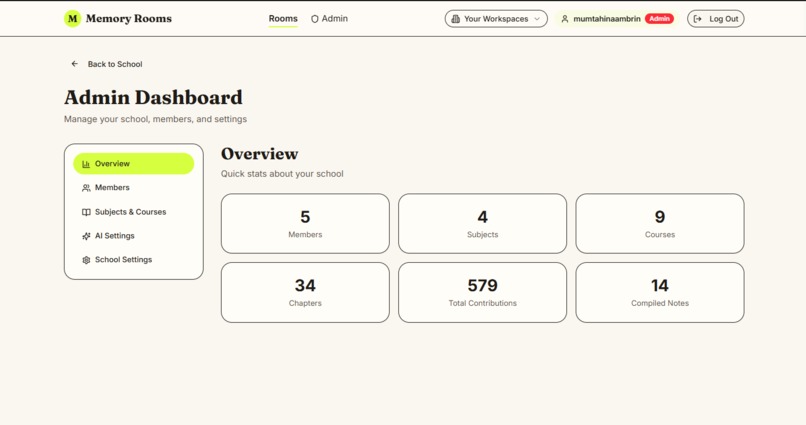
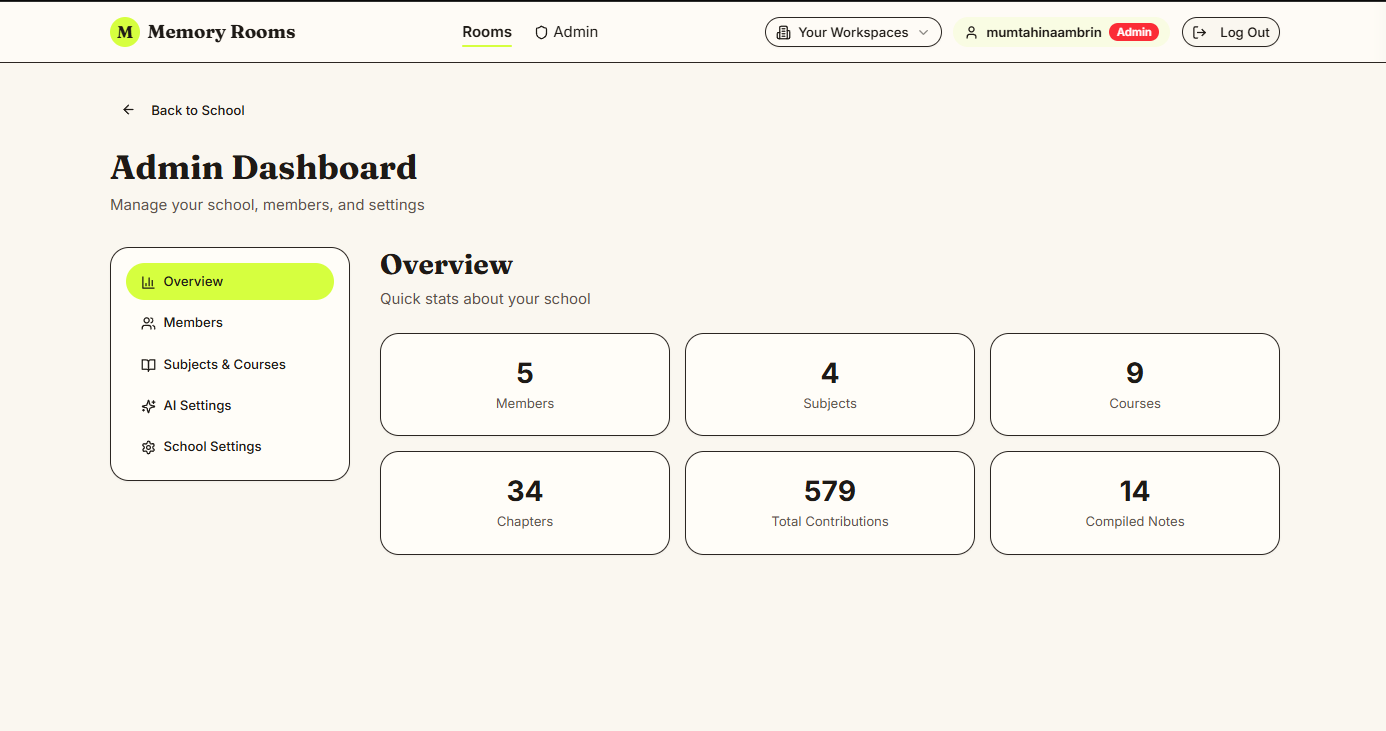
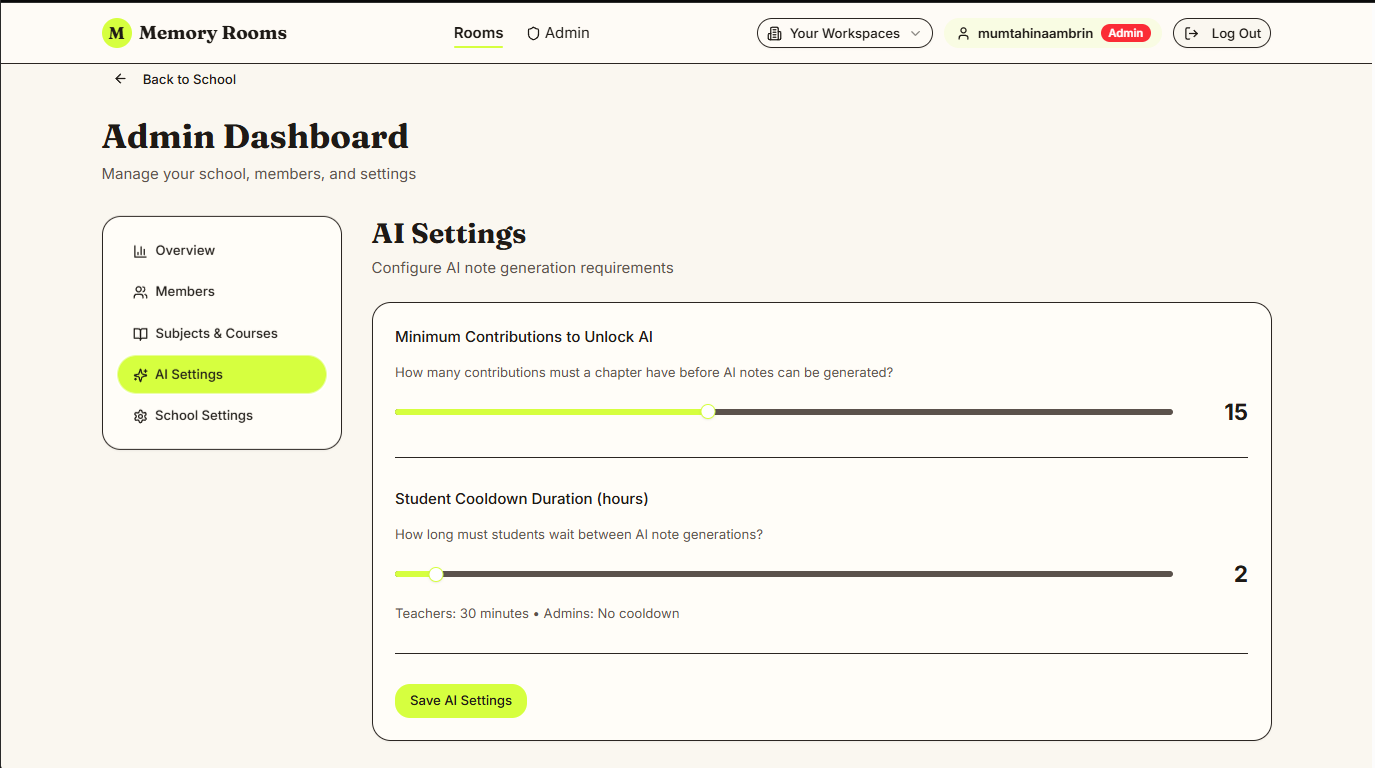
Admin Dashboard
-
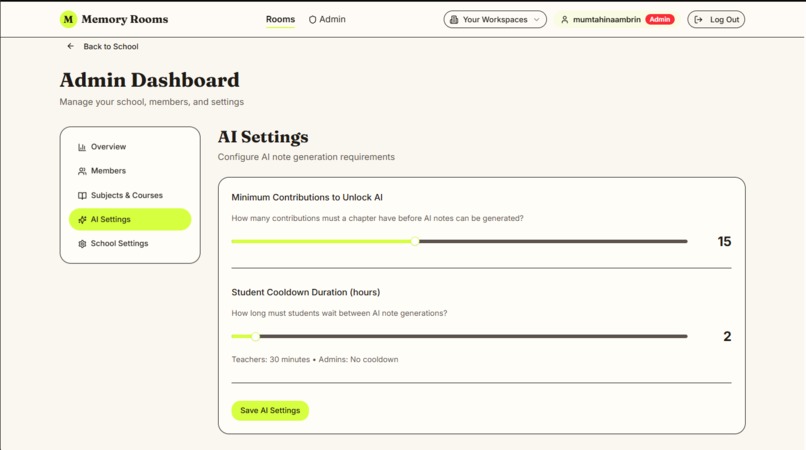
Admin Dashboard
Inspiration
In a real classroom, learning happens fast and verbally. Teachers explain concepts, emphasize subtle details, give side comments, examples, and warnings often all in one flow. As students, it’s extremely hard to write down every important point accurately while also trying to understand what’s being taught.
Everyone misses something:
- one student misses a formula,
- another misses a definition,
- someone else misses a worked example or an exam hint.
When notes are compared later, it becomes obvious that no single person captured the full lecture.
Traditional AI note-taking tools try to summarize from slides or recordings, but they often:
- miss context added verbally by teachers,
- leave out details students found important,
- rely on a single source of truth.
We realized that good notes need unified, community-level input.
That insight became the foundation of Class Memory Rooms.
What it does
Class Memory Rooms turns each lecture into a shared, collaborative knowledge space.
.png)
- Each school is a private workspace
- Each lecture becomes a room where students contribute:
- key takeaways
- solved examples
- confusions
- resources
- note photos
- key takeaways
Once enough collective input exists, any student can trigger AI-generated unified notes, which compile:
- structured explanations
- definitions and formulas
- worked examples
- common mistakes
- quick revision sheets
.png)
The result is a single, high-quality set of notes that reflects what the entire class learned, not just one person or one AI prompt.
How we built it
We built the project with a frontend-first, backend-ready approach.
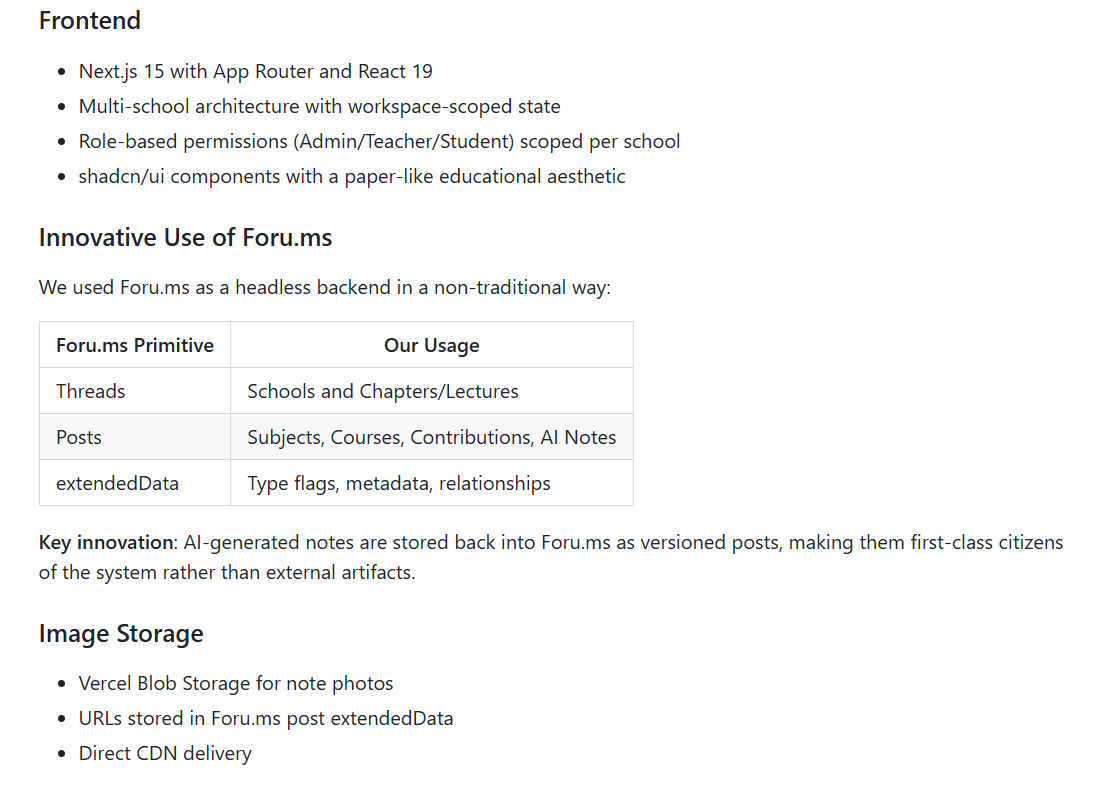
This allowed us to focus on UX, collaboration, and system design while relying on a flexible backend.
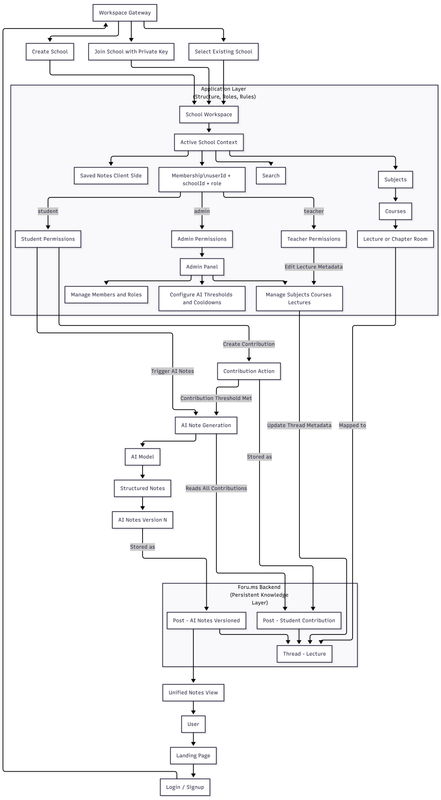
Challenges we ran into
- Designing a system where roles are scoped per school, not per user
- Preventing users from being auto-redirected into a demo workspace unintentionally
- Balancing open collaboration with safeguards against AI misuse
- Making AI helpful without replacing human judgment
- Ensuring demo behavior never leaks into real school workspaces
Many of these challenges required revisiting early assumptions and refactoring the architecture.
Accomplishments that we’re proud of
- Turning a forum backend into a collaborative academic memory system
- Designing a realistic multi-school, role-aware SaaS architecture
- Empowering students, not just teachers to generate AI notes responsibly
- Building a demo environment that showcases the product without compromising real usage
- Creating a frontend that is production-quality, backend-ready, and judge-friendly
What we learned
- Learning is inherently collaborative, not individual
- AI works best when it organizes collective human input
- Role scoping per workspace is critical for real-world systems
- Good frontend architecture prevents backend and permission bugs early
- Iteration and correction are signs of strong engineering, not failure
What’s next for Class Memory Rooms
- Advanced semantic search across lectures and note
- Analytics for teachers to understand learning gaps
- Mobile-friendly and offline-first experiences
Class Memory Rooms is built on a simple belief:
When everyone contributes what they caught, nothing important gets lost.
Built With
- foru.ms
- gemini
- grok
- next.js
- react
- tailwindcss
- typescript
- v0
- vercel


Log in or sign up for Devpost to join the conversation.