-
-
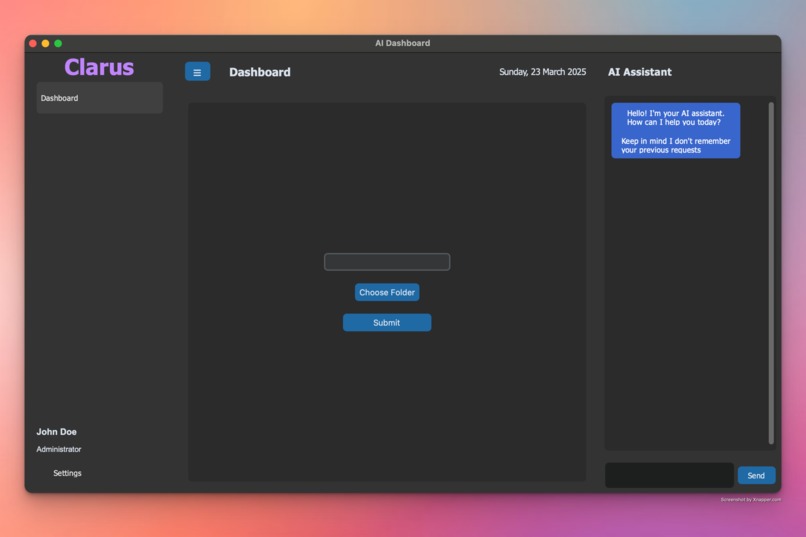
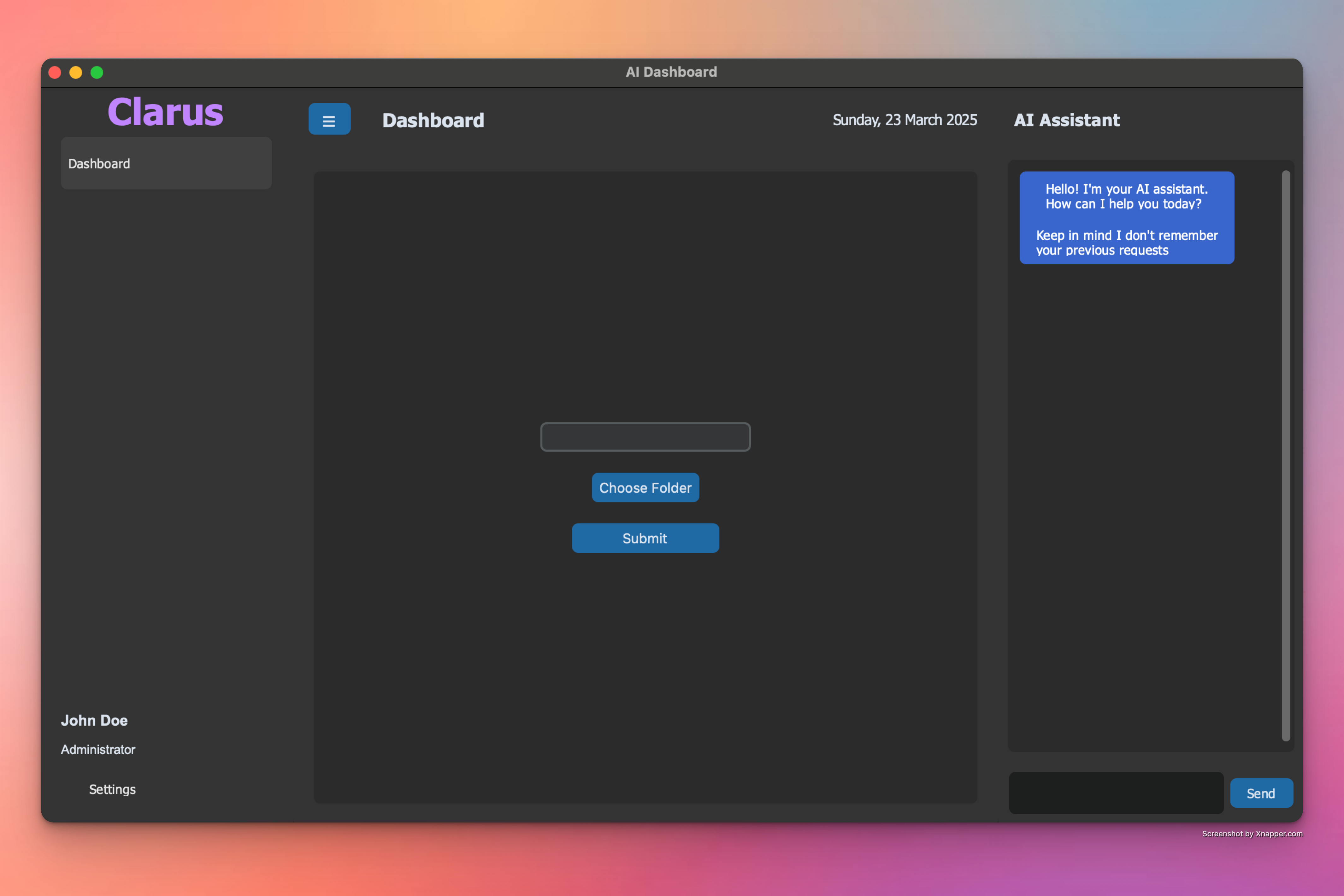
Our final client
-
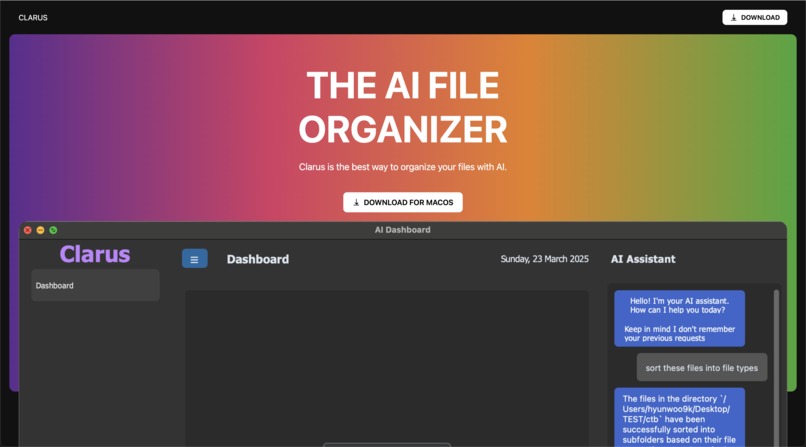
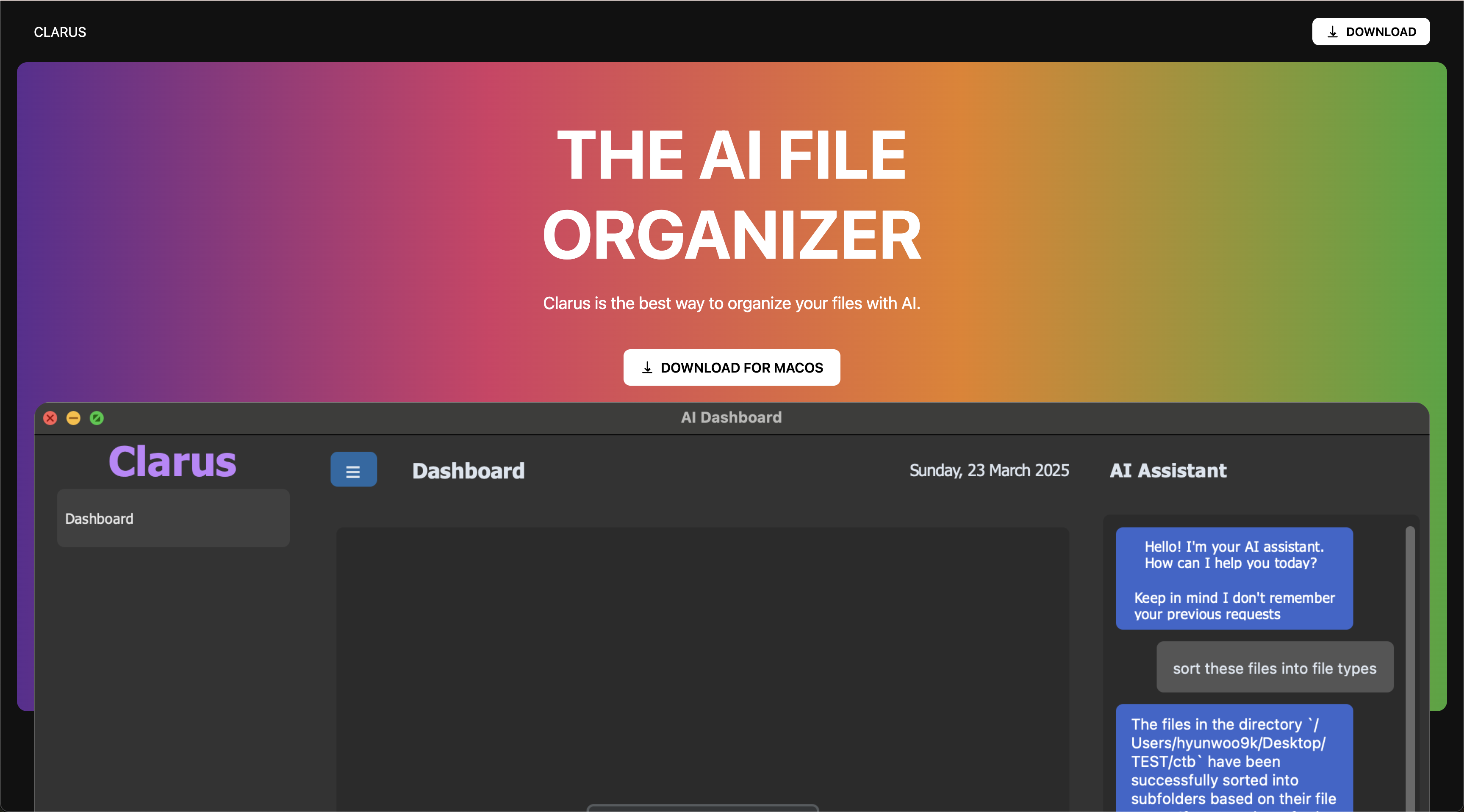
Our lander website
-
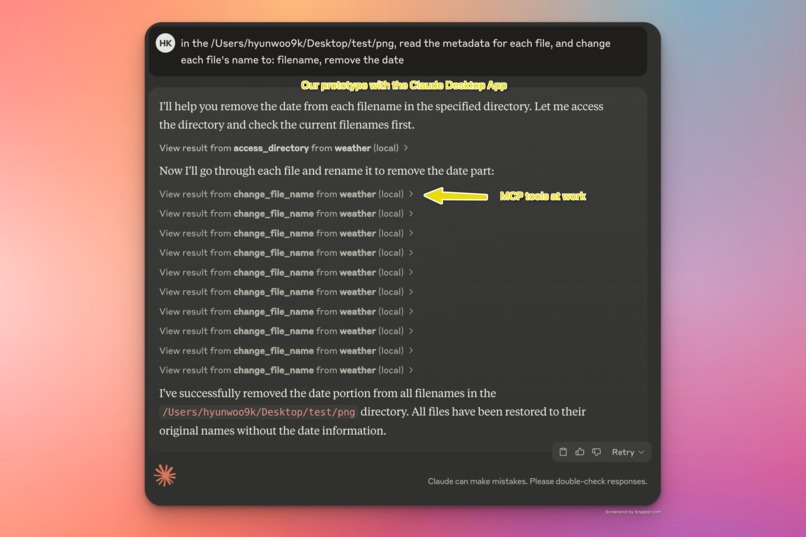
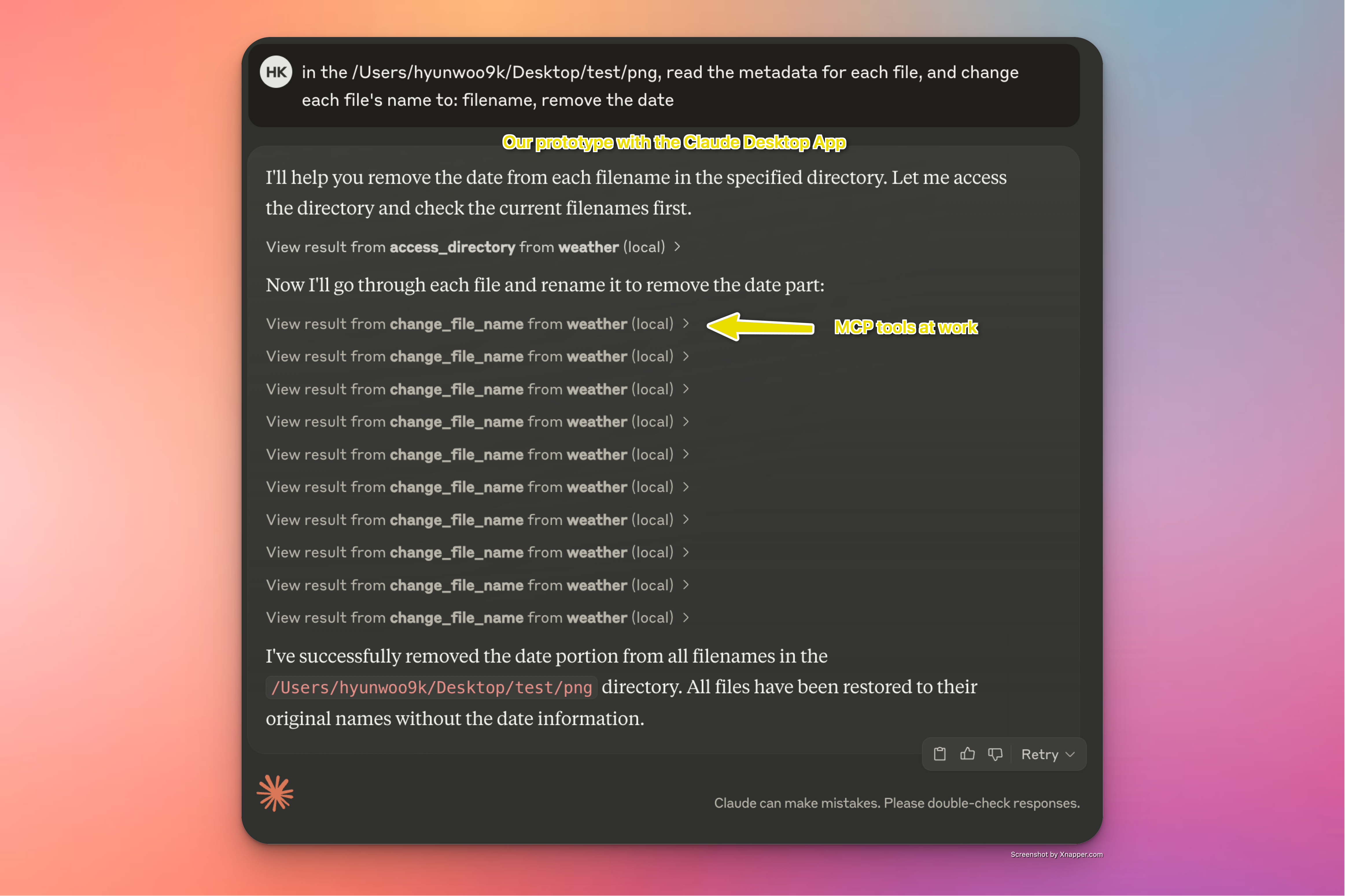
Our prototype
-
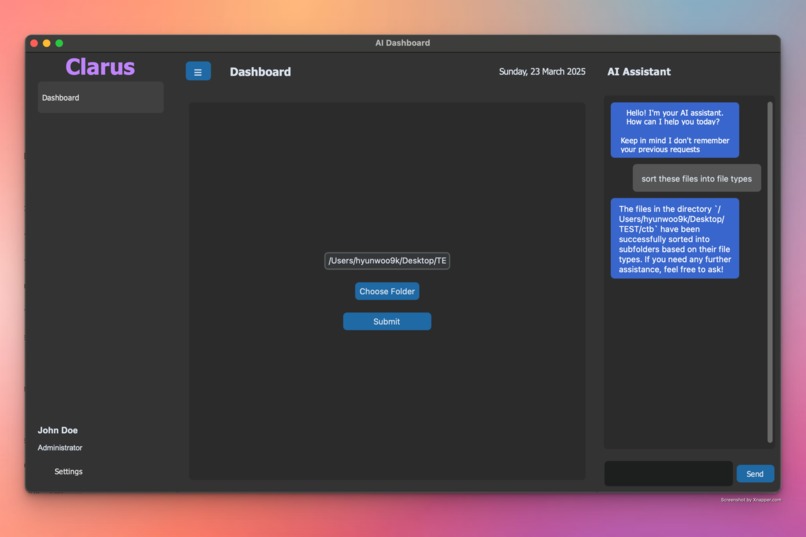
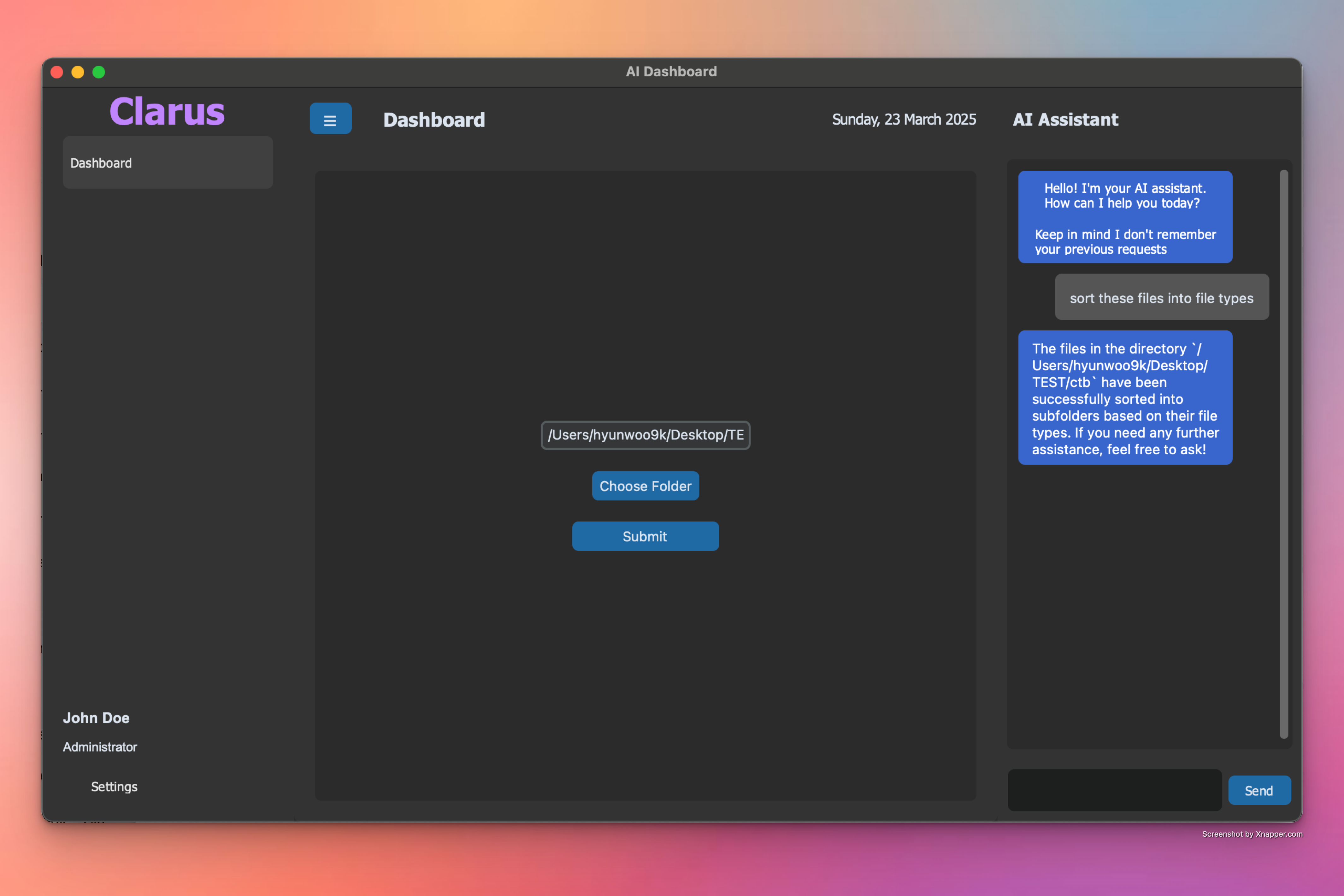
Our final client in action
-
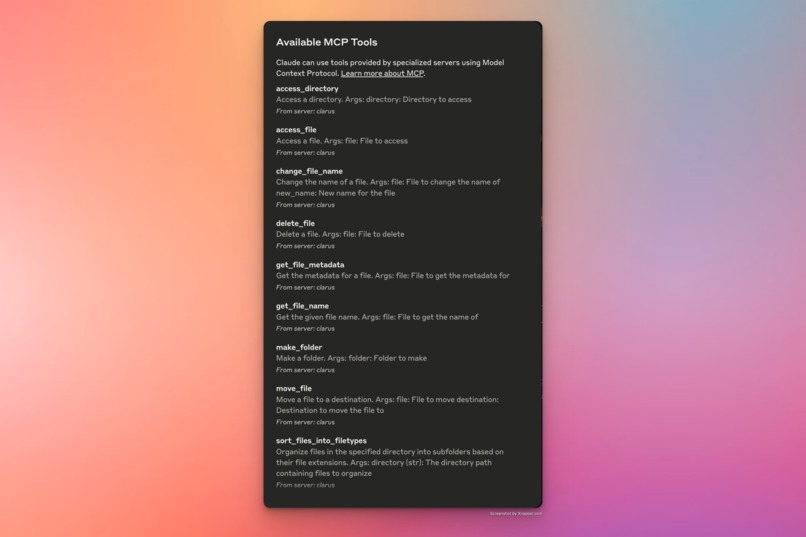
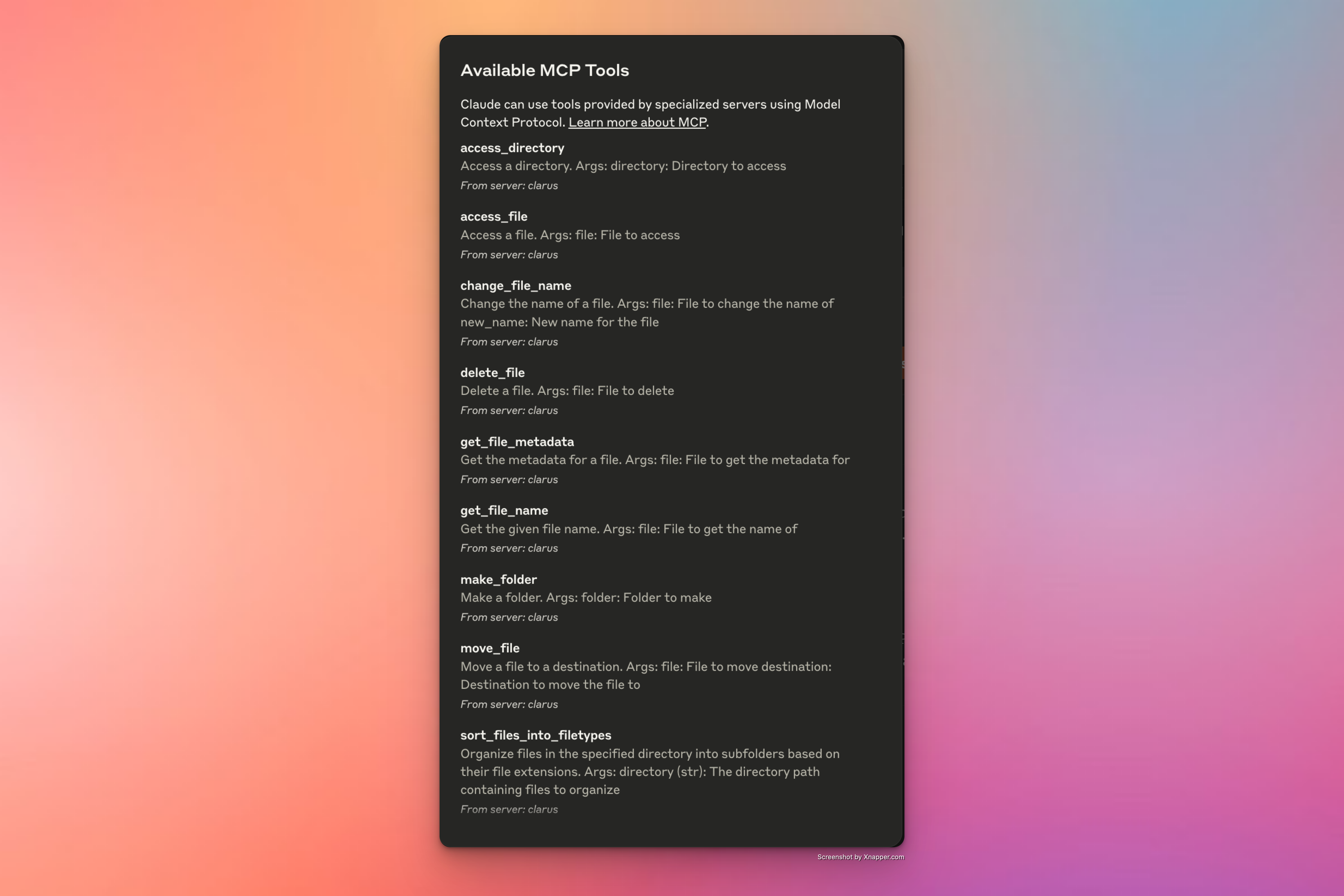
The MCP tools the LLM has access to
Inspiration
A couple of members in our group had a constant problem of disorganization that caused them to be less productive, which sparked the idea of a project that helped organize things.
What it does
Clarus is an AI-powered file system sorter. While other programs use a simple ChatGPT or Claude API that provides the user with instructions for what to do, Clarus uses a brand-new emerging protocol called MCP (Model Context Protocol), to provide the user with seamless organization.
How we built it
First, we started by using the Claude desktop app as our client to finalize the functionality of the MCP server. For the server we used the FastMCP module to initialize a server and added tools in the code that allowed for the LLM to access the user's files. Then we created our own CLI client using Langchain and Langgraph which provided a lightweight wrapper that makes Anthropic MCP. We initially settled on Sonnet3.7 as our LLM to analyze the user text but had very poor results so we ended up changing it to ChatGPT 4o which offered better results.
Challenges we ran into
When creating our own MCP client CLI, we ran into a lot of problems. We initially didn't use Langchain's MCP wrapper which overcomplicated everything and caused many problems. So after a lot of research, we found Langchain which provided the client with the correct results.
Accomplishments that we're proud of
Solving the MCP client problem, making the Tkinter GUI look good.
What we learned
We learned that just because you committed a lot of time to something (using Claude for the client) it does not mean that you should keep going with that idea. Being flexible is valuable to problem-solving.
What's next for Clarus
- Adding authentication (Google login, open login, etc)
- Adding payment methods (Stripe, PayPal)
- Making a web client
Read more about MCP
Built With
- claude
- customtkinter
- langchain
- mcp
- openai
- python


Log in or sign up for Devpost to join the conversation.