-
-
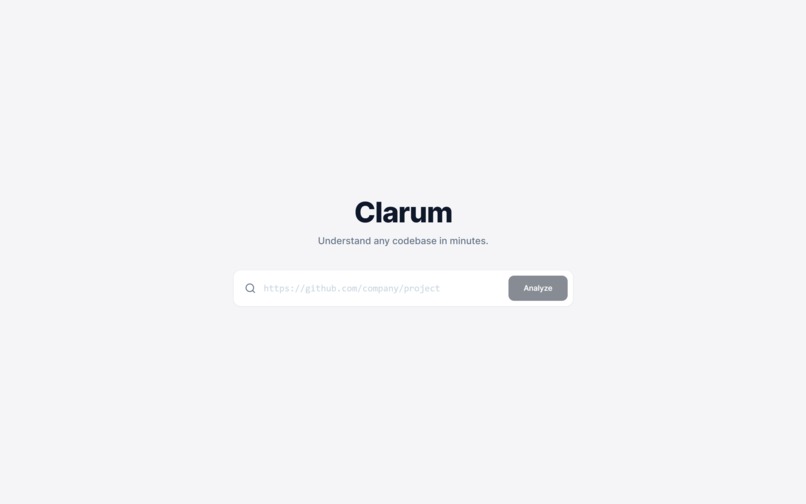
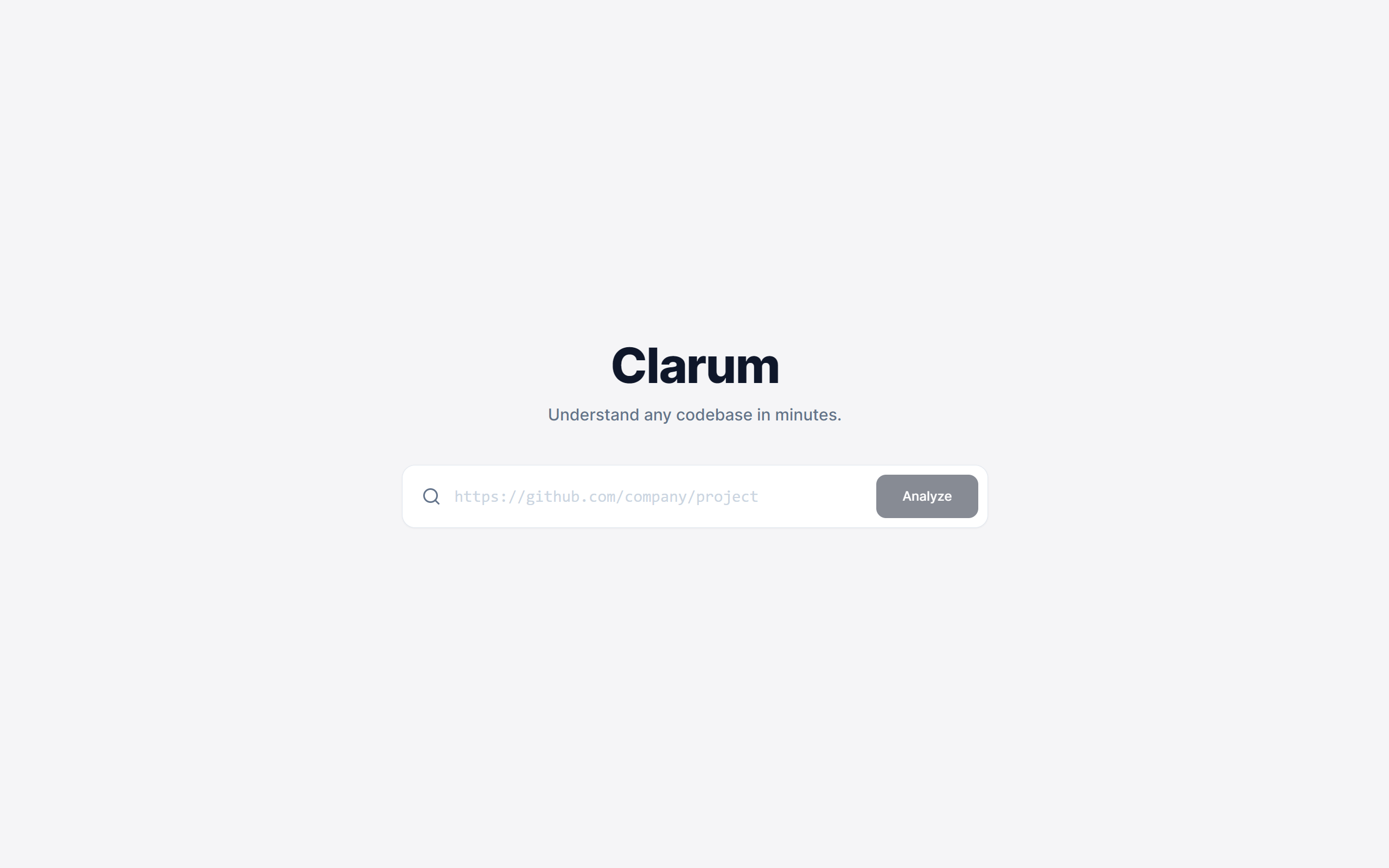
Paste any GitHub repository and generate an AI-powered onboarding experience in minutes.
-
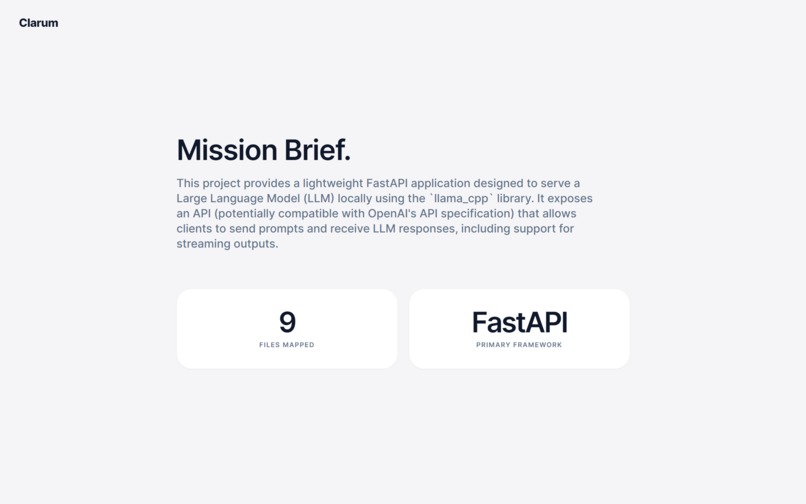
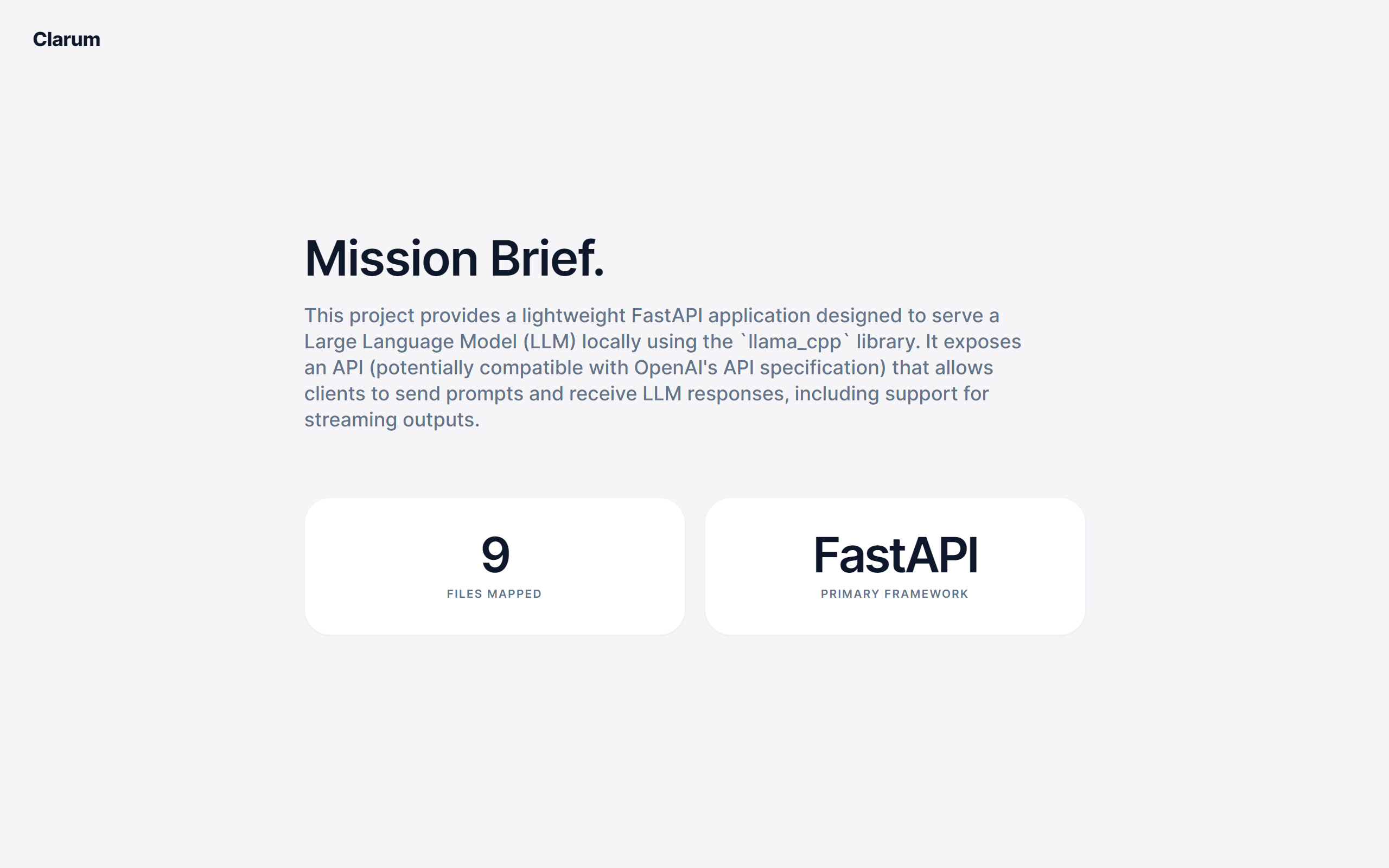
AI-generated project summary explaining purpose, architecture, and key technologies.
-
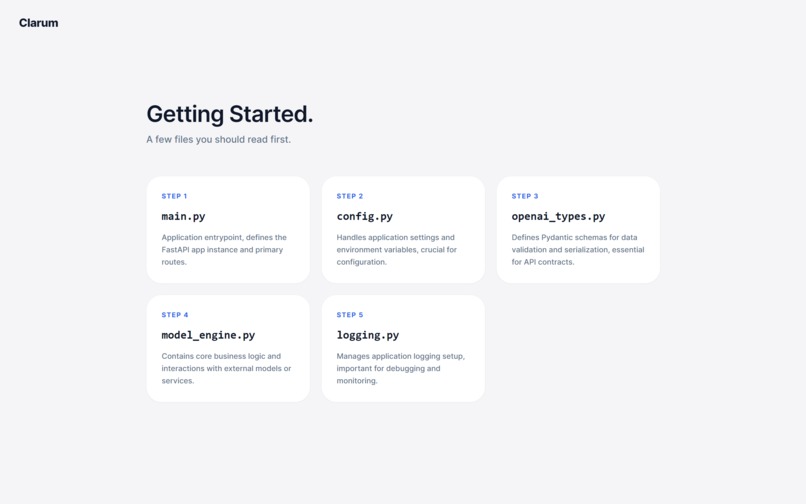
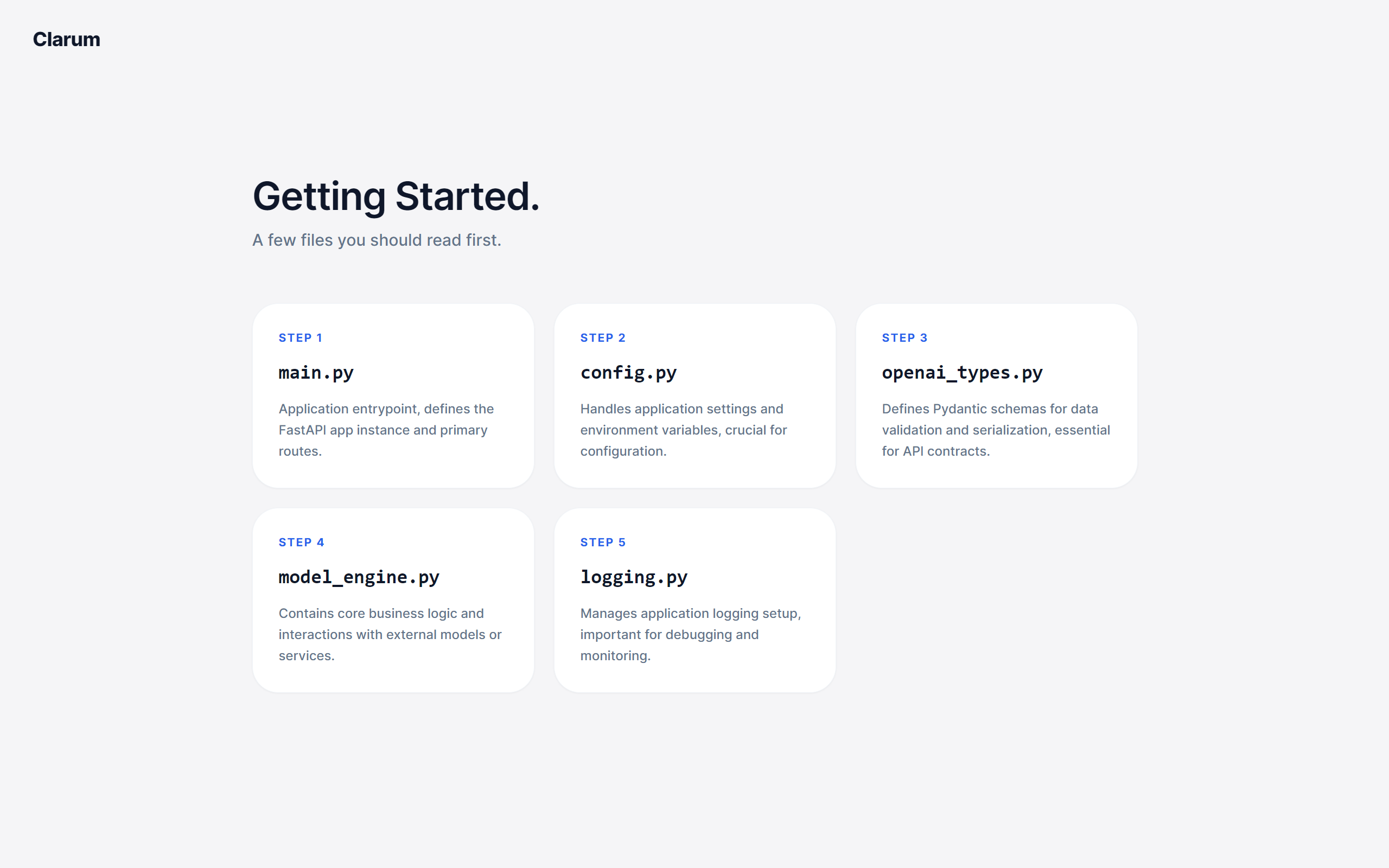
Personalized onboarding path showing the best files to read first and why.
-
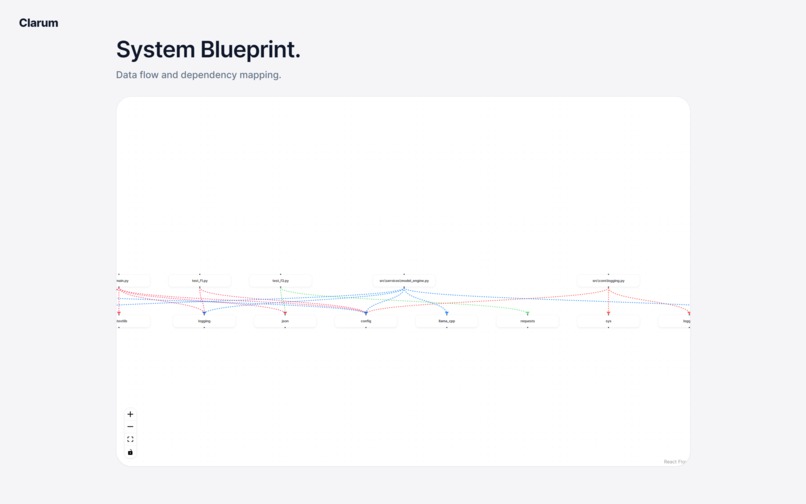
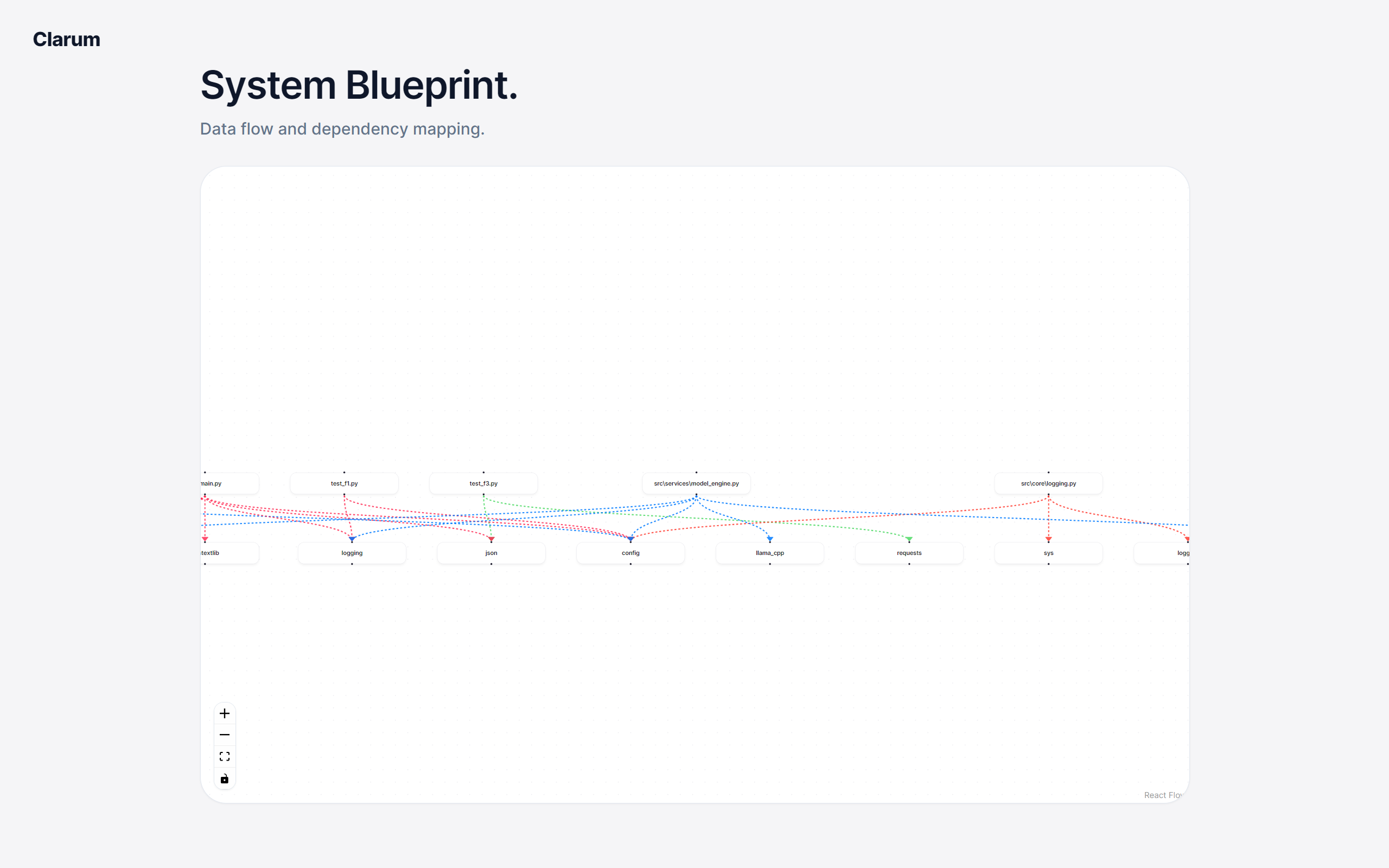
Interactive dependency graph visualizing relationships between files and modules.
Inspiration
One of the most frustrating parts of software development is joining an unfamiliar project. Whether it's an open-source repository, a team codebase, or a project from a classmate, understanding how everything fits together often takes hours of reading files, tracing imports, and building mental maps.
The inspiration for Clarum came from my own experience and the experience of my peers. We often found ourselves spending more time figuring out a repository than actually contributing to it. I wanted to build a tool that could reduce that onboarding time and provide developers with a clear starting point.
What it does
Clarum is an AI-powered repository onboarding assistant.
Users simply provide a public GitHub repository URL, and Clarum analyzes the codebase to generate:
- A project overview explaining the purpose of the repository
- An architecture summary describing how the system works
- An interactive dependency graph showing file relationships
- A guided learning path that recommends which files to read first and why
The goal is to help developers understand unfamiliar codebases in minutes instead of hours.
How we built it
Clarum was built using a React + Vite frontend and a FastAPI backend.
The backend uses GitPython to clone repositories, NetworkX to build dependency graphs, and Gemini 2.5 Flash to generate architecture summaries and onboarding recommendations. Results are validated using Pydantic schemas and cached using SQLite.
The frontend focuses heavily on clarity and presentation. React Flow and Dagre are used to generate interactive dependency maps, while Tailwind CSS provides the clean, minimal interface.
The entire system is deployed with Vercel for the frontend and Render for the backend.
Challenges we ran into
The biggest challenge was the user experience.
Generating repository insights was relatively straightforward compared to presenting them in a way that felt intuitive and useful. Many existing developer tools expose a lot of information, but often overwhelm the user in the process.
A significant amount of time was spent designing and refining the interface so that the generated information felt approachable rather than intimidating. Turning a dependency graph into something that actually helps developers understand a system was one of the most difficult parts of the project.
Accomplishments that we're proud of
The accomplishment I'm most proud of is the overall experience.
Clarum takes several different types of information—repository structure, dependency relationships, AI-generated explanations, and onboarding guidance—and presents them in a clean, cohesive interface.
I'm also proud that the project is fully deployed and functional, allowing users to analyze real repositories rather than relying on static examples.
What we learned
This project reinforced the idea that meaningful products can be built in a very short amount of time when the scope is focused.
I also learned a great deal about combining deterministic analysis with generative AI. Instead of asking an LLM to understand an entire repository directly, extracting structured information first and then letting the model reason over that information produces much more reliable results.
Finally, I gained valuable experience deploying a full-stack AI application to production and designing interfaces that prioritize clarity over complexity.
What's next for Clarum
The current version focuses primarily on Python repositories.
In the future, I would like to expand support for additional languages such as JavaScript, TypeScript, Java, Go, and Rust. I would also like to improve the dependency analysis engine, generate more detailed onboarding plans, and provide deeper architectural insights for larger repositories.
The long-term goal is to make Clarum a universal onboarding tool that helps developers understand any codebase, regardless of language, framework, or complexity.
Judge Notes
For reliability during evaluation, three pre-analyzed repositories are included in the system cache.
If Gemini API quota, rate limits, or external service availability impact live analysis, the following demo repositories will continue to function normally and showcase the complete Clarum workflow:
- https://github.com/BlazeeeXD/llm-inference-service
- https://github.com/BlazeeeXD/inference-resource-monitor
- https://github.com/BlazeeeXD/llm-config-benchmark
All generated reports, dependency graphs, architecture summaries, and onboarding paths remain fully interactive.


Log in or sign up for Devpost to join the conversation.