Inspiration
1 in 3 stroke survivors develops aphasia, losing reliable speech despite full cognitive ability. Existing AAC tools are either expensive ($15,000+ hardware) or clinically inaccessible. We built Clarivo to close that gap with a free, intelligent system that restores communication—not just through speech synthesis, but through personalized, adaptive expression that evolves with the user.
What it does
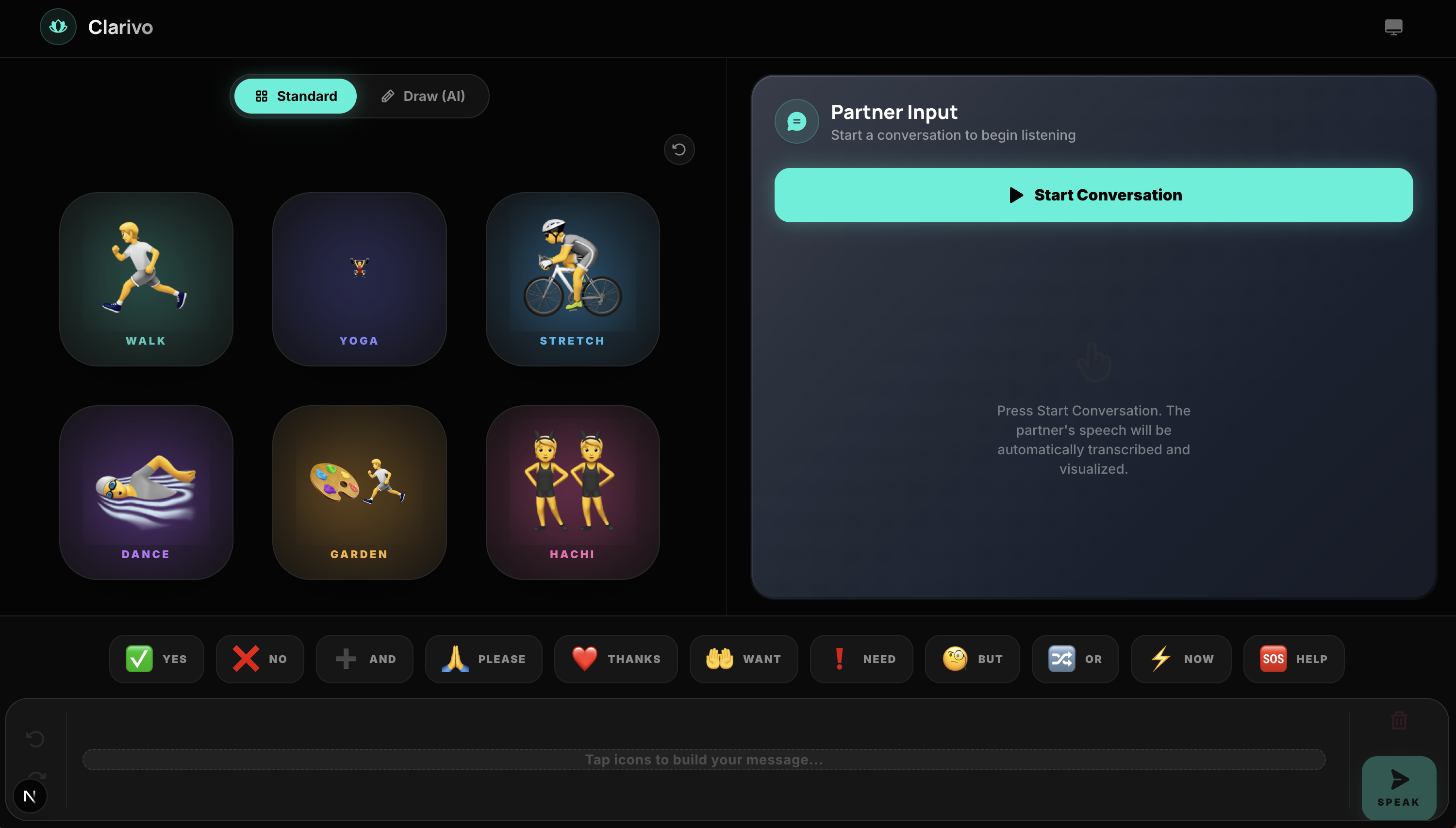
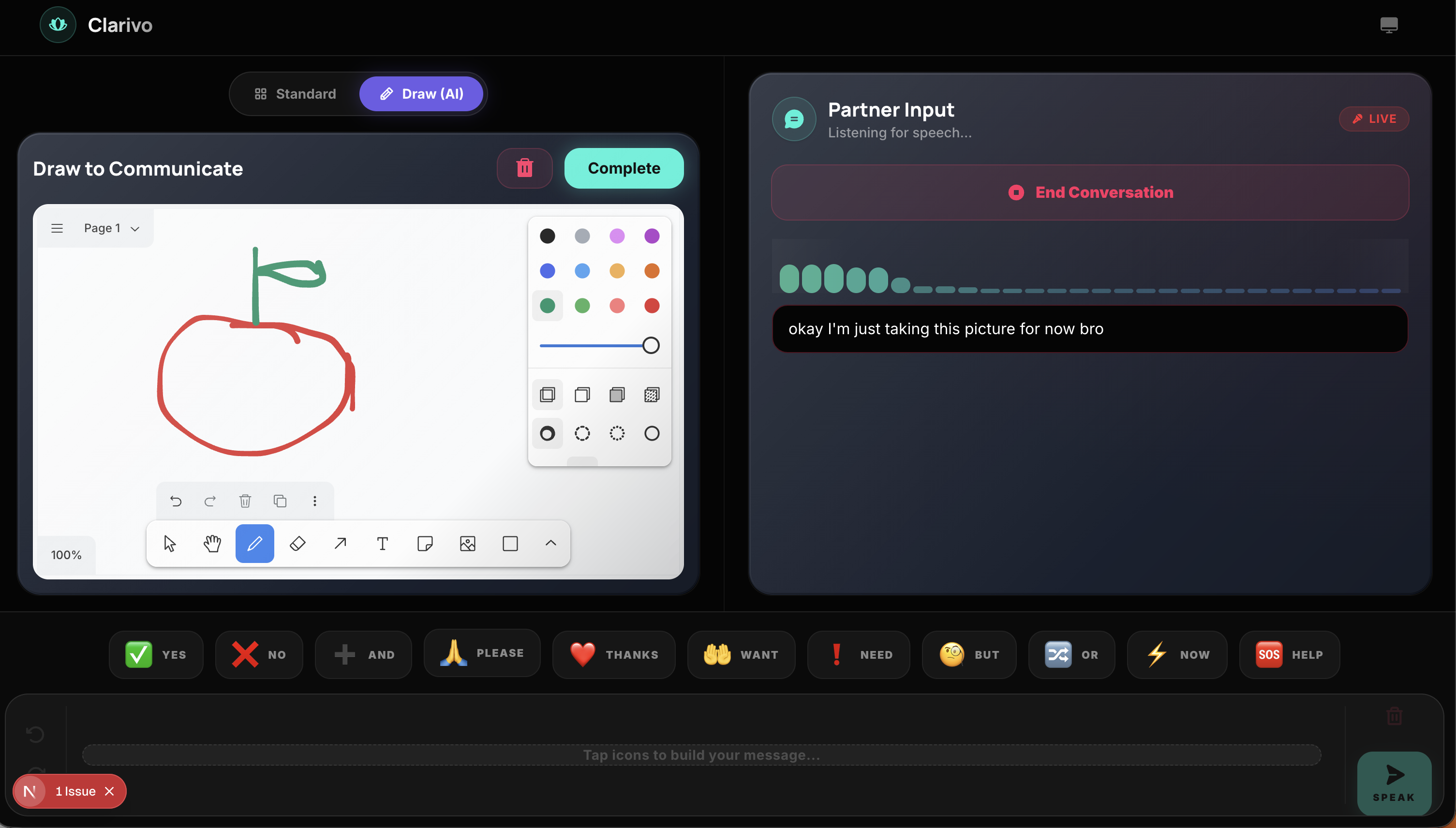
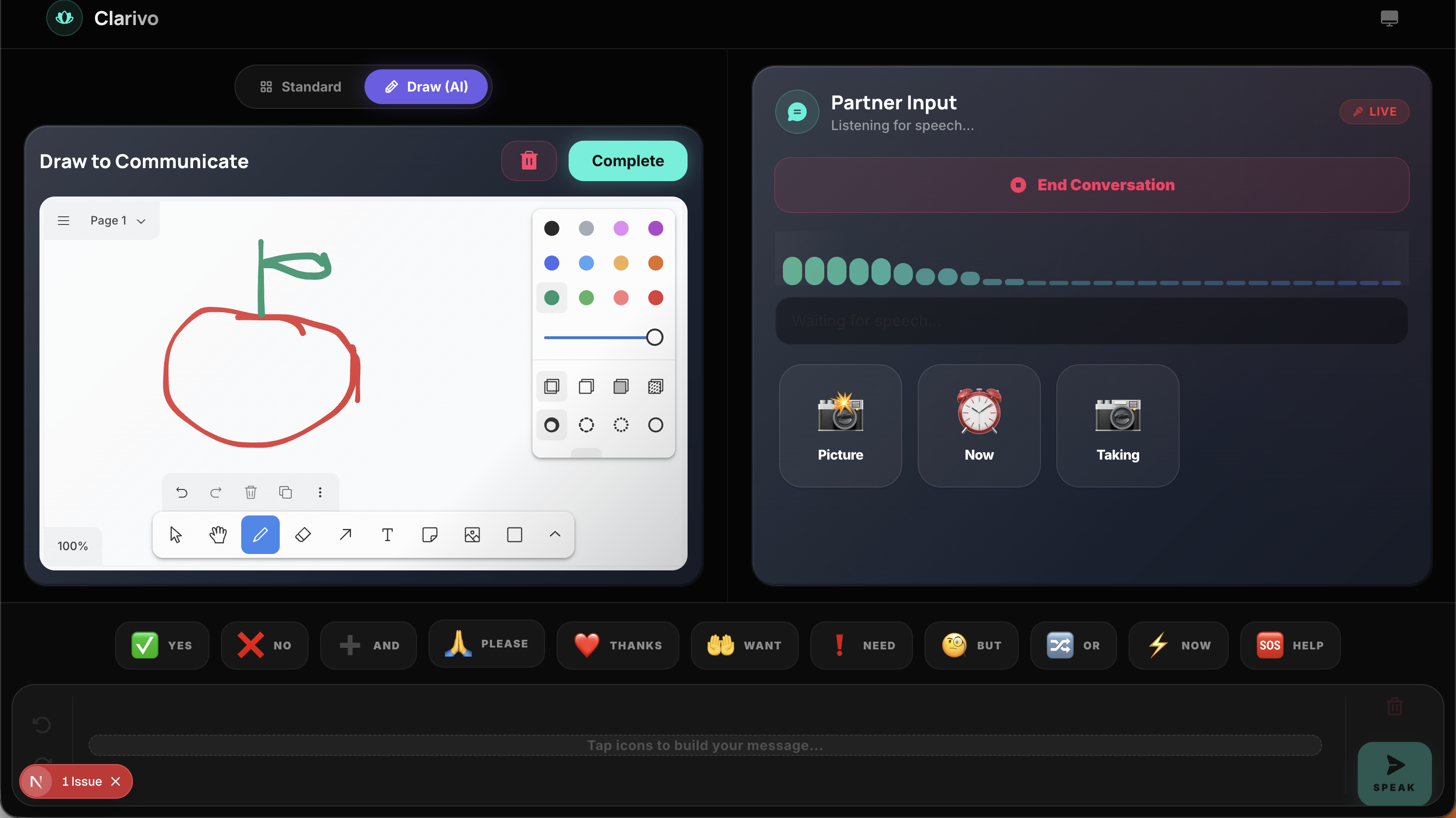
Clarivo is an AI-powered AAC platform that helps non-speaking or speech-impaired users communicate through icons and structured intent building.
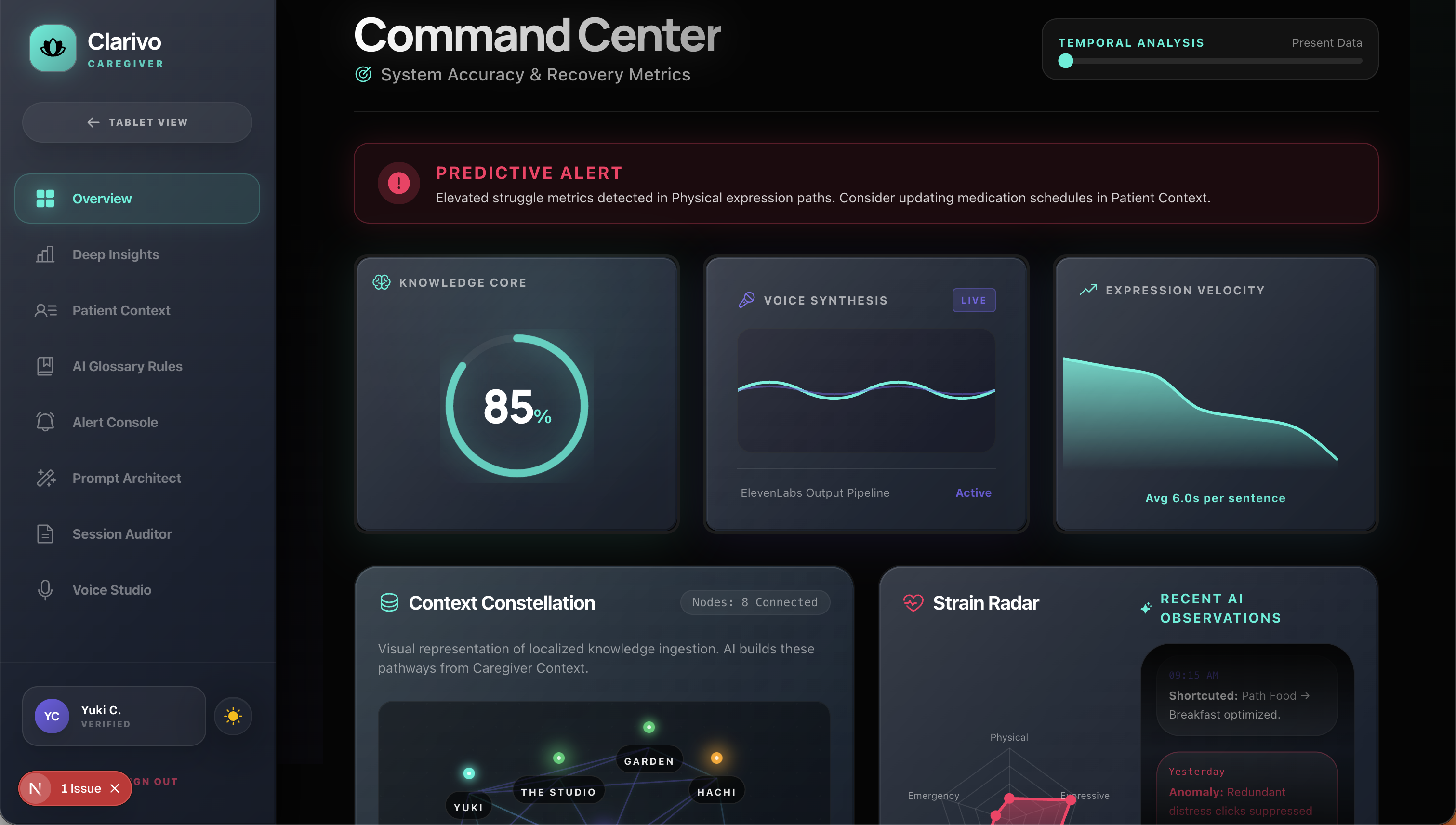
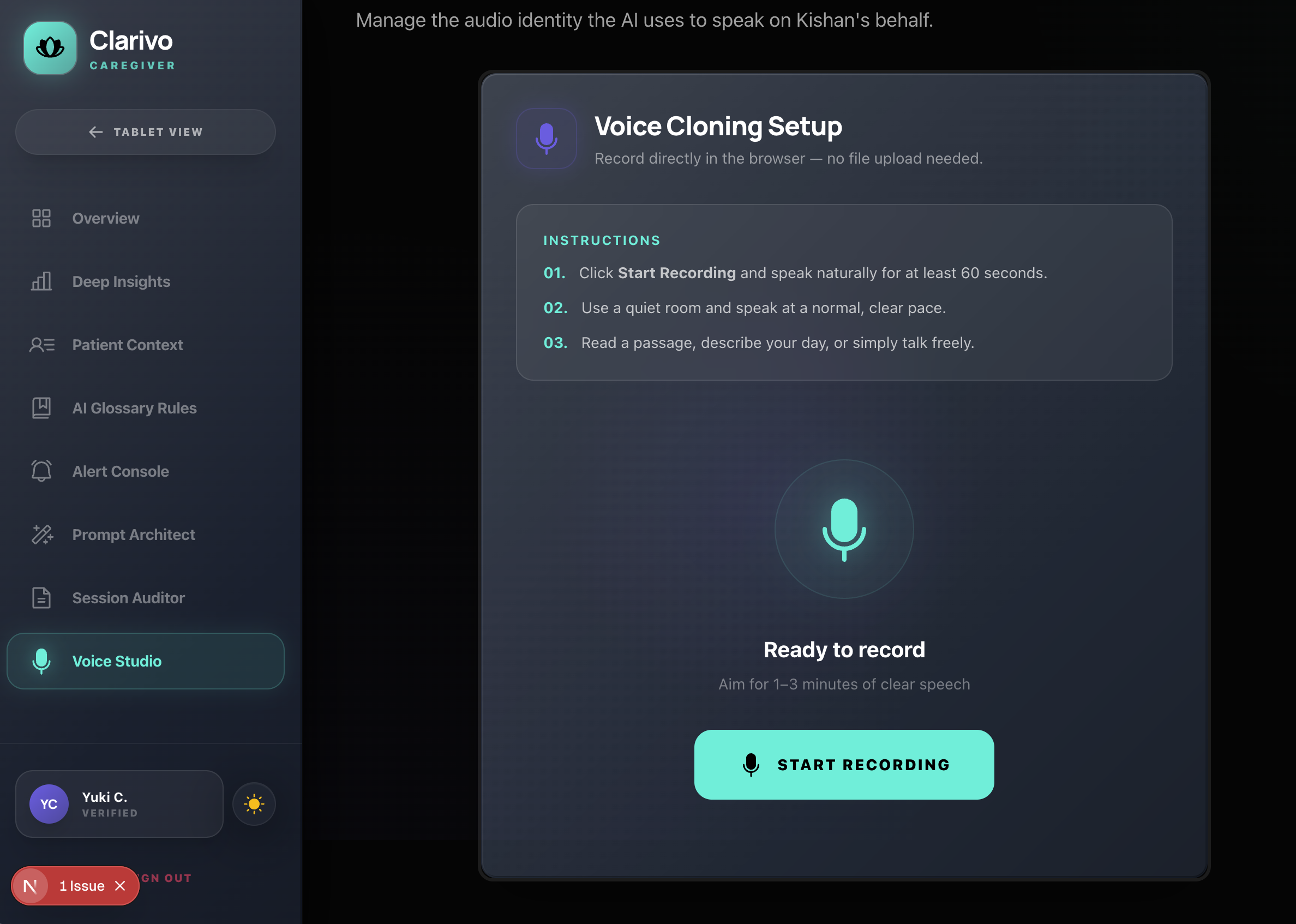
Icon-Based Communication: Decision tree + free-form drawing “Icon Composer” for flexible expression Voice Cloning: ElevenLabs generates speech in the patient’s own voice, preserving it if they lose it fully later on AI Sentence Engine: Converts icon sequences into natural, context-aware speech Caregiver Intelligence Loop: Caregivers provide small feedback signals that continuously improve personalization Analytics Dashboard: Tracks usage patterns, urgency signals, and daily AI-generated summaries
How we built it
Frontend: Next.js 14, TypeScript, Tailwind CSS, Phosphor Icons, Recharts AI Backend: FastAPI with GPT-4o-mini for real-time intent generation and GPT-4o for deeper insights Voice Layer: ElevenLabs for voice cloning and real-time synthesis Data Layer: MongoDB Atlas with structured path-based session tracking and caching Architecture: Streaming via SSE with a shared type-safe API contract across services
Challenges we ran into
Achieving sub-400ms latency for real-time AI responses Managing limited LLM context while preserving medical and behavioral relevance Handling complex state synchronization between patient and caregiver interfaces Ensuring stable and consistent voice cloning across sessions
Accomplishments that we're proud of
Real-time speech generation in a cloned patient voice A working “Knowledge Score” that reflects system understanding over time Adaptive shortcuts driven by real usage frequency A fully functional caregiver feedback loop that improves AI behavior Building a system that meaningfully replaces expensive AAC hardware
What we learned
Breaking AI into separate roles (intent, clarification, summarization) improves reliability Accessibility-first design requires extreme simplicity in interaction patterns Streaming LLM outputs dramatically improves perceived responsiveness Hierarchical “path-based” data structures work better than traditional relational models for AAC flows
What's next for Clarivo
Offline-first mobile app with edge AI support Smart home integration for environmental control Voice-based messaging to external platforms (WhatsApp, iMessage) Clinical pilot studies with speech therapy professionals
Built With
- elevenlabs
- fastapi
- mongodb-atlas
- motor
- next.js-14
- openai-gpt-4o
- openai-gpt-4o-mini
- phosphor-icons
- python
- recharts
- sse-(server-sent-events)
- tailwind-css
- typescript


Log in or sign up for Devpost to join the conversation.