-
-
Clarivana
-
-
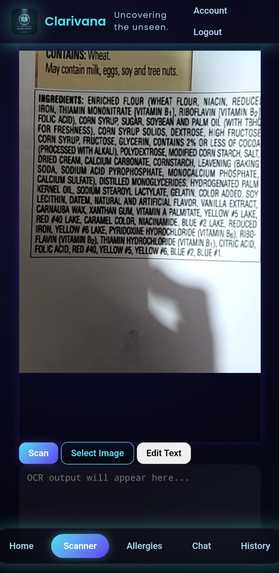
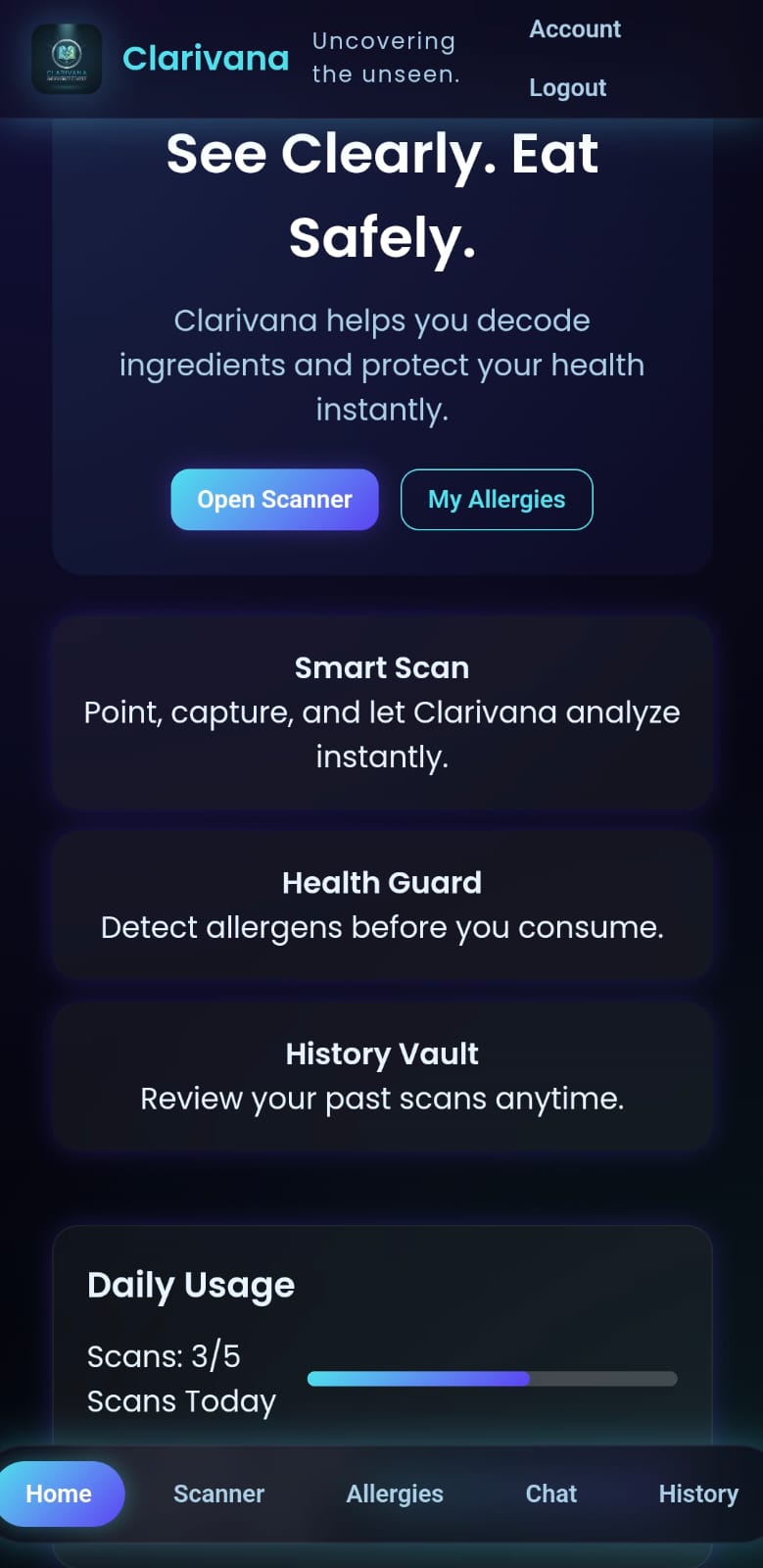
Scan food labels to get started
-
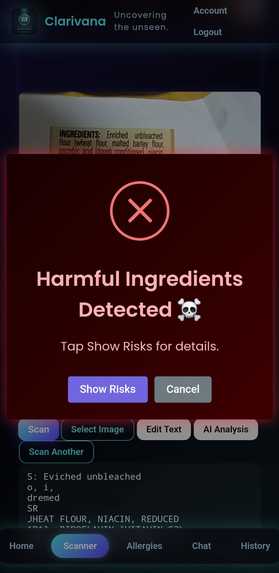
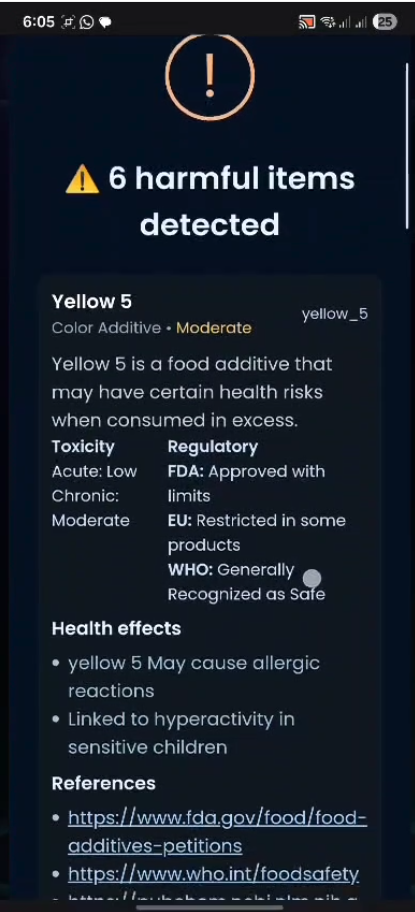
Get Instant allerts
-
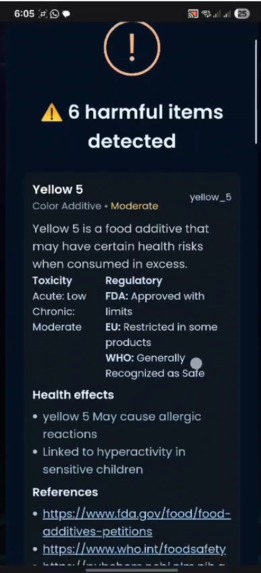
Detailed description of ingredients
-
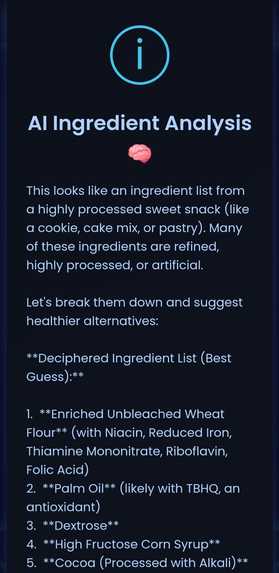
Get healthier alternatives from our AI
-
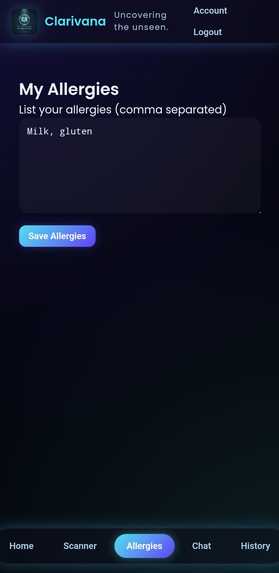
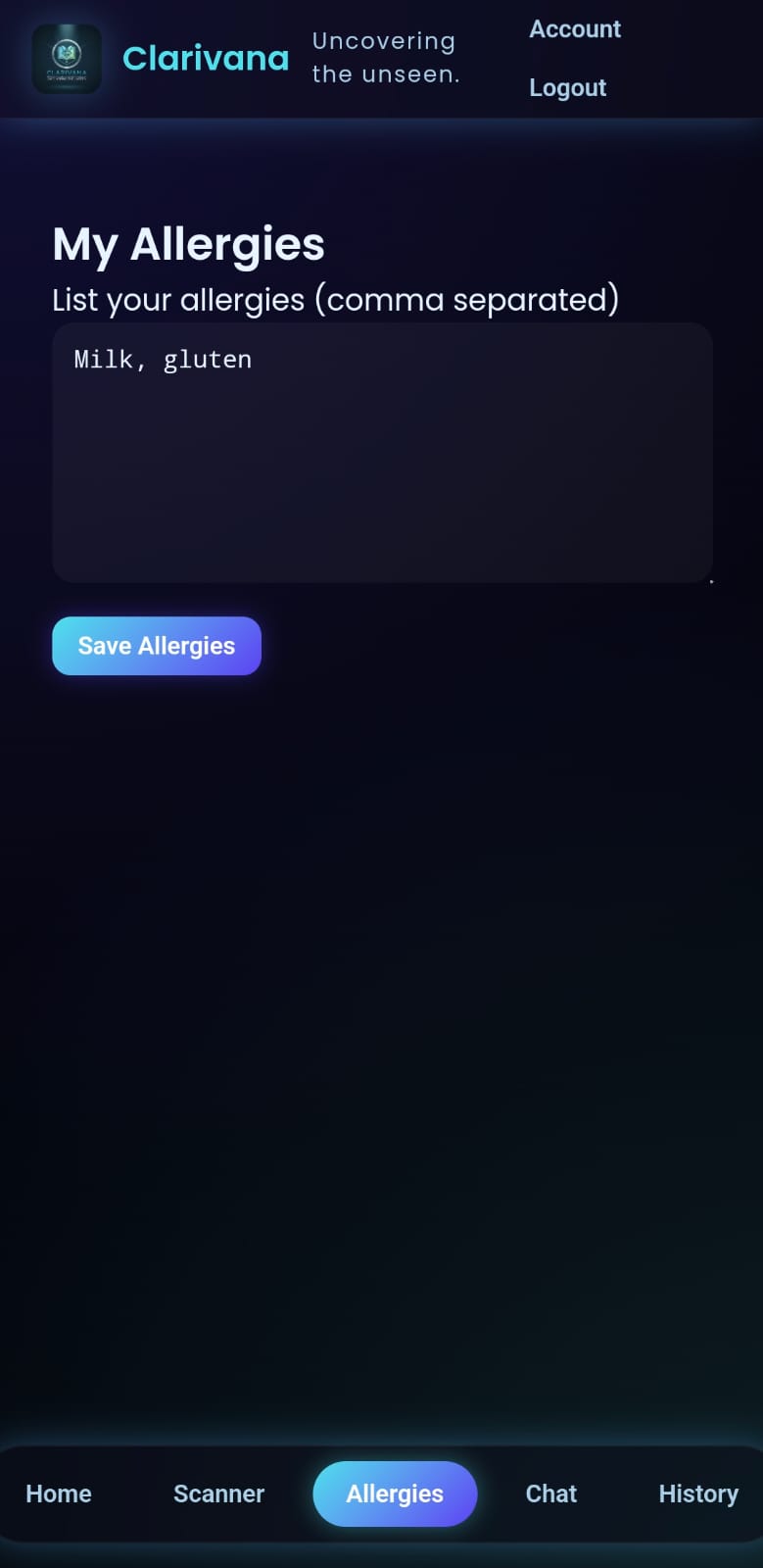
Edit and save your allergies
-
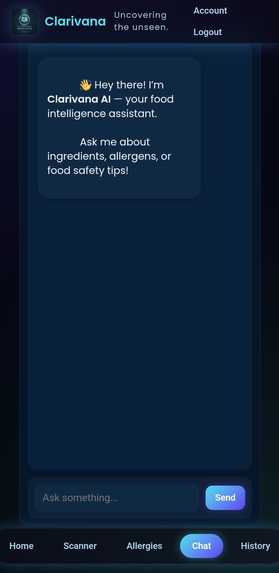
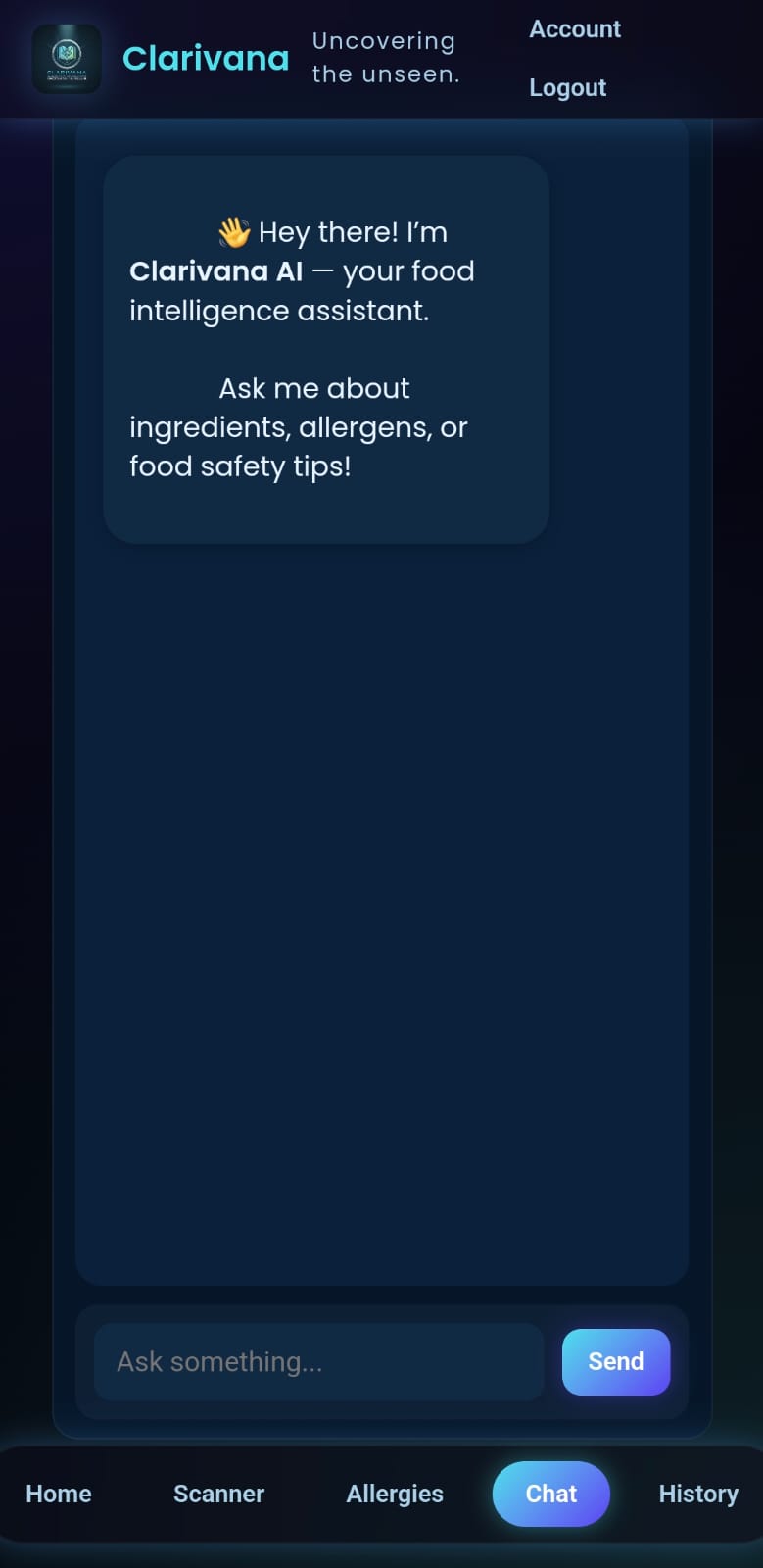
Chat with Clarivana AI



Inspiration
It all began with a simple visit to the grocery store. One of us picked up a pack of “sugar-free” biscuits that looked perfectly healthy. When we turned it around, the ingredients read: aspartame, sucralose, sodium benzoate. These words sounded more like chemical formulas than food components. After looking them up, we were surprised to learn that some of these additives have been linked to potential health risks such as migraines, obesity, and metabolic disorders.
That experience made us realize how difficult it is for ordinary consumers to understand what they are eating. We asked ourselves a simple question: Why should something as basic as eating healthy be so confusing? From that question, Clarivana was born.
What it does
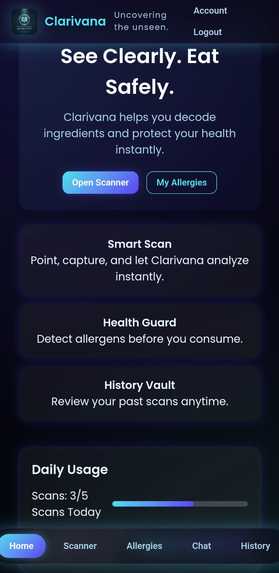
Clarivana is a web-based application that helps users identify harmful ingredients in packaged food. By scanning the label on a product, the app detects potentially harmful chemicals, explains their effects, and recommends safer alternatives.
In short, Clarivana makes food labels understandable to everyone and empowers people to make informed choices about what they eat.
How we built it
We built Clarivana using HTML, CSS, and JavaScript. For text extraction, we integrated the Tesseract.js library, which performs Optical Character Recognition (OCR) directly in the browser. The extracted text is then analyzed by our custom algorithm, Clarivana Smart OCR – Adaptive Ingredient Detection v2.1, which compares the ingredients against a curated database of harmful additives and preservatives.
Our database was created using information from global health and food safety sources. The interface design follows a clean and minimal approach, keeping the focus on clarity and usability.
Challenges we ran into
The first major challenge was achieving accurate text extraction from labels with poor lighting or complex backgrounds. Another issue was handling different ways of writing the same ingredient, such as “E951” and “Aspartame.” We also faced difficulties creating a smooth user interface that feels professional while remaining lightweight. Finally, balancing scientific accuracy with user-friendly explanations required several rounds of refinement.
Accomplishments that we're proud of
We managed to create a functional real-time ingredient scanner that works entirely in the browser. The adaptive detection system recognizes ingredient variations, making it much smarter than a simple keyword search. We also designed a visually appealing and easy-to-use interface that clearly communicates health information. Most importantly, we built something that can genuinely help people make healthier decisions in their everyday lives.
What we learned
Through this project, we learned how to integrate OCR with JavaScript effectively and how to manage data processing in a browser environment. We also understood the importance of user experience design and how small UI choices can influence user trust. Beyond the technical aspects, we learned the value of teamwork, iteration, and testing with real users to refine both design and accuracy.
What's next for Clarivana
Our next steps include integrating barcode and QR code scanning for faster detection, expanding our database to include region-specific ingredient regulations, and adding an AI-powered health risk score for each product. We also plan to develop a mobile version of Clarivana and collaborate with nutrition experts to keep the information credible and updated.
Our long-term goal is simple: to make food transparency accessible to everyone, everywhere.
Tagline: Clarivana — Uncovering the Unseen.


Log in or sign up for Devpost to join the conversation.