-
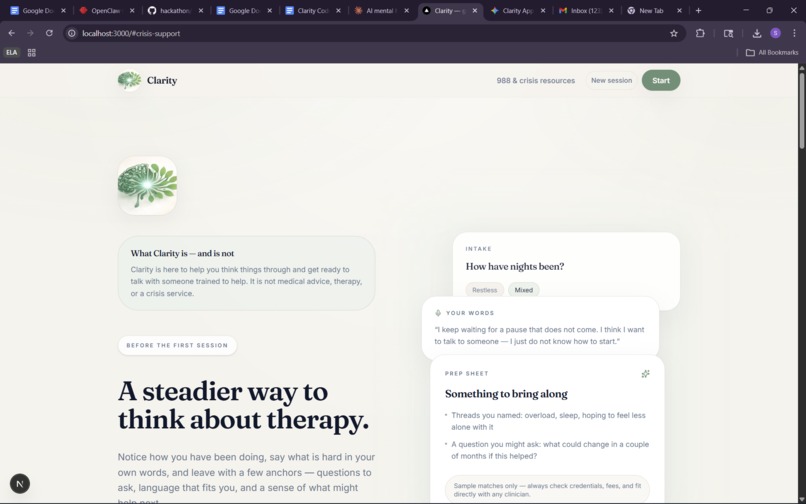
landing page, everything else will be covered in presentation
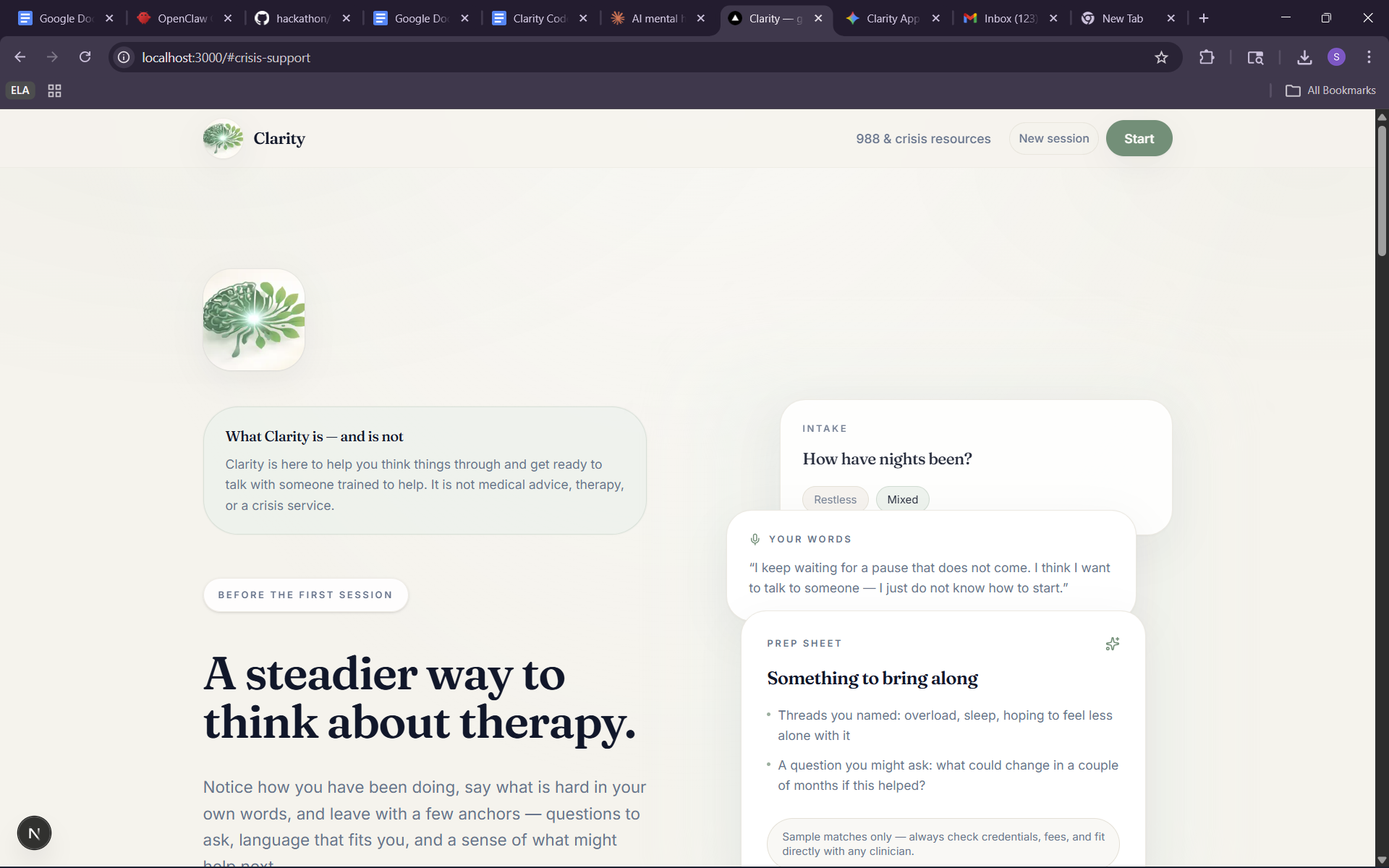
XX Inspiration: As juniors, we face intense pressure from school, college apps, extracurriculars, and family expectations. One of our close friends struggled with this stress, which took a serious toll on his mental health and led him to unhealthy coping methods. Seeing this made us realize how hard it is to take the first step toward getting help. That’s why we created Clarity, to make that step easier and more accessible.
XX What it does: Clarity helps users recognize when they may be struggling by tracking patterns like mood, sleep, and screen time. It offers personalized, low-friction suggestions first, then gradually encourages professional help if needed. What makes it unique is that it prepares users for therapy by organizing their thoughts and identifying key concerns. It also matches users with therapists using clear, explainable criteria.
XX How we built it: We built Clarity using Next.js, React, TypeScript, and Tailwind CSS. The platform guides users through a step-by-step flow, starting with a brain dump and ending with a therapy prep sheet. We used AI to turn unstructured thoughts into meaningful insights and recommendations. A centralized state system allows all steps to connect smoothly without needing a full backend.
XX Challenges we ran into: One challenge was balancing simplicity with collecting enough meaningful data. We also had to make AI outputs consistent and reliable, adding fallback systems when needed. Another challenge was building trust, especially with sensitive mental health data. We solved this by making our recommendations transparent and easy to understand.
XX Accomplishments that we're proud of: We’re proud of creating a smooth, supportive user experience from start to finish. The transition from a simple brain dump to a structured therapy prep sheet works seamlessly. We also built an explainable therapist matching system instead of a “black box.” Most importantly, we created something that could genuinely help people like our friend.
XX What we learned: We learned that mental health solutions need to be human-centered, not just technically strong. We gained experience designing intuitive user flows and working with AI responsibly. We also learned how to turn a real-world problem into a functional product. This project showed us the importance of empathy in technology.
XX What's next for Clarity: Next, we want to connect Clarity to real therapist databases and expand its features. We plan to add ongoing tracking and more personalized insights over time. We also want to build a mobile version for easier access. Our goal is to make mental health support simple, accessible, and actionable for everyone.
Built With
- next.js
- react
- tailwindcss
- typescript


Log in or sign up for Devpost to join the conversation.