-
-
Clarity's Mission Statement
-
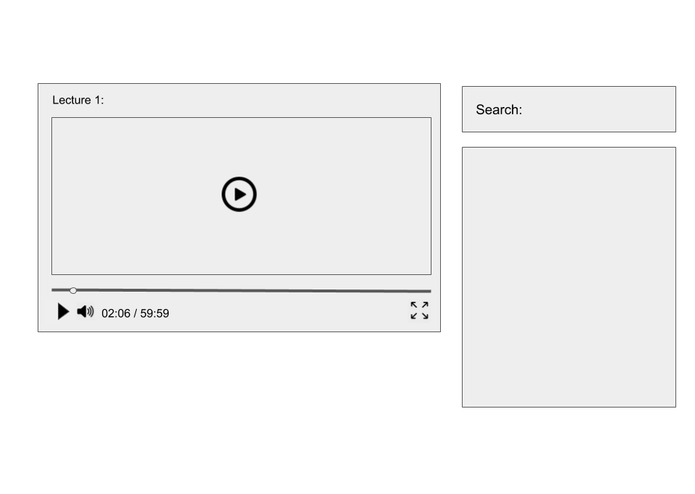
Layout
-
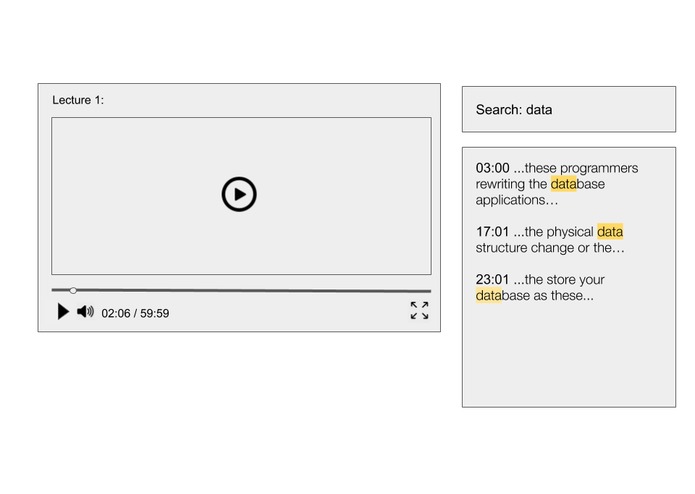
Searching for Keywords Functionality
-
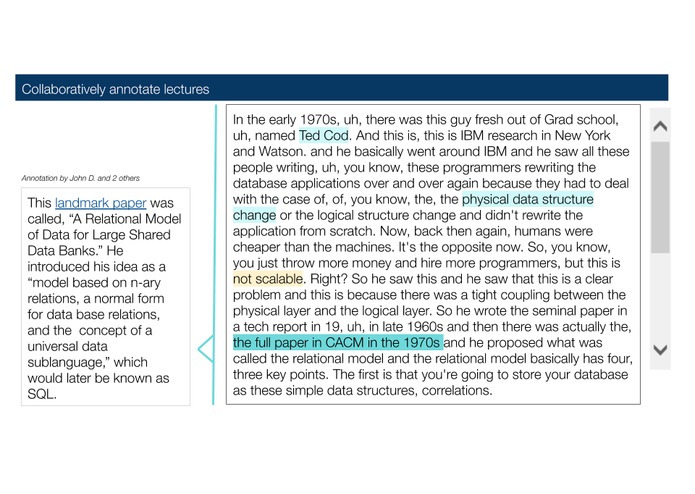
Comment Section of Transcript
-
Comment Section of Transcript (example with picture)
-
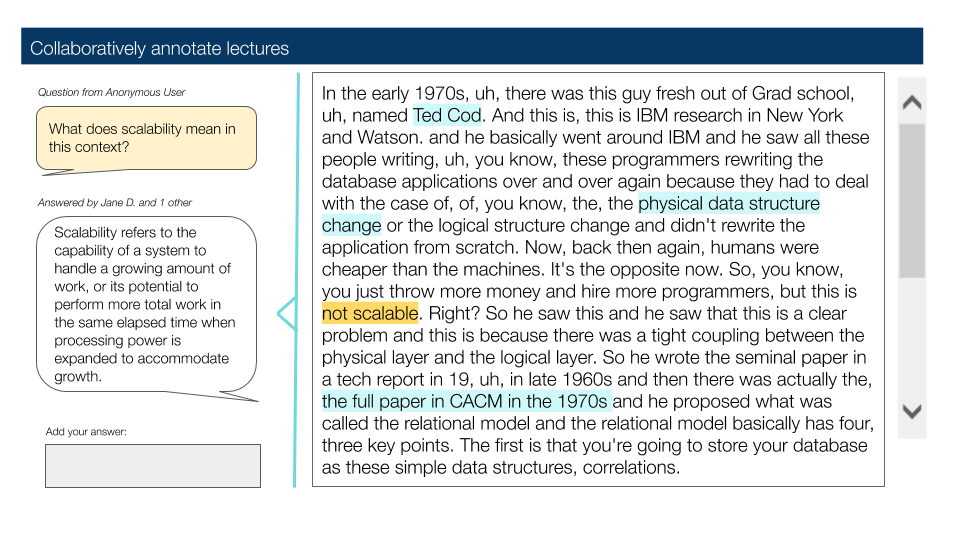
Collaborative Annotation Feature
-
Actual Website Design/MVP

Inspiration
Clarity equalizes the quality of education for differently-abled students by making lectures and discussions more easily understandable. Traditionally, students learn by taking notes from lecture and watching videos of lectures. However, many differently-abled students are unable to learn to their full extent due to an absence of proper accommodations. It’s estimated that one in five students has a language-based learning disability, the most common of which is dyslexia. These disabilities can make learning more stressful because processing the lecture and taking notes simultaneously can be challenging. In addition, many visually impaired or blind students need to record lecture videos to review them later, but current speech-to-text services provide transcripts that aren’t always accurate and are extremely time-consuming to search through for relevant information.
An estimated 85-90% of students with disabilities are able to meet the same graduation standards as all other students as long as if they receive the appropriate instruction and proper arrangements. Yet, there was only a 67.1% graduation rate in 2017 for students with disabilities. A similar trend is also seen in students that miss more school (absenteeism) due to chronic illness. Because disabilities like these can make the regular classroom learning experience more difficult and time-consuming, we developed Clarity as the liaison to bridge this educational gap and ensure equal access to higher education for everyone.
Having reliable transcriptions allows students to focus on absorbing lecture material or engaging in class discussions rather than rushing to write notes that are hard to understand and study from later. In addition, for students who are unable to come to class like those with chronic illnesses, clear transcripts with accurate speaker identification ensure that students feel like they haven’t missed any information in discussion sections or lectures.
What it does
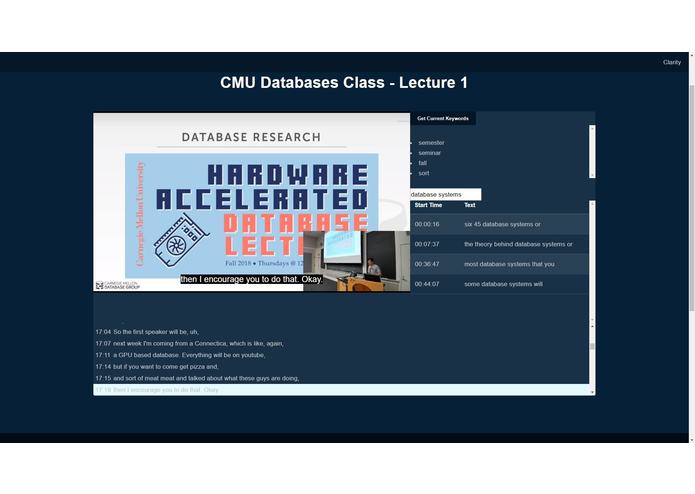
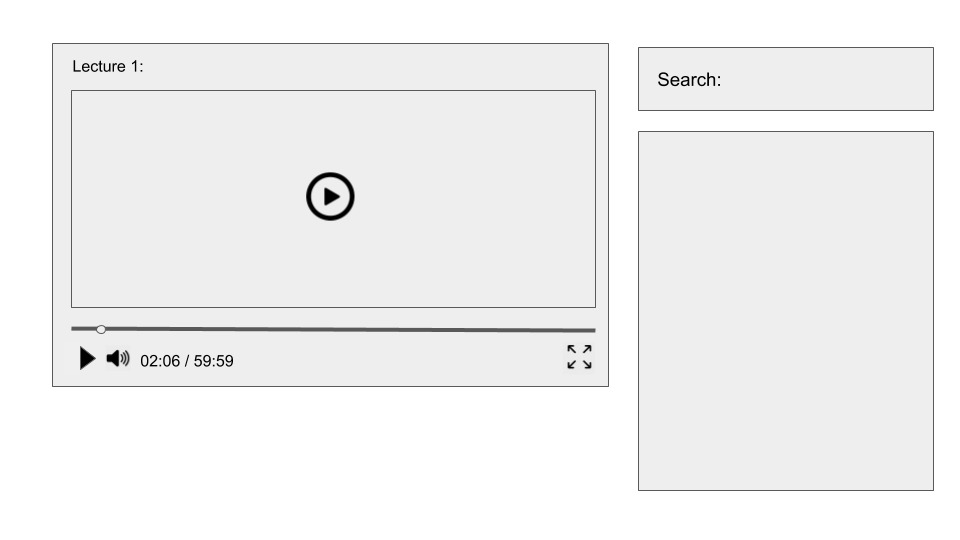
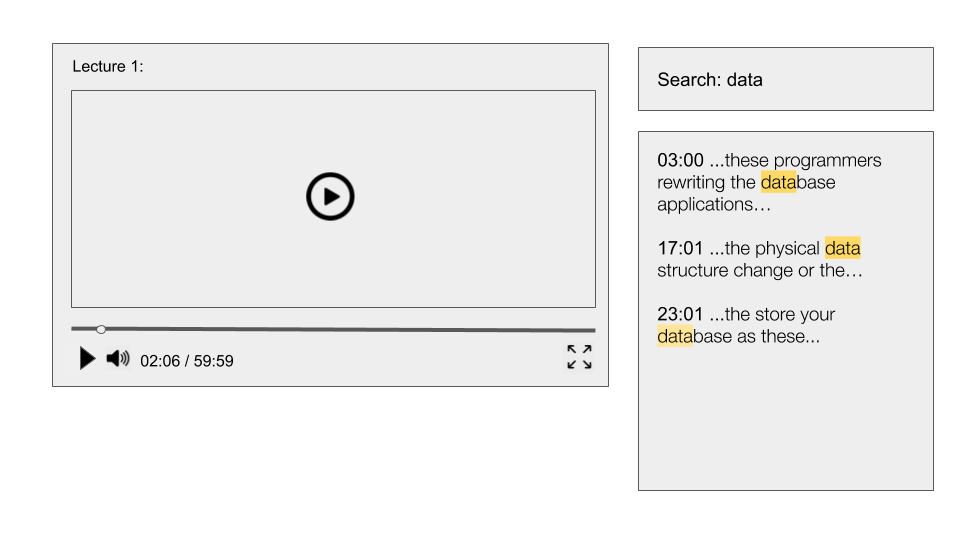
Clarity uses Rev.ai’s speech-to-text API to translate lectures into accurate transcripts that students can easily search and eventually use to collaborate. The transcript progresses in real-time with videos of lectures, so students can easily follow along. There are time-stamps associated with the transcript, so it’s easy to search through transcripts to find out when the professor was talking about a certain concept. Clarity also allows students to search for recurring instances of keywords that the professor is currently talking about in order to quickly jump to relevant parts of the lecture when the professor references the concept again.
How we built it
We utilized modern HTML5 features, including the HTML5 web video player, using the video/js library. We handled captioning internally, by using the textTrack feature of videoJS, and all front end features are written in HTML/CSS/JS. We used Rev.AI for our transcription service. They return a really useful json output which not only includes the accurate transcription of our video but also identifies different speakers and confidence intervals on all the transcriptions. We use cortical API for sentiment analysis and extracting keywords.
Challenges we ran into
Our team primarily faced challenges when learning how to use Node.JS and the Express JS framework. Since we came in with no knowledge of the subject, we had to learn all of the tooling and methods while also exploring the various API’s that we utilized for the project. Overall, it was a lot of on the fly learning and trial/error to get the MVP up and running.
Accomplishments that we're proud of
We were able to pick up new frameworks and languages while also leaving enough time to actually use those tools to create a MVP of our app. We implemented the key features we were looking for, and having finished those, were able to spec out bigger future features. We also learned how to use various APIs, including the Rev.AI API which provided incredibly accurate text to speech, as well as numerous other features, and the cortical API, which provided sentiment analysis.
What we learned
Node js/Express.js
Javascript
Rev.AI API usage/Rev in general, for transcription
Cortical API
HTML/CSS
What's next for Clarity
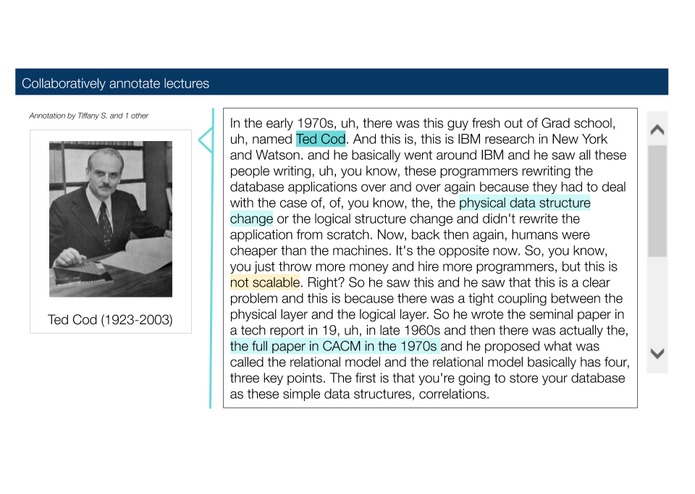
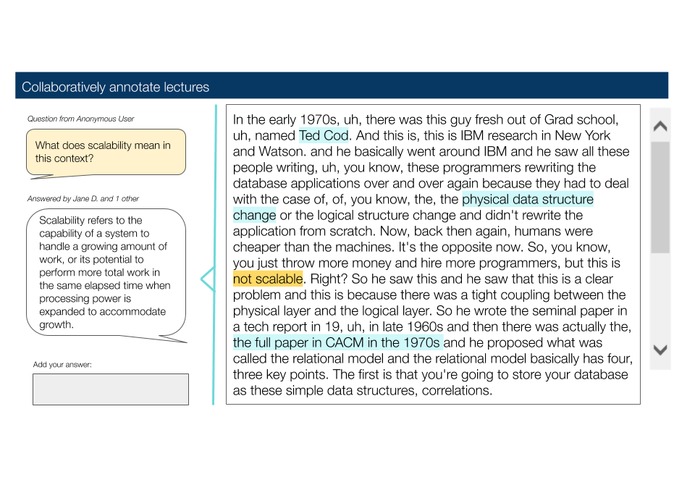
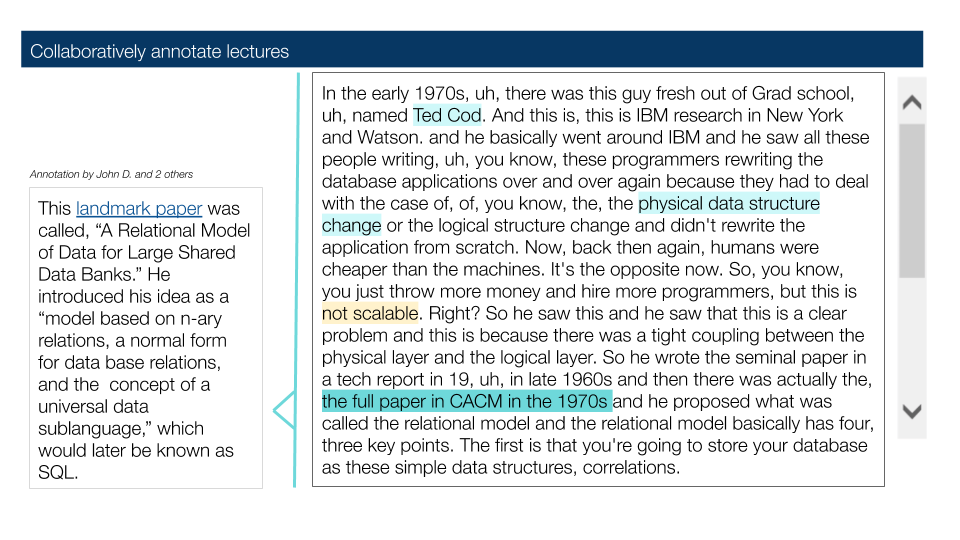
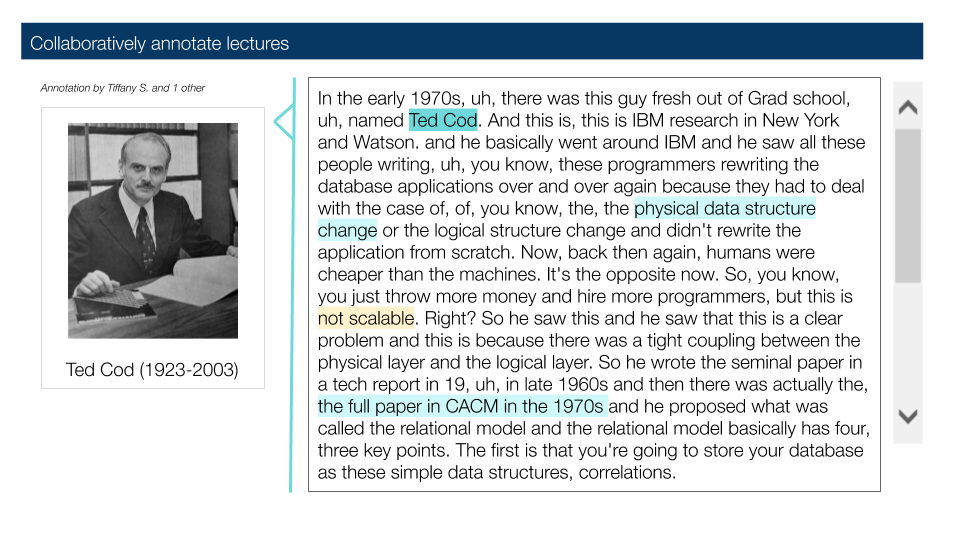
The next step for Clarity would be to make our service more collaborative. In the future, students would be able to select excerpts from transcripts as a starting point for building their own notes. Students would also be able to collaborate more easily with classmates by annotating (or correcting) transcript excerpts with questions about concepts that other students could answer or comment on. In addition, students can use Clarity to identify and mark key terms and topics within the lecture to focus on studying weaker areas of understanding. These features will help Clarity make learning more active, collaborative, and rewarding for all students.
Log in or sign up for Devpost to join the conversation.