-
-

Clarity Logo
-
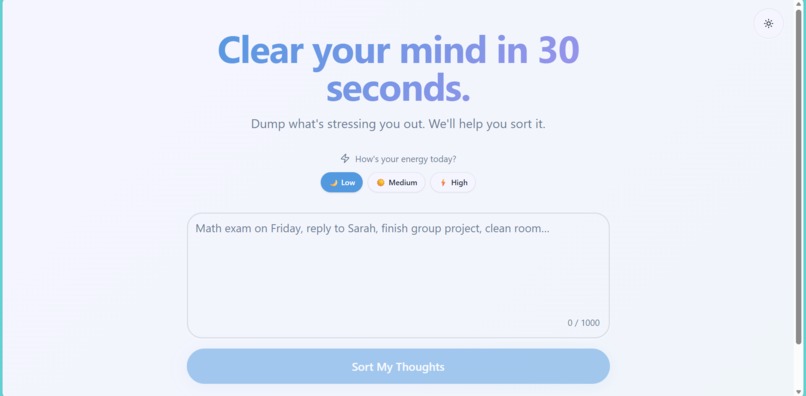
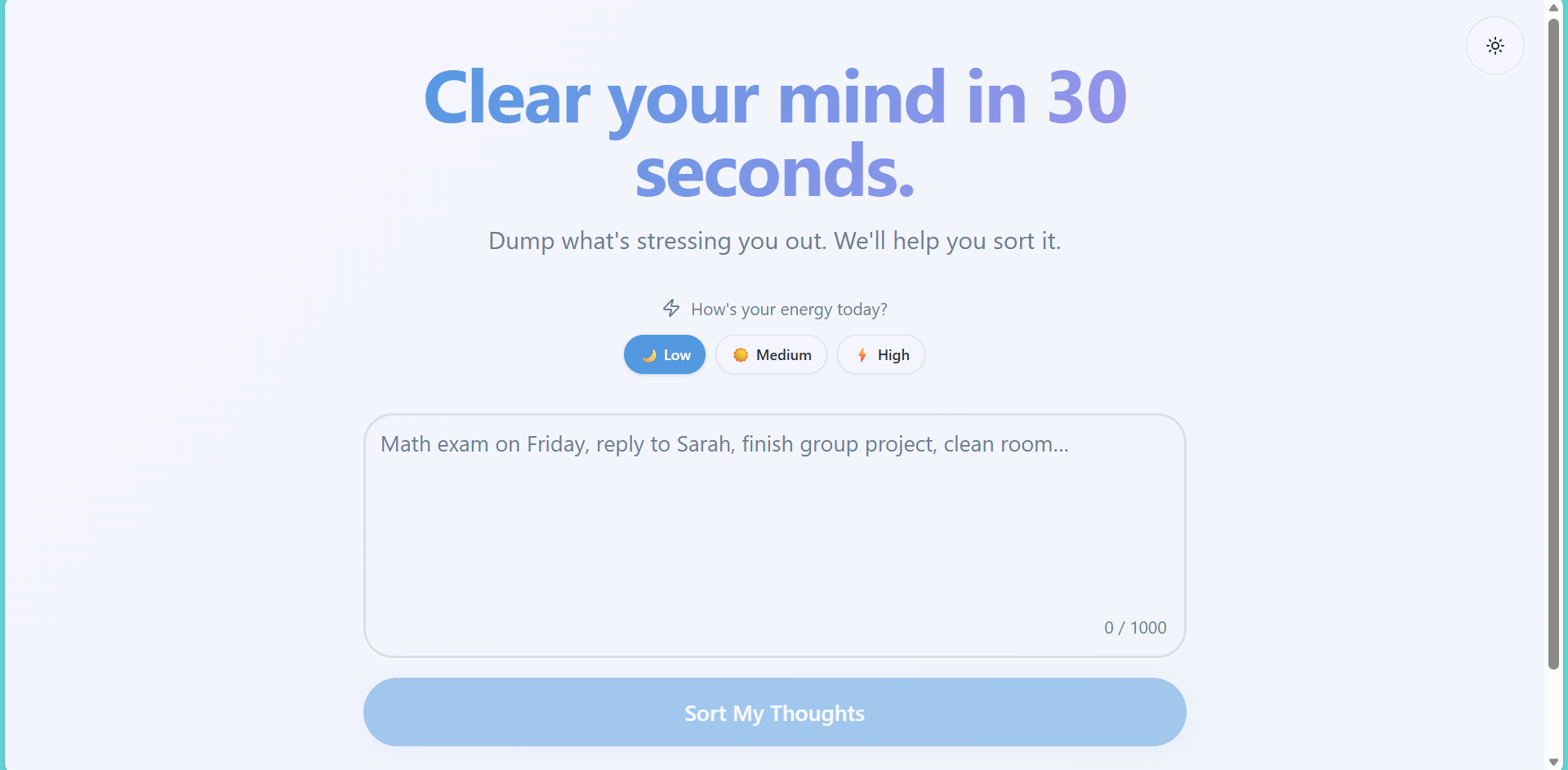
Landing Page
-
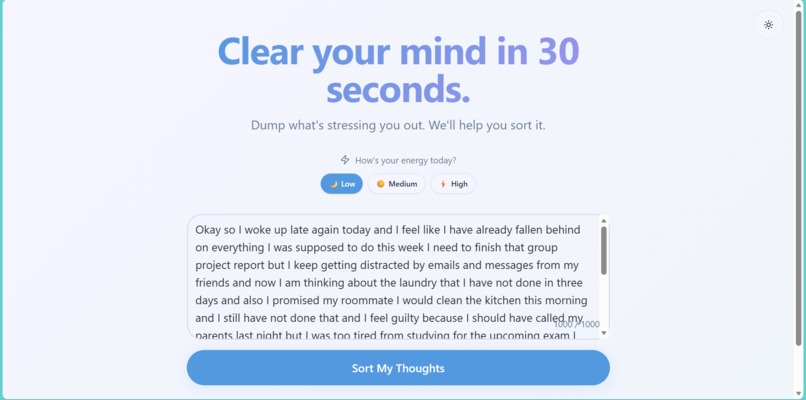
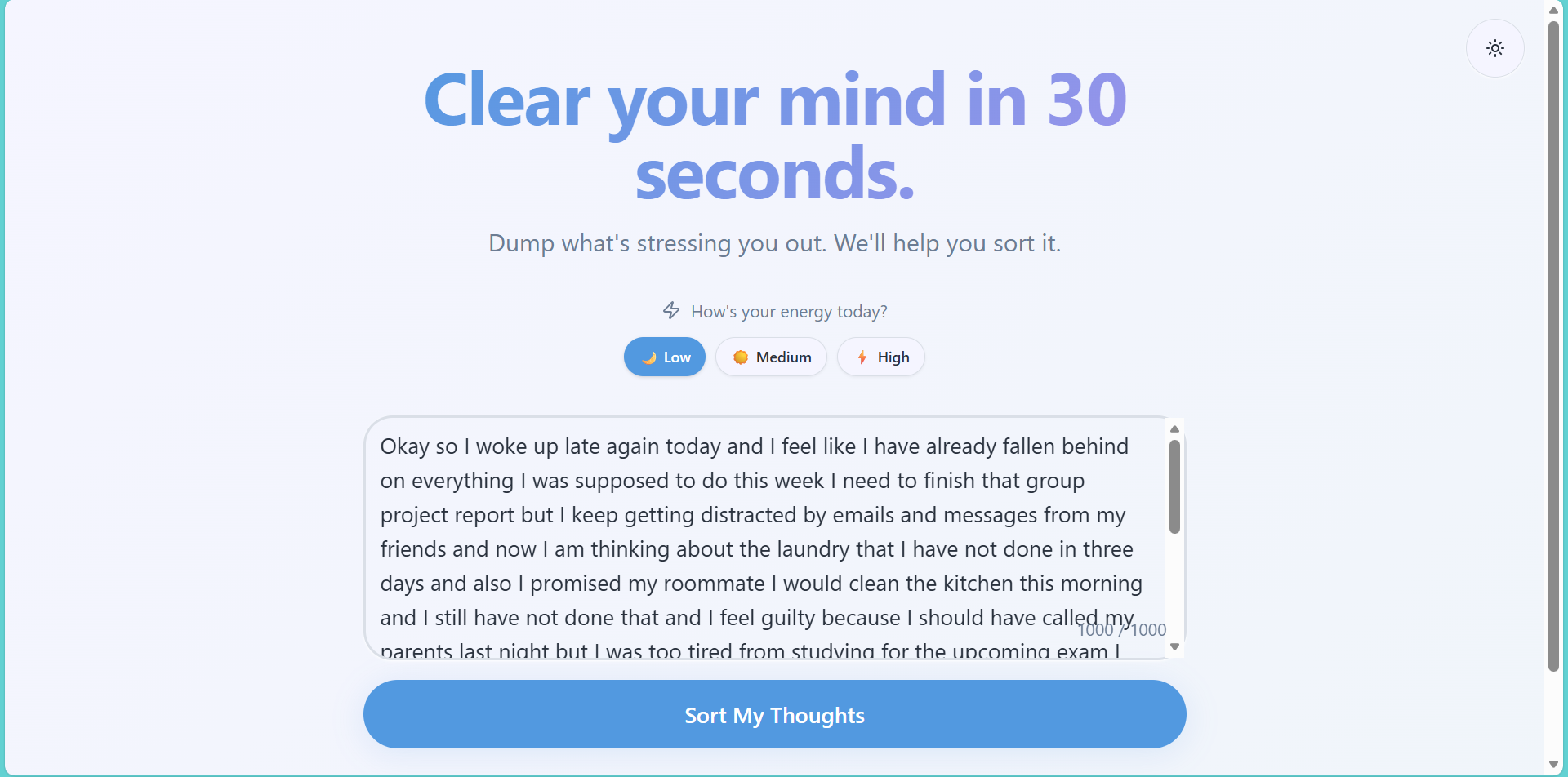
Landing Page with Sample Input
-
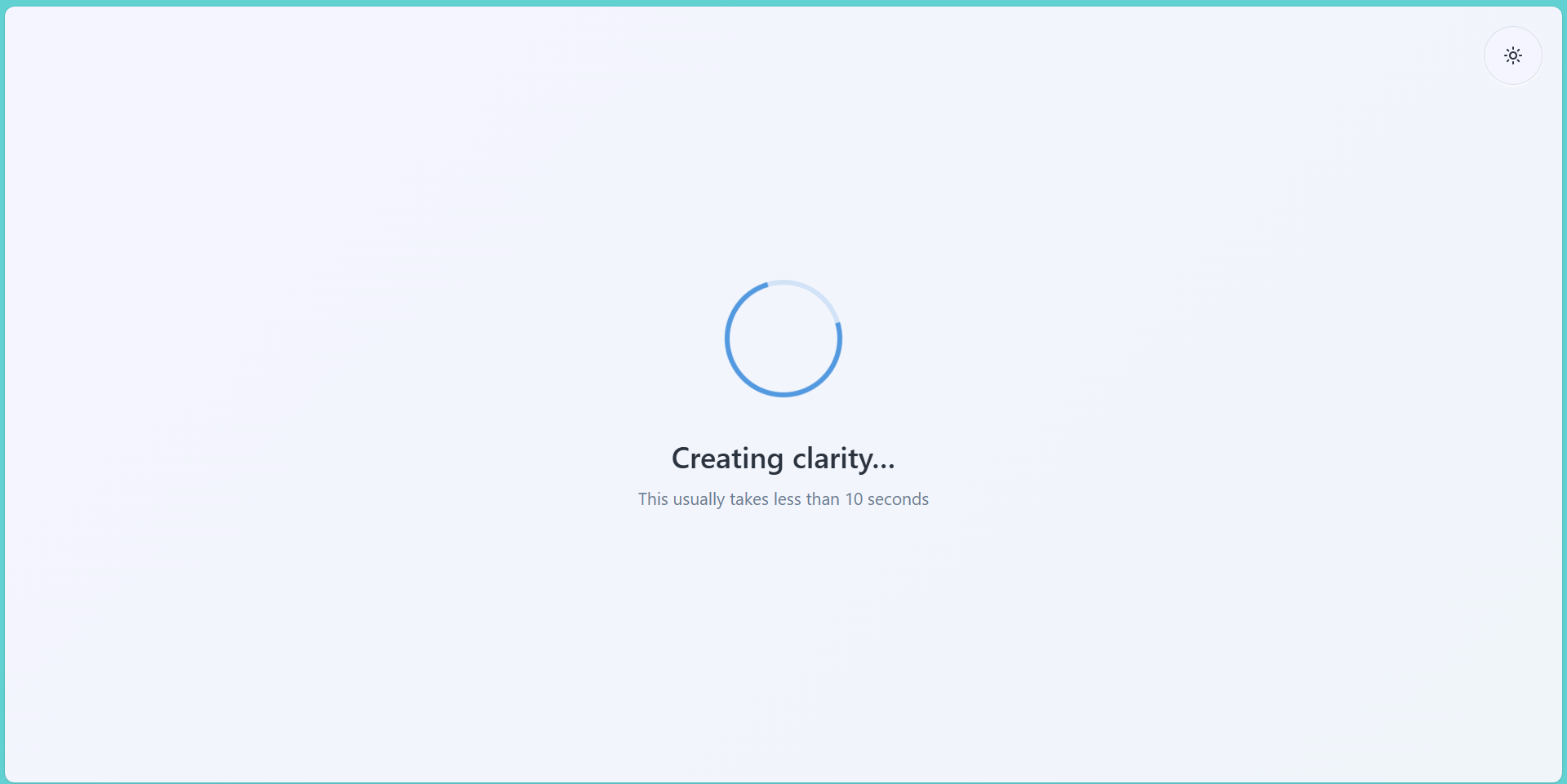
Loading Screen
-
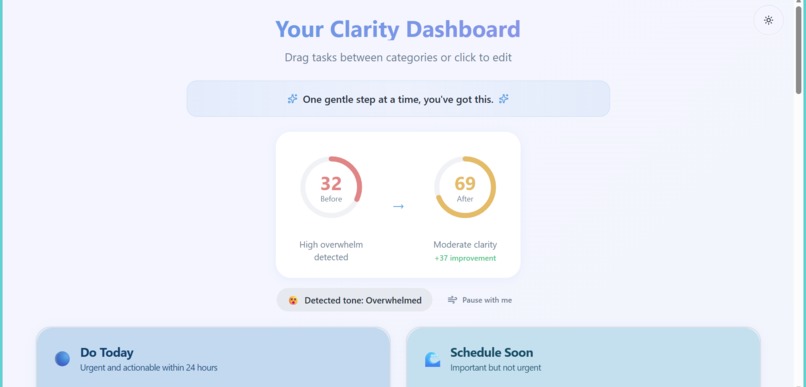
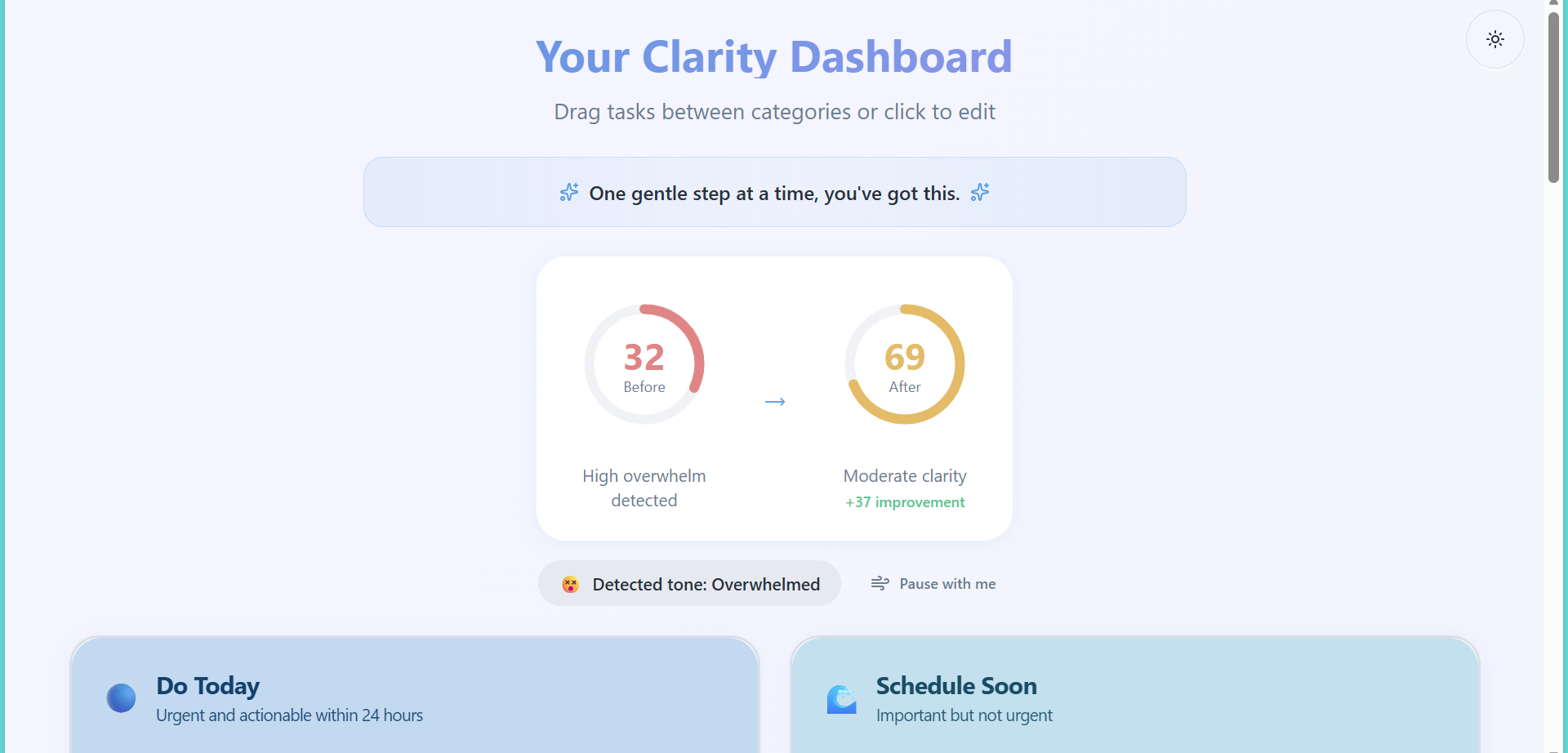
Dashboard (Light Mode)
-
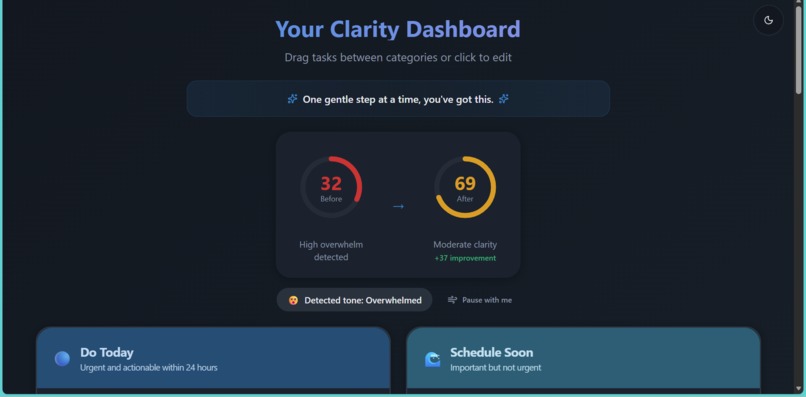
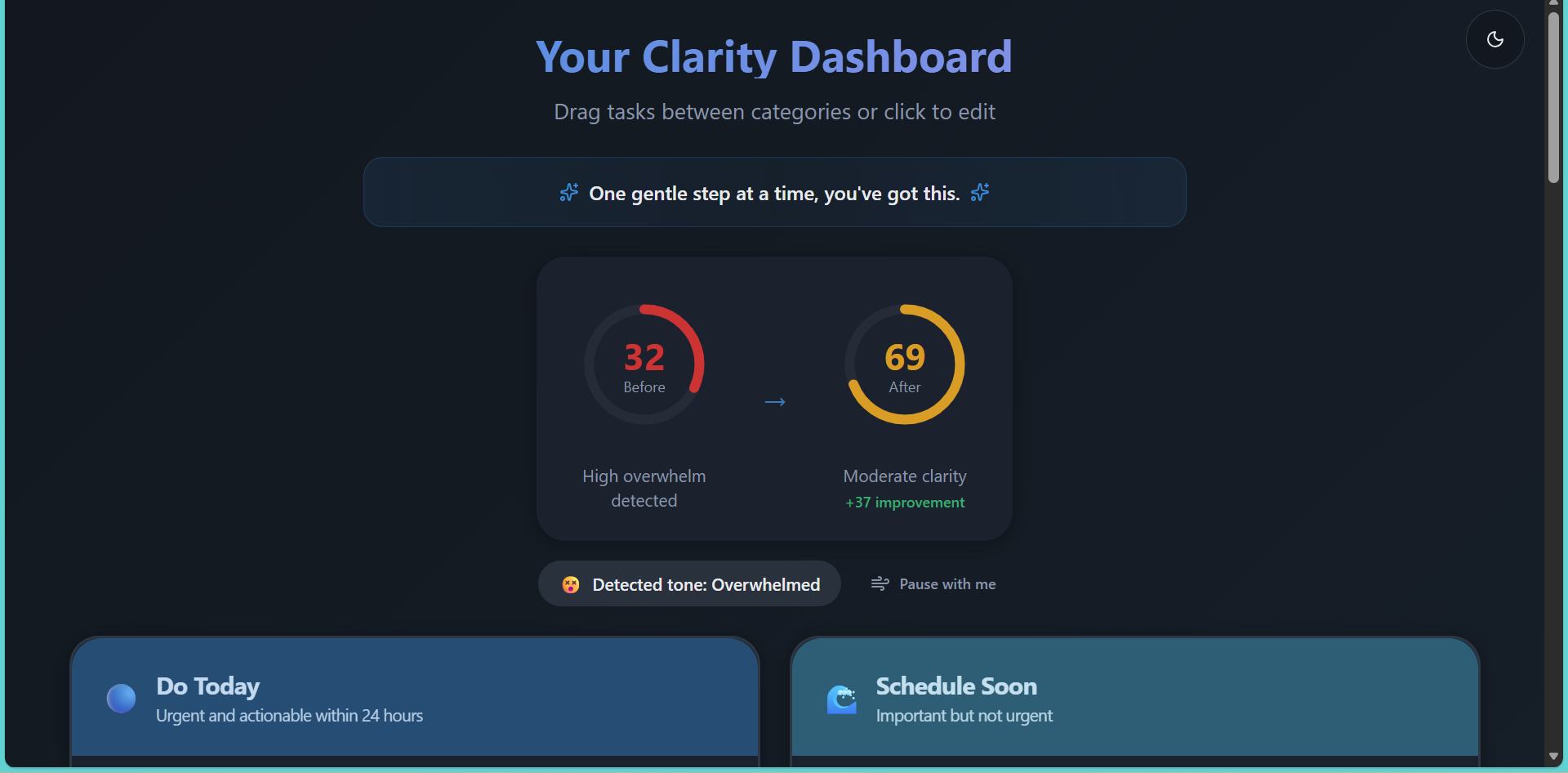
Dashboard (Dark Mode)
-
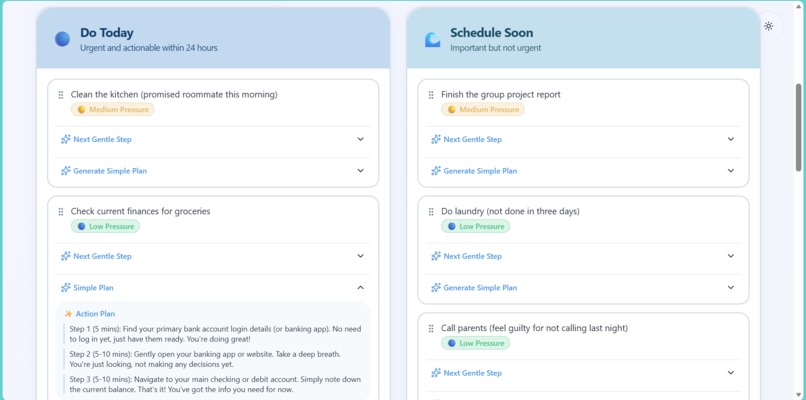
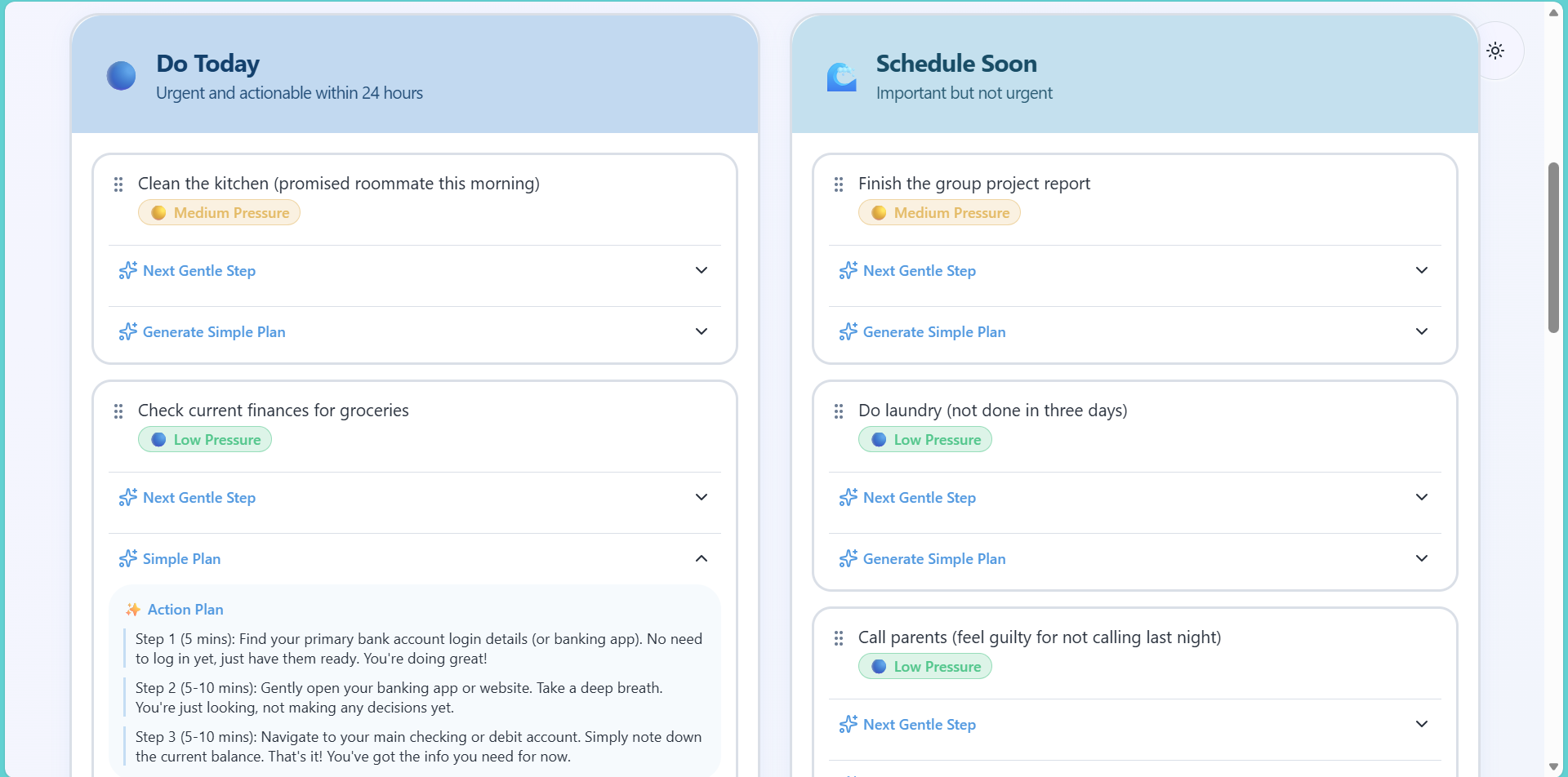
"Do Today" and "Schedule Soon" Quadrants
-
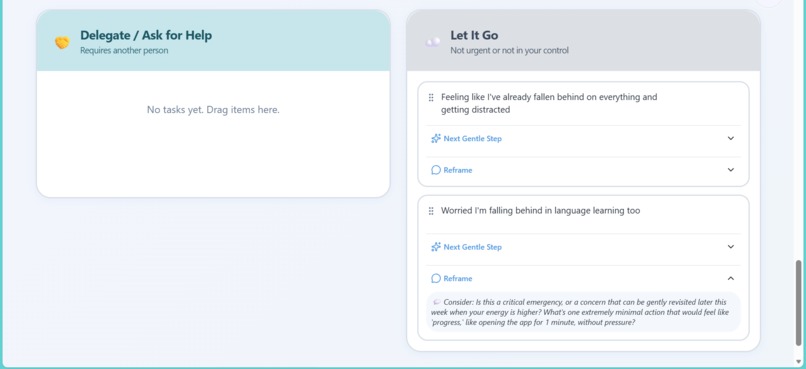
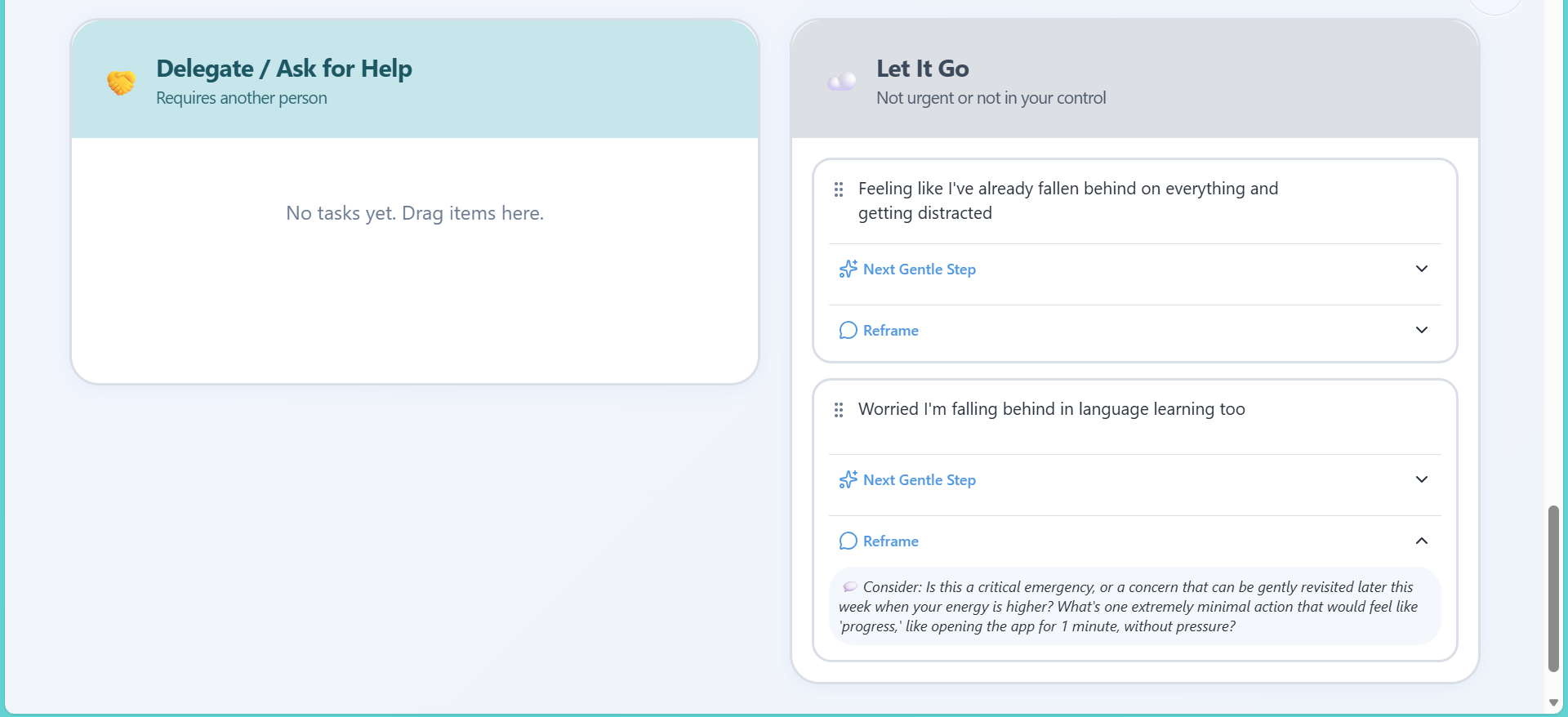
"Delegate / Ask for Help" and "Let It Go" Quadrants
-
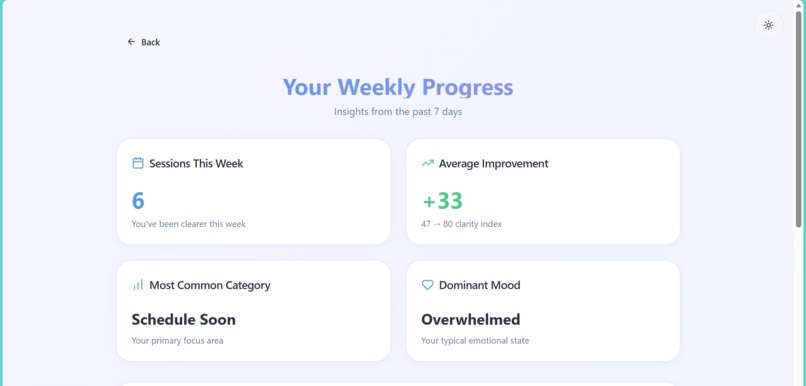
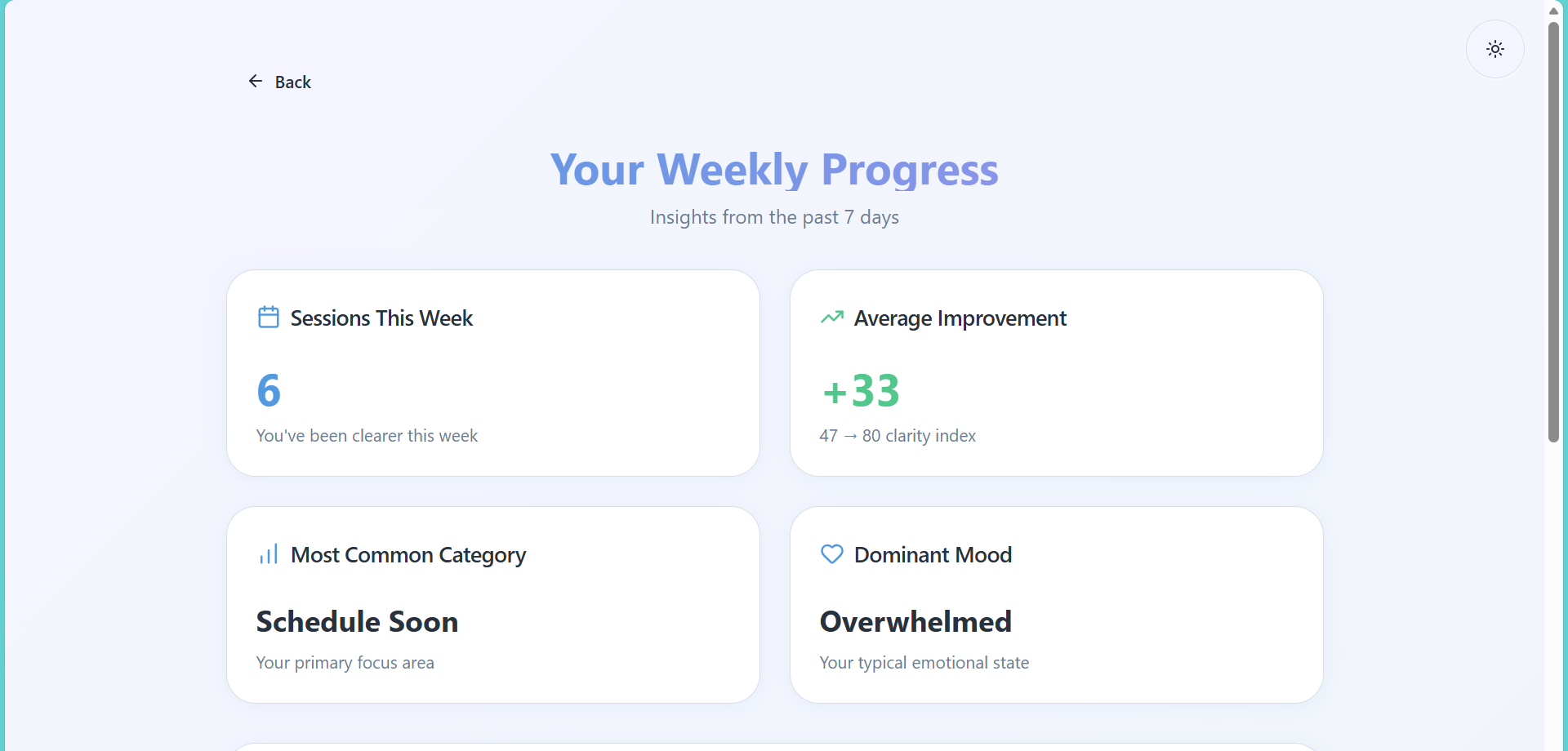
Weekly Progress Page
-
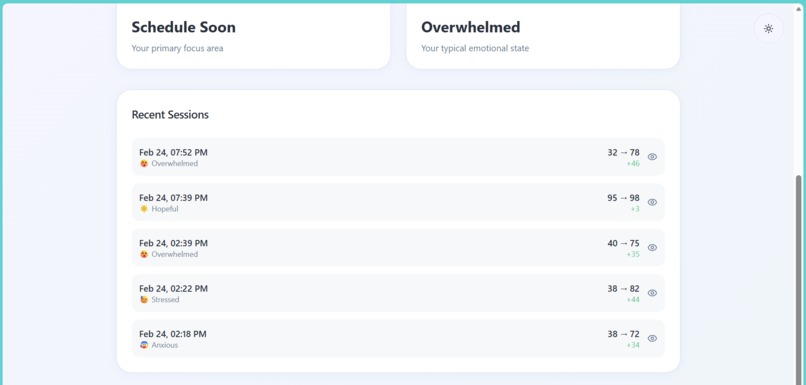
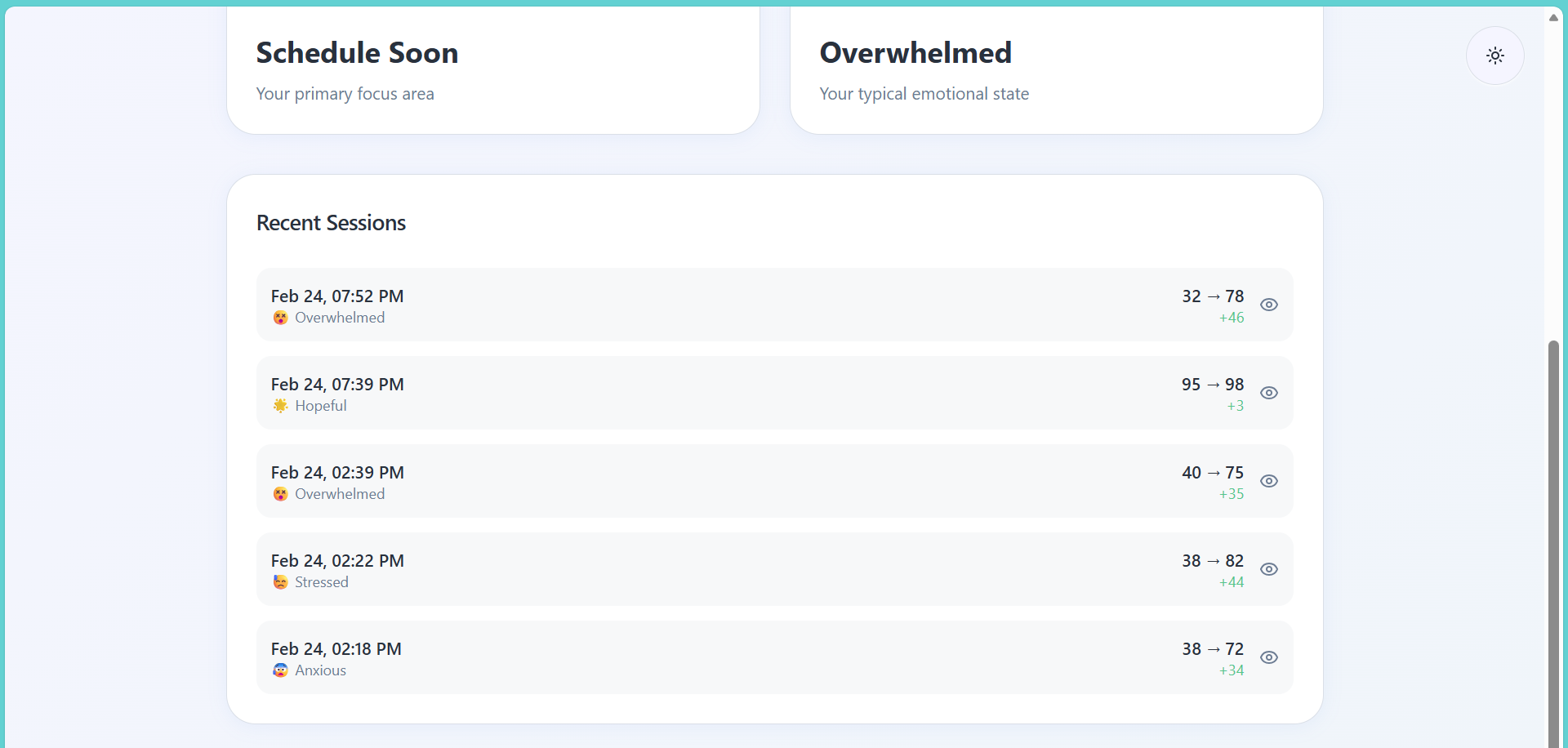
History

Clarity
An AI-Powered Overwhelm Reset Companion
💡 Inspiration
Clarity was inspired by a simple but persistent problem: cognitive overload.
Students and young professionals frequently experience a buildup of unfinished tasks, academic pressure, professional expectations, and emotional concerns. Traditional productivity systems require structure, categorization, and maintenance. When someone is already overwhelmed, organizing tasks becomes an additional burden.
The goal of Clarity was to reduce friction instead of adding to it. Rather than asking users to manage a system, Clarity allows them to write freely. The system handles the structure.
The guiding question: How can artificial intelligence reduce mental clutter in under 30 seconds?
❓ The Problem
Overwhelm is not merely a scheduling issue. It is a cognitive load issue.
When responsibilities accumulate, the brain attempts to track everything simultaneously. This increases anxiety, reduces focus, and encourages avoidance. This can be modeled conceptually as:
$$ Cognitive\ Load = \sum_{i=1}^{n} (Task\ Urgency_i + Emotional\ Weight_i) $$
As unresolved items increase, perceived stress increases nonlinearly. Most productivity tools assume users are already organized. However, the moment of overwhelm is precisely when structured input is most difficult. Clarity addresses this gap.
🛠️ How It Works
Clarity transforms unstructured thought into structured action.
Users paste a free-form "brain dump" into the interface. A Large Language Model (LLM) processes the input and returns structured JSON with categorized tasks:
- Do Today: Critical items for immediate focus.
- Schedule Soon: Important tasks for the near future.
- Delegate: Items that don't require your direct energy.
- Let It Go: Perspective reframing for low-priority worries.
The system also calculates a Clarity Index based on urgency distribution and emotional intensity.
✨ Why It Is Useful
Clarity lowers activation energy.
Traditional tools require manual task breakdown, categorization, and prioritization. Clarity removes those steps. This makes it valuable for:
- Students managing heavy deadlines.
- Early career professionals juggling multiple projects.
- Individuals experiencing decision fatigue.
The interaction takes under 30 seconds and produces immediate mental relief.
🏗️ How It Was Built
Clarity was built using a modern stack focused on speed and reliability:
- Platform: MeDo (No-code AI builder platform)
- AI Engine: LLM API with structured prompt engineering
- Frontend: HTML5, CSS3, JavaScript, TypeScript
- Data Handling: Secure JSON structured response rendering
Architecture Flow
- Input: User input is collected through a minimalist interface.
- Analysis: The input is sent to an LLM with specific instructions for JSON formatting.
- Structuring: The LLM returns categorized data (tasks, mood, index).
- Rendering: The frontend dynamically generates visual cards based on the response.
🧠 What I Learned
- Prompt Engineering: How to ensure reliable structured JSON output from non-deterministic models.
- UX for Wellbeing: Designing AI systems that feel supportive and empathetic rather than clinical.
- Latency Management: The importance of keeping response times low to maintain a "30-second reset" promise.
🚧 Challenges Faced
- Structured Output Reliability: Iterative prompt refinement was needed to ensure the LLM never "broke" the UI with bad JSON formatting.
- Balancing Intelligence and Simplicity: Avoiding "feature creep" to maintain a minimalist, stress-free user experience.
- Ethical Framing: Ensuring the tool is framed as a productivity/clarity aid rather than a clinical mental health diagnostic tool.
🚀 Next Steps
- Cloud Storage: Cross-device access to previous sessions.
- Voice Input: Integration for hands-free "venting" sessions.
- Reflection Reports: Weekly AI-generated summaries highlighting behavioral patterns.
- Integrations: Exporting tasks directly to Google Calendar or Notion.


Log in or sign up for Devpost to join the conversation.