Inspiration
Most people sign leases, loans, and terms-of-service agreements without understanding what they're agreeing to. Legal language is dense by design, and a lawyer for a routine lease is out of reach for most renters. Clarity exists to close that specific gap not by replacing lawyers, but by making the everyday paperwork people actually sign legible before they sign it.
What it does
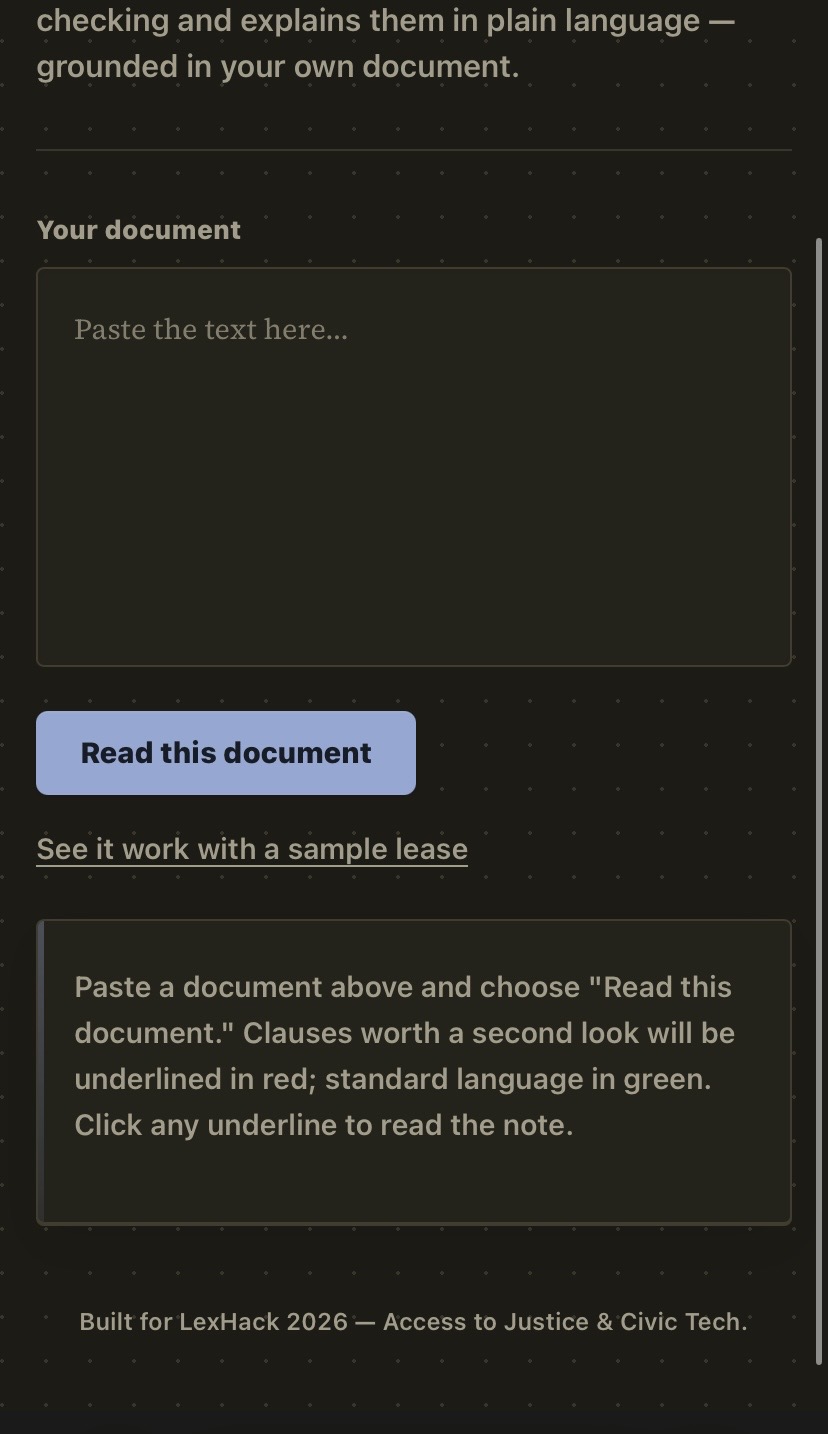
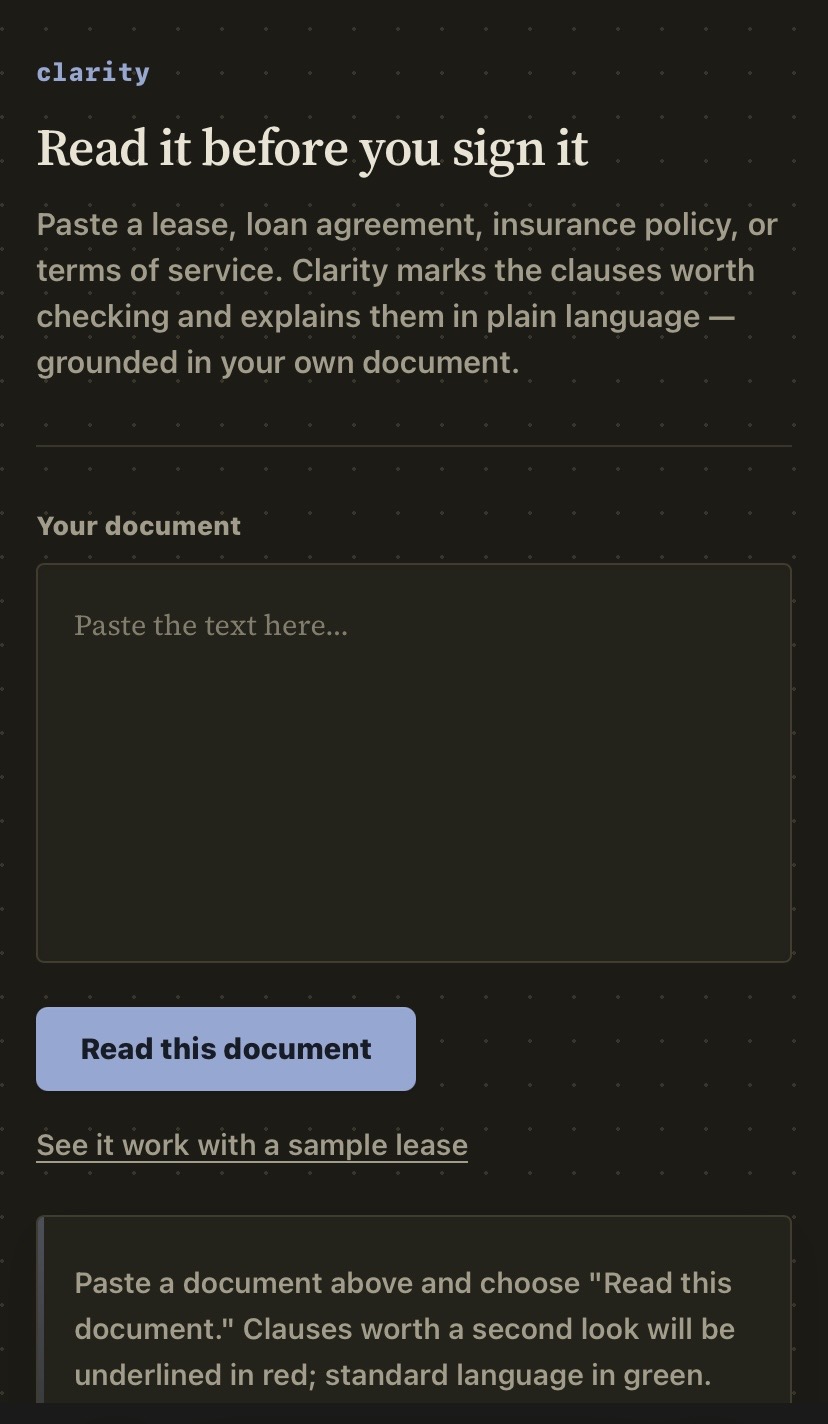
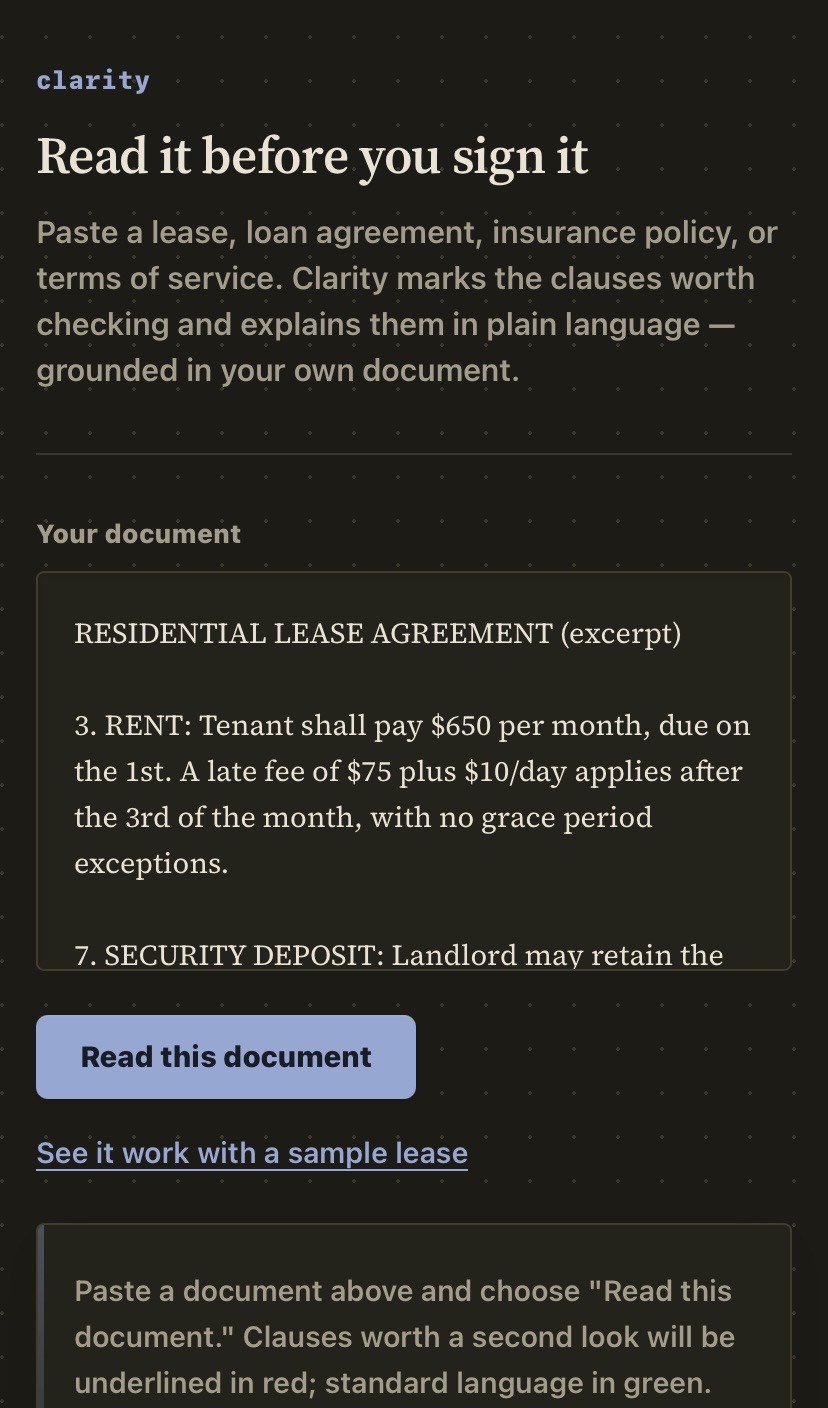
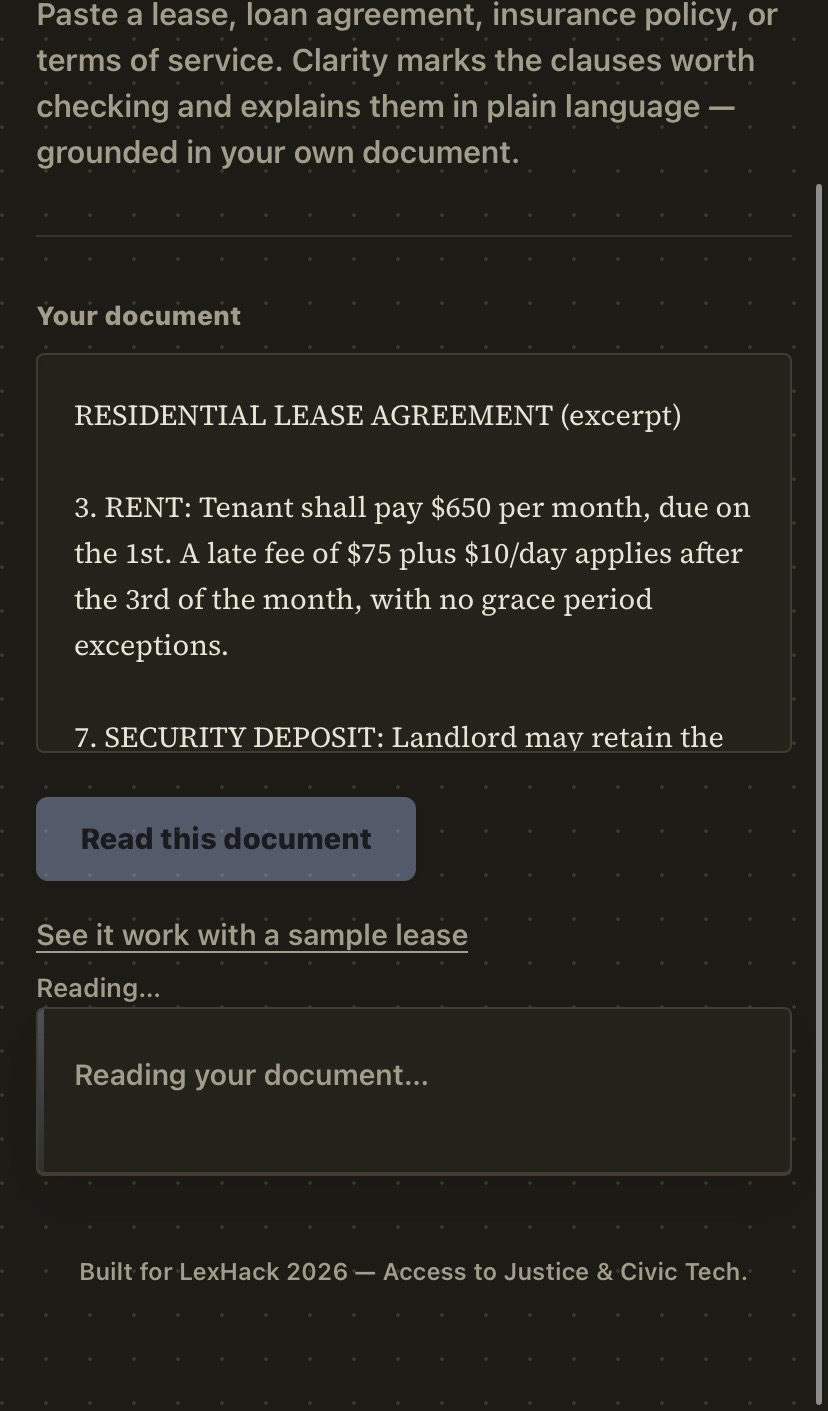
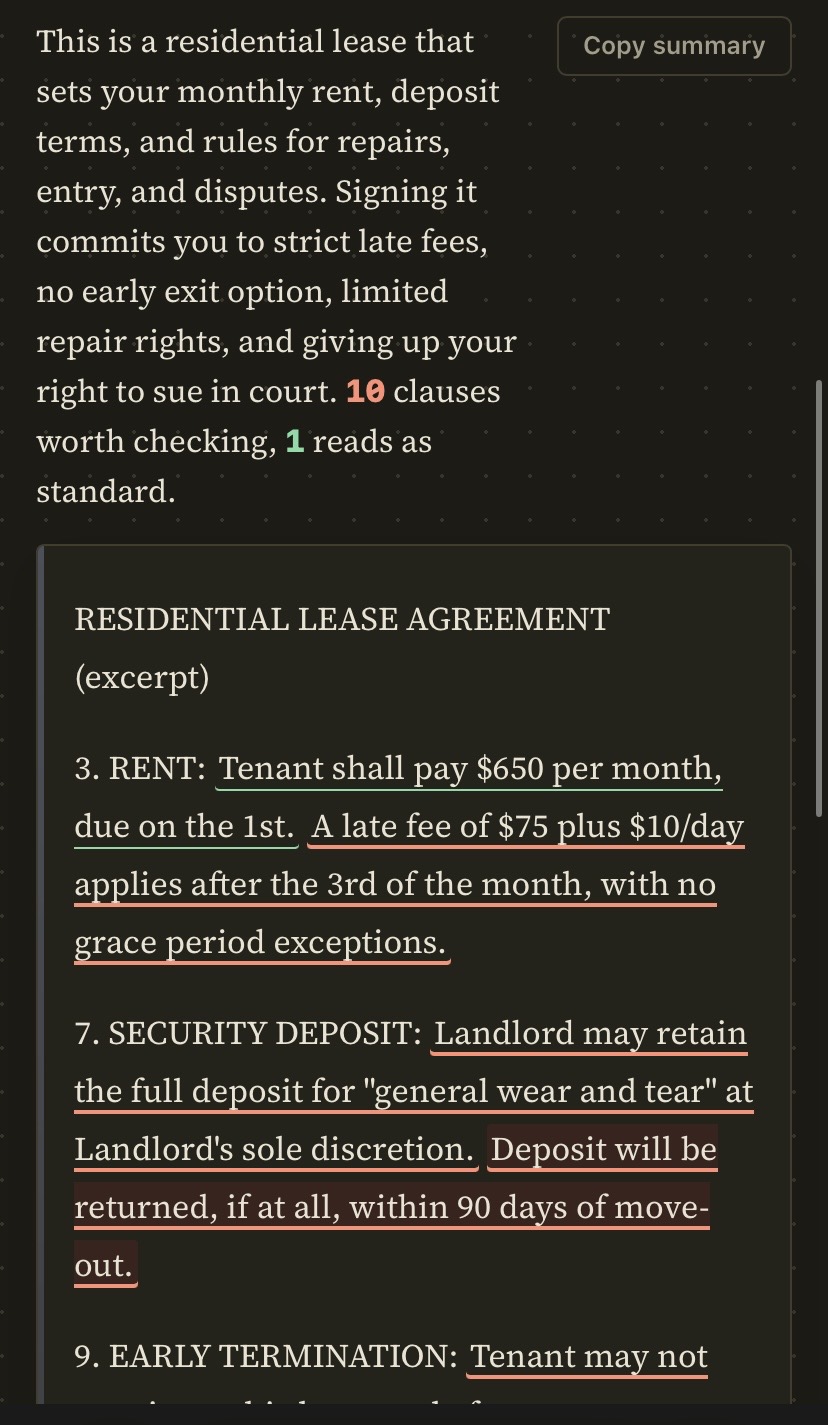
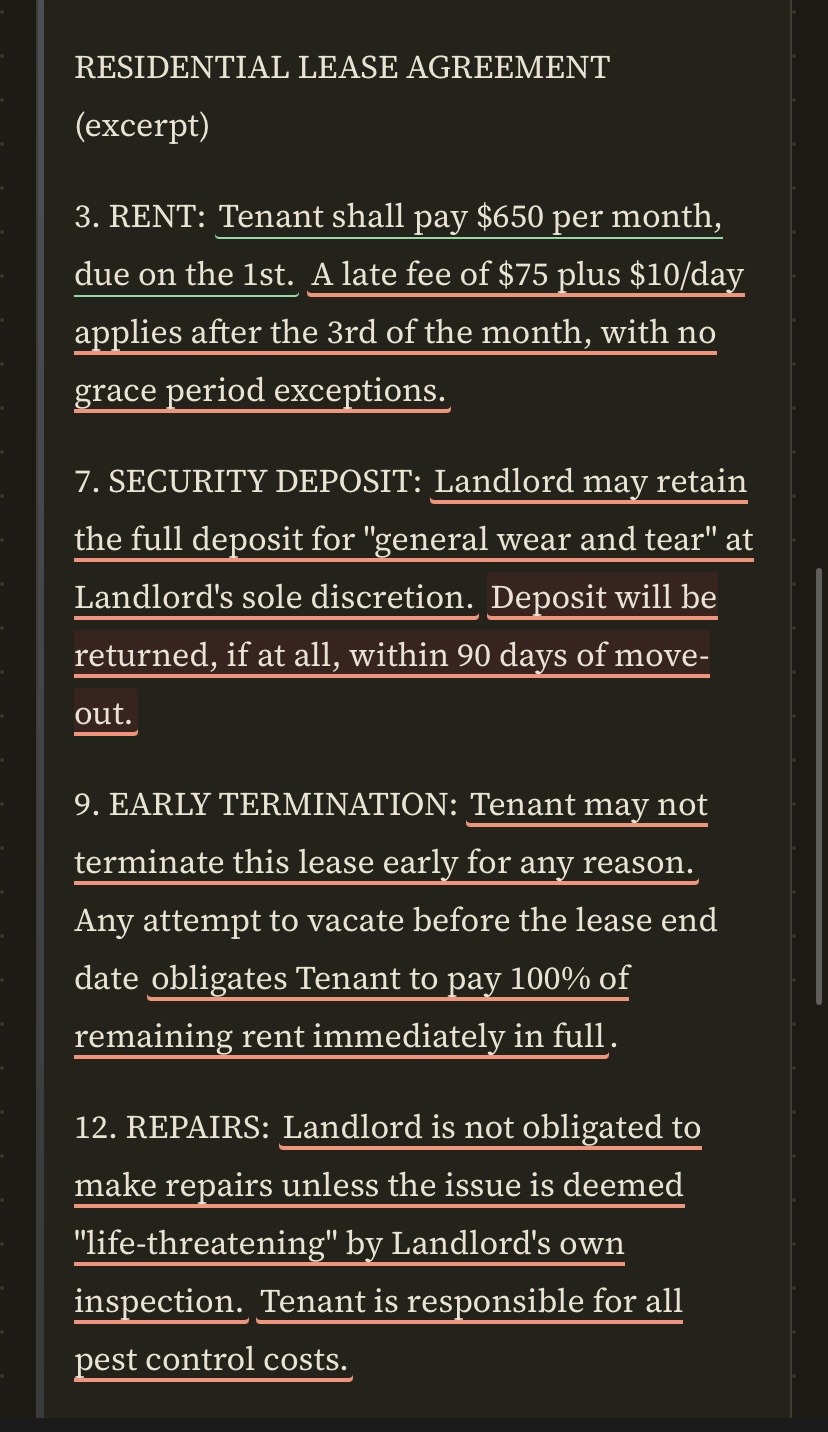
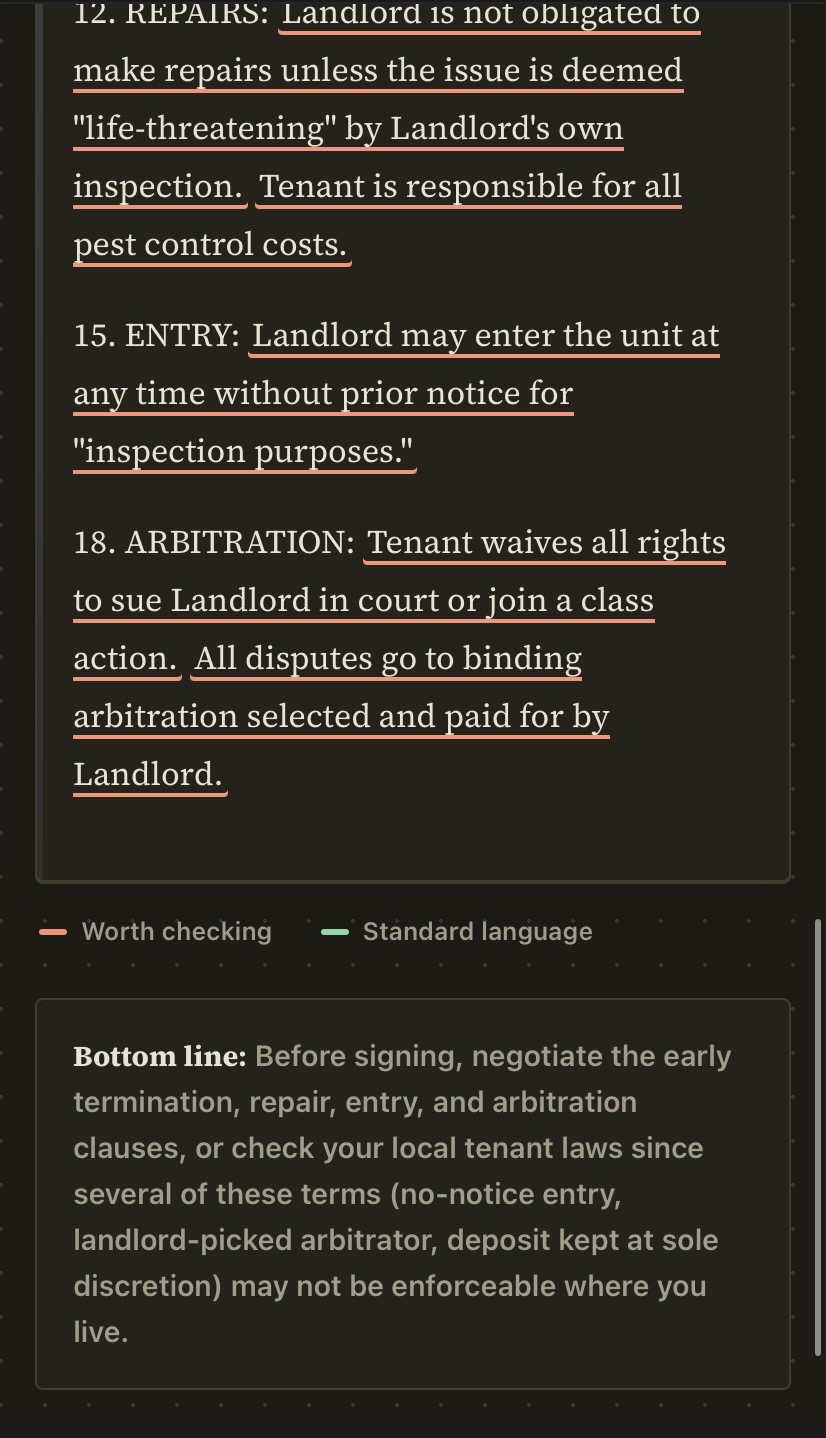
Paste any contract, lease, insurance policy, or terms-of-service text into Clarity, and it renders your document as an annotated page. Clauses worth a second look are underlined in red, standard/fair clauses in green. Click any underlined phrase and a plain-language note opens right next to it, explaining what the clause means and why it was flagged. A one-line verdict up top ("2 clauses worth checking, 4 read as standard") gives an at-a-glance read, and a bottom-line recommendation summarizes what to check before signing.
How we built it
Clarity is a single self-contained web app that calls Claude directly from the page (Anthropic's in-browser "sample" capability, no separate backend). The model is prompted to return strict structured JSON: an overview, a bottom-line recommendation, and a list of annotations, each carrying an exact verbatim quote from the input document plus a risk/standard classification and explanation. The client then does exact string matching to locate each quoted clause inside the original text and wraps it inline so every highlight is provably grounded in the actual document, not a generic paraphrase.
Challenges we ran into
The hardest part was grounding: getting the model to quote clauses character-for-character (rather than paraphrase) so the client could reliably locate and highlight them inline, while still returning valid, parseable JSON under time pressure. We also had to design for graceful failure documents that are too long, ambiguous input, or a viewer declining access without breaking the reading experience.
Accomplishments that we're proud of
A working, testable prototype that goes from empty page to an annotated legal document in under a minute, with no signup and no backend to deploy. The interaction model click the actual clause, not a separate summary makes the "grounded in your document" claim visibly true rather than just asserted.
What we learned
Plain-language legal tools are only trustworthy if a user can trace every claim back to the source text. Building the UI around inline, click-to-reveal annotations (instead of a chatbot-style Q&A) turned out to matter more for trust than any amount of polish on the explanation text itself.
What's next for Clarity
Support for uploading scanned/PDF documents, a "compare two versions" mode for redlines, and letting users ask a targeted follow-up question about a specific flagged clause.
Built With
- anthropic-api
- claude
- css
- html
- javascript
- legaltech
- prompt-engineering


Log in or sign up for Devpost to join the conversation.