-
-
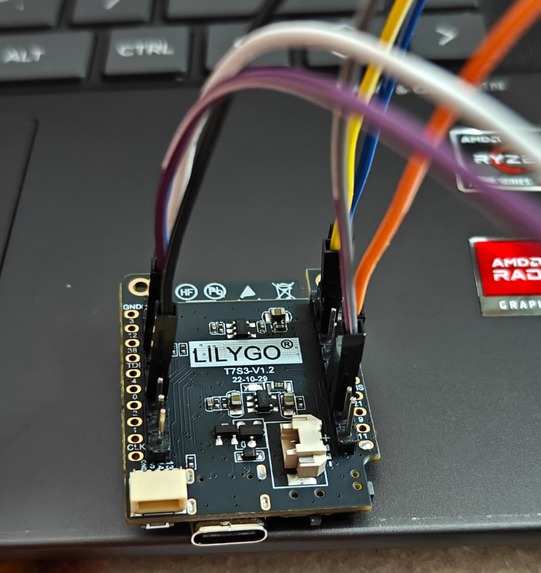
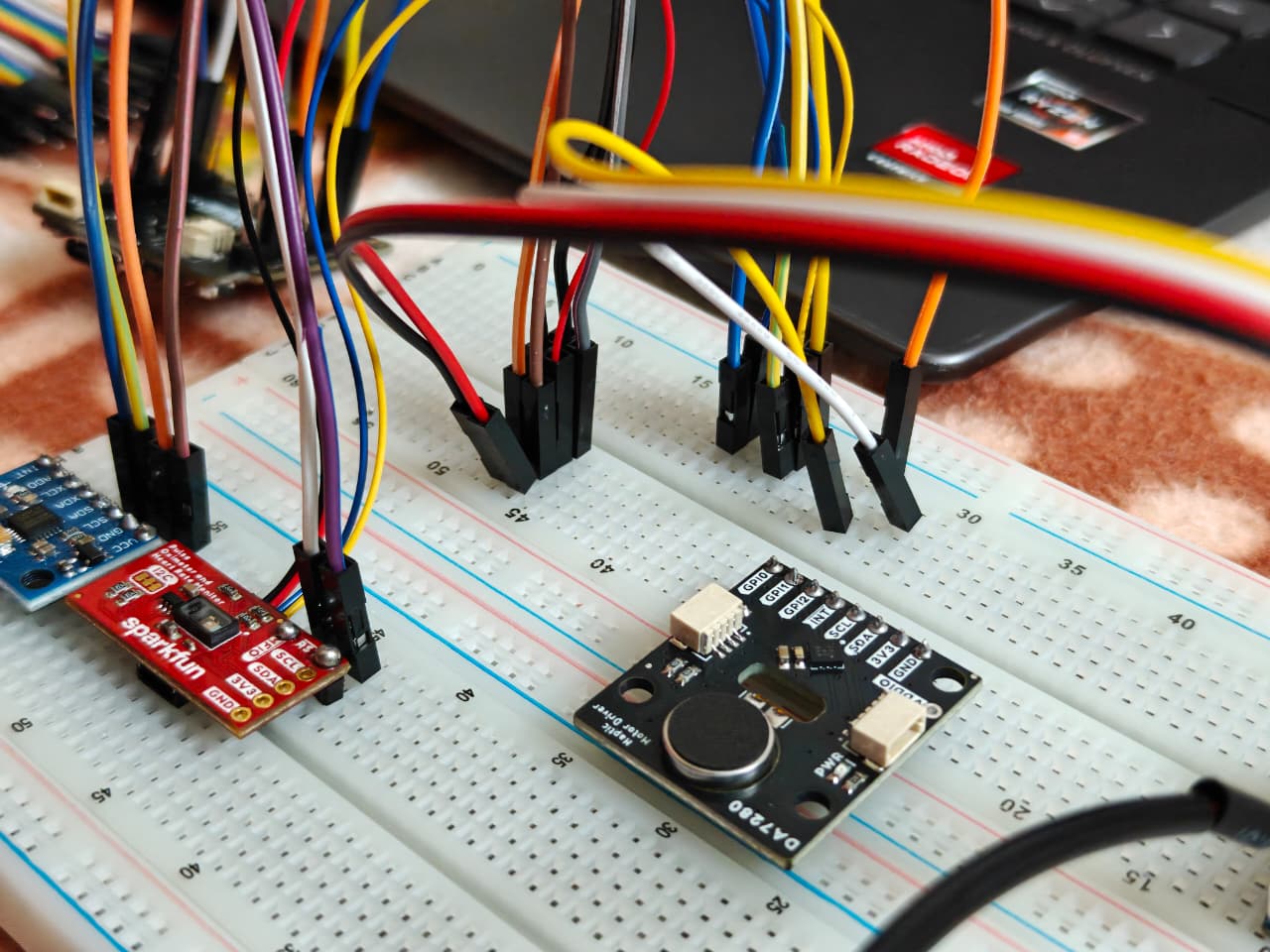
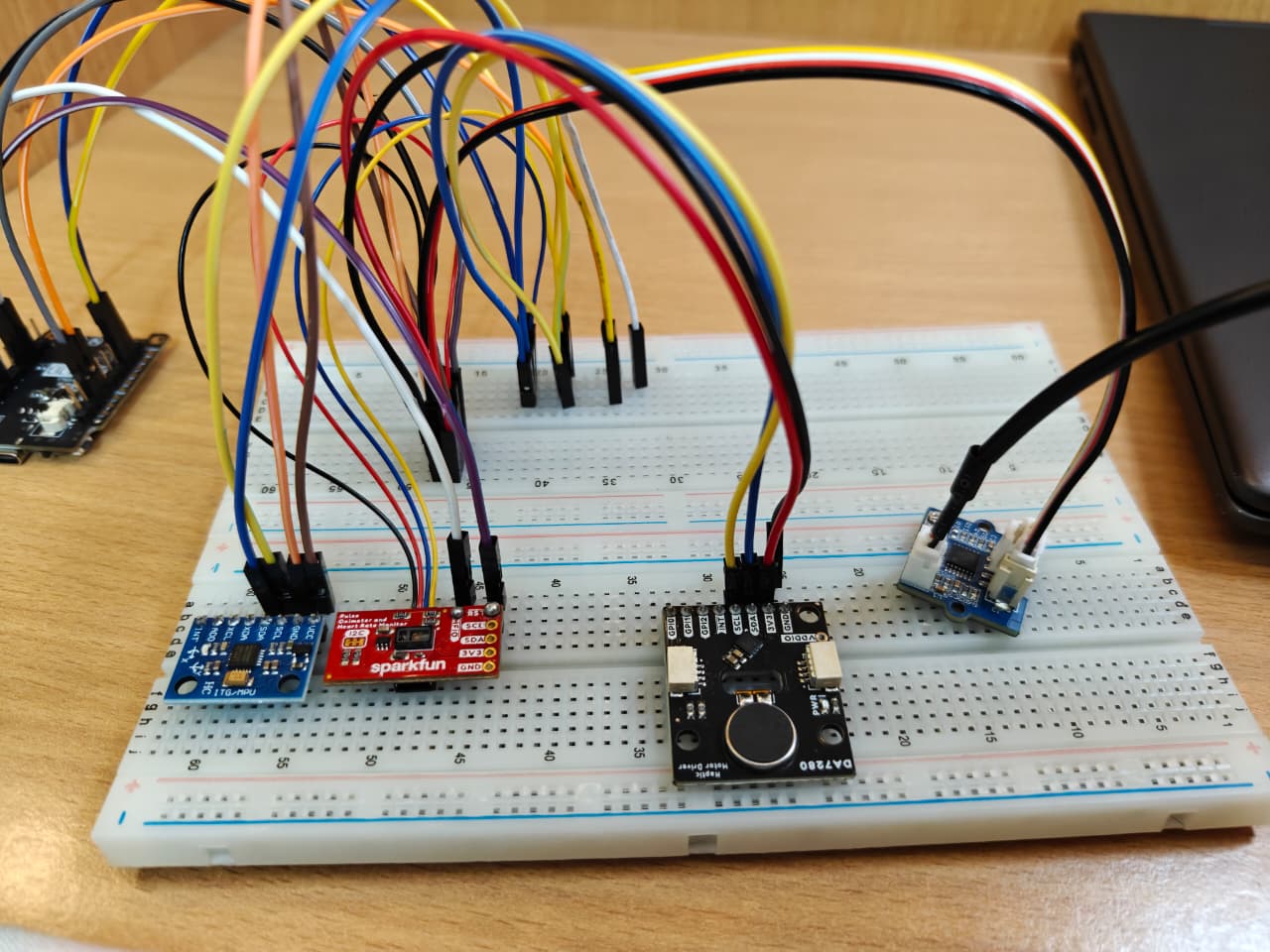
Esp32(main cantroller)
-
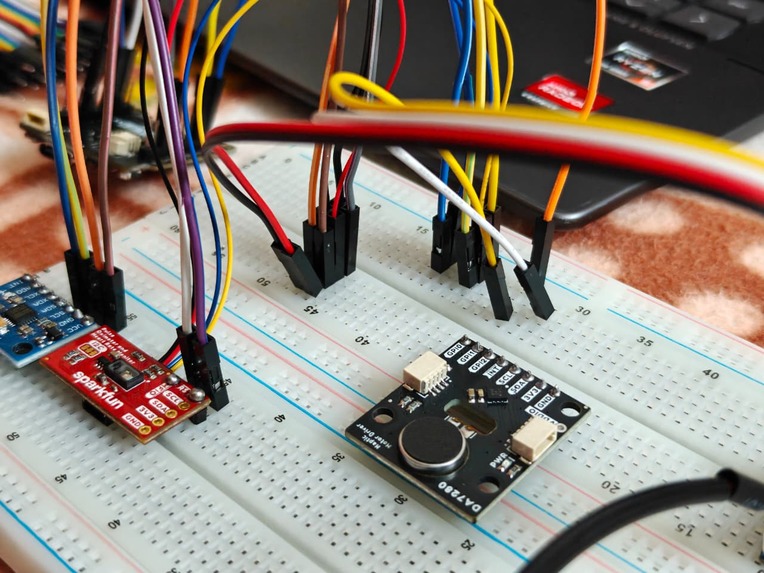
Other connected sensors
-
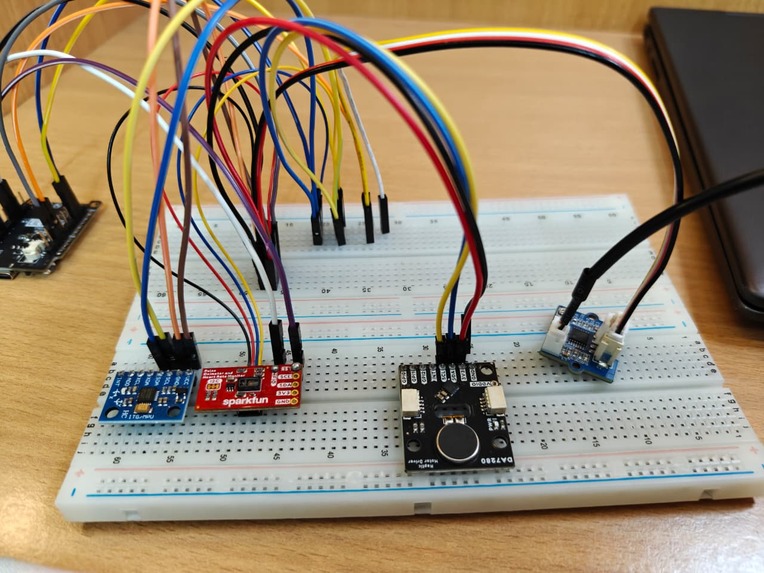
Clarity Band Prototype
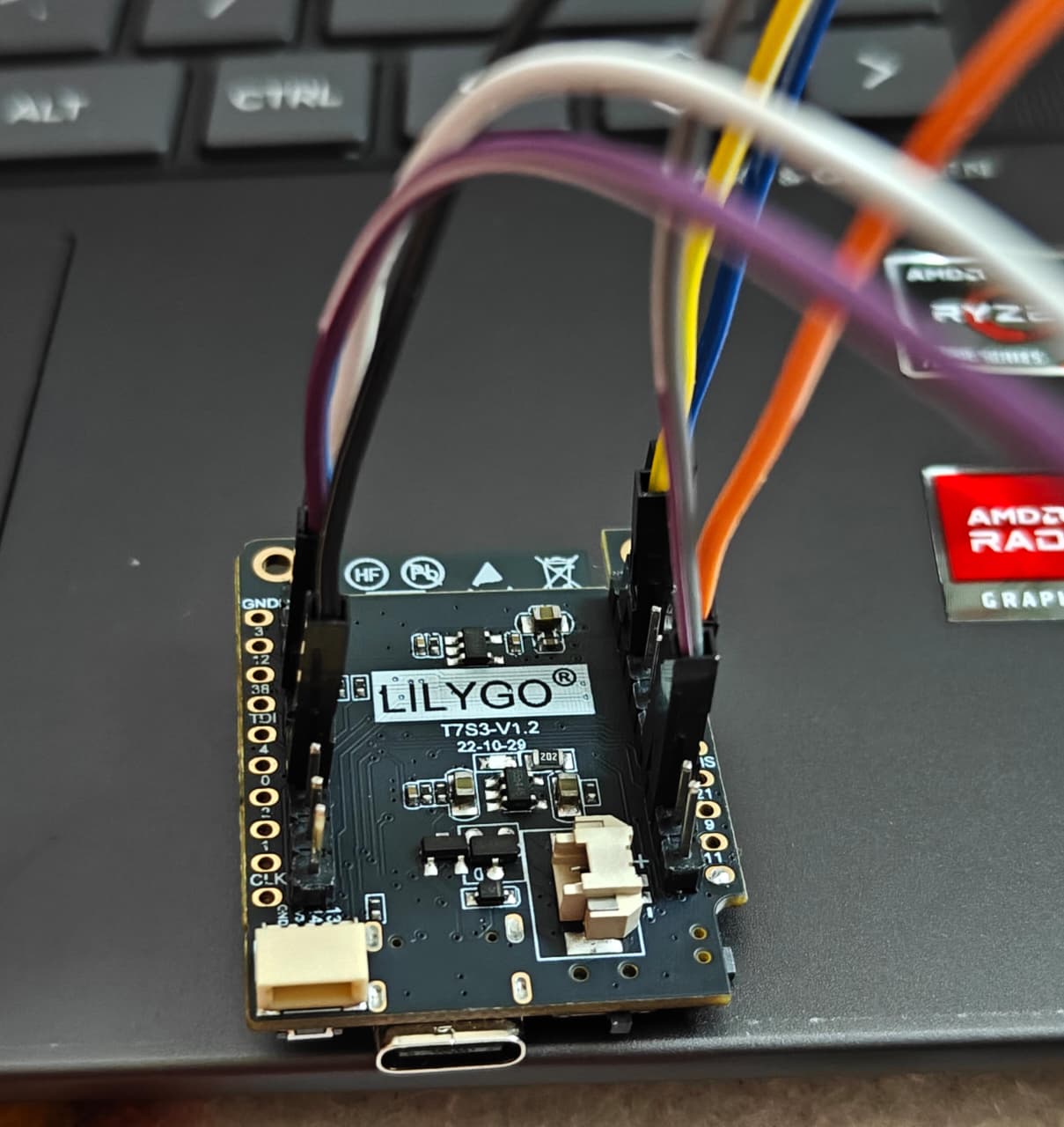
Inspiration
Clarity Band: The Autonomous Bio-Haptic Guardian 💡 Inspiration The idea for Clarity Band was born from a paradox we observed in our daily lives as students: Technology makes us anxious, yet we look to technology to solve it.
We noticed that while everyone wears smartwatches, these devices are passive observers. They tell you, "Your heart rate is high, you are stressed," but they don't do anything to fix it. Even worse, the constant buzzing of notifications keeps our nervous systems in a chronic state of "Fight or Flight" (Sympathetic Dominance).
We asked ourselves: Can we build a device that doesn't just track stress, but actively treats it?
We were inspired by Polyvagal Theory and the concept of Sensory Grounding. Just as a cat’s purr or a slow breathing rhythm can calm a person down, we realized we could use haptic technology to "hack" the body's natural relaxation pathways. We wanted to build an "autonomous guardian" for the nervous system—a device that steps in before burnout hits.
What it does
It continuously monitor physiological biomarkers to predict the onset of an acute stress or panic event. When the stress occurs, it automatically deploy a gentle, haptic (vibrational) biofeedback pattern to regulate the user's nervous system before they are continuously overwhelmed. We don't stimulate the nerve directly, we use sensory grounding to signal the brain to activate the 'Vagus Nerve'. Vibrations hits the tactile nerves -> The signal travels to the brain ->The brain interprets this smooth, rhythmic pattern as 'Safety' or 'Calm' -> Brain then tells the vagus nerve to lower the heart rate
How we built it
We approached this as a Cyber-Physical System, combining embedded hardware with biomedical signal processing.1. The Hardware Architecture: We moved away from standard "buzzer" motors (ERM) which create jagged, alarming vibrations. Instead, we engineered a precision haptic stack: Controller: ESP32 (selected for its dual-core architecture to handle sensing and actuation simultaneously). Actuation: We used a Linear Resonant Actuator (LRA) driven by the Dialog DA7280 Haptic Driver. This allows us to drive the motor at its resonant frequency (200Hz), creating crisp, organic pulses rather than a generic "buzz." Sensing: A MAX30102 Pulse Oximeter measures photoplethysmography (PPG) data in real-time.
- The Science of the Signal The core innovation lies in the frequency. We targeted the Pacinian Corpuscles—mechanoreceptors in the skin that are most sensitive to vibrations between 200Hz and 250Hz ## Challenges we ran into The "Motion Artifact" Nightmare: Initially, simply typing on a keyboard caused our heart rate readings to spike. The optical sensor was confusing motion with blood flow.
The Fix: We implemented a Moving Average Filter and an outlier rejection algorithm in C++ to smooth the signal and ignore sudden, non-biological jumps.
The "Annoyance" Factor: Our early prototypes used standard motors that felt like a phone ringing. It was annoying, not relaxing.
The Fix: Integrating the DA7280 driver was a turning point. It allowed us to modulate the waveform into a smooth Sine Wave envelope, mimicking the feeling of slow human breathing (4 seconds rise, 4 seconds fall).
Power Consumption: Continuous bio-monitoring drains batteries in hours.
The Fix: We engineered a "Deep Sleep" architecture. The device samples the user intermittently and only wakes the high-power haptic driver when an intervention is strictly necessary.
Accomplishments that we're proud of
True Autonomy: We built a truly closed-loop system. The device doesn't just vibrate randomly; it successfully detects a stress spike (Low HRV) and triggers the intervention automatically, functioning as an "autonomous guardian" without user input. Taming the DA7280 Driver: We successfully interfaced the complex DA7280 Haptic Driver with the ESP32 via I2C. This was a significant challenge as libraries for this specific driver are scarce, requiring us to write custom register configurations to achieve the perfect "breathing" waveform resonance (~200Hz). Scientific Integrity: We are proud that we didn't just build "pseudo-science." We researched and corrected our biological model from "Direct Vagus Stimulation" to the scientifically accurate "Indirect Sensory Grounding" pathway, ensuring our project stands up to medical scrutiny.
What we learned
The biggest lesson was distinguishing between "Nerve Stimulation" and "Sensory Processing." Early on, we thought we were stimulating the Vagus nerve directly. Through deep research, we learned we were actually utilizing the Indirect Pathway: Mechanoreceptors -> Somatosensory Cortex -> Brainstem -> Vagus Nerve This taught us that how you explain your innovation is just as important as what you build
What's next for Clarity Band
We plan to integrate Edge AI. Instead of reacting to stress, we want to predict it. By feeding historical HRV data into a TensorFlow Lite model on the ESP32, the band could learn a user's specific trigger times (e.g., "Monday Morning Meetings") and start the calming vibrations proactively.

Log in or sign up for Devpost to join the conversation.