Inspiration
Modern life constantly fragments our attention. Notifications, messages, emails, and app switching pull our focus in dozens of directions every hour. While we have tools that track our steps, sleep, and heart rate, we still lack a way to perceive cognitive overload — the moment when our mental capacity begins to collapse.
Most people only realize they are mentally overloaded after their productivity drops, their attention fragments, or they feel burnout. We wondered:
What if cognitive overload could become something we could sense in real time?
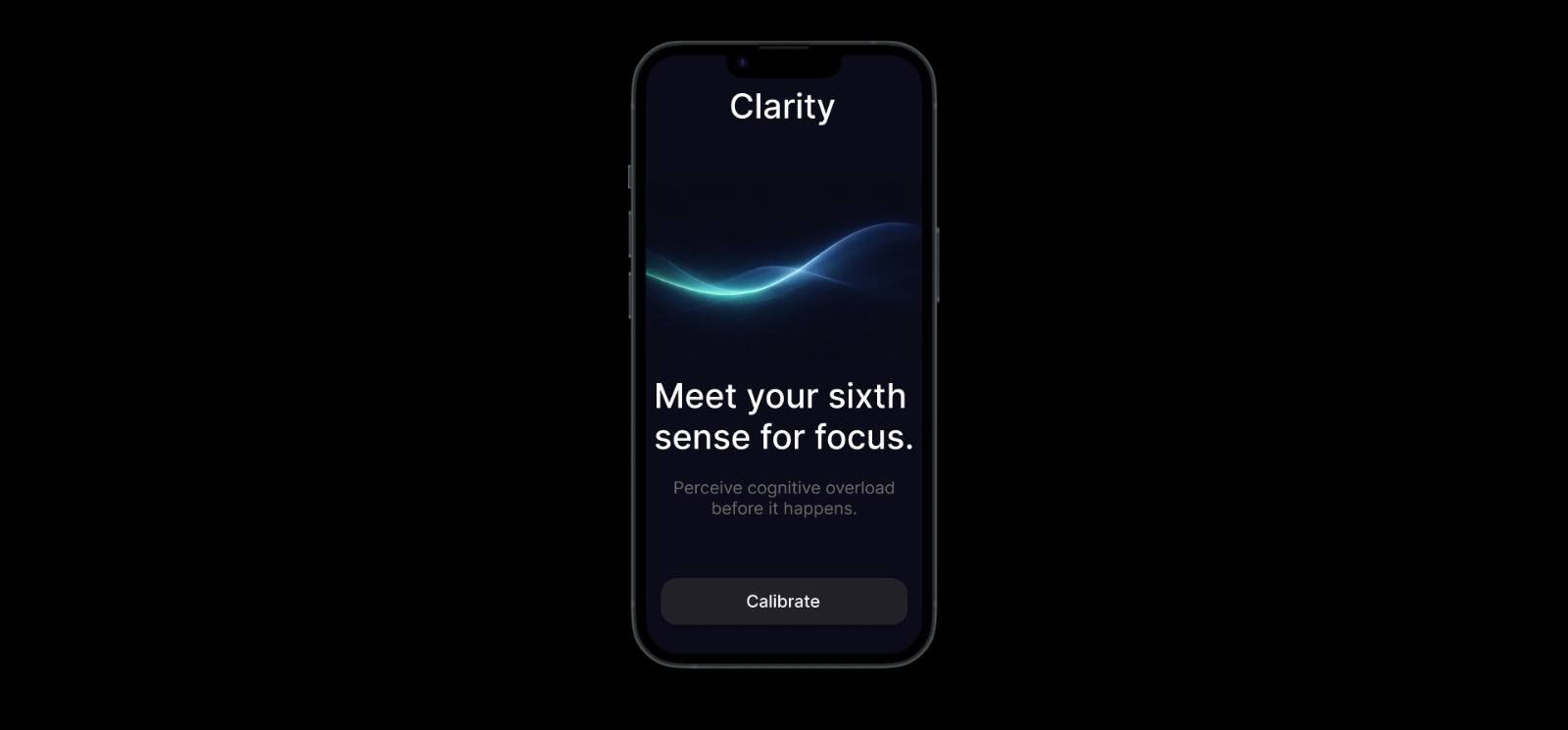
This idea inspired Clarity, a speculative interface that introduces a new sensory layer — the ability to visualize and manage mental load before it becomes overwhelming.
What it does
Clarity is a cognitive overload sensing interface designed to help users perceive and manage their mental load in real time.
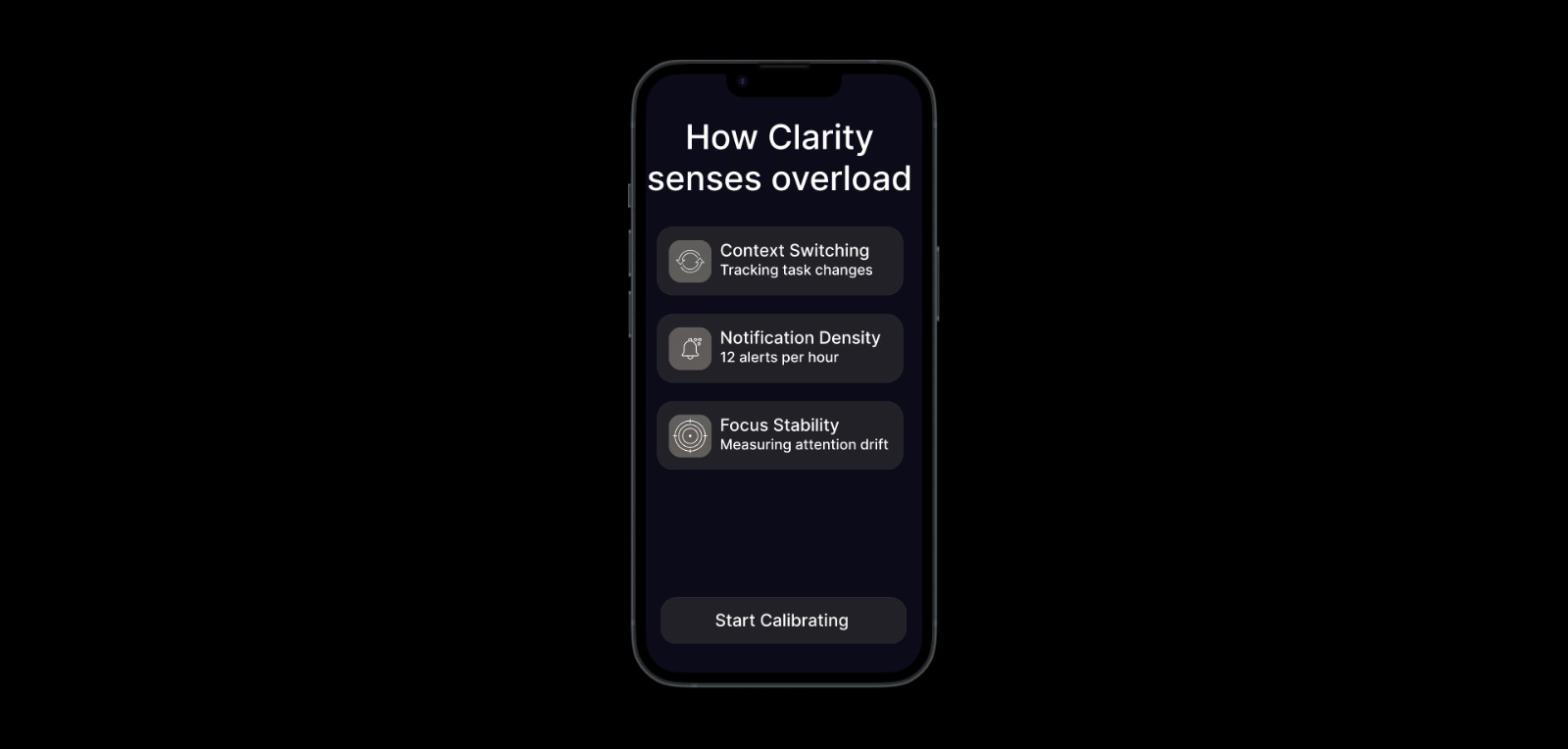
The system analyzes behavioral signals such as:
- Context switching between applications
- Notification density and interruptions
- Focus stability during tasks
These signals combine into a dynamic metric called the Mental Load Index.
The interface then visualizes this invisible cognitive state through a simple and intuitive system:
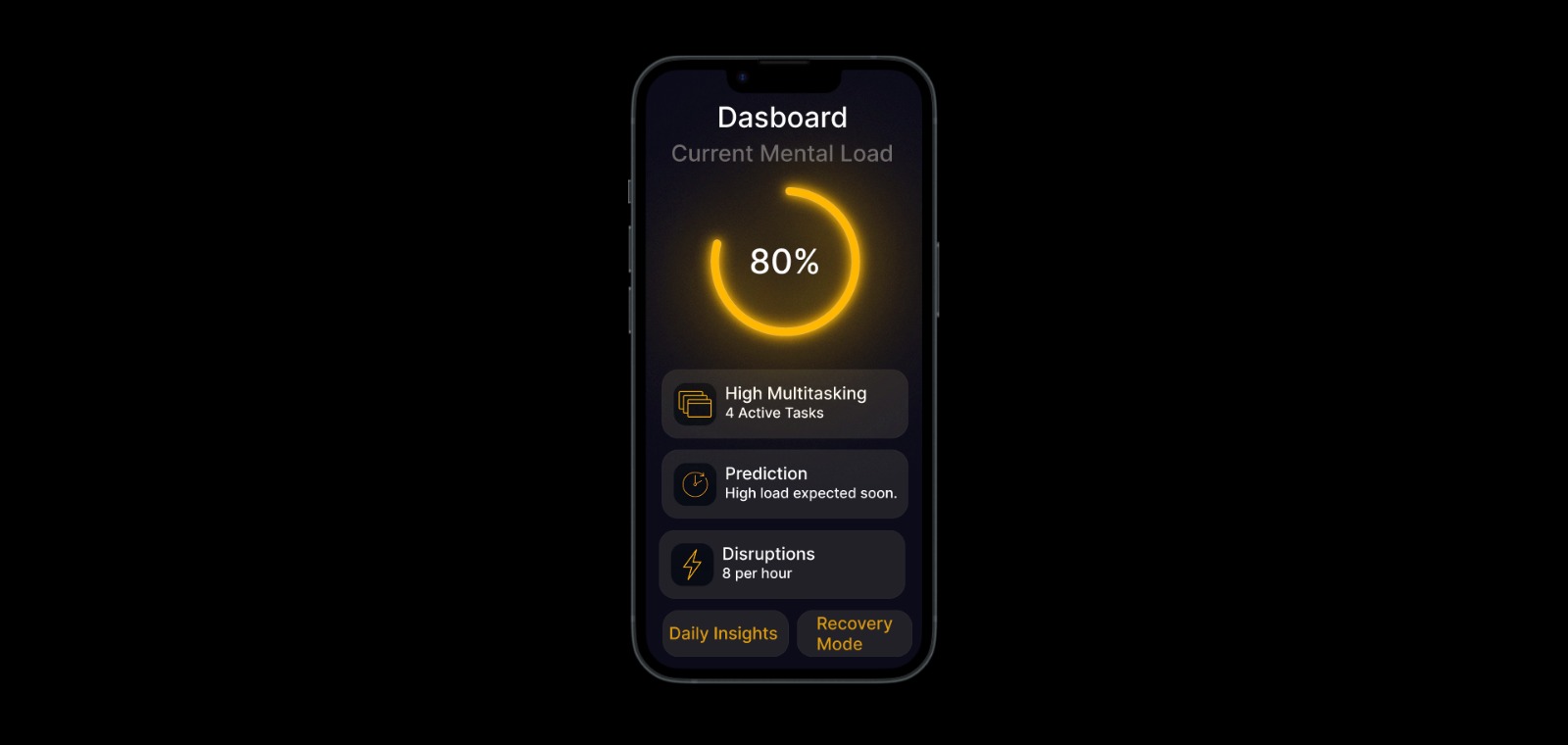
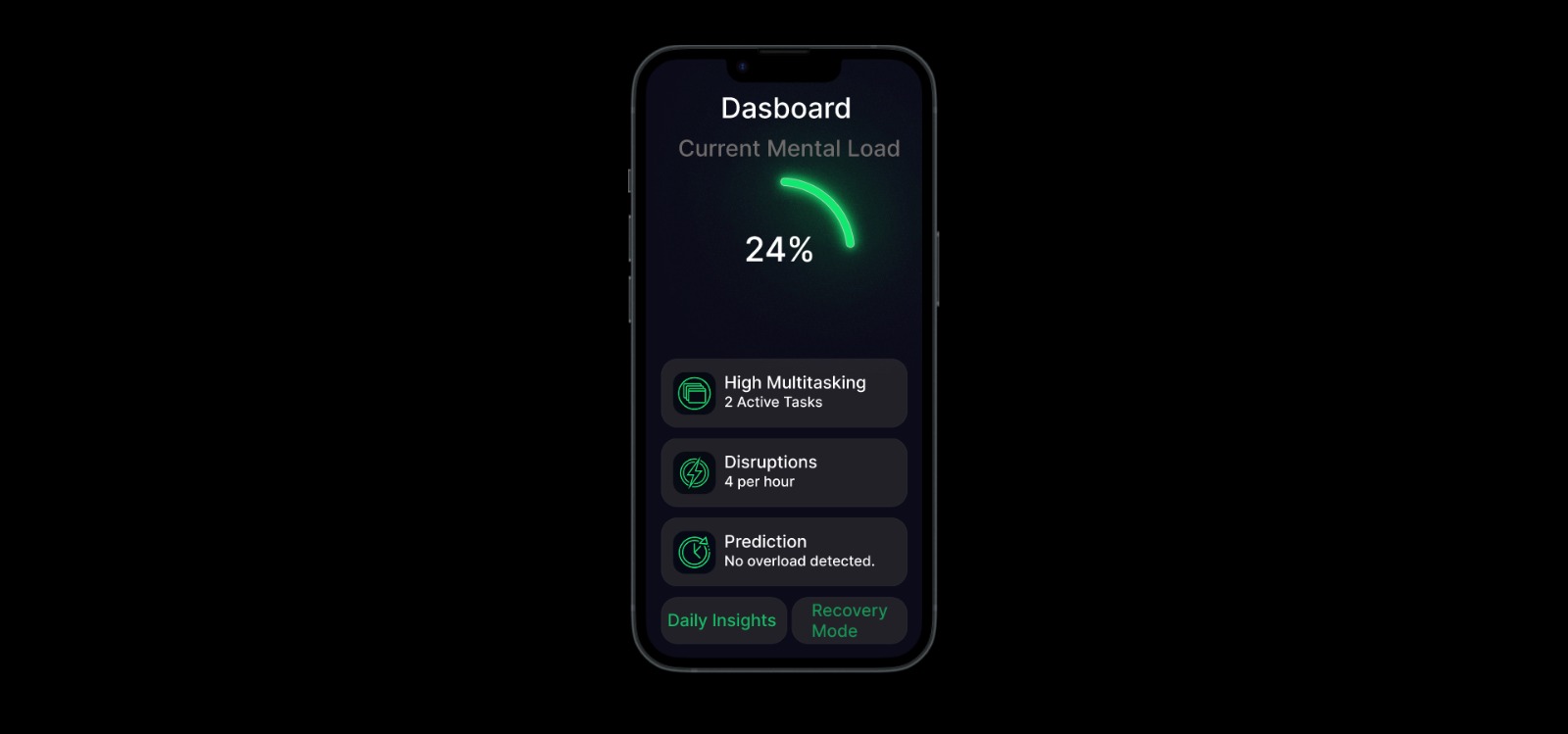
- A mental load dashboard showing real-time cognitive pressure
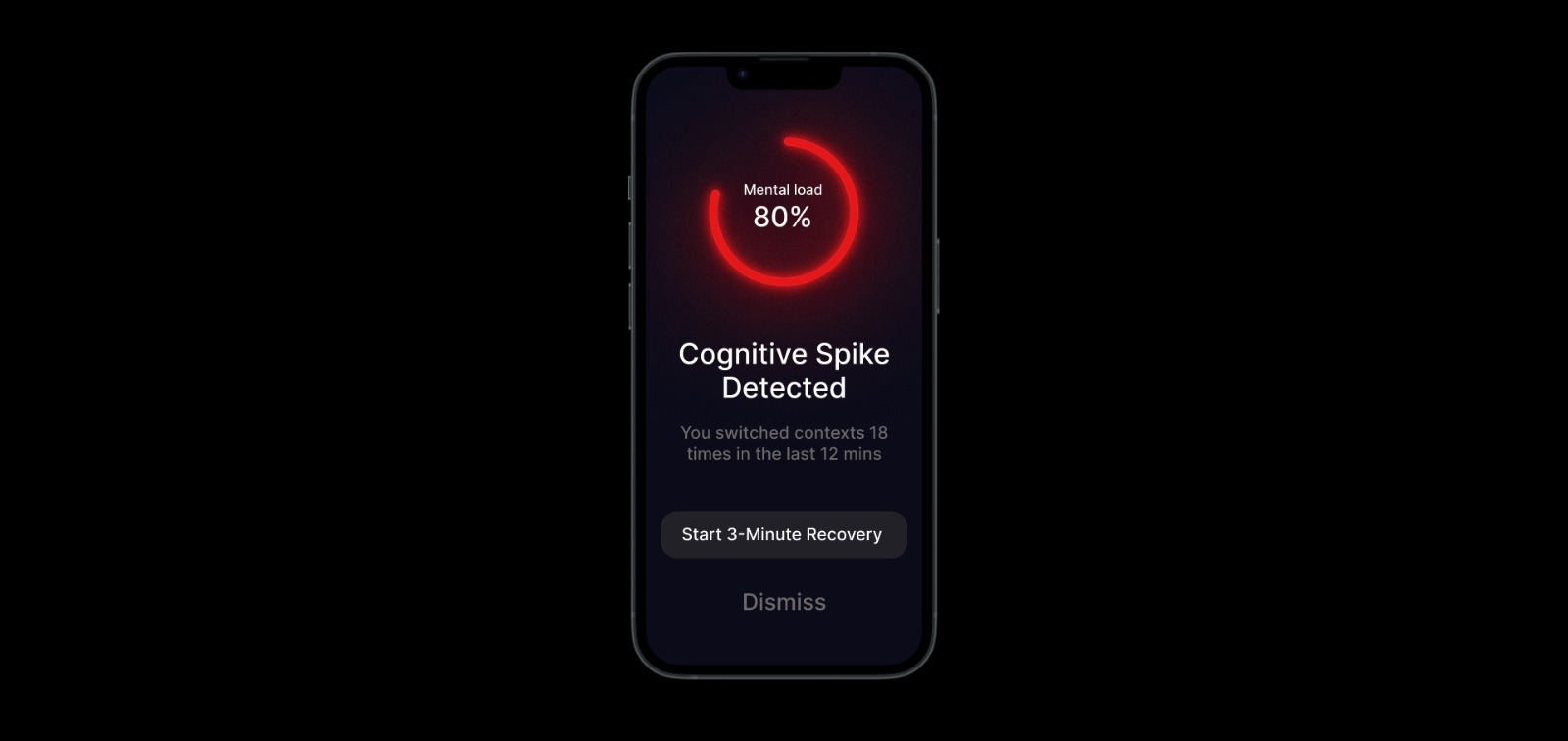
- Cognitive spike detection when overload reaches critical levels
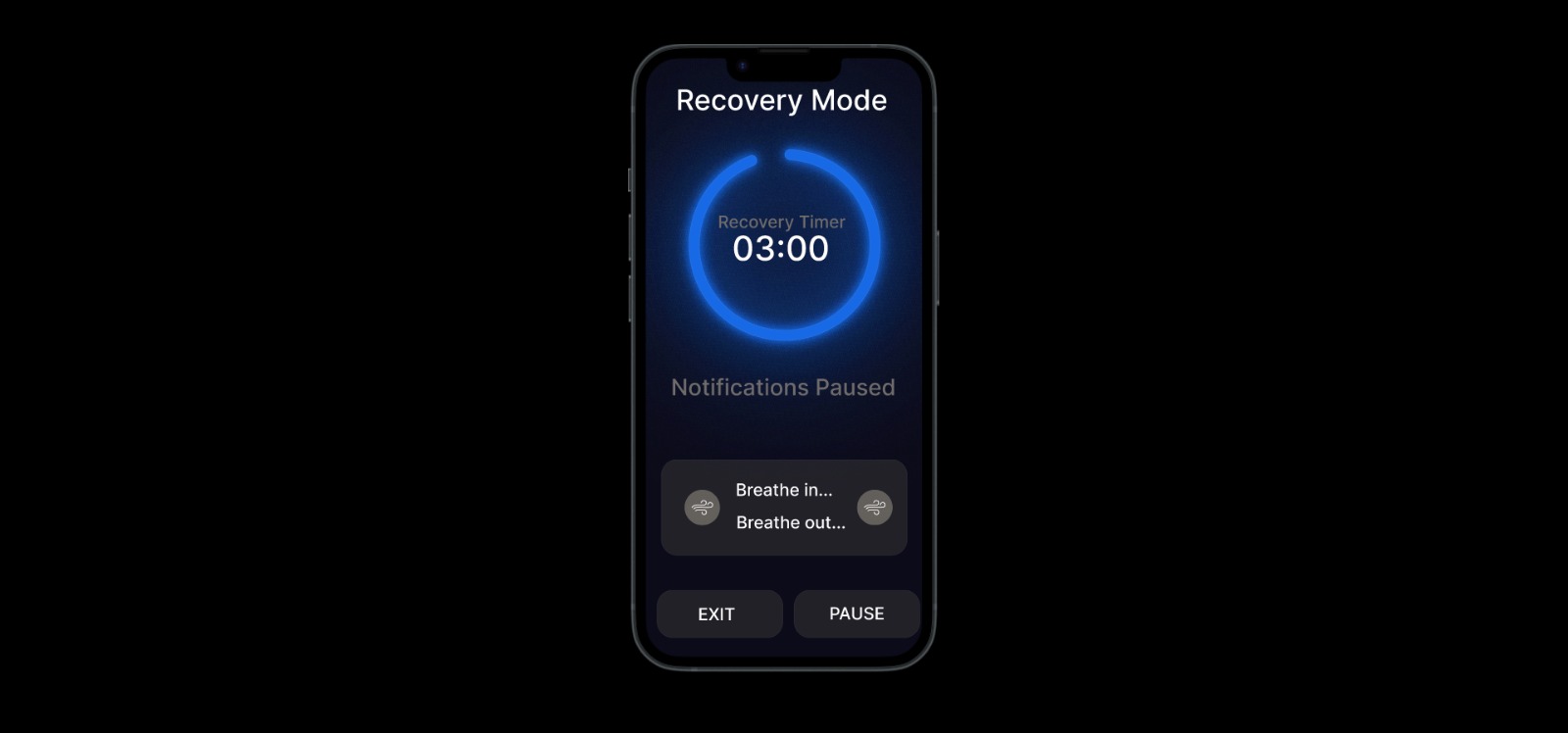
- A guided recovery mode that helps restore focus
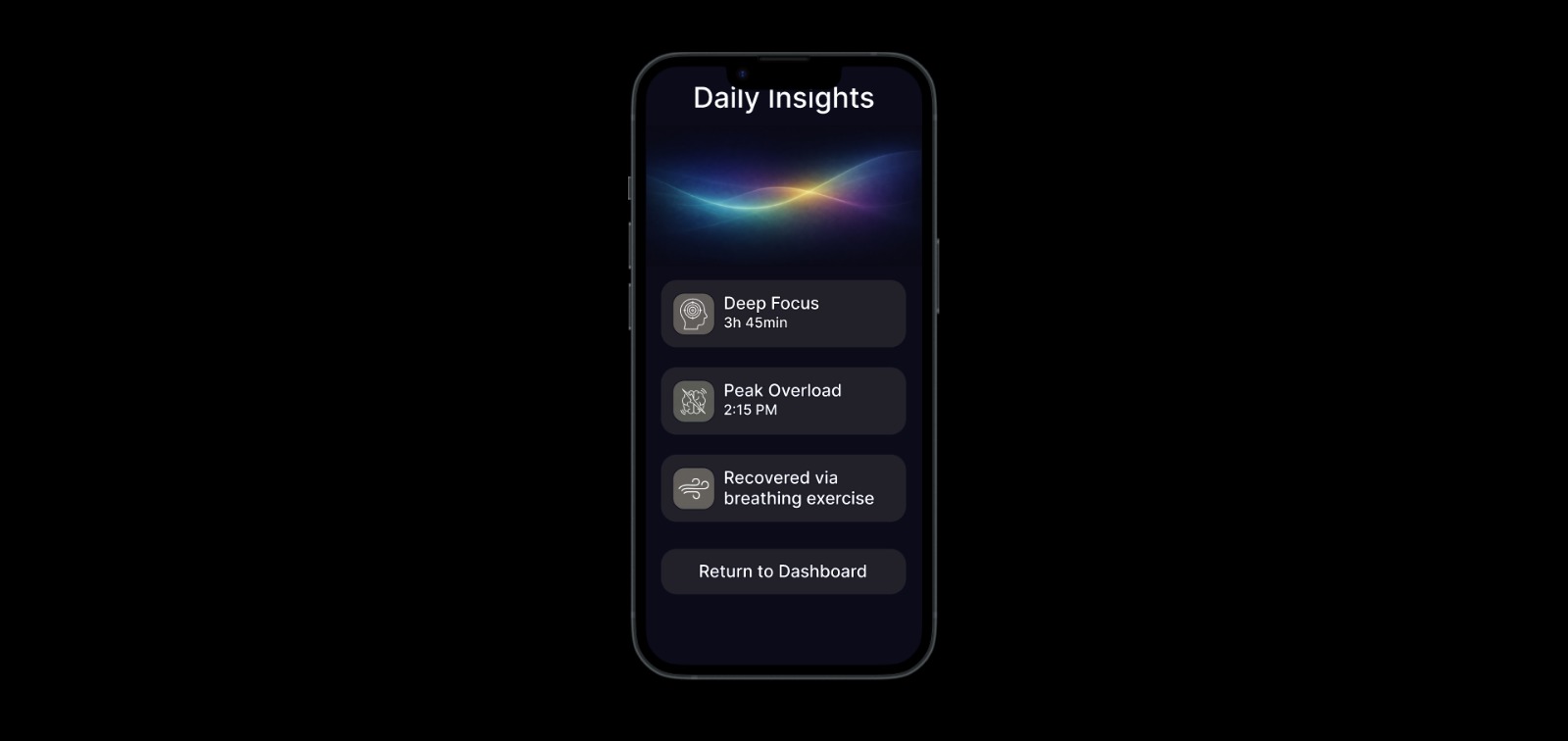
- Daily insights that reveal long-term focus patterns
By transforming invisible mental signals into visible feedback, Clarity allows users to detect cognitive overload before burnout occurs.
How we built it
Clarity was designed as a future-forward cognitive sensing interface using Figma to prototype the entire user experience.
The process included:
Behavior modeling
- We explored how cognitive overload could be inferred through observable digital behaviors such as task switching and interruptions.
Interface prototyping
- The full product flow was designed using Figma frames and prototype interactions to simulate a real mobile experience.
Signal visualization
- We created a visual system to represent cognitive pressure using intuitive signals like:
- mental load percentages
- spike alerts
- focus stability indicators
Interaction flows
- Multiple states were designed to simulate how the system responds dynamically:
- high mental load
- spike detection
- recovery mode
- restored focus
The result is a complete interactive prototype demonstrating how cognitive sensing could work in a future interface.
Challenges we ran into
Designing an interface for something humans cannot naturally perceive was one of the biggest challenges.
Key difficulties included:
- Translating abstract cognitive signals into clear visual feedback
- Preventing the interface from becoming overwhelming or data-heavy
- Designing alerts that help the user without becoming another source of interruption
Balancing useful insight with simplicity required multiple iterations of the interface and interaction flows.
Accomplishments that we're proud of
We are proud of several aspects of the project:
- Designing a new sensory interface concept focused on cognitive awareness
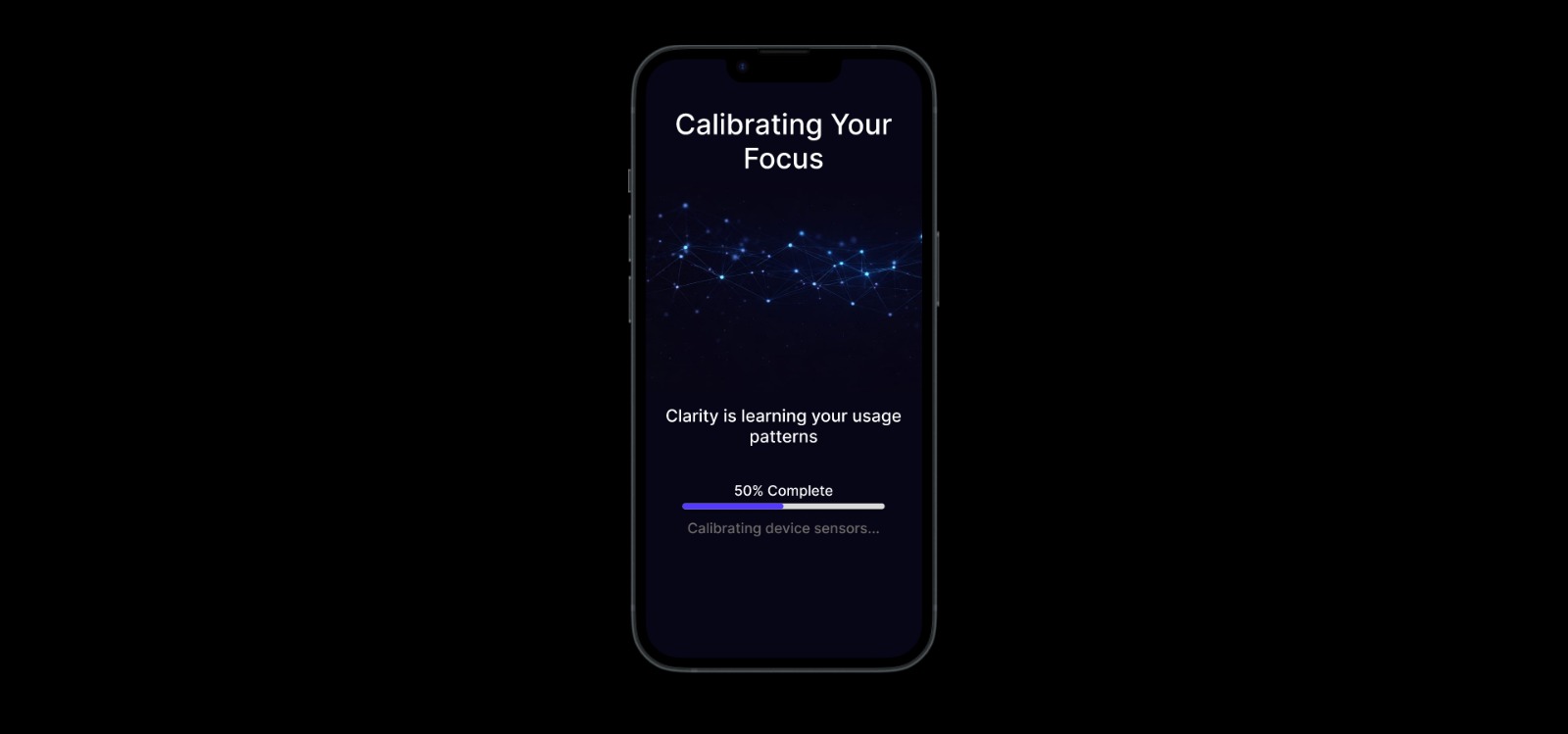
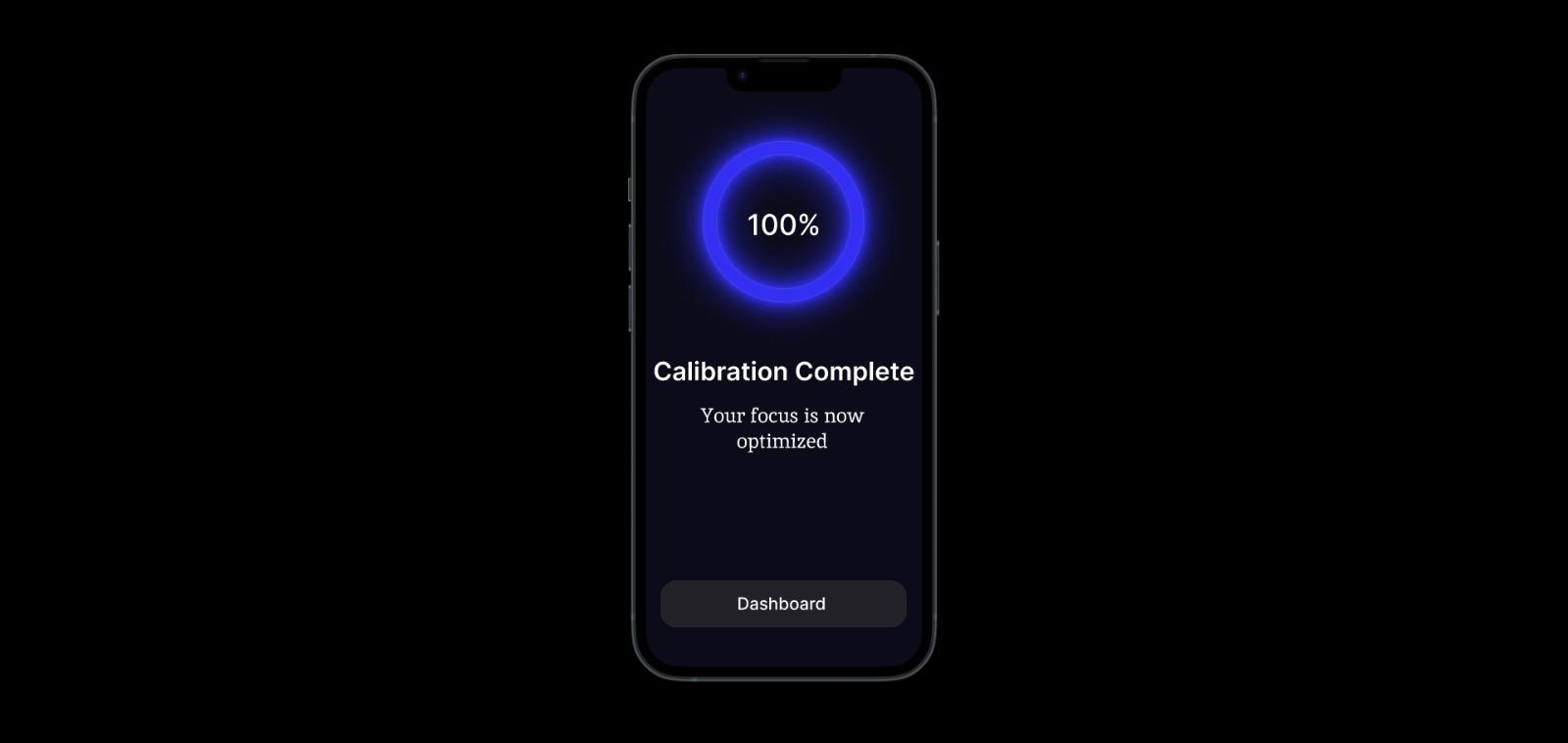
- Creating a complete user journey, from calibration to recovery
- Building a fully interactive prototype that demonstrates dynamic mental load changes
- Designing an interface that remains minimal, intuitive, and calm, even when presenting complex behavioral data
Most importantly, we successfully transformed an invisible mental state into something users can perceive and manage.
What we learned
Through this project we learned that designing for human cognition requires a different approach than designing for traditional data dashboards.
We discovered that:
- Users respond better to signals and guidance than raw metrics
- Interfaces that deal with mental wellbeing must remain calm, minimal, and supportive
- Good design can transform complex behavioral patterns into intuitive feedback
Clarity reinforced the idea that design can create entirely new ways for humans to understand themselves.
What's next for Clarity — A Cognitive Overload Sensing Interface
Clarity is currently a speculative prototype, but the concept opens the door to many future possibilities.
Potential next steps include:
- Integrating real behavioral signals from devices and wearables
- Expanding the system to detect environmental and emotional signals
- Providing personalized focus coaching and productivity insights
- Extending the interface beyond phones to ambient environments and smart devices
Our long-term vision is a future where people can perceive and manage their cognitive wellbeing as easily as they track their physical health.
Clarity represents a step toward that future.
Built With
- figma


Log in or sign up for Devpost to join the conversation.