-
-
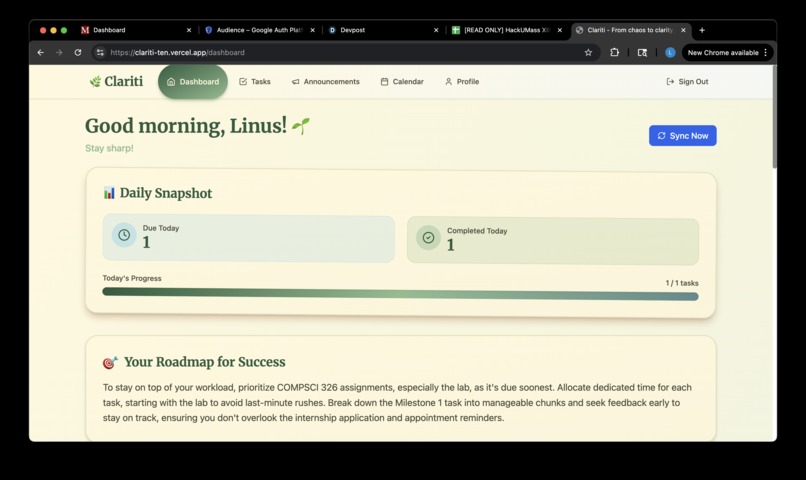
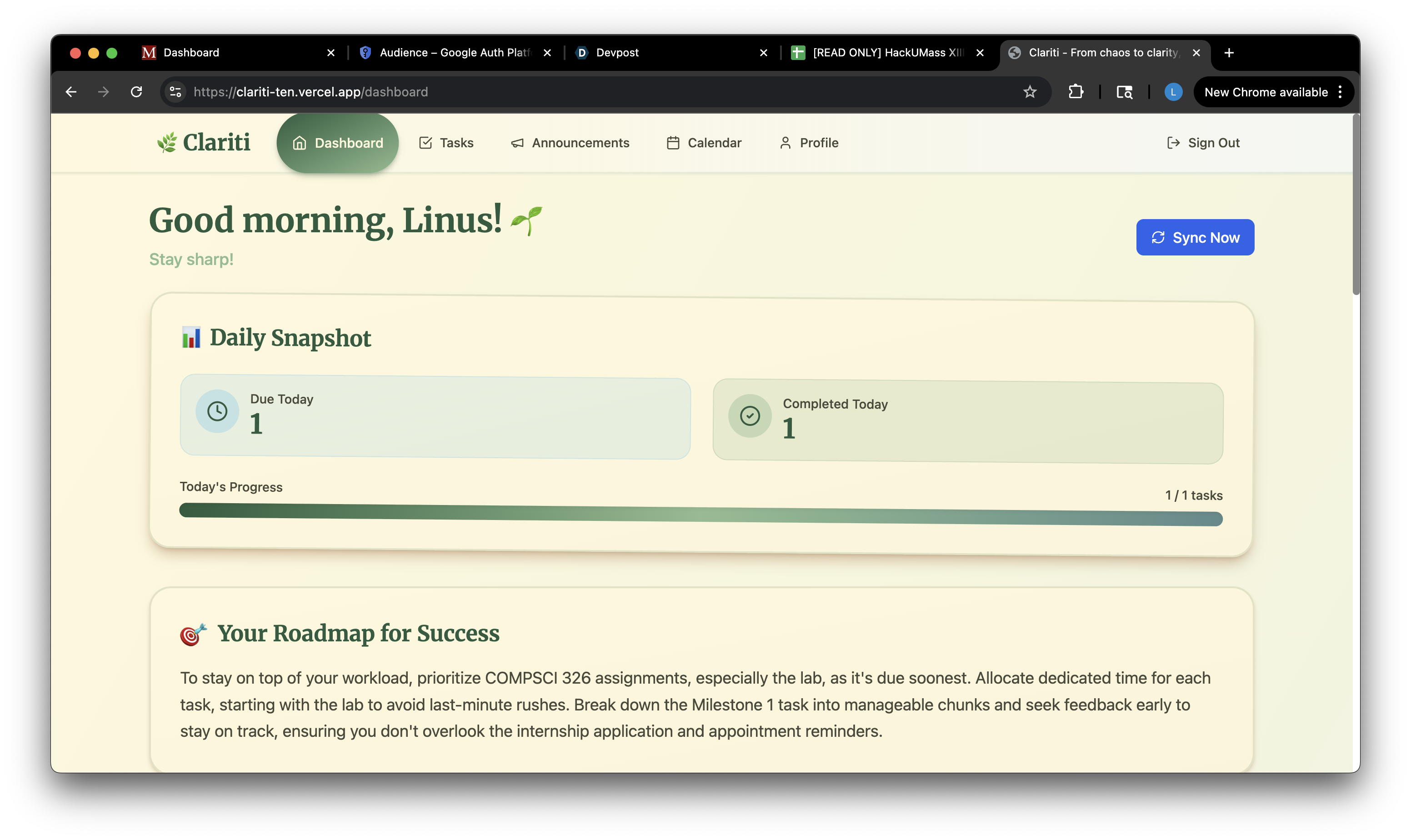
Top of Dashboard page.
-
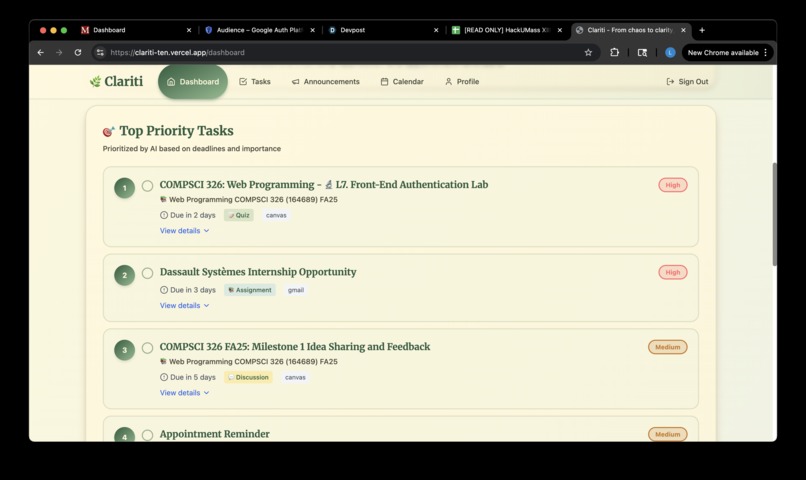
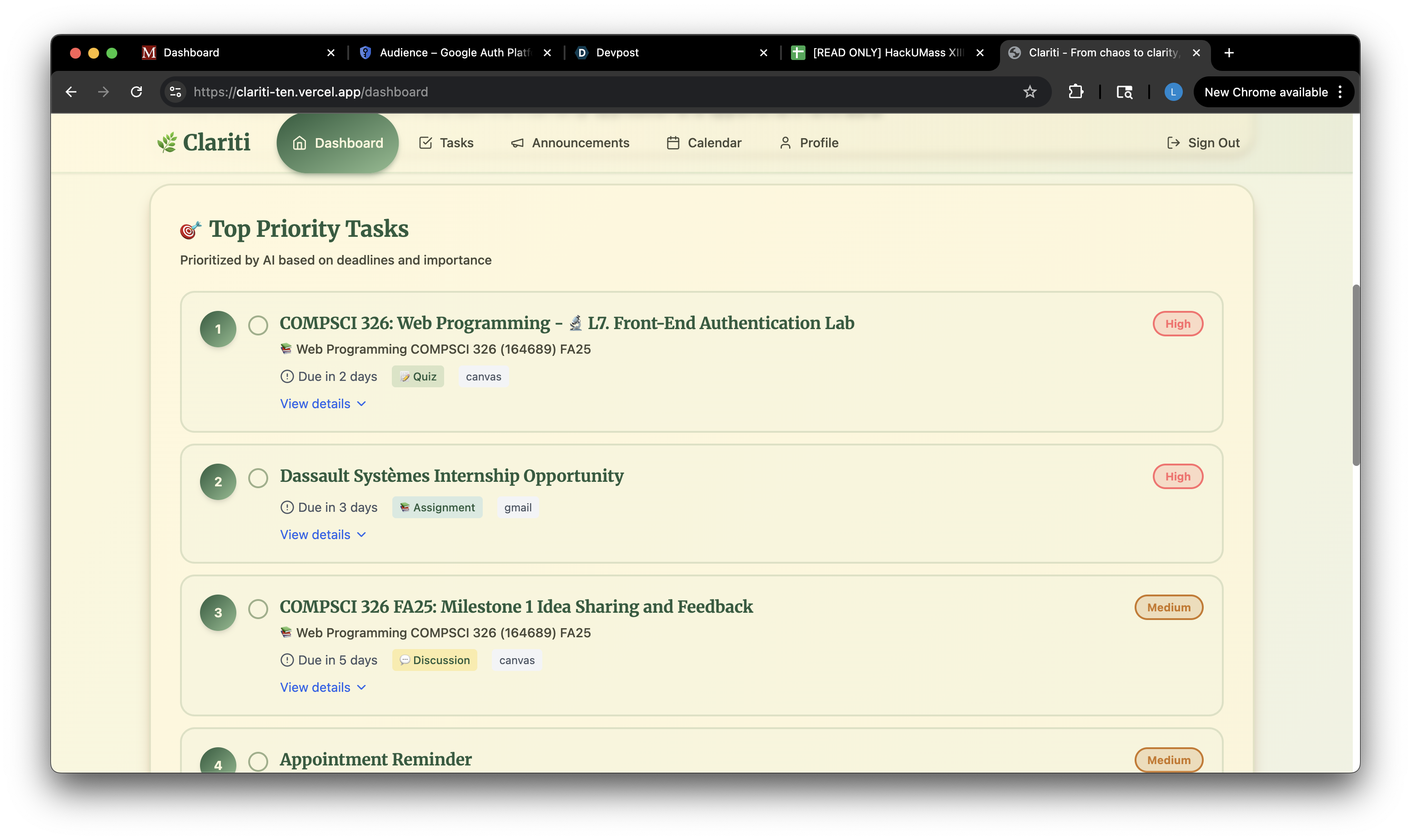
Priority task list on dashboard page.
-
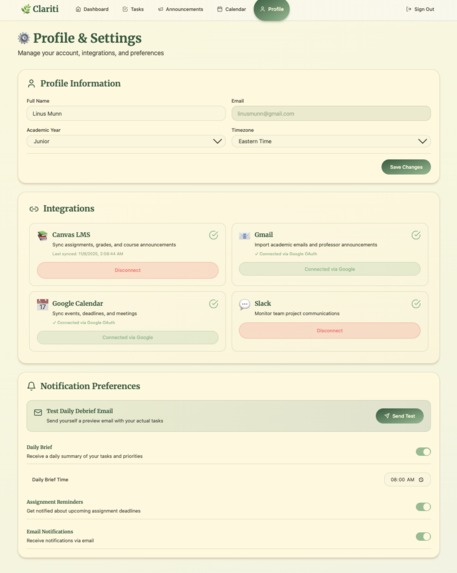
Profile page.
-
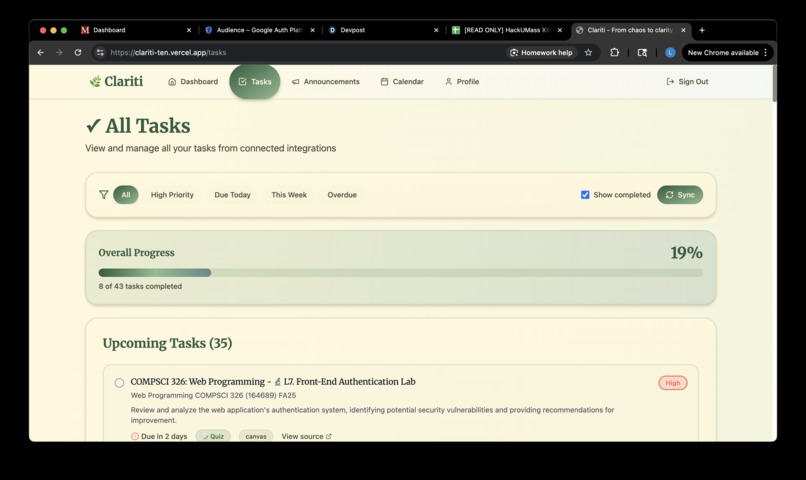
Overall task list with filters.
-
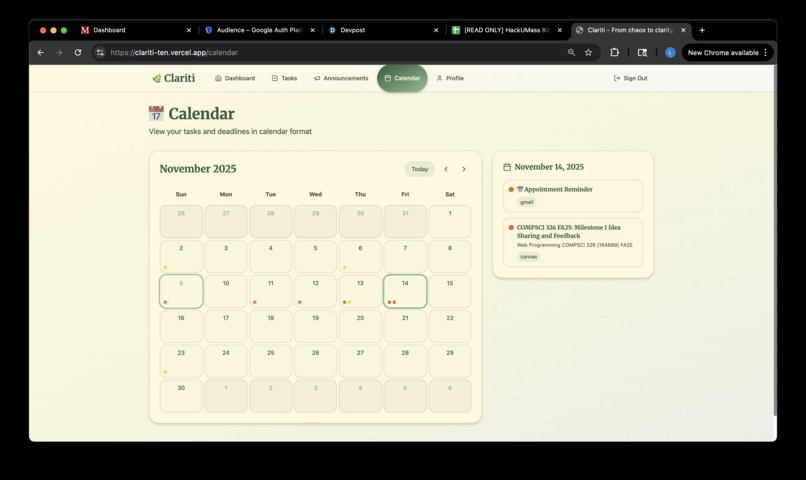
Calendar page.
-
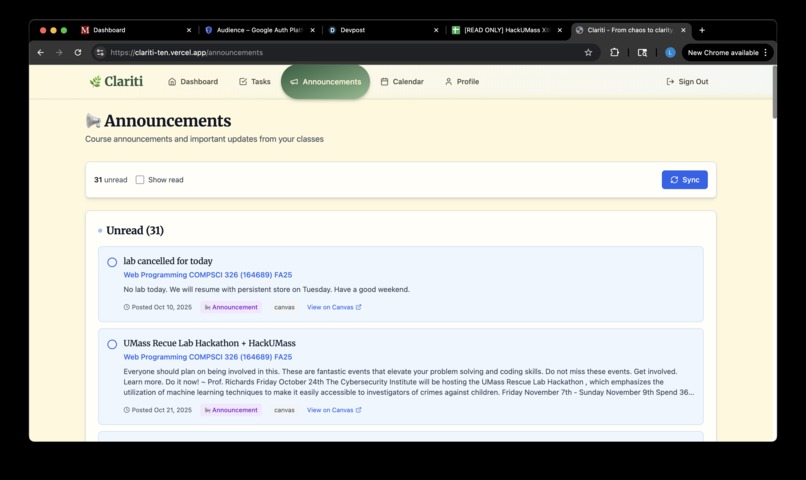
Announcements page.
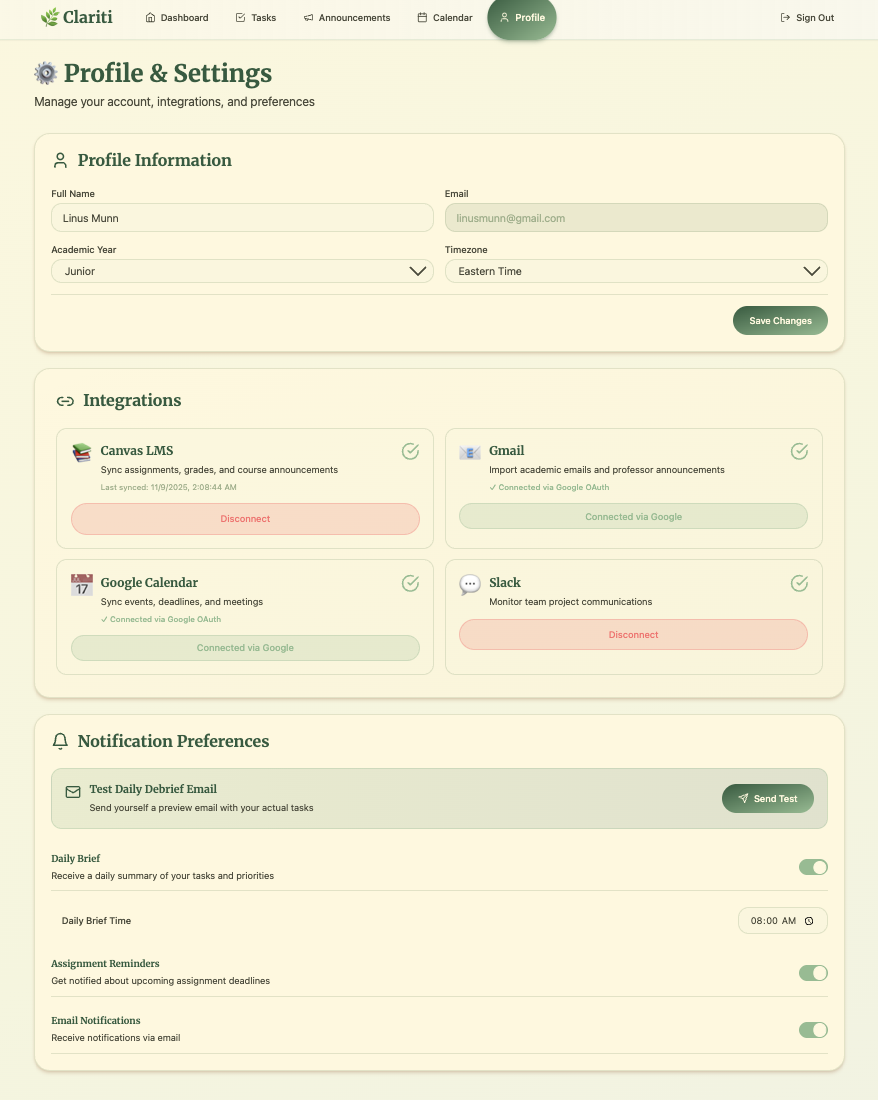
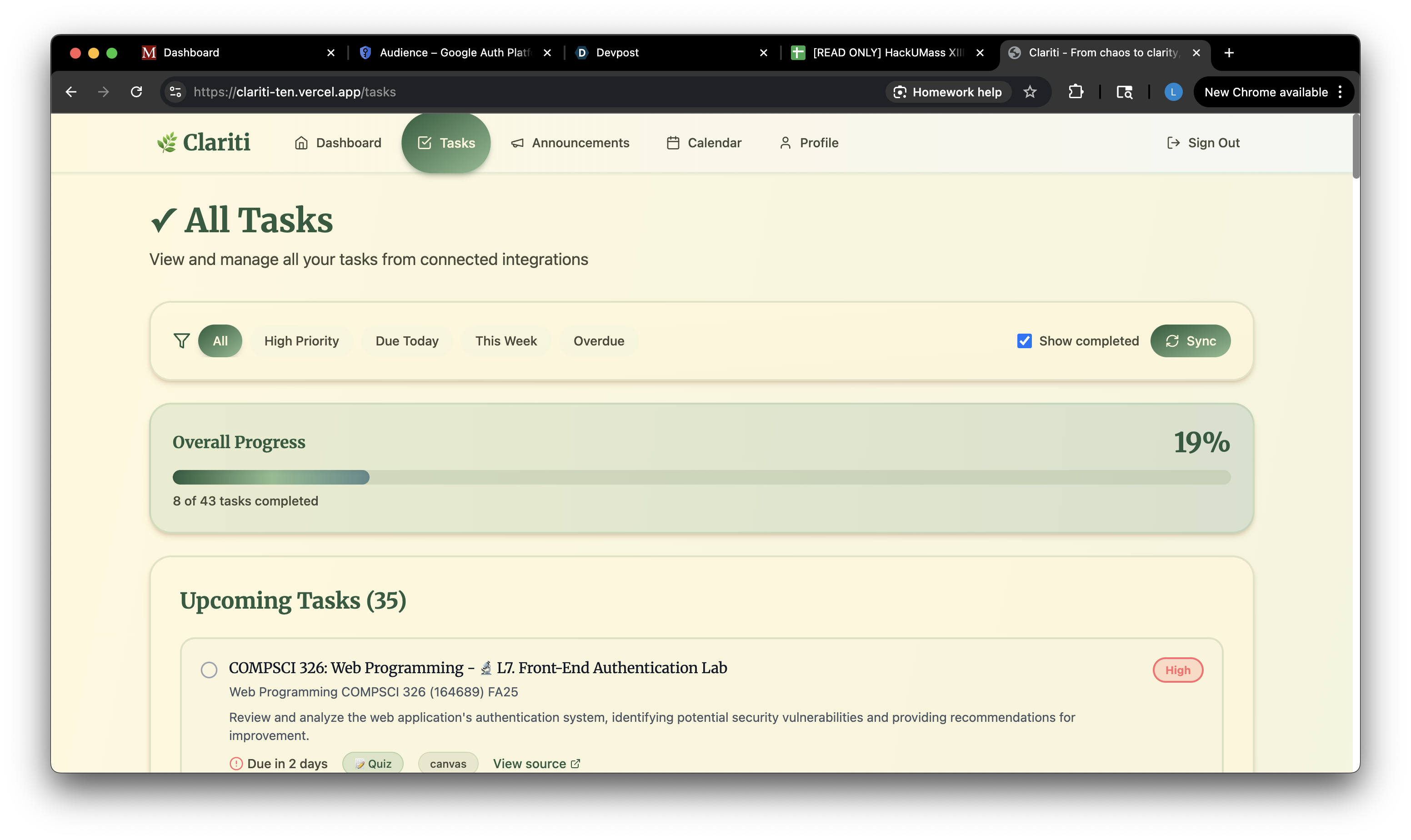
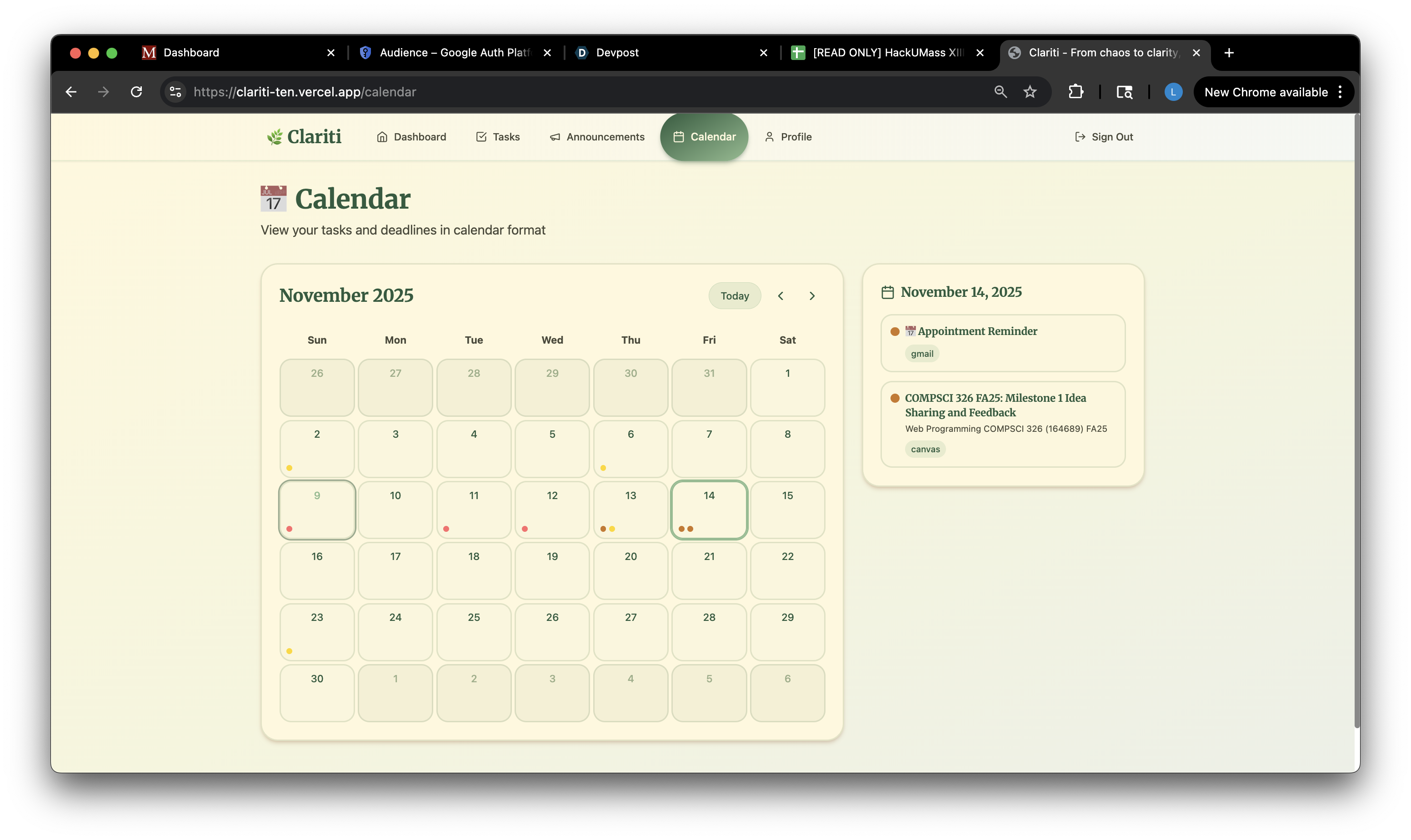
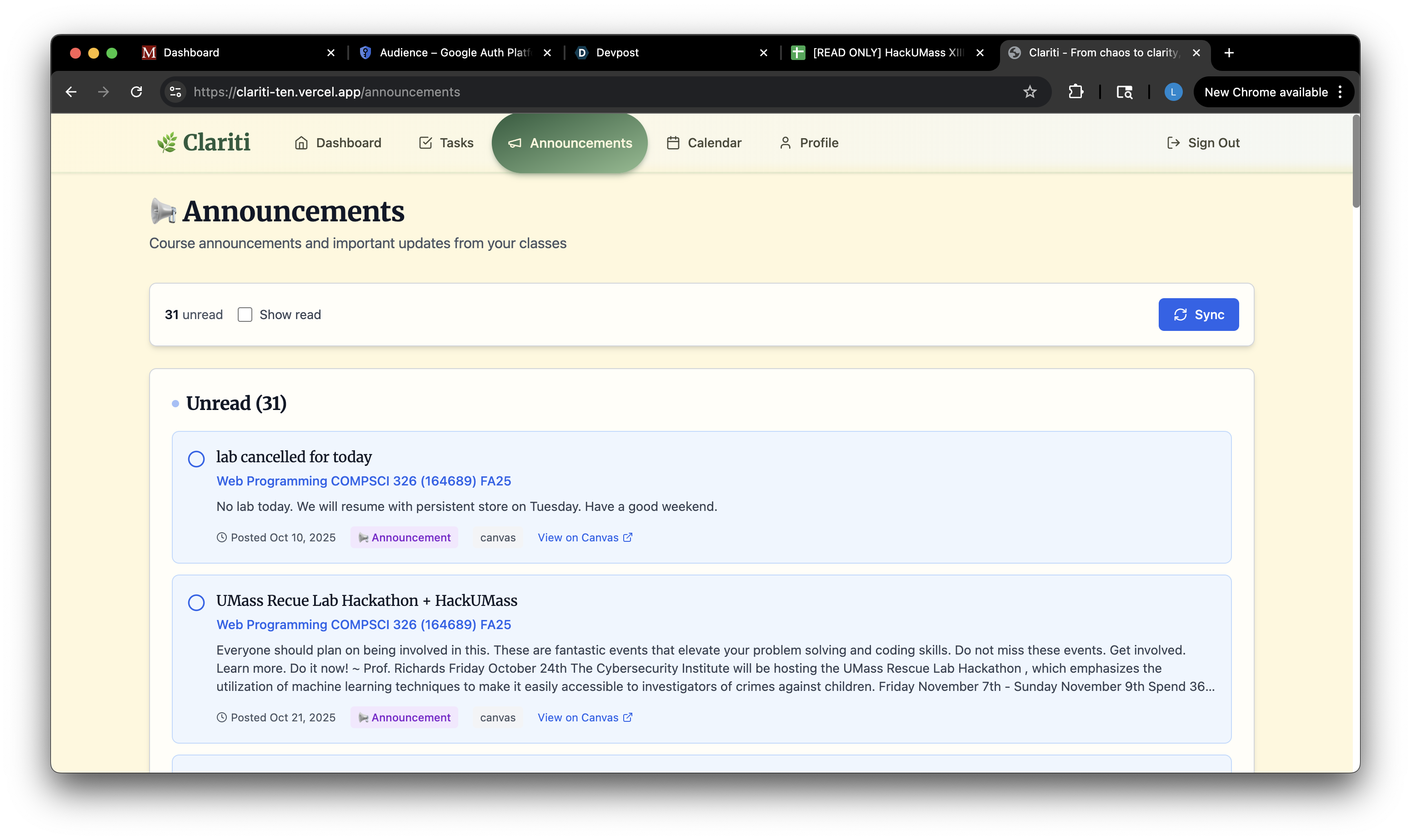
Inspiration
As college students juggling classes, multiple clubs, part-time jobs, and personal life, we often feel completely overwhelmed. Important information comes from Canvas, Gmail, Slack, and Google Calendar, and it’s impossible to know what truly matters today. There have been plenty of times where we missed a deadline or scrambled to find an assignment because the information was scattered across so many platforms. That constant chaos and stress is what inspired us to build Clariti — an AI-powered assistant designed to organize our day and help students focus on what actually matters instead of hunting through dozens of apps.
What it does
Clariti brings all the scattered pieces of a student’s digital life into one clear, actionable daily brief. Every morning, it summarizes assignments, emails, Slack messages, and calendar events to highlight the tasks and deadlines that need attention today. It tracks progress, provides smart reminders, and shows students exactly what they should prioritize. The goal is simple: replace overwhelm with clarity so students can start each day with a plan and focus on getting things done, rather than constantly searching for what’s important.
How we built it
We built Clariti as a web app with a React frontend and a Node/Express backend. To simulate realistic academic data, we created a Canvas teacher account with test students. We then integrated Canvas, Gmail, Slack, and Google Calendar so the app could pull in assignments, messages, and events automatically. Using the Cohere API, we summarized the information and prioritized tasks based on urgency and relevance. The interface also allows users to add, edit, or delete tasks manually so they can maintain control over their schedule while still benefiting from AI organization.
Challenges we ran into
Integrating multiple APIs with very different data structures was a bigger challenge than we expected, and handling OAuth authentication across all platforms required careful attention. Training the AI to distinguish between urgent and important tasks also took a lot of trial and error, because not every due date or message is equally critical. On top of that, designing a user interface that reduces stress rather than adding more clutter forced us to think carefully about simplicity and focus. Finally, like every hackathon, time was limited, so balancing the scope of features with what we could realistically build was a constant challenge.
Accomplishments that we're proud of
Despite the hurdles, we are proud that we built a working AI-powered system that can actually summarize and prioritize student tasks. We successfully connected multiple platforms into a single hub and created a clean, user-friendly interface for managing daily responsibilities. We also managed to simulate realistic student workloads, test AI summarization and prioritization, and deliver a product that could genuinely reduce academic stress. Most importantly, we built something that feels practical and usable for students like us.
What we learned
Throughout the process, we learned a lot about real-world API integration, AI summarization, and prioritization. We also realized how critical good UX design is when your goal is to reduce cognitive load. Beyond technical skills, we learned that students don’t need more apps — they need clarity and focus. Finally, working under hackathon pressure taught us to iterate quickly, solve problems creatively, and build a product that actually addresses a real pain point.
What's next for Clariti
In the future, we plan to expand Clariti with more integrations, such as Notion and Trello, and improve the AI to provide personalized learning patterns and smarter task recommendations. We hope to create a mobile version for students to access daily briefs on the go and include weekly summaries to track progress. Testing with real students will be key to refining the AI’s accuracy and improving the user experience. Ultimately, we want Clariti to be the go-to assistant for students, turning scattered information into clarity, focus, and confidence every day.
Built With
- auth)
- auth-2.0-(google
- canvas
- canvas-lms-api
- cohere-ai-api-(command-r-model)
- eslint
- git/github
- gmail-api-(google-workspace)
- google-auth-2.0
- google-calendar-api
- jwt
- natural-language-processing-for-task-filtering-&-rewriting
- next.js-14-(app-router)
- next.js-api-routes-(server-components)
- nextauth.js
- nextauth.js-(auth-authentication)
- ngrok-(webhook-testing)
- postcss
- postgresql-(railway)
- prisma-orm
- railway-(postgresql-database)
- react-18
- shadcn/ui-components
- slack)
- slack-api-(web-api
- tailwind-css
- typescript
- vercel-(hosting-&-ci/cd)
- vercel-cron-jobs-(automated-syncing)

Log in or sign up for Devpost to join the conversation.