-
-
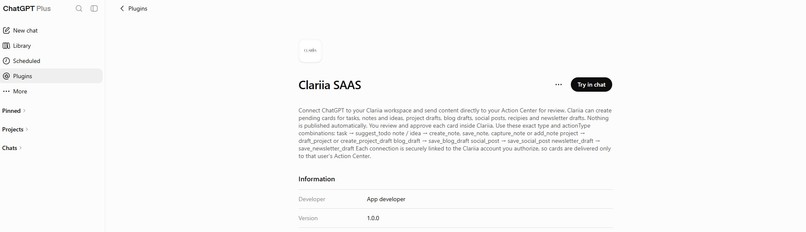
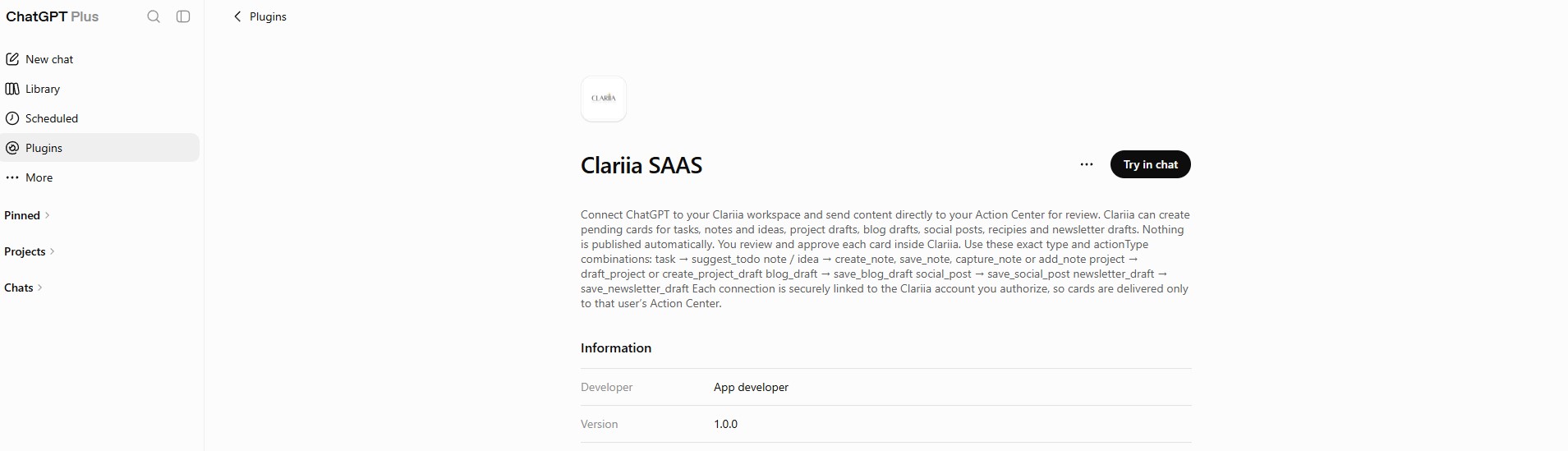
Clariia SAAS Plugin
-
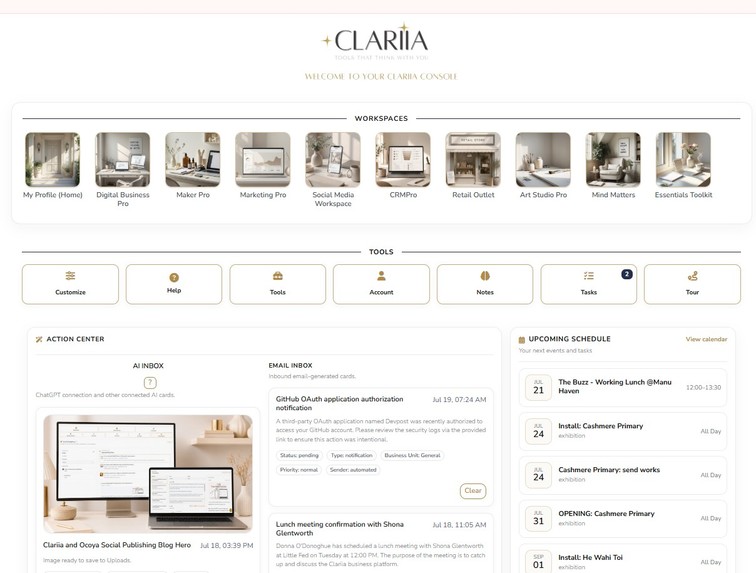
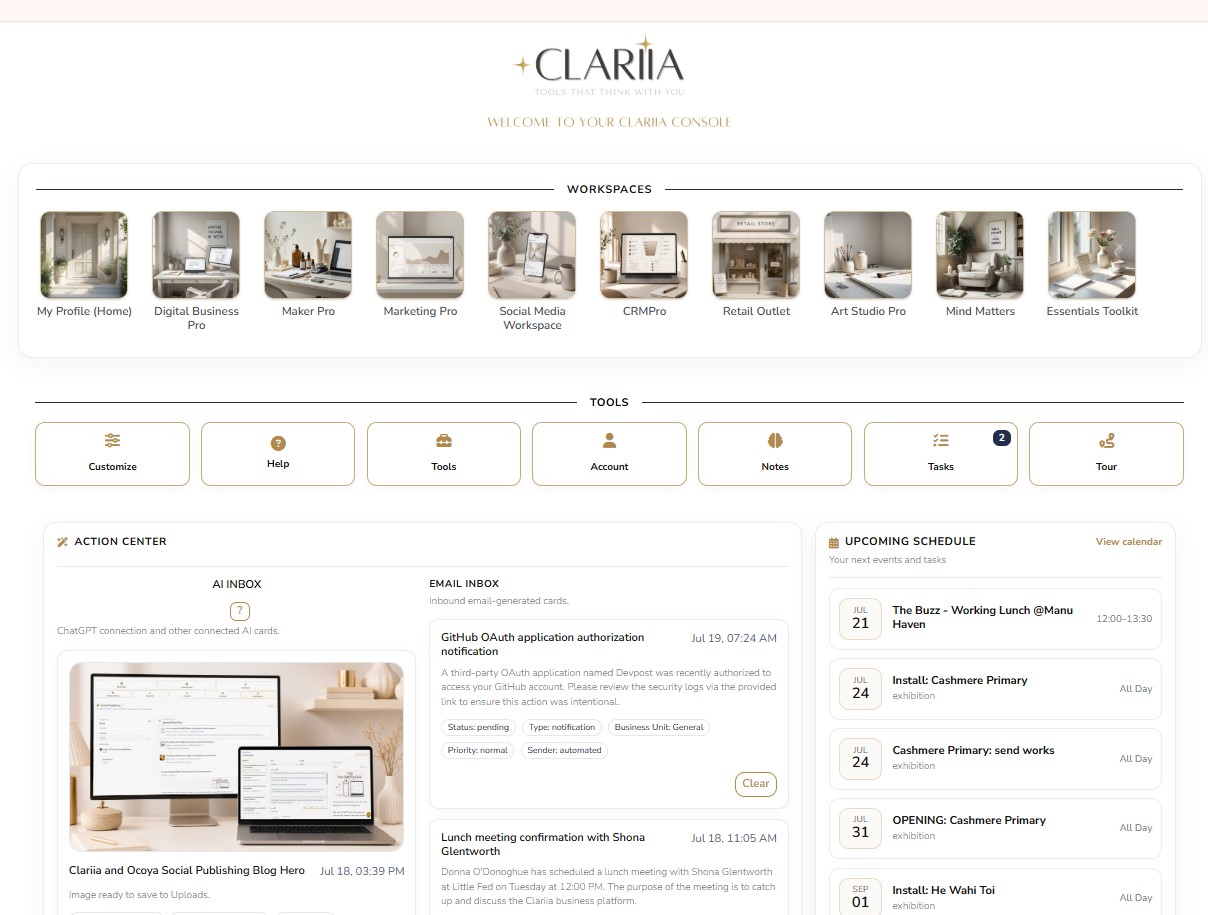
Clariia AI inbox
-
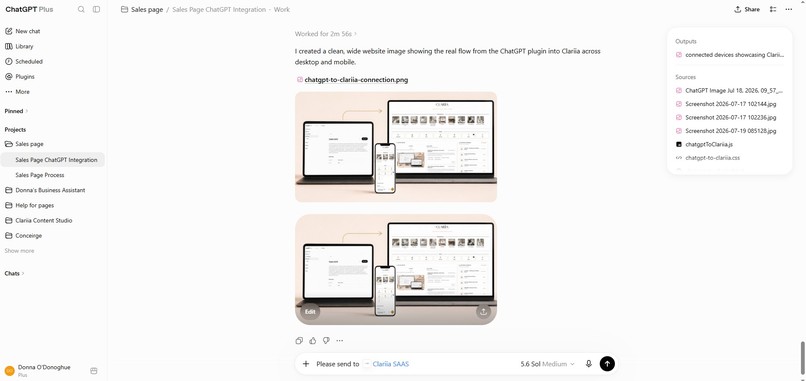
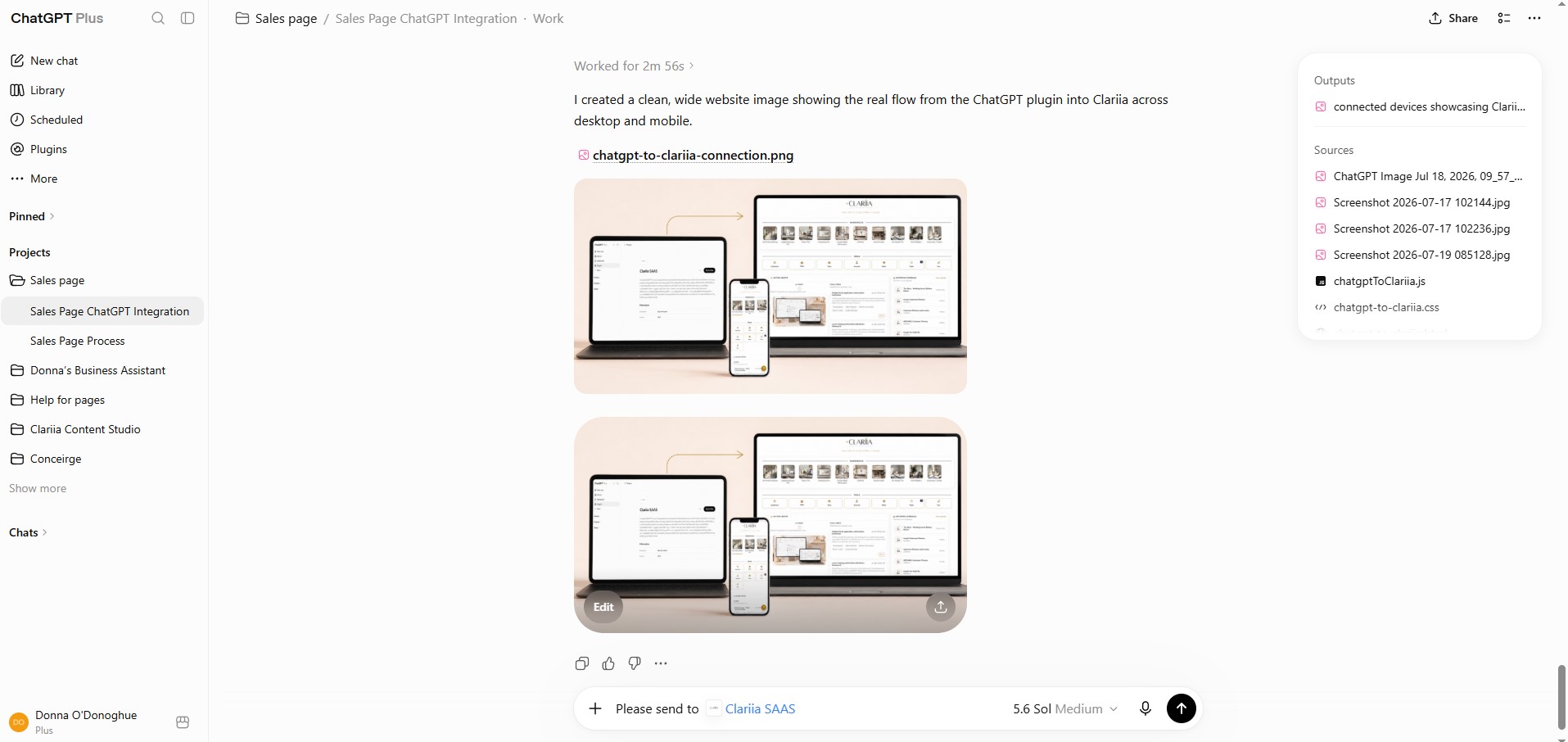
Image creation pre send
-
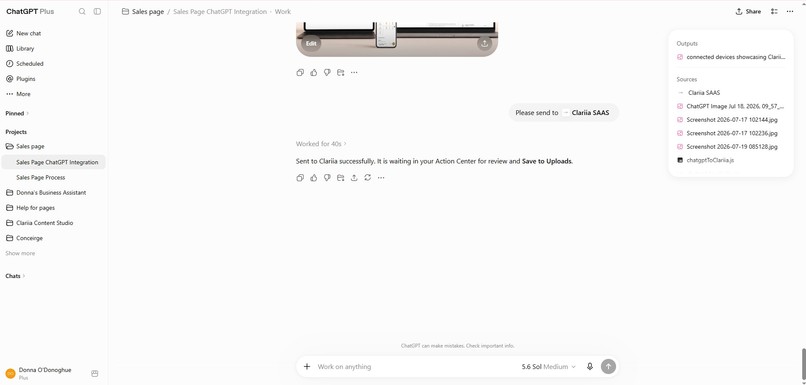
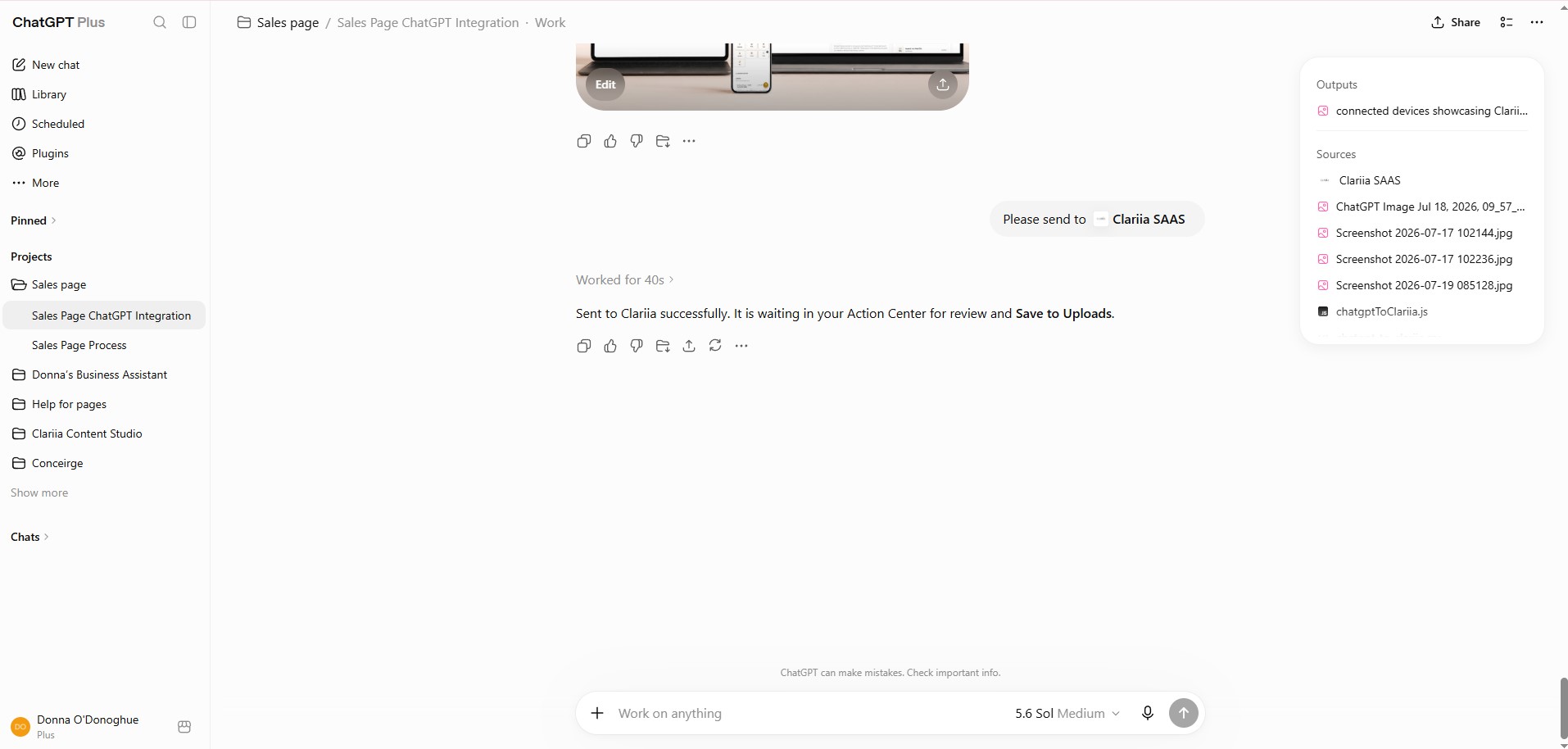
send confirmation
-
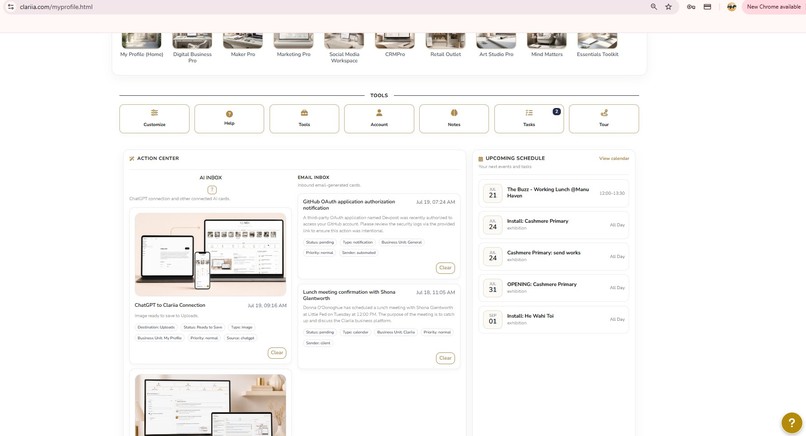
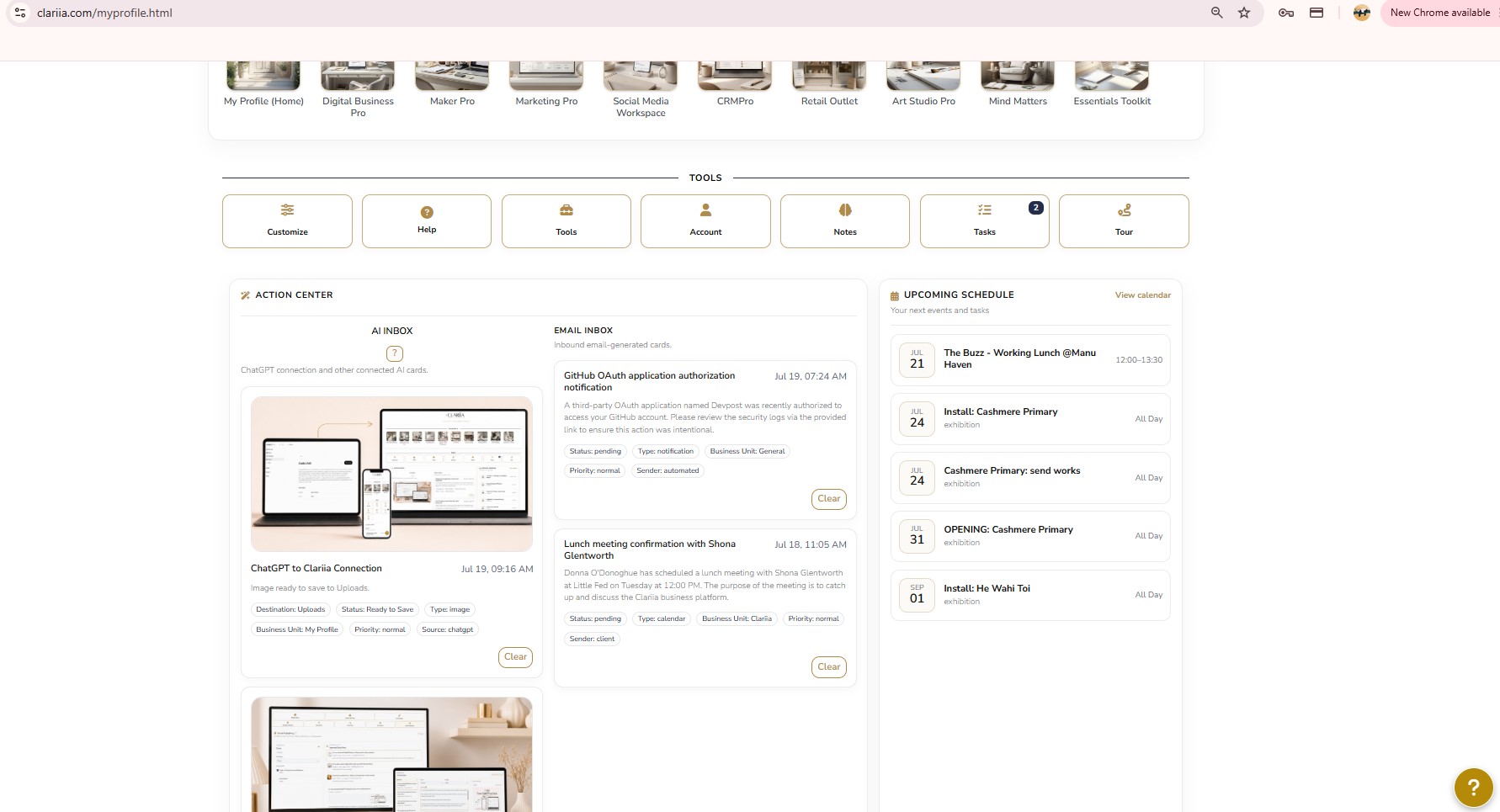
Image arrival in AI Inbox pre distrubution
-
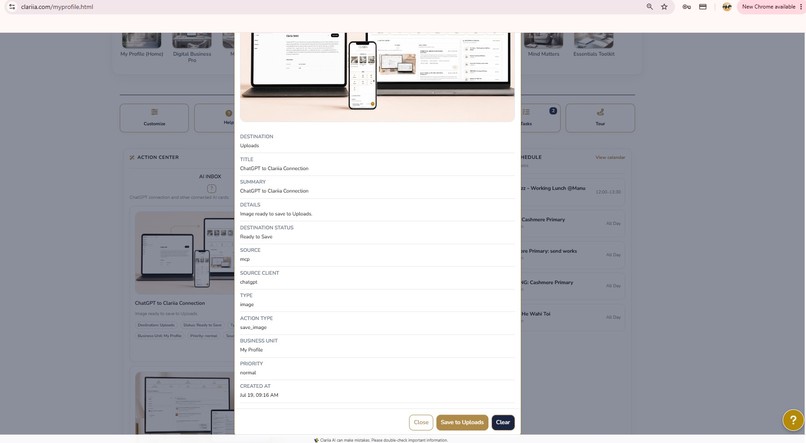
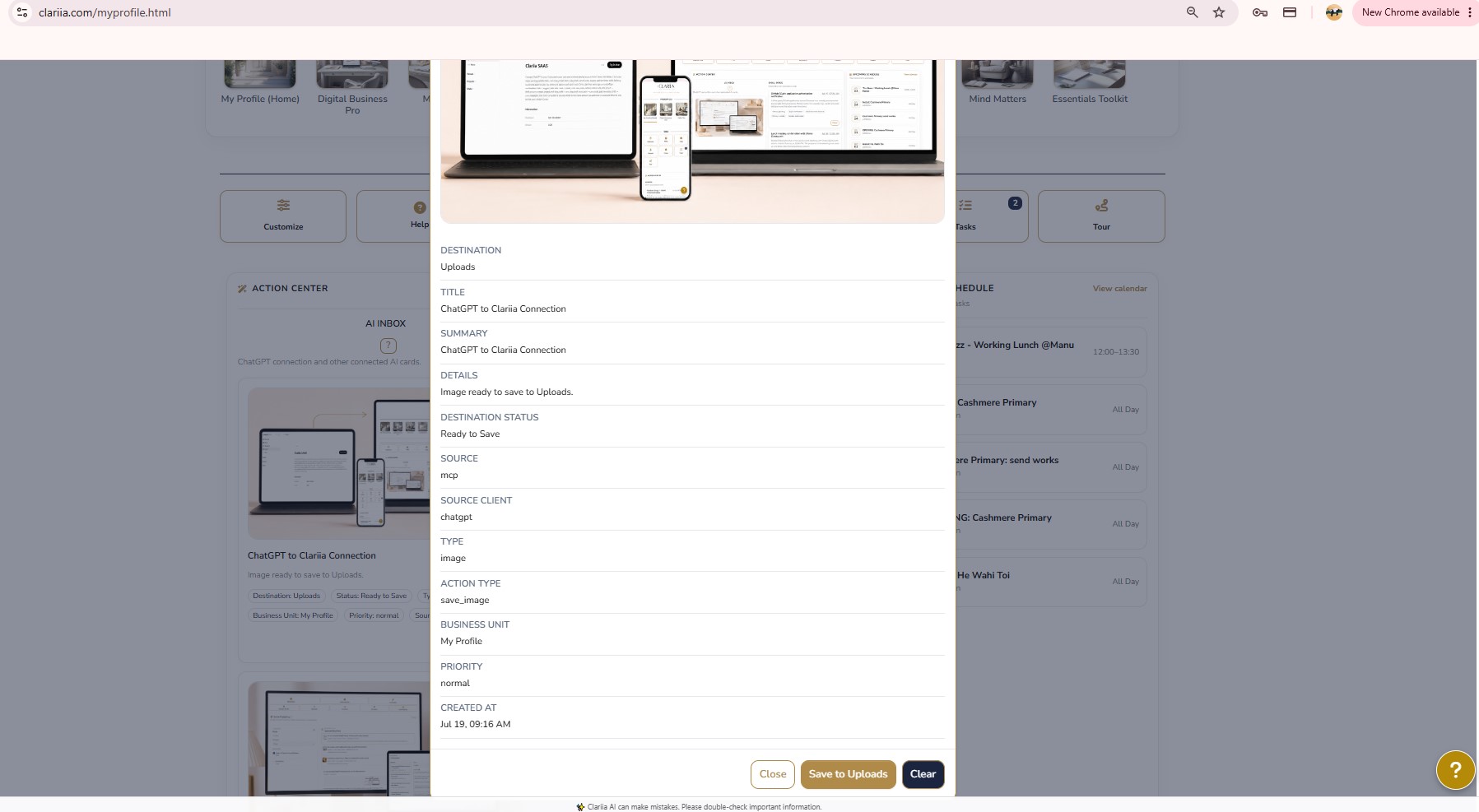
Pop-up distrubution screen
-
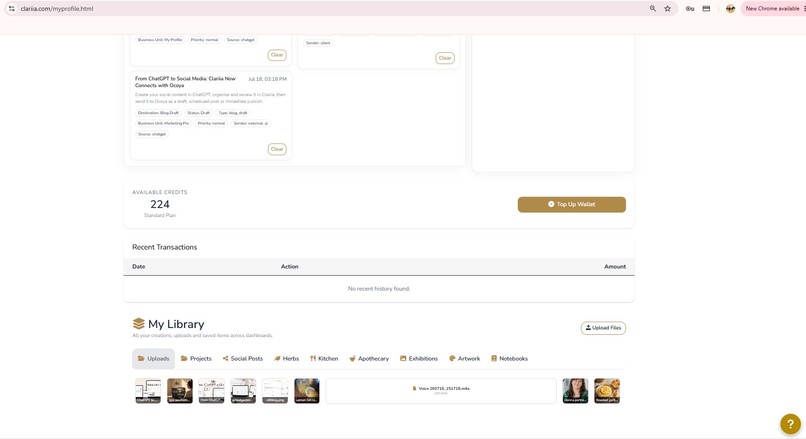
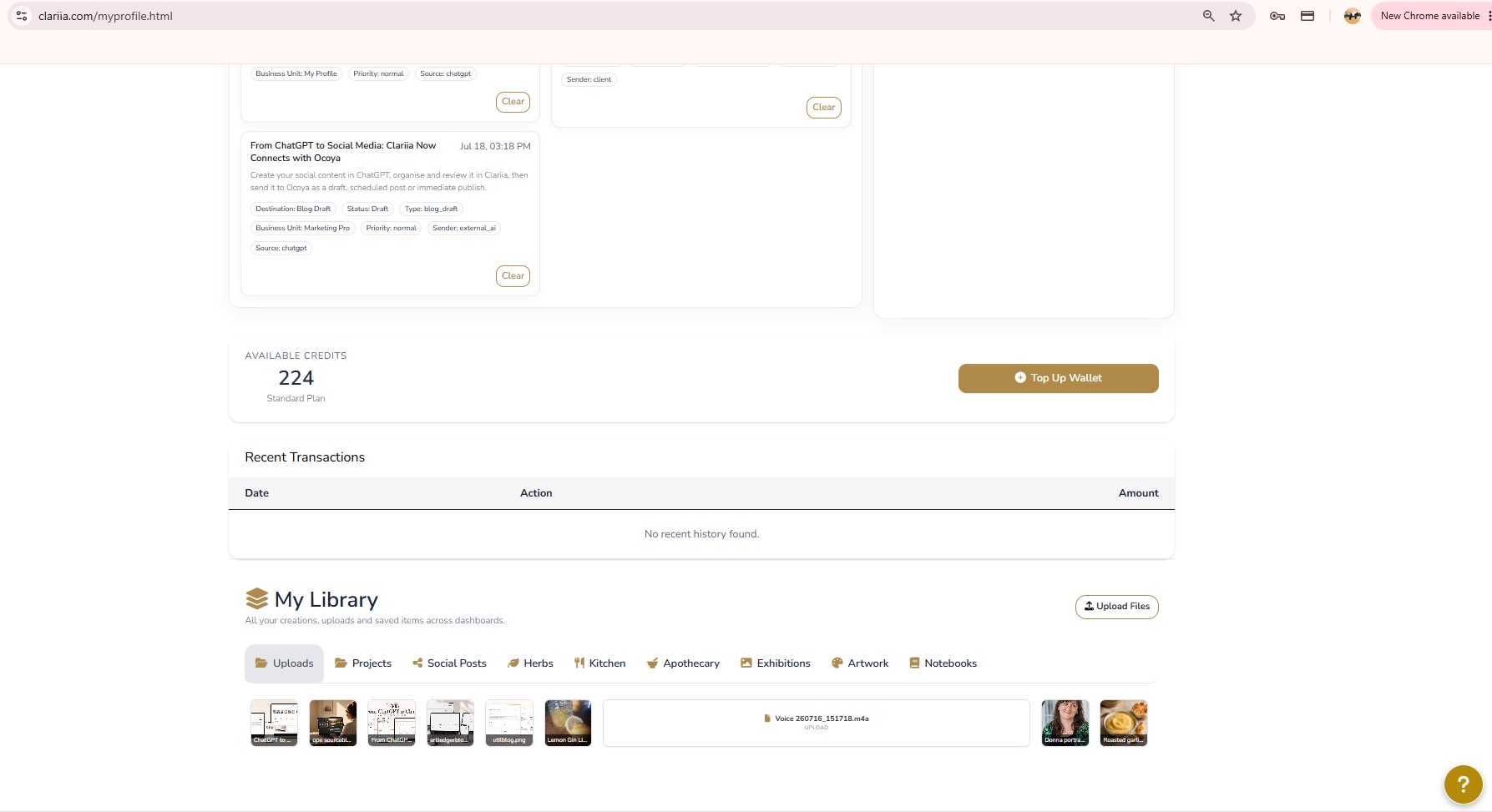
Image saved in upload library
-
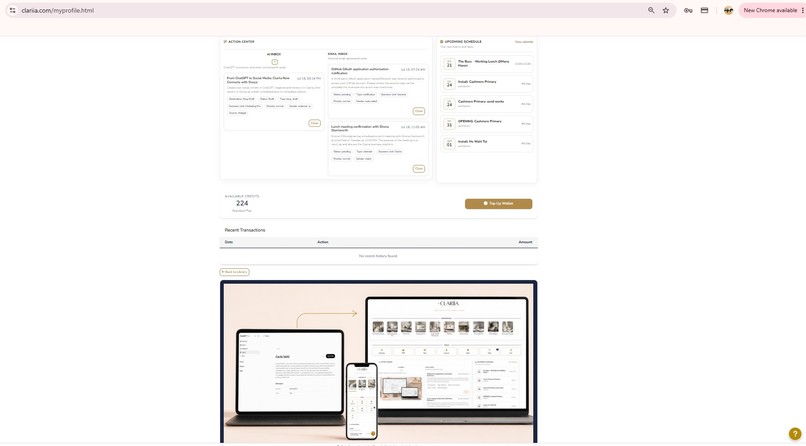
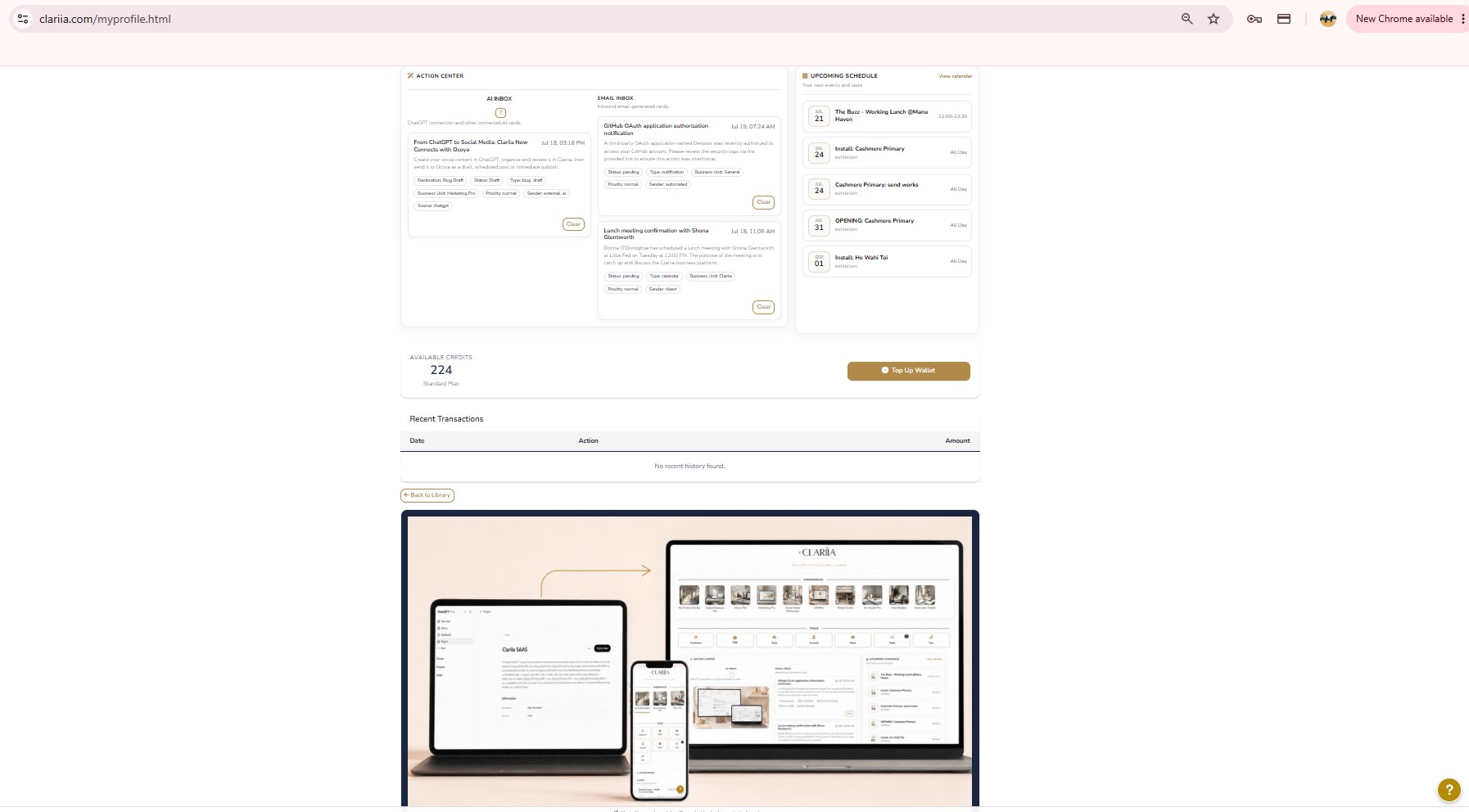
Image saved in upload library (2)
Inspiration
I created Clariia to help solopreneurs and small-business owners keep their work organised and make running a business less overwhelming.
Social media is something I personally struggle to stay consistent with. I can create useful posts, blogs and newsletters in ChatGPT, but getting that work out of a conversation, into the correct business system and eventually onto social media still involved too much copying, pasting and reorganising.
I built Clariia Action Inbox to solve that problem for myself and for the people I created Clariia to support.
What it does
Clariia connects securely to ChatGPT through the Model Context Protocol (MCP).
A user can create something in ChatGPT and send it to their Clariia Action Inbox. Supported content includes tasks, notes, projects, blog drafts, social posts, newsletter drafts, recipes and images.
The content arrives as a pending card for the user to review. Nothing is automatically published or permanently filed. The user decides whether to send it to the appropriate Clariia workspace, keeping them in control while creating an organised record of their work.
How we built it
I am an artist and business owner rather than a traditional software developer. I built the integration using ChatGPT, GPT-5.6, OpenAI Codex, Visual Studio Code, JavaScript, Node.js, Firebase, Firestore, OAuth and MCP.
I made the product, workflow and security decisions, then used Codex to inspect the system, implement changes, diagnose failures, write tests and verify the live workflow.
Clariia and the original Action Inbox foundation existed before Build Week. During Build Week, I substantially extended and strengthened it. This work included improving OAuth sign-in and reconnection, reorganising the MCP architecture, adding Recipe and Image workflows, improving routing and diagnostic logging, extending Blog Draft fields and retesting all supported destinations.
Challenges we ran into
Authentication was one of the biggest challenges. ChatGPT needed to connect to the correct Clariia account without replacing the user’s normal signed-in session or allowing account ownership information to be supplied by an external tool.
I also encountered routing problems where content arrived as the wrong card type, appeared to succeed without enough evidence or was connected to the wrong Google account.
My early prompts were not always precise enough, and at times that sent the work around in circles. I learned to give Codex clearer boundaries, identify exactly which systems were in scope and require evidence before accepting a change as successful.
Accomplishments that we're proud of
The Action Inbox now works as a real production workflow from ChatGPT to Clariia.
ChatGPT can securely send several types of useful content to the authenticated user’s account. Every item remains pending until the user reviews it, and the authenticated identity is established by the server rather than accepted from the tool request.
I am particularly proud that I built and tested this as a non-traditional developer. The finished demonstration shows a Facebook post being created in ChatGPT, delivered to Clariia, reviewed in the Action Inbox and saved into the Social Posts workspace.
What we learned
I learned that using AI to build software still requires strong human judgement. Codex could implement and test complex changes, but I needed to define the problem, protect the user experience, question uncertain results and decide what “working” actually meant.
I also learned the importance of testing the complete live workflow. A successful-looking response is not enough. I needed proof that the correct card was created for the correct user and could be sent to its intended destination.
What's next for Clariia Action Inbox
The next step is to make the connection and onboarding process easier for everyday users who may not understand MCP or think of themselves as technical.
I also want to test the workflow with more solopreneurs and small-business owners, improve the guidance inside Clariia and continue refining how created work is organised and moved into the appropriate workspace.
The goal remains simple: help people turn useful ChatGPT conversations into practical, organised work without taking control away from them.

Log in or sign up for Devpost to join the conversation.