-
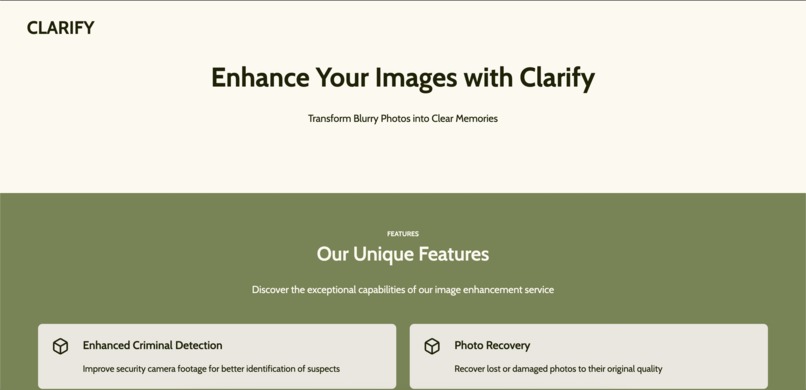
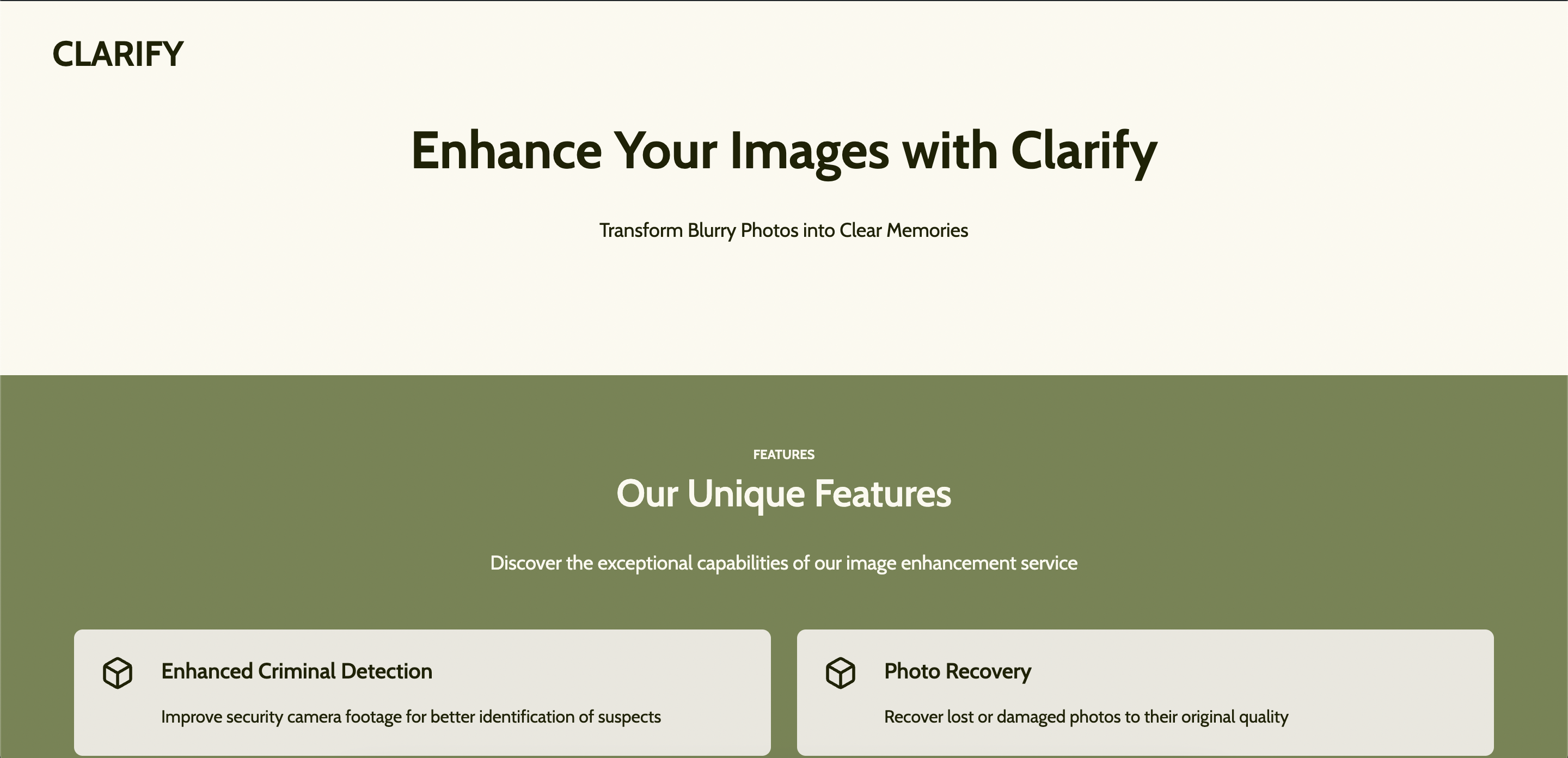
A sneak peek at our website!
-
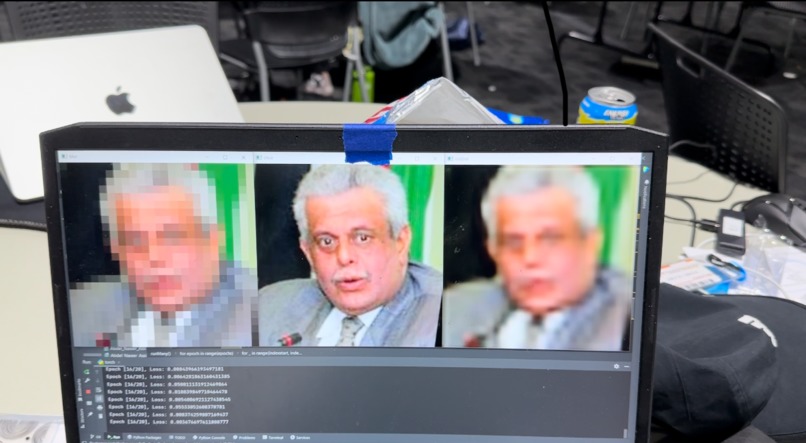
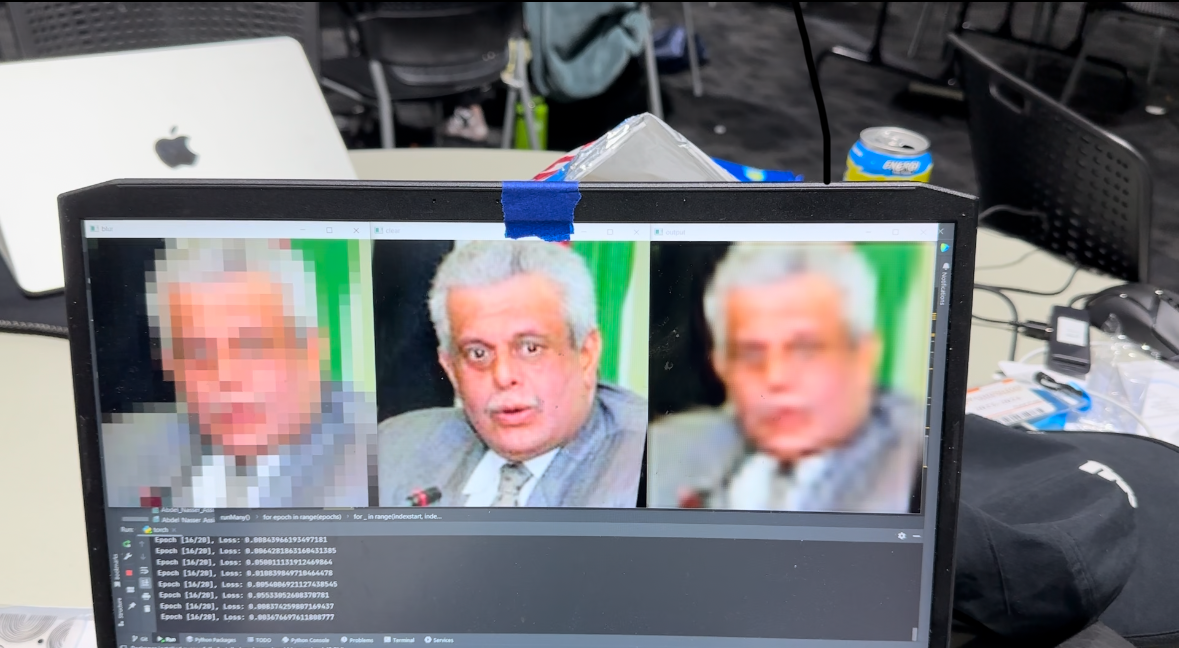
After a bit of training, a clear result emerged. (Left: Input, Middle: Target, Right: Reconstruction)
-
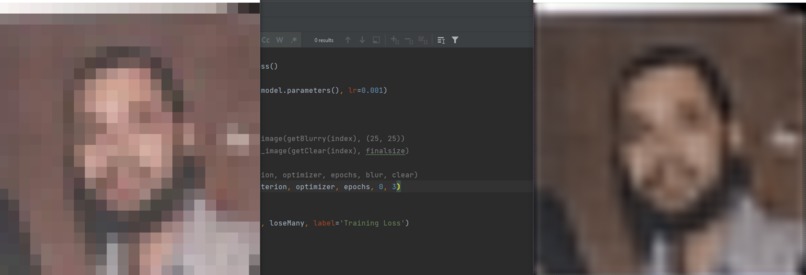
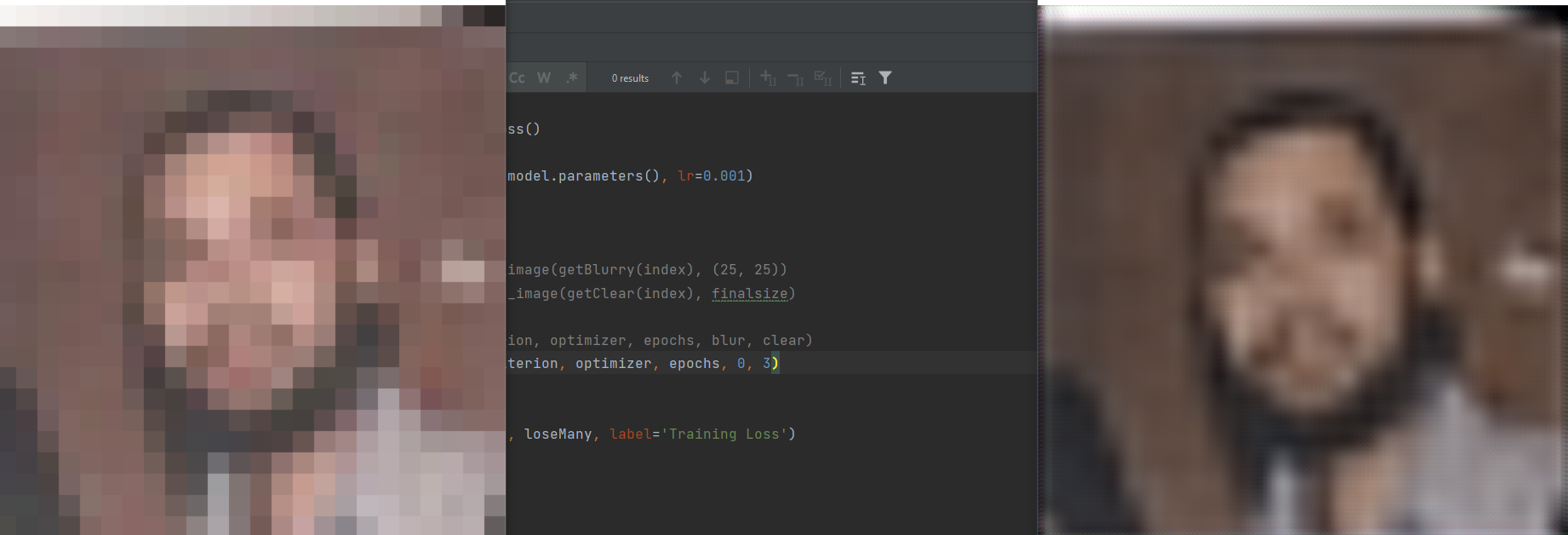
Left: Input (Pixelated), Right: Output (Sharpened)
Inspiration
Count to fifteen in your head.
In the time you've been counting, a home has been burglarized in the US. Thousands of dollars in precious valuables may have been stolen, including objects that were priceless. Even equipped with modern technology, people's lives continue to be threatened on a daily basis.
Security camera footage seems like the best solution to catch criminals, but _ instead _, dirt, rainwater, and cobwebs cover the cameras, veiling the thief's face in a blur. People give up hope, without any real evidence to report to police.
That's where Clarify comes in, a one-of-a-kind AI image clarification tool.
Functionality
Once a user visits our website, they can choose an image to upload. Then, this image is sent to our servers and, within seconds, a sharpened image is returned: with reduced blur and enhanced visuals. This model has been extensively trained and fine-tuned to suit all types of faces. This ensures that the model does not discriminate based on factors like race and gender, which ensures equality for all.
How We Built It
We utilized one of many widely available facial recognition databases, which gave us 13,000+ clear face images. This data was then downsampled to one tenth of the original resolution and classified as training data. We developed a De Convolutional Neural Network (DeCNN) from scratch, which contains several convolutional layers. During the training phase, where we fed it more than 10,000 images, it adjusted its parameters to better optimize for the inputs. Afterwards, we ran it on the testing data, which was able to upscale the resolution and restore it to a more recognizable state. For our desktop edition, we used Resnet-blocks and Pixel Sorting to increase complexity while maintaining stability.
Challenges
Many aspects of this project were challenging. For example, creating the neural network from scratch and attempting to integrate a Flask database to provide a user-friendly experience both were time-consuming and stressful. Additionally, we had to anticipate nuances such as overfitting the model, and combat them with the skills we had.
Accomplishments
We were able to develop a functioning CNN model in just under 24 hours, an achievement that can take multiple weeks for scientific researchers to achieve. We also published an original website which made it more presentable to users. This technology has the potential to help the lives of many.
What We Learned
We learned a lot about the operations behind convolutions, as well as how to debug neural networks. We also learned the challenges of developing a database.
Future of Clarify
We plan to expand the capabilities of its use; such as constantly improving and diversifying the dataset. We also want to finalize the website to ensure that it works efficiently and is easily accessible to all people. We want to expand the dataset to include non-portrait images. We're excited to see where this project will take us!


Log in or sign up for Devpost to join the conversation.