-
-
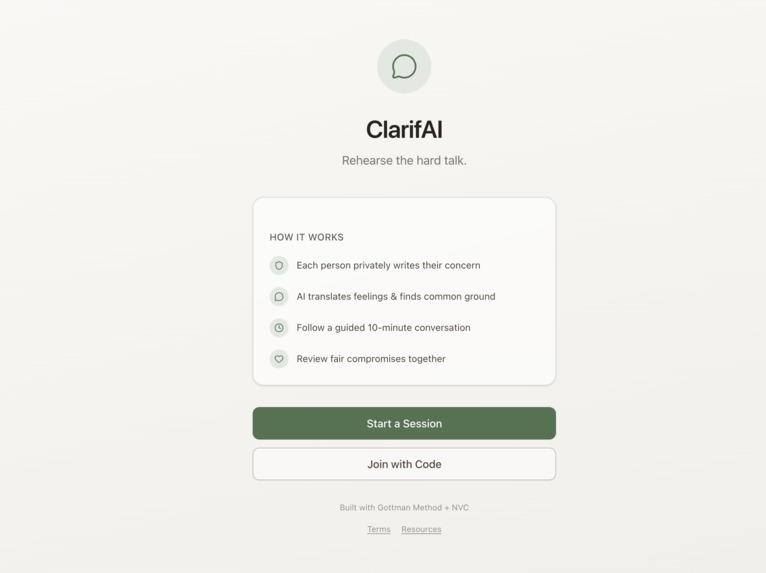
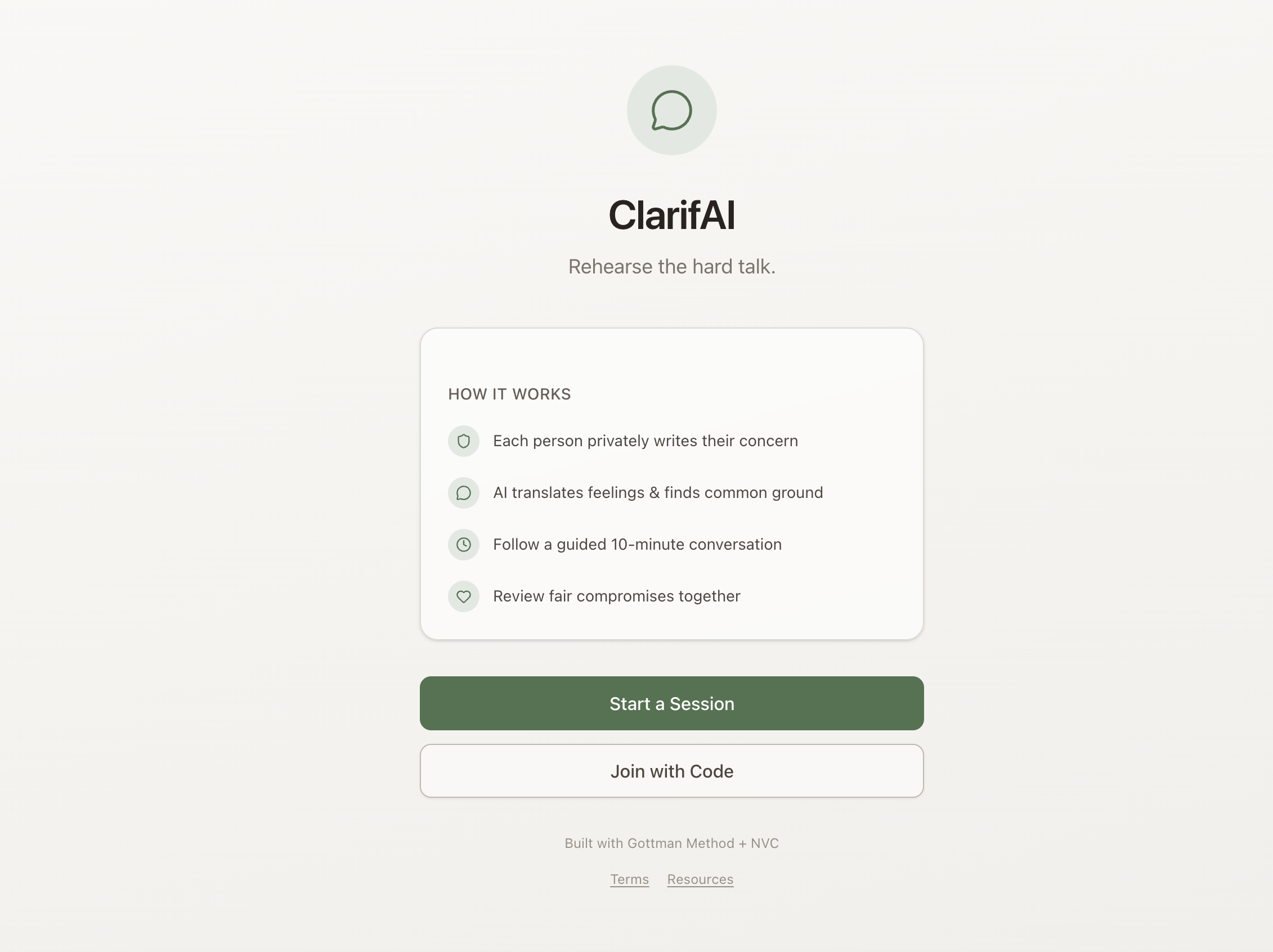
Home Screen
-
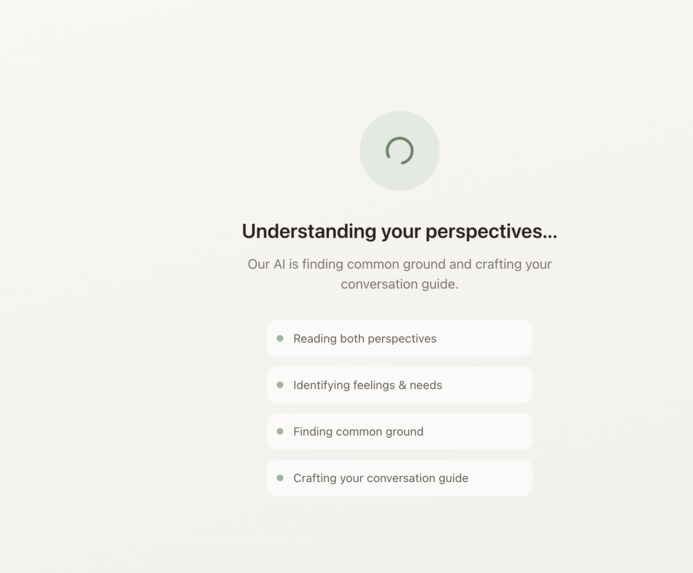
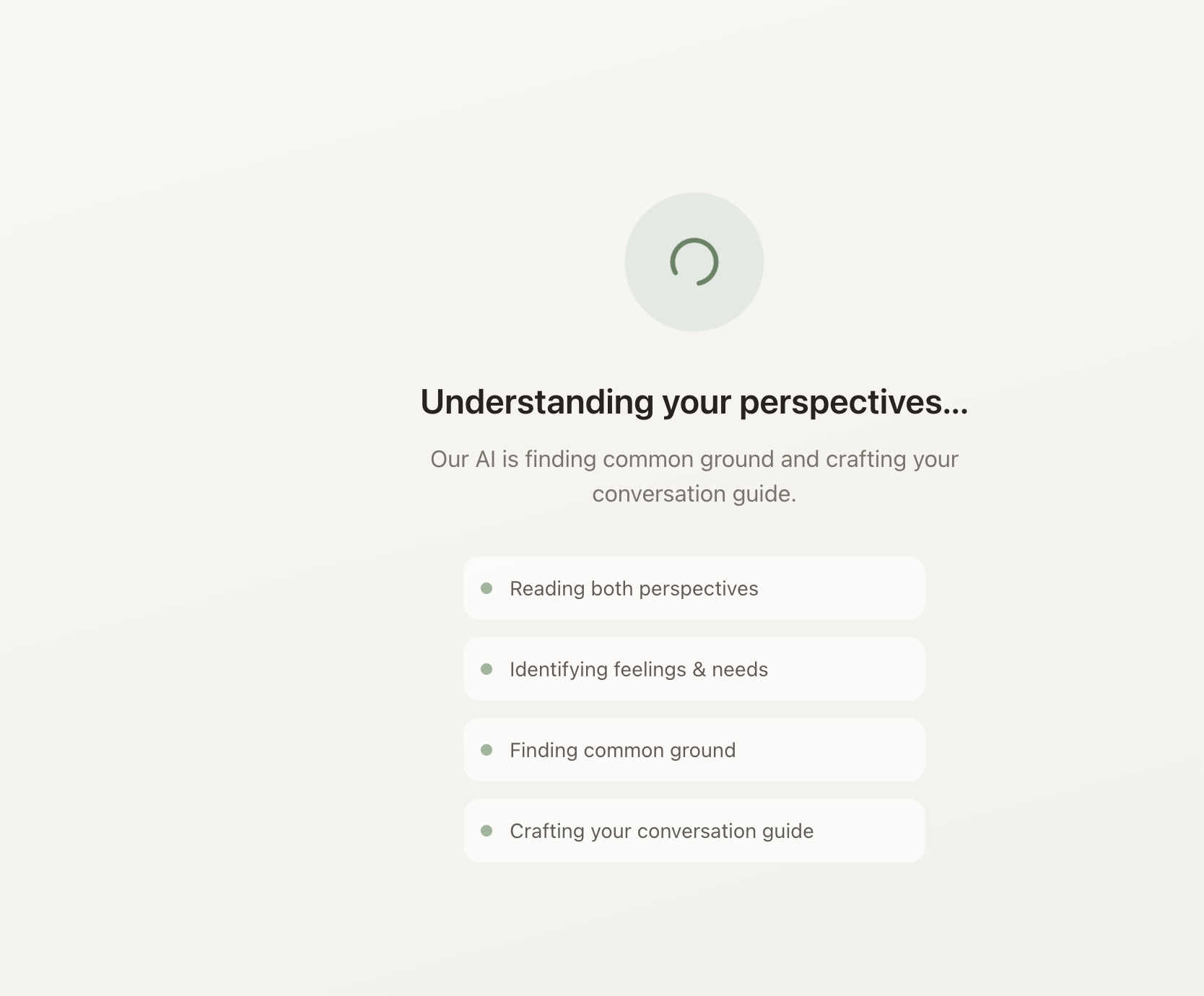
AI analyzing emotional concerns of each perspective
-
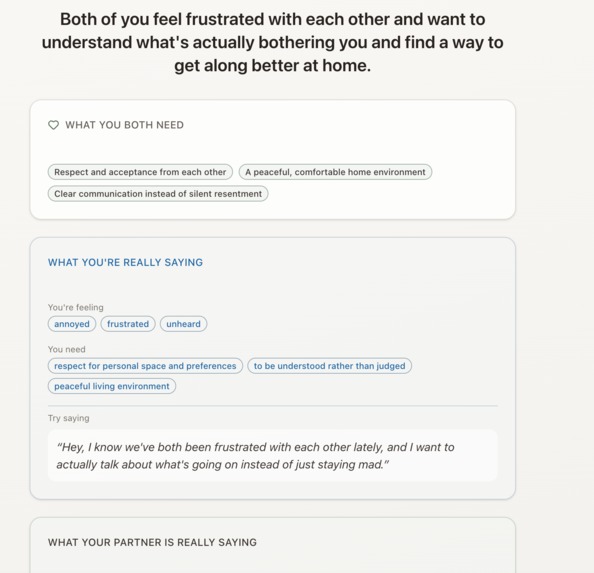
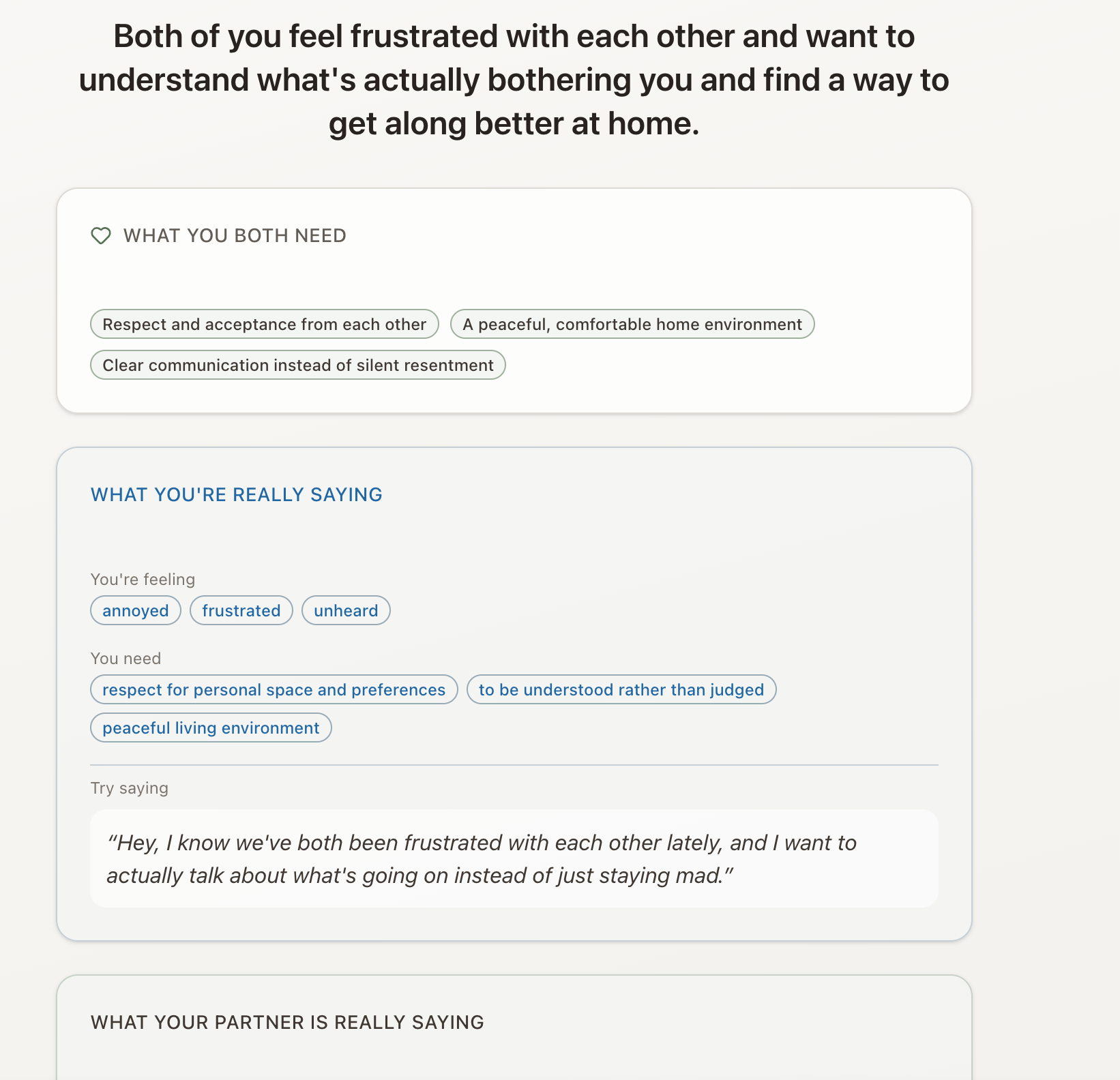
AI analyzed the concerns
-
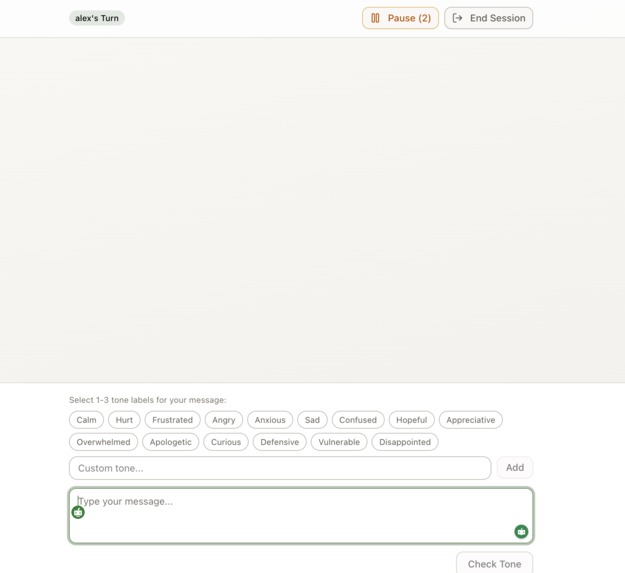
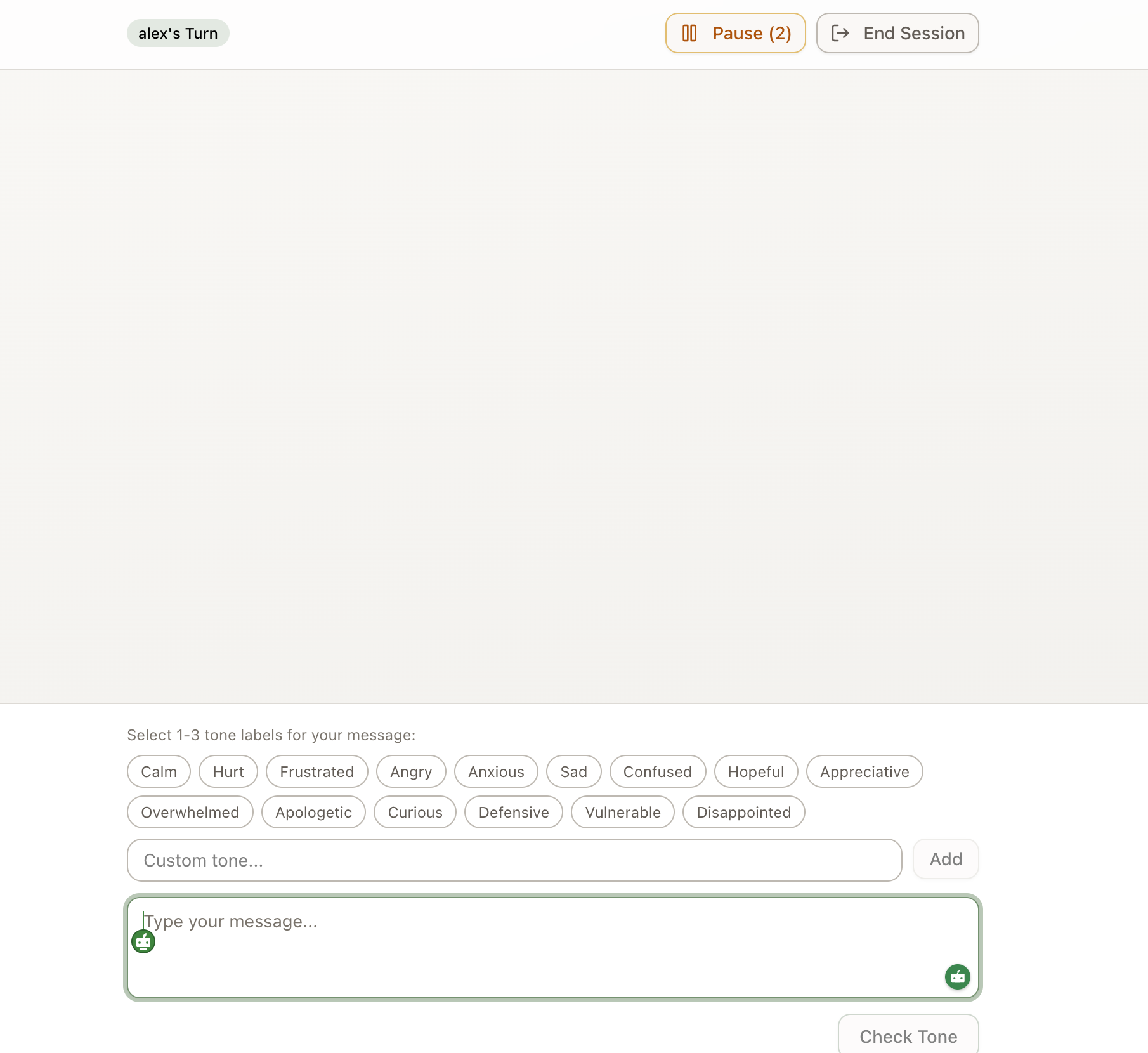
Conversation section
Inspiration
The inspiration for this project came from observing firsthand how many relationships deteriorate not because of unsolvable issues, but because of unproductive conversations. As people who have gone through breakups ourselves, we know that many relationships don’t end because of a lack of care, but because difficult conversations go wrong. Whether it's friends, roommates, couples, or even parents, they often struggle to communicate during moments of conflict, especially when emotions are high and misunderstandings escalate quickly.
While professional mediation and therapy can be effective, they are not always accessible, timely, or affordable. At the same time, existing communication tools often lack structure or guidance, leaving individuals to navigate sensitive discussions on their own, which can result in defensiveness, emotional shutdown, or escalation.
We were inspired to develop an AI-powered relationship mediation application that serves as a neutral, supportive guide during challenging conversations. By integrating evidence-based frameworks such as the Gottman Method and Nonviolent Communication, the application helps users slow down, reflect, and engage more constructively.
Our goal is not to replace human connection or professional help, but to create a safe, structured space where people feel heard, respected, and empowered to resolve conflict productively, before small issues become lasting damage.
What it does
ClarifAI is an AI-powered relationship mediation application designed to help couples and roommates navigate difficult conversations productively. It provides private, structured conversation rooms where two participants can communicate through a guided, turn-based chat that reduces escalation and promotes understanding.
Using evidence-based conflict resolution frameworks such as the Gottman Method and Nonviolent Communication, ClarifAI analyzes messages in real time to offer constructive guidance, tone feedback, and suggested reframes before messages are sent. This helps users express concerns clearly while minimizing defensiveness and misinterpretation.
The platform includes built-in safety features, including automatic detection of concerning language related to coercion, violence, or self-harm, as well as a pause system that enforces short breaks when conversations become emotionally intense. All interactions are kept private and anonymous, with anonymized data optionally contributing to ongoing research in conflict resolution and healthy communication.
How we built it
We built ClarifAI using Next.js and React for the frontend, with Supabase handling the database, authentication, and real-time updates. The AI features are powered by Claude (via OpenRouter, which enhances reliability through a load-balancing model), analyzing conversation entries, checking tone, and providing mediation guidance based on principles from the Gottman Method and Nonviolent Communication. Tailwind CSS and Radix UI were used to create a clean, accessible interface, while Supabase Realtime enables turn-based chat, pause timers, and live room updates.
Challenges we ran into
Throughout the project, we encountered several technical obstacles. Early on, we resolved lightningcss errors with a simple macOS command. We also faced turbopack bundling issues, which we solved by using webpack for production while keeping turbopack locally for faster testing speeds.
Our biggest challenge came the morning of submission, less than an hour before the deadline. Two production deployments on Vercel both had fatal flaws, causing unauthorized errors on the /api/rooms endpoint. We frantically searched through logs and rolled back one version, still broken. Vercel's hobby tier only allows one rollback at a time, and we couldn't reach the working deployment we needed.
Then we had a breakthrough: we deleted the latest deployment, shifting everything back so our target became the new previous version. This allowed us to roll back once more and successfully reach the stable deployment. With minutes to spare, our app was back online, a testament to staying calm under pressure and thinking creatively within platform limitations.
Accomplishments that we're proud of
- Coming up with the Project Idea
- Building this project in such a short time
- The AI being able to respond and guide to human emotions, something a basic GPT can lack
- It contributes to human emotion research
- We successfully integrated evidence-based conflict resolution techniques
What we learned
Through this project, we learned how important UX design is when dealing with emotionally sensitive situations. Small design choices, like limiting message frequency or adding a pause button, can significantly change how people communicate. We also gained experience integrating AI responsibly, especially around safety, reliability, and bias. On the technical side, we learned a lot about real-time systems, state synchronization, and building full-stack applications under tight time constraints.
What's next for ClarifAI
In the future, we want to add voice and video mediation options, customizable mediation styles, and post-conversation summaries with actionable suggestions. We also plan to expand safety features, improve AI personalization, and collaborate with researchers and counselors to further validate and refine the mediation models. Long-term, ClarifAI could be used not only for personal relationships but also for schools, workplaces, and community conflict resolution. We
Built With
- claude
- next.js
- radix
- react
- supabase
- tailwind
- vercel


Log in or sign up for Devpost to join the conversation.