-
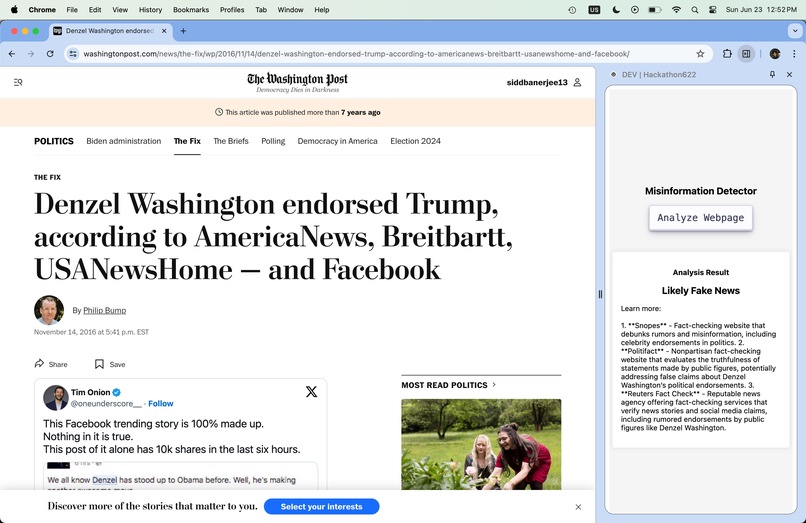
This headline eventually turned out to be fake, as our model correctly predicted. Resources for more information are below the analysis.

Inspiration
Misinformation has become more and more widespread, posing numerous societal and ethical concerns. We have seen these effects first hand, and hoped to help address this issue.
What it does
It's a chrome extension; you open a sidebar, and it determines if the site contains misinformation.
How we built it
To initially build the chrome extension, we used a framework called Plasmo. We built the front end in TypeScript and used react, and we built the backend in Python. We trained a logistic regression model using a data set with over 40000 lines of news text classified as true or fake, and then grabbed the URL from the current website and passed it through the Flask backend. Then, we scraped the text from the website and passed it through our machine learning model for analysis, finishing by displaying the results of the model on the sidebar for the user to see. Finally, we sent a request to the OpenAI API to display additional resources for a user to look into if they want more context or information about the topic that they are currently reading about.
Challenges we ran into
The onSubmit function of the html form was using defaults, which refreshed the page, so we spent a long time figuring out why the information was not going through to the model. We also found it a bit challenging initially because none of us had experience using react or flask.
Accomplishments that we're proud of
Our model is accurate and the user interface looks very good.
What we learned
We learned how to make a chrome extension, and connect the backend to the frontend with Flask.
What's next for Clarif.ai
Give a more accurate description of what exactly is false in the page, and allow users to give feedback to improve our model.
Built With
- flask
- javascript
- openai
- pickle
- python


Log in or sign up for Devpost to join the conversation.