Inspiration
ClarifAI was born from pure exam panic.
With a brutally difficult exam approaching in just 48 hours, I found myself drowning in messy PDFs, incomplete class notes, textbook screenshots, and random lecture materials scattered everywhere. Most study apps could summarize content, but they still didn’t actually teach me in a way that felt personal or engaging.
That sparked the idea:
What if students could turn any chaotic study material into a personalized AI tutor that adapts to how they learn best?
We wanted to build something that feels less like a rigid educational platform and more like a comforting, intelligent study companion that understands stress, urgency, and different learning styles.
That became ClarifAI.
What it does
ClarifAI transforms messy study materials into personalized learning experiences powered by AI.
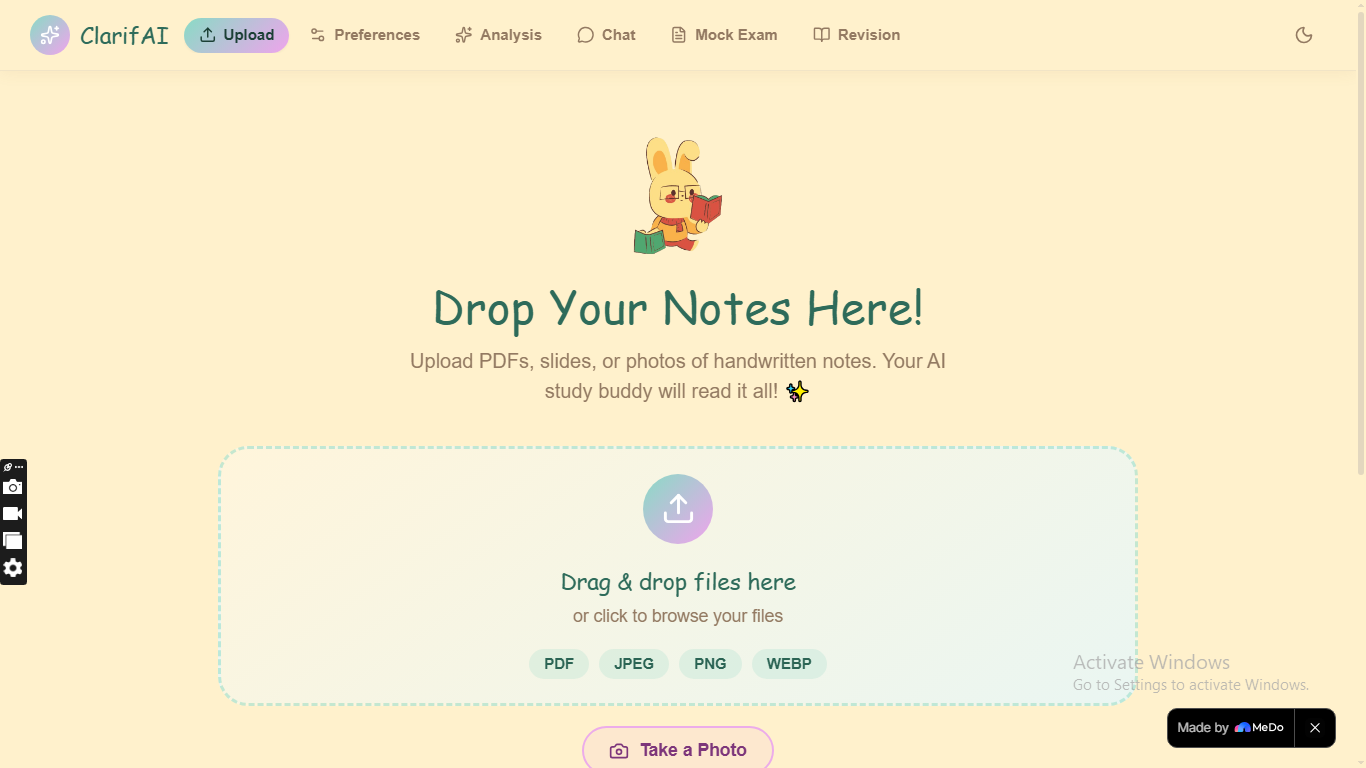
Users can upload:
- PDFs
- Handwritten notes
- Textbook images
- Lecture screenshots
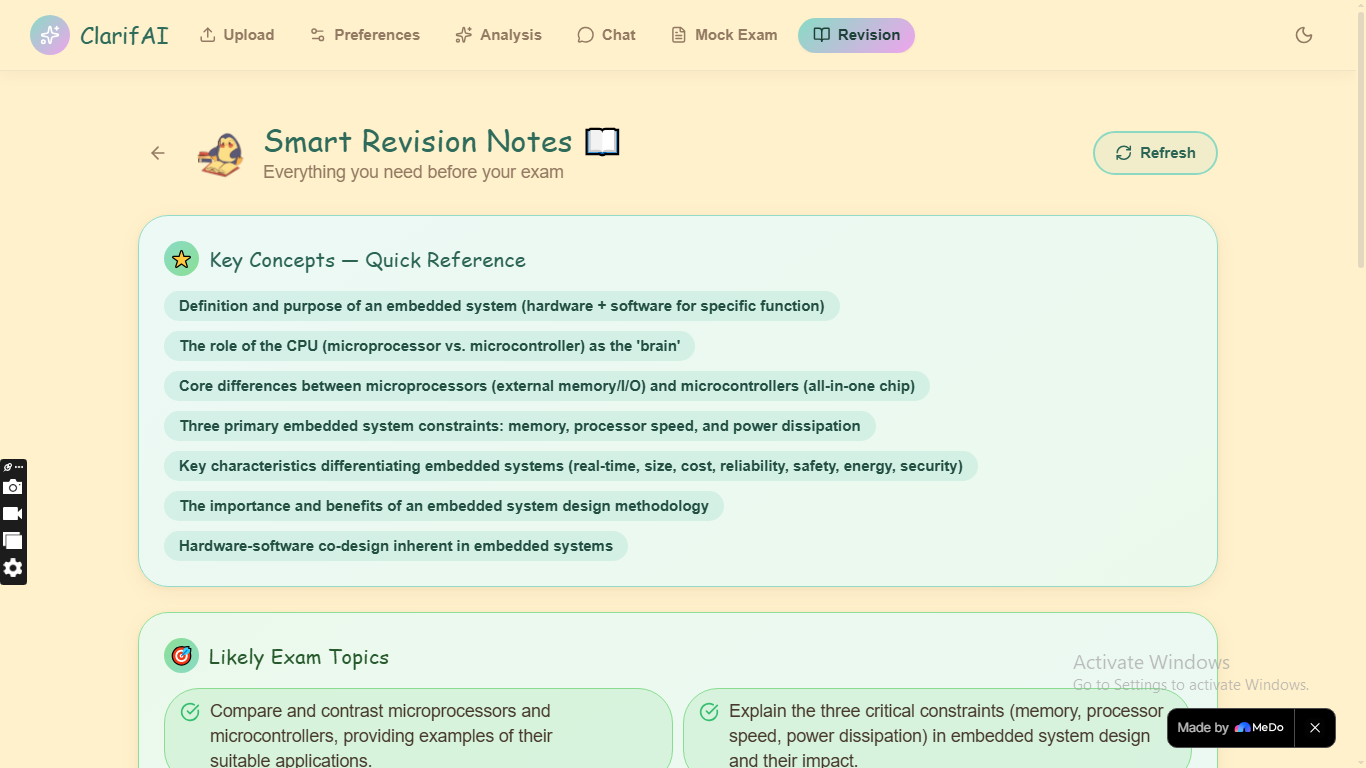
ClarifAI then converts them into:
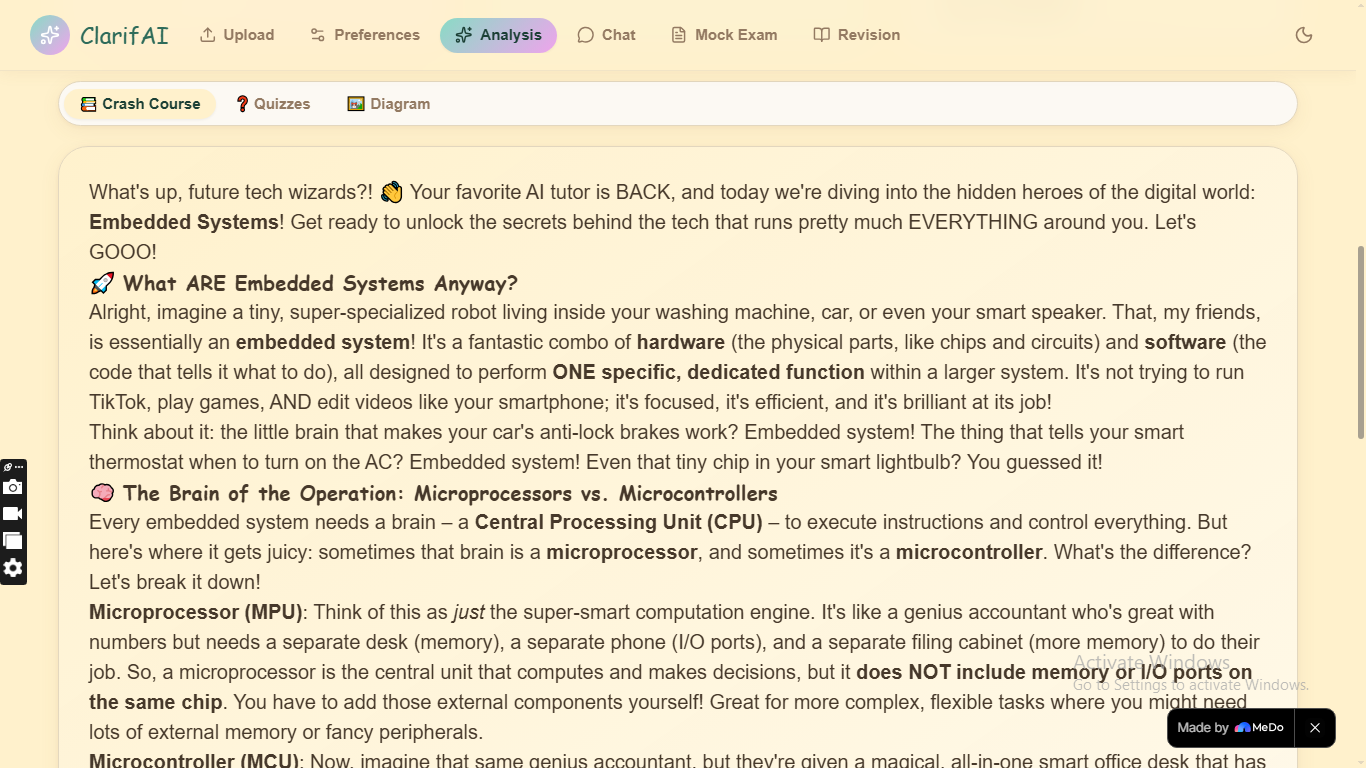
- Simplified tutorials
- Adaptive quizzes
- Crash courses
- Revision summaries
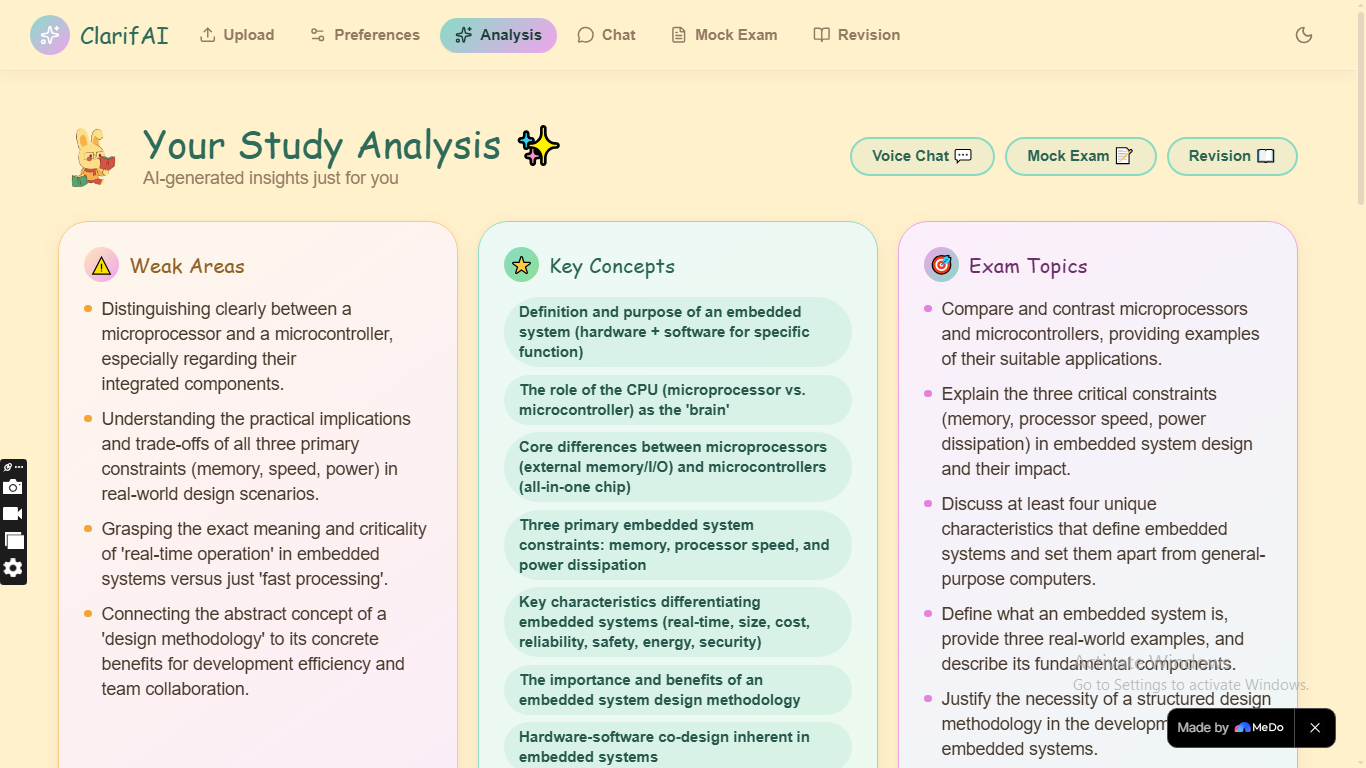
- High-probability exam topics
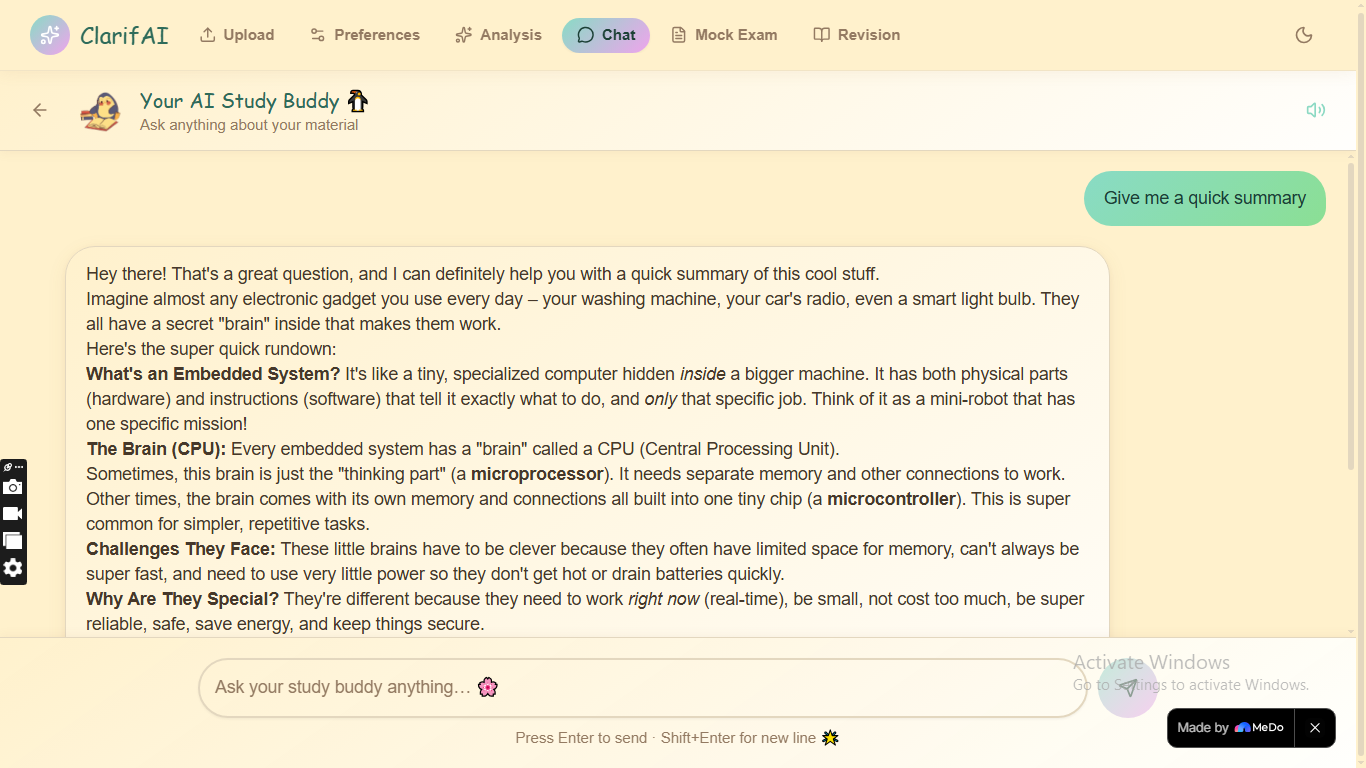
- Interactive AI explanations
- Voice conversations with uploaded notes
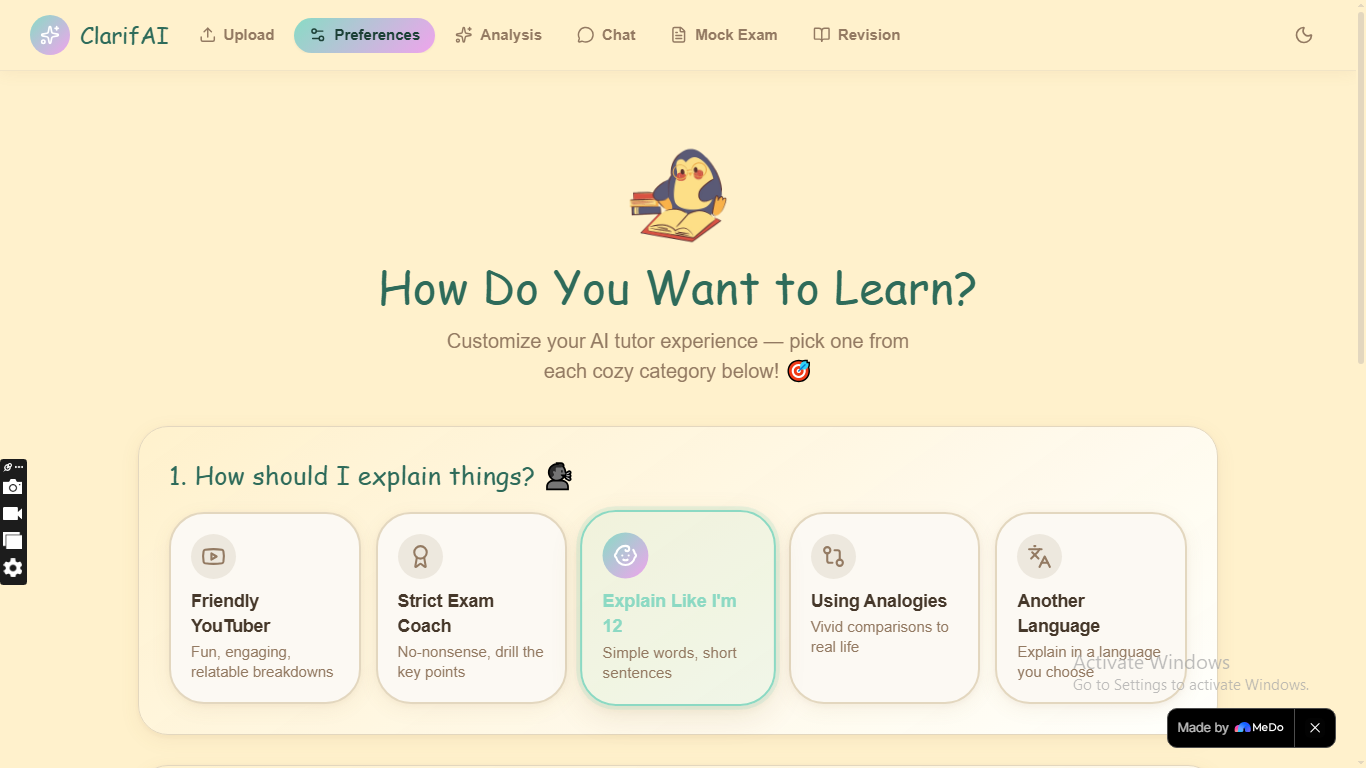
One of ClarifAI’s core features is personalized teaching styles.
Users can choose HOW the AI explains concepts:
- Like a friendly YouTuber
- Like a strict exam coach
- Like you’re 12 years old
- Using analogies
- In another language
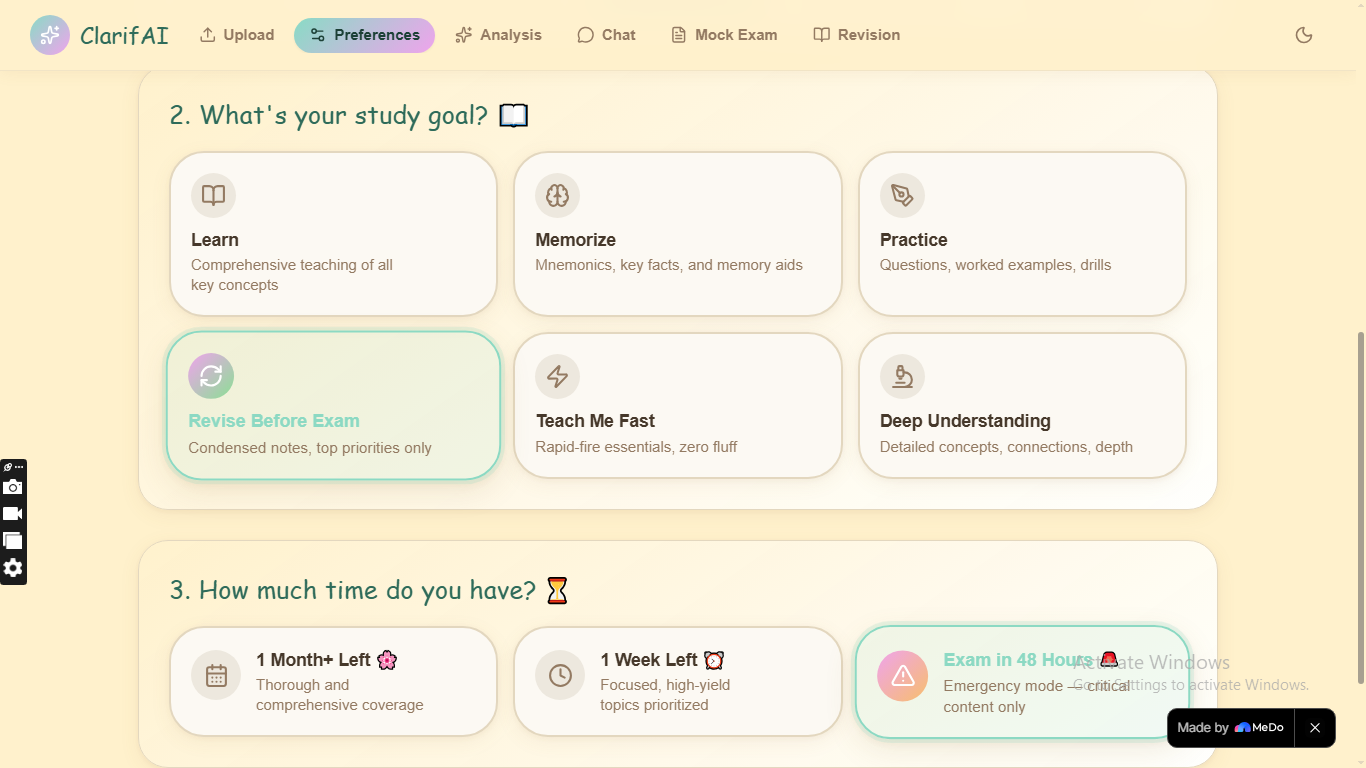
The platform also adapts based on exam urgency :
- 1 month+ left
- 1 week left
- Exam in 48 hours
This changes the pacing, depth, and revision strategy generated by the AI.
This is the favourite feature from many of my friends who've tried ClarifAI and that is because studying 48 hours before an exam is vastly different than having 1 week for the exam!
ClarifAI also detects:
- probable weak areas
- difficult concepts
- likely student misconceptions
and generates targeted revision content accordingly.
We designed the app with a cozy, cute, stress-reducing aesthetic to make studying feel less overwhelming and more approachable.
How we built it
We built ClarifAI during the MeDo Hackathon using MeDo's rapid product development workflows.
The platform was designed using:
- AI-assisted full-stack app generation
- OCR + document parsing workflows
- AI tutoring and summarization pipelines
- Adaptive quiz generation systems
- Personalized prompt engineering for learning styles
- Conversational AI interfaces for voice/note interaction
One of the most interesting parts of the development process was using MeDo’s requirements-first workflow. Instead of immediately generating random boilerplate code, MeDo first structured the application logic and workflows into a detailed requirements document before building the actual product.
This significantly accelerated prototyping and helped us move from concept → working MVP extremely quickly.
We focused heavily on:
- UX polish
- emotional design
- personalization
- AI interaction quality
- smooth onboarding
Challenges we ran into
One of the biggest challenges was balancing:
- simplicity
- personalization in learning
- AI flexibility
without overwhelming the user.
Because ClarifAI supports multiple learning styles, urgency modes, and content types, prompt engineering became surprisingly complex.
We had to ensure the AI could:
- explain concepts differently
- maintain accuracy
- adapt tone
- generate useful quizzes
- stay concise under exam pressure
Another challenge was handling inconsistent uploaded materials. Handwritten notes, blurry textbook images, and poorly formatted PDFs all required different processing approaches.
We also spent significant time refining the UI direction. Most AI education apps feel cold or overly corporate, so we intentionally designed ClarifAI to feel warm, comforting, and student-friendly (including cute mascots as "study buddies")
Accomplishments that we're proud of
We’re especially proud that ClarifAI feels like an actual learning companion rather than just another AI wrapper.
Some highlights:
- Built a working AI-powered personalized tutor during the hackathon
- Successfully generated adaptive learning experiences from messy study materials
- Created dynamic explanation modes with different teaching personalities
- Developed urgency-aware study flows for last-minute exam preparation
- Designed a cozy and emotionally engaging UI experience
- Achieved a surprisingly polished MVP in a very short time
One of our favorite moments was seeing confusing notes transform into genuinely understandable lessons in completely different teaching styles.
What we learned
This project taught us that educational AI becomes much more powerful when it focuses on:
- personalization
- emotional experience
- learning psychology
instead of only summarization.
We also learned how important UX and tone are in AI products. The same information can feel dramatically more engaging depending on how it’s explained.
From a technical perspective, we learned a lot about:
- AI workflow orchestration
- prompt engineering
- adaptive content generation
- OCR limitations
- conversational learning systems
We also experienced how powerful rapid AI-assisted prototyping can be for turning ideas into functional products incredibly quickly.
What's next for ClarifAI
We want to evolve ClarifAI into a fully adaptive AI learning platform.
Future plans include:
- Real-time study progress tracking
- Spaced repetition systems
- Multiplayer/group study rooms
- Exam prediction models
- Emotion-aware tutoring
- Gamified revision systems
- Mobile app support
- Deeper voice tutoring interactions
We also want ClarifAI to support students globally by expanding multilingual capabilities and improving accessibility for different educational systems.
Our long-term vision is simple:
Make studying feel less overwhelming and more human.
Built With
- gemini
- medo
- ocr-web-service
- voice

Log in or sign up for Devpost to join the conversation.