-
-
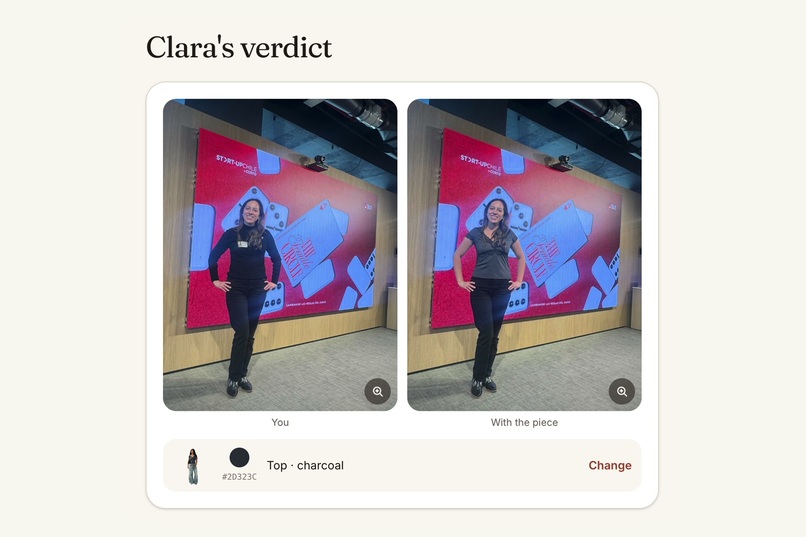
Virtual try on
-
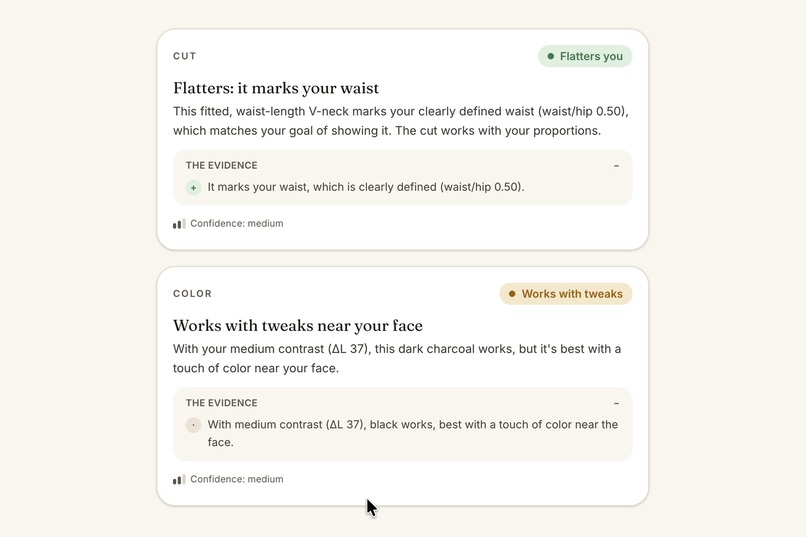
Your own veredict
-
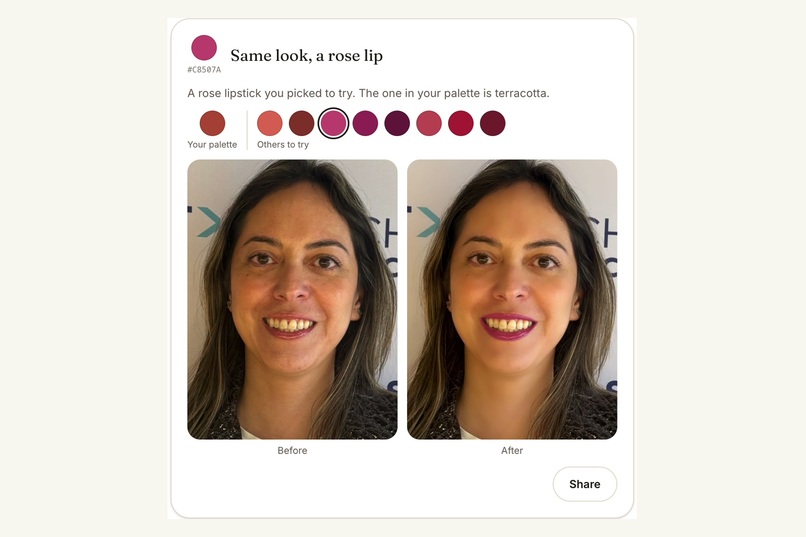
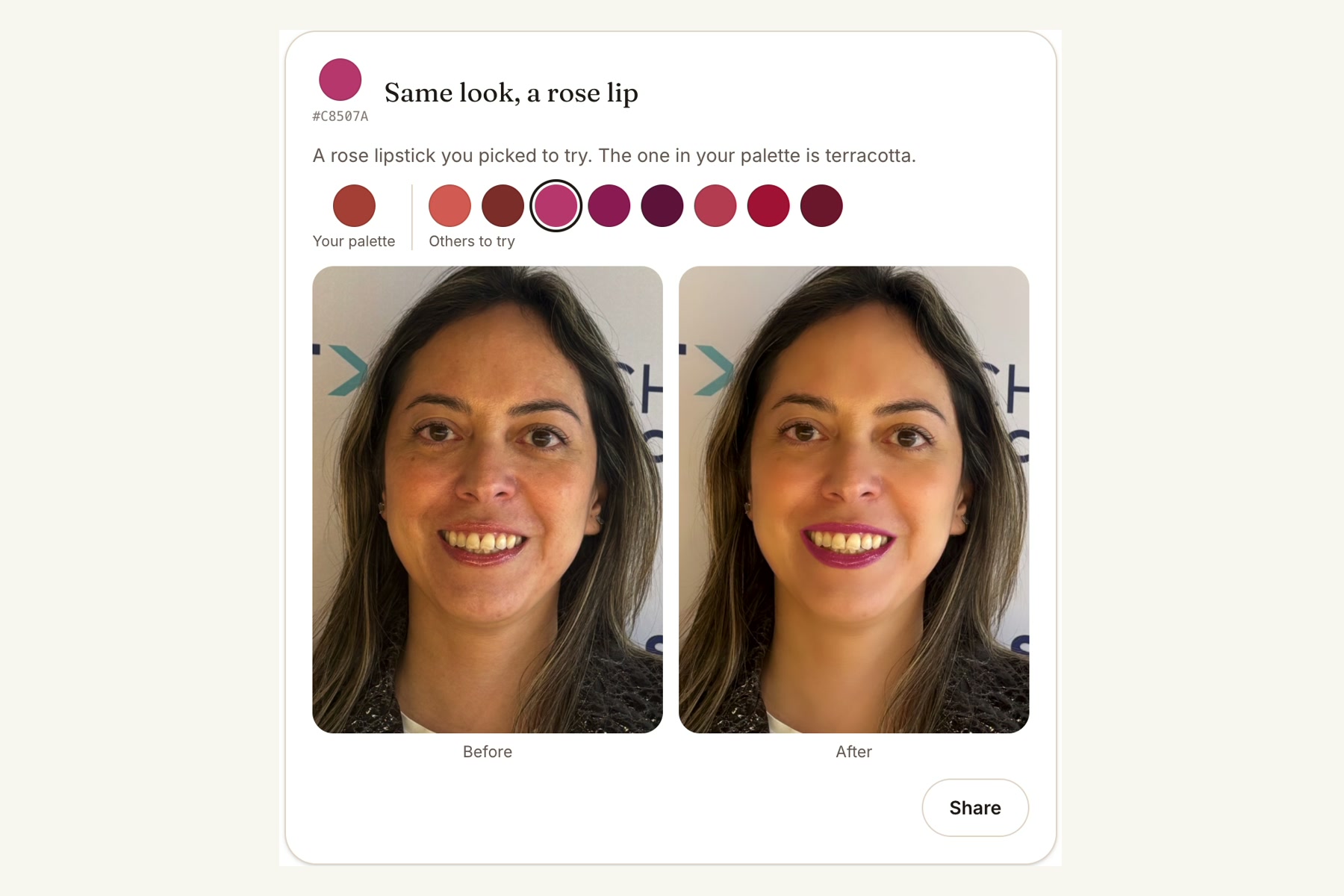
Select your make up with your colors
-
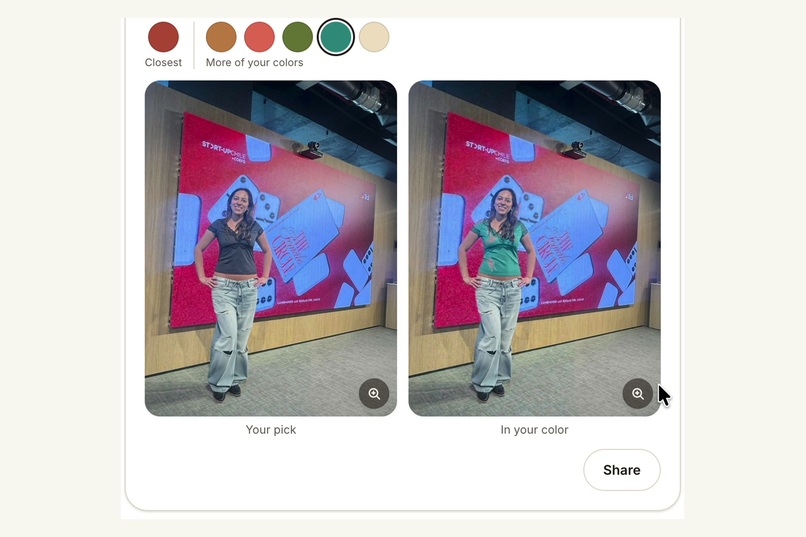
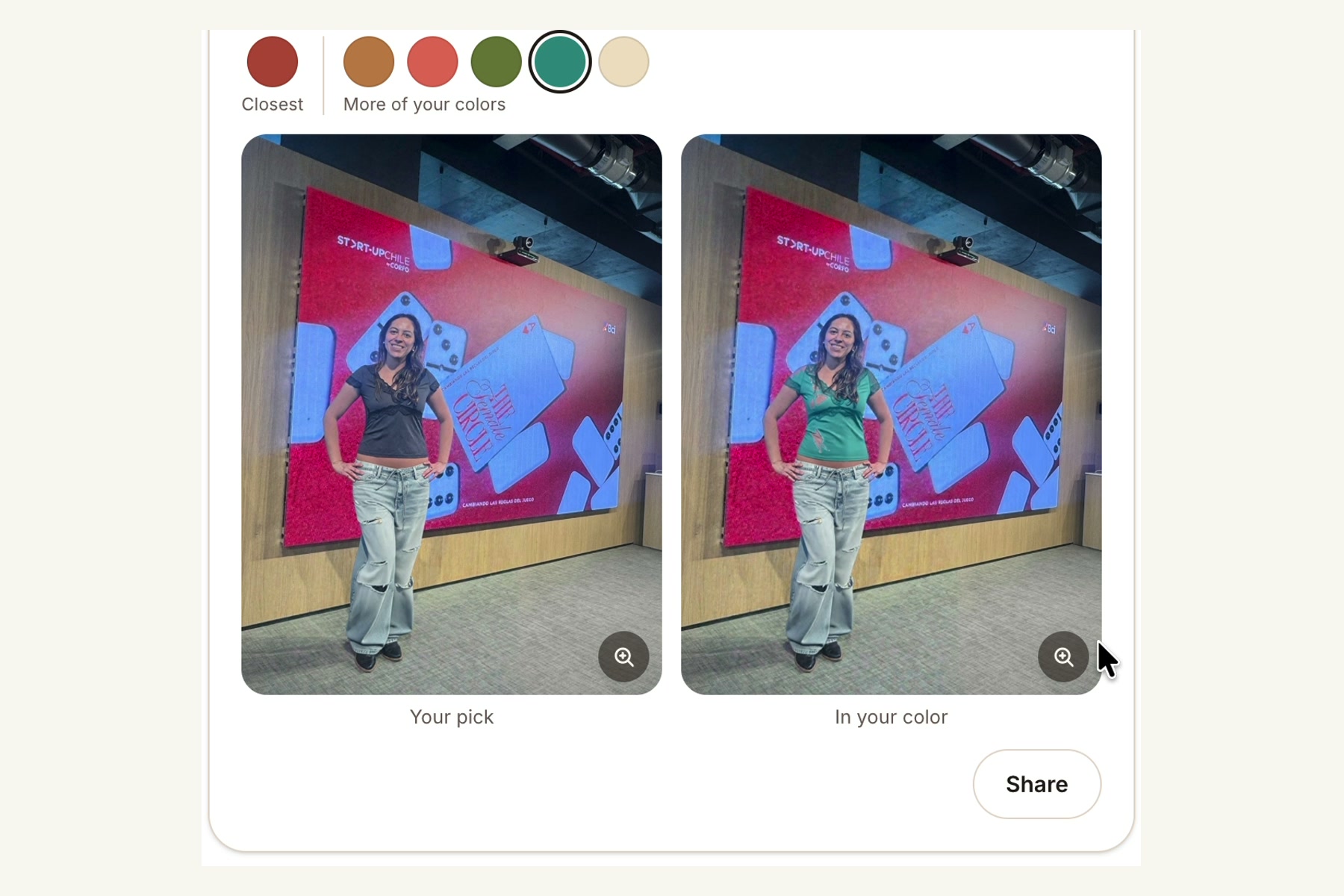
Change color
-
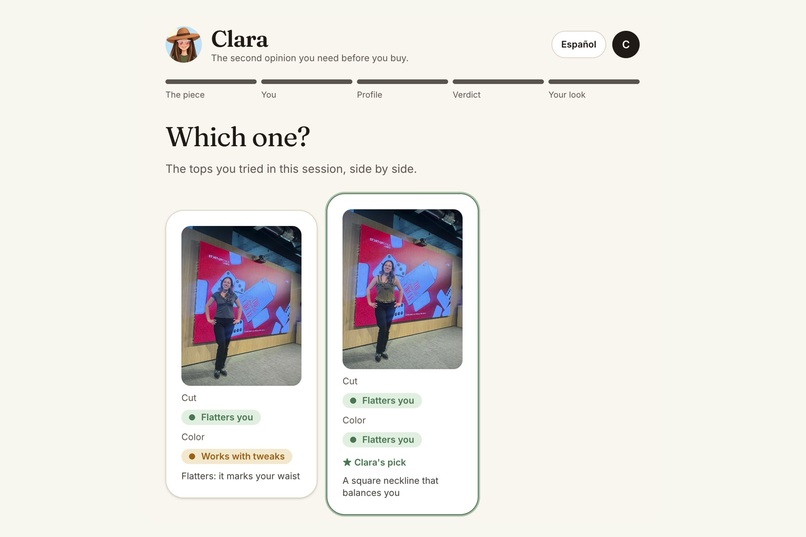
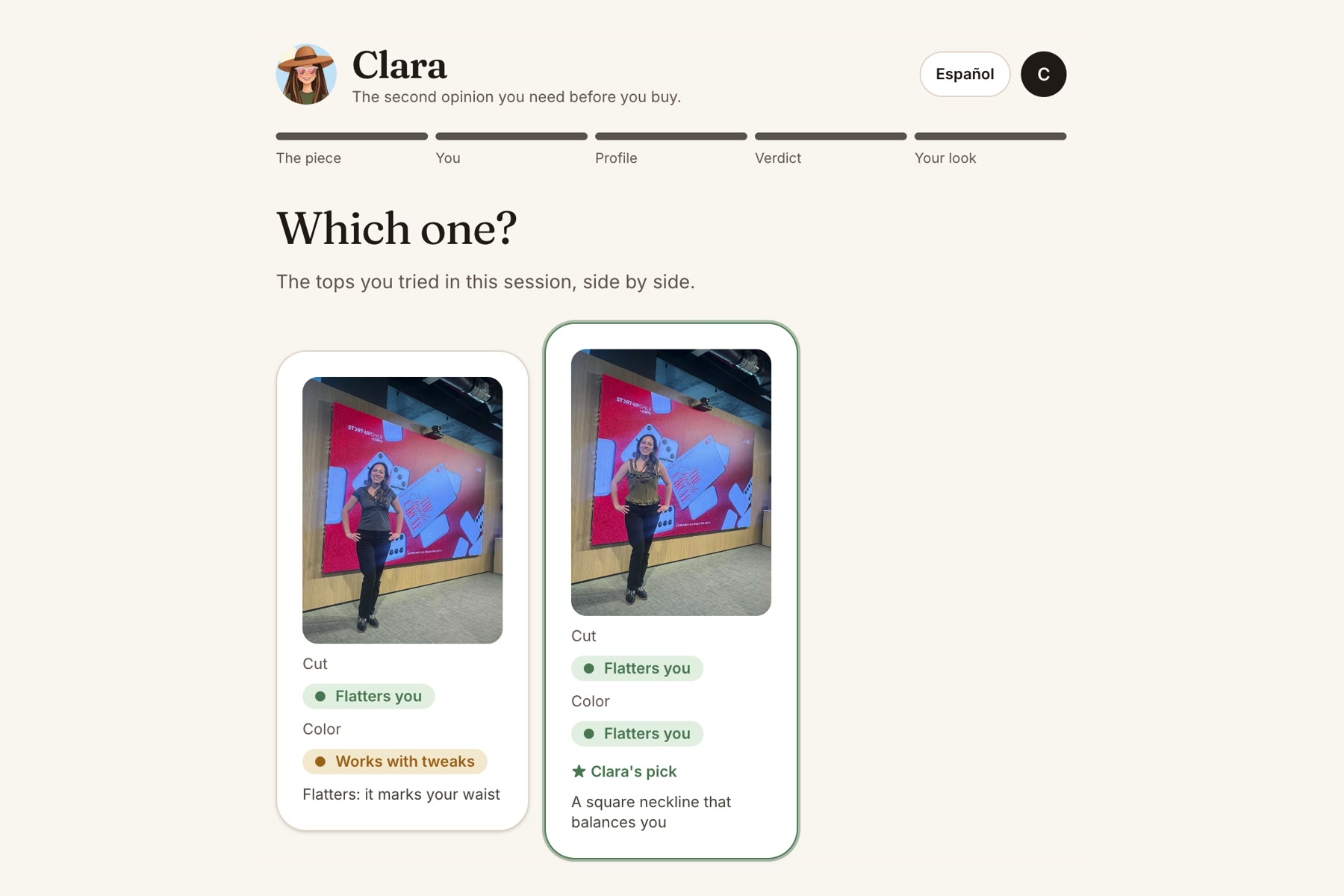
Compare which best fits on you
-
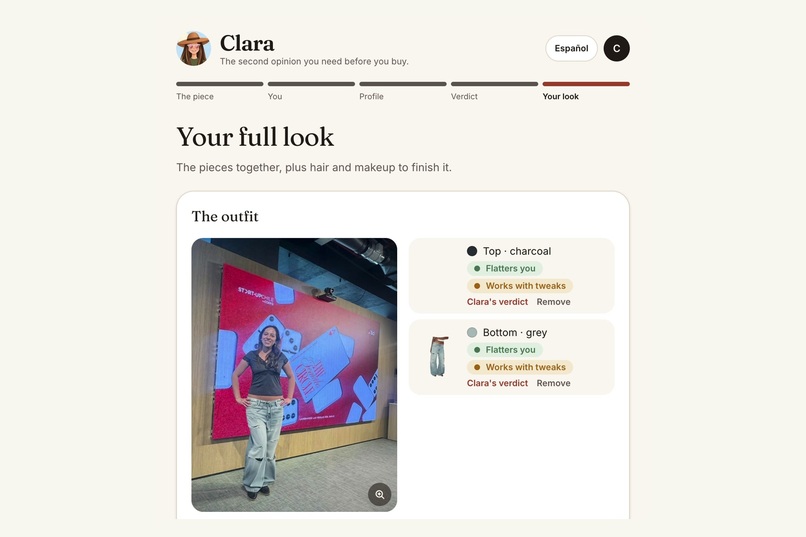
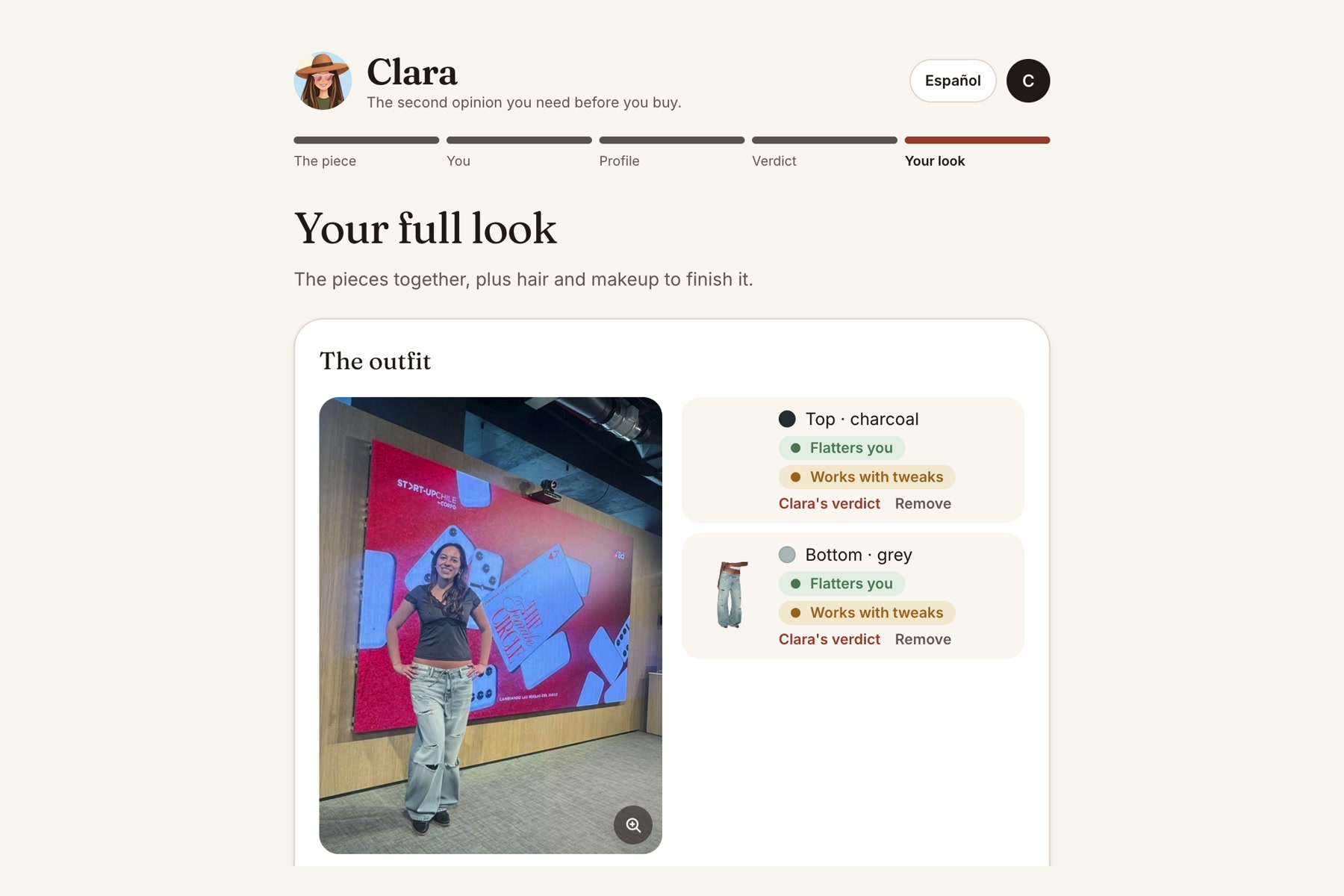
Complete your outfit
Inspiration
More than fifteen years ago, I wrote a two-page idea for an online store with a virtual fitting room. You would enter your measurements, a virtual model would replicate your body, and the store would recommend clothes and outfits that suited your shape and your taste. The thinking was simple: most women don't want to spend their weekends in a mall just to find out what doesn't fit them.
Nobody believed in it. The technology wasn't there yet, and the idea went into a drawer.
I found that document again this month. A lot has changed since then: virtual try-on is now everywhere, even inside search engines. But one thing hasn't changed at all. It's the moment right before you buy, when you look at a piece you love and ask yourself: "How does this look on me?" And there's no one honest there to answer.
That question isn't really about clothes. It's about confidence.
- A friend is kind, but she says everything looks great.
- A stylist knows, but she's expensive and she's not with you at checkout.
- Color-analysis apps hand you an abstract palette and leave you alone with the catalog.
- Try-on tools show the garment on you, but they never tell you whether it works, and generated images tend to flatter anything.
Clara is the answer I wanted fifteen years ago: an honest second opinion that helps people feel good about what they choose, without ever making them feel judged for their bodies.
What it does
Clara starts from the garment you fell in love with, not from a catalog she picks for you.
- Your profile. Upload a well-lit selfie and a full-body photo, and enter your height. Clara reads your undertone, skin depth and contrast, and estimates your body proportions, showing a confidence level for each. You can correct anything that doesn't look right.
- The garment you love. Upload a screenshot or photo of a piece from any online store or social feed.
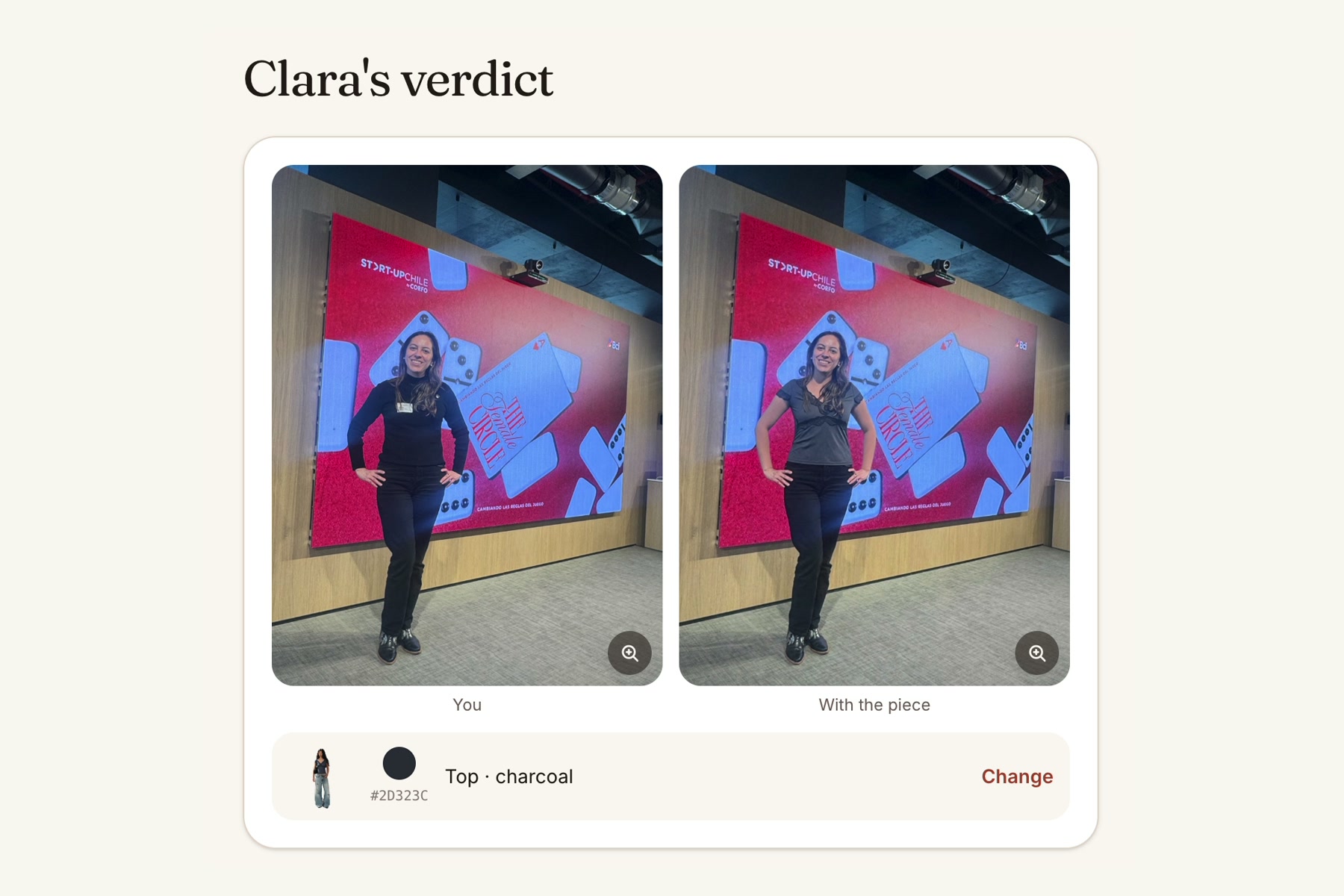
- Try it on. See it on yourself with YouCam's generative try-on.
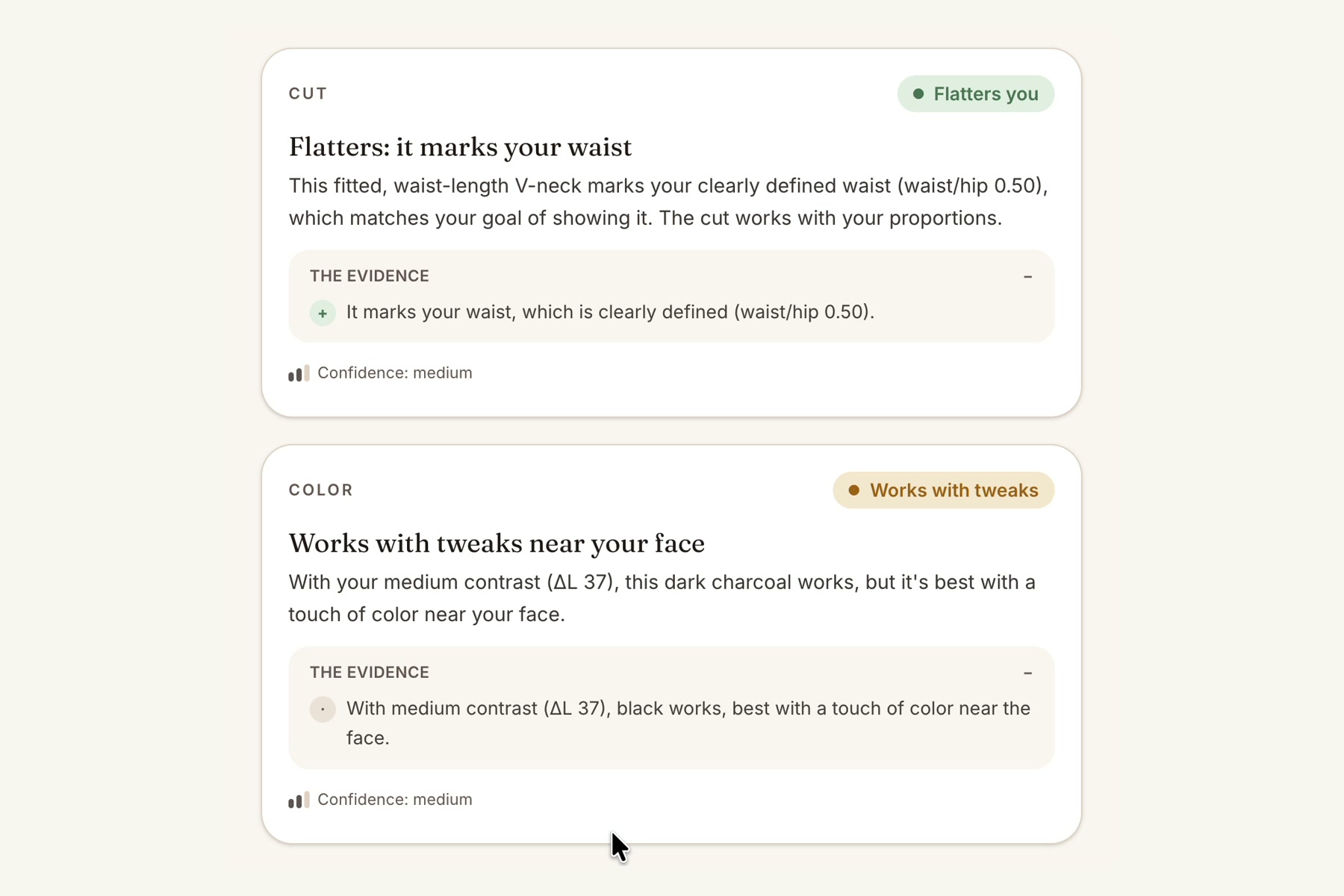
- An honest verdict. Clara judges the cut and the color separately ("flatters you", "works with tweaks" or "not your best"), and explains why, based on what she measured.
- Make it work. If it isn't your best choice, Clara doesn't take it away from you. She shows you how to wear it: a different lipstick applied on your own photo, the color kept away from your face, or a better version of the same piece.
Clara never talks about flaws to hide. She talks about goals: looking taller, showing off your shoulders, feeling confident at an interview.
How I built it
- Web app: [Next.js deployed on Vercel], with server routes that proxy every YouCam call so the API key never reaches the browser.
- YouCam APIs, chained together:
- AI Facial Color Tones Analyzer to read undertone, depth and contrast.
- AI Clothes Virtual Try-On to render the garment on the user's photo.
- AI Makeup Virtual Try-On for the "make it work" suggestions.
- Body proportions: pose landmarks detected in the browser with MediaPipe, scaled by the user's height. For example, the shoulder-to-hip ratio:
$$ r = \frac{d(\text{shoulder}_L,\ \text{shoulder}_R)}{d(\text{hip}_L,\ \text{hip}_R)} $$
Clara shows these readings as ranges with a confidence level, never as exact numbers.
- Verdict engine: deterministic rules combine color, proportions and the user's goal. A language model only writes the explanation, using measured data only, so it can't invent traits.
- Privacy: photos are used only during the session and are not stored on our servers.
Challenges I ran into
- Finding an angle nobody had taken. The first round of this hackathon had 238 projects, and several already combined color analysis with try-on. The breakthrough was flipping the starting point: instead of an app that picks outfits for you, Clara gives a second opinion on the piece you already chose, and she looks at the silhouette, not just the color.
- Try-on flatters everything. A generated image will make almost any garment look good, so the picture alone can't be the verdict. I separated the two: the image shows style and color, and the verdict explains fit and harmony.
- One photo doesn't fit all. A close selfie works for color analysis but not for try-on, and a full-body shot is the opposite. Clara asks for both and checks their quality before analyzing.
- Talking about bodies without hurting. Every message was rewritten so it speaks about proportions and goals, never about defects.
- [Add the technical challenges you hit while building.]
Accomplishments that I'm proud of
- Turning a fifteen-year-old idea that nobody believed in into a working product in one weekend.
- A verdict that shows its work: every recommendation comes with its evidence.
- A design principle I care about: Clara never says "don't wear that". She helps you make it work.
What I learned
- An old idea isn't necessarily a wrong one. Sometimes it's just early.
- In AI styling, trust is the product. Being honest about uncertainty (bad lighting, loose clothing, low confidence) makes the advice more credible, not less.
- Self-esteem and shopping are deeply connected, and technology can either reinforce insecurity or ease it. Clara is designed to ease it.
What's next for Clara
- A one-tap "Ask Clara" from any shopping app or browser.
- A widget for retailers, so their customers get an honest opinion before checkout and return fewer items.
- More languages, starting with Spanish, and styling for every gender.
Built With
- anthropic
- claude
- github-actions
- mediapipe
- next.js
- node.js
- perfect-corp
- postgresql
- react
- supabase
- tailwindcss
- typescript
- vercel
- vitest
- youcam-api
- zod

Log in or sign up for Devpost to join the conversation.