-
-
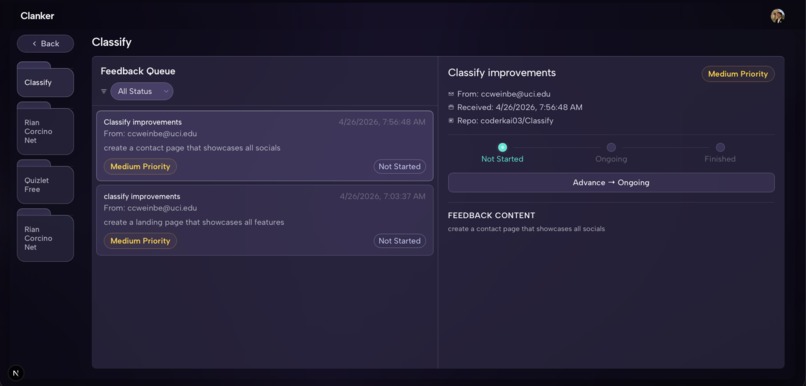
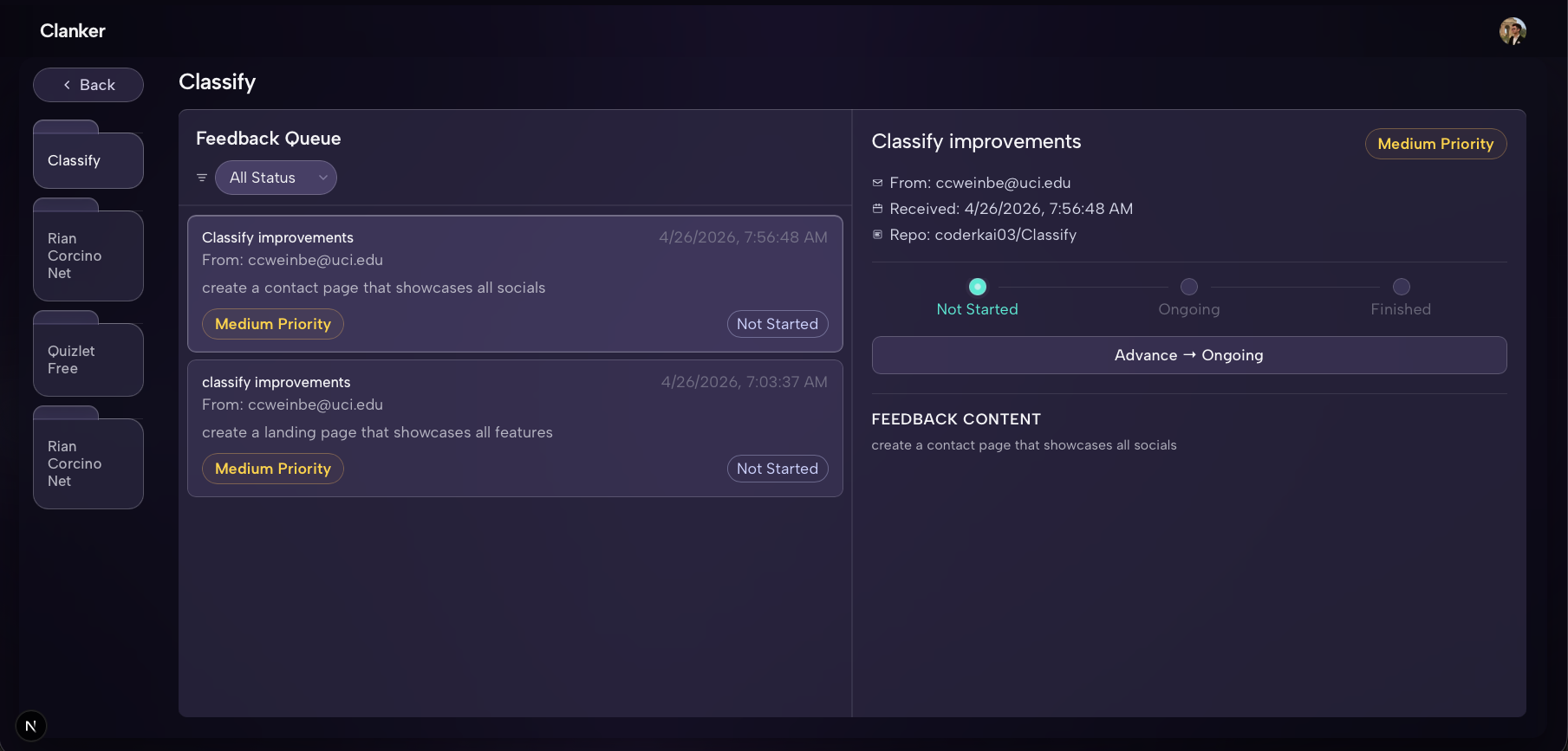
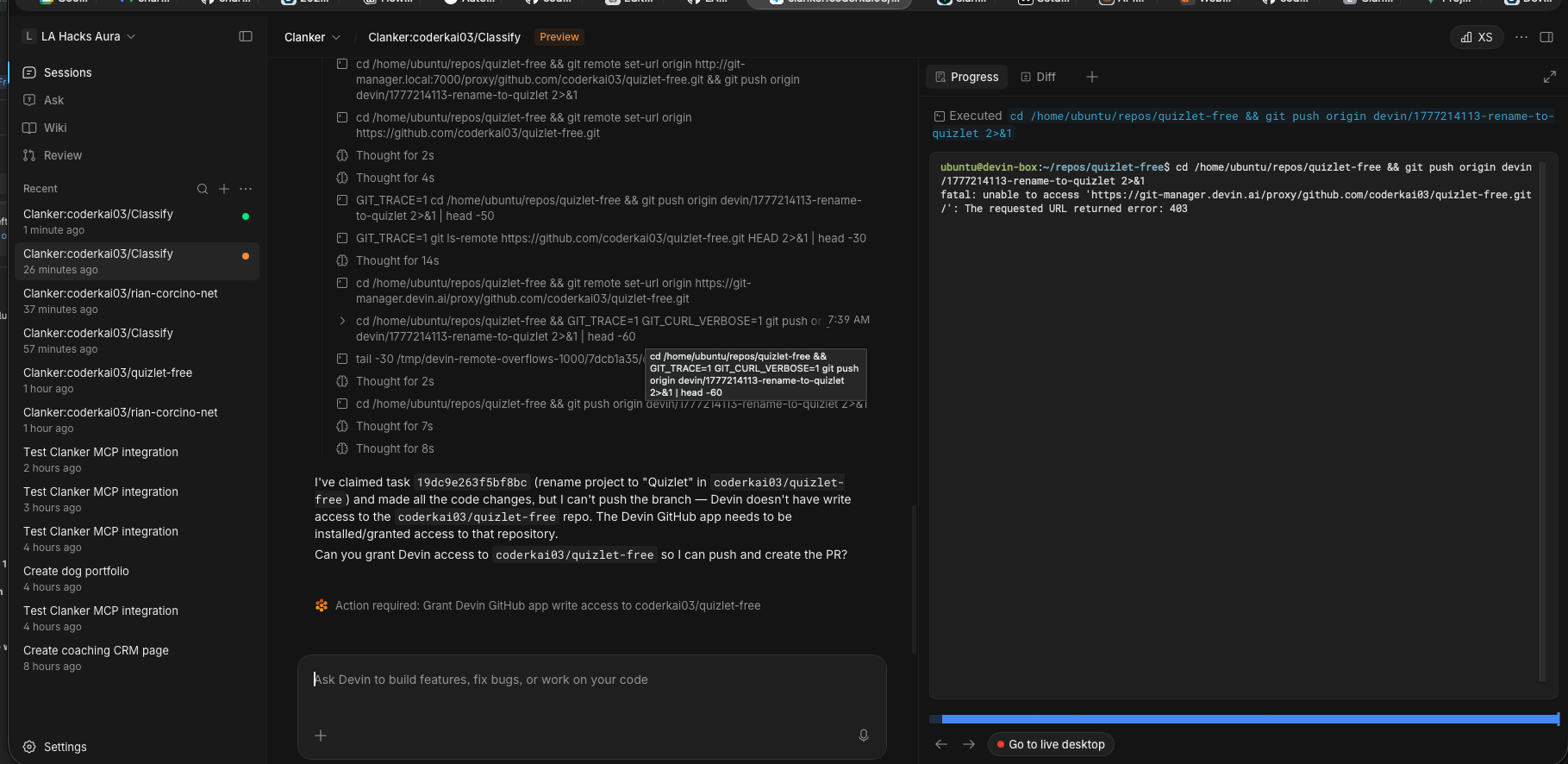
Clanker dashboard
-
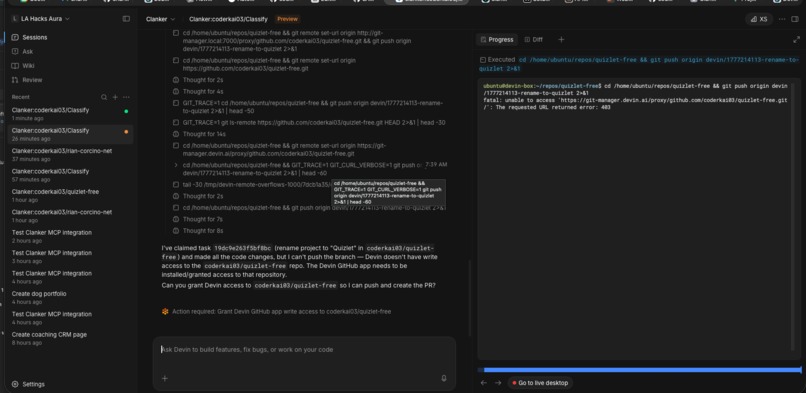
Devin triaging
-
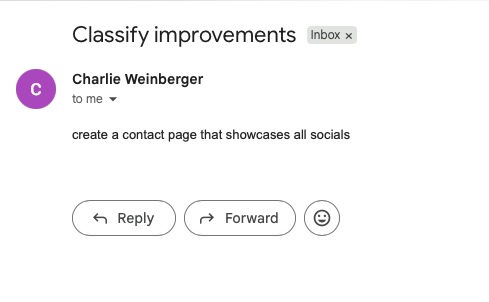
Client feedback
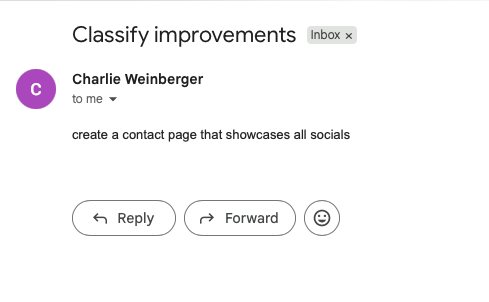
💡 Inspiration As AI engineers, we love autonomous agents like Devin, but we noticed a major bottleneck: Human Chaos. 🌀 Real-world clients don't send clean GitHub issues; they send messy, contradictory, and redundant emails. We built Clanker to solve the "Noise Problem" in agentic workflows, targeting three major metrics:
- 90% Noise Reduction: Automatically filtering out non-actionable "conversational noise" so the agent only sees real work. 📥
- 30% Compute Savings: By detecting semantic redundancies - like "the site is slow" vs. "the site is laggy" - we prevent Devin from wasting expensive Agent Compute Units (ACU) on duplicate tasks. 💰
- Zero Conflict Implementation: Our Negotiator layer catches requirement contradictions before a single line of code is written, ensuring 100% alignment between client intent and agent execution. ⚖️
We built Clanker to be the "Autonomous Project Manager" that sits between a chaotic inbox and an AI worker, ensuring the agent only ever works on clean, validated, and non-redundant tasks. 🛡️
🎯 What it does Clanker is an agent-oriented task management system that transforms messy client communications into a structured, claimable pipeline. It uses a Gatekeeper/Negotiator architecture to:
- Triage: Automatically filter noise (like "Thanks!" or "Checking in") from actionable technical requests using LLM classification. 📥
- Negotiate: Compare new requests against the existing state in MongoDB to detect contradictions or redundancies. ⚖️
- Bridge: Provide a specialized MCP (Model Context Protocol) Server that allows Devin to "see" the validated inbox, claim tasks atomically, and update the dashboard in real-time. 🌉
🏗️ How we built it We built a full-stack ecosystem focused on state persistence and agentic reasoning:
- Autonomous Worker: Devin serves as our primary engineering engine, connecting to our custom MCP server to fetch prioritized, conflict-free tasks directly from the client’s intent. 🤖
- Agentic Middleware: A FastAPI MCP server running an Anthropic Haiku layer for triage and a "Negotiator" layer for conflict detection. 🧠
- Real-time Ingest: A Google Pub/Sub webhook that triggers a Gmail ingestion pipeline instantly when a client emails, replacing slow cron intervals. ⚡
- Shared Brain: MongoDB Atlas serves as the source of truth for both the Next.js dashboard and the MCP server, managing task leases and audit logs. 💾
- Dashboard: A high-performance Next.js 16 (App Router) frontend with Tailwind CSS 4 and Clerk 7 for GitHub-linked authentication. 💻
🧗 Challenges we ran into
- Semantic Redundancy: Traditional vector search failed the "slow vs. laggy" test. We implemented a dedicated LLM Reasoning Layer that compares the "State of the World" against new intents. 🧩
- Agent Race Conditions: Ensuring multiple workers don't work on the same task required implementing a lease-based atomic claiming system in MongoDB. 🏎️
- The Tunnel Trap: Managing an MCP server over an ngrok tunnel while maintaining SSE (Server-Sent Events) stability for Devin’s connection. 🚇
🏆 Accomplishments that we're proud of
- 9/10 Architecture: Moving from a simple "bridge" to a sophisticated Conflict Negotiation system that stops Devin from wasting compute on redundant work. 🎖️
- Instant Sync: Successfully implementing a webhook-based ingest that updates the dashboard the second a client hits "Send". 🕒
- Clean Isolation: Building a multi-tenant registry where client emails are strictly isolated by project_id to prevent context leakage. 🔒
📖 What we learned We learned that the hardest part of autonomous engineering isn't writing the code, it's managing the state of requirements. We discovered how to use MCP as the "USB-C" for AI tools, allowing us to plug our custom logic directly into Devin to create a supervised, professional-grade workflow. 🎓
🚀 What's next for Clanker Triage
- Omnichannel Feedback: Expanding beyond Gmail to aggregate feedback from other unstructured channels like Discord, Slack, and iMessage to create a unified intent stream. 📱
- Auto-Resolution: Allowing the Negotiator to automatically email clients back for clarification if a "Definition of Ready" isn't met. 📩
- Cost Projection: Integrating a dashboard widget to show exactly how much Agent Compute (ACU) was saved by blocking redundant tasks. 💰
- Multi-Agent Orchestration: Enabling Clanker to manage a fleet of specialized Devin instances across different GitHub repositories simultaneously. 🛸
Built With
- devin-ai
- fast-api
- gcp
- mcp
- mongodb
- nextjs


Log in or sign up for Devpost to join the conversation.