Inspiration
In today's fast-paced R&D landscape, research scientists and corporate innovators suffer from severe information overload. Finding papers is easy; understanding which papers actually moved the needle and synthesizing their findings takes weeks. We realized that existing tools act merely as search engines, leaving the heavy lifting of synthesis to the user. We wanted to build a true B2B SaaS solution that acts as a distinguished AI Research Scientist.
What it does
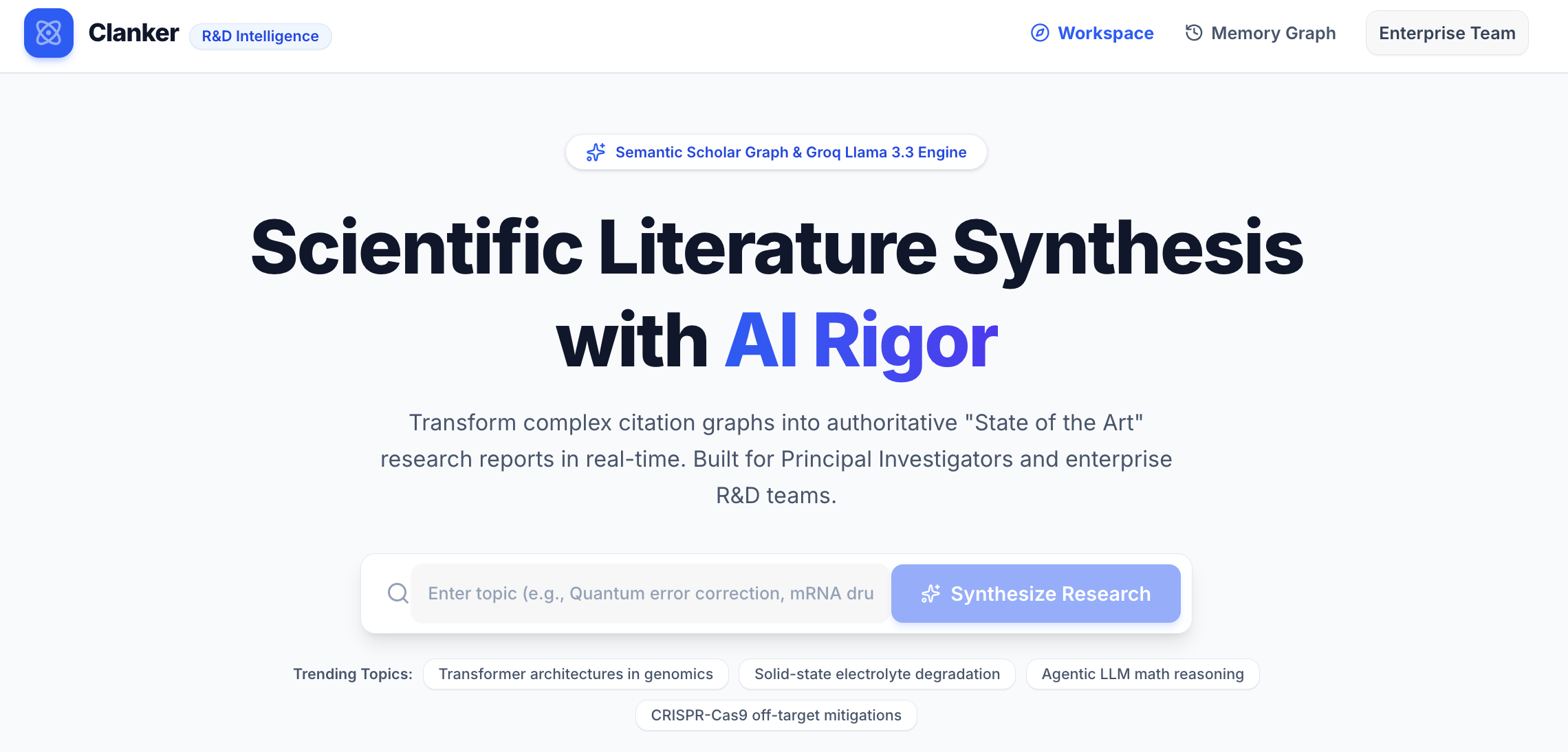
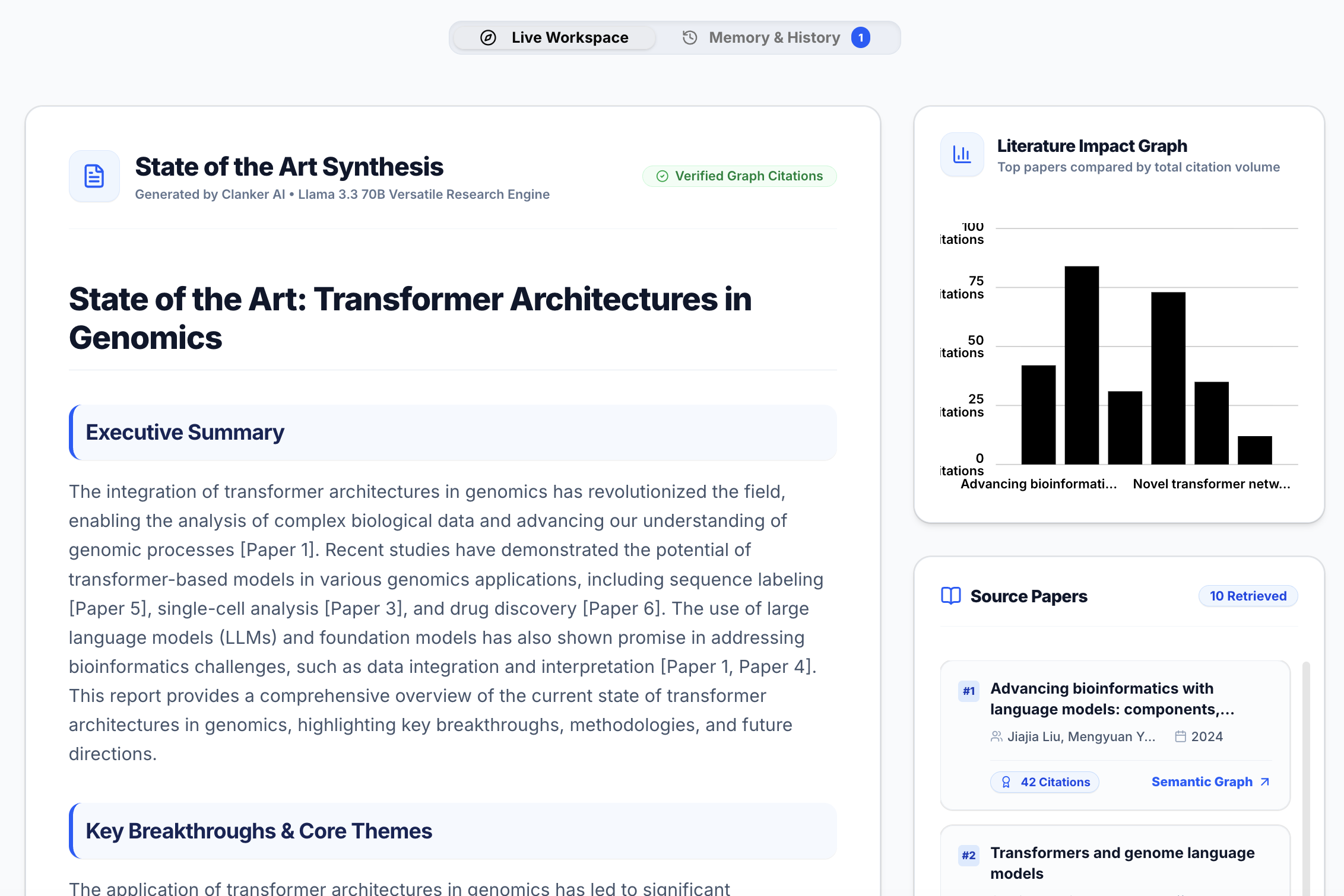
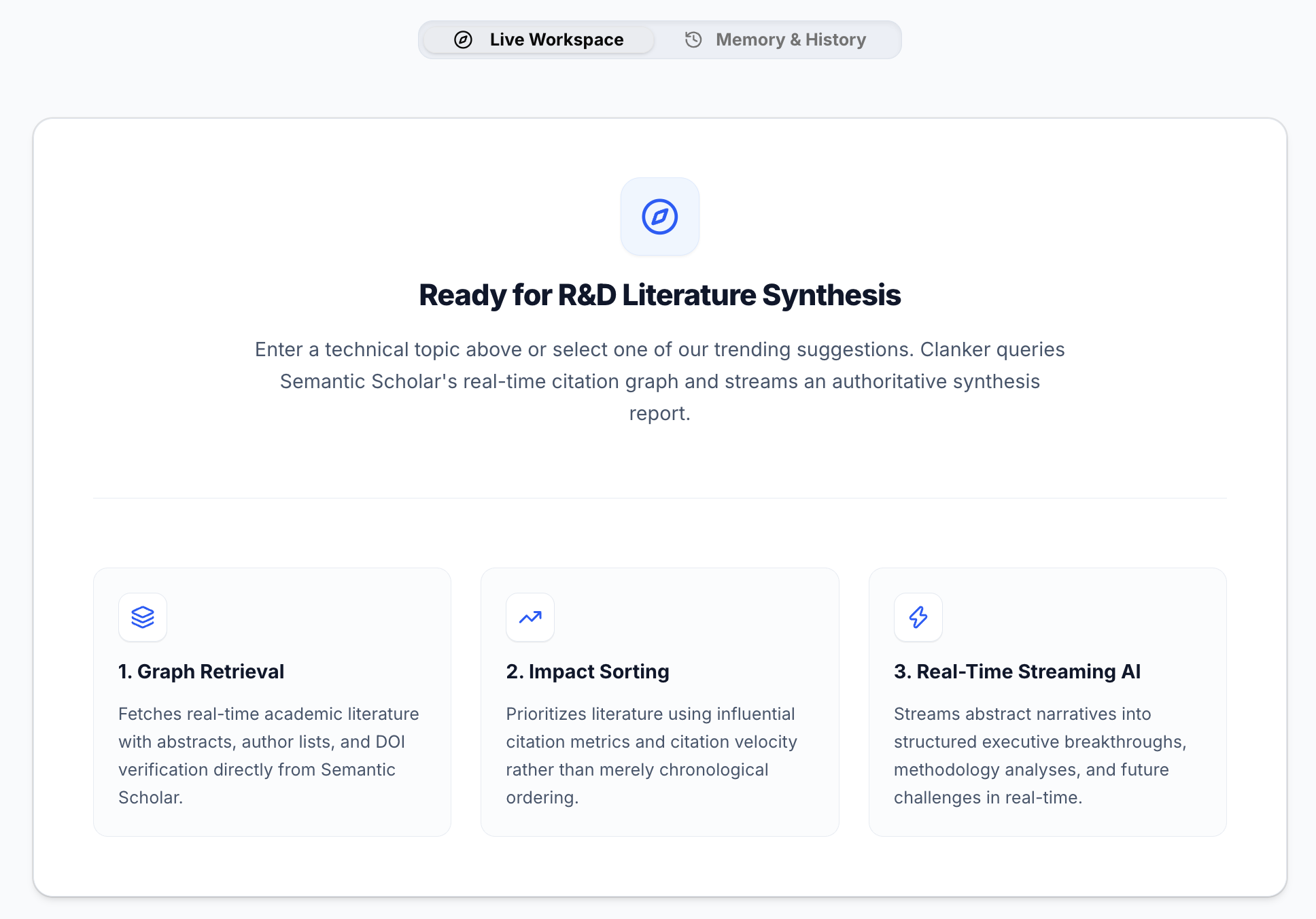
Clanker is a production-ready web application designed for R&D teams. When a user inputs a research topic, Clanker doesn't just do a keyword search. It leverages the Semantic Scholar Graph API to identify the most impactful academic papers based on influential citation counts. Then, it feeds these high-signal abstracts into a high-speed LLM (Groq Llama-3) to instantly generate a comprehensive, fully-cited "State of the Art" Markdown report. It also provides a visual dashboard of citation metrics to validate the sources.
How we built it
We strictly adhered to the "Not Just Demo Day" philosophy by building a scalable, enterprise-grade architecture:
- Frontend & Backend: Next.js 14 (App Router) with TypeScript, combining the UI and serverless Route Handlers in one unified repository.
- Data Pipeline: Integration with Semantic Scholar Graph API to fetch peer-reviewed data and citation graphs.
- AI Engine: Vercel AI SDK paired with Groq API (Llama-3) for near-instantaneous reasoning and text generation.
- Design System: Tailwind CSS, shadcn/ui, and Tremor for professional, corporate-grade data visualization.
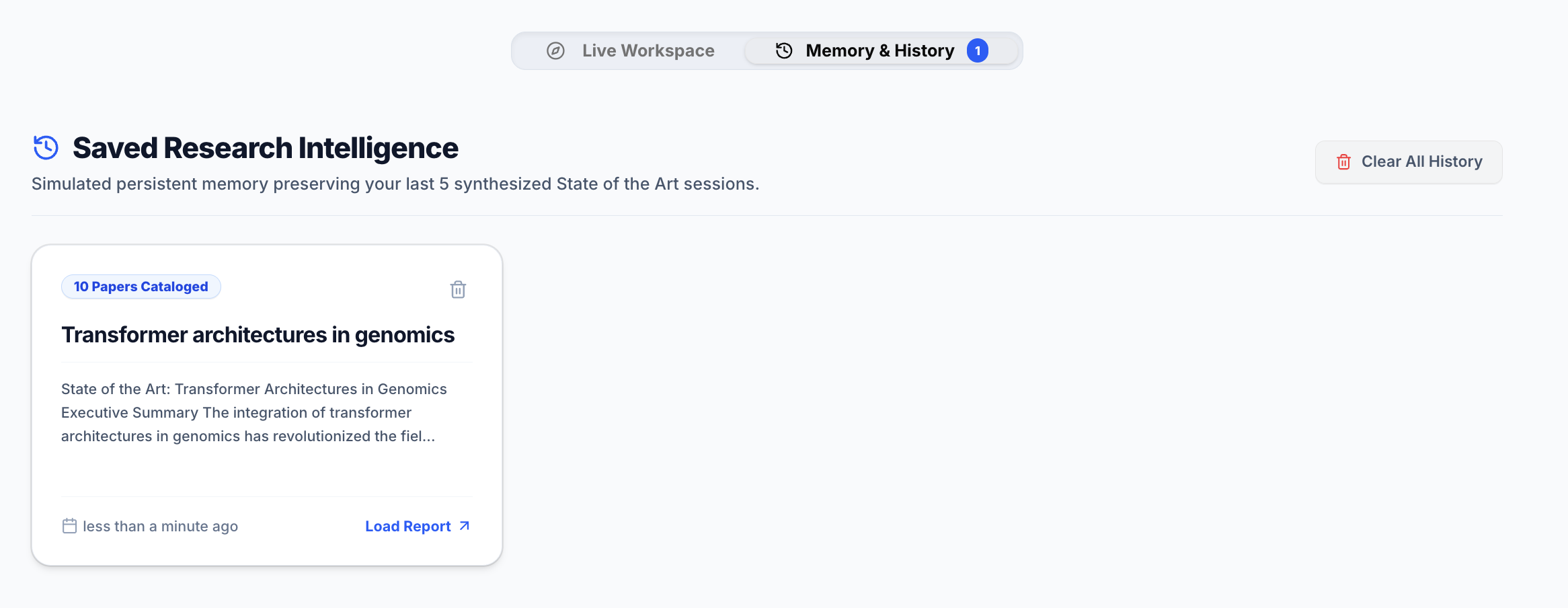
- State Management: LocalStorage integration to maintain research session history without the immediate overhead of a relational database for the MVP.
Challenges we ran into
The biggest challenge was migrating the core logic from a slow, experimental Python/Streamlit prototype into a lightning-fast, edge-ready Next.js environment. Ensuring the AI strictly adhered to the provided Semantic Scholar context without hallucinating external facts required precise prompt engineering and structured data handling between the server and the ultra-fast Groq API.
Accomplishments that we're proud of
We successfully built a tool that looks, feels, and performs like a funded Silicon Valley startup's product in just hours. By prioritizing influential citations over mere recency, we created a tool that genuinely solves a real-world problem for R&D departments. It’s fully deployed, responsive, and ready for real users today.
What we learned
We learned the immense power of combining structured knowledge graphs with high-speed LLMs. Relying purely on an LLM's internal knowledge is risky for science; bringing verified, citation-backed data to the LLM as context is the ultimate game-changer for avoiding hallucinations.
What's next for Clanker
- User Authentication & DB: Implementing Supabase for real user accounts and persistent, cloud-based research memory.
- Deep PDF Analysis: Upgrading from abstract-level analysis to full-text PDF parsing using OCR and vector databases.
Authors
- Kamil Piejko: Lead Full-Stack Developer & AI Architect. Architected and built the entire Next.js application, integrated the Semantic Scholar and Groq APIs, and implemented the frontend UI.
- Joanna Pich: Product Strategy & QA. Ensured the generated reports met real-world R&D standards, defined the core value proposition, and tested AI outputs to minimize hallucinations.
- Dominika Zięba: UX Research. Shaped the B2B "trust-blue" visual identity concept and structured the project's narrative and presentation.
Built With
- api
- artificial-intelligence
- llm
- next.js
- react
- tailwind-css
- typescript


Log in or sign up for Devpost to join the conversation.