Inspiration
In Cameroon, many merchants rely on Mobile Money (because we start with our environment but it can apply to any other operator)to receive payments for their goods and services. However, some dishonest customers use fake or manipulated payment messages to convince sellers that a transaction has been completed.
This can lead to financial losses, especially for small businesses that need to process transactions quickly. We wanted to address this everyday problem by building a simple tool that helps merchants identify suspicious payment messages before handing over their goods.
That is how CLAIR was born, with one central idea: help merchants make safer decisions, even when they have limited internet access or technical knowledge.
What CLAIR Does
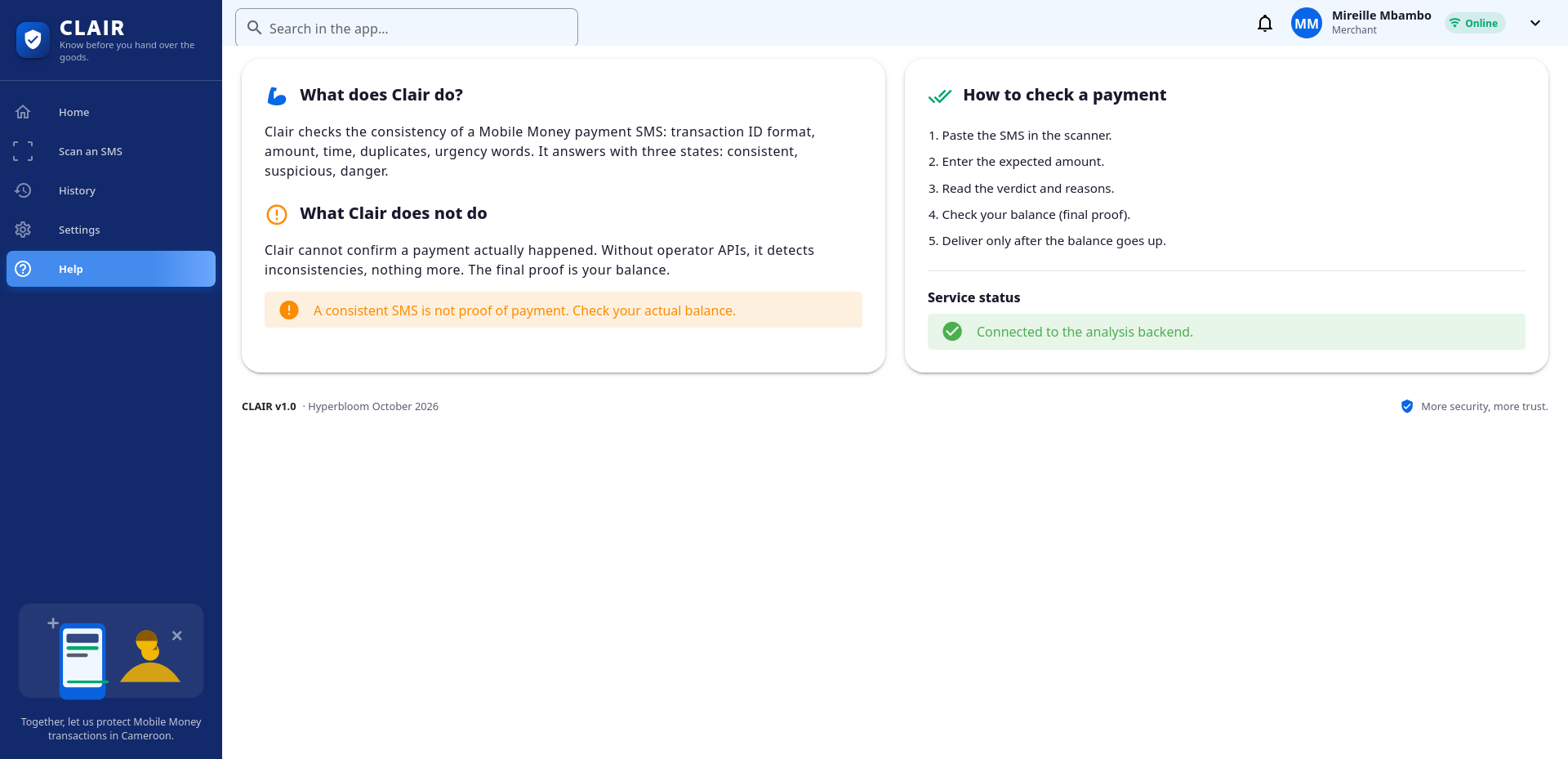
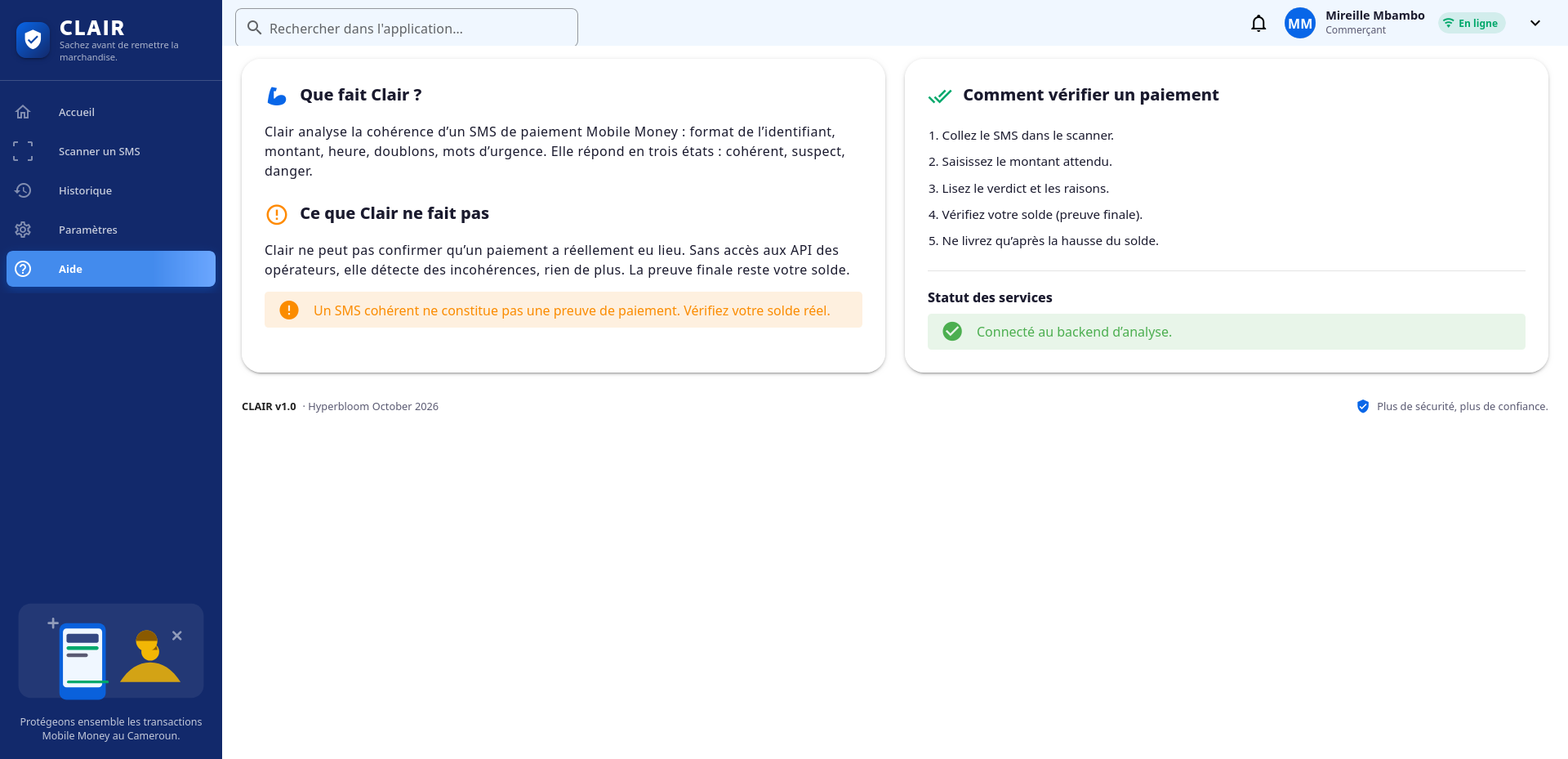
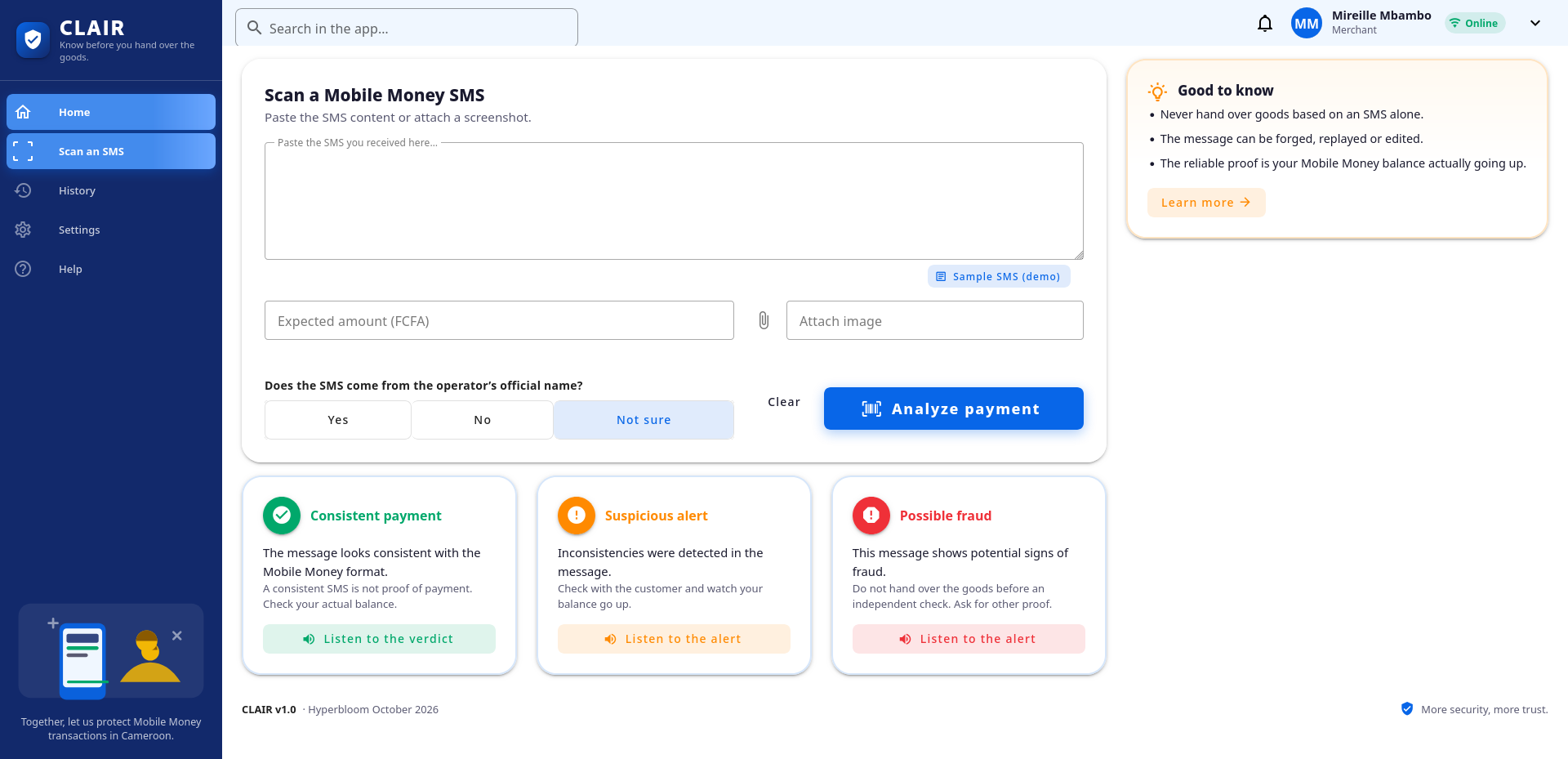
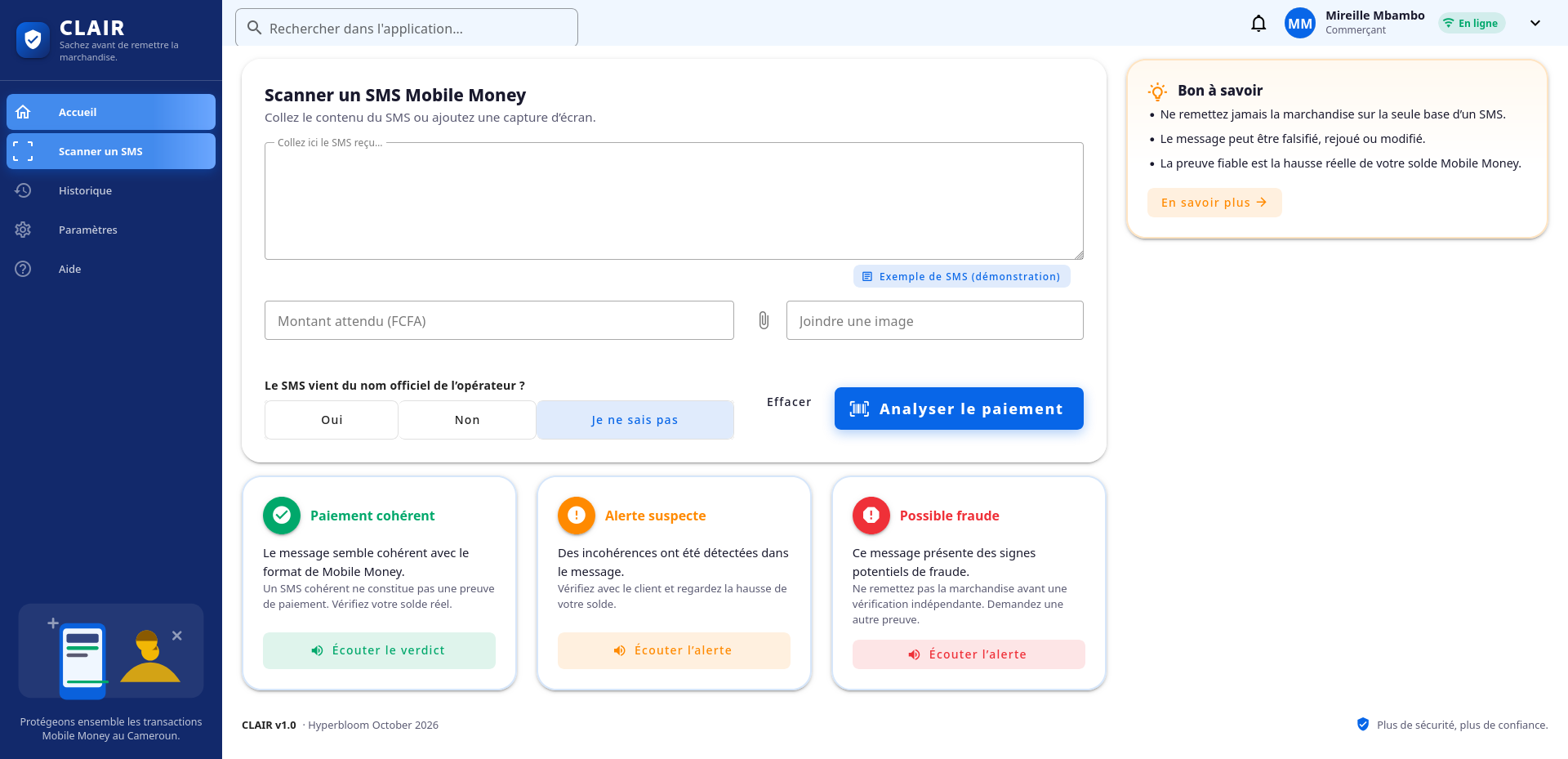
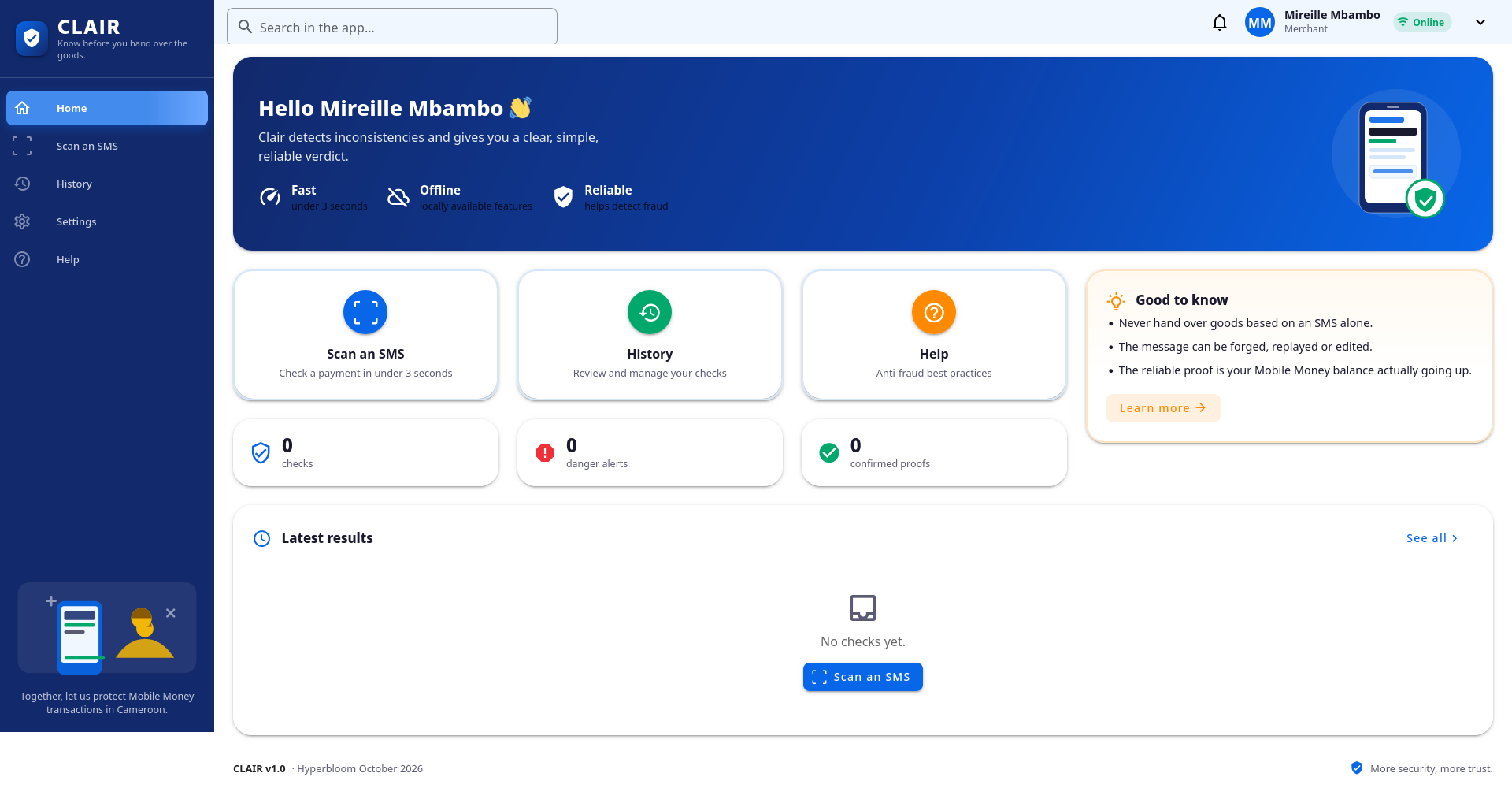
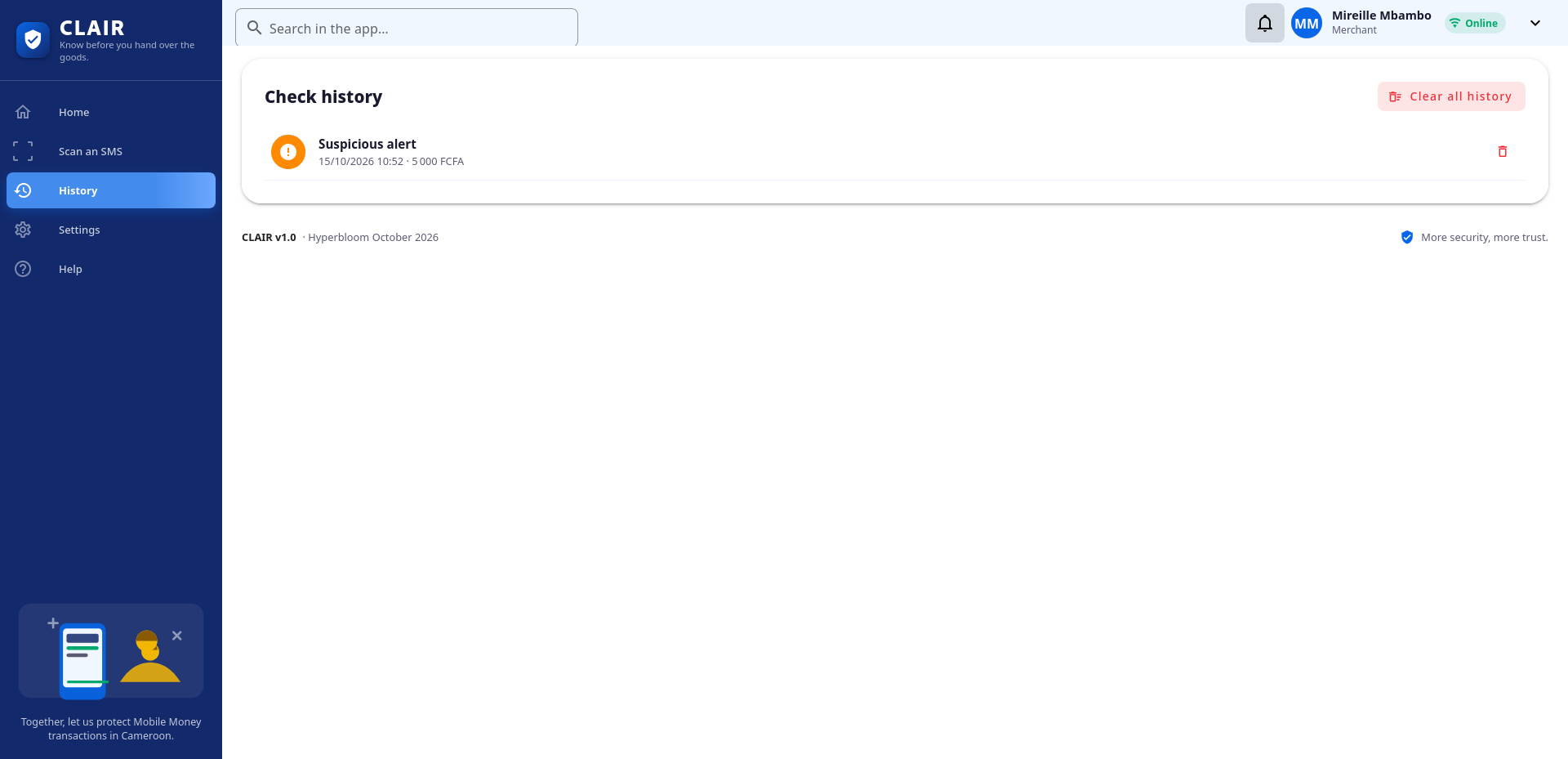
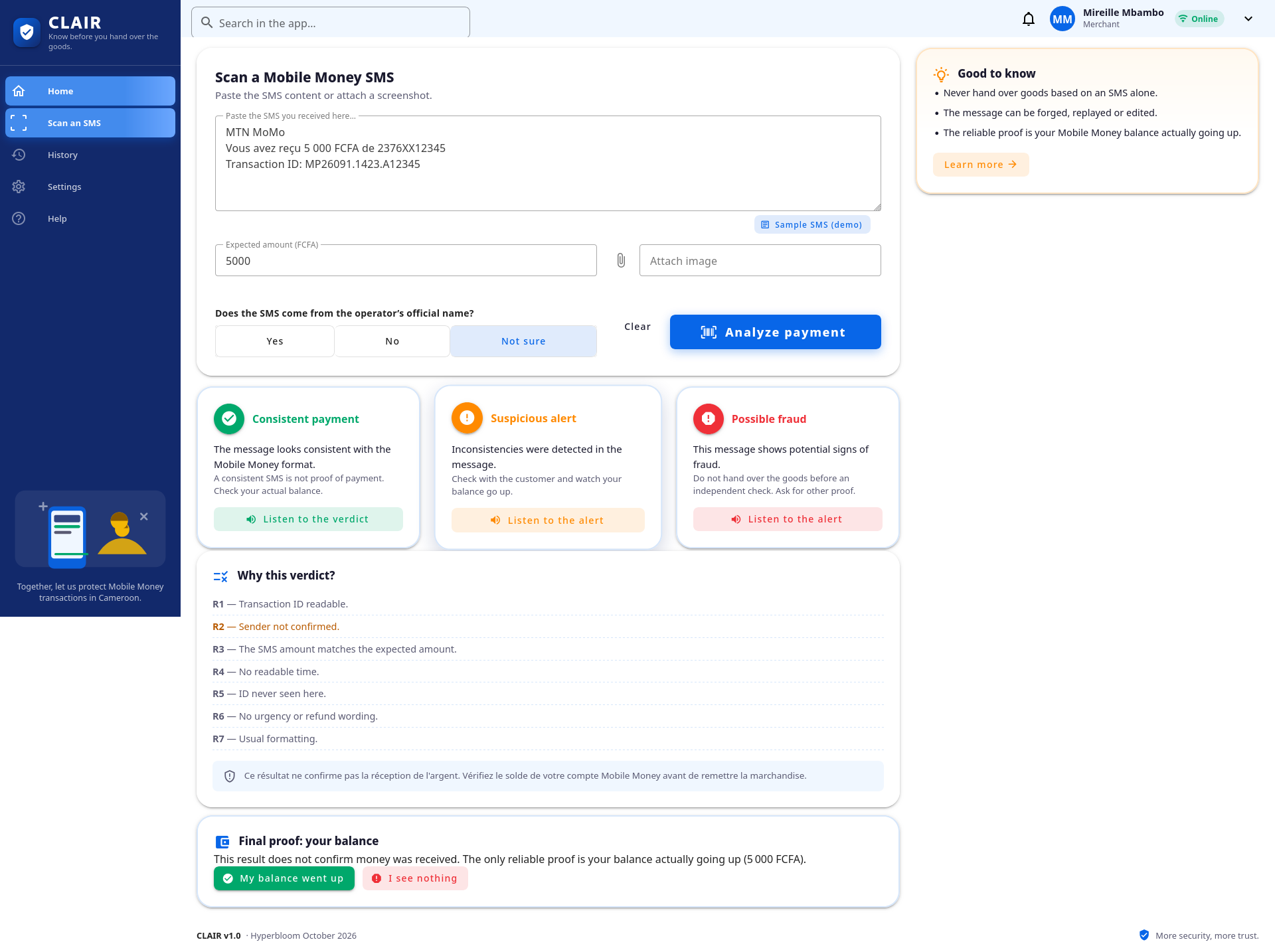
CLAIR analyzes Mobile Money payment SMS messages or screenshots and looks for inconsistencies that may indicate a suspicious transaction. It provides one of three clear verdicts:
- Cohérent: The message appears consistent with the expected information.
- À vérifier: Some details require further verification.
- Danger: The message contains suspicious elements that should not be ignored.
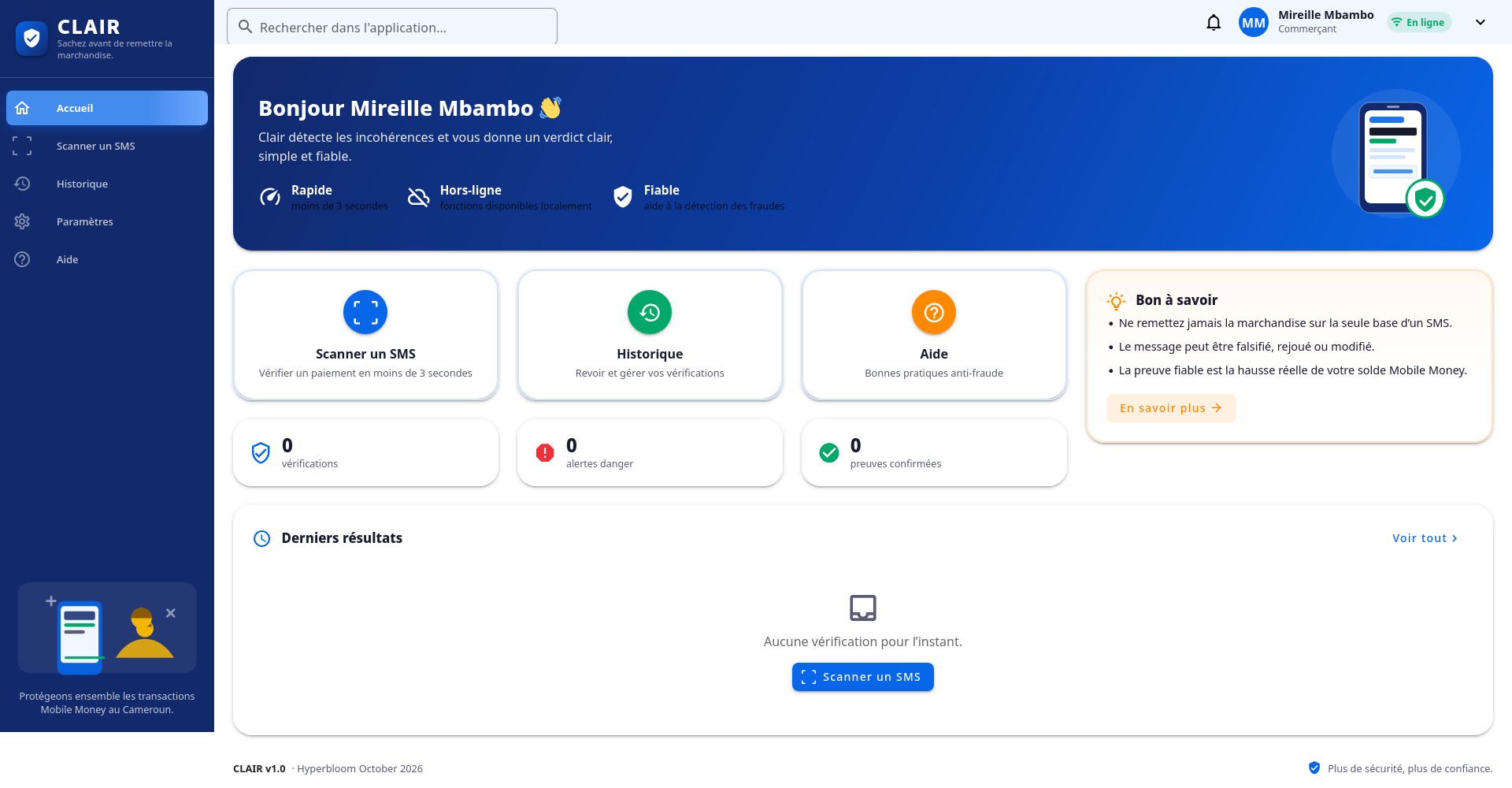
The result is presented through simple text and visual indicators, with voice and vibration feedback designed to make the experience accessible and easy to understand.
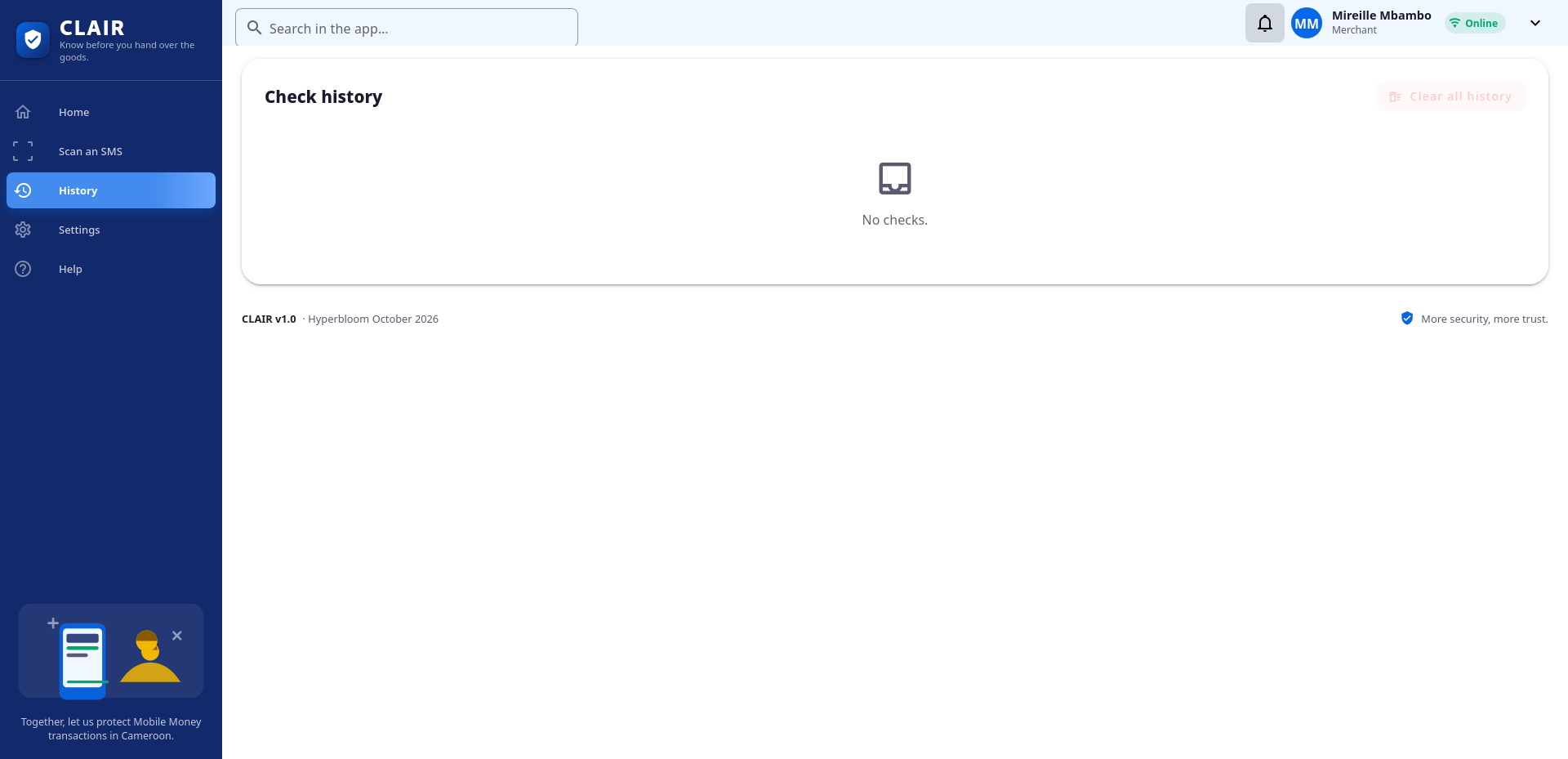
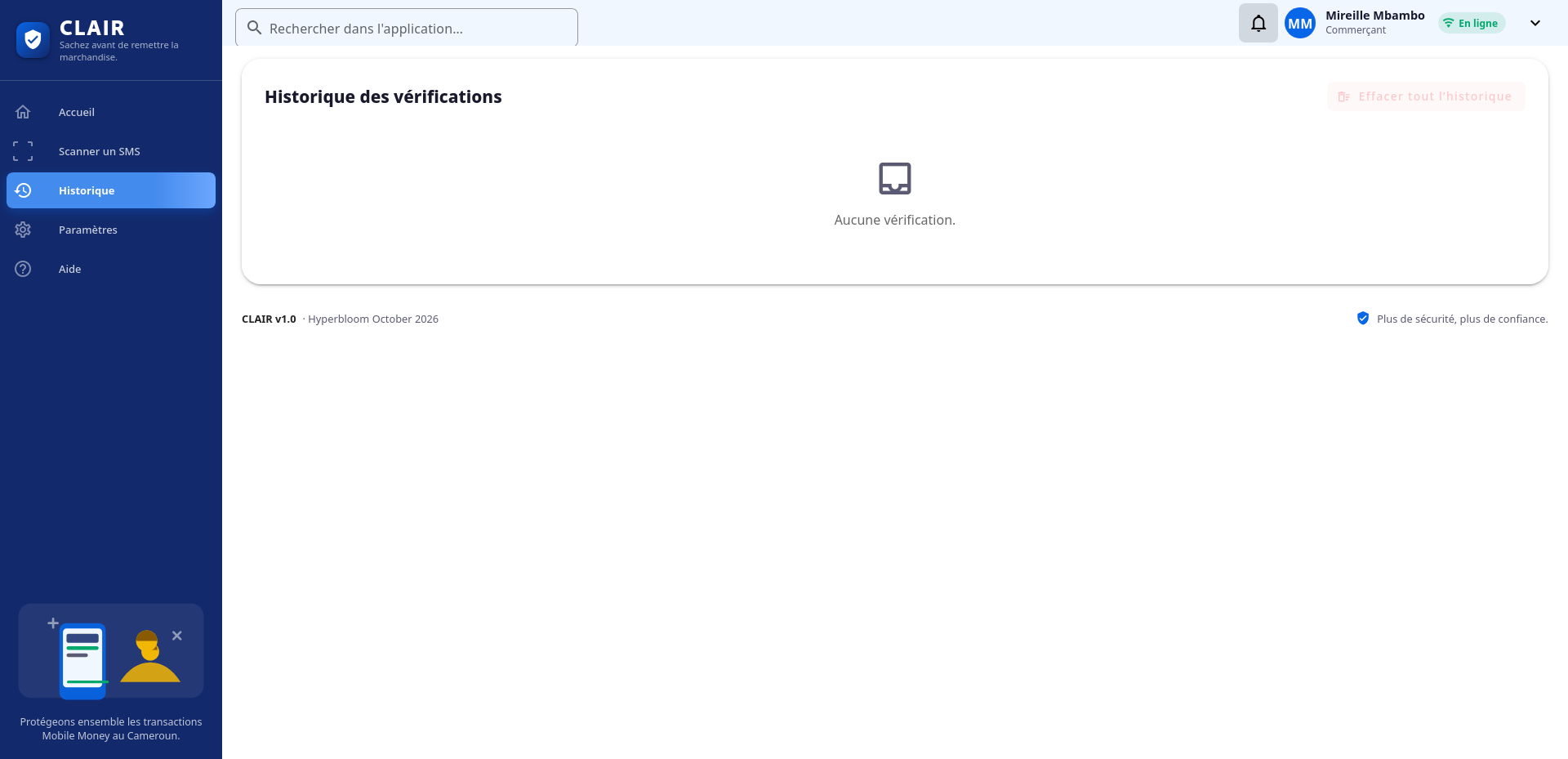
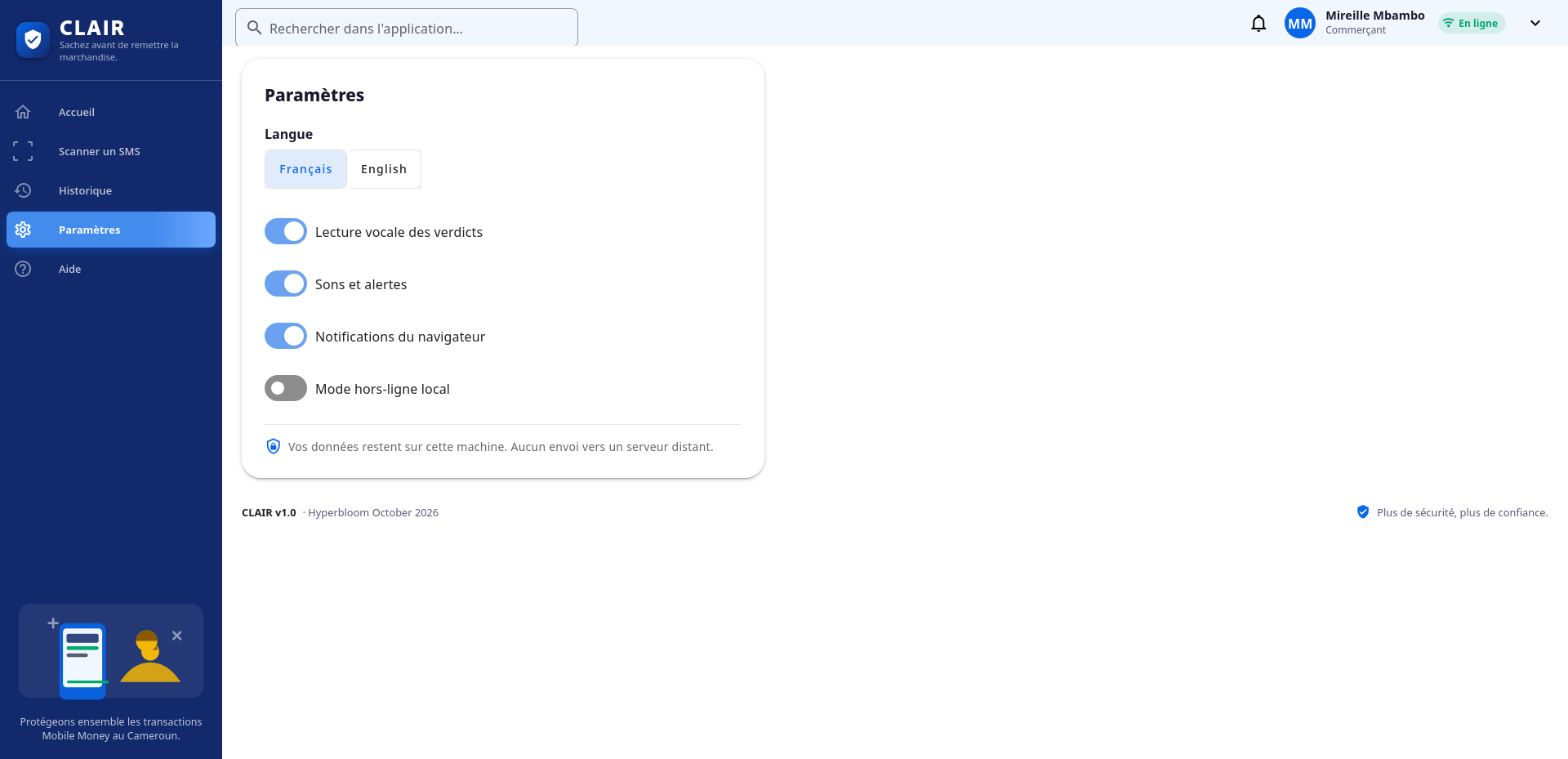
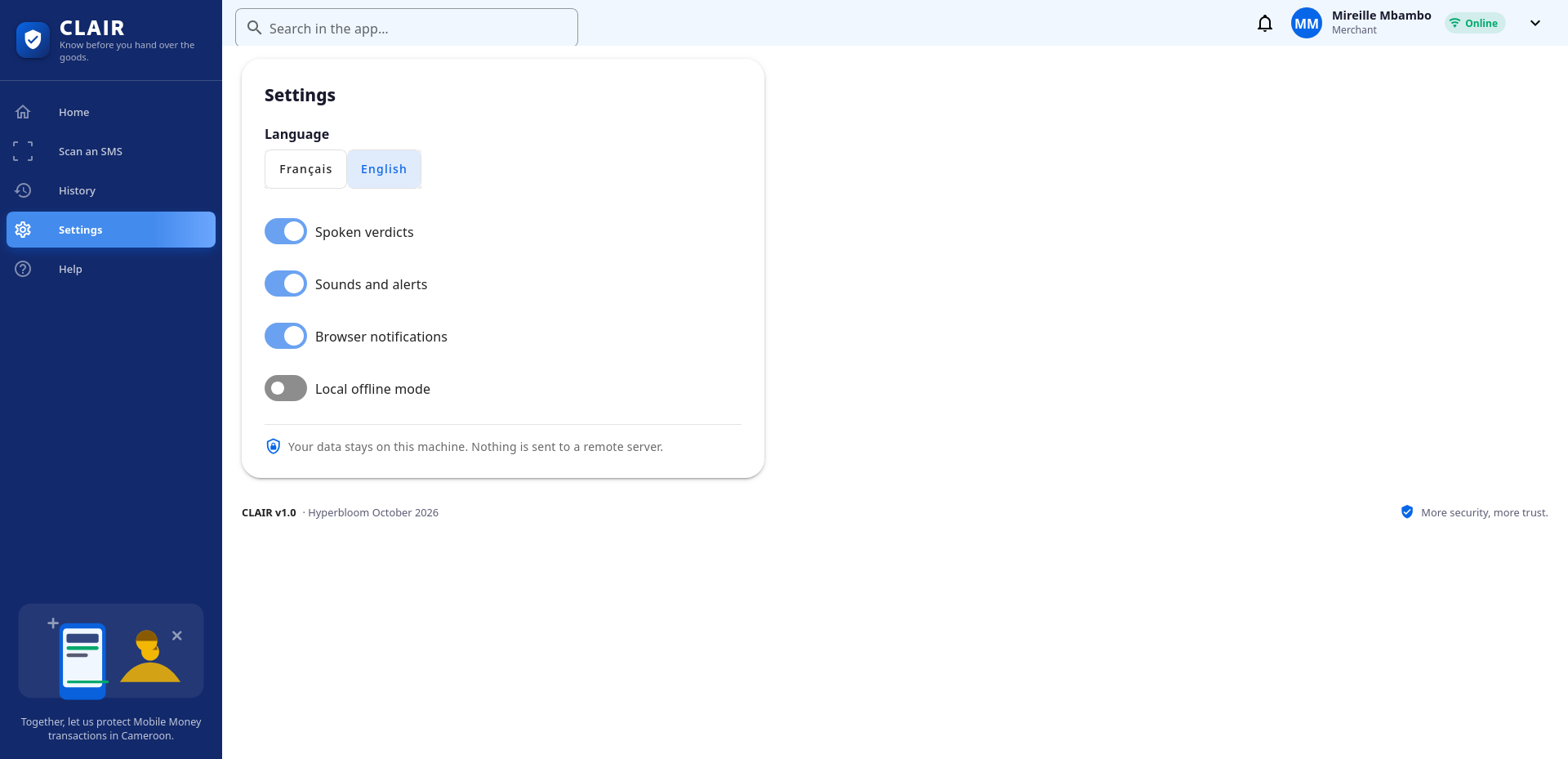
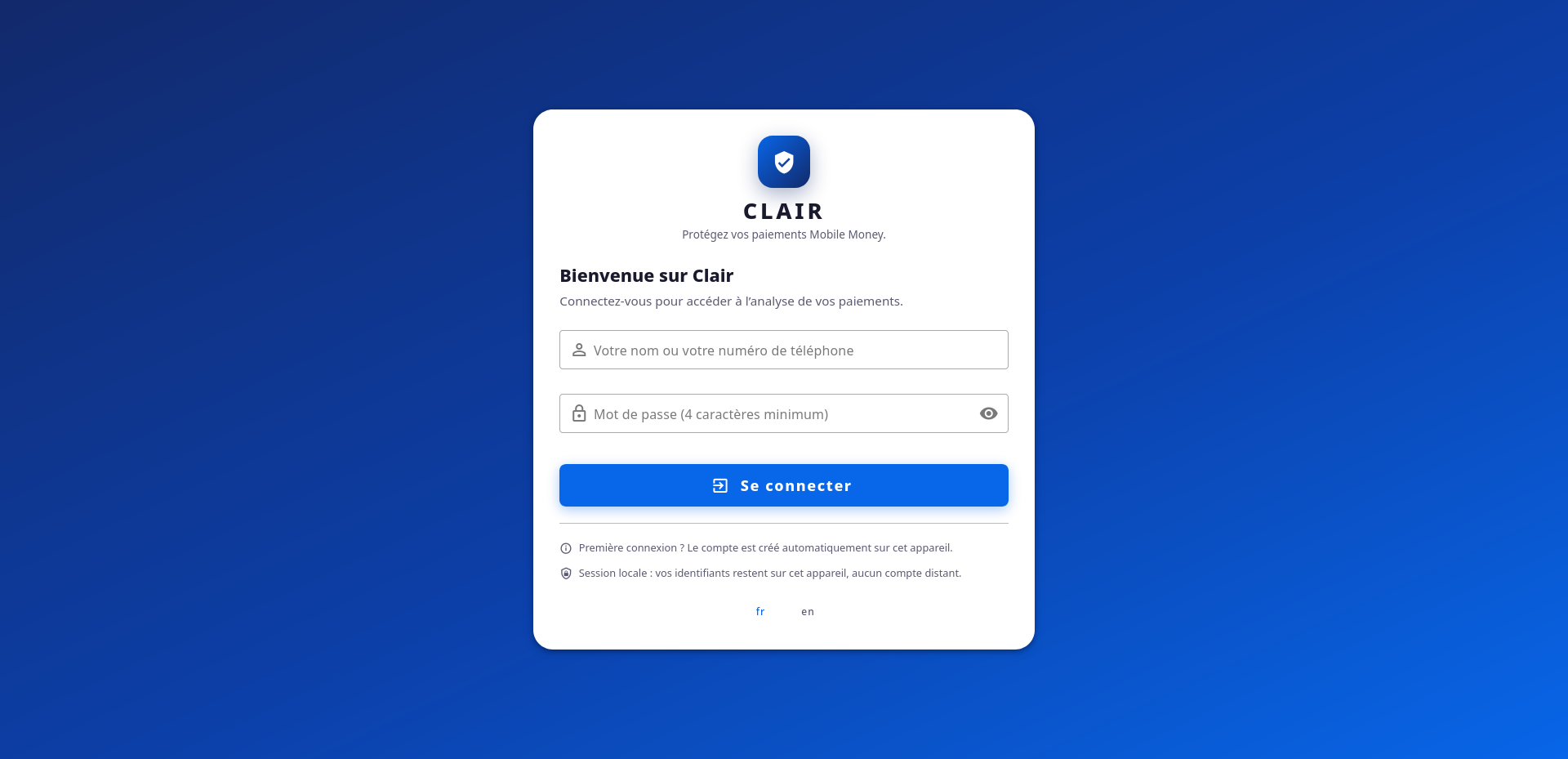
CLAIR can operate offline and does not require users to create an account. Importantly, it does not independently confirm that money has actually been transferred. Merchants should always check their real Mobile Money balance before releasing goods.
How We Built the Project
We approached CLAIR with a practical goal: make payment-message verification as simple as possible for everyday merchants.
The project focuses on analyzing the information contained in payment messages, identifying inconsistencies, and translating the results into understandable warnings. Rather than overwhelming users with technical details, CLAIR communicates through three straightforward verdicts.
We also considered the realities of local commerce, where internet connectivity may be unreliable and users need fast, accessible tools. This motivated the emphasis on offline functionality, a simple interface, and multiple feedback methods.
What We Learned
Working on CLAIR helped us understand that building a useful technology solution requires more than writing code. It starts with identifying a real problem, understanding the people affected by it, and designing a solution that fits their daily activities.
We also learned the importance of communicating uncertainty responsibly. A message that appears consistent is not proof that a payment has been completed. This distinction is essential when designing a tool intended to protect people from fraud.
Finally, we recognized the value of accessibility and simplicity. A security tool is most useful when people can understand its warnings quickly and act on them confidently.
Challenges We Faced
One of our main challenges was addressing the risk of fraudulent payment messages without direct access to Mobile Money operators' transaction systems. Because CLAIR cannot independently verify transfers through an operator API, its analysis must be presented as an assessment of the message rather than definitive proof of payment.
Another challenge was designing clear verdicts for users who may not have technical expertise. We needed to make the difference between a consistent message, a message requiring verification, and a dangerous message immediately understandable.
Offline operation and accessibility were also important considerations. The experience needed to remain useful in environments with limited connectivity while communicating results through clear visual and audio feedback.
These challenges reinforced the importance of being transparent about a tool's capabilities and limitations.
Our Vision
We want CLAIR to help make digital payments safer for merchants, particularly small businesses that depend on Mobile Money for their daily transactions.
Our vision is simple: technology should not only be powerful; it should also be practical, accessible, and adapted to the realities of the people who use it.
Built With
- accessibility
- css3
- detection
- fraud
- html5
- javascript
- localstorage
- mobile-money
- node.js
- offline-first
- progressive-web-app-(pwa)
- service-workers
- vibration-api
- web-speech-api

Log in or sign up for Devpost to join the conversation.