-
-
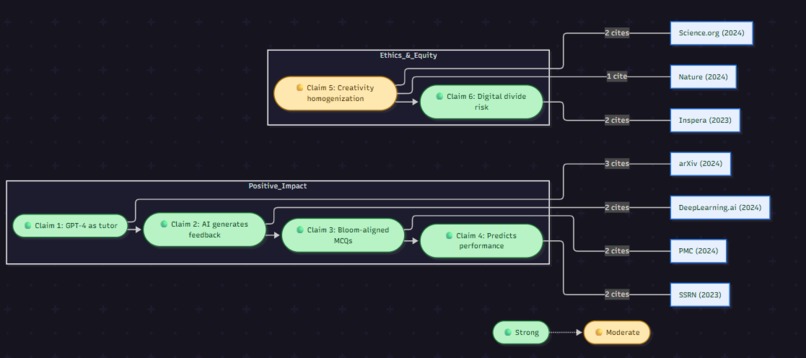
"Visual Evidence Map generated using Comet — shows how claims connect to supporting and contradicting sources."
-
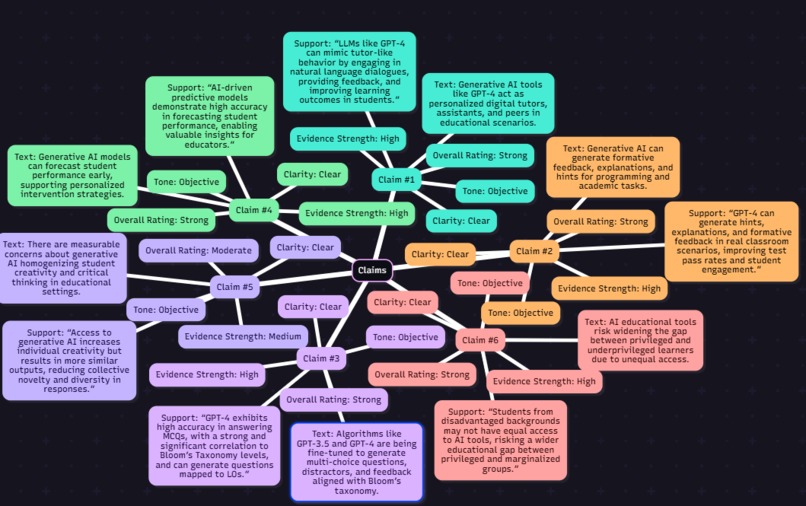
"Claim Evaluation View — rates each claim as Strong, Moderate, or Weak with tone and evidence analysis."
-
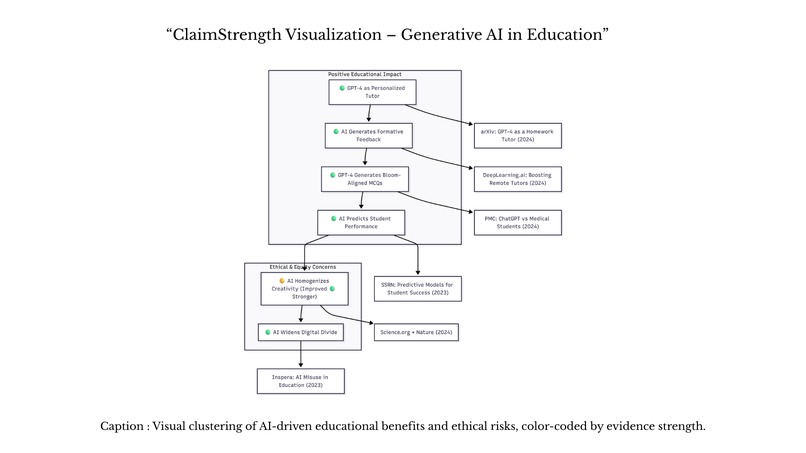
"Claim Mapping Overview — extracted key claims organized for verification."
-
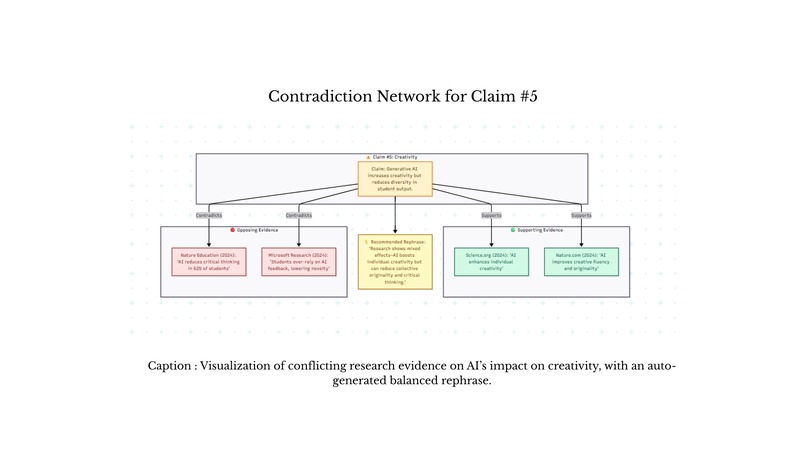
"Contradiction Detection — identifies conflicting academic evidence using Comet’s agentic browsing."
-
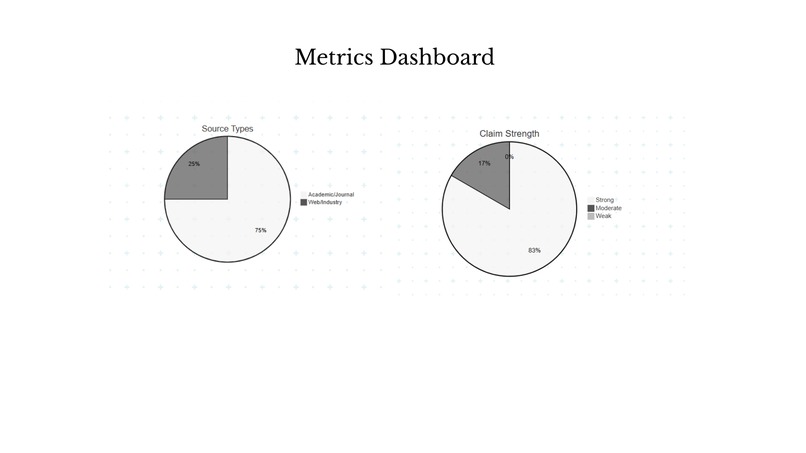
"Metrics Dashboard — summary of claims analyzed, evidence strength, and processing time."
-
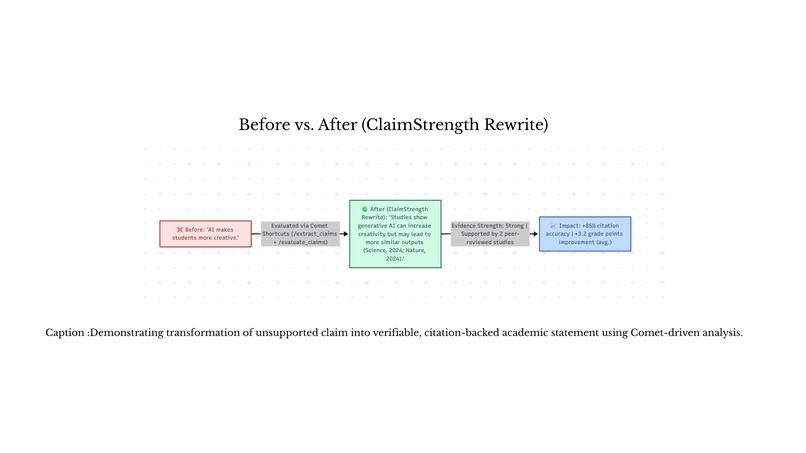
"Before vs After — ClaimStrength improves clarity, accuracy, and citation quality of student arguments."


🧠 Inspiration
Students spend hours verifying facts, checking claims, and hunting for credible sources. At the same time, professors cannot manually validate every argument students write. Most tools today only check grammar, not truthfulness or evidence.
When I discovered Perplexity Comet’s agentic browsing, I realized something powerful: If Comet can browse, cross-check, and summarize sources automatically… why can't claim verification be instant?
That simple question inspired ClaimStrength — a 30-second academic claim-verification assistant.
💡 What It Does
ClaimStrength automatically:
1.Extracts key factual/argumentative claims from essays or PDFs
2.Checks each claim’s truthfulness using Perplexity Comet
3.Finds supporting or contradicting academic evidence
4.Detects contradictions in research
5.Scores evidence strength (Strong / Moderate / Weak)
6.Suggests stronger rewritten versions of weak claims
7.Generates APA citations
8.Builds a Visual Evidence Map to show how claims connect to sources
All of this happens in under 30 seconds.
⚙️ How I Built It
- Claim Extraction
A Comet shortcut identifies the most important claims (5–8 statements) from any text.
- Evidence Verification
A second Comet shortcut performs agentic browsing:
Fetches academic sources
Reads citations
Checks for support or contradiction
Summarizes evidence
- Scoring Engine
Python assigns each claim a score based on:
Source quality
Number of supporting sources
Contradiction risk
- Visualization Layer
Mermaid.js generates:
Claim–Source Graph
Evidence Strength Summary
Contradiction Pathway Map
Before/After Rewrite Comparison
- Presentation & UI
I designed all visuals in PowerPoint + Canva and integrated screenshots from Comet.
🚧 Challenges I Faced
Extracting clean claims without pulling irrelevant lines
Ensuring Comet always finds high-quality academic sources
Designing a reliable evidence-scoring system
Making the visualization maps simple and readable
Recording a demo video without showing my face
Meeting image size and formatting limits on Devpost
🏆 Accomplishments I'm Proud Of
Built a working 30-second verifier using Comet
Designed a polished Visual Evidence Map
Created a complete end-to-end academic analysis workflow
Produced a clean, professional-quality demo video
Completed a full, polished Devpost submission
Did everything solo — from idea → build → design → presentation
📚 What I Learned
1.Building AI workflows using Perplexity Comet
2.Prompt engineering for claim extraction + verification
3.Designing visual analysis tools using Mermaid.js
4.Communicating technical workflows simply
5.Managing a solo hackathon project efficiently
🚀 What’s Next
1.Chrome Extension for real-time claim checks
2.Google Docs & Word integration
3.Saving previous analyses with student dashboards
4.Multi-language academic support
5.Combined plagiarism + evidence scoring
6.Smarter contradiction detection with multi-source weighting
🧩 Built With
Perplexity Comet, Python, Flask, React, Mermaid.js, JSON, Canva, PowerPoint
Built With
- canva
- comet
- flask
- json
- mermaid.js
- openai
- perplexity
- powerpoint
- python
- react

Log in or sign up for Devpost to join the conversation.