-
-
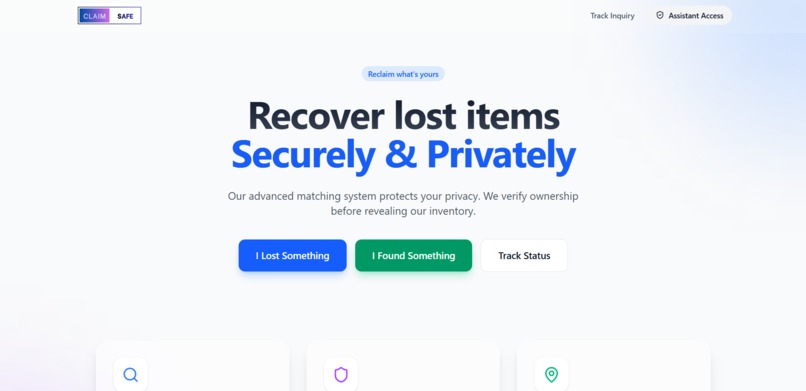
Main
-
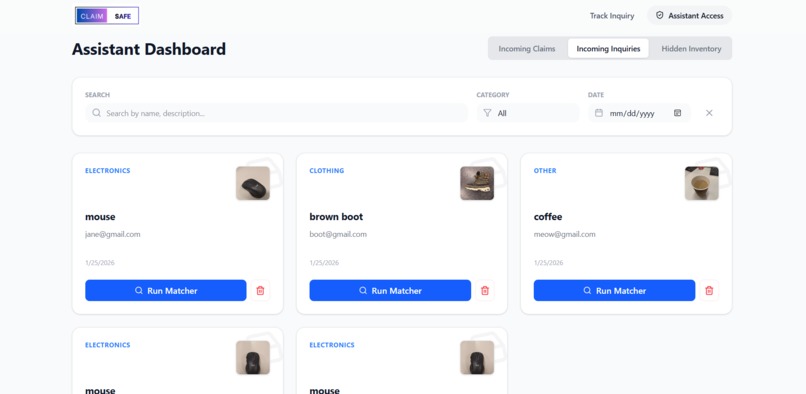
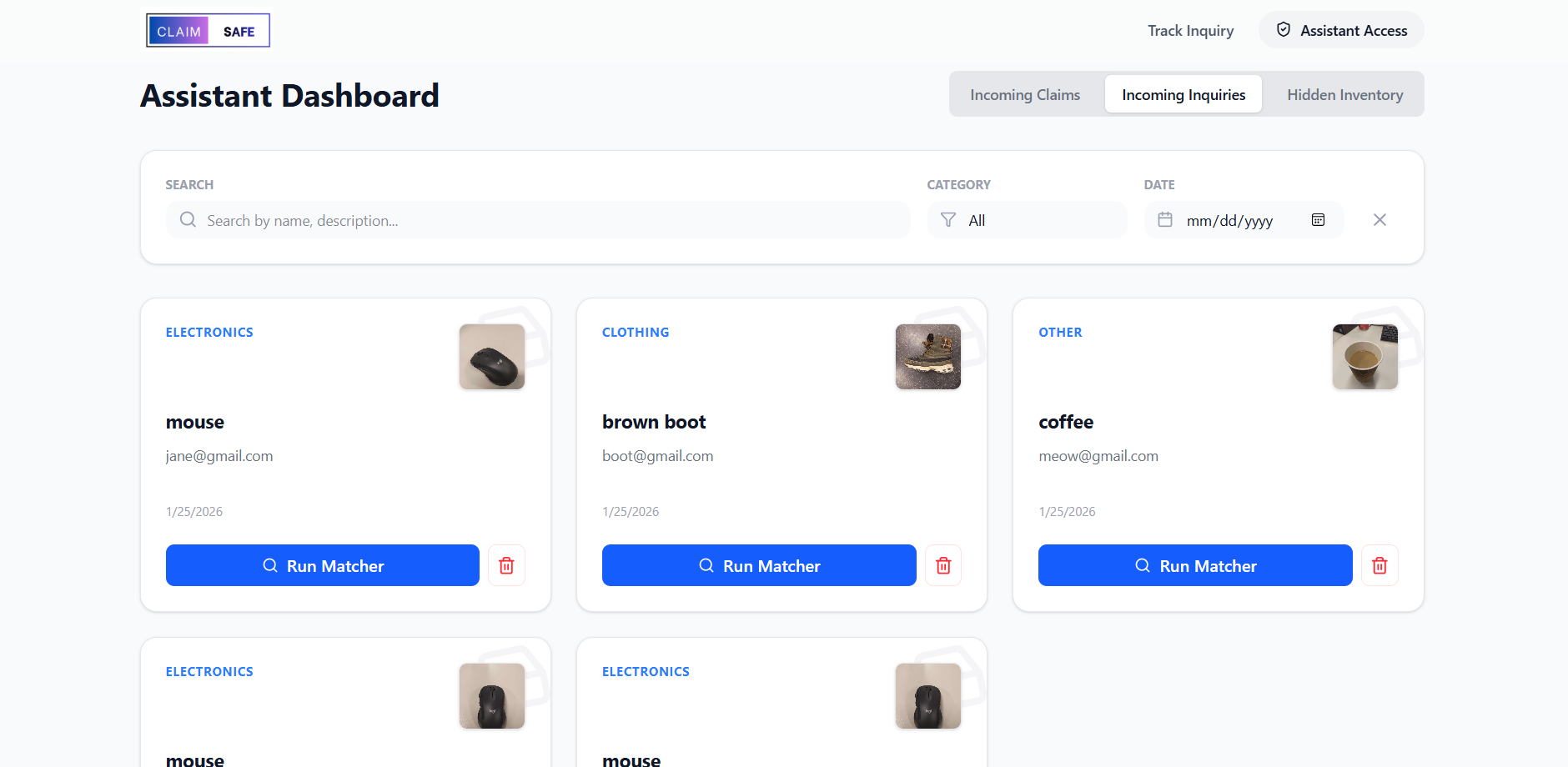
Incoming Inquiries
-
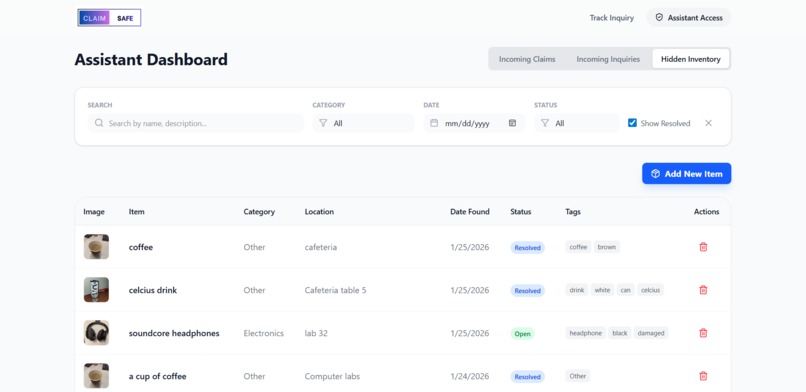
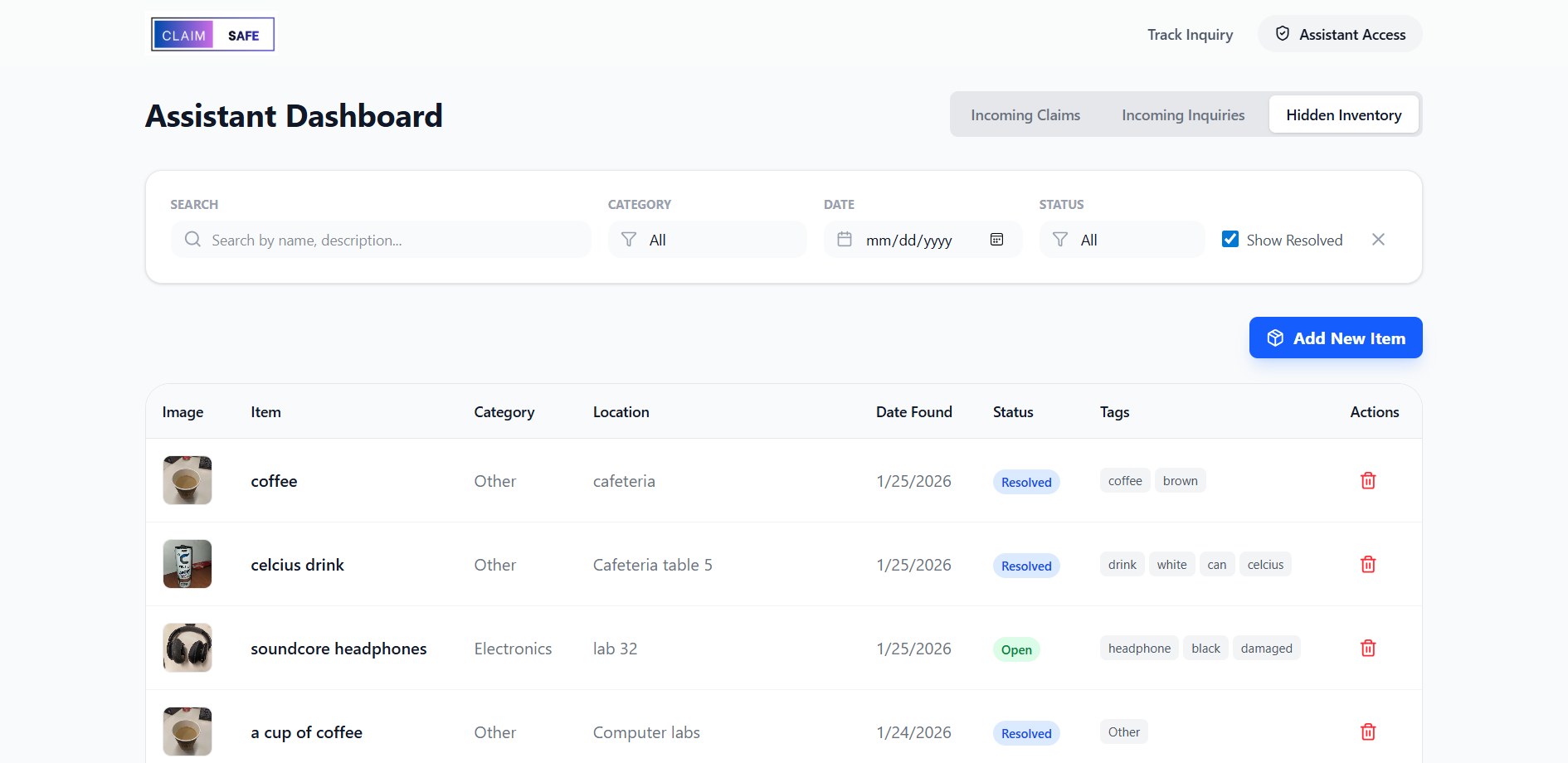
Hidden Inventory
-
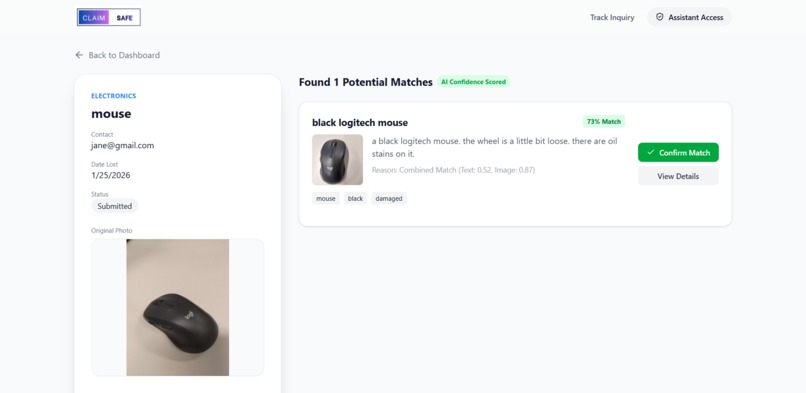
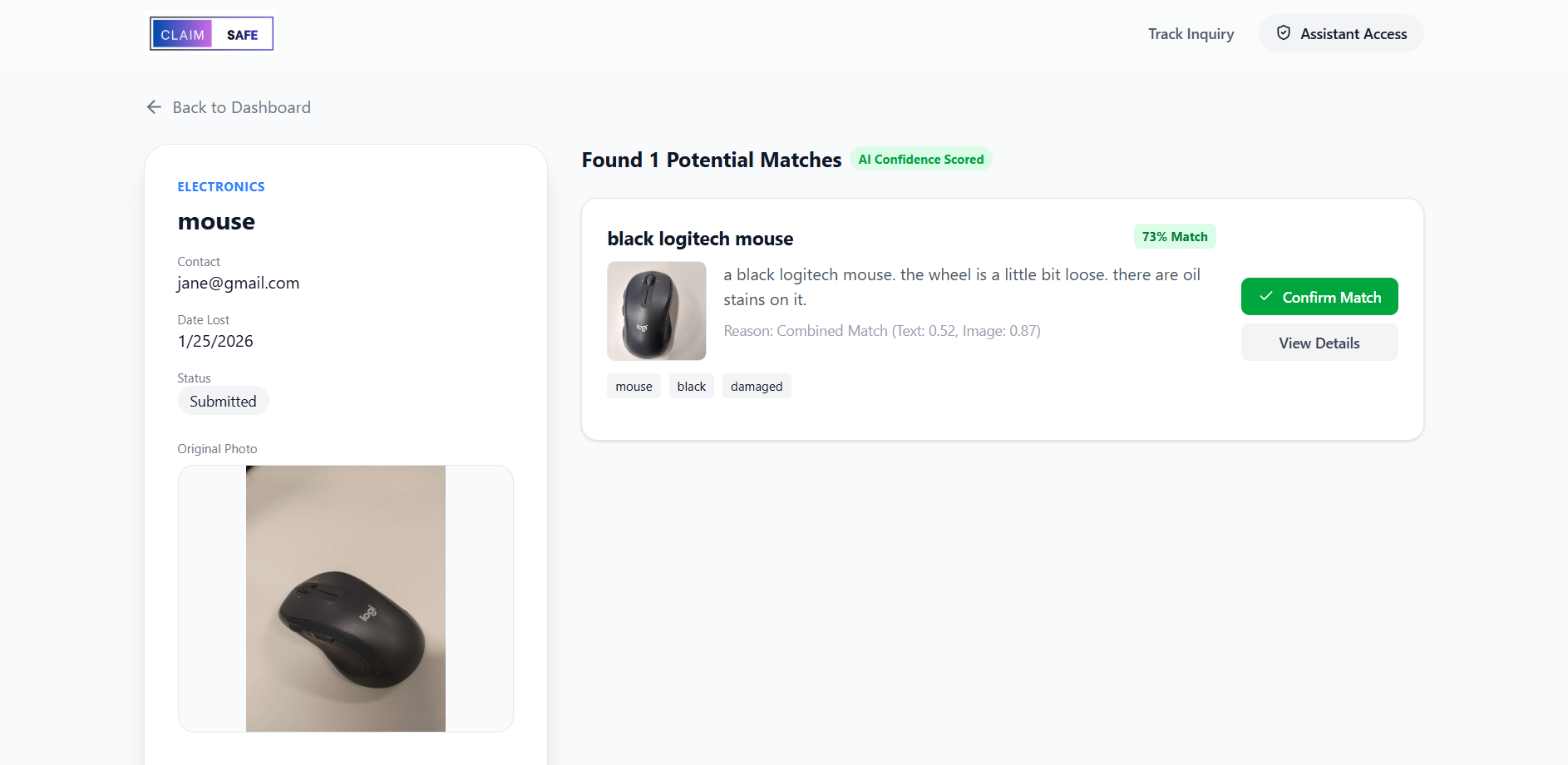
Potential Match
-
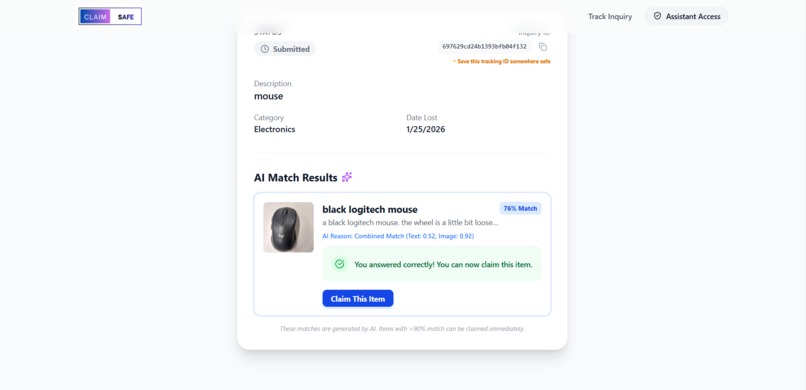
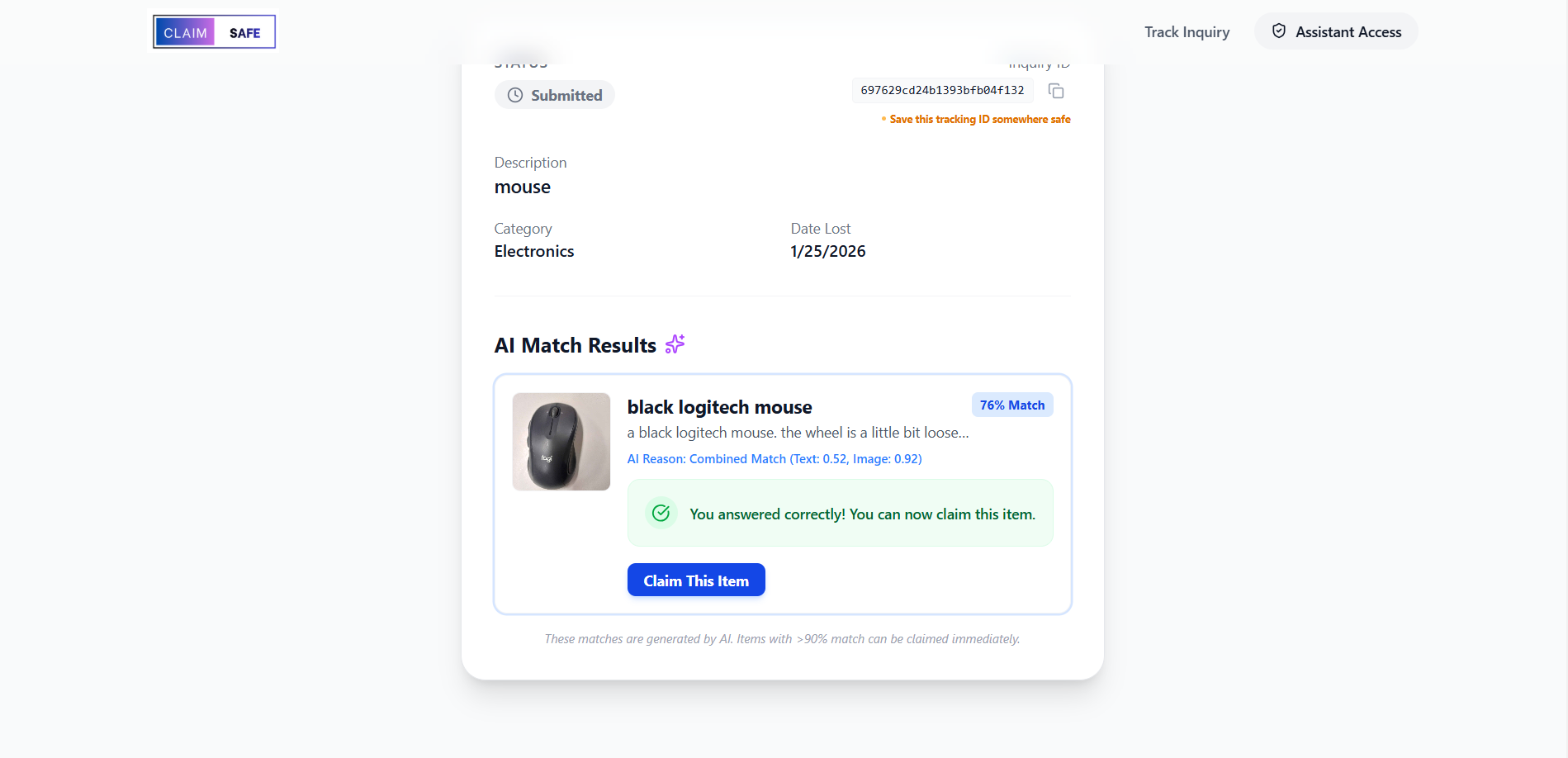
AI Match Results
-
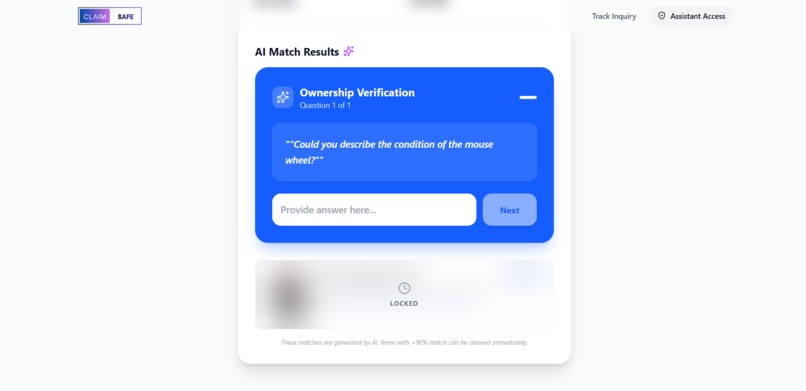
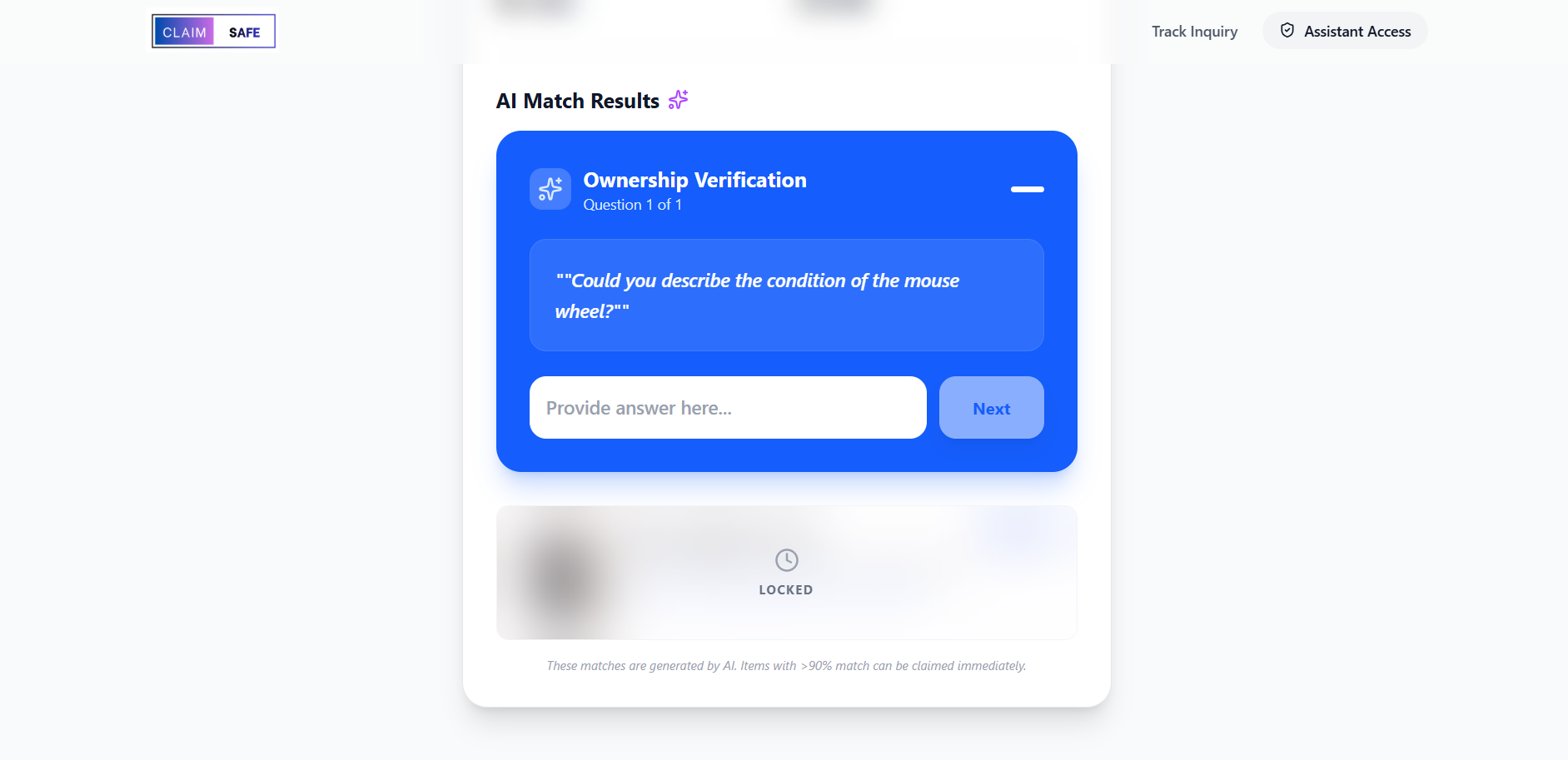
Ownership Verification
-
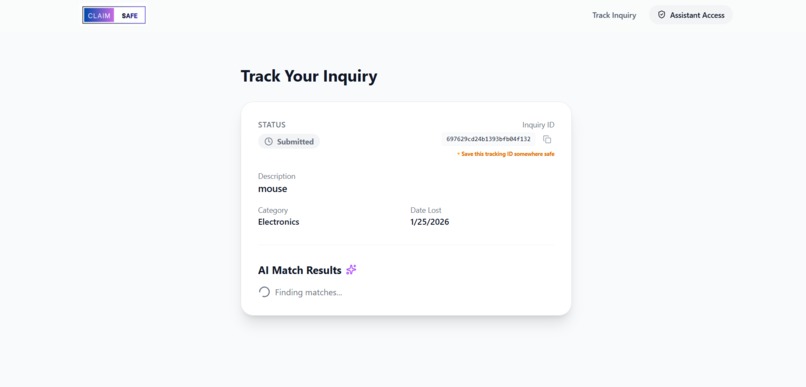
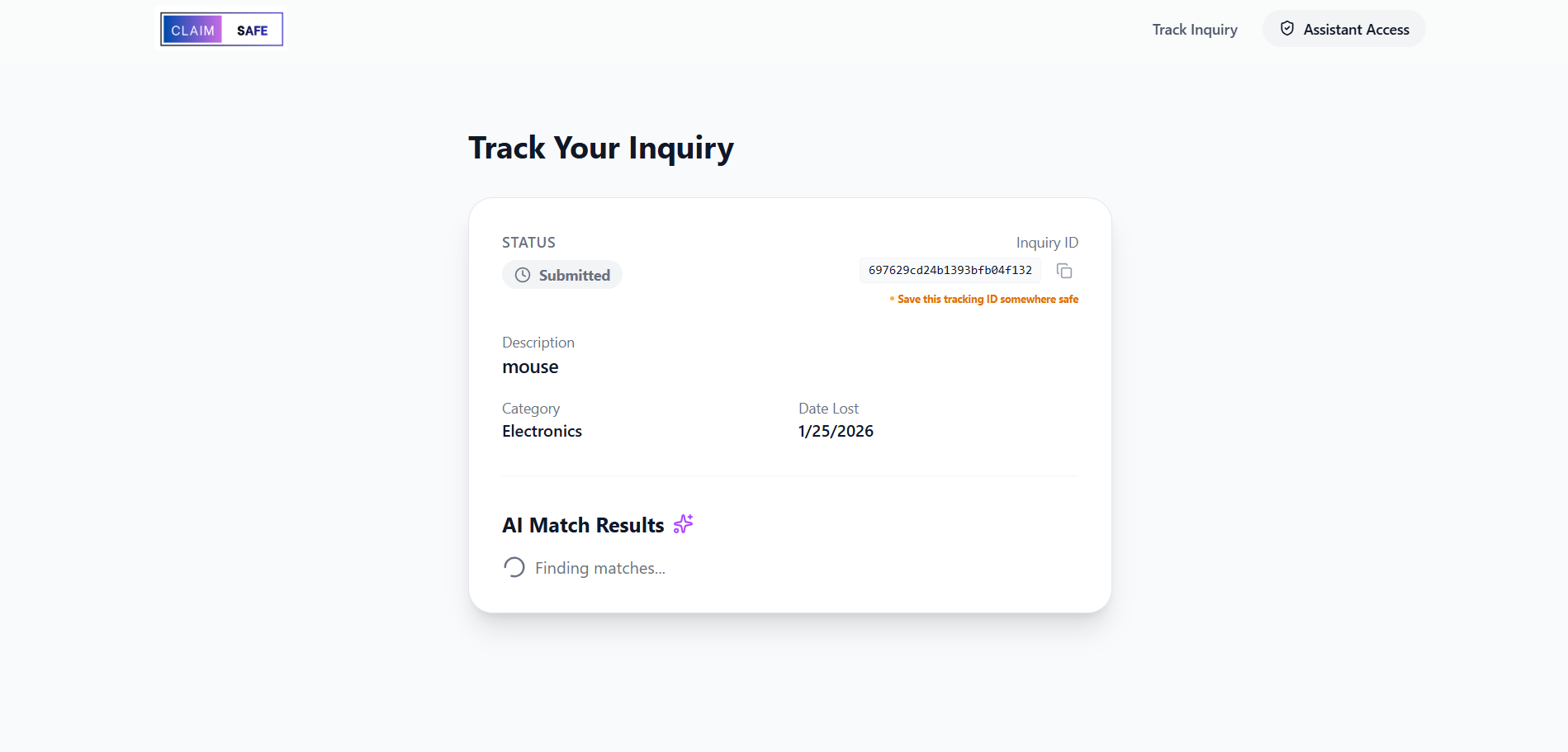
Track Your Inquiry
Inspiration
You know that sinking feeling when you realize your phone or wallet is gone? Traditional lost-and-found systems are fundamentally broken by a Trust vs. Utility paradox:
- If you show the public everything you’ve found, you invite fraudulent claims and "fishing."
- If you hide the inventory, the person who lost the item can’t find it.
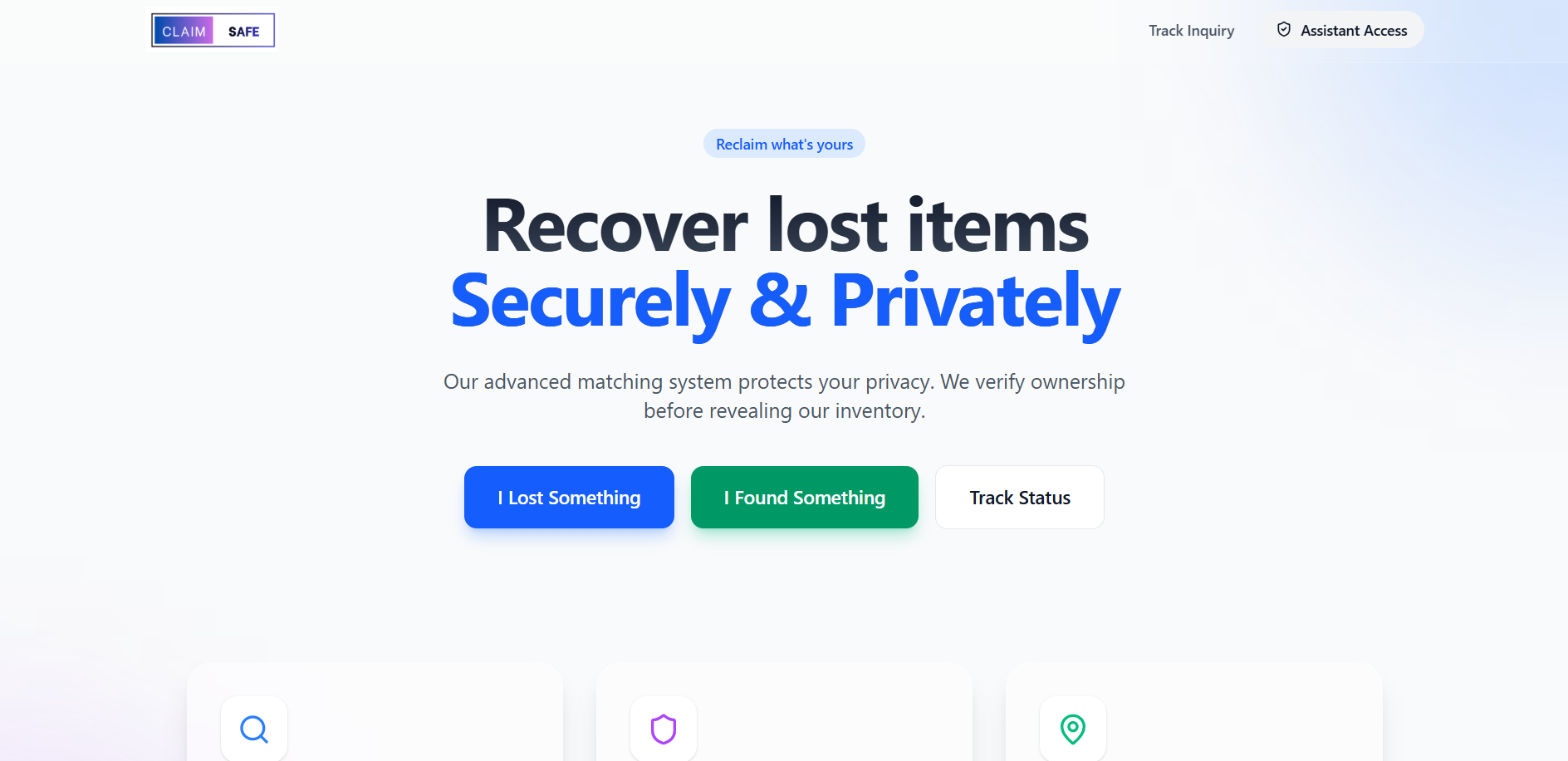
We built ClaimSafe to bridge this gap. We wanted to create a "Privacy First" system where AI acts as a secure intermediary, matching items without revealing a single sensitive detail to the wrong person until ownership is proven.
What it does
ClaimSafe is a secure, AI-powered recovery platform. Users submit "Lost Inquiries" through text or photo. Our engine performs a multi-modal search against a hidden database managed by assistants.
If a potential match is found, the system triggers a Zero-Knowledge Verification flow powered by Google Gemini. The AI analyzes the hidden item's details and generates a strategic question, for example, "Does your phone have a specific sticker on the back?" to verify ownership before any contact information or location data is revealed.
How we built it
We built ClaimSafe using:
Frontend: Built with Next.js 14 (App Router). We used Tailwind CSS for a custom "Glassmorphism" UI and Framer Motion for smooth micro-animations that give the app a premium, trustworthy feel. Backend: Powered by FastAPI (Python) to handle high-concurrency requests and integrate with AI models asynchronously.
Vision Matching: We integrated the OpenAI CLIP model via the Sentence-Transformers library. This allows the system to understand the visual semantics of photos and match them against descriptions.
Text Analysis: We leveraged Scikit-Learn for TF-IDF Vectorization and Cosine Similarity, enabling the system to understand relationships between text descriptions even when keywords don't match exactly.
Security & Verification: We used the Google GenAI SDK to implement Gemini 2.5 Flash Lite. The model serves as our "Verification Agent," reading hidden item descriptions and generating dynamic questions to test owners without leaking data.
Data Storage: We chose MongoDB and the Motor async driver for a flexible, scalable database that can handle evolving item attributes. To save images to MongoDB, we encoded the image as base64 and we decode them back to .png/.jpg when rendering
Challenges we ran into
Multi-Modal Integration: The biggest hurdle was balancing the importance of a photo versus a text description. We had to create a custom weighting system to ensure that a good text description could still find a match even if the photo was poor.
Strict Privacy: We had to architect the API to ensure that raw inventory data is locked down. The system only shares information with the user after the AI verification protocol is successfully completed.
Accomplishments that we're proud of
Zero-Knowledge Flow: Successfully building a system where the AI "intents" its own verification questions. Seeing the model correctly ask, "What color is the keychain attached to your keys?" based on an image it just processed (that the user hasn't seen) was a massive victory for us.
Premium UX: We moved away from the "utility tool" look and created a premium, trustworthy aesthetic that feels like a modern security layer rather than a standard spreadsheet.
What we learned
Computer Vision Power: We learned how CLIP embeddings allow us to search by "vibe" and "concept" rather than just fixed labels.
Strategic Prompting: We mastered prompt engineering to prevent the LLM from "hallucinating" or accidentally giving away the answer (e.g., "Is your phone the one with the cat sticker?").
Vector Math: Deepening our understanding of high-dimensional vector spaces and cosine similarity across different data types.
What's next for ClaimSafe
Vector Search Scaling: Transitioning to MongoDB Atlas Vector Search for massive scalability.
Geospatial Intelligence: Implementing distance-based decay to prioritize matches found near the user's reported loss location.
Built With
- async
- computer-vision
- fastapi
- framer-motion
- glassmorphism
- google-gemini
- mongodb
- motor
- natural-language-processing
- next.js
- openai-clip
- pydantic
- python
- tailwind-css
- typescript
- vector-embeddings
- zero-knowledge-verification

Log in or sign up for Devpost to join the conversation.