-
-
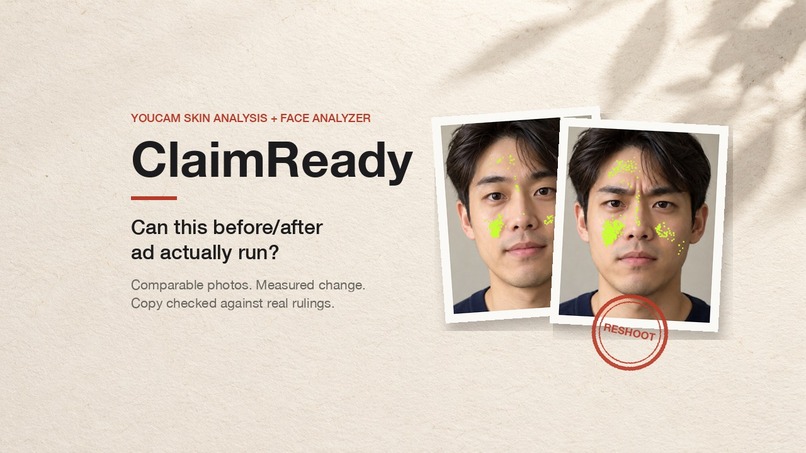
ClaimReady: is this before/after skincare ad ready to run?
-
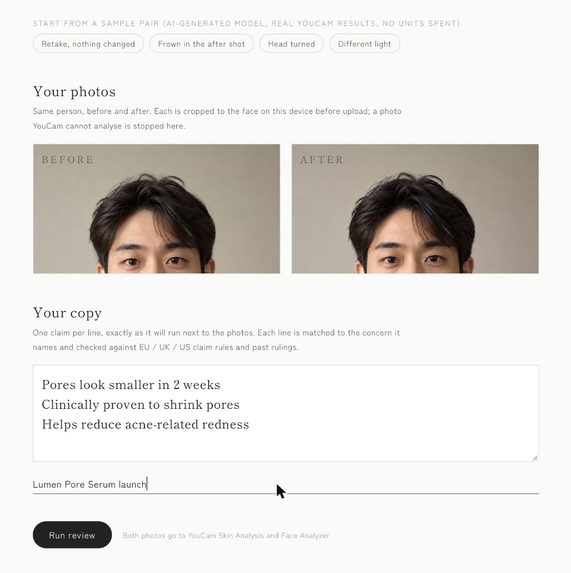
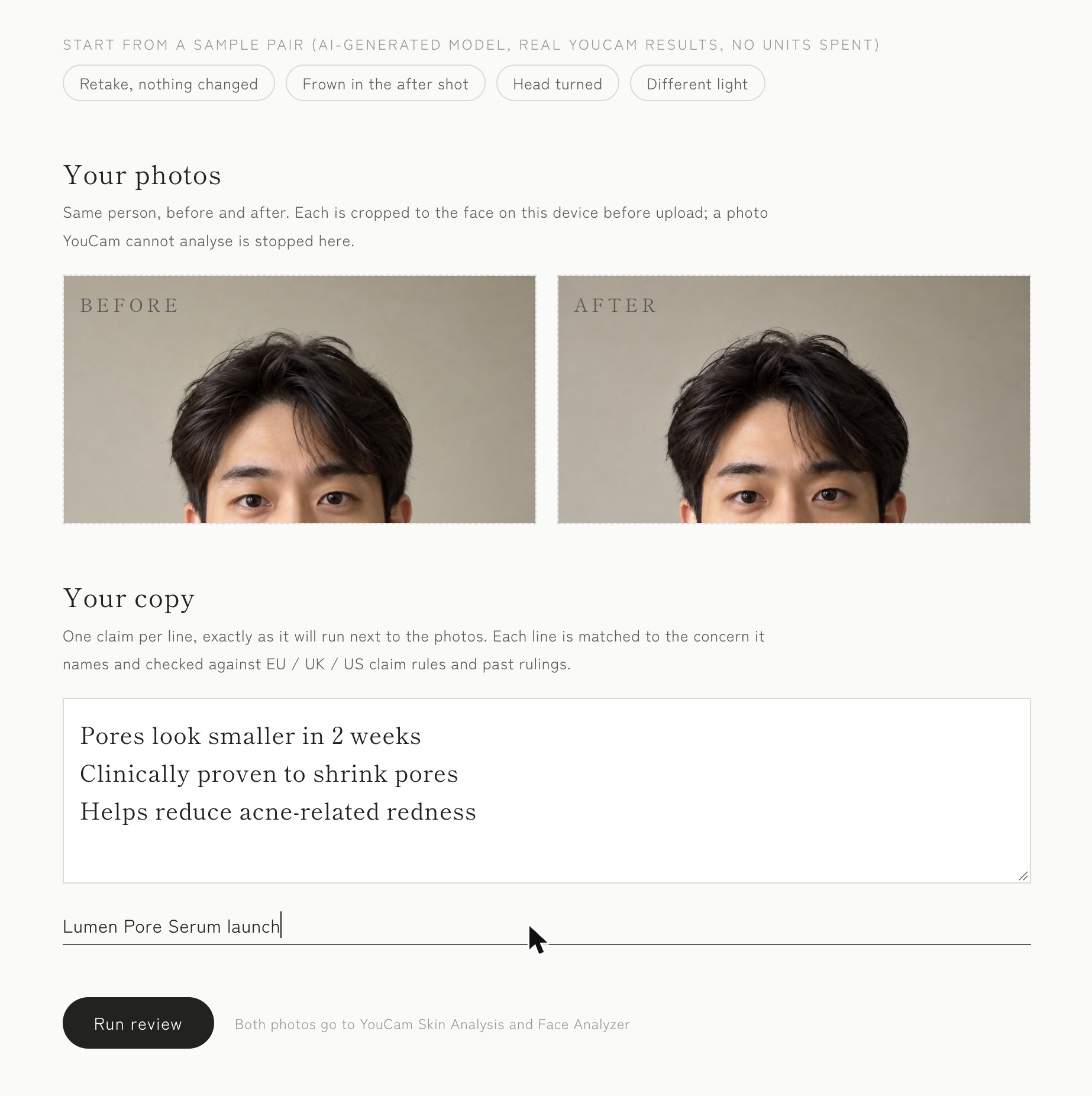
Upload: the before and after photos and the copy the brand plans to post, one claim per line.
-
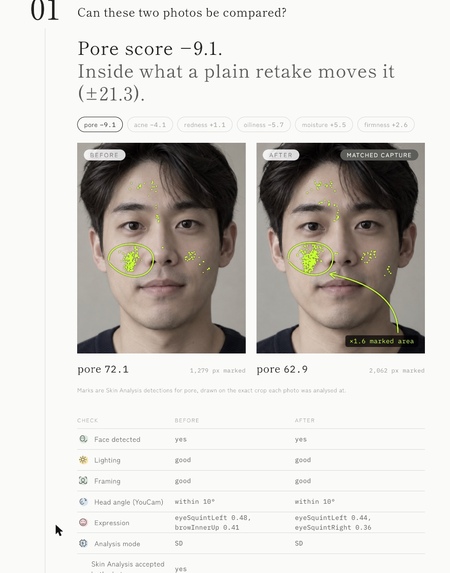
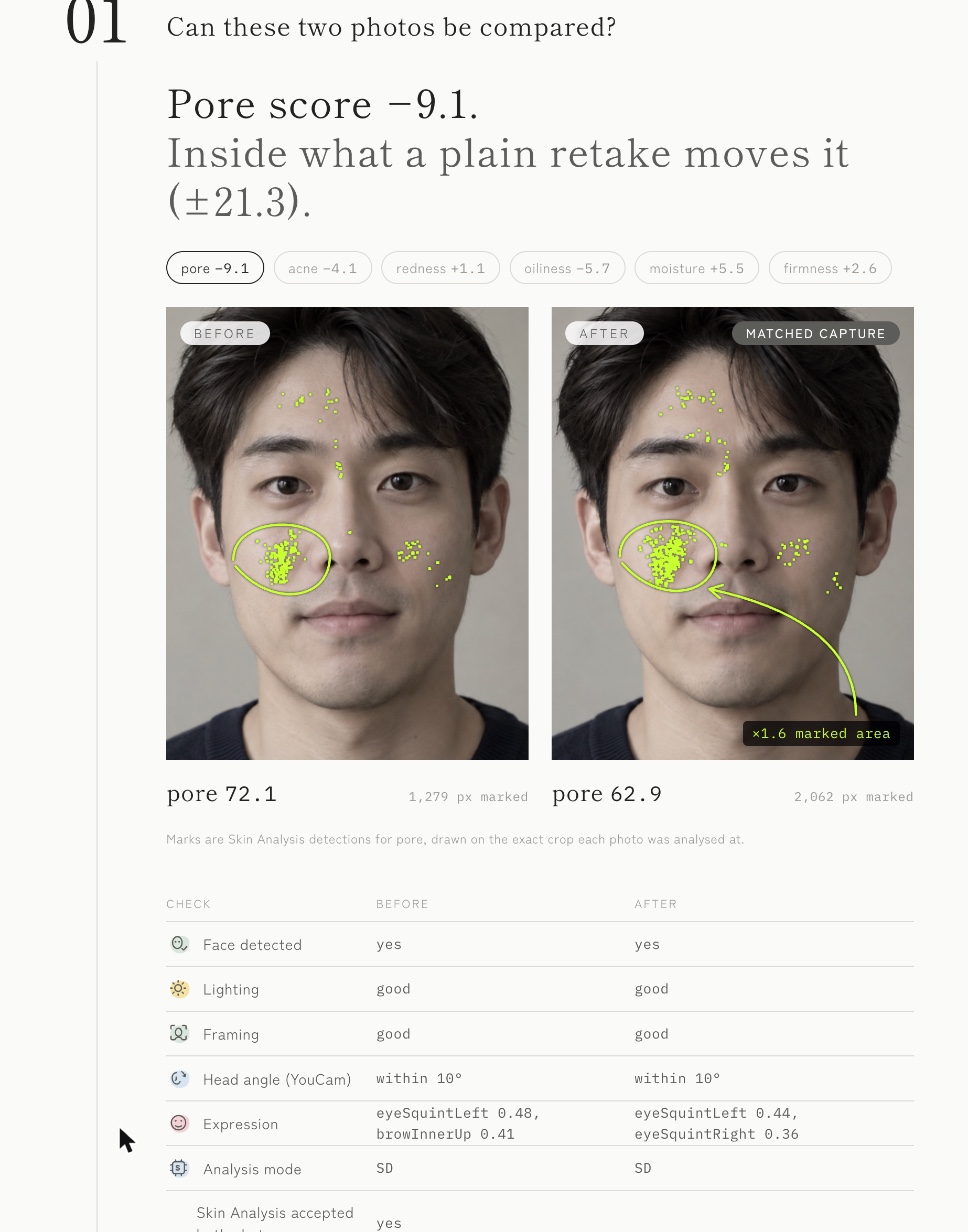
Step 1: YouCam Skin Analysis pore detections on both photos. Pore -9.1 is inside retake noise (±21.3).
-
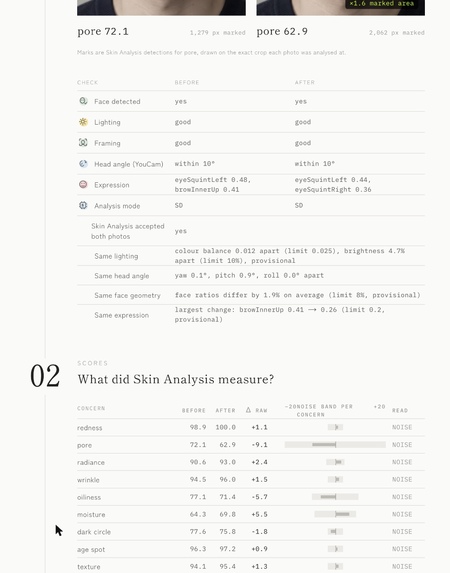
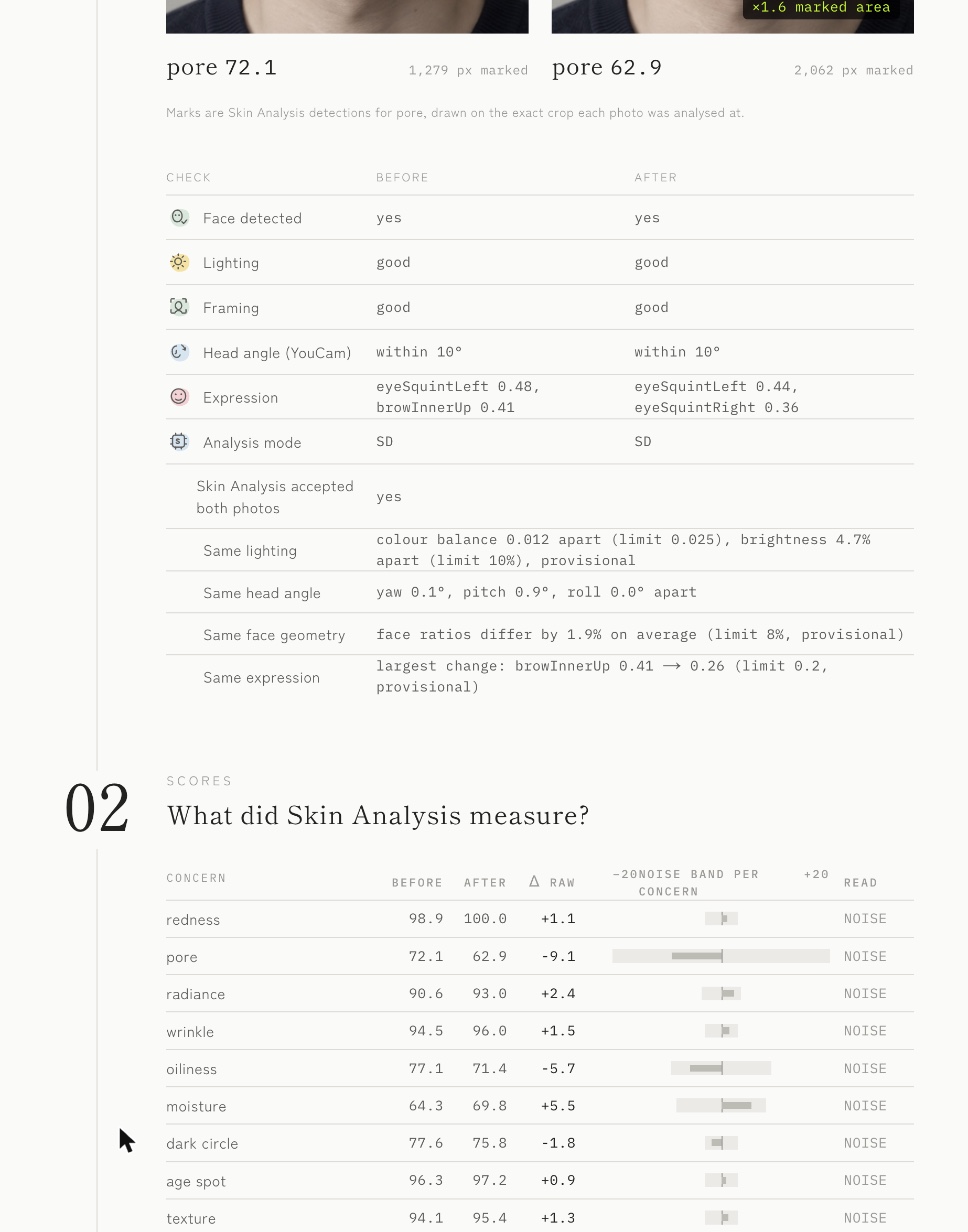
Capture checks from YouCam Face Analyzer and on-device landmarks, then all 15 concerns against their noise bands.
-
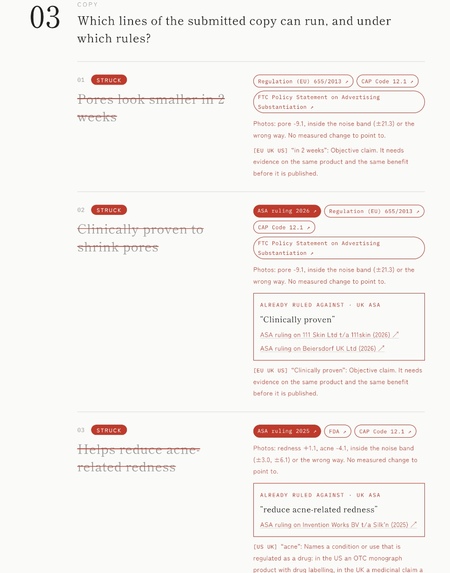
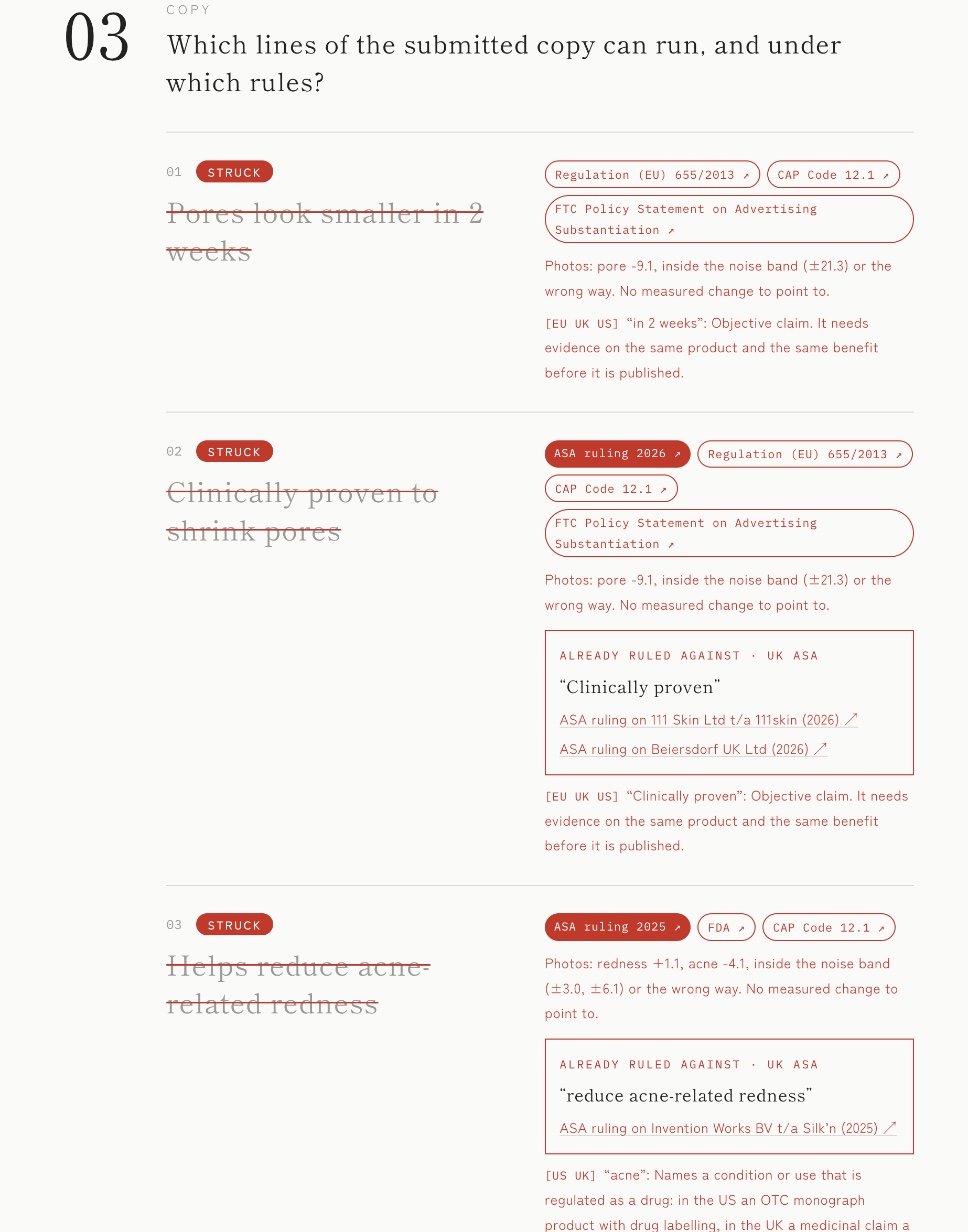
Step 3: each line of copy, with the rule or the UK ASA ruling behind its mark, linked to the source.
-
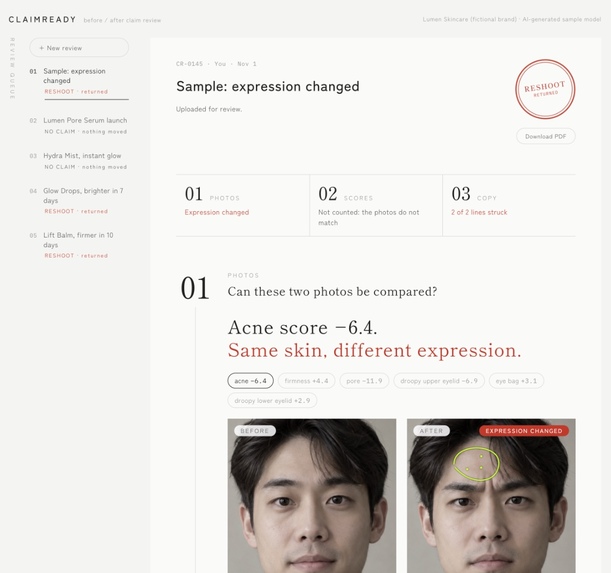
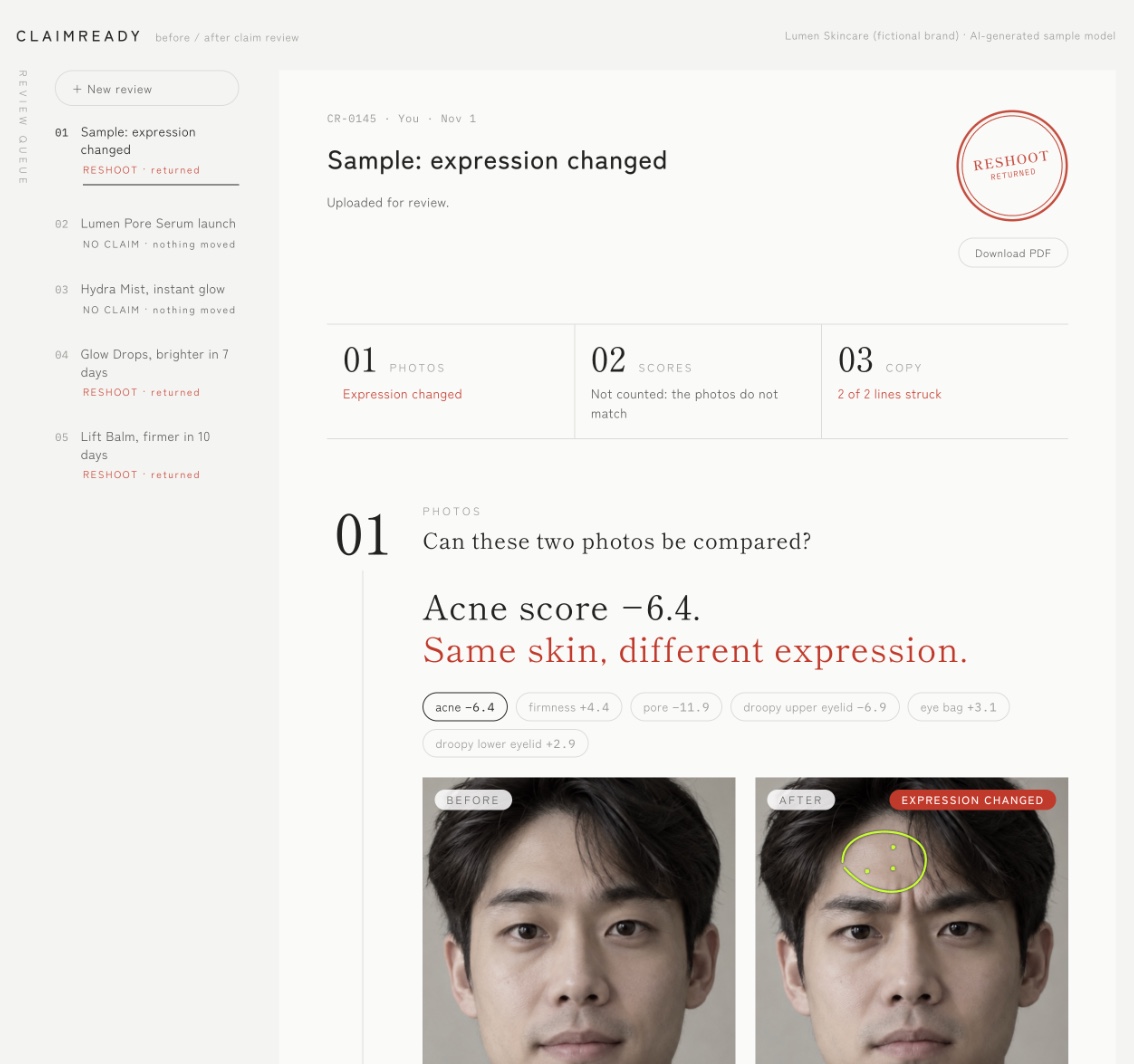
A frown in the after shot: same skin, different expression, so the pair is returned for a reshoot.
Inspiration
A before/after photo is the strongest claim a skincare ad makes, and regulators treat it as one. UK CAP guidance says before and after images "are treated as objective claims just the same as written claims". But a frown, a head turn or warmer light changes what an analysis API measures without anyone editing the photo. On our AI-generated test face, a frown in the after shot moved the acne score by 6.4 and pore by 11.9. Read the usual way, that is a product result.
What it does
ClaimReady is the check a brand reviewer runs before the ad goes out. They upload the before photo, the after photo and the copy, one claim per line. The review sheet answers three questions:
- Can the two photos be compared? On the device, MediaPipe finds and crops the face and reads expression, head pose and face-region light. YouCam Face Analyzer grades lighting, framing and head angle for each photo. If expression, angle, light or face geometry differ, the pair is returned for a reshoot and no score difference is counted.
- What did YouCam Skin Analysis measure? All 15 concerns, raw scores only, each against its own noise band measured from retakes of the same face. YouCam's detection masks are drawn on both photos so the reviewer sees where the change is.
- Which lines can run? Each line is matched to the concern it names and to the measured change, then checked against ten EU / UK / US claim rules and 381 phrases the UK ASA or US FDA has already ruled against, with a link to every statute and ruling.
ClaimReady never approves copy. It strikes what the photos or the rules cannot carry and leaves the decision to a person. Every review downloads as a PDF with all concerns and sources.
Retail value: a struck "clinically proven" line costs nothing before launch and a ruling after it. Brands, agencies and marketplaces that host before/after listings get the evidence in one sheet, instead of a reviewer deciding that two photos "look better".
How we built it
- YouCam Skin Analysis v2 (15 concerns, SD) is the measurement: raw_score only, never ui_score, which YouCam documents as adjusted toward favorable results. The per-concern detection masks from the response are redrawn on the exact crop each photo was analysed at.
- YouCam Face Attributes & Ratio Analyzer grades face quality (lighting, framing, angle) and returns face ratios used as the same-face check.
- MediaPipe Face Landmarker runs in the browser before upload: crop to what Skin Analysis requires, expression from blendshapes, head pose and face-region colour and brightness. A photo YouCam would refuse never reaches the API.
- Claim rules carry verbatim quotes and links to the official text (FD&C Act, FDA guidance, CAP Code, Regulation (EU) 655/2013, FTC substantiation policy). The precedent list was built from ASA rulings and FDA warning letters.
- Next.js 16, TypeScript, react-pdf for the export, Vitest, deployed on Vercel. Sample pairs replay stored real YouCam responses; live calls stop at a reserved unit floor.
Challenges we ran into
- The first live calls were all refused: Skin Analysis needs the face to fill 60% of the width and a 480 px short side. Both checks moved onto the device.
- One noise band does not fit all concerns: retakes moved pore by up to 14 raw points but redness by about 1. Each concern has its own band.
- Skin Analysis sees the light too: warmer light made the pore mask 3.4 times larger and moved the pore score by 20, so lighting is compared between the shots.
- Phrase similarity against past rulings found nothing new on real brand copy. Measured on 205 claims from 48 brands' pages, labelled by a different model family: the rules catch 74% of flagged lines on an unseen batch with 12% false positives, so the precedent list is shown only on exact matches.
Accomplishments that we're proud of
- The same image submitted twice returned identical raw scores on all 15 concerns, so Skin Analysis can be used as a measurement instrument.
- Every red mark on the sheet links to a rule text or a ruling a reviewer can open.
What's next
- Repeat-capture experiments with real people to replace the noise bands measured on AI-generated images.
- Retouch and filter detection between the two shots.
Limits
Noise bands and pair thresholds come from AI-generated images of one model and are provisional. The sample photos are AI-generated, not real people. Rules flag wording for a human reviewer; they are not legal advice.
Built With
- mediapipe
- next.js
- react
- react-pdf
- typescript
- vercel
- vitest
- youcam-face-attributes-ratio-analyzer
- youcam-skin-analysis
