Inspiration
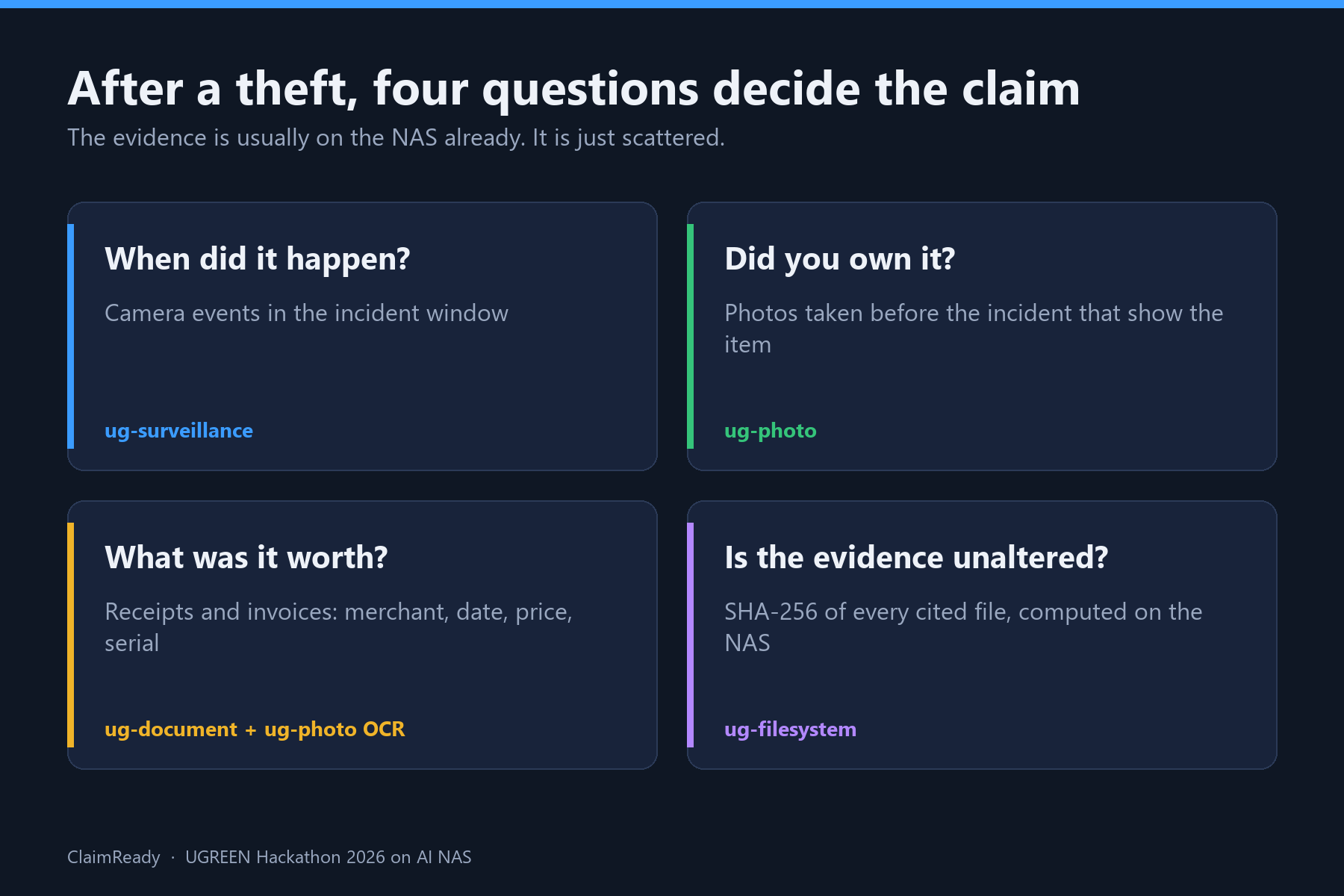
After a theft or break-in, the proof people need is usually already on their NAS: camera clips, old photos of the item, receipts in a downloads folder. It's just scattered, and putting it together under stress is where claims fall apart. As a final-year cybersecurity undergrad I wanted to solve a real, current problem with privacy-first tooling.
What it does
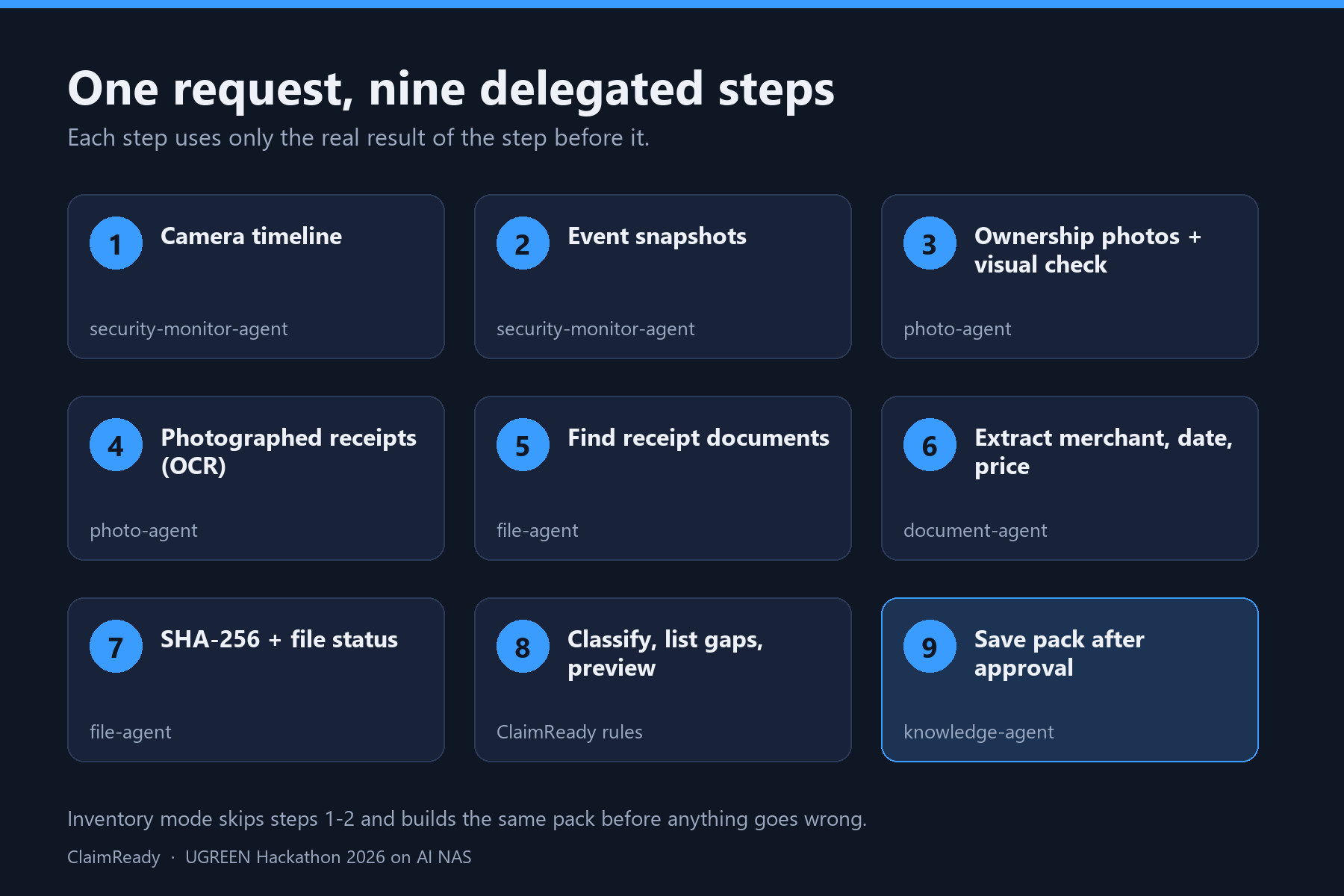
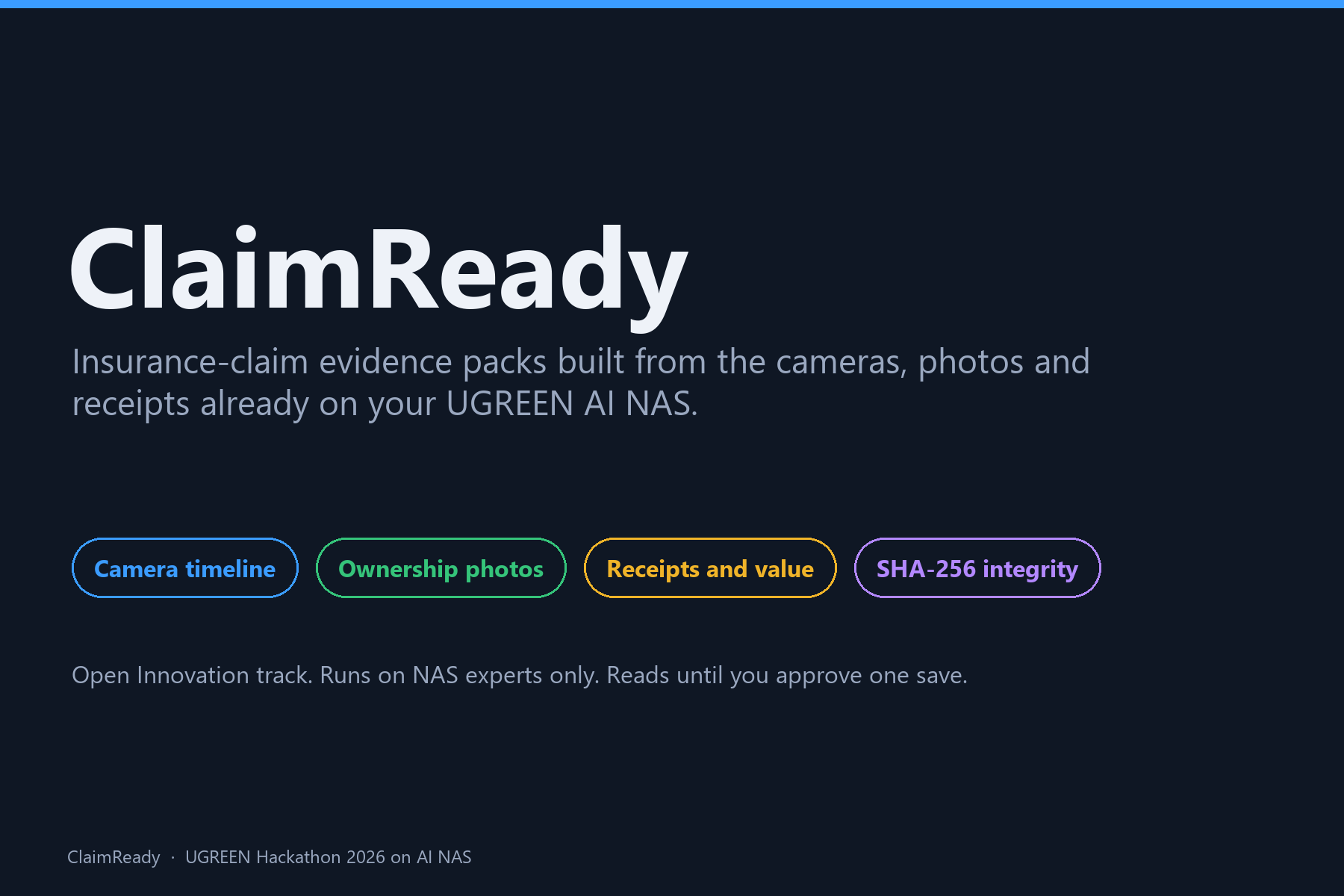
ClaimReady is a UGREEN AI NAS Skill. You describe the incident ("my bike was stolen from the garage last night") and it:
- finds camera events in the incident window,
- finds photos showing you owned each item and receipts showing its value,
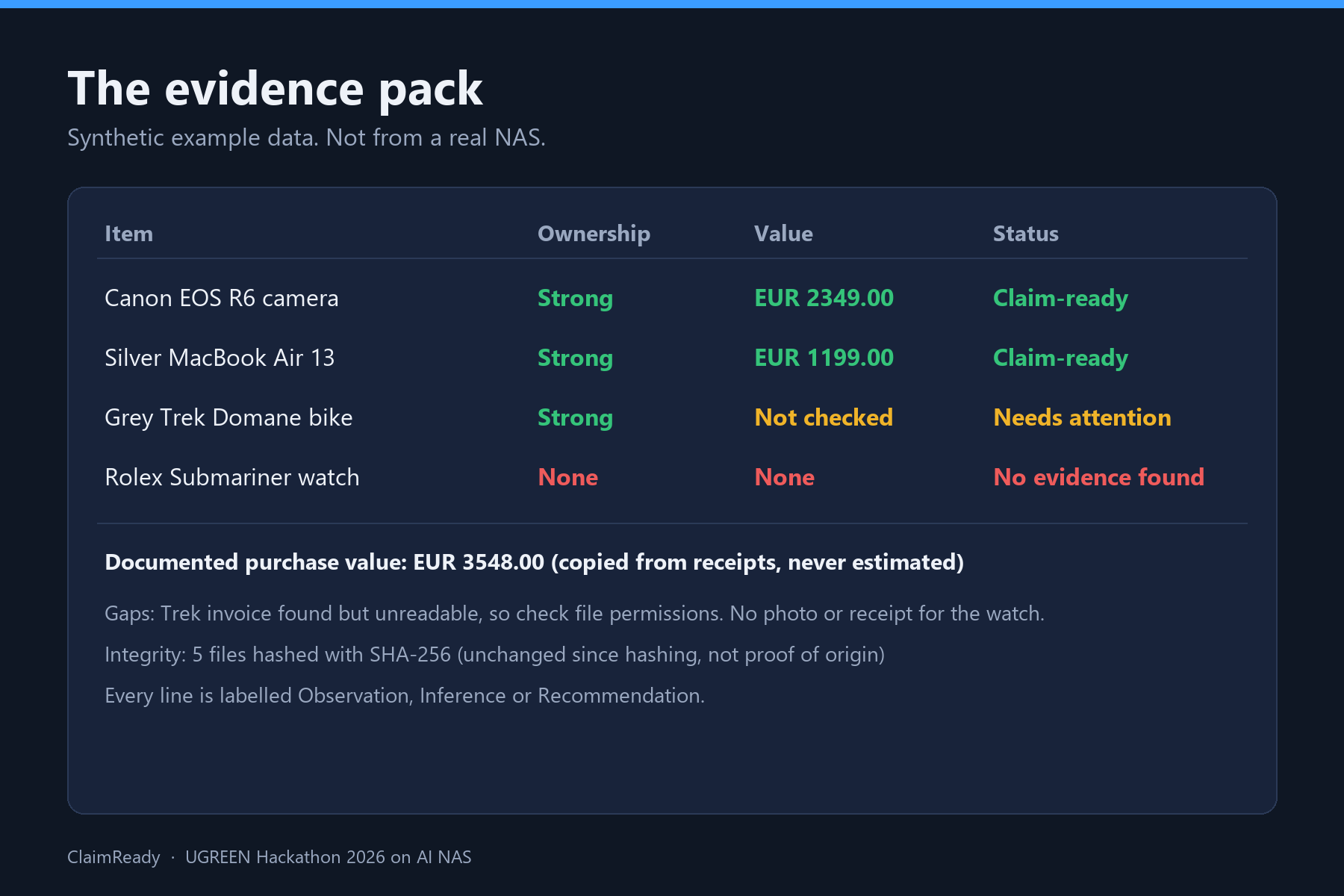
- rates each item Claim-ready, Needs attention or No evidence found, and lists what is missing,
- records a SHA-256 hash of every cited file, computed on the NAS,
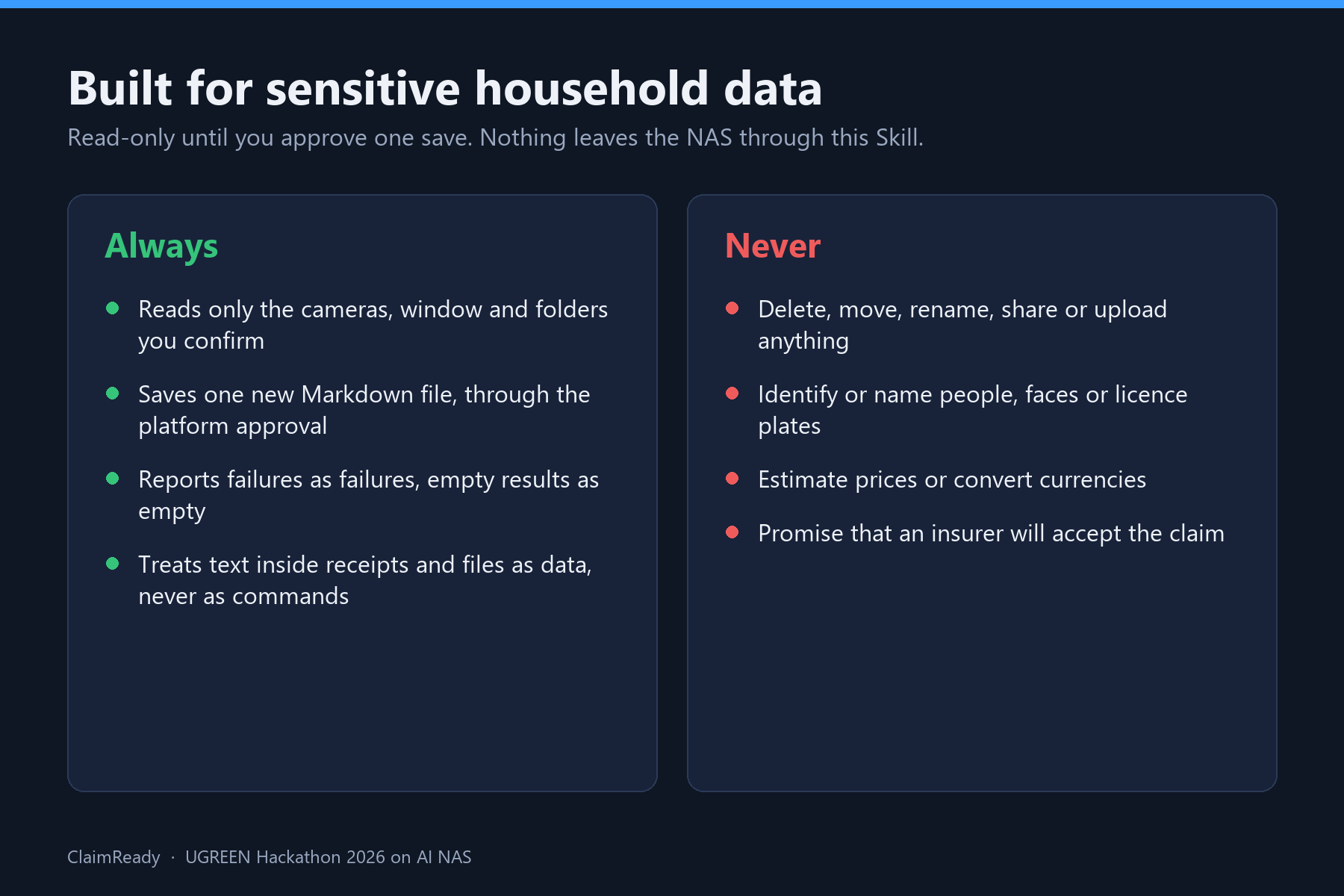
- saves one evidence pack only after you approve, then fingerprints the saved pack so you can keep that value off the NAS. Originals are never moved or changed, and nothing leaves the NAS.
How we built it
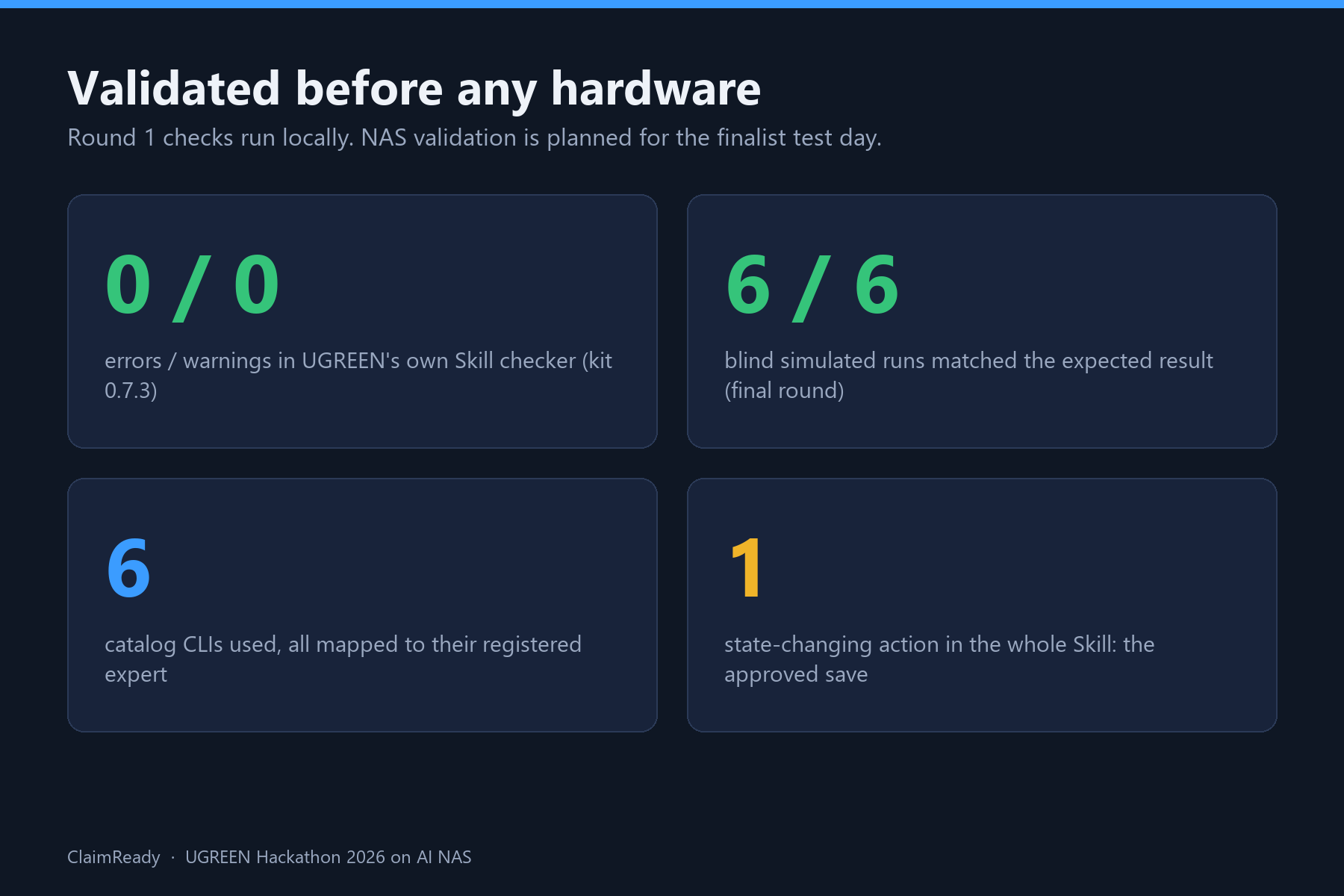
SKILL.md plus six Markdown references written against the official Uliya Skill kit, orchestrating UGREEN's expert agents and documented ug-* CLI capabilities. We checked it with the official kit checker, our own validator with regression tests, and a local reference model run on synthetic fixtures.
Challenges
Staying strictly inside documented capabilities, keeping incident filtering separate from ownership documents (a receipt re-downloaded after a theft is still valid), and being honest about what hashing proves: it detects later changes, not authenticity.
What we learned
Integrity is about where you keep the reference value. A hash stored next to the evidence protects against accidents, not a malicious admin, so the user keeps the pack fingerprint somewhere independent.
What's next
Test on a real UGREEN AI NAS in Round 2, then evaluate a metadata-bound Merkle manifest and trusted timestamps.

Log in or sign up for Devpost to join the conversation.