-
-
ClaimOps source-backed claim review desk
-
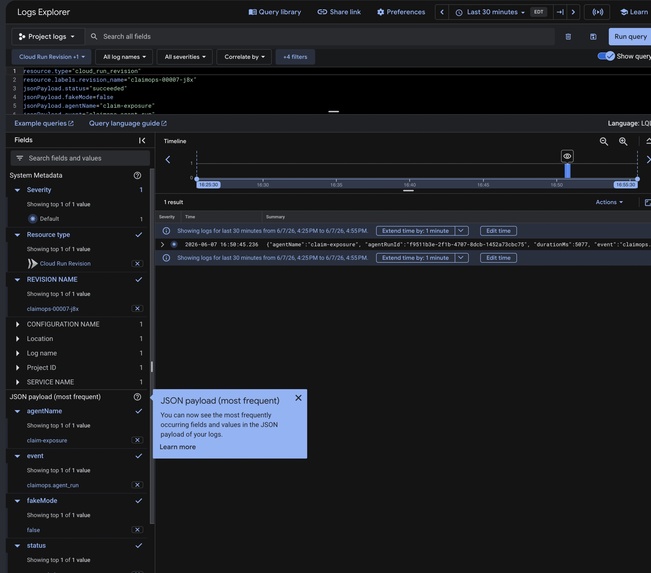
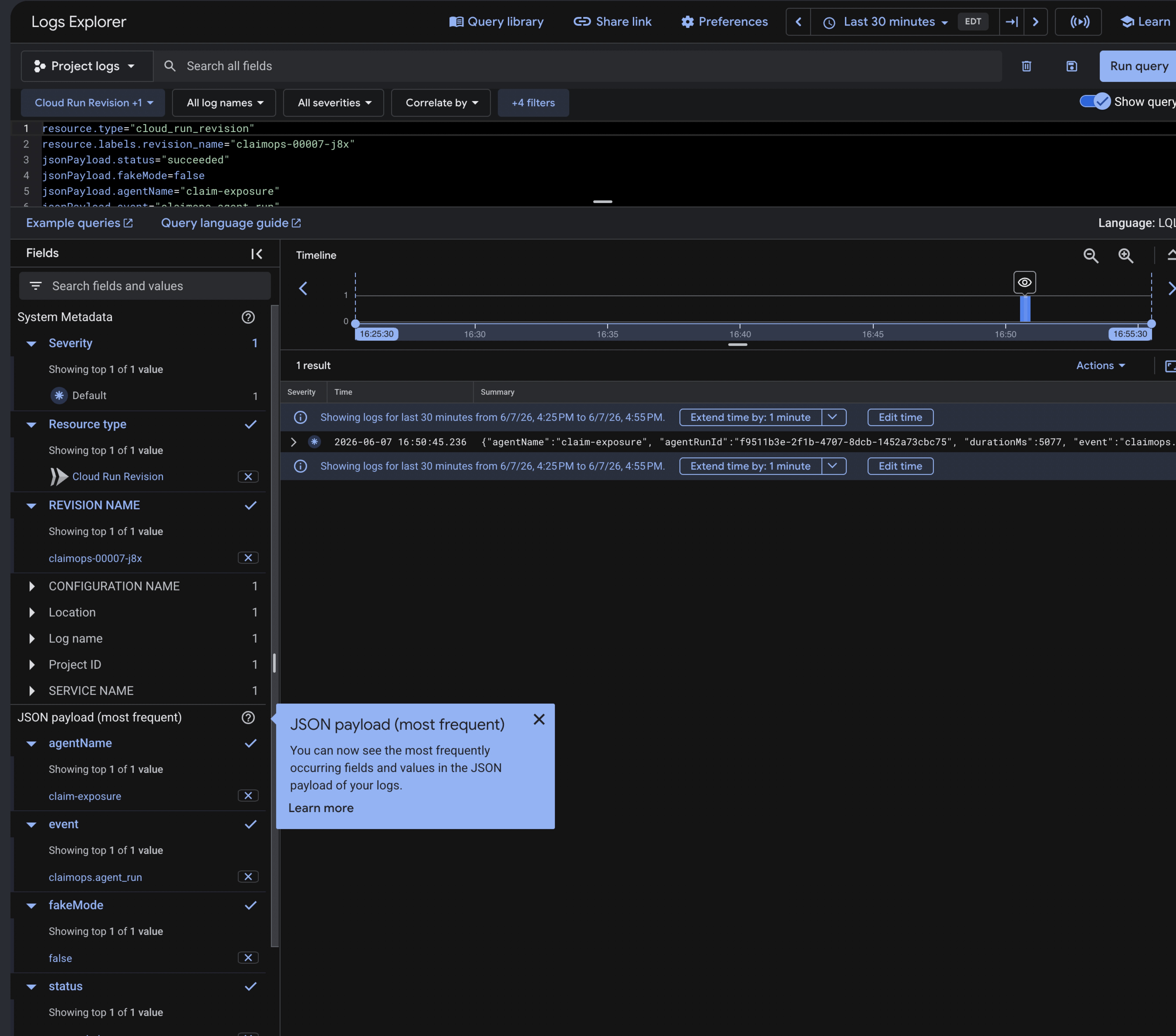
Cloud Logging: rev 00007-j8x, claim-exposure succeeded, fakeMode false.
-
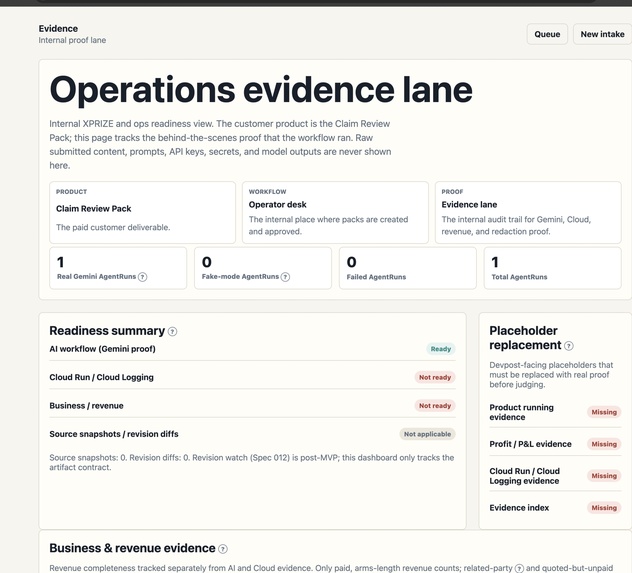
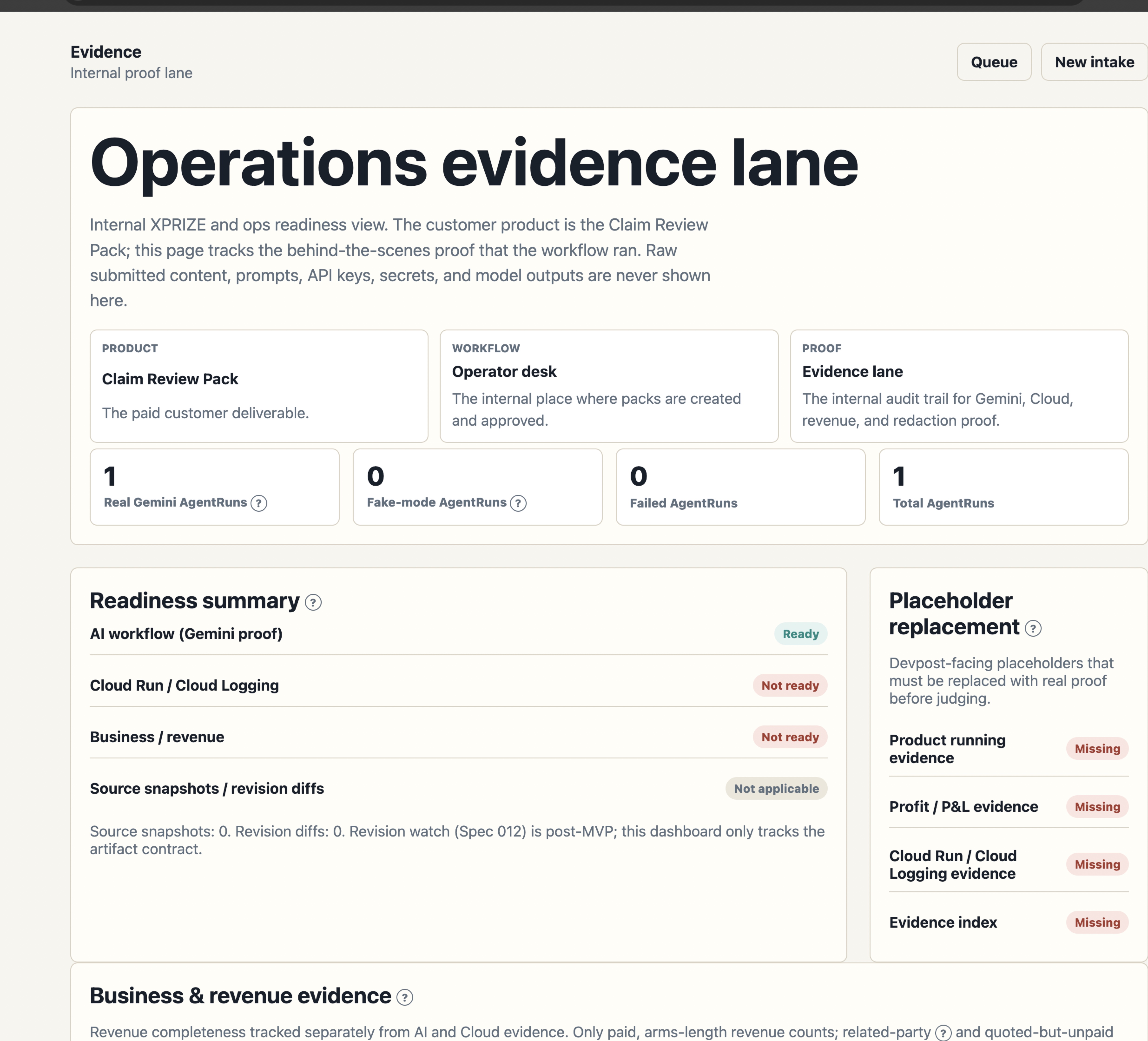
Evidence dashboard: 1 real Gemini AgentRun, 0 fake-mode, readiness proof lane.
-
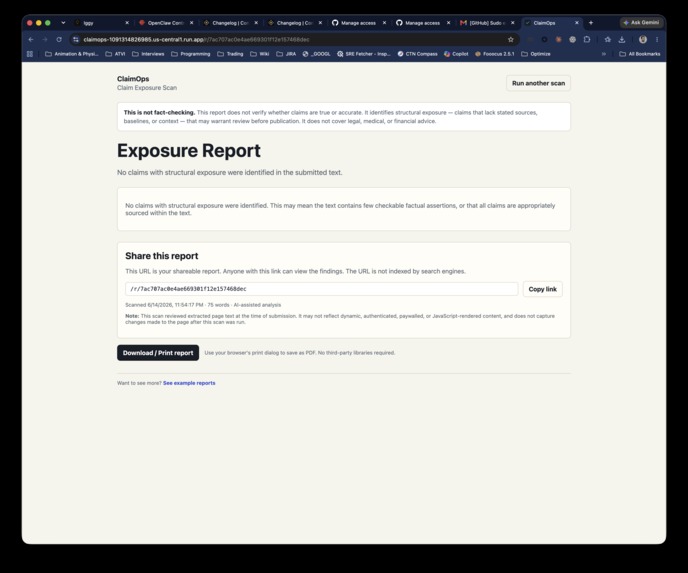
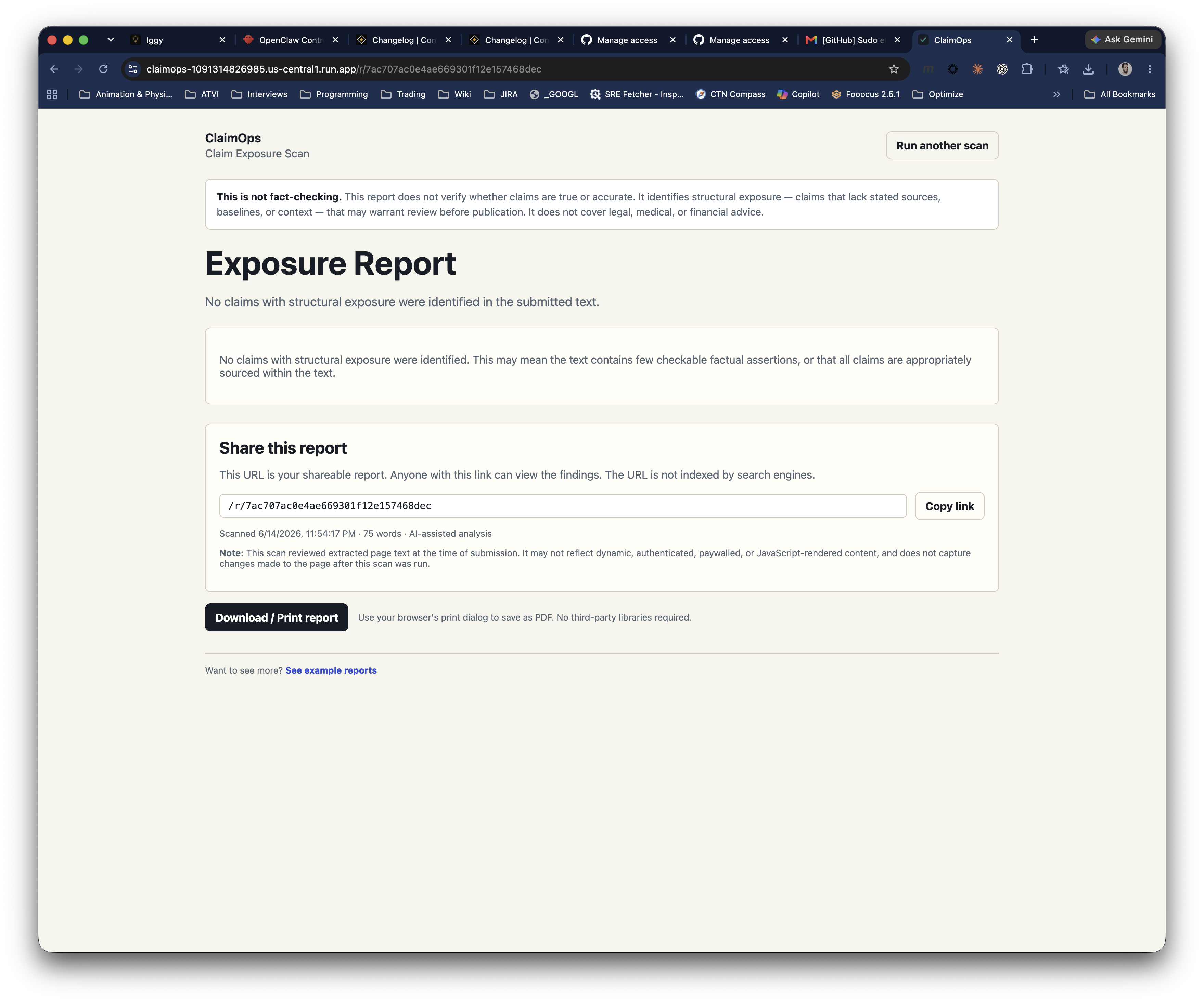
Live Cloud Run Exposure Report, captured Aug 19, 2026. Public scan and shareable report in the deployed product.
Inspiration
ClaimOps exists because small teams publish factual claims every day without the research staff, editorial review process, or legal budget that larger institutions rely on. The cost of being wrong is rising: synthetic media, motivated framing, vague source chains, and persuasive spin make it harder to know what is true before something goes live.
What it does
ClaimOps is a source-backed claim-review desk with two surfaces:
- A free, public Claim Exposure Scan (live): paste text or a URL and ClaimOps returns a shareable Exposure Report — the factual claims it found, an exposure read on each, and the limits of the evidence. It deliberately frames exposure and uncertainty, not a one-word "true/false" verdict.
- An operator Claim Review desk (internal): turns a submitted claim, article, post, ad, campaign email, or speech excerpt into a review packet — extracted claims, source-backed verification notes, confidence and evidence limits, spin and manipulation flags, suggested safer rewrites, and an audit trail of sources and agent steps.
The goal is not to replace human judgment. It is to make the first pass faster, more consistent, and easier to inspect.
How it works (live in production)
ClaimOps is deployed and running on Google Cloud:
- Cloud Run (us-central1) hosts the app and API — live revision
claimops-00015-bpv, 100% traffic, at https://claimops-1091314826985.us-central1.run.app - Each scan makes a real Gemini API call (
gemini-2.5-flash) — no fake or mock mode — logged as a structured AgentRun in Cloud Logging - Public Exposure Reports persist durably in Cloud Storage (private bucket, public-access-prevention on), served only via unguessable,
noindex/r/[id]links - Secret Manager injects the Gemini key at runtime; it never touches the repo, logs, or evidence
- URL ingest is SSRF-hardened (pinned-IP egress), and a temporal grounding contract keeps the model from misframing recent dates
- A source-authority and evidence-provenance contract labels each source's tier and whether a check actually ran
Verify it yourself: /api/health returns status:ready, and /r/c01480743259c88ce35377d49977a236 is a real generated report.
How it's built
ClaimOps is a Gemini-native agent workflow — intake, claim extraction, source planning, verification, spin/rhetoric, and reviewer summary — on Next.js, React, TypeScript, and Node, deployed to Cloud Run with Cloud Logging, Cloud Storage, and Secret Manager. Every Gemini call, status, and cost is instrumented as auditable evidence.
Business model and honest status
The first wedge is paid pilot claim review for small editorial and communications teams: a customer sends a piece of content, ClaimOps returns a source-backed review packet. ClaimOps is currently pre-revenue — the product is live and instrumented for revenue, cost, usage, and customer evidence, pending the first paid pilot.
Challenges
The main challenge is keeping the product honest. A verification desk has to show its work, separate evidence from inference, and make uncertainty visible — which is why the public surface frames exposure rather than issuing "true/false" verdicts, and why source tier and provenance are explicit. It also has to stand on its own as a distinct product with its own customer workflow, revenue evidence, and Gemini/Google Cloud production path.
Built With
- audit-logs
- cloud-logging
- cloud-run
- cloud-storage
- devpost
- gemini-2.5-flash
- gemini-api
- github
- google-cloud
- next.js
- node.js
- react
- secret-manager
- source-backed-ai-agents
- spin-detection
- typescript
- verification-workflows

Log in or sign up for Devpost to join the conversation.