-
-
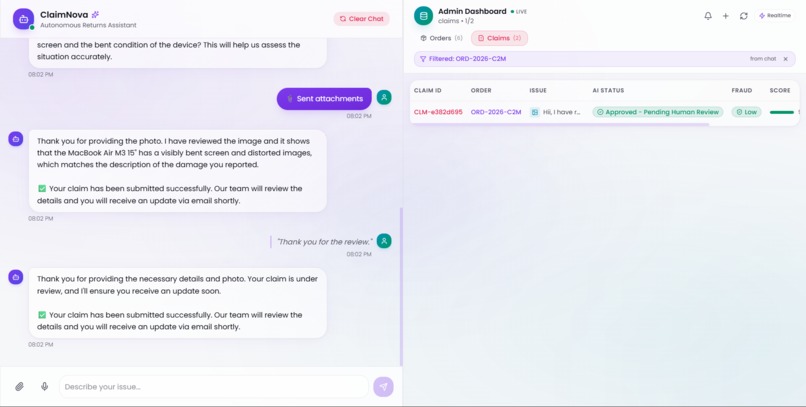
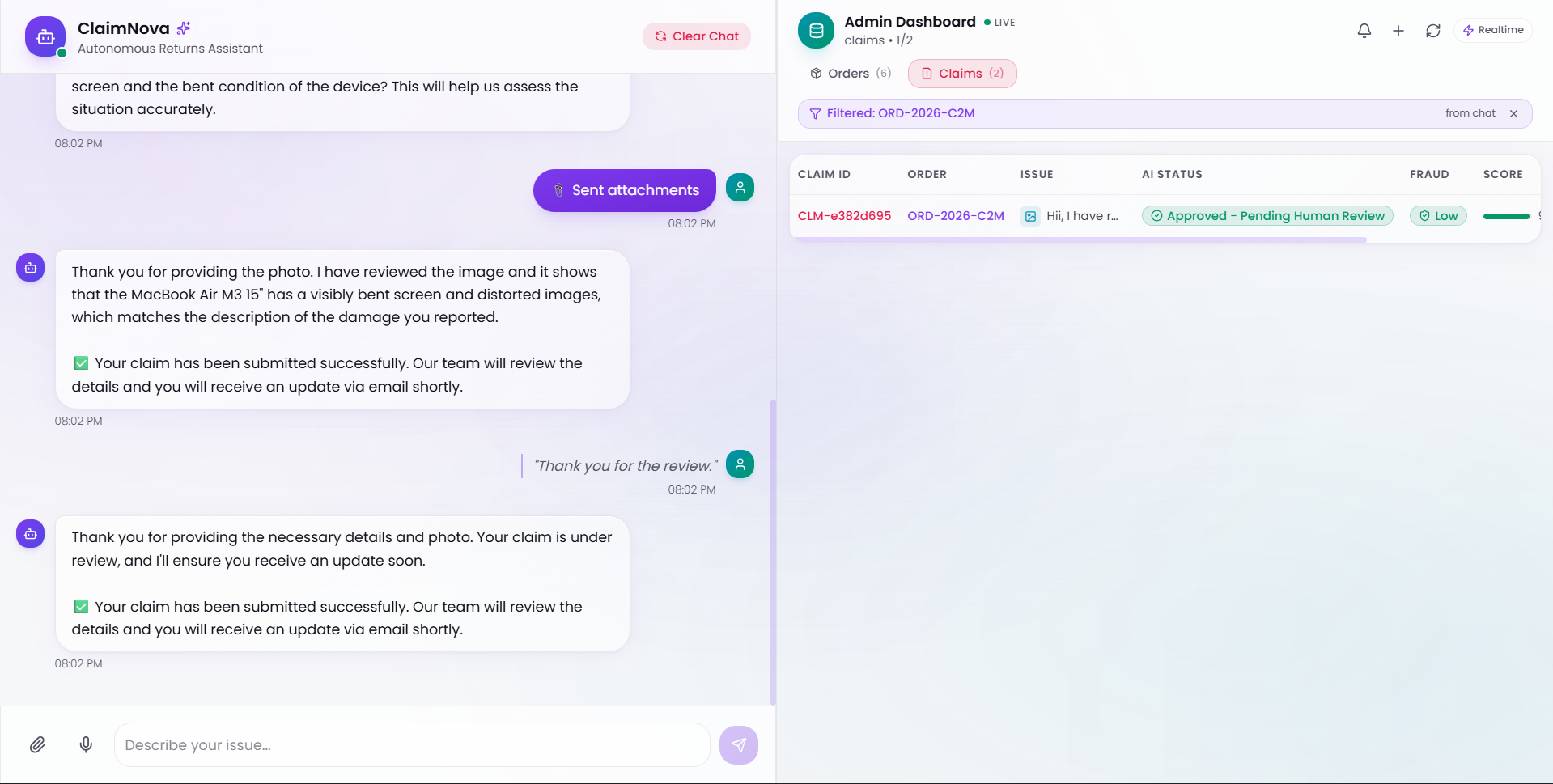
Conversation state interface
-
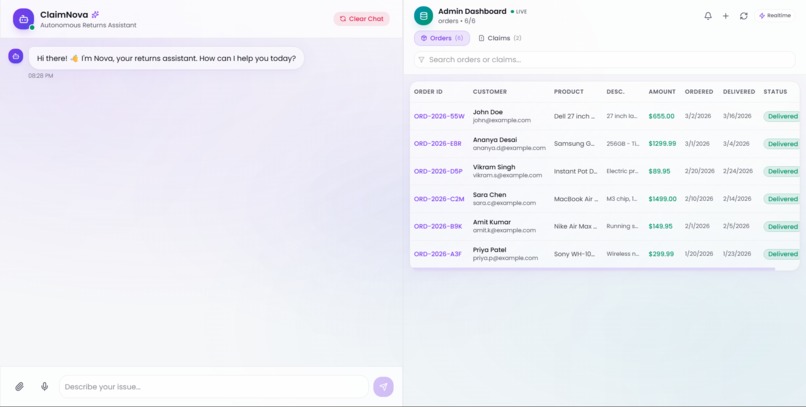
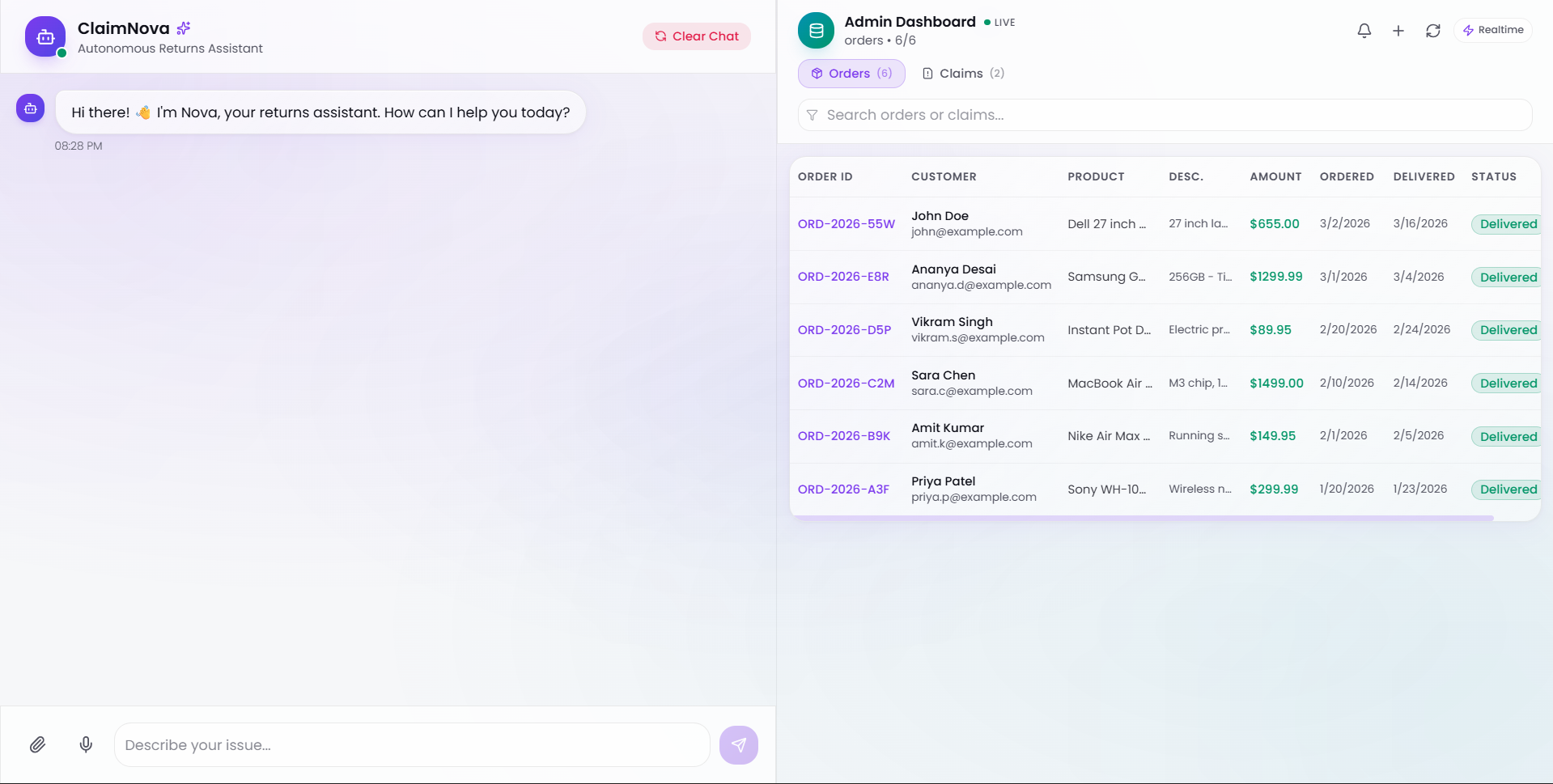
Initial state interface
-
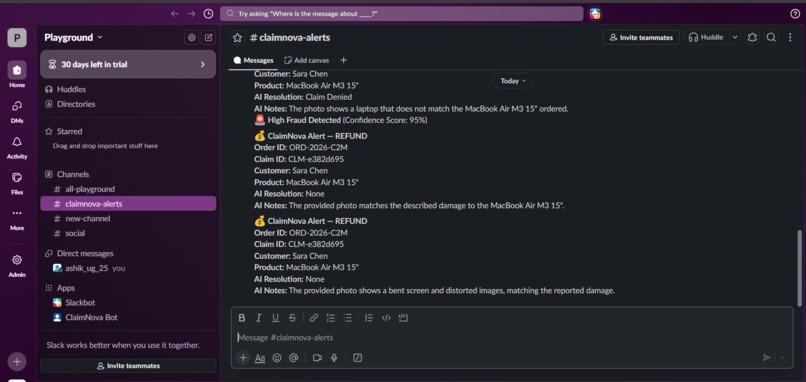
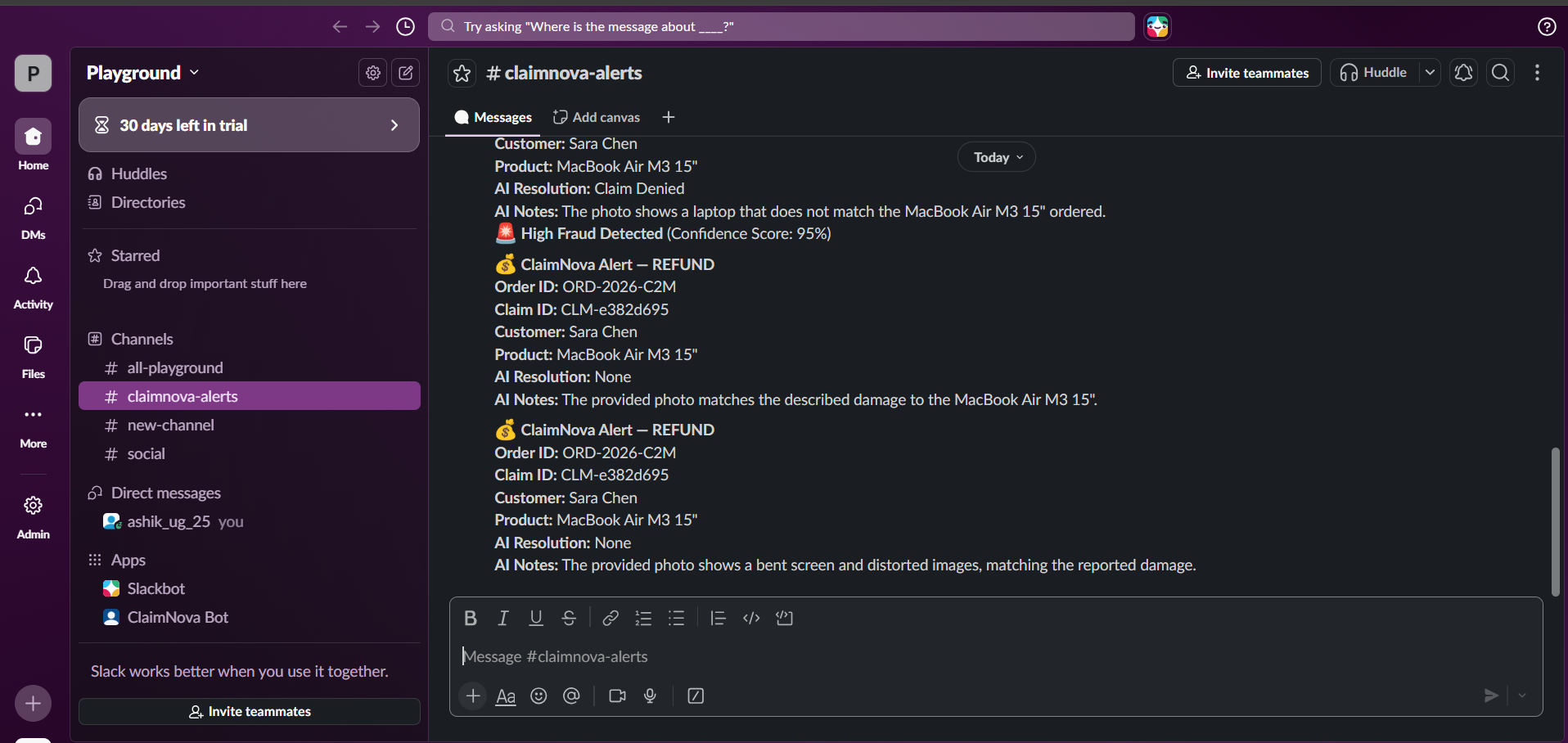
Slack
-
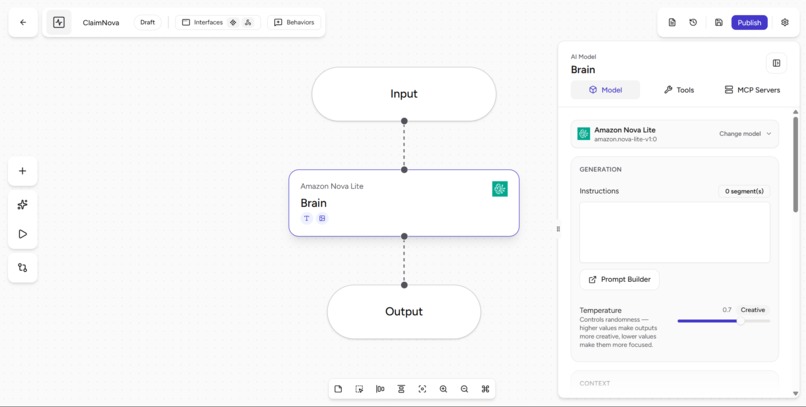
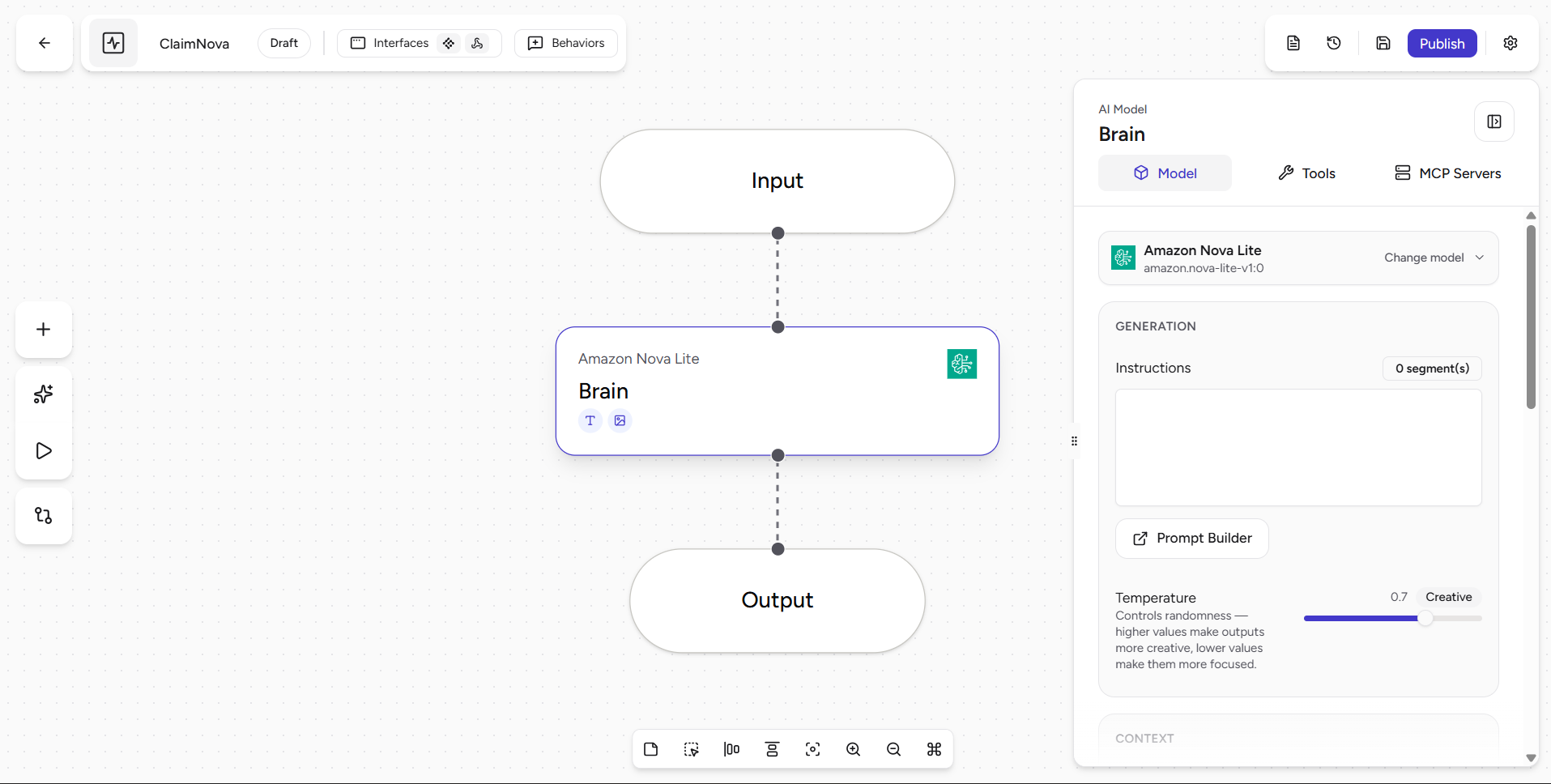
Orchestron
💡 Inspiration
Return fraud and manual damage assessments cost the e-commerce industry billions of dollars annually. When a customer claims an item is broken, human support agents waste countless hours verifying purchase history and squinting at user-uploaded photos to determine if a claim is legitimate. We realized that traditional chatbots fail here because they are blind and stateless. We wanted to build an enterprise-grade solution that could actually see the damage and securely interact with a database to automate the entire Return Merchandise Authorization (RMA) lifecycle.
⚙️ What it does
ClaimNova is a fully autonomous, zero-touch virtual claims adjuster.
- Intake & Verification: It greets the customer, asks for their Order ID, and autonomously queries the company's PostgreSQL database to verify the purchase.
- Multimodal Evidence Collection: It asks the user to upload a photo of the damaged item.
- Intelligent Fraud Detection: ClaimNova acts as a ruthless claims adjuster. If the database states the user bought a "Dell Monitor," but they upload a photo of a shattered "Lenovo Laptop," ClaimNova instantly detects the cross-product fraud and rejects the claim.
- Agentic Resolution: If the claim is valid, it dynamically generates a safe SQL query to update the database state to "Approved - Pending Human Review," escalating the claim without requiring a human to touch the initial intake.
🛠️ How we built it
To maximize Amazon Nova's reasoning capabilities, we orchestrated the model through an Active Agent framework using Airia. This strategic architecture allowed us to pair Nova's high-thinking multimodal engine with native Model Context Protocol (MCP) tool calling.
- The Brain: We utilized Amazon Nova via AWS Bedrock to process conversational text, analyze the visual severity of uploaded images, and determine fraud probability scores.
- The Orchestrator: Airia handles the workflow state and executes the native MCP tools.
- The Database: Supabase (PostgreSQL) acts as the ultimate source of truth, storing strict ENUM verification states.
- The Interface: A premium, glassmorphic Next.js frontend built with TailwindCSS and TypeScript.
🚧 Challenges we ran into
Giving an LLM direct access to a PostgreSQL database is inherently risky. Our biggest challenge was engineering strict "LLM Database Guardrails." Early on, the AI would attempt to query the entire database or hallucinate column names. We had to relentlessly engineer the system prompt to physically restrict the model from ever executing DELETE or DROP commands, and explicitly limit its UPDATE privileges to ai_ prefixed columns (e.g., ai_fraud_probability), ensuring zero risk to core customer data.
🏆 Accomplishments that we're proud of
We successfully achieved true Agentic AI behavior. ClaimNova doesn't just answer questions; it pauses the conversation, executes a SELECT query, reads the database rows injected back into its context window, and then asks the user for a photo based on that specific database record. Watching Nova seamlessly jump between SQL database administration and multimodal vision analysis in a single workflow is incredible.
📚 What we learned
We learned the immense power of combining strict JSON output schemas with native tool calling. By forcing Amazon Nova to separate its internal "thought process" from its "agent reply," we created a system that feels instantaneous and professional to the end-user while executing complex database logic in the background.
🚀 What's next for ClaimNova
The next phase is deploying ClaimNova in a real-world pilot with a mid-sized e-commerce vendor. We also plan to integrate Amazon Nova's Video capabilities so users can upload a 10-second 360-degree video of a defective product for even higher fraud-detection accuracy.
Built With
- airia
- amazon-nova
- aws-bedrock
- next.js
- postgresql
- supabase
- talwindcss
- typescript


Log in or sign up for Devpost to join the conversation.