-
-
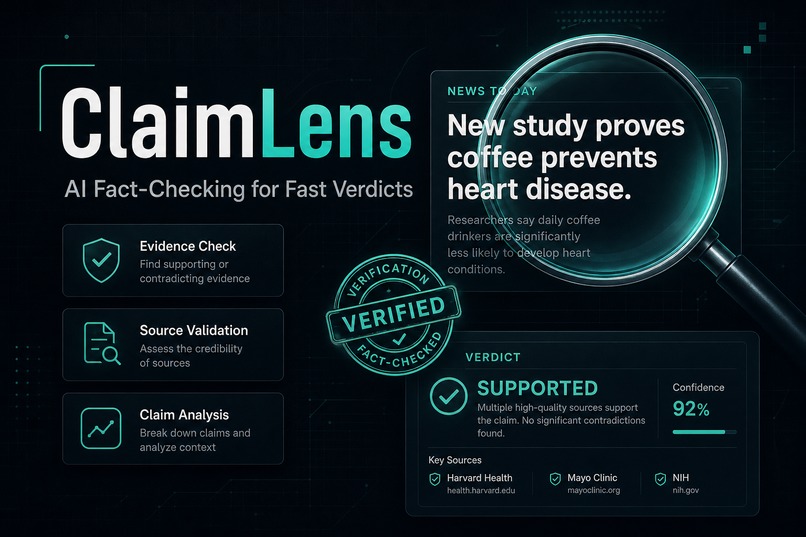
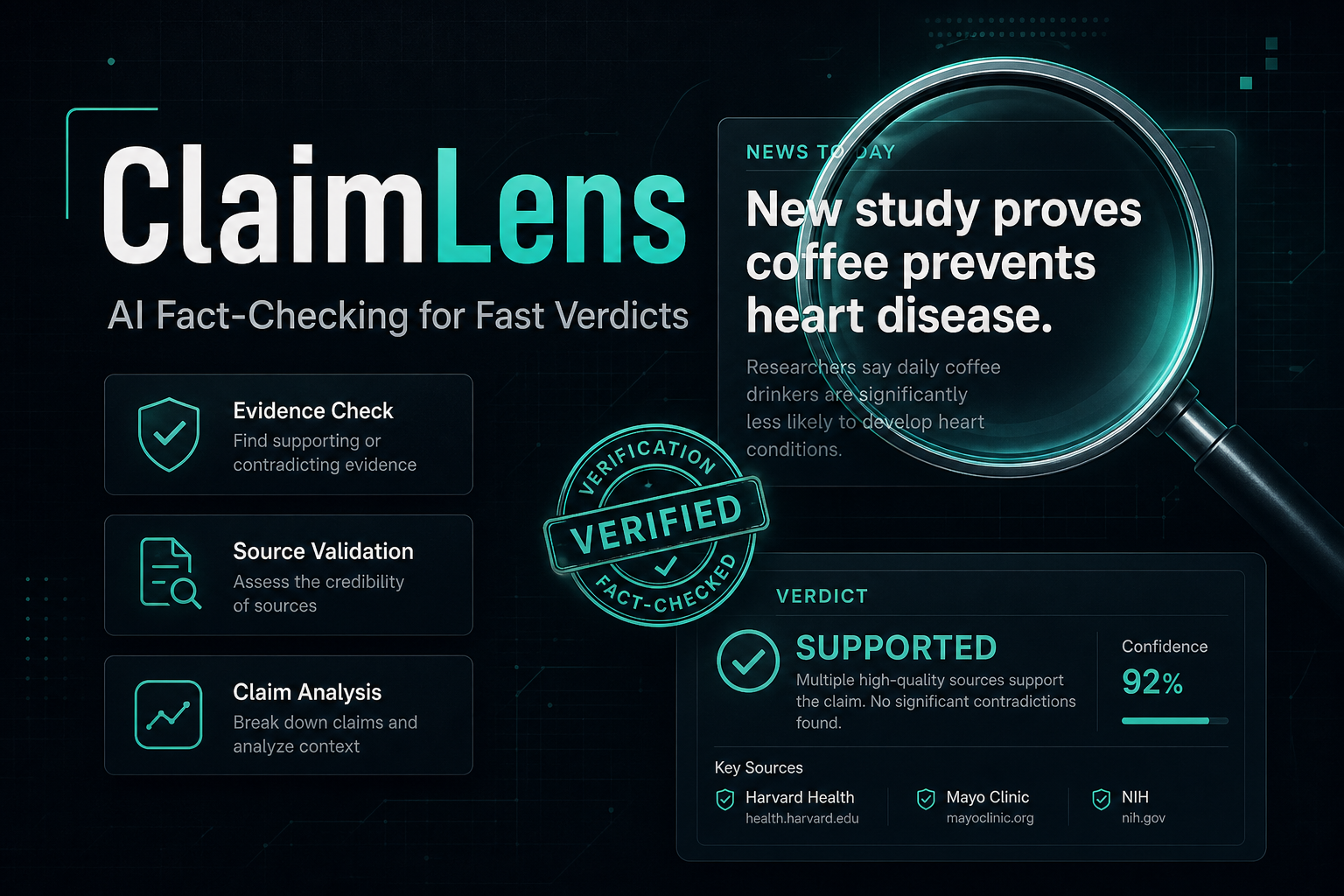
Cover
-
-
Inspiration
Misinformation spreads faster than most people can verify it. We wanted to build a system that helps users quickly evaluate viral claims, screenshots, and quoted statements without manually searching across multiple sources.
What it does
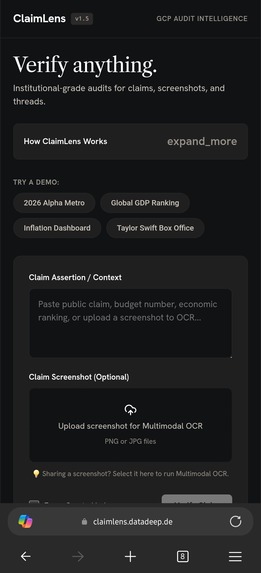
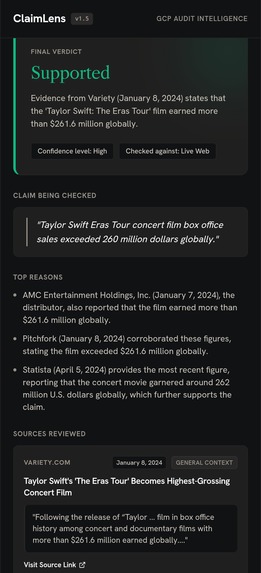
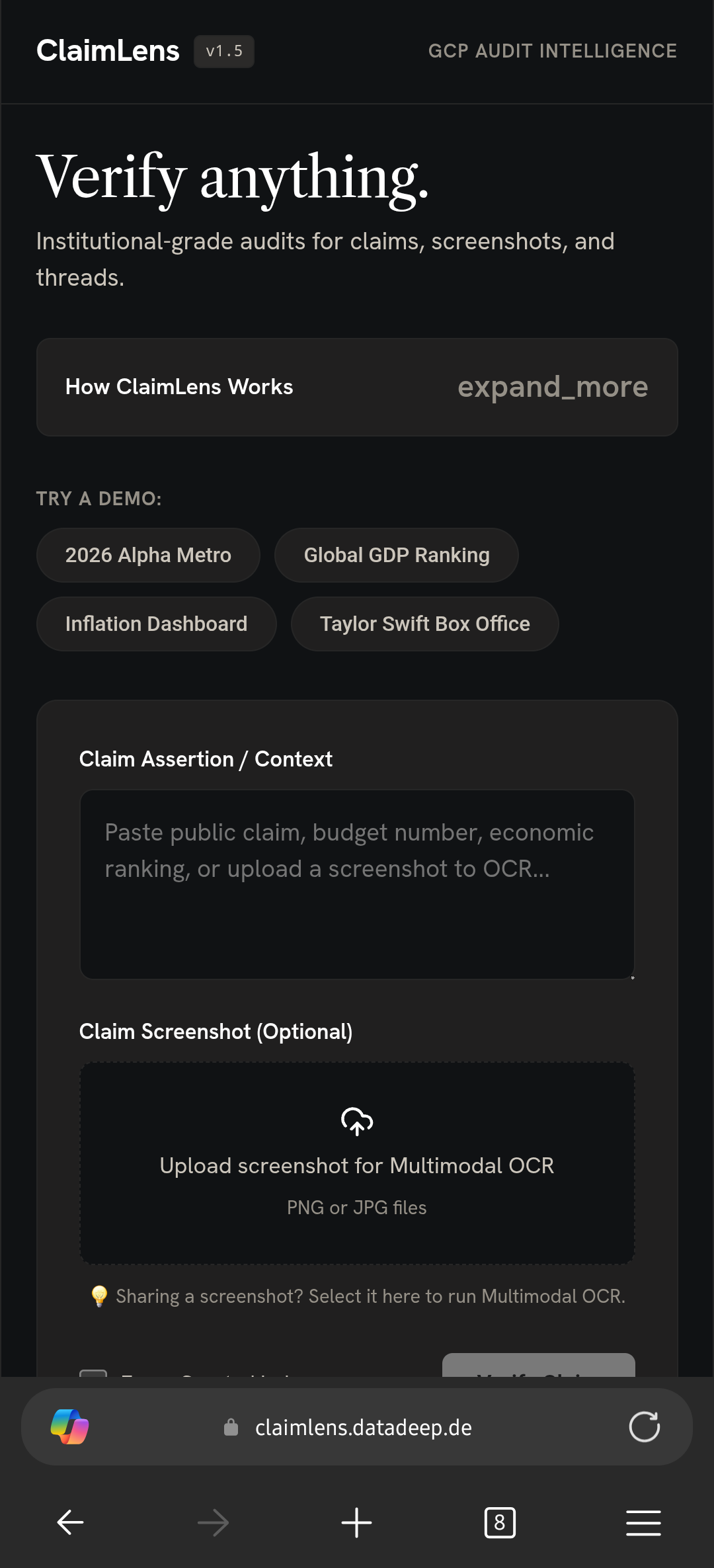
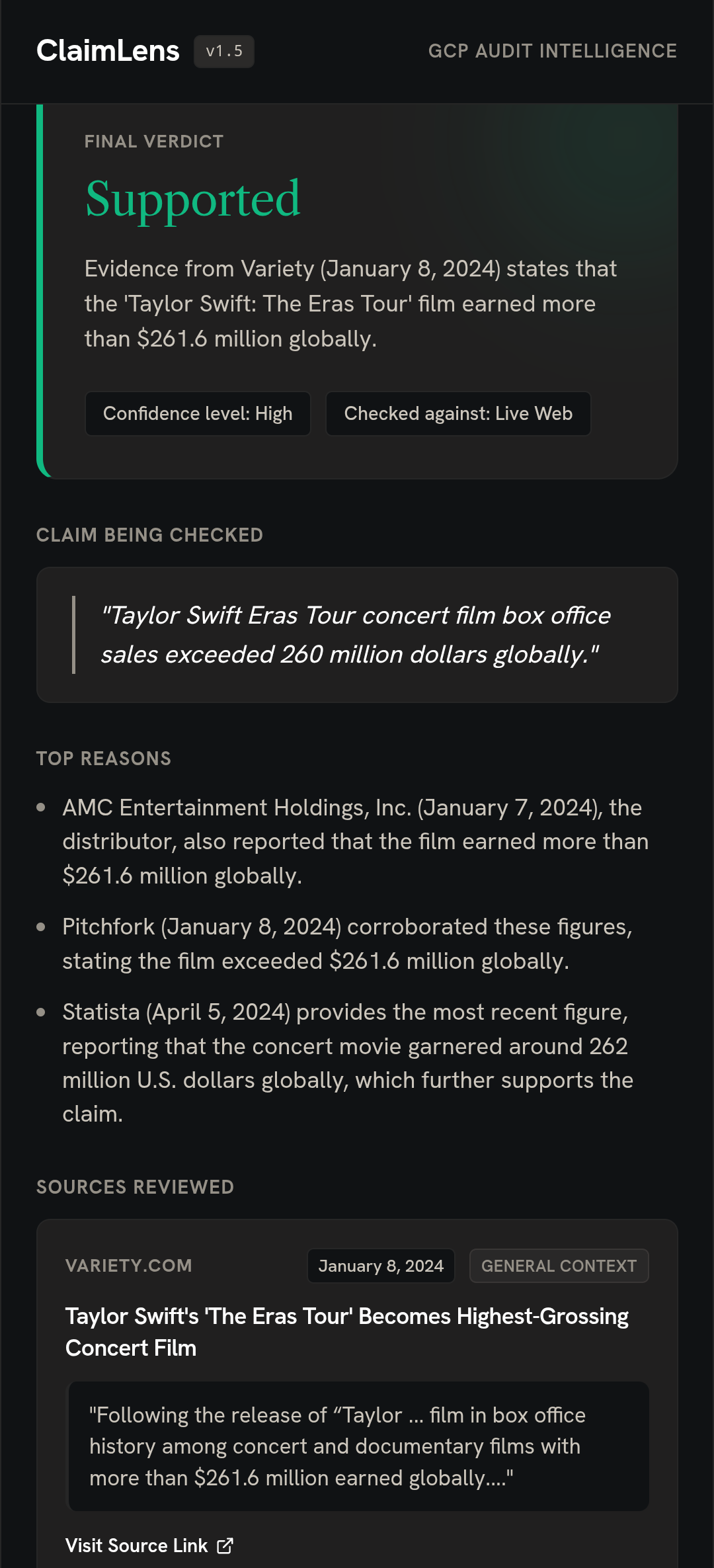
ClaimLens is a working agentic fact-checking system for claim verification. A user submits a text claim or screenshot, the system extracts the core assertion, retrieves relevant evidence, evaluates support and confidence, and returns a structured verdict with audit context.
How we built it
We built ClaimLens as a practical verification pipeline rather than a simple chat demo.
The system follows a 5-step agent flow:
- User submits a claim or screenshot.
- The system extracts and normalizes the claim.
- Evidence is retrieved from curated and web-backed sources.
- The reasoning layer evaluates support, contradictions, and confidence.
- ClaimLens returns a structured verdict such as Supported, Misleading, Outdated, or Unresolved.
We built the product with a frontend experience for fast claim intake and a backend verification pipeline designed for real evidence-based auditing.
Why this is agentic
ClaimLens does not just generate text. It performs a task-oriented workflow: it interprets user input, executes a verification path, retrieves evidence, reasons over support signals, and returns an actionable result in a structured format. That task execution flow is the core agent behavior we wanted to demonstrate for the Rapid Agent hackathon, which focuses on agents that reason, plan, and take action on real-world tasks.
Challenges we ran into
One of the biggest challenges was keeping the verification experience both fast and trustworthy. We had to balance claim extraction, evidence retrieval quality, verdict clarity, and deployment stability, while making sure the system remained truthful about what it could and could not verify.
Accomplishments that we're proud of
We shipped a live public product with a real end-to-end workflow. ClaimLens accepts claims, runs them through a verification pipeline, and returns a readable verdict with evidence-oriented audit context instead of a vague chatbot-style answer.
What we learned
We learned that building a useful agent is not only about model output. It also requires structured task flow, clear intermediate reasoning boundaries, evidence presentation, confidence signaling, and an interface that helps users understand the result quickly.
What's next for ClaimLens
Next, we want to improve evidence depth, strengthen source attribution, support more claim types, expand screenshot and multimodal workflows, and make the verification agent more robust across breaking news and high-ambiguity situations.
Built With
- brave
- cloud
- cloudflare
- elasticsearch
- fastapi
- gemini
- github
- pages
- python
- react
- search
- vite

Log in or sign up for Devpost to join the conversation.