-
-
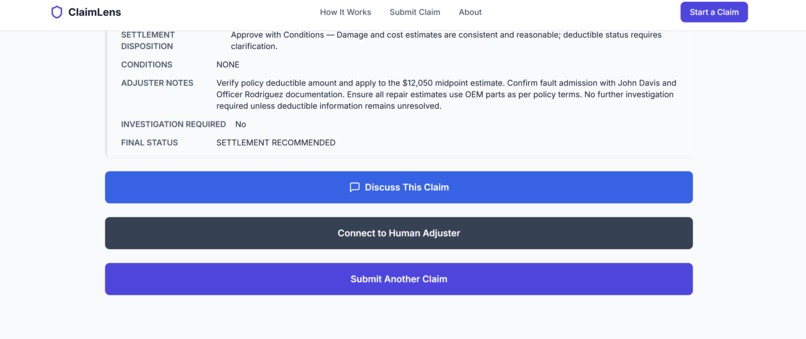
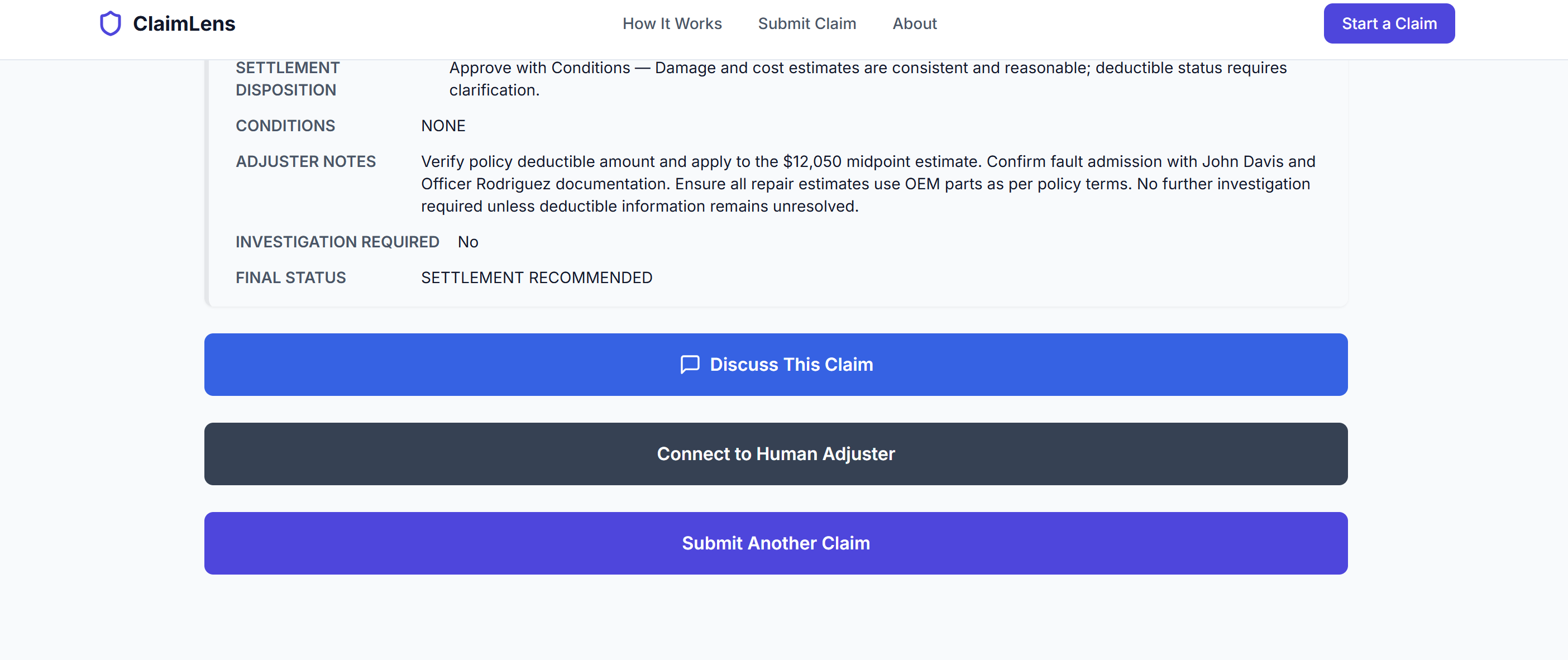
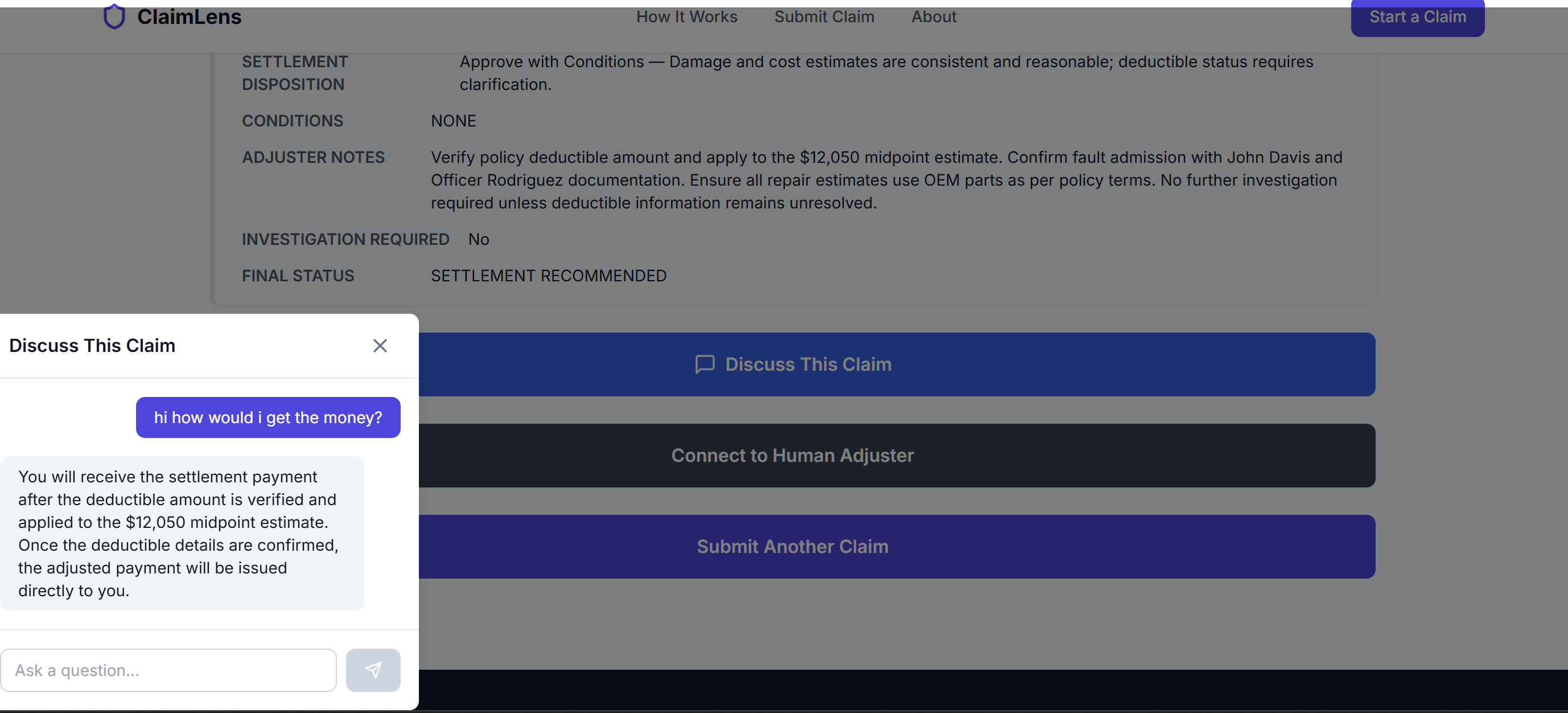
Buttons for connecting to human or for general chatbot
-
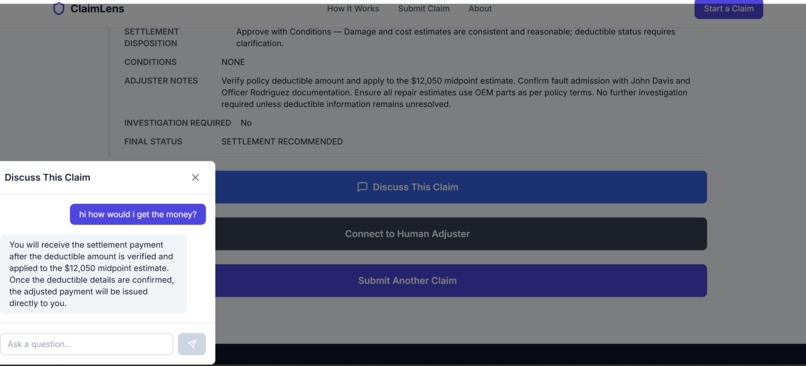
chatbot
-
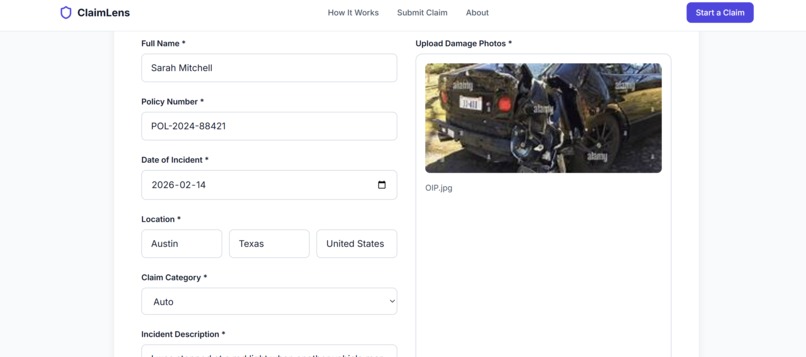
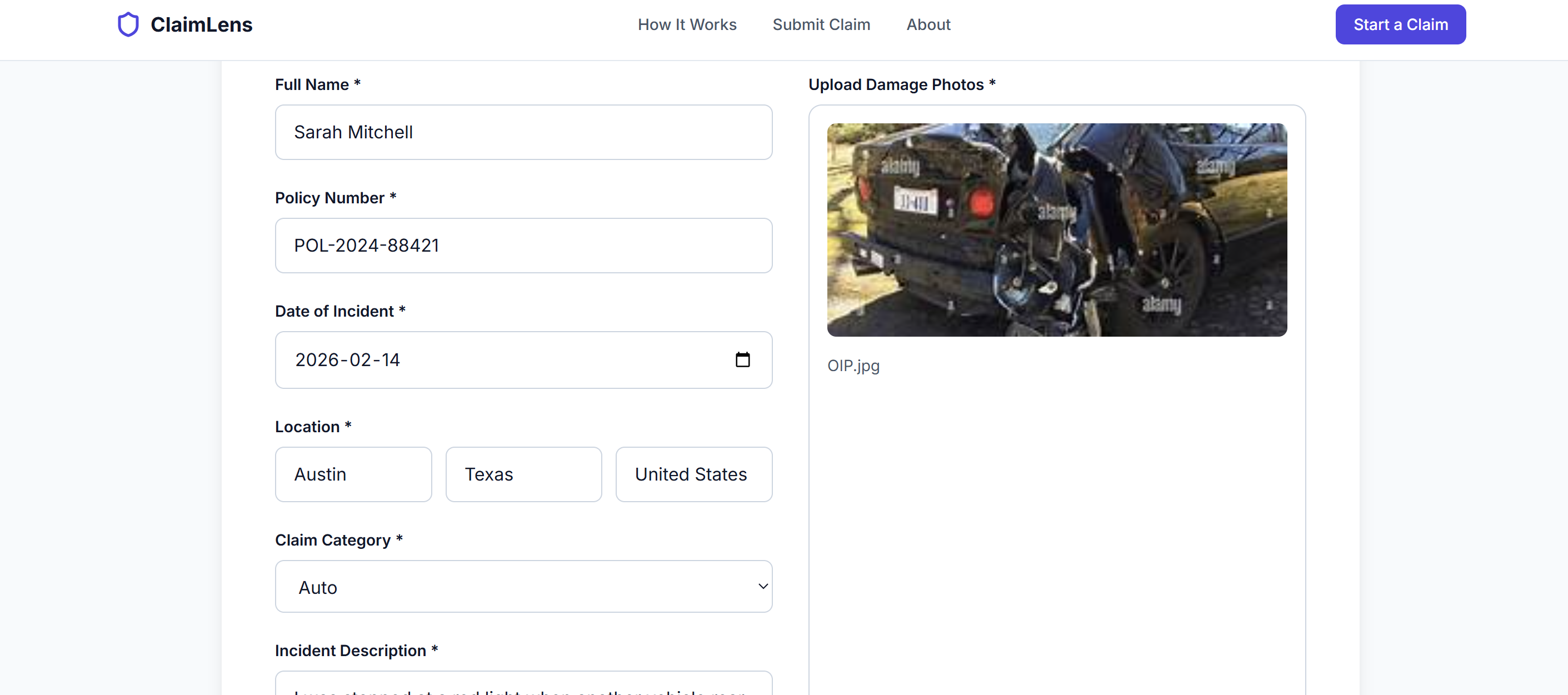
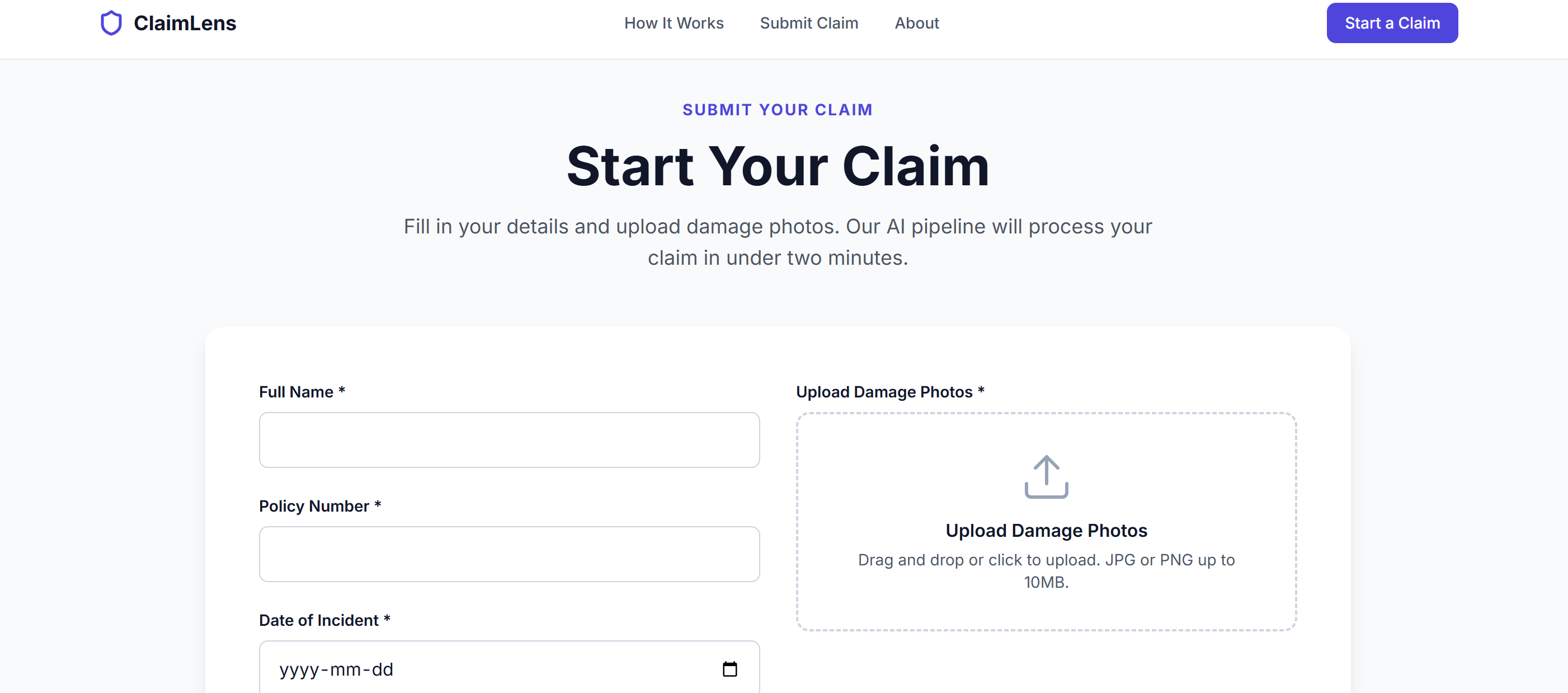
Filling up form
-
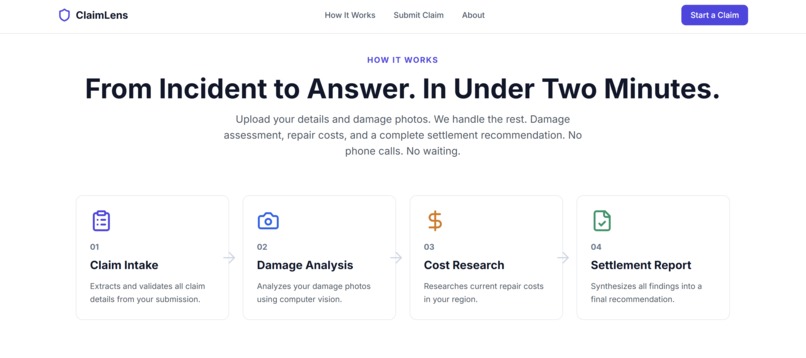
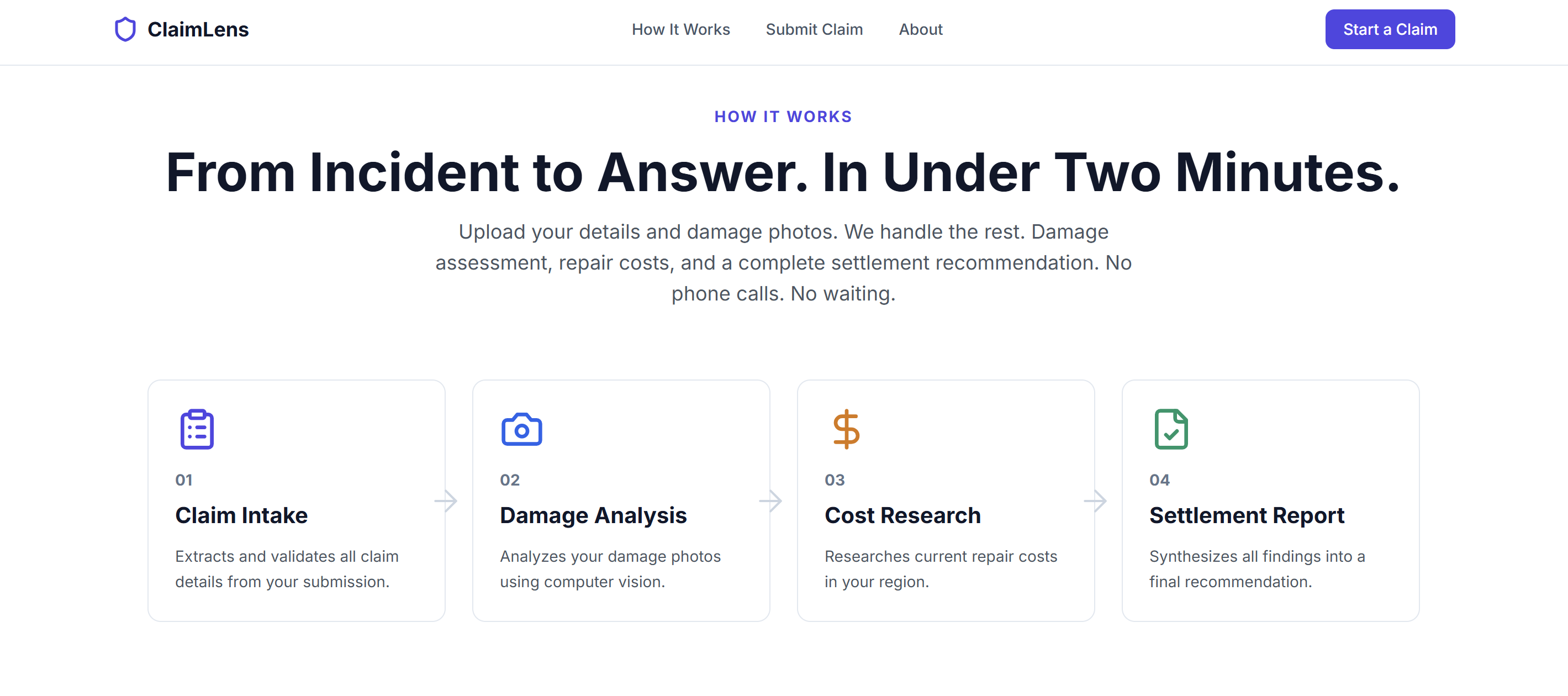
How it works
-
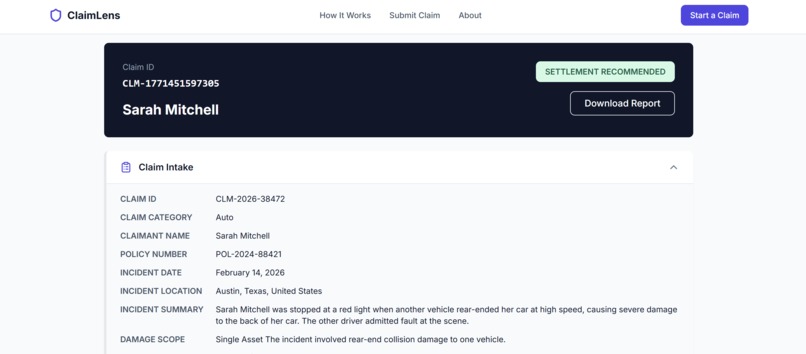
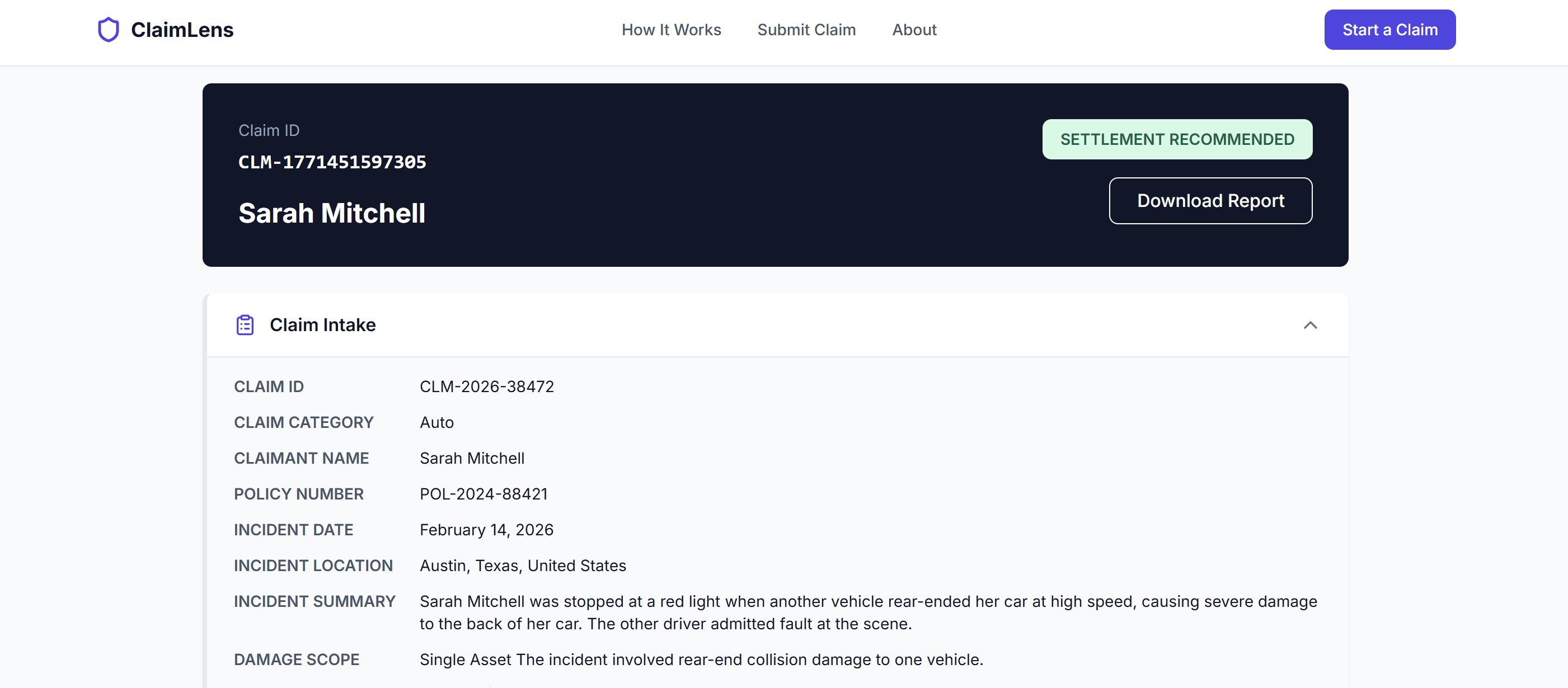
Full report + download
-
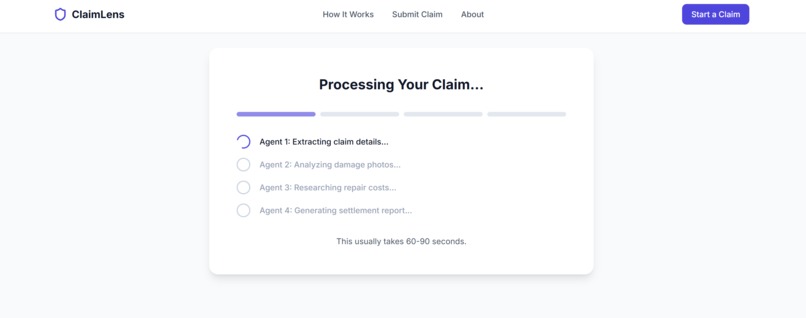
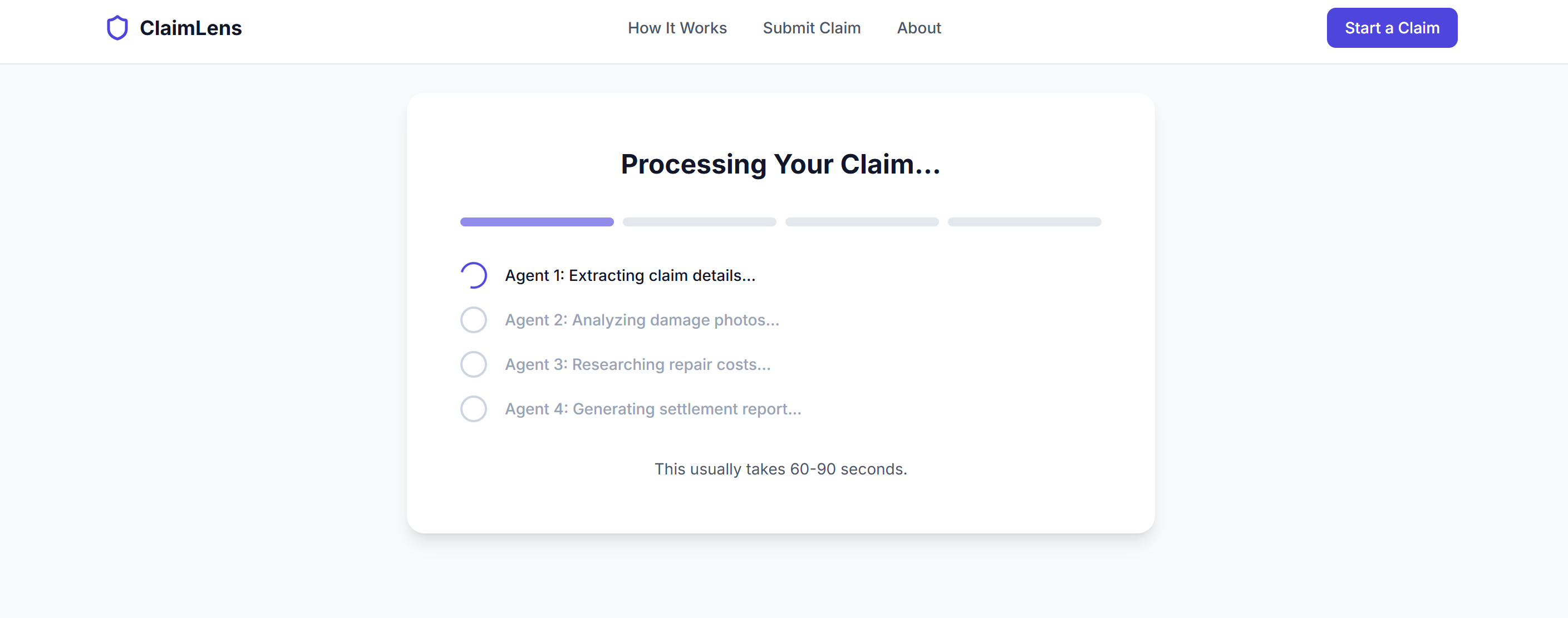
Agents working on claim
-
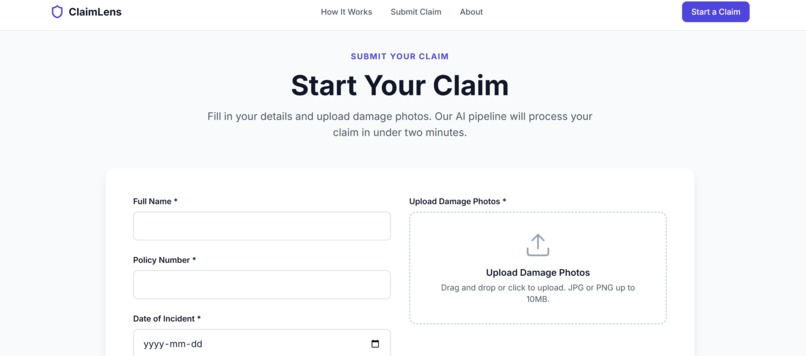
Form
-

Homepage

Inspiration
Insurance claims processing remains heavily manual even though most straightforward claims follow a structured and repeatable workflow. After an accident or property damage, claimants often wait days or weeks while adjusters review descriptions, examine photos, research repair costs, and prepare settlement reports. The reasoning required for many of these claims is procedural and evidence based rather than subjective. With the advanced reasoning, multimodal understanding, and agent capabilities available in Amazon Nova, this workflow can be redesigned. ClaimLens was created to demonstrate how foundation models can automate structured enterprise processes that have real economic and human impact.
What it does
ClaimLens is an AI powered insurance claims processing platform built entirely using Amazon Nova foundation models. A claimant submits incident details and damage photos. The system processes the claim through four specialized Nova powered agents and generates a professional settlement recommendation in under two minutes.
The Intake Agent extracts and validates structured claim data, ensuring all required fields are complete, generating a clean standardized claim record, and flagging missing or inconsistent information. The Vision Agent uses multimodal reasoning to analyze uploaded images, identify visible damage, determine affected components and severity, and verify consistency with the written description. The Cost Research Agent researches live regional repair costs using Nova reasoning with tool use, producing an itemized breakdown of labor, parts, and supplemental costs. The Settlement Agent synthesizes all prior outputs, cross references data, and produces a structured recommendation such as Approve, Approve with Conditions, Escalate for Investigation, or Deny, including pre and post deductible calculations and detailed adjuster notes.
The platform produces a structured, adjuster ready settlement report that can be downloaded directly after processing. A Discuss This feature opens an AI chat interface that allows users to ask contextual questions about their specific claim based on the structured outputs generated by the agents. A Connect to Human Adjuster option allows the user to email customer service for manual review if needed.
How we built it
ClaimLens was built as a full stack web application with a React and TypeScript frontend deployed on Vercel and a Node.js Express backend deployed on Render. All AI functionality runs exclusively on Amazon Nova foundation models and services.
The system architecture follows a multi agent design. Each agent is configured with strict system instructions, defined responsibilities, and structured output schemas to ensure consistency and reliability. Nova 2 Lite powers structured reasoning for the Intake, Cost Research, and Settlement stages, while Nova multimodal capabilities power the Vision Agent. The backend orchestrates agents sequentially using the OpenAI compatible SDK, passing validated structured outputs from one stage to the next to maintain deterministic and auditable workflows.
User input and uploaded images are securely handled server side, with structured outputs transformed into a downloadable settlement report. The Discuss This feature uses the structured outputs to provide grounded AI answers, and the Connect to Human Adjuster option allows direct communication with customer service.
Challenges we ran into
One significant challenge was enforcing deterministic and structured outputs from foundation models that naturally produce conversational responses. Insurance workflows require precision, consistency, and compliance ready formatting. Careful prompt engineering and strict output constraints were necessary to maintain predictable behavior.
Another challenge was preventing hallucination in multimodal reasoning. The Vision Agent was explicitly constrained to reason only from visible photographic evidence and to clearly state uncertainty when confidence was low. Cross agent communication required strict JSON formatting to prevent downstream errors caused by inconsistent structure.
Accomplishments that we're proud of
ClaimLens demonstrates a complete end to end multi agent claims processing pipeline that produces a settlement ready report in under two minutes. The system showcases practical enterprise application rather than a simple conversational interface.
All AI functionality runs entirely on Amazon Nova models, highlighting advanced reasoning, multimodal understanding, and structured agent orchestration. The addition of downloadable settlement reports, contextual claim specific AI discussion, and optional human adjuster connection ensures that automation is balanced with transparency and human oversight.
What we learned
The development process reinforced that multi agent systems provide greater reliability and interpretability for structured enterprise workflows than single monolithic prompts. Constrained reasoning improves auditability and consistency in regulated environments.
It also demonstrated that Amazon Nova’s reasoning and multimodal capabilities are particularly effective when paired with clearly defined agent roles and sequential orchestration.
What's next for ClaimLens
Future development includes integrating Nova Act to automate additional insurance workflow tasks across internal enterprise dashboards, expanding support to property and commercial claims, and incorporating Nova multimodal embeddings to improve similarity search and fraud detection.
The long term vision is to deploy ClaimLens within insurance operations to reduce processing time, lower operational costs, and improve the claimant experience during high stress situations.

Log in or sign up for Devpost to join the conversation.