-
-
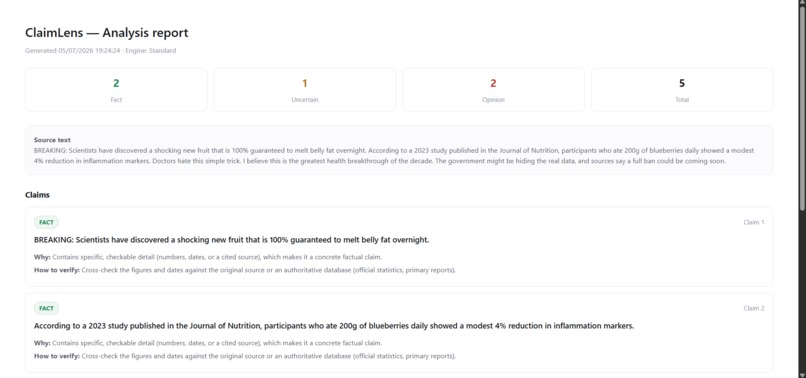
analysis report
-
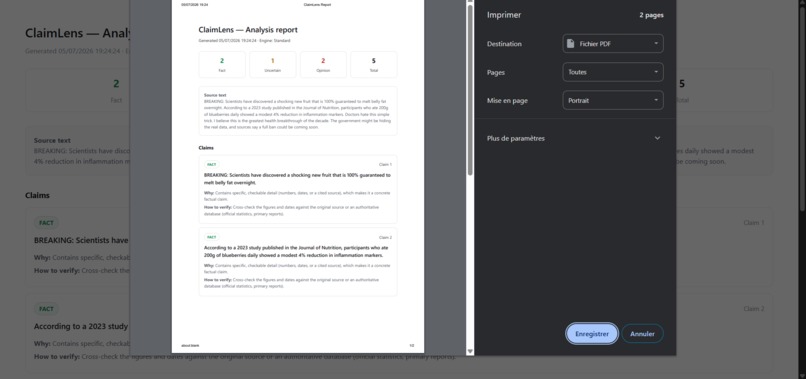
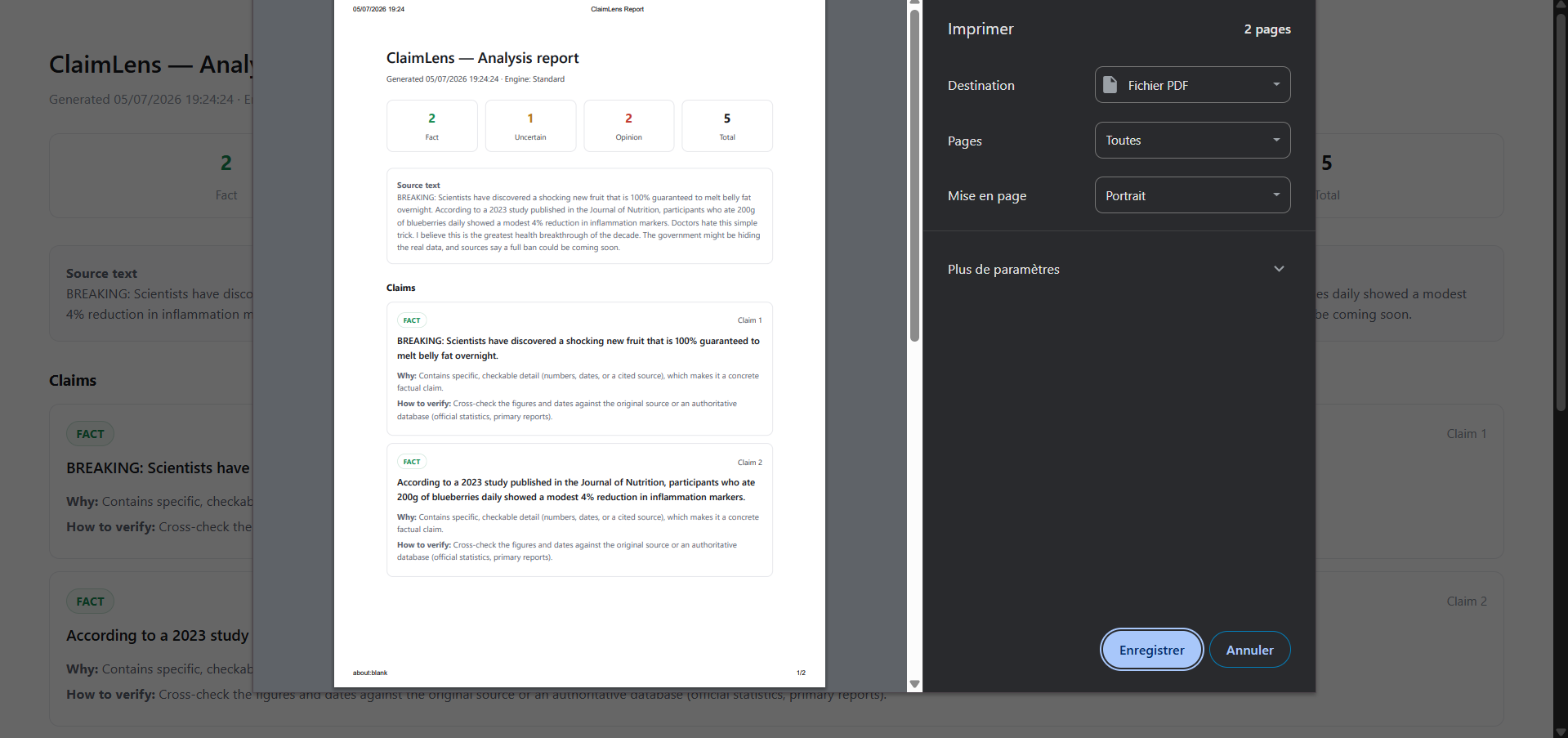
exporting the report as PDF
-
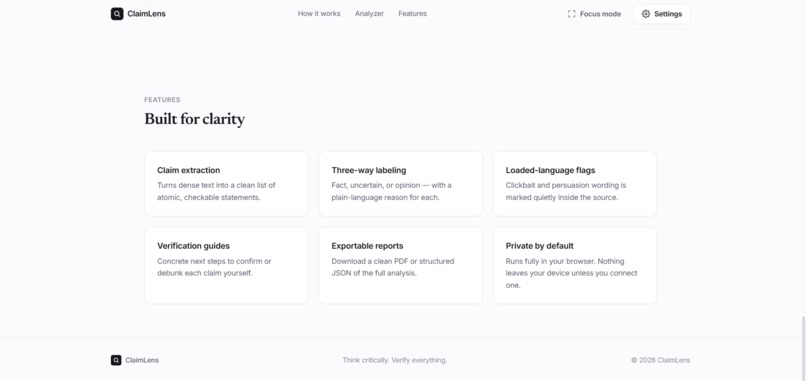
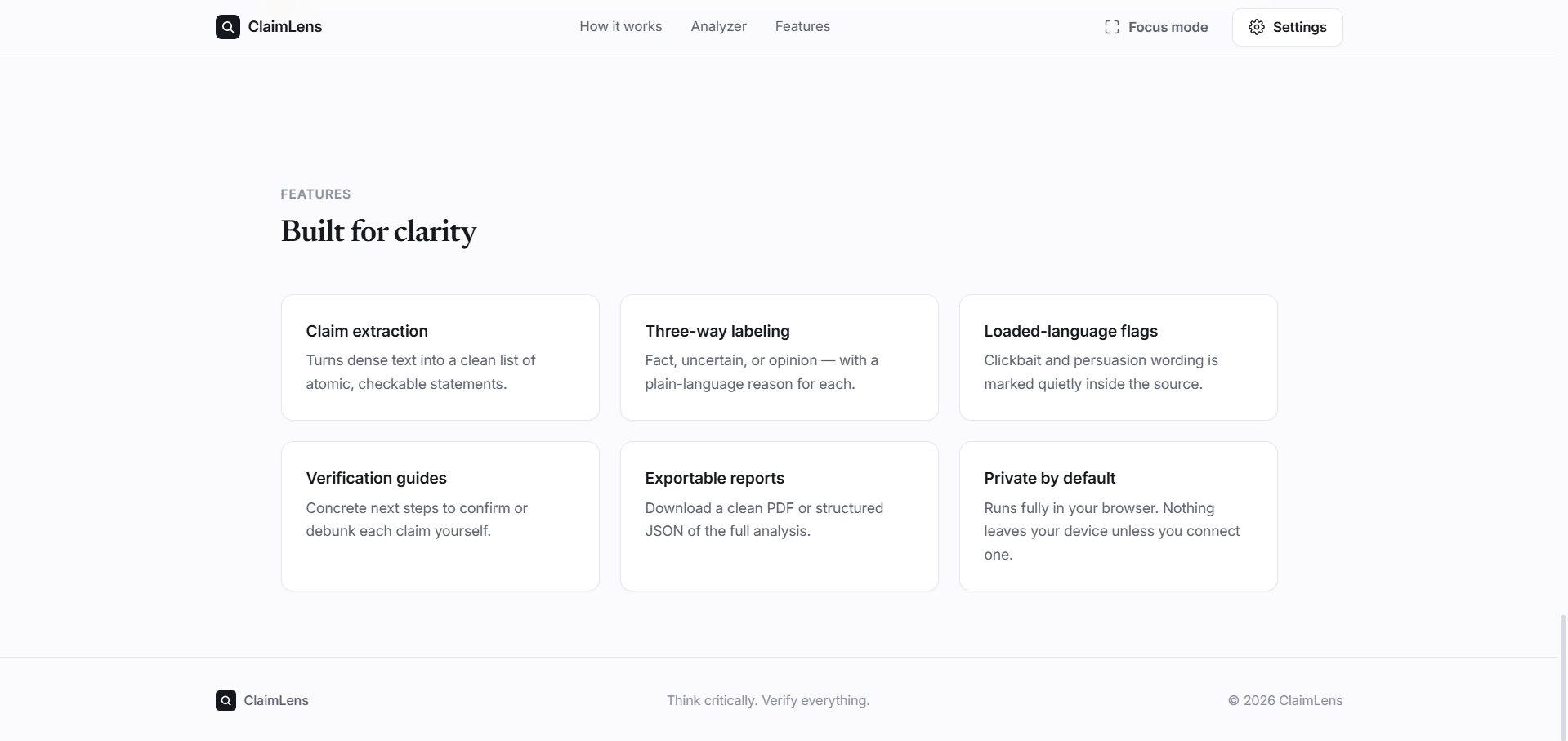
features
-
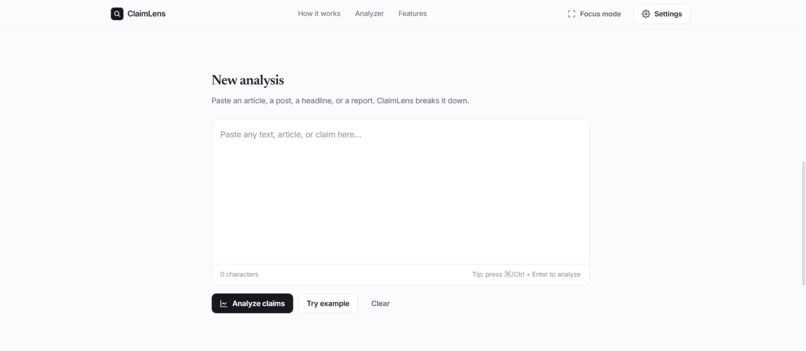
clear analysis
-
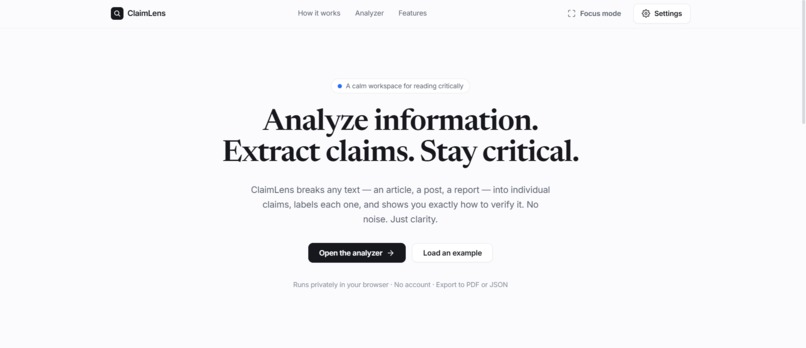
the home page
-
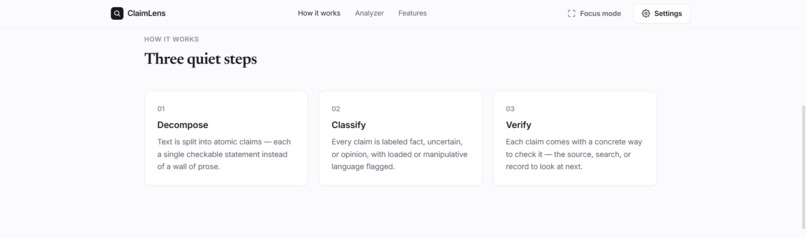
how it works
-
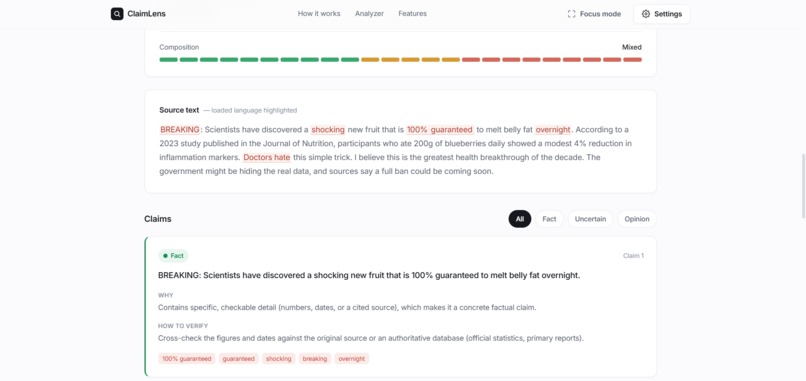
get the results of the analysis
-
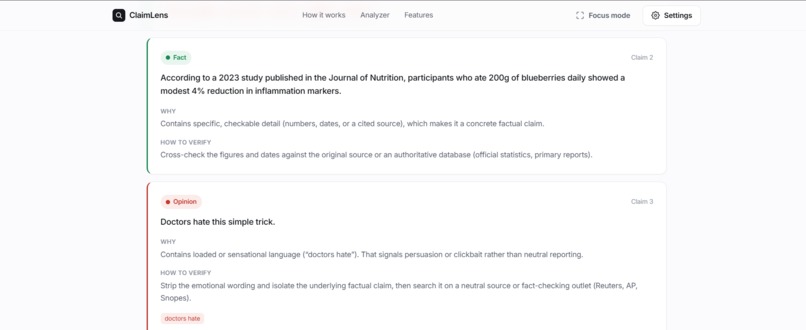
-
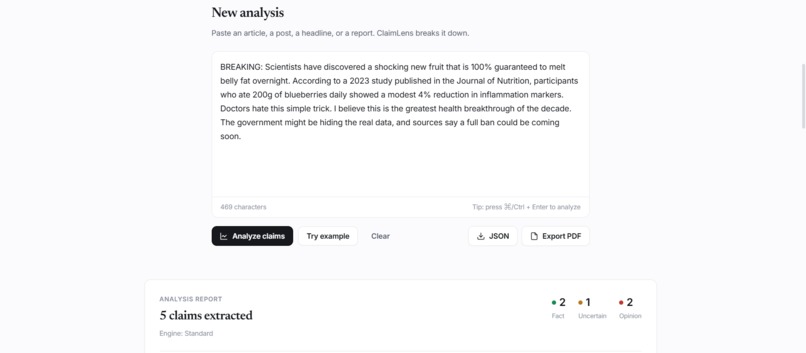
testing an analysis example
Inspiration
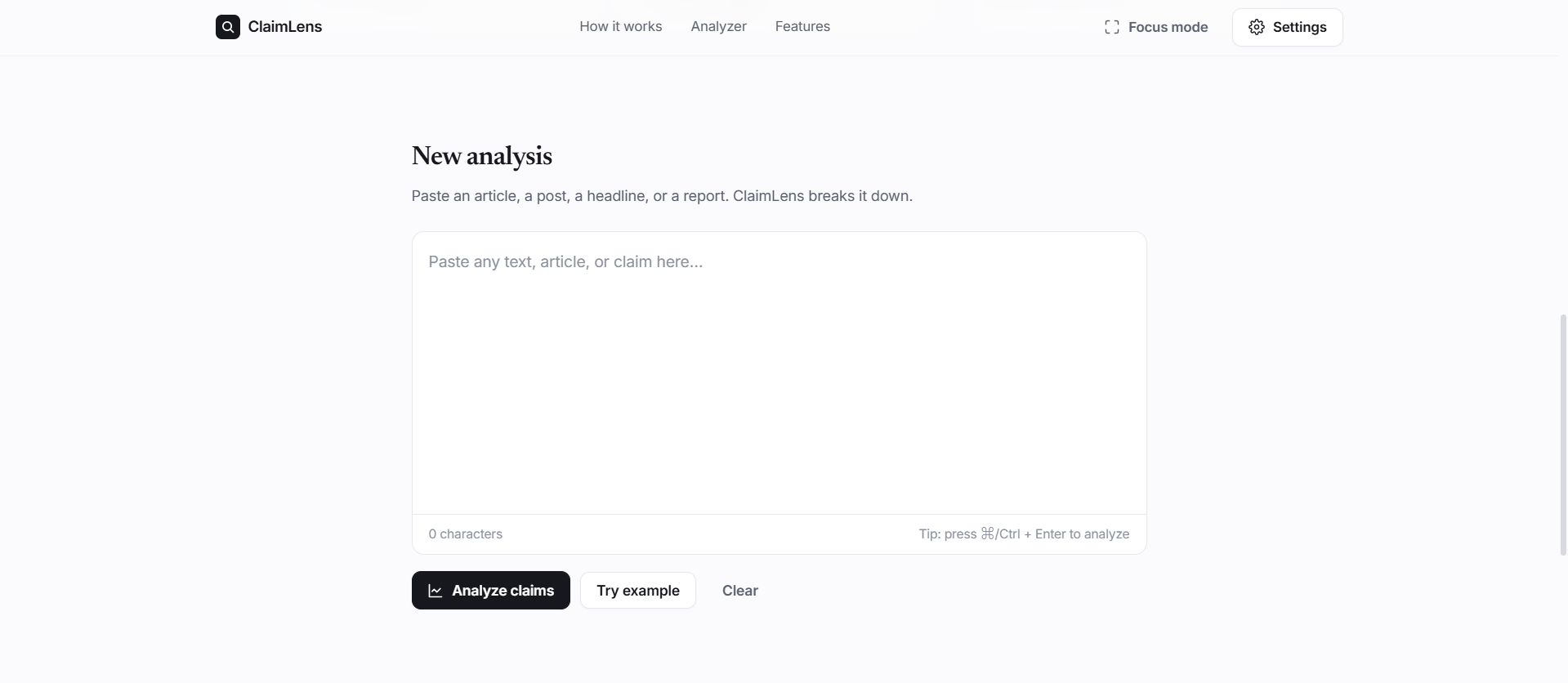
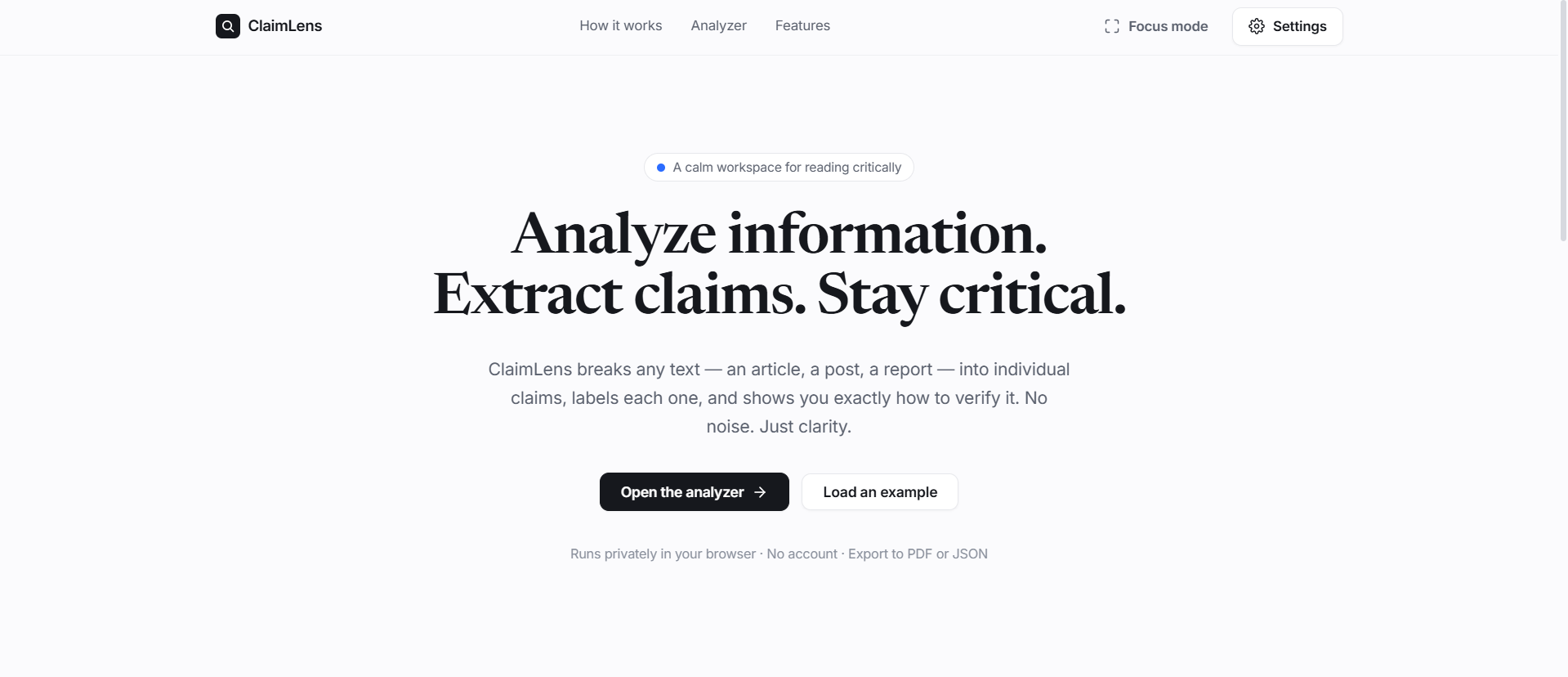
I’ve always noticed how easy it is to read something online and just accept it without really thinking about it. Articles, tweets, headlines they often mix facts, opinions, and emotional wording all together, and it becomes hard to separate what’s actually solid information from what’s just persuasive language. So I wanted to build something that doesn’t tell you what to believe, but instead slows you down a bit and helps you see how information is built. That’s where ClaimLens came from a tool that breaks text into smaller pieces so you can actually think about each claim on its own.
What it does
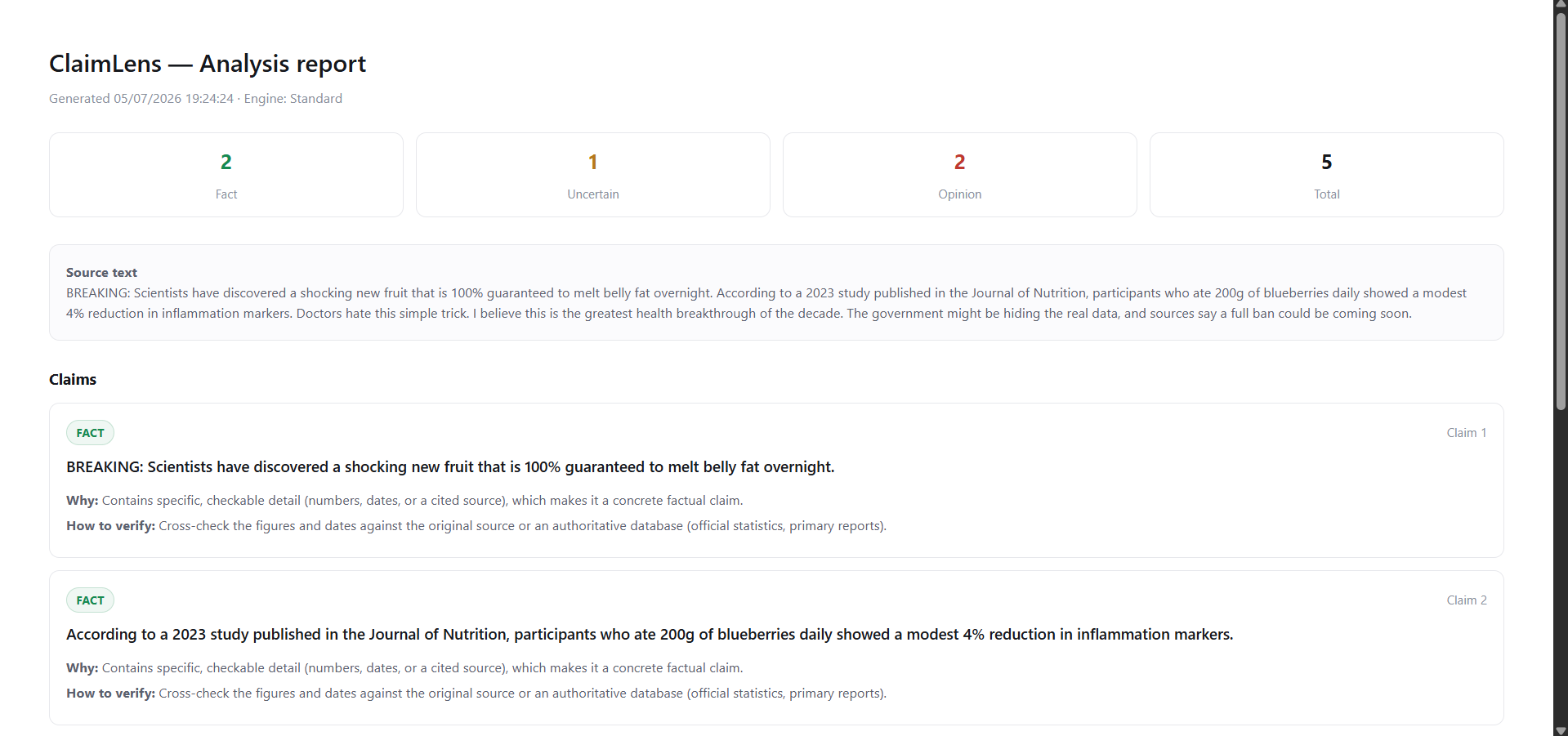
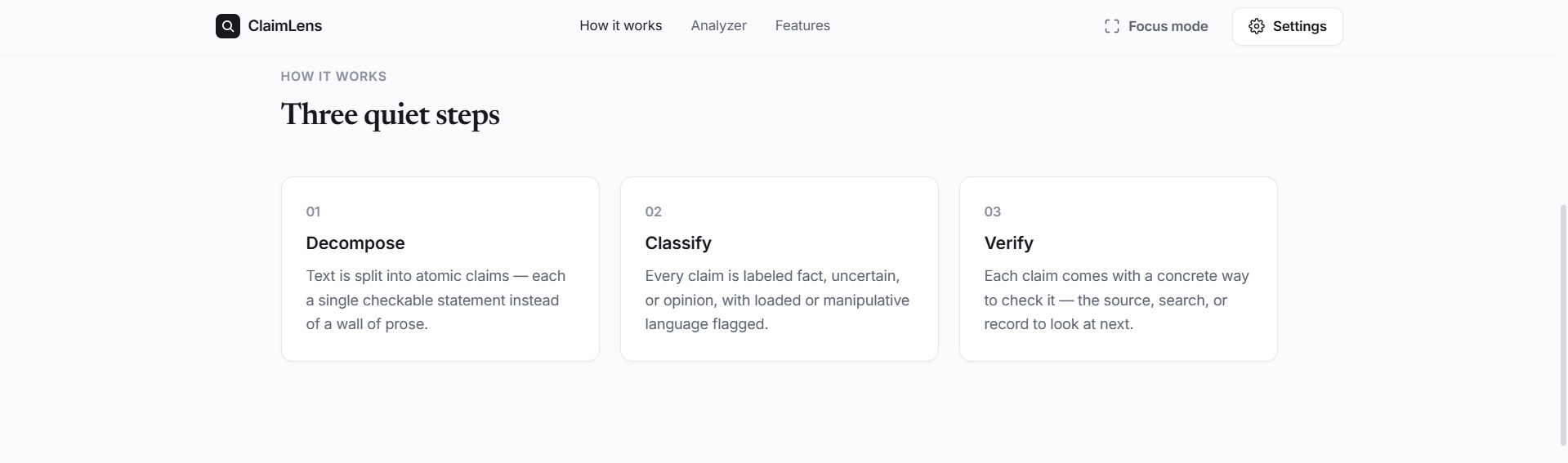
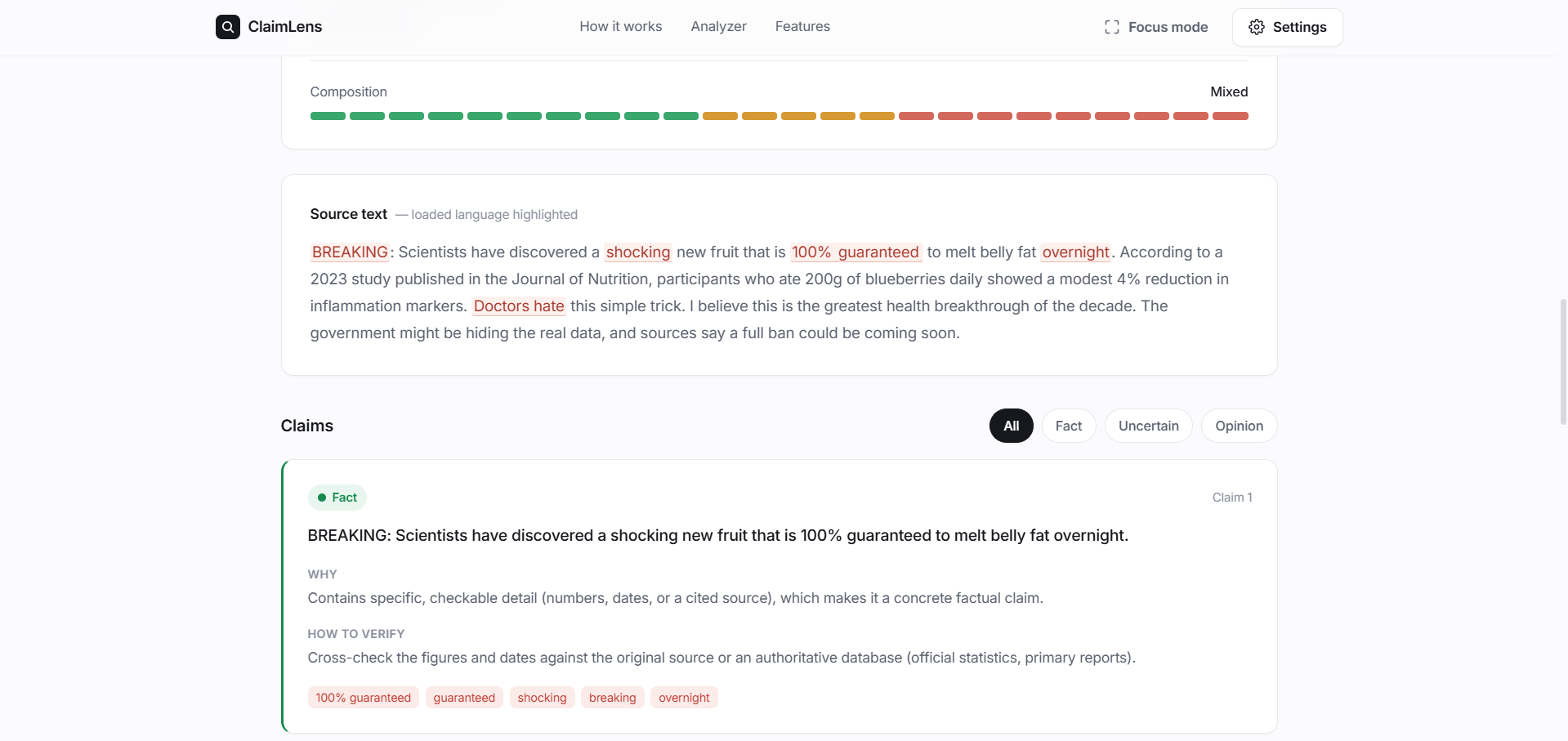
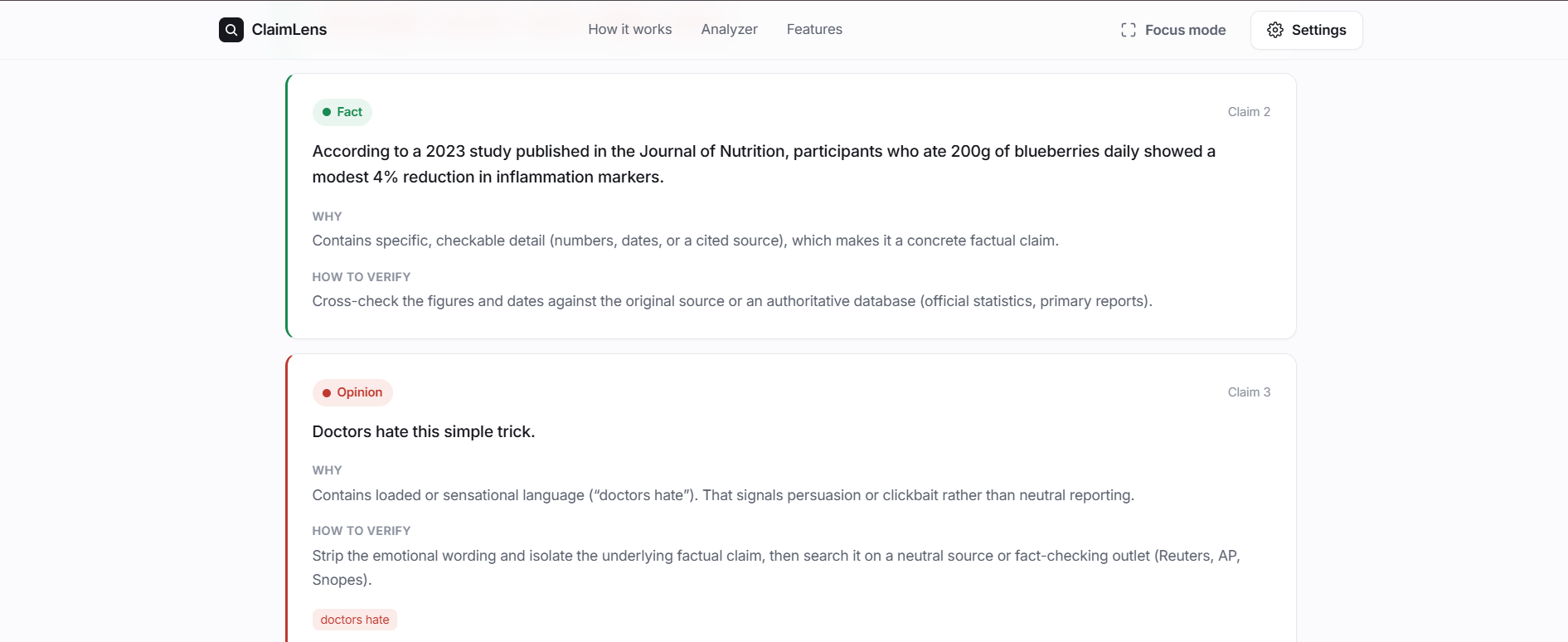
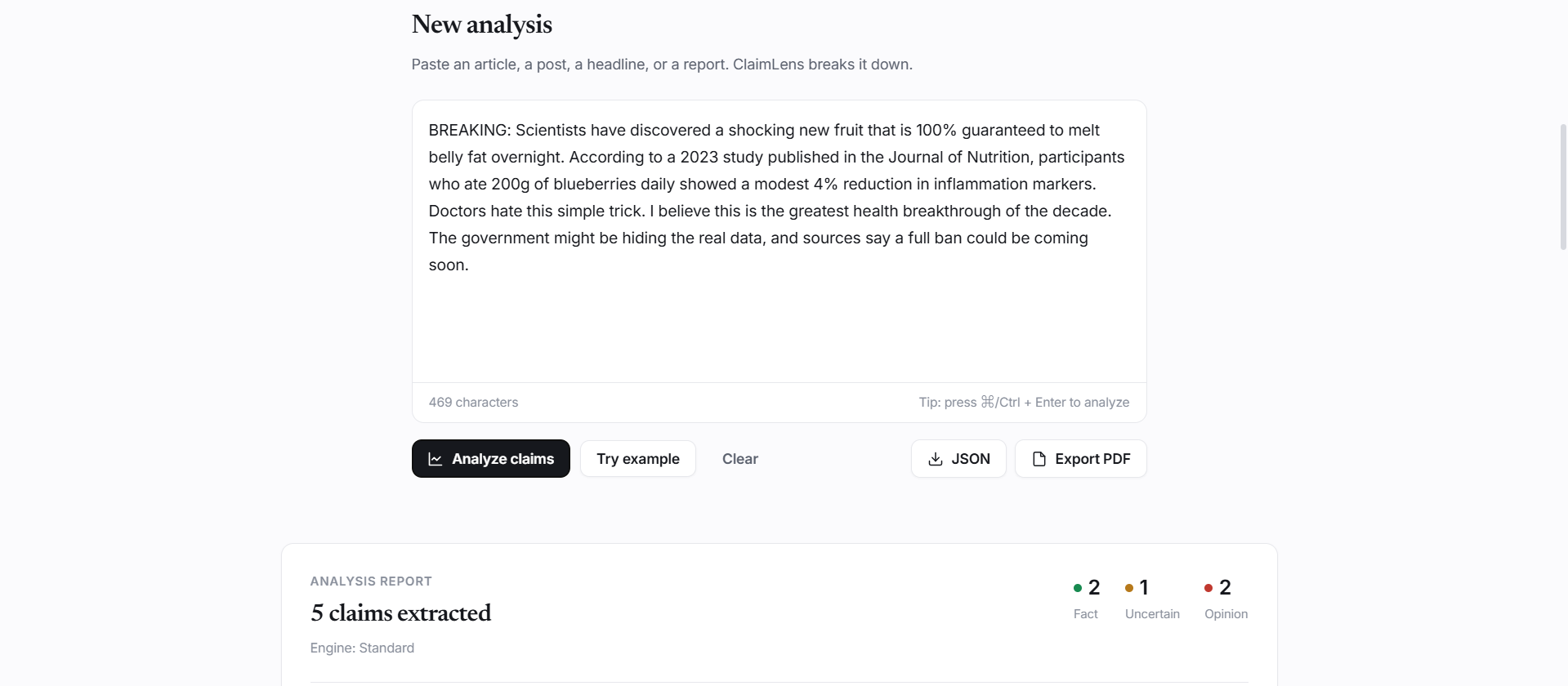
ClaimLens takes any text you paste in an article, a post, or even a random paragraph and breaks it down into smaller “claims”. Each claim is then labeled in a simple way: fact uncertain opinion It also highlights emotionally charged or clickbait-style wording so you can instantly notice when language is trying to influence you. On top of that, it explains why something was labeled a certain way and gives you a simple idea of how you could verify it yourself. The goal isn’t to decide what’s true or false for you it’s just to make the structure of information clearer so you can judge it yourself.
How we built it
I built ClaimLens as a simple front-end web app using HTML, TailwindCSS, and JavaScript. Under the hood, it has two modes: a lightweight “on-device” engine that uses rules and patterns to detect opinions, uncertainty, and factual signals an optional enhanced mode that can connect to AI APIs like OpenAI or Gemini for deeper analysis Most of the work actually went into the UI. I wanted it to feel calm and readable, almost like a writing or reading space, not a typical “AI tool” dashboard. So I focused a lot on spacing, typography, and making everything feel soft and distraction-free.
Challenges we ran into
The hardest part was figuring out how to analyze text without overcomplicating things. At first, I wanted something super “intelligent”, but quickly realized I didn’t need a perfect NLP system to make something useful. So instead, I built a simpler system that looks at patterns in language like numbers, hedging words, and emotional phrases and combines them to make a decision. It’s not perfect, but it works surprisingly well for a demo. Another challenge was making the UI not feel overwhelming. Since the idea is about clarity, I had to constantly remove things that added noise instead of value.
Accomplishments that we're proud of
We’re proud that we were able to turn a simple idea into a fully working product in a very short time. ClaimLens isn’t just a UI mockup it actually analyzes text, breaks it into claims, and classifies them in a meaningful way. We also managed to design a clean and calm interface that makes a complex task feel simple and readable. Features like focus mode, claim filtering, and the trust meter helped turn the idea into a real user experience instead of just an algorithm demo. Another thing we’re proud of is building a hybrid system that works both on-device (with heuristics) and with optional AI enhancement. This makes the project flexible, fast, and usable even without external APIs.
What we learned
Through this project, we learned that you don’t always need a perfect AI model to build something useful. Even simple rule-based logic can create meaningful results when combined with good UX design. We also learned how important it is to structure information clearly. Breaking text into smaller, understandable parts changes the way users interact with information completely. On the technical side, we improved our skills in frontend architecture, state management in vanilla JavaScript, and designing scalable UI components without frameworks. Most importantly, we learned how to balance functionality with simplicity especially under time pressure.
What's next for ClaimLens
If we continue developing ClaimLens, the next step would be to make it more powerful and more connected to real-world data. We would like to add: real-time fact checking using web sources and citations better natural language understanding for more accurate claim extraction support for multiple languages bias detection across entire articles, not just individual sentences and possibly a browser extension version so users can analyze content anywhere online The long-term vision is to make ClaimLens a simple but powerful tool for improving media literacy and helping people think more critically about what they read every day.
Built With
- api
- css
- gemini
- html
- javascript
- localstorage
- openai
- tailwind

Log in or sign up for Devpost to join the conversation.